
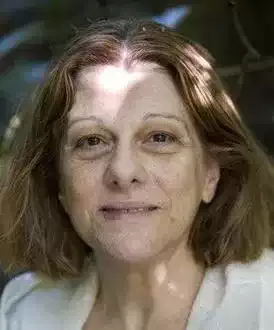
Hélia Correia
b. 1949
 PT
PT
PT
Hélia Correia is a notable contemporary Portuguese writer, recognized for her poetic work and her prose of great depth and originality. Her writing is marked by a rich and elaborate language, by the exploration of universal themes such as memory, time, identity, and the female condition, and by a unique sensitivity to the subtleties of human experience. With a solid and multifaceted literary career, Hélia Correia has established herself as one of the most important voices in recent Portuguese literature, influencing generations of readers and writers.
n. 1949-01-01, Lisboa
90
Views
Bio
Identification and basic context
Hélia Correia is a prominent Portuguese writer. Born in 1949. Originally from Lisbon, her cultural context of origin is deeply linked to Portuguese urban and intellectual life. She writes in Portuguese.Childhood and education
Little detailed public information is available about her specific childhood and education. However, her work shows a solid cultural background and a wide range of literary and philosophical references, suggesting a path of intense reading and self-teaching, as well as possible academic training in humanities.Literary career
Hélia Correia's literary career is marked by a continuous and diverse production that includes poetry, prose, and essays. She began her literary activity significantly in the 1970s and 1980s, establishing herself as a unique voice in the Portuguese literary scene. Her work has evolved constantly, exploring different formal and thematic approaches, always with a mark of originality and rigor.Work, style, and literary characteristics
Among her most notable works are the novels "O Mundo Mágico dos Desejos" (1980), "Lillias F.B." (1986), "Aura" (1995), and "Perpetuus" (2001), and the poetry collections "As Fitas da Fome" (1991) and "Da Morte Lenta dos Pássaros" (2000). The dominant themes in her work include memory, time, identity, subjectivity, the fragility of the human condition, the relationship between body and soul, and the exploration of the female universe. Her style is recognized for its imagistic density, the musicality of verse, the precision of language, and the ability to construct complex and evocative narratives. The poetic tone varies between the lyrical, the reflective, and the melancholic. Her language is erudite, but accessible, rich in metaphors and symbolism. Hélia Correia is often associated with late modernism or a postmodern aesthetic, due to her way of engaging with literary tradition and experimenting with form and content.Cultural and historical context
Hélia Correia writes in a post-revolutionary Portugal era, with its inherent reflections on national identity and freedom of expression. She is part of a generation of writers seeking to innovate and renew Portuguese literature. Her work reflects a dialogue with philosophy, psychoanalysis, and visual arts, integrating a complex contemporary cultural web.Personal life
Little detailed public information is available about Hélia Correia's personal life, allowing her to maintain a certain reserve. It is known that her life is dedicated to writing and study.Recognition and reception
Hélia Correia is a widely recognized and respected author in Portugal and abroad. Her work has been the subject of academic study and has received several important literary awards, attesting to her prominent place in contemporary literature.Influences and legacy
Her work shows influences from authors such as Fernando Pessoa, Clarice Lispector, and the tradition of mystical and metaphysical poetry. Hélia Correia, in turn, has influenced new writers through her stylistic originality and thematic depth, consolidating a legacy of literary rigor and exploration of human complexity.Interpretation and critical analysis
Hélia Correia's work is often analyzed from philosophical and existential perspectives, exploring the nature of consciousness, the ephemerality of time, and the search for meaning. Literary criticism highlights her mastery in constructing atmospheres and exploring the human psyche.Curiosities and lesser-known aspects
A lesser-known aspect might be her connection to other arts or forms of expression, although her main notoriety is as a writer. Her dedication to the written word and reflection is a striking trait of her personality.Death and memory
As a contemporary and active author, Hélia Correia's death is not a present issue. Her memory is being built through her continuous work and growing critical and academic recognition.Poems
0No poems found
Videos
50
Comments (0)
Log in
to post a comment.
No comments yet. Be the first to comment.