Poem of the day

Do Not Go Gentle Into That Good Night

Dylan Thomas
Do not go gentle into that good night, 
Old age should burn and rave at close of day; 
Rage, rage against the dying of the light. 

Though wise men at their end know dark is right, 
Because their words had forked no lightning they 
Do not go gentle into that good night. 

Good men, the last wave by, crying how bright 
Their frail deeds might have danced in a green bay, 
Rage, rage against the dying of the light. 

Wild men who caught and sang the sun in flight, 
And learn, too late, they grieved it on its way, 
Do not go gentle into that good night. 

Grave men, near death, who see with blinding sight 
Blind eyes could blaze like meteors and be gay, 
Rage, rage against the dying of the light. 

And you, my father, there on that sad height, 
Curse, bless, me now with your fierce tears, I pray. 
Do not go gentle into that good night. 
Rage, rage against the dying of the light.
Read full poem

Born on this day

10
António Ramos Rosa

António Ramos Rosa was one of the most influential Portuguese poets of the 20th century, known for his dense, reflective poetry deeply connected to the human condition and language. His work is marked by a constant search for authentic expression, exploring themes such as existence, death, time, and poetry itself. His writing evolved over decades, maintaining thematic and stylistic coherence, but always open to new formal and lexical explorations. He is considered a pillar of contemporary Portuguese-language poetry.

Rogério Viana

Rogério Viana was a Portuguese poet and professor. His poetic work, often linked to his homeland, Beira Alta, and its customs, is characterized by tender lyricism and a strong connection to nature and traditions. He explored themes such as the rural landscape, memory, childhood, and identity.

Conceição da Costa Neves

Conceição da Costa Neves was a Portuguese poet whose work was distinguished by its uniqueness and exploration of profound themes. Her writing, marked by a strong lyrical and reflective component, addressed the human condition with particular sensitivity, leaving a relevant poetic legacy. Her poetic voice contributed to the diversity and richness of Portuguese literature.

Mariana Ianelli

Mariana Ianelli is a contemporary Brazilian writer and poet, known for her lyrical and reflective writing. Her poetic work explores deep themes such as memory, time, identity, and the human condition, often with an introspective and sensory approach. With careful language and a particular rhythm, Ianelli constructs vivid images and subtle evocations, inviting the reader to immerse themselves in inner universes and confront existential questions. Her poetry stands out for its originality and its ability to touch upon universal sensibilities.

Mariza Fontes de Almeida

Mariza Fontes de Almeida is a poet whose work is characterized by a unique lyrical voice, exploring the depth of human emotions and the intrinsic beauty of everyday life. Her writing, marked by keen sensitivity and evocative language, invites reflection on life, love, and the passage of time. Her contribution to contemporary Portuguese poetry lies in her ability to transfigure the ordinary into poetic art.

G. Buchner

Georg Büchner was a German writer, playwright, and biologist, known for his innovative work that pioneered realism and expressionism in literature and theater. Despite his short life, he left a significant literary legacy. His most famous works include the play "Woyzeck", considered a masterpiece of modern theater, and "Danton's Death". Büchner was also noted for his satirical and political writing, criticizing the society and oppression of his time.

Miguel Delibes

Miguel Delibes was one of the most important Spanish writers of the 20th century, known for portraying the rural life of Castile and traditional values. His work is characterized by a realistic style, accessible language, and a profound social and environmental concern. He is recognized for his ability to give voice to peasants and for his subtle critique of modernity.

Pablo de Rokha

Pablo de Rokha, pseudonym of Carlos Díaz Loyola, was a Chilean poet of great projection, recognized for his avant-garde and socially engaged work. His poetry is marked by a powerful and experimental language, exploring themes such as the human condition, social injustice, and the search for an authentic national identity, making him a central figure in Latin American poetry.

Héctor Azar

Mexican writer, poet, and essayist, Héctor Azar stood out for his profound lyrical work and his sharp literary and social criticism. His poetry is characterized by emotional intensity, constant introspection, and a search for truth through the word. He addressed themes such as solitude, the passage of time, death, and love, with a refined yet powerful style. He was an influential figure in Mexico's cultural landscape, leaving a legacy of intellectual rigor and artistic sensitivity.

Leopoldo Panero

Spanish poet, member of the Generation of '50, known for his rooted and existential poetry. His work is characterized by introspection, the exploration of vital anguish, death, and the search for meaning in an often desolate world. His language is direct and his tone, often somber.

Died on this day

7
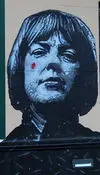
Ingeborg Bachmann

Ingeborg Bachmann was a prominent Austrian poet and writer, known for her lyrical work and social criticism. Her poetry explores themes such as guilt, identity, love, and disillusionment, often in a confessional and reflective tone. Bachmann also distinguished herself as a playwright and essayist, addressing existential and political issues of her time. Her writing is marked by intense language and a deep sensitivity to the complexities of the human condition, leaving a significant legacy in German-language literature.

António Borges Coelho

António Borges Coelho was a Portuguese poet, professor, and politician, known for his engaged poetry and his deep connection with the history and culture of Portugal. His work reflects a strong sense of social and political intervention, marked by accessible language that is nonetheless loaded with meaning. He explored themes such as national identity, the struggle for freedom, and the human condition, often using resources from Portuguese literary tradition. His career as a professor and his political activity influenced his worldview and his writing, making him a relevant figure in the cultural and political landscape of his time.

Germán Espinosa

Germán Espinosa was a prominent Colombian poet and essayist, recognized for his profound lyrical work and his sharp reflection on the human condition, identity, and the social reality of his country. His poetry is characterized by powerful language, vivid imagery, and a constant exploration of the mysteries of existence. Throughout his career, he established himself as an influential voice in Hispanic American literature, addressing universal themes with a unique and committed perspective.

Vicente Gaos

Vicente Gaos was a Spanish poet, a key figure of the Generation of '50, known for his existential and social poetry, marked by a profound reflection on the human condition and the reality of his time. His work, characterized by direct language and great lyrical sensitivity, addresses themes such as memory, identity, justice, and the search for hope in difficult contexts.