Bertolt Brecht
Author of the day

Bertolt Brecht

Bertolt Brecht was a highly influential German playwright, poet, and theatre director. He is renowned for his pioneering work in epic theatre, which aimed to provoke critical thought rather than emotional immersion. His writings often carried strong political and social messages, critiquing capitalism, war, and injustice. Brecht's innovative techniques, such as the alienation effect (Verfremdungseffekt), revolutionized modern theatre.

Poem of the day

Do Not Go Gentle Into That Good Night

Dylan Thomas
Do not go gentle into that good night, 
Old age should burn and rave at close of day; 
Rage, rage against the dying of the light. 

Though wise men at their end know dark is right, 
Because their words had forked no lightning they 
Do not go gentle into that good night. 

Good men, the last wave by, crying how bright 
Their frail deeds might have danced in a green bay, 
Rage, rage against the dying of the light. 

Wild men who caught and sang the sun in flight, 
And learn, too late, they grieved it on its way, 
Do not go gentle into that good night. 

Grave men, near death, who see with blinding sight 
Blind eyes could blaze like meteors and be gay, 
Rage, rage against the dying of the light. 

And you, my father, there on that sad height, 
Curse, bless, me now with your fierce tears, I pray. 
Do not go gentle into that good night. 
Rage, rage against the dying of the light.
Read full poem

Born on this day

10
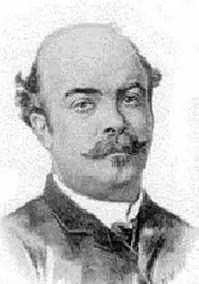
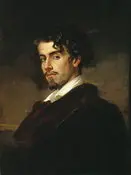
Gustavo Adolfo Bécquer

Gustavo Adolfo Bécquer was a Spanish poet and writer, a prominent figure of Post-Romanticism. His work, marked by intimacy, melancholy, and the idealization of love and women, transcends his time and continues to be a fundamental reference in Spanish-language poetry. Although his life was marked by financial difficulties and personal fragility, Bécquer left a body of work that explores the transience of life, the enigmatic nature of inspiration, and the ethereal beauty of romantic feeling, consolidating himself as one of the most read and translated poets in his country.

Leonardo Fróes

Leonardo Fróes was a Brazilian poet whose work is distinguished by its originality and depth, exploring the complexity of human existence with a rich and imagistic language. His poetry navigates between the lyrical self and the universe, addressing themes such as solitude, love, the passage of time, and the search for meaning. With a style that moves between the lyrical and the philosophical, Fróes captivates the reader with his ability to articulate existential reflections with refined aesthetic sensitivity. His contribution to contemporary Brazilian poetry lies in how he reinvents tradition, infusing it with a personal and innovative vision, consolidating him as a relevant figure in the literary scene.

Luís Guimarães Júnior

Luís Guimarães Júnior was a Brazilian poet and professor. His poetic work is marked by reflection on the human condition, the passage of time, and the search for meaning amidst life's complexities. With a style that oscillates between lyricism and introspection, he approached universal themes with sensitivity and depth, leaving a legacy of verses that invite contemplation.

Edgar Quinet

Edgar Quinet was a French historian and writer, known for his work on French history and for advocating republican and secular ideals. His works frequently addressed the French Revolution and the religious history of Europe. He was an important figure in the intellectual and political scene of 19th-century France.

José Maria da Silva Couto

José Maria da Silva Couto was a Portuguese writer and diplomat, known mainly for his historical and ethnographic fiction, with a strong emphasis on the East. His writing, marked by erudition and exoticism, transports the reader to distant realities and fascinating cultures. Despite having held diplomatic positions, his literary legacy is what endures, offering a detailed look at the interactions between Portugal and the East in past centuries.

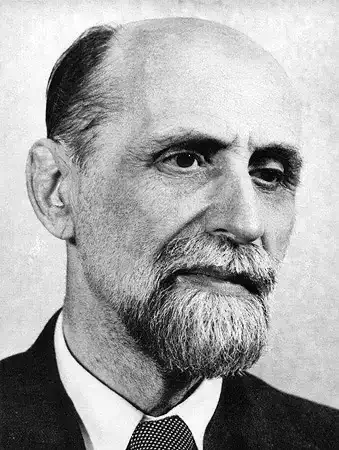
Juan Pablo Forner y Segarra

Juan Pablo Forner y Segarra was a Spanish lawyer, writer, and politician, known for his active participation in public life and his satirical and critical writings. His work ranges from legal treatises to literary and political works, always with a sharp and often combative tone. He was a relevant figure in the turbulent political and intellectual landscape of late 18th and early 19th century Spain.

Julia de Burgos

Julia de Burgos was a Puerto Rican poet whose work is characterized by its lyrical intensity, social commitment, and profound exploration of identity, love, and freedom. Her poetry, marked by a powerful and often rebellious female voice, addresses themes such as social injustice, the condition of women, and the longing for self-determination. Considered one of the most important voices in 20th-century Hispano-American poetry, her legacy transcends borders, inspiring generations of readers and writers through her courage, passion, and unwavering pursuit of truth and beauty.

Died on this day

11
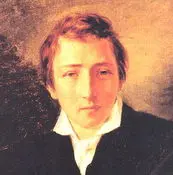
Heinrich Heine

Heinrich Heine was a German poet, journalist, and essayist, widely regarded as one of the most important poets of the German language. His work is marked by deep irony, melancholy, and a critical view of society, mixing intense lyricism with biting satire. Heine explored themes such as love, nature, politics, and the human condition, with a style that transitioned between romanticism and realism. His influence extended across various fields, and his poetic legacy continues to be celebrated for its modernity and its ability to express the complexity of the modern world with a language that is both accessible and sophisticated.

Aléxandros Papadópoulos Evremídis

Aléxandros Papadópoulos Evremídis was a Greek poet whose work was distinguished by its philosophical depth and symbolic charge, exploring themes such as mortality, the search for truth, and the complex relationship between man and the cosmos. His poetry, often marked by erudite language and mythological and classical references, reflects a deep meditation on the human condition and its place in the universe. Evremídis sought, through his writing, to achieve a universal dimension, using language to unveil the essential truths of existence. His work, although sometimes hermetic, has been the subject of study and admiration for its rigorous formal construction and the intensity of its reflections.

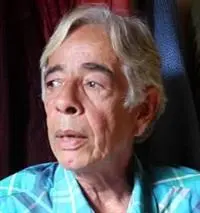
Darcy Ribeiro

Darcy Ribeiro was a Brazilian anthropologist, professor, politician, and writer. His work is marked by deep reflection on the identity and formation of the Brazilian people, addressing themes such as education, cultural diversity, and the dilemmas of development in Latin America. He stood out for his theories on Brazilian social formation and his involvement in educational and political projects aimed at social transformation. His writing, often engaged, seeks to understand and propose paths for Brazil's historical and cultural challenges.

Felipe d’Oliveira

Felipe d’Oliveira is a contemporary Portuguese poet, whose work is distinguished by the exploration of existential themes, by the reflection on time and memory, and by a careful and evocative poetic language. His poetry, marked by an introspective tone and a constant search for truth and beauty, dialogues with literary tradition, but proposes an original and personal approach to the questions of human existence and artistic creation.

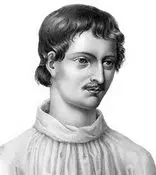
Giordano Bruno

Giordano Bruno was an Italian Dominican friar, philosopher, poet, and cosmologist. He is best known for his cosmological theories which included an infinite universe with multiple suns and planets, and for his advocacy of the transmigration of souls. His ideas, which went against the Catholic doctrine of the time, led to a long trial by the Roman Inquisition.

He is glorified not in one, but in countless suns,
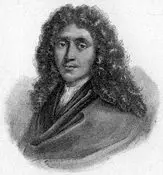
Molière

Molière, pseudonym of Jean-Baptiste Poquelin, was a French playwright, actor, and poet, widely regarded as one of the greatest masters of comedy in Western literature. His works satirized the customs, hypocrisy, and vanities of 17th-century French society, addressing themes such as marriage, social class, and religion with wit and insight.

Writing is like prostitution. First you do it for
João Vaz

João Vaz was a poet whose work stands out for its lyrical depth and exploration of existentialist themes. His poetry is characterized by introspective language and an incessant search for the meaning of life and human existence, often permeated by a melancholic and philosophical atmosphere. His literary production reflects the anxieties of his time, engaging with currents of thought that question reality and the nature of identity. Although his name is not among the most prominent in the history of Portuguese poetry, his work offers a unique perspective on the human condition.

Mariana Belmira de Andrade

Mariana Belmira de Andrade was a notable figure in the literary landscape, known for her sensitivity and the depth of her poetic expression. Her work, although it may not have achieved the notoriety of other contemporaries, is a reflection of an authentic voice that explored themes such as identity, nature, and the ephemerality of life. The quality of her writing and the originality of her perspective give her a prominent place among poets who knew how to capture the essence of the human experience in verse.

Shmuel Agnon

Shmuel Yosef Agnon (born Samuel Josef Czaczkes) was an Israeli writer, awarded the Nobel Prize in Literature in 1966. He is widely considered one of the most important Hebrew-language writers of the 20th century. His work explores the relationship between the traditional Jewish world and modernity, faith, doubt, and identity.

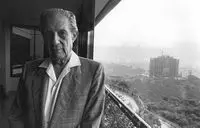
Juan Liscano

Juan Liscano was a prominent Venezuelan poet, literary critic, and essayist. His poetic work is characterized by a profound reflection on existence, identity, and the human condition, often tinged with melancholy and a sharp perception of reality. Liscano explored diverse poetic forms, from free verse to more classical structures, always maintaining a singular voice and refined language. He was an influential figure in Venezuelan culture, not only for his literary production but also for his work as a cultural manager and critic, leaving an important legacy in 20th-century Hispanic American literature.