Poem of the day

Do Not Go Gentle Into That Good Night

Dylan Thomas
Do not go gentle into that good night, 
Old age should burn and rave at close of day; 
Rage, rage against the dying of the light. 

Though wise men at their end know dark is right, 
Because their words had forked no lightning they 
Do not go gentle into that good night. 

Good men, the last wave by, crying how bright 
Their frail deeds might have danced in a green bay, 
Rage, rage against the dying of the light. 

Wild men who caught and sang the sun in flight, 
And learn, too late, they grieved it on its way, 
Do not go gentle into that good night. 

Grave men, near death, who see with blinding sight 
Blind eyes could blaze like meteors and be gay, 
Rage, rage against the dying of the light. 

And you, my father, there on that sad height, 
Curse, bless, me now with your fierce tears, I pray. 
Do not go gentle into that good night. 
Rage, rage against the dying of the light.
Read full poem

Born on this day

4
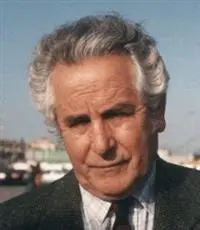
Juan Van Halen

Juan Van Halen is a Spanish author known for his work in the field of history and literature. His writing covers historical themes, often with a focus on Spain and its traditions. He is an explorer of narratives that connect the past to the present, seeking to present content in an accessible and engaging way.

Rufino Blanco Fombona

Rufino Blanco Fombona was a prominent Venezuelan writer, essayist, and politician, a key figure of modernism and the Generation of '98 in Hispanic America. His work is characterized by a deep reflection on Latin American identity, criticism of imperialism, and the exaltation of Hispanic culture. He was an intellectual committed to his time, whose vibrant and passionate prose addressed themes such as history, politics, and literature with a penetrating and often polemical gaze. As a public figure, Blanco Fombona played an important role in Venezuelan diplomacy and politics, which allowed him to interact with various intellectual and political circles of the era. His legacy lies in his vigorous defense of Hispanicity and his tireless work for the preservation and dissemination of culture, as well as in his influential literary work that continues to be studied and debated.

Henry Lawson

Henry Lawson was an Australian writer and poet, celebrated for his vivid portrayals of Australian bush life, identity, and the struggles of ordinary people. He is considered one of Australia's greatest literary figures, known for his realistic and often melancholic depiction of the Australian landscape and its inhabitants. His work frequently captures the hardship, mateship, and resilience of the Australian spirit.

For there's a swellin' in my heart -- a tightness in my throat --

Died on this day

7
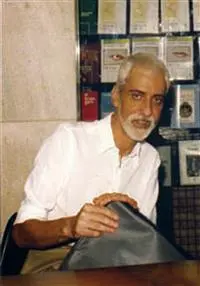
Cláudio Martins

Cláudio Martins is a Portuguese poet whose works explore the relationship between the individual and society, the ephemerality of time, and the search for meaning in a constantly changing world. His poetry is marked by a direct and reflective language, with touches of melancholy and irony, inviting the reader to question their own perceptions and the reality that surrounds them. Martins stands out for the originality and depth of his observations on the human condition.

João Rui de Sousa

João Rui de Sousa is a Portuguese poet and writer whose work is characterized by its reflective depth and exploration of themes such as memory, the passage of time, and identity. With a careful style and a language that combines rigor and sensitivity, Sousa has been building a literary career that has earned him recognition in the panorama of contemporary Portuguese-language poetry. His writing invites contemplation and introspection, addressing the human condition with a nuanced and humanistic perspective.

Tite de Lemos

Tite de Lemos is a Brazilian poet, essayist, and translator, known for his poetry that explores the complexity of the human condition, memory, identity, and urban and natural landscapes. His poetic work, marked by careful and reflective language, is part of the context of contemporary Brazilian poetry, engaging with existential and social themes. As a translator, he has significantly contributed to the dissemination of foreign authors in Brazil.

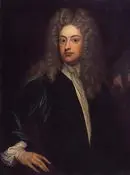
Joseph Addison

Joseph Addison was an English essayist, poet, playwright, and politician. He is best known for co-founding The Spectator magazine with his lifelong friend Richard Steele. Addison's writings were highly influential in the 18th century, shaping literary tastes and contributing to the development of English prose style. His essays offered witty observations on society, politics, and morality, making him a prominent figure in the Augustan age of English literature.

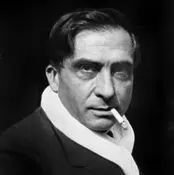
Pierre Reverdy

Pierre Reverdy was a French surrealist poet, considered one of the most important poets of the 20th century. His work is marked by the search for an innovative poetic language, with surprising imagery and a profound reflection on solitude, time, and the human condition. He is one of the precursors of the surrealist movement.

Miron Białoszewski

Miron Białoszewski was a Polish poet, writer, playwright, and actor, considered one of the most important figures in post-war Polish literature. He was one of the most original representatives of the so-called "new lyricism" and the "poetic prose movement," characterized by innovative language, a colloquial tone, and the exploration of everyday life. His work, often autobiographical and fragmented, addresses themes such as memory, identity, sexuality, and life in Warsaw during and after World War II.

Arturo Reyes

Arturo Reyes was a Colombian journalist, writer, and politician, known for his work that portrays the life and customs of the Colombian Caribbean region. His writings are marked by a lively and detailed style, capturing the essence of the local people and culture. As a journalist, Reyes dedicated himself to covering events in his homeland, contributing to the press with chronicles and reports that often became the basis for his literary works. His political activity was also linked to the defense of the interests of the Caribbean region. Reyes' work is fundamental to understanding the cultural and social identity of Caribbean Colombia.