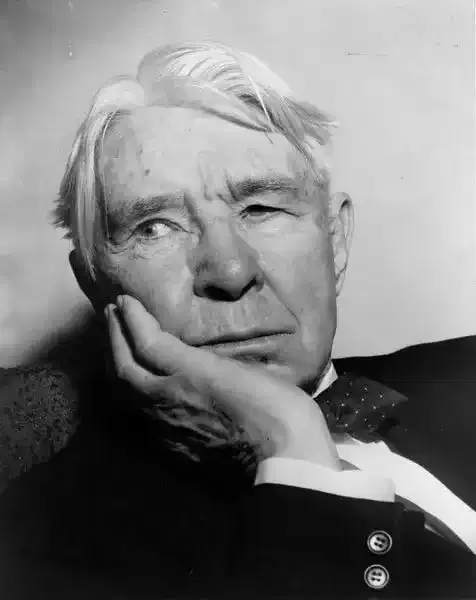
Carl Sandburg
Author of the day

Carl Sandburg

Carl Sandburg was an American poet, historian, novelist, and lexicographer. He is considered one of the most important American poets of the 20th century, known for his free verse and his focus on the American working class and the landscapes of the American Midwest. His poetry often celebrated the common man and the industrial might of America, earning him a reputation as the "poet of the people." Beyond his poetry, Sandburg was also a prolific biographer, most notably of Abraham Lincoln, and a…

Poems
Poem of the day

Grass

Carl Sandburg
Pile the bodies high at Austerlitz and Waterloo.
Shovel them under and let me work
-I am the grass; I cover all.

And pile them high at Gettysburg
And pile them high at Ypres and Verdun.
Shovel them under and let me work.
Two years, ten years, and the passengers ask the conductor:

What place is this?
Where are we now?

I am the grass.
Let me work.
Read full poem

Born on this day

14
Niandra LaDez

Niandra LaDez is a multifaceted artist, known primarily for her work in music and visual arts. Her artistic expression is characterized by a strong experimental vein and the fusion of different languages, creating a unique and engaging aesthetic universe. Her work frequently explores themes of identity, spirituality, and the relationship between human beings and the cosmos. With a transgressive approach and refined sensitivity, Niandra LaDez challenges conventions, inviting the public to immerse themselves in alternative realities and to reflect on the nature of art and existence. Her ability to move between different artistic disciplines gives her a unique position in the contemporary creative landscape.

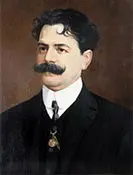
Afrânio Peixoto

Afrânio Peixoto was a Brazilian physician, professor, politician, and writer, a prominent figure in the culture and literature of his time. His work ranges from poetry to historical and literary studies, always with a keen eye on the particularities of Brazil and its language. Peixoto demonstrated a deep appreciation for literary tradition, while simultaneously engaging in the intellectual debates of his time, defending the importance of national culture and the purity of the Portuguese language. His work as an educator and a member of institutions such as the Brazilian Academy of Letters consolidated his position as an influential intellectual. Through his writings, he sought not only to express his poetic sensibility but also to contribute to the formation of a Brazilian cultural identity, revisiting and reinterpreting the country's history and literature.

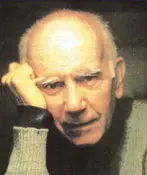
Érico Veríssimo

Érico Veríssimo was one of the most important Brazilian novelists, known for his vast work that portrays Gaucho society and national identity. With an engaging narrative and memorable characters, he addressed themes such as urban life, family relationships, social conflicts, and the search for a place in the world. His accessible yet profound writing won a broad audience, making him one of Brazil's most widely read and translated authors. Érico Veríssimo left a significant literary legacy, with works that remain relevant and continue to inspire readers and writers through his ability to capture the essence of the human experience. His style is marked by narrative fluidity, psychological realism, and a humanistic vision, which established him as a master of Brazilian prose. Through his stories, Érico Veríssimo offered a rich and multifaceted panorama of Brazil, especially of Rio Grande do Sul.

Gilson Nascimento

Gilson Nascimento is a name that resonates in Brazilian poetry, known for his sensitivity and the way he explores the nuances of human existence. His work is characterized by a deep reflection on life, death, time, and the human condition, expressed through a language that blends lyricism with a critical view of the world. With a career marked by a constant search to express the complexity of feelings and experiences, Gilson Nascimento has established himself as an important voice in contemporary poetry, engaging with literary traditions while proposing new aesthetic and thematic approaches.

Jonas da Silva

Jonas da Silva is a name that can correspond to different individuals, but in the literary context, the most likely reference is to a poet whose work is part of contemporary aesthetic currents. His poetry is often marked by a deep exploration of the human condition, addressing universal themes such as memory, identity, and the ephemerality of existence. The language used sometimes seeks an approximation to the everyday, but laden with a subtle musicality and an imagistic density that invites reflection. His journey, although it may not be widely disclosed in terms of specific dates and places, reflects a genuine interest in art and poetic expression as a way of questioning the world and subjectivity. His contribution to literature lies in his ability to articulate modern sensibilities with a particular lyrical sensitivity, leaving an indelible mark on the poetic landscape.

António Manuel da Cunha Belém

António Manuel da Cunha Belém was a Portuguese poet and writer, a figure linked to the 18th century and the transition between Baroque and Arcadianism. His poetic work, although not extensive, reveals a particular sensibility and mastery of language that place him in the literary context of the time. Besides poetry, he also dedicated himself to other areas of knowledge, demonstrating a diverse intellectual background. His figure is an example of Portuguese intellectuals of his time, who sought to reconcile literary production with an interest in scientific and historical issues.

Francisco Aires

Francisco Aires was a Portuguese poet and physician. His poetic work, marked by strong sensitivity and deep lyricism, explores themes such as death, melancholy, and the human condition. He was also a relevant figure in medicine, where his professional practice influenced his worldview and his writing.

Carlos Eugénio Correia da Silva

Carlos Eugénio Correia da Silva was a Portuguese poet whose work stands out for its lyrical depth and exploration of universal themes. His writing reflects a keen sensitivity to the nuances of the human soul and the world around him. Through careful language and a contemplative vision, Silva left behind a body of poems that resonate with authenticity and the ability to evoke emotions. His poetry often addresses love, nature, and the passage of time, with a sometimes melancholic tone, but always imbued with a unique beauty. Correia da Silva's contribution to Portuguese poetry lies in his ability to translate the complexity of human feelings and their relationship with the cosmos into verses, leaving a legacy of reflection and aesthetic contemplation.

Albert Drach

Albert Drach was an Austrian writer, known for his dense and experimental prose. His work frequently explored language and perception, challenging traditional narrative conventions. He stood out in 20th-century German-language literature. His writing is characterized by a deep reflection on existence and the human condition, often in urban and introspective settings. Drach left a legacy as a singular and intellectually rigorous author.

Arda Collins

Arda Collins is an American poet known for her exploration of themes such as identity, family, and memory in her work. Her poetry is often marked by rich and imagistic language, reflecting on the complexities of human relationships and the search for a sense of belonging.

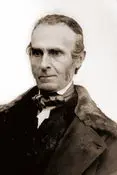
John Greenleaf Whittier

John Greenleaf Whittier was an American poet and abolitionist, celebrated for his lyrical verse that often depicted rural New England life and championed social reform. His poetry evoked strong imagery of nature, home, and the changing seasons, resonating deeply with readers. A staunch advocate against slavery, Whittier used his literary platform to promote abolitionist ideals, making his work a significant voice in the moral and political landscape of 19th-century America. His legacy endures through his evocative poems and his commitment to justice.

A Christmas Carmen

Died on this day

9
Natércia Freire

Natércia Freire was a prominent figure in contemporary Portuguese poetry. Her work stands out for its lyrical depth and exploration of universal themes such as love, identity, and the human condition. With careful language and an evocative style, the author built a unique poetic body that dialogues with literary tradition and modernity.

Marguerite Yourcenar

Marguerite Yourcenar was a French-American writer, translator, and literary critic, born in Belgium. She was the first woman elected to the French Academy in 1980. Her work is marked by a scholarly, reflective style and a profound exploration of the human condition, history, and mythology.

For me, a poet is someone who is “in contact.” Som
Jalāl ad-Dīn Muḥammad Balkhī, Rūmī

Jalāl ad-Dīn Muḥammad Balkhī, more commonly known as Rumi, was a 13th-century Persian poet, jurist, theologian, and Islamic mystic. Born in the region of Greater Khorasan, he migrated with his family to escape the Mongol invasion, eventually settling in Konya, in the Sultanate of Rum, from which he derives his honorific name. His work, deeply spiritual and mystical, is central to the Sufi tradition, exploring divine love, union with the Absolute, and the journey of the soul. Rumi is celebrated worldwide for his lyrical poetry, particularly the "Masnavi," a six-volume allegorical epic, and the "Divan-e Shams-e Tabrizi," a vast collection of lyrical poems and ruba'iyat. His legacy transcends cultural and religious boundaries, being considered one of the most influential and beloved poets in history.

António Frutuoso Aires de Gouveia

António Frutuoso Aires de Gouveia, also known as A. Frutuoso Aires de Gouveia, was a Portuguese poet whose work is part of a literary context that values tradition and lyrical expression. His poetry, although sometimes less accessible to the general public, is appreciated for its thematic depth and elaborate formal construction. He explored themes such as faith, nature, and human interiority, with a language that reflects particular care with words and rhythm.

José Martins Garcia

Portuguese poet whose work is marked by a deep reflection on the human condition, the passage of time, and the search for transcendence. His poetry, often existentialist in nature, explores solitude, memory, and the individual's relationship with the universe. The language used is dense and evocative, with a strong appeal to introspection and contemplation, consolidating him as an important voice in contemporary poetry.

Fernando Lemos

Fernando Lemos was a multifaceted artist, with a body of work that spanned poetry, painting, and photography. His poetry, often linked to surrealism and the exploration of the unconscious, is characterized by a dense, imagistic, and sometimes dreamlike language, reflecting a deep investigation into the human condition, desire, and transgression. His artistic trajectory, marked by his time in Paris and his connection to important avant-garde movements, gave him a unique perspective on art and literature. Lemos stood out for his ability to translate into words the visions and anxieties that emerged from his other artistic practices, creating a singular and provocative poetic work.

Gil de Carvalho

Gil de Carvalho is a Portuguese poet whose writing stands out for its originality and for the way it explores the intimacy of human experience. His poetry addresses universal themes such as love, loss, memory, and the passage of time, with a language that combines the musicality of verse with the depth of reflection. Carvalho has been establishing himself as a singular voice in the contemporary literary landscape, with a work that invites introspection and dialogue with the reader.