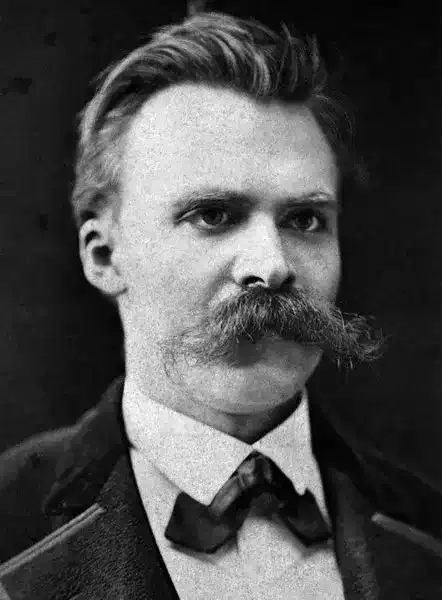
Friedrich Nietzsche
Author of the day

Friedrich Nietzsche

Friedrich Nietzsche was an influential German philosopher, philologist, and cultural critic. His work addresses themes such as morality, religion, truth, art, and the human condition, with a radical critique of traditional Western values. He is known for concepts such as the "death of God", the "superman" (Übermensch), and the "will to power" (Wille zur Macht). His writing is marked by an aphoristic and provocative style, which challenges the reader to rethink their beliefs and values.

Poem of the day

Grass

Carl Sandburg
Pile the bodies high at Austerlitz and Waterloo.
Shovel them under and let me work
-I am the grass; I cover all.

And pile them high at Gettysburg
And pile them high at Ypres and Verdun.
Shovel them under and let me work.
Two years, ten years, and the passengers ask the conductor:

What place is this?
Where are we now?

I am the grass.
Let me work.
Read full poem

Born on this day

2
Marcus Accioly

Marcus Accioly was a Brazilian poet whose works explore the depths of the human soul, with a dense language full of symbolism. His poetry is marked by strong spirituality and a constant search for the transcendent, addressing themes such as loneliness, love, death, and the ephemerality of existence. Accioly developed a unique style, characterized by intrinsic musicality and erudite vocabulary, which earned him a prominent place in contemporary Brazilian poetry. His work invites reflection on the mysteries of life and the universe.

Laurence Whistler

Laurence Whistler was a British poet and writer known for his lyrical style and his reflections on themes such as nature, art, and the inner life. His poetic work is valued for its clarity, musicality, and the depth of his observations.

Died on this day

13
Pedro Henrique Saraiva Leão

Pedro Henrique Saraiva Leão was a Brazilian poet whose work stood out for its originality and lyrical depth. Exploring universal themes such as love, longing, and the ephemerality of life, his poetry is marked by careful language and a unique sensibility. Despite a sometimes discreet literary output, his poetic legacy left a significant mark on Brazilian literature, being recognized for his contribution to contemporary poetry.

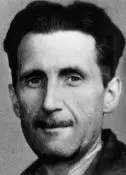
George Orwell

George Orwell, pseudonym of Eric Arthur Blair, was an English novelist, essayist, and journalist. He is widely known for his works of dystopian fiction, with strong social and political criticism. His most famous works, "Animal Farm" and "1984", explore themes of totalitarianism, surveillance, and the manipulation of truth, becoming references in world literature. Orwell also stood out for his investigative journalism and his engagement in social causes.

The great enemy of clear language is insincerity.
Blaise Cendrars

Blaise Cendrars was a Swiss writer and poet, born in La Chaux-de-Fonds, known for his adventurous life and innovative literary style. His works, often autobiographical, explore themes of travel, exile, war, and the search for identity. Cendrars is an important figure of literary modernism, with a dynamic and imagery-rich writing that reflects his intense experiences.

George Augustus Moore

George Augustus Moore was an Irish writer known for his novels and short stories that explored themes of love, art, religion, and the Irish society of his time. His realistic prose and frank approach to controversial subjects distinguished him on the literary scene.

Sandro Penna

Sandro Penna was an Italian poet, known for his lyrical and intimate poetry, which frequently explores themes such as youth, beauty, desire, and melancholy. His work, marked by clear and musical language, and by an apparent formal simplicity, reveals a profound sensibility and a unique vision of the world. Penna maintained a discreet stance throughout his life, dedicating himself entirely to his art.

Manuel Joaquim Dias

Manuel Joaquim Dias was a Portuguese poet, a figure of popular and satirical poetry of the 19th century. His work is marked by a critical and humorous tone, addressing customs and social types of his time with sharpness and insight. Dias's poetry reflects an attentive look at Portuguese society, using irony and satire as tools to comment on reality. His style, while rooted in the tradition of popular poetry, presents an originality in the way it transitions between the social and the personal, constructing a vivid portrait of everyday life. The work of Manuel Joaquim Dias constitutes a valuable record of a specific period in Portuguese cultural history, standing out for its ability to entertain and, at the same time, provoke reflection on human behavior and social structures.

Amato Lusitano

Amato Lusitano was a Renaissance physician and poet, known for his vast medical work and also for his poetic production in Latin. His poetry, although less prominent than his medical career, reflects the humanism and interest in arts and sciences characteristic of his time. His literary contribution, expressed in Latin verses, demonstrates the erudition and sensitivity of a man dedicated to knowledge and beauty. Amato Lusitano exemplifies the figure of the Renaissance intellectual, with multiple talents and a profound impact in his time.

Maria Amélia Marques Neto

Maria Amélia Marques Neto was a Portuguese writer and poet, whose work stands out for its sensitivity and strong connection to Portuguese popular culture and traditions. Her poetic work, often evocative and melancholic, addresses themes such as identity, memory, and the passage of time, using accessible language yet rich in lyricism. She was also an important figure in the dissemination and preservation of cultural heritage, especially concerning oral traditions and popular literature.

António de Cértima

António de Cértima was a Portuguese poet, a name linked to the surrealist movement in Portugal. Although his work is less extensive than that of other contemporaries, his participation in the surrealist group and his contribution to the renewal of Portuguese poetry mark his relevance. His poetry explores the imaginary, the dreamlike, and creative freedom, aligning with the surrealist principles of breaking with conventional logic and exploring the unconscious.

Eugénia de Vasconcelos

Eugénia de Vasconcelos is a notable figure in Portuguese poetry, known for her lyrical sensitivity and exploration of intimate and social themes. Her work, marked by careful language and a strong sense of observation, addresses the human condition, interpersonal relationships, and reflection on the world around her. The poet reveals a unique ability to transform the everyday into poetry, giving it a universal and touching dimension.

Antonio Barolini

Antonio Barolini was a prominent Italian writer, poet, and translator. His work is recognized for its stylistic sophistication and the depth with which he addressed the human experience, with a focus often turned to the complexities of life and art. Barolini stood out for his versatility, moving with mastery between prose and poetry. His writing is marked by sharp sensitivity and the ability to evoke deep emotions and reflections, consolidating him as an important figure in 20th-century Italian literature.