Juan Ramón Jiménez
Author of the day

Juan Ramón Jiménez

Juan Ramón Jiménez was a Spanish poet, awarded the Nobel Prize in Literature in 1956. His work, profoundly marked by symbolism and the desire for "pure poetry," evolved towards an incessant search for beauty and transcendence. His poetry explores themes such as nature, spirituality, love, and the very essence of poetry, with a refined, musical, and visionary style. He is considered one of the great renovators of 20th-century Spanish poetry.

Poem of the day

Do Not Go Gentle Into That Good Night

Dylan Thomas
Do not go gentle into that good night, 
Old age should burn and rave at close of day; 
Rage, rage against the dying of the light. 

Though wise men at their end know dark is right, 
Because their words had forked no lightning they 
Do not go gentle into that good night. 

Good men, the last wave by, crying how bright 
Their frail deeds might have danced in a green bay, 
Rage, rage against the dying of the light. 

Wild men who caught and sang the sun in flight, 
And learn, too late, they grieved it on its way, 
Do not go gentle into that good night. 

Grave men, near death, who see with blinding sight 
Blind eyes could blaze like meteors and be gay, 
Rage, rage against the dying of the light. 

And you, my father, there on that sad height, 
Curse, bless, me now with your fierce tears, I pray. 
Do not go gentle into that good night. 
Rage, rage against the dying of the light.
Read full poem
Quote of the day
We cannot change anything unless we accept it. Condemnation does not liberate, it oppresses.
— Carl Jung
See quote

Born on this day

9
Alexandre S. Santos

Alexandre S. Santos is a contemporary Portuguese poet, whose poetic work is characterized by a deep exploration of the human condition, addressing themes such as the ephemerality of life, the search for meaning, and the individual's relationship with the universe. His writing, marked by introspective lyricism and dense, imagistic language, has been earning a prominent place in current Portuguese poetry.

Morais Filho

Antônio de Morais Filho, known as Morais Filho, was a Brazilian writer and intellectual, with a multifaceted work that spans poetry, prose, and essay. His writing is often associated with a deep reflection on Brazilian culture, identity, and social issues, using a rich and evocative language. Morais Filho left an important legacy, being recognized for his critical insight and his contribution to Brazilian cultural thought.

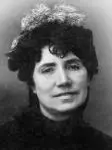
Rosalía de Castro

Rosalía de Castro was a central figure of Galician and Portuguese literature, known for her lyrical poetry and her deep connection to the land and people of Galicia. Her work addresses themes such as saudade (longing), social injustice, the condition of women, and the melancholic beauty of the landscape. She is considered one of the most important voices of the Rexurdimento, a movement of cultural renaissance in Galicia.

Leonardo Aldrovandi

Leonardo Aldrovandi is a poet whose work is distinguished by its lyrical intensity and exploration of profound themes such as memory, time, and the human condition. His poetry is marked by a language rich in imagery and a sensibility that captures the nuances of emotions and existential experiences. With an authentic voice and a style that combines tradition with modernity, Aldrovandi has established himself as a relevant author in the literary landscape, whose verses continue to inspire and provoke reflection in his readers.

Pier Antonio Quarantotti

Pier Antonio Quarantotti was an Italian writer and journalist, whose work focused on social, historical, and cultural themes. A journalist by training, he transferred a keen observational ability and precise language to his literary writing. His writings frequently explored the life and customs of his native land, the Veneto region, offering a vivid portrait of its people and history.

Jesús Lizano

Jesús Lizano was a Spanish poet, novelist, essayist, and literary critic, known for his vast and diverse work. His writing spans from lyrical poetry to narrative and critical reflection, demonstrating remarkable versatility. Associated with surrealism and experimental poetry, Lizano explored new forms of expression, seeking to break with literary conventions. His work is an invitation to explore language and imagination, with a strong innovative streak.

James Scully

James Scully is an American poet and activist known for his visceral and politically engaged poetry, which frequently addresses themes of class, sexuality, and social justice. His work is marked by a raw and direct language, reflecting his experiences and his unvarnished worldview.

Died on this day

7
Luiza Neto Jorge

Luiza Neto Jorge was a Portuguese poet, essayist, and translator. Her poetic work is marked by a deep reflection on the human condition, time, memory, and transcendence, with a refined language and an at times melancholic tone.

José Afonso

José Afonso was a Portuguese singer and songwriter, widely regarded as one of the most important figures in Portuguese protest music. His work, marked by deep poetry and social criticism, echoed the aspirations for freedom and justice of his time, becoming a symbol of resistance against the dictatorship. With a vast and influential discography, José Afonso left a lasting legacy in Portuguese music, with songs that continue to be sung and inspire generations, addressing universal themes such as love, the land, hope, and the struggle for human dignity.

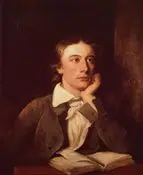
John Keats

John Keats was a leading figure of the second generation of English Romantic poets. Despite a short life, his prolific output of some of the most celebrated odes and sonnets in the English language profoundly impacted literature. His poetry is renowned for its sensory richness, exploration of beauty, and philosophical depth, often delving into themes of love, mortality, and the transient nature of existence. Keats's work, though not widely appreciated during his lifetime, is now considered a cornerstone of Romantic literature, celebrated for its exquisite craftsmanship and emotional intensity.

A Draught Of Sunshine
Paul Claudel

Paul Claudel was a French poet, playwright, and diplomat. He is considered one of the greatest French poets of the 20th century. His poetic work is marked by a deep lyricism and strong spirituality, influenced by his conversion to Catholicism. His plays, on the other hand, explore themes such as sin, redemption, and faith, with a grandiose and symbolic style.

Stefan Zweig

Stefan Zweig was an Austrian writer, playwright, journalist, and activist. His work, written in German, is known for its lyricism, psychological depth, and exploration of themes such as love, identity, and destiny. He became one of the most translated and popular authors of his time.

Alan Brownjohn

Alan Brownjohn is an English poet and literary critic, known for his poetry that reflects on life in post-war Britain, addressing themes such as social change, popular culture, and the urban experience with a lucid and often ironic perspective. His work is characterized by clear and direct language, combined with careful observation of the nuances of daily life and cultural transformations. He frequently explores the relationship between the individual and society, questioning established norms and values. Throughout his career, Brownjohn has maintained a commitment to the realistic representation of the world around him, avoiding rhetorical excesses and focusing on the authenticity of his observations. His poetry has a reflective and critical quality, inviting readers to consider the complexities of their time. As a critic, he has also contributed to the understanding of modern poetry, offering insightful analyses of other writers. He is recognized as an important voice in contemporary English poetry, appreciated for his integrity and his ability to capture the spirit of his age.

Luis Palés Matos

Luis Palés Matos was a central figure in 20th-century Puerto Rican and Latin American poetry, known primarily as the foremost exponent of "Afro-Antilleanism" in lyric poetry. His work is characterized by the fusion of African, Antillean, and Spanish elements, creating poetry of great musicality, sensuality, and vitality. Through rich and evocative language, he explored themes such as Caribbean identity, the sensuality of tropical nature, and the influence of African culture on the soul of the Caribbean. His poetry is a celebration of life, race, and the land of his birth, marked by unmistakable rhythm and sonority.