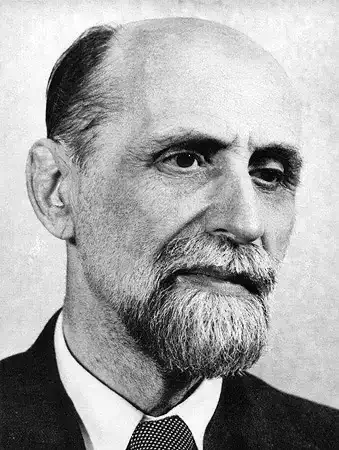
Bertolt Brecht
Author of the day

Bertolt Brecht

Bertolt Brecht was a highly influential German playwright, poet, and theatre director. He is renowned for his pioneering work in epic theatre, which aimed to provoke critical thought rather than emotional immersion. His writings often carried strong political and social messages, critiquing capitalism, war, and injustice. Brecht's innovative techniques, such as the alienation effect (Verfremdungseffekt), revolutionized modern theatre.

Poem of the day

Grass

Carl Sandburg
Pile the bodies high at Austerlitz and Waterloo.
Shovel them under and let me work
-I am the grass; I cover all.

And pile them high at Gettysburg
And pile them high at Ypres and Verdun.
Shovel them under and let me work.
Two years, ten years, and the passengers ask the conductor:

What place is this?
Where are we now?

I am the grass.
Let me work.
Read full poem

Born on this day

10
João Moura Jr.

João Moura Jr. is a poet and essayist whose work is distinguished by its deep reflection on the human condition and its relationship with time and memory. His writing, marked by careful language and lyrical sensibility, addresses themes such as identity, the ephemerality of life, and the search for meaning. João Moura Jr.'s poetry invites the reader to an introspective dive, exploring the nuances of emotions and experiences.

Olegário Mariano

Olegário Mariano was a Brazilian poet, known for his lyrical poetry and for his themes of love and nature. His work is marked by a delicate and musical style, with strong influences from Parnassianism and Symbolism, although he developed his own distinctive voice. He is considered one of the representatives of the so-called "generation of 1910" of Brazilian poetry, standing out for the formal beauty and sensitivity of his verses.

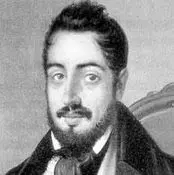
Mariano José de Larra

Mariano José de Larra was a Spanish journalist, essayist, and playwright, a prominent figure of Romanticism in Spain. Known for his 'costumbrista' articles, in which he criticized the Spanish society and politics of his time with irony and sharpness.

Jomi García Ascot

Jomi García Ascot was a Spanish poet, translator, and professor, exiled in Mexico after the Spanish Civil War. His poetic work is marked by longing for his lost homeland, reflection on exile, and the search for a language that would express the complexity of his existential experience. He was also an important promoter of Hispanic culture in Mexico.

Mario Bojórquez

Mario Bojórquez is a Mexican poet and translator, recognized for his contribution to contemporary Spanish-language poetry. His poetic work is often marked by dense language, with reflections on identity, memory, the body, and the landscape, often with an existential touch and a particular sound. Bojórquez also stands out as an important promoter of literature, acting as a translator and editor, connecting different literary traditions. His poetic sensibility and formal rigor consolidate him as a relevant figure in the literary scene of his country and beyond.

Jorge Riechmann

Jorge Riechmann is a Spanish poet, translator, and essayist, known for his deep connection with ecology and social criticism. His poetic work, often reflective and committed in nature, addresses themes such as nature, justice, memory, and utopia. He has been an important voice in contemporary Spanish poetry, combining philosophical reflection with vigorous lyricism.

Tirso de Molina

Tirso de Molina, pseudonym of Fray Gabriel Téllez, was a prolific Spanish playwright and poet of the Golden Age. Recognized as one of the pillars of Baroque theater, his work stands out for the creation of complex female characters and the ability to weave plots of love, honor, and comedy. His most famous play, "El burlador de Sevilla y convidado de piedra" (The Trickster of Seville and the Stone Guest), is fundamental to the consolidation of the Don Juan myth. Through his numerous comedies, sacramental plays, and poems, Tirso de Molina explored the human condition, morality, and faith with a vibrant style and great psychological insight, leaving a significant legacy in Spanish literature.

Died on this day

3
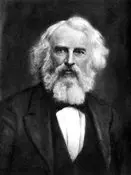
Henry Wadsworth Longfellow

Henry Wadsworth Longfellow was an American poet and educator, celebrated for his lyrical verse and narrative poems. His work often drew inspiration from mythology, history, and American folklore, making complex themes accessible to a wide audience. He became one of the most popular poets of his time, both in the United States and abroad, though his literary reputation has evolved over the years. Longfellow's poems frequently explored themes of heroism, domestic life, and the passage of time. His accessible style and moralistic undertones resonated deeply with Victorian sensibilities, cementing his status as a beloved literary figure. Despite later critical re-evaluations, his contributions to American literature and his role in shaping national identity through verse remain significant.

So pitiful as these!
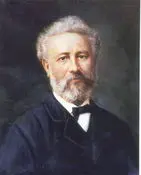
Júlio Verne

Jules Verne was a prominent French writer, born in Nantes in 1828, widely regarded as one of the fathers of science fiction. He is celebrated for his adventure novels that frequently explored the potential of technology and scientific exploration, such as 'Twenty Thousand Leagues Under the Seas' and 'Around the World in Eighty Days'. Verne was known for his vivid imagination and for predicting many inventions and concepts that would later become a reality. His works continue to inspire readers and scientists worldwide, capturing the spirit of discovery and curiosity about the unknown.

José dos Santos Ferreira

José dos Santos Ferreira, known as Q302250 on Wikidata, was a poet whose work is part of the context of interventionist poetry with a strong social and political tone. His writing is marked by a deep sense of justice and a commitment to denouncing oppression and inequalities. His poetry, with direct language and a vehement tone, sought to give voice to the marginalized and inspire the struggle for a more just world.