Juan Ramón Jiménez
Author of the day

Juan Ramón Jiménez

Juan Ramón Jiménez was a Spanish poet, awarded the Nobel Prize in Literature in 1956. His work, profoundly marked by symbolism and the desire for "pure poetry," evolved towards an incessant search for beauty and transcendence. His poetry explores themes such as nature, spirituality, love, and the very essence of poetry, with a refined, musical, and visionary style. He is considered one of the great renovators of 20th-century Spanish poetry.

Poem of the day

Do Not Go Gentle Into That Good Night

Dylan Thomas
Do not go gentle into that good night, 
Old age should burn and rave at close of day; 
Rage, rage against the dying of the light. 

Though wise men at their end know dark is right, 
Because their words had forked no lightning they 
Do not go gentle into that good night. 

Good men, the last wave by, crying how bright 
Their frail deeds might have danced in a green bay, 
Rage, rage against the dying of the light. 

Wild men who caught and sang the sun in flight, 
And learn, too late, they grieved it on its way, 
Do not go gentle into that good night. 

Grave men, near death, who see with blinding sight 
Blind eyes could blaze like meteors and be gay, 
Rage, rage against the dying of the light. 

And you, my father, there on that sad height, 
Curse, bless, me now with your fierce tears, I pray. 
Do not go gentle into that good night. 
Rage, rage against the dying of the light.
Read full poem

Born on this day

12
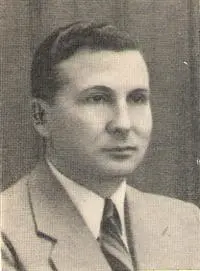
Horácio Dídimo

Horácio Dídimo is a name associated with contemporary Portuguese-language poetry, with a body of work that explores the depths of the human condition, the ephemerality of time, and the search for meaning in a constantly changing world. His writing is characterized by careful language, a strong imagistic charge, and a sensitivity that oscillates between melancholy and hope. His poetry reflects a dialogue with the anxieties of modernity, addressing universal themes through a personal and introspective perspective. Dídimo is recognized for his ability to create dense lyrical atmospheres and for his originality in exploring recurring themes in poetry, such as love, memory, and the passage of life.

Ana Amélia

Ana Amélia is a Portuguese poet known for her introspective lyricism and exploration of themes such as memory, identity, and the passage of time. Her work stands out for the musicality of its verse and the subtlety with which she addresses the complexities of the human experience, often tinged with a serene melancholy. With a style that combines tradition with contemporary sensibility, Ana Amélia has built a body of work that resonates with authenticity and emotional depth, earning her a prominent place in recent Portuguese poetry.

Reis Ventura

Reis Ventura was a Portuguese poet whose work is mainly situated within the context of Neorealism and Social Poetry. Characterized by strong civic intervention and the denunciation of social injustices, his work addresses themes such as poverty, oppression, and the struggle for human dignity. His poetry is marked by a tone of protest and a direct, accessible language.

Fernando Alves dos Santos

Fernando Alves dos Santos was a Portuguese poet associated with the Surrealism movement. His work is marked by the exploration of the unconscious, the dreamlike, and creative freedom, breaking with traditional literary conventions. Surrealist language, with its unexpected associations and strong imagery, seeks to unveil new realities and perspectives on human existence, desire, and perception.

Tito Olívio

Tito Olívio is a poet whose work is distinguished by its lyrical intensity and deep exploration of human emotions. His poetic compositions address universal themes such as love, loss, memory, and the search for meaning, with a language that oscillates between delicacy and expressive strength. His poetry, often marked by a particular sonority and evocative imagery, invites reflection on the human condition and its dilemmas. Tito Olívio constructs a singular poetic universe, where subjectivity intertwines with universality, leaving an indelible mark on the literary landscape.

Maria Teresa Galveias

Maria Teresa Galveias is a Portuguese poet whose work is distinguished by its lyrical sensitivity and exploration of universal themes such as love, loss, and the passage of time. Her poetry is characterized by accessible language, yet imbued with emotional depth, capable of evoking images and feelings that resonate with the reader. Her work contributes to the diversity of contemporary Portuguese-language poetry, consolidating her presence in the literary landscape with verses that reflect a particular vision of the world and human experience.

Dana Gelinas

Dana Gelinas is a well-known author for her writing that straddles the fictional and the essayistic, addressing themes such as identity, memory, and contemporary social dynamics. Her work is marked by an introspective approach and by a keen analysis of human and cultural relationships. Gelinas explores subjectivities and interconnections in a constantly transforming world, using language that seeks clarity and depth. Her texts invite reflection on the human condition and on the challenges of constructing meaning amidst modern complexity.

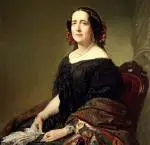
Gertrudis Gómez de Avellaneda

Gertrudis Gómez de Avellaneda was a prominent Cuban writer, recognized for her romantic poetry and theatrical work. Her writing is characterized by passion, emotional intensity, and the exploration of themes such as love, freedom, and justice. Despite facing the social limitations imposed on women of her time, she managed to publish and gain recognition in the literary circles of Spain and America. Her legacy endures as a symbol of the struggle for female artistic expression and a fundamental exponent of Hispanic American Romanticism.

Ricardo E. Molinari

Ricardo E. Molinari was a distinguished Argentine poet and literary critic, recognized for his deep connection to the poetic tradition and his ability to evoke vivid and melancholic images. His work is characterized by careful musicality and a refined language, exploring recurring themes such as the passage of time, memory, nature, and introspection. Molinari developed a prolific career that spanned several decades, establishing himself as an influential figure in his country's literary landscape. His poetry, often tinged with subtle melancholy, invites reflection on the human condition and the transience of existence, earning him a respected place among readers and critics for its authenticity and formal mastery.

Died on this day

10
Herberto Helder

Herberto Helder was a singular and enigmatic Portuguese poet, known for his overwhelming and experimental work that defies easy classification. His poetry is a dense and labyrinthine universe, marked by transgressive language, by the visceral exploration of the body, sexuality, death, and transcendence. Helder is considered one of the most original and influential poets in contemporary Portuguese literature, with a body of work that continues to intrigue and fascinate readers and critics with its radicalism and profound reflection on the human condition and the very nature of language and poetry.

Hélio Pellegrino

Hélio Pellegrino was a Brazilian physician, psychoanalyst, writer, and activist, known for his multifaceted work that spans poetry, fiction, and essays on social and psychoanalytic themes. His writing, often marked by deep sensitivity and a critical eye on the human condition and Brazilian society, explored the complexities of the psyche, love, death, and the search for meaning. Pellegrino left a significant legacy as an engaged intellectual and sensitive artist.

António Homem de Melo

António Homem de Melo was a Portuguese writer, son of the first Count of Melo and D. Maria da Assunção da Silva Pereira. He graduated in Law from the University of Coimbra and practiced law in Porto. He actively collaborated in several literary publications and newspapers, demonstrating an early interest in writing and literary criticism.

D. Gonçalo Coutinho

D. Gonçalo Coutinho, a prominent figure of the 15th century, was a Portuguese nobleman and troubadour whose poetic activity is part of the rich vein of Galician-Portuguese lyric poetry. His work, although inserted in a context of collective song production, reveals a particular sensitivity and a mastery of the metric and thematic forms of the time, reflecting the customs, ideals, and passions of the court and medieval society.

Ana de Castro Osório

Ana de Castro Osório was a Portuguese writer, journalist, republican, and feminist, a pioneer in advocating for the rights of women and children in Portugal. With a vast body of work encompassing children's literature, poetry, and essays, she stood out for her civic and political activism, becoming one of the most influential figures of the republican and feminist movement of her time. Her fight for education, gender equality, and social rights marked her life and writing, leaving a legacy of persistence and commitment to social justice. She was an essential figure in building a more just and egalitarian society in Portugal.

Maria O'Neill

Maria O'Neill was a renowned Portuguese poet whose work is part of the Portuguese surrealist movement, albeit with very personal characteristics. Her poetry is marked by a strong dreamlike quality, a universe of daring images, and a deep exploration of the unconscious, sexuality, and desire. With a life marked by intense experiences and a transgressive stance, Maria O'Neill left a unique poetic legacy, exploring creative freedom and the limits of language. Her work, though sometimes challenging, is fundamental to understanding surrealism in Portugal and poetry written by women in the 20th century.

Rafael Alfaro

Rafael Alfaro is a name associated with several public figures, one of the most prominent being that of a Spanish entrepreneur and philanthropist. His business activities cover different sectors, with a focus on investments and business development. In addition to his business career, Alfaro is recognized for his involvement in philanthropic activities and support for social and cultural causes, demonstrating a commitment to the well-being of the community.

Antón Avilés "de Taramancos"

Antón Avilés "de Taramancos" was an influential Galician poet and cultural activist. His poetic work is a reflection of Galician identity, addressing themes such as land, history, and social struggles. He is known for his strong language and his deep connection with the cultural roots of Galicia. Besides his literary production, Avilés "de Taramancos" played an important role in defending Galician culture and language, being a respected figure for his integrity and passion for his land.

Eunice Odio

Costa Rican poet, Eunice Odio is an essential voice in 20th-century Spanish-language poetry. Her work is distinguished by a profound exploration of the human condition, spirituality, death, and the search for identity, often through language charged with symbolism and powerful imagery. Her poetry transcends geographical and temporal boundaries, inviting existential and transcendent reflection.