Friedrich Nietzsche
Author of the day

Friedrich Nietzsche

Friedrich Nietzsche was an influential German philosopher, philologist, and cultural critic. His work addresses themes such as morality, religion, truth, art, and the human condition, with a radical critique of traditional Western values. He is known for concepts such as the "death of God", the "superman" (Übermensch), and the "will to power" (Wille zur Macht). His writing is marked by an aphoristic and provocative style, which challenges the reader to rethink their beliefs and values.

Poem of the day

Grass

Carl Sandburg
Pile the bodies high at Austerlitz and Waterloo.
Shovel them under and let me work
-I am the grass; I cover all.

And pile them high at Gettysburg
And pile them high at Ypres and Verdun.
Shovel them under and let me work.
Two years, ten years, and the passengers ask the conductor:

What place is this?
Where are we now?

I am the grass.
Let me work.
Read full poem

Born on this day

8
Guilherme de Almeida

Guilherme de Almeida was a Brazilian poet, journalist, and lawyer, a central figure of Parnasianism and Modernism in Brazil. His poetic work, marked by musicality, formal rigor, and nationalist themes, celebrates the Brazilian landscape, history, and culture. Almeida also stood out as an important translator and promoter of foreign literature in Brazil.

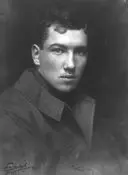
Robert Graves

Robert Graves was an English poet, novelist, and scholar, known for his extensive poetic work and evocative prose. His writing explored themes of mythology, love, war, and the nature of art, often with a personal and reflective touch. Graves left a significant literary legacy, influencing generations of writers with his insight and stylistic mastery.

Carlos D’Alge

Carlos D’Alge is a poet whose work is distinguished by its exploration of subjectivity and the nuances of human experience. His poetry is characterized by refined language and an unparalleled ability to capture deep emotions and reflections. D’Alge has consolidated his presence in the literary landscape through consistent production and a keen eye on the world, which has allowed him to create verses that resonate with readers.

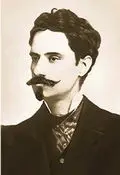
Alphonsus de Guimaraens

Alphonsus de Guimaraens, artistic name of Afonso Henriques de Lima Barreto, was a Brazilian poet, considered the greatest representative of Symbolism in Brazil. His work, marked by profound lyricism, mysticism, and an intense exploration of subjectivity, addresses themes such as death, idealized love, lost childhood, and the search for the transcendent. His poetry is characterized by musical language, full of symbols and ethereal images, which evoke a dreamlike and spiritual universe.

Vitaliano Brancati

Vitaliano Brancati was a prominent Italian novelist and playwright, known for his works exploring life in Sicily and the complexities of the human condition. His writing is characterized by sharp wit, deep empathy for his characters, and a subtle critique of social conventions and hypocrisy. He is particularly famous for novels such as "Il bell'Antonio" and "Donati e compagni". Brancati masterfully captured the nuances of Sicilian culture while addressing universal themes like love, frustration, and the search for identity.

Henrik Pontoppidan

Henrik Pontoppidan was a Danish writer, awarded the Nobel Prize in Literature in 1917, along with Karl Gjellerup. He is known for his novels and short stories that portray rural life in Denmark, focusing on themes such as the conflict between traditional peasantry and modernity, and the struggle for meaning in a changing world. His works often feature penetrating social realism and a deep psychological interest in his characters. Pontoppidan passed away in 1943.

Died on this day

11
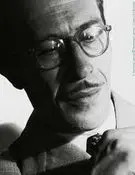
Adolfo Casais Monteiro

Adolfo Casais Monteiro was a Portuguese poet, essayist, and literary critic. He stood out for his poetry, marked by a deep reflection on the human condition, time, and memory, often expressed in restrained lyricism and great formal rigor. His essayistic work addressed crucial themes of Portuguese literature and culture in general, with remarkable analytical insight. He also served as a university professor and an active figure in the cultural landscape, leaving a significant intellectual legacy.

Narcisa Amália

Narcisa Amália was a Brazilian poet, a pioneer in Brazilian women's literature, noted for her strong voice in defense of women's rights and the abolition of slavery. Her work, though sometimes associated with Arcadianism and Romanticism, innovates by addressing social and political issues from a feminist and abolitionist perspective, marking an important chapter in Brazilian literature.

João Augusto Sampaio

João Augusto Sampaio was a poet whose work stood out for its lyrical depth and exploration of existential themes. His poetic compositions are marked by careful language and strong musicality, reflecting a keen sensitivity to the complexities of the human condition. His writing, though sometimes introspective, achieved a universal echo, touching readers through the exploration of life's beauty, melancholy, and mystery. Sampaio left a poetic legacy that continues to be appreciated for its authenticity and its contribution to the richness of Portuguese-language poetry.

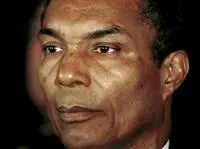
Corsino Fortes

Corsino Fortes was a Cape Verdean poet and professor, whose work stood out for its lyrical depth and reflection on identity, the land, and the human condition. His poetry, marked by a rich and imagistic language, dialogues with African roots and Portuguese heritage, exploring themes such as saudade, memory, and the search for meaning. With a career dedicated to literature and education, Fortes left a poetic legacy that celebrates Cape Verdean culture and questions the complexities of being in the world. His work is a testament to the power of words in evoking landscapes, feelings, and existential reflections.

Mira Schendel

Mira Schendel was a Swiss visual artist and poet, based in Brazil, known for her innovative and experimental approach to visual arts and literature. Her work, often associated with concretism and neoconcretism, explores the relationship between object, text, and space, questioning the boundaries of art and language. As a poet, Schendel stood out for her concise and conceptual writing, often integrated into her installations and visual works. Her poetry is characterized by abstraction, the exploration of the sign, and the dematerialization of the word, inviting the viewer-reader to a profound sensory and intellectual experience.

José Augusto de Castro

José Augusto de Castro was a Portuguese lawyer and poet, known for his poetic work that reflects a romantic and sometimes melancholic sensibility. Although his main activity was law, poetry occupied an important place in his life, manifesting itself in verses that explored themes such as nature, love, and the transience of life. His literary contribution, although part of a broader context of poetic production of his time, left a mark on Portuguese literature for its expressiveness and lyricism.

José Manuel de Vasconcelos

José Manuel de Vasconcelos was a poet whose work is notable for its lyrical depth and reflection on the human condition. He explored themes such as love, longing, and the passage of time, using language rich in imagery and musicality. His poetry is an invitation to introspection and contemplation of the beauty and fragility of existence.

Carmen Jodra Davó

Carmen Jodra Davó is a Spanish writer whose work stands out for its literary quality and exploration of themes that resonate deeply with readers. Her writing is characterized by careful prose and the ability to evoke emotions and reflections. With a keen eye for the complexities of life and human relationships, Jodra Davó constructs narratives that invite introspection. Her work contributes to the contemporary literary landscape with stories that explore the human condition, memory, and the search for meaning, establishing her as a prominent author.