Poem of the day

Do Not Go Gentle Into That Good Night

Dylan Thomas
Do not go gentle into that good night, 
Old age should burn and rave at close of day; 
Rage, rage against the dying of the light. 

Though wise men at their end know dark is right, 
Because their words had forked no lightning they 
Do not go gentle into that good night. 

Good men, the last wave by, crying how bright 
Their frail deeds might have danced in a green bay, 
Rage, rage against the dying of the light. 

Wild men who caught and sang the sun in flight, 
And learn, too late, they grieved it on its way, 
Do not go gentle into that good night. 

Grave men, near death, who see with blinding sight 
Blind eyes could blaze like meteors and be gay, 
Rage, rage against the dying of the light. 

And you, my father, there on that sad height, 
Curse, bless, me now with your fierce tears, I pray. 
Do not go gentle into that good night. 
Rage, rage against the dying of the light.
Read full poem

Born on this day

11
Paulo Leminski

Paulo Leminski was a Brazilian poet, translator, literary critic, and professor. Recognized for his innovative and experimental work, he moved between poetry, prose, and criticism, exploring new languages and forms of expression. His literary production is marked by creative freedom, humor, metalinguistics, and the influence of various cultural traditions, including Eastern and indigenous ones. Leminski left a significant legacy in Brazilian literature, with a body of work that continues to be studied and celebrated for its originality and depth.

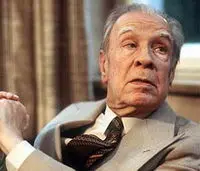
Jorge Luis Borges

Jorge Luis Borges was an Argentine writer, poet, essayist, and translator. His work is characterized by its philosophical depth, intricate plots, and exploration of themes such as time, infinity, identity, and the nature of reality. Borges is considered one of the most significant literary figures of the 20th century, renowned for his innovative use of literary devices and his profound influence on postmodern literature.

Adam Cast Forth
Cleise Mendes

Cleise Mendes is a Brazilian poet whose work is characterized by lyrical delicacy and the ability to evoke deep and universal feelings. Her poetry explores themes such as love, saudade (longing), the passage of time, and introspection, using accessible language that is nevertheless rich in symbolism. With writing that flows with naturalness and melody, Mendes constructs a poetic universe where the beauty of everyday life intertwines with existential reflections, captivating readers with her sensitivity and the way she translates human emotions into touching verses.

Donizete Galvão

Donizete Galvão is a contemporary Brazilian poet, recognized for his poetry that oscillates between lyricism and social criticism, often addressing themes such as identity, memory, the city, and the complexities of human existence. His work is marked by precise language and a sensitive and insightful view of the world.

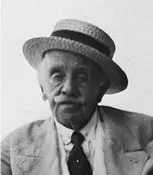
Max Beerbohm

Sir Henry Maximilian Beerbohm was an English writer, essayist, critic, and caricaturist. Known for his elegant and witty style, he stood out in the literature of his time. His most famous work is "The Works of Max Beerbohm" (1921), a collection of his essays, and the novel "Zuleika Dobson" (1911). Beerbohm was also a talented caricaturist, producing satirical portraits of prominent figures of Edwardian society.

Leonoreta Leitão

Leonoreta Leitão is a figure associated with poetry, with a work that stands out for its ability to express the complexity of human emotions and the beauty of the world. Her writing is marked by evocative language and deep sensitivity, exploring themes such as identity, nature, and the passage of time. Her poetic voice offers a unique and introspective perspective on the experience of being in the world.

Rafael Soto Vergés

Rafael Soto Vergés is a Spanish writer and poet. His work spans various literary genres, with a style that frequently explores the human condition and contemporary society. He is known for his ability to create engaging and poetic narratives that resonate with readers through his expressive language and universal themes. His contribution to Spanish literature is marked by the depth and originality of his writing.

Died on this day

16
Bulhão Pato

Joaquim de Araújo Pato Moniz Barreto Castelo Branco, better known as Bulhão Pato, was a Portuguese poet and politician whose work belongs to the Romantic period. His poetry is marked by strong lyricism, with themes that address love, country, nature, and the feeling of saudade (longing), characteristics typical of the era. As a political figure, he actively participated in Portugal's public life. Bulhão Pato left a literary legacy that reflects the sensibilities and concerns of his time, establishing himself as an important representative of Portuguese Romantic poetry.

Eduardo White

Eduardo White is a poet recognized for his work that oscillates between lyricism and reflection on existence. His poetry, often marked by an evocative and imagistic language, explores universal themes such as time, memory, and the search for meaning. His writing demonstrates a deep sensitivity to the complexities of the human condition, addressing them with a singular poetic voice.

Dom Francisco Manuel de Melo

Dom Francisco Manuel de Melo was an influential Portuguese military officer, politician, and writer, known for his vast body of work that spans poetry, prose, and theater. His literary production reflects the complexity of Baroque society, addressing themes such as honor, religion, the human condition, and social relations with a rich and erudite style. A multifaceted figure of the 17th century, Melo played important roles in administration and diplomacy, but it is in literature that his legacy endures. His works are a testament to his intelligence and critical vision, marking Portuguese literature with their depth and expressiveness.

João das Neves

João das Neves was a Portuguese poet whose words explored the depths of the human soul and the complexity of the universe. His work, marked by rich and imaginative language, moved between lyricism and existential reflection, addressing universal themes such as love, death, and the ephemerality of time. The ability to capture the essence of human emotions and dilemmas in concise and powerful verses solidified his place in Portuguese-language poetry.

Luís Amaro

Luís Amaro is a contemporary Portuguese poet, recognized for his work that oscillates between confessional lyricism and reflection on the human condition. His poetry explores themes such as love, memory, the passage of time, and the search for meaning in a constantly changing world. Amaro stands out for the musicality of his verses and his ability to evoke deep emotions.

Luís Gama

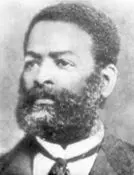
Luís Gonzaga Pinto da Gama was a self-taught lawyer, journalist, writer, and Brazilian abolitionist. Born to a free African mother and a white father, he was illegally sold into slavery at the age of ten, but regained his freedom and became one of the most important intellectuals and activists for the abolitionist cause in Brazil. His literary work and legal activism were fundamental in the fight against slavery and for human dignity.

Simone Weil

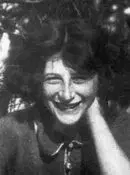
Simone Weil was a French-Jewish philosopher, mystic, and political activist. She is known for her works on the human condition, social justice, and religious experience. Weil was a renowned intellectual who was deeply interested in the social and political problems of her time.

All sins are attempts to fill voids.
Karel Van De Woestijne

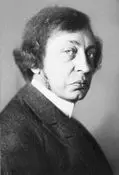
Karel Van de Woestijne was a Belgian poet and literary critic, considered one of the central figures of Flemish modernism. His work, marked by introspective and symbolist lyricism, often explores themes of spirituality, decadence, and the search for transcendence. He is known for his rich and evocative language, which influenced generations of Dutch-language poets.

Pentti Saarikoski

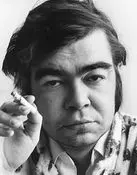
Pentti Saarikoski was a Finnish poet and writer, a central figure in post-war Finnish poetry. His work is known for its lyrical intensity, its reflections on the human condition, society, and identity, and its formal experimentation. Saarikoski is considered one of Finland's most important poets, whose work continues to resonate for its honesty and depth.

Félix Horta

Félix Horta is a poet whose work is characterized by the exploration of themes such as memory, the passage of time, and the search for meaning in a constantly changing world. His poetry reveals a refined sensitivity to the details of everyday life, transfiguring them into reflections on the human condition and the ephemerality of existence. With a language that oscillates between simplicity and depth, Félix Horta constructs a poetic universe that invites contemplation and introspection. His writing is an invitation to rediscover the world through an attentive and lyrical gaze, solidifying his position as an attentive observer of life's complexities.

João Caetano

João Caetano was a Portuguese actor and playwright, a prominent figure in 19th-century theater. He stood out for his stage versatility, interpreting a wide range of roles and being recognized for his dedication to his characters. As an author, he contributed several plays that reflected the taste and theatrical conventions of his time, consolidating his name in the Portuguese artistic landscape.

Michel Butor

Michel Butor was an influential French novelist and essayist, associated with the Nouveau Roman. His work is characterized by formal experimentation, exploration of the novel's structure, and interrogation of reality.