Poem of the day

Do Not Go Gentle Into That Good Night

Dylan Thomas
Do not go gentle into that good night, 
Old age should burn and rave at close of day; 
Rage, rage against the dying of the light. 

Though wise men at their end know dark is right, 
Because their words had forked no lightning they 
Do not go gentle into that good night. 

Good men, the last wave by, crying how bright 
Their frail deeds might have danced in a green bay, 
Rage, rage against the dying of the light. 

Wild men who caught and sang the sun in flight, 
And learn, too late, they grieved it on its way, 
Do not go gentle into that good night. 

Grave men, near death, who see with blinding sight 
Blind eyes could blaze like meteors and be gay, 
Rage, rage against the dying of the light. 

And you, my father, there on that sad height, 
Curse, bless, me now with your fierce tears, I pray. 
Do not go gentle into that good night. 
Rage, rage against the dying of the light.
Read full poem

Born on this day

15
António Gedeão

António Gedeão was the literary pseudonym of Rómulo de Carvalho, a notable Portuguese poet and essayist. His poetic work is marked by the fusion of science and poetry, exploring themes such as the universe, time, matter, and human knowledge with an accessible yet profound language. Recognized for his ability to translate scientific concepts into poetic imagery, Gedeão left an important legacy in 20th-century Portuguese literature, being one of the greatest names in Portuguese neo-realism and modernism.

Luís Represas

Luís Represas is a Portuguese poet known for his lyrical and introspective work, marked by the exploration of themes such as time, memory, loneliness, and the search for meaning. His poetry is characterized by careful language, sometimes melancholic, and by strong musicality, which brings him closer to other arts. In addition to his literary career, Represas is recognized for his work as a musician and composer, which gives a particular dimension to his artistic expression, merging the sensibilities of poetry and song.

Célia Lamounier de Araújo

Célia Lamounier de Araújo is a Brazilian writer whose work stands out in the field of children's and young adult literature. With a career dedicated to education and literary creation, she has contributed to the enrichment of the literary collection for children and young people in Brazil. Her writing, often marked by educational themes, human values, and imagination, seeks to captivate the young reader and stimulate their development.

Sousa Caldas

Sousa Caldas, a Portuguese poet, dedicated his life to the art of the word, exploring themes such as saudade, love, and nature with pronounced lyrical sensitivity. His work reflects a deep connection to the land and traditions, expressed through careful and musical language.

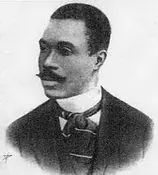
Cruz e Sousa

João da Cruz e Sousa was a Brazilian poet, a prominent figure of Symbolism, known by his artistic name Cruz e Sousa. His poetic work is marked by deep spirituality, mysticism, musicality, and innovative use of language, exploring the transcendent and the ethereal. He faced racial prejudice and poverty throughout his life, which is reflected in his writing with themes of pain, suffering, and the search for redemption through art.

Maria Gabriela Llansol

Maria Gabriela Llansol was a writer and translator of great sensitivity, whose work is distinguished by its philosophical depth and exploration of the human condition. Her writing, often marked by a confessional and introspective tone, addresses themes such as memory, identity, solitude, and the search for meaning in a complex world. Llansol stood out for her precise and evocative language, creating unique literary universes that invite reflection on existence and its multiple facets.

José Luis Mendonça

José Luís Mendonça, a recognized Angolan poet, stood out for his lyrical voice and for the way his work intertwines with the complexities of identity, history, and the human condition in Africa. His poetry is an invitation to reflect on collective and individual experiences, marked by evocative language and profound sensitivity. Mendonça is an essential figure in Portuguese-language African literature, whose writing continues to inspire and provoke debate.

Jaime de Figueiredo

Jaime de Figueiredo was a Portuguese poet, whose work stands out for its connection to literary movements of the first half of the 20th century. His poetic compositions frequently explore the human dimension, the existential condition, and social reality, reflecting a keen eye for the complexities of the world and the individual. His poetic output is marked by a language that oscillates between the lyrical and the reflective, seeking to capture the essence of emotions and experiences.

Raffaello Baldini

Raffaello Baldini was an Italian poet and writer, known for his poetry that delves into the landscapes and culture of Romagna, his native land. His work stands out for its colloquial language, musicality, and ability to evoke daily life with simplicity and depth. Baldini moved between the Romagnol dialect and standard Italian, exploring the nuances of regional identity. His poetry is often marked by a melancholic and ironic tone, addressing themes such as memory, time, the passage of life, and human relationships. Baldini is recognized for giving voice to common experiences, transforming the particular into the universal through his lyrical sensibility and his keen eye for detail.

Roque Dalton

Roque Dalton García was a Salvadoran poet, journalist, and political activist, a key figure in 20th-century Central American literature. His poetic work is characterized by a deep connection to the social and political reality of his country, addressing themes such as injustice, revolution, and Latin American identity with a vigorous and often ironic language. Despite his intense literary activity, his life was marked by exile and armed struggle, which significantly influenced his writing, imbuing it with a unique urgency and testimonial weight. His legacy endures as a symbol of resistance and the pursuit of social justice through poetic word.

Died on this day

7
Rodrigues de Abreu

Rodrigues de Abreu was a writer whose literary output, although less explored in depth by specialized criticism, offers a valuable glimpse into the literature of his time. His work reflects a remarkable capacity for social observation and a particular attention to the nuances of human language and thought. Through writing that moves between the narrative and the reflective, Abreu left a record that contributes to the understanding of the literary evolution and aesthetic concerns of his era. His legacy lies in the authenticity of his voice and in how he captured the essence of his observations.

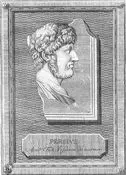
Aulo Pérsio Flaco

Aulus Persius Flaccus, more commonly known as Persius, was a Roman poet from Cisalpine Gaul, born in Volterra, Etruria. Although his work is relatively small, consisting of six satires, it is considered a landmark in Latin literature for its philosophical depth and complex style. Persius belonged to the Stoic school, and his satires reflect the ideals and concerns of this philosophy.

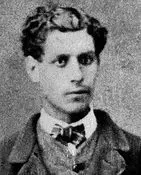
Conde de Lautréamont

The Count of Lautréamont, pseudonym of Isidore Lucien Ducasse, was a Franco-Uruguayan writer, known for his visionary and dark work. His writing, which challenged the literary conventions of his time, profoundly influenced movements such as surrealism and symbolism. His most famous work, 'The Songs of Maldoror', is a poetic and disturbing narrative that explores themes such as evil, rebellion, and criticism of bourgeois society, marked by bold language and shocking imagery.

Hans Magnus Enzensberger

Hans Magnus Enzensberger was a prominent German poet, writer, editor, and political activist. His work is known for its intelligence, irony, and social and political engagement. He addressed a wide range of themes, from criticism of consumer society to the analysis of the complexities of international politics. Throughout his career, Enzensberger explored various literary genres, including poetry, essays, fiction, and documentaries. His writing frequently challenged conventions and provoked critical thinking. He was an influential figure in German and international literature, receiving numerous awards for his literary and intellectual contributions.

Léon-Paul Fargue

Léon-Paul Fargue was a French poet and writer. He is associated with the Surrealist movement and is known for his lyrical and imagistic poetry. His works often capture the atmosphere of Paris and explore themes of love, time, and memory.

António dos Santos Vicente

António dos Santos Vicente was a Portuguese poet, whose work is distinguished by its lyrical depth and exploration of existential themes and the human condition. His poetry, though sometimes discreet in terms of public notoriety, represents a collection of reflection and sensibility, contributing to the richness of poetic expression in the Portuguese language.