Poem of the day

Do Not Go Gentle Into That Good Night

Dylan Thomas
Do not go gentle into that good night, 
Old age should burn and rave at close of day; 
Rage, rage against the dying of the light. 

Though wise men at their end know dark is right, 
Because their words had forked no lightning they 
Do not go gentle into that good night. 

Good men, the last wave by, crying how bright 
Their frail deeds might have danced in a green bay, 
Rage, rage against the dying of the light. 

Wild men who caught and sang the sun in flight, 
And learn, too late, they grieved it on its way, 
Do not go gentle into that good night. 

Grave men, near death, who see with blinding sight 
Blind eyes could blaze like meteors and be gay, 
Rage, rage against the dying of the light. 

And you, my father, there on that sad height, 
Curse, bless, me now with your fierce tears, I pray. 
Do not go gentle into that good night. 
Rage, rage against the dying of the light.
Read full poem

Born on this day

10
Arlindo Barbeitos

Arlindo Barbeitos is an Angolan poet whose work is part of the rich tradition of Portuguese-language literature, addressing crucial themes such as national identity, African cultural heritage, the fight for freedom, and social criticism. His poetry is marked by a strong symbolic charge and a deep sense of belonging, exploring the complexities of Angolan reality and the quest for a just and sovereign future. Barbeitos is an important voice in contemporary African poetry.

Carlos Fino

Carlos Fino is a contemporary Portuguese poet, known for his intimate and reflective lyricism. His work explores themes such as the passage of time, memory, and the human condition, with a refined language and a melancholic, yet hopeful tone. Throughout his career, he has been consolidating his own style, marked by the musicality of verse and the depth of his poetic imagery, earning a prominent place in current Portuguese poetry.

Leal de Souza

Leal de Souza was a poet whose work stands out for its lyrical depth and exploration of themes such as identity, memory, and the individual's relationship with the world. His writing, often introspective, invites reflection on the human condition and its diverse facets. Through careful language and sharp sensibility, he left a relevant contribution to contemporary poetry.

Mafalda Veiga

Mafalda Veiga is a Portuguese singer and songwriter who emerged on the music scene in the 90s, standing out for her peculiar voice and her introspective and poetic lyrics. Throughout her career, she has explored sounds ranging from pop to rock, always with a strong lyrical component in her songs. Her compositions address everyday themes, human relationships, existential questions, and a particular sensitivity to melancholy and reflection, winning a loyal audience and consolidating her position in Portuguese music.

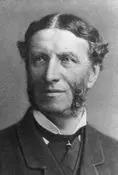
Matthew Arnold

Matthew Arnold (24 December 1822 – 15 April 1888) was an English poet and cultural critic. He was Professor of Poetry at the University of Oxford from 1857 to 1867. Arnold is remembered today for his poetry and for his critical insights into the social and religious trends of his time. He is also one of the most influential examiners of the 19th century. He was the son of Thomas Arnold, headmaster of Rugby School and historian.

Have something to say and say it as clearly as you
Félix Horta

Félix Horta is a poet whose work is characterized by the exploration of themes such as memory, the passage of time, and the search for meaning in a constantly changing world. His poetry reveals a refined sensitivity to the details of everyday life, transfiguring them into reflections on the human condition and the ephemerality of existence. With a language that oscillates between simplicity and depth, Félix Horta constructs a poetic universe that invites contemplation and introspection. His writing is an invitation to rediscover the world through an attentive and lyrical gaze, solidifying his position as an attentive observer of life's complexities.

Paulo Quintela

Paulo Quintela was a notable Portuguese philologist and university professor. He dedicated a large part of his career to the study of Portuguese literature and language, with a special emphasis on medieval literature and Portuguese philology studies. His work contributed significantly to the understanding and dissemination of Portugal's literary and linguistic heritage.

Ramiro Guedes de Campos

Ramiro Guedes de Campos was a Portuguese poet known for his intimate and reflective poetry. Although his work was not extensively published during his lifetime, it reveals a deep sensitivity in exploring themes such as the fleetingness of time, memory, and the human condition. His style is characterized by the musicality of his verse and the use of evocative imagery, placing him in continuity with Portuguese lyric poetry.

Diego Jesús Jiménez

Diego Jesús Jiménez was a Spanish poet whose work is distinguished by its lyrical depth and the incessant search for a language that translates the nuances of human experience. His poetry explores themes such as memory, time, identity, and the individual's relationship with the world. With keen sensitivity, Jiménez addressed the beauty and melancholy of existence in his verses, using a refined and reflective style. His contribution to contemporary Spanish poetry is notable for its authenticity and the expressive force of his writing.

Died on this day

6
Louis Aragon

Louis Aragon was a prominent French poet, novelist, and journalist. He is considered one of the founders of Surrealism and an important figure in 20th-century French literature. His work covers a wide range of themes, including love, politics, and the human condition.

We know that the nature of genius is to provide id
José Joaquim de Torres

José Joaquim de Torres was a Portuguese poet known for his lyrical work, marked by deep sensitivity and reflection on universal themes. His poetry explores the human condition, the passage of time, and the search for meaning, using language rich in imagery and musicality. Despite a less extensive output, his work stands out for its aesthetic quality and its ability to evoke deep emotions in readers.

Nuno Álvares Pereira Pato Moniz

Nuno Álvares Pereira Pato Moniz was a Portuguese poet whose work is part of the symbolism movement, exploring the musicality of the word and the suggestion of states of mind. His poetic compositions are marked by an ethereal atmosphere and a search for transcendence. His literary production, although concise in volume, left a mark for the delicacy and depth of his aesthetic and spiritual explorations, contributing to the renewal of Portuguese poetry in his time.

Biagio Marin

Biagio Marin was an Italian poet and linguist, known for his poetic work that celebrates the culture and landscape of the Istrian region, combining elements of the lyrical tradition with an innovative language deeply connected to the land and its cultural roots. His poetry is a testament to his identity and his deep love for his territory.

Arturo Barea

Arturo Barea was a Spanish writer and journalist, exiled in the United Kingdom after the Spanish Civil War. He is mainly known for his autobiographical work "The Forging of a Rebel", a trilogy that narrates his experiences in Spain in the early 20th century, the Civil War, and his subsequent exile. His work is characterized by a deep social commitment, a critical view of Spanish reality, and a vivid and moving prose that portrays the life of the popular classes and the complexity of Spanish history.