Today

25 de May

Monday

11 Born on this day 8 Died on this day
Bertolt Brecht
Author of the day

Bertolt Brecht

Bertolt Brecht was a highly influential German playwright, poet, and theatre director. He is renowned for his pioneering work in epic theatre, which aimed to provoke critical thought rather than emotional immersion. His writings often carried strong political and social messages, critiquing capitalism, war, and injustice. Brecht's innovative techniques, such as the alienation effect (Verfremdungseffekt), revolutionized modern theatre.

Poem of the day

Grass

Carl Sandburg
Pile the bodies high at Austerlitz and Waterloo.
Shovel them under and let me work
-I am the grass; I cover all.

And pile them high at Gettysburg
And pile them high at Ypres and Verdun.
Shovel them under and let me work.
Two years, ten years, and the passengers ask the conductor:

What place is this?
Where are we now?

I am the grass.
Let me work.
Read full poem

Born on this day

11
Theodore Roethke

Theodore Roethke was an influential American poet known for his profound explorations of nature, the human psyche, and the existential condition. His work, marked by intense lyricism and a strong connection to the natural world, evolved from early symbolism to a more direct and introspective exploration. Roethke is remembered for his formal mastery and his ability to evoke inner and outer landscapes with equal vividness. Considered one of the most important American poets of his generation, Roethke left a lasting legacy through his poetry, which continues to resonate for its emotional honesty and profound observation of the world. His writing is characterized by a distinct musicality and powerful imagery, capturing both the beauty and the anguish of existence.

José Maria de Barros Pinho

José Maria de Barros Pinho, better known as Ary dos Santos, was a Portuguese poet of great relevance, a prominent figure of the so-called Intervention Poetry. His work is marked by a strong sense of social and political criticism, addressing themes such as oppression, freedom, and injustice. With direct and passionate language, Ary dos Santos became an influential voice in the fight against the dictatorship in Portugal, echoing the aspirations of a generation and leaving a lasting legacy in protest and intervention poetry.

Gonçalo Soares da Franca

Gonçalo Soares da Franca was a Portuguese poet whose work is notable for its exploration of existential themes and the musicality of his verses. His writing reflects a profound sensibility and a unique ability to translate the complexities of the human soul into words. His literary career contributed to the richness of Portuguese-language poetry.

João Adolfo Hansen

João Adolfo Hansen is an important Brazilian poet and literary critic, known for his work that moves between lyrical poetry and essayistic reflection. His poetry is marked by precise language, a deep knowledge of literary tradition, and a constant questioning of language, art, and the human condition. Hansen is a central figure in contemporary Brazilian criticism and poetry, with a body of work that reflects intellectual maturity and aesthetic sensibility.

Pedro Henrique Saraiva Leão

Pedro Henrique Saraiva Leão was a Brazilian poet whose work stood out for its originality and lyrical depth. Exploring universal themes such as love, longing, and the ephemerality of life, his poetry is marked by careful language and a unique sensibility. Despite a sometimes discreet literary output, his poetic legacy left a significant mark on Brazilian literature, being recognized for his contribution to contemporary poetry.

Edward Bulwer-Lytton

Edward George Earle Lytton Lytton Bulwer, 1st Baron Lytton, was a prolific English writer, poet, and politician. Author of highly successful historical and social novels, his works often explored themes of mystery, romance, and adventure. He was also a noted playwright and a politician who served in the House of Commons.

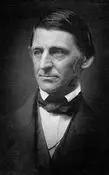
Ralph Waldo Emerson

Ralph Waldo Emerson was a pivotal American essayist, lecturer, philosopher, and poet, widely regarded as the leader of the Transcendentalist movement. His philosophy emphasized individualism, self-reliance, the divinity of nature, and the inherent goodness of humanity. Emerson's prolific writings and eloquent lectures profoundly influenced American thought, literature, and culture, advocating for a spiritual and intellectual awakening distinct from European traditions. His ideas continue to inspire discussions on personal freedom, environmentalism, and the pursuit of truth.

Finish each day before you begin the next, and int
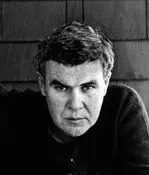
Raymond Carver

Raymond Carver was an American writer known for his concise and realistic prose, often focusing on the lives of the working class and their challenges. His work, characterized by economy of language and psychological depth, portrays characters in moments of crisis and transition, exploring loneliness, disillusionment, and the search for meaning in an apparently mundane world. Carver is considered a prominent figure in literary minimalism.

Eugénio Lisboa

Eugénio Lisboa was a Portuguese poet, essayist, and university professor, a prominent figure in contemporary literature. His poetic work, marked by existential reflection and social criticism, explores themes such as identity, memory, and time with a refined language and a unique sensibility. He was also a notable literary critic and a profound connoisseur of Fernando Pessoa's work, having dedicated important studies to the poet.

Died on this day

8
Júlio Dantas

Júlio Dantas was a prominent Portuguese doctor, playwright, poet, and politician. He distinguished himself through his literary work, especially theater, where he addressed historical and social themes with an elaborate style and a strong civic component. He was also an influential figure in Portuguese public life.

Guerra-Duval

Detailed biographical information about Guerra-Duval is not publicly available. Given the scarcity of data, it is presumed to be a lesser-known literary figure or a pseudonym whose real identity and work have not been widely documented in accessible records.

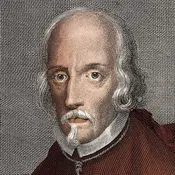
Calderón de la Barca

Pedro Calderón de la Barca was a Spanish playwright and writer of the Golden Age. Born in Madrid in 1600, he is considered one of the greatest names in Spanish theater, succeeding Lope de Vega in popularity. His work is known for its philosophical depth, poetic complexity, and exploration of themes such as free will, destiny, and honor.

Eduardo Lizalde

Eduardo Lizalde was a Spanish poet, essayist, and literary critic, whose work is marked by a profound reflection on existence, art, and the human condition. His poetry, often enigmatic and philosophical, invites introspection and questioning. Lizalde also stood out for his activity as a critic, incisively analyzing literature and culture.

Jesús Lizano

Jesús Lizano was a Spanish poet, novelist, essayist, and literary critic, known for his vast and diverse work. His writing spans from lyrical poetry to narrative and critical reflection, demonstrating remarkable versatility. Associated with surrealism and experimental poetry, Lizano explored new forms of expression, seeking to break with literary conventions. His work is an invitation to explore language and imagination, with a strong innovative streak.