Federico García Lorca
Author of the day

Federico García Lorca

Federico García Lorca was a Spanish poet, playwright, and theatre director, widely regarded as one of the most important figures of the Generation of '27. His work is characterized by its lyrical intensity, exploration of Andalusian folklore, and profound engagement with themes of love, death, desire, and social injustice. Lorca's poetic and dramatic output, infused with elements of surrealism and symbolism, has had a lasting impact on Spanish and world literature.

Poem of the day

Do Not Go Gentle Into That Good Night

Dylan Thomas
Do not go gentle into that good night, 
Old age should burn and rave at close of day; 
Rage, rage against the dying of the light. 

Though wise men at their end know dark is right, 
Because their words had forked no lightning they 
Do not go gentle into that good night. 

Good men, the last wave by, crying how bright 
Their frail deeds might have danced in a green bay, 
Rage, rage against the dying of the light. 

Wild men who caught and sang the sun in flight, 
And learn, too late, they grieved it on its way, 
Do not go gentle into that good night. 

Grave men, near death, who see with blinding sight 
Blind eyes could blaze like meteors and be gay, 
Rage, rage against the dying of the light. 

And you, my father, there on that sad height, 
Curse, bless, me now with your fierce tears, I pray. 
Do not go gentle into that good night. 
Rage, rage against the dying of the light.
Read full poem

Born on this day

8
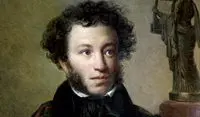
Alexandre Pushkin

Alexander Pushkin is widely regarded as the greatest Russian poet and the founder of modern Russian literature. His work spans a vast range of genres, including lyric, epic, narrative poetry, and drama. With a style that blends the colloquial and the elevated, Pushkin explored themes such as love, freedom, honor, and destiny, leaving an indelible legacy on Russian and world culture.

Amélia Rodrigues

Amélia Rodrigues was a Portuguese poet, known for her religious and mystical work, with strong Marian inspiration and in the figure of Fátima. Her poetic compositions express deep devotion and a search for transcendence, reflecting her faith and her connection with the apparitions of Fátima. Her writing is marked by simplicity, tenderness, and the strength of her spirituality, which touched many readers in Portugal and abroad.

José Augusto de Carvalho

José Augusto de Carvalho was a poet whose work is part of the Portuguese literary context of the 19th century. Characterized by a romantic poetry, and at times with tones of saudosismo and melancholy, he explored universal themes such as love, nature, and the fleetingness of time. His writing is marked by careful language and a lyrical sensibility that brings him closer to other figures of poetry of his time.

Glória de Sant'Anna

Glória de Sant'Anna was a Brazilian poet whose work is distinguished by its lyrical depth and exploration of existential, spiritual, and human nature themes. Her poetry is marked by rich language and a keen sensitivity to the nuances of feeling and being, addressing love, loneliness, transcendence, and the search for meaning. Her writing reflects an intense inner journey, where reflection on the human condition intertwines with a deep connection to the universe, resulting in poems that touch the reader with their sincerity and beauty.

Márcio de Sousa Andrade

Márcio de Sousa Andrade is a poet whose writing is characterized by vigorous language and a critical perspective on contemporary society. His work addresses themes such as social injustice, urban alienation, and the search for meaning in a world often devoid of values. Andrade constructs a poetic universe that interweaves individual experience with collective problems, using an at times ironic and interventionist tone that challenges the reader to confront reality.

Colombina

Colombina was a singular figure in the Brazilian literary scene, acting as a poet, writer, and performer. Her work is characterized by experimentation, transgression of social and aesthetic norms, and by a strong charge of subjectivity and social criticism. Associated with avant-garde movements, Colombina sought to break with conventions, exploring new forms of expression that included performance and artistic intervention. Her poetry is a reflection of her search for authenticity and her challenge to the status quo.

D. João Manuel

D. João Manuel was a historical and religious figure with connections to the literary world, whose work is part of the context of a specific period in Portuguese history. Although his main notoriety lies in other spheres, his written production, particularly in the religious and spiritual field, contributes to the understanding of cultural and theological aspects of his time. His writing reflects his role and convictions, offering a glimpse into the thought and language of his era.

Died on this day

9
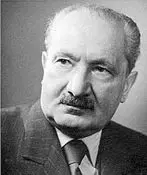
Martin Heidegger

Martin Heidegger was a prominent German philosopher, considered one of the most influential thinkers of the 20th century. He is best known for his work "Being and Time" (Sein und Zeit), which introduced a new approach to the question of being and influenced various philosophical currents, such as existentialism and phenomenology.

José Joaquim Bordalo

José Joaquim Bordalo, known by the pseudonym "Camillo", was a singular figure in the literary and journalistic landscape of 19th-century Portugal. His literary output, although less voluminous than that of other contemporaries, reveals a critical spirit and a talent for social observation, with forays into poetry and prose, reflecting the contradictions of the society of his time.

D. Luís Xavier de Meneses

D. Luís Xavier de Meneses was a notable figure in the literary and historical context, whose work transcended the purely poetic sphere. His work, when explored, reveals a sensitivity that combines with the ideals and circumstances of his time, reflecting concerns that could range from personal lyricism to social commentary. His historical and literary importance lies in his ability to intervene and produce texts that dialogue with his era, leaving a testimony of his vision and his role in society.

Joaquim Matos

Joaquim Matos was a poet whose work is distinguished by its lyrical intensity and profound exploration of existentialist themes and the human condition. With a writing style marked by introspection and the search for meaning, his verses invite reflection on life, death, and the universe. His contribution to poetry is valued for its originality and its ability to touch the reader with the force of his emotions and the rigor of his expression.

Luiz-Manuel

Luiz-Manuel is a poet whose work is distinguished by a deep exploration of the human condition, addressing themes such as love, death, and the ephemerality of time. His writing is characterized by careful language, with a strong visual and musical appeal, often evoking inner landscapes and existential reflections. With a literary career marked by introspection and the search for meaning, Luiz-Manuel has established himself as a unique voice in contemporary poetry, capable of engaging with tradition while introducing formal and thematic innovations. His work invites the reader on a journey of self-discovery and contemplation on the complexity of life.

Filipe Nery Xavier

Filipe Nery Xavier was an influential Brazilian poet and politician, known for his active participation in the literary and political movements of the 19th century. His work is marked by expressive lyricism and an engagement with the social and patriotic issues of his time. Xavier moved between romantic poetry and the precursors of realism, exploring themes such as love, nature, and national identity in his verses. His career as a public figure, including his role as a journalist and deputy, often intertwined with his literary production, giving his poetry a civic dimension and a strong sense of belonging to his homeland. Filipe Nery Xavier left an important legacy in Brazilian literature, contributing to the formation of a national poetic identity in a period of the country's consolidation.

Alexandre Toursky

Alexandre Toursky was a French writer and translator, known for his contributions to literature and his translation work. His writing and translation work reflect a deep understanding of the languages and cultures with which he worked.