
27 de May
Born on this day
11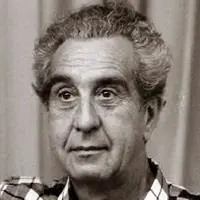
Luís Maria Leitão, better known by the pseudonym Luís Veiga Leitão, was a Portuguese poet and plastic artist, a member of the literary group <i>Germinal</i>. He was an anti-fascist militant, forced into exile due to persecution by the Estado Novo.
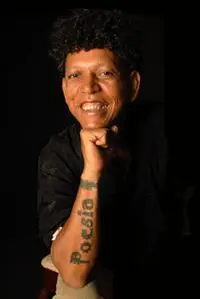
Eliakin Rufino is a Brazilian poet whose work is part of contemporary poetry, with a focus on existential and social issues. His writing, often marked by intensity and deep reflection, seeks to engage with reality in a poetic and critical way, exploring themes such as identity, the search for meaning, and the complexities of modern life.

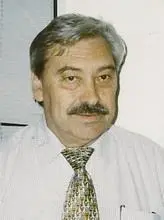

Manuel Teixeira Gomes GCSE was the seventh president of the First Portuguese Republic from October 6, 1923, to December 11, 1925. There is a library and a secondary school named after him in Portimão. There is also a preschool and basic school named after him in Lisbon.

Poet and translator. The son of Galician parents who immigrated to Portugal, he studied Law in Lisbon up to his 2nd year. Exiled in France from 1967 to 1974, there he studied Romance Philology at the Sorbonne and Political Science at the ISP.

Linda Pastan is a contemporary American poet, known for her accessible yet profoundly resonant poetry that explores domestic life, family, the passage of time, and the search for meaning in everyday experiences. Her work is praised for its <strong>clarity, sensitivity, and subtle humor</strong>. Pastan has a remarkable ability to capture intimate moments and transform them into universal reflections on the human condition, with elegant and precise language.

Wendy Battin is known for her work in the field of literature, with a special focus on poetry and literary criticism. Her work stands out for the sensitivity and depth with which she addresses universal themes, using poetic language as a vehicle to explore the nuances of human experience and the complexities of the contemporary world.


Died on this day
10
José Augusto Baptista Lopes e Seabra was a Portuguese poet, essayist, professor, diplomat, and politician. He graduated in Law from the University of Lisbon in 1961.

Arsenii Tarkovskii was a Russian poet, known for his poetry of deep existential resonance and his ability to evoke vivid images of nature and memory. His work, marked by rich language and a philosophical tone, addresses themes such as time, death, love, and the search for meaning. His poetic legacy is notable for its originality and expressive power, influencing generations of poets in Russia and beyond.
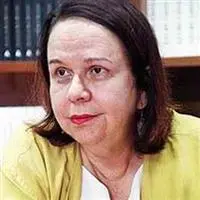
Lélia Coelho Frota was a multifaceted figure, standing out as a Brazilian anthropologist, writer, and researcher. Her work is marked by a profound investigation into Brazilian culture, identity, and social manifestations, with a particularly close look at issues of gender and representation. As a writer, she moved between academic essays and fiction, always with a vigorous style and an unparalleled capacity for analysis. Her legacy lies in her contribution to understanding complex aspects of Brazilian society and in how, through her research and writings, she illuminated previously little-explored themes, especially concerning the female universe and cultural diversity.
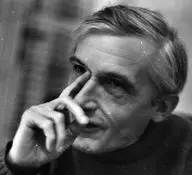
János Pilinszky was a Hungarian poet, born in Budapest on November 25, 1921. He studied literature at the Eötvös Loránd University in the Hungarian capital starting in 1938.

António Loja Neves is a contemporary Portuguese poet, whose work is distinguished by its lyrical depth and exploration of universal themes. His poetry often addresses the human condition, the passage of time, the beauty of nature, and the nuances of emotions. With careful language and an engaging rhythm, Neves crafts verses that resonate with authenticity and their ability to evoke vivid images and deep feelings. His contribution to contemporary Portuguese-language poetry is notable for its sensitivity and its constant search for genuine poetic expression.


Enrique de Mesa was a Spanish poet, known for his lyrical work and sonnets. His writing frequently explored themes such as love, nature, and melancholy, reflecting romantic and post-romantic sensibilities.


