Jean-Paul Sartre
Author of the day

Jean-Paul Sartre

Jean-Paul Sartre was a French philosopher, writer, playwright, and literary critic, a central figure of atheistic existentialism. His vast and multifaceted work explores human freedom, individual responsibility, bad faith, and social commitment. Sartre rejected the Nobel Prize in Literature, advocating for a stance of refusal of bourgeois institutions. His thought profoundly influenced 20th-century philosophy, literature, and political debate, marking a generation with his emphasis on autonomy a…

Poem of the day

Do Not Go Gentle Into That Good Night

Dylan Thomas
Do not go gentle into that good night, 
Old age should burn and rave at close of day; 
Rage, rage against the dying of the light. 

Though wise men at their end know dark is right, 
Because their words had forked no lightning they 
Do not go gentle into that good night. 

Good men, the last wave by, crying how bright 
Their frail deeds might have danced in a green bay, 
Rage, rage against the dying of the light. 

Wild men who caught and sang the sun in flight, 
And learn, too late, they grieved it on its way, 
Do not go gentle into that good night. 

Grave men, near death, who see with blinding sight 
Blind eyes could blaze like meteors and be gay, 
Rage, rage against the dying of the light. 

And you, my father, there on that sad height, 
Curse, bless, me now with your fierce tears, I pray. 
Do not go gentle into that good night. 
Rage, rage against the dying of the light.
Read full poem

Born on this day

9
Costa Alegre

Costa Alegre was a Portuguese poet whose work is part of the modernist context in Portugal. His poetry is marked by strong formal and thematic experimentation, exploring urban life, existential anxieties, and the fragmentation of modern experience. Although not as well-known as some of his contemporaries, his contribution to the renewal of Portuguese poetry is significant. His work, at times challenging and innovative, reflects the turbulence and changes of a crucial period in Portuguese and European history.

Alexei Bueno

Alexei Bueno is a Brazilian poet, essayist, and translator, recognized for his work that navigates between tradition and modernity, with a strong influence of metalanguage and reflection on the art of writing itself. His poetry is marked by formal rigor, exploration of language, and themes that include memory, time, identity, and the search for meaning. With a vast production encompassing poetry books, critical essays, and translations, Alexei Bueno has established himself as a unique voice in contemporary Brazilian literature, engaging with past masters and proposing new aesthetic approaches.

Vicente Aleixandre

Vicente Aleixandre was a Spanish poet, a central figure of the Generation of '27. His poetic work is marked by a deep lyricism and an exploration of the themes of love, death, the cosmos, and the human condition, often with a language charged with symbolism and dreamlike imagery. He was awarded the Nobel Prize in Literature in 1977, recognizing the universality and strength of his poetic expression, which made him one of the most important Spanish-language poets of the 20th century.

Pe. Tomás José de Aquino

Fr. Tomás José de Aquino was a Portuguese priest and writer, known for his literary work that reflects the religious and cultural context of his time. His writing spanned various areas, demonstrating notable erudition and a profound knowledge of literature and theology. His literary contributions are a testament to his time and his dedication to knowledge and art.

Maria Brandão

Maria Brandão is a contemporary poet whose work is distinguished by the deep exploration of the human condition, the relationship with nature, and the search for existential meaning. Her writing is characterized by lyrical and introspective language, inviting reflection on the passage of time, the ephemerality of life, and the strength of affective bonds. Through refined sensitivity, she addresses universal themes such as love, longing, and memory, weaving a singular and moving poetic universe. Her poetry resonates with those who seek in art a mirror of their own anxieties and yearnings.

João de Deus Ramos

João de Deus Ramos was a Portuguese poet, pedagogue, and politician, known for his influence in the field of education and for his poetic work of a lyrical and social nature. He stood out for creating an innovative reading method, widely adopted in Portuguese schools. In his poetry, he addressed themes such as love, the homeland, and religiosity, with a language that sought simplicity and musicality, characteristics that made him one of the unavoidable names in 19th-century Portuguese literature.

Died on this day

5
Mário de Sá-Carneiro

Mário de Sá-Carneiro was a Portuguese poet, novelist, and short-story writer, a prominent figure of the first generation of Portuguese Modernism. His work is marked by profound pessimism, the exploration of fragmented identity, existential anguish, and the search for an authentic "self", often in conflict with reality. His literary production, although limited due to his early death, is recognized for its emotional intensity, originality, and visionary character, anticipating themes and concerns that would become central to 20th-century literature.

Domingos Carvalho da Silva

Domingos Carvalho da Silva was a Portuguese poet whose work is notable for its strong connection to the land, traditions, and the Portuguese popular soul, with a rural and expressive language. His poetry, rooted in the lyricism of everyday life and the exaltation of simple living, brings the sonority, customs, and feelings of the people to the literary universe, giving him a unique place in Portuguese poetry.

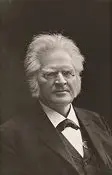
Bjørnstjerne Bjørnson

Bjørnstjerne Bjørnson was a Norwegian poet, novelist, and playwright, considered one of the "Big Four" of Norwegian literature. He was the first Norwegian to win the Nobel Prize in Literature, in 1903. He is widely known for his contribution to the development of the modern Norwegian language and his role in shaping Norwegian national identity. His works often address themes of patriotism, rural life, and social conflicts.

Pedro Oom

Pedro Oom was a Portuguese poet whose work is situated within the context of modernism. His poetry is marked by formal experimentation and the exploration of urban and existential themes. Despite a not extensive literary output, he left a mark through his originality and the way he approached modernity in Portuguese poetry.