
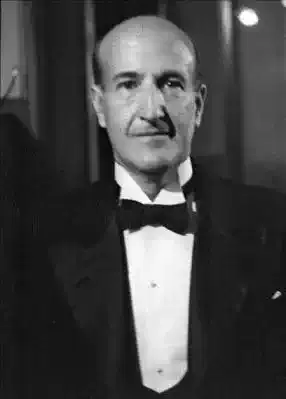
Vicente Aleixandre
1898–1984
· lived 86 years
 ES
ES
ES
Vicente Aleixandre was a Spanish poet, a central figure of the Generation of '27. His poetic work is marked by a deep lyricism and an exploration of the themes of love, death, the cosmos, and the human condition, often with a language charged with symbolism and dreamlike imagery. He was awarded the Nobel Prize in Literature in 1977, recognizing the universality and strength of his poetic expression, which made him one of the most important Spanish-language poets of the 20th century.
n. 1898-04-26, Sevilha · m. 1984-12-14, Madrid
102
Views
Bio
Identification and basic context
Vicente Aleixandre y Merlo was a Spanish poet, considered one of the most prominent figures of the Generation of '27. He was born in Seville and lived most of his life in Madrid. He was awarded the Nobel Prize in Literature in 1977.Childhood and education
Born in Seville to a middle-class family. His childhood and youth took place in Malaga, where the family moved. He was a brilliant student with a strong inclination for literature from an early age. His education was marked by extensive reading and a deep interest in poetry.Literary career
Began writing poetry in his youth. His work evolved from an initial intimate lyricism to a more cosmic and universal poetry. He was a distinguished member of the Generation of '27, collaborating with other important poets and intellectuals of the time. He published several poetry collections that established him as one of the great names in Spanish literature.Work, style, and literary characteristics
His major works include "Espadas como labios" (1932), "La destrucción o el amor" (1935), "Sombra del paraíso" (1944), "Historia del corazón" (1954), and "Diálogos del conocimiento" (1974). The dominant themes in his work are love, death, nature, the cosmos, solitude, and the human condition. It is characterized by intense lyricism, abundant use of metaphors and dreamlike imagery, and a deep exploration of the subconscious. His language is rich and evocative, with a striking musical rhythm. He was associated with Surrealism, although his work transcends any single label.Cultural and historical context
Lived most of his adult life in Spain during a turbulent period, including the Second Republic, the Spanish Civil War, and the Franco regime. These events had a profound impact on his work, which reflects anguish, solitude, and the search for a lost paradise. He maintained close relationships with other poets of the Generation of '27, such as Federico García Lorca and Rafael Alberti.Personal life
Vicente Aleixandre was a reserved man dedicated to poetry. He suffered from a serious kidney disease that limited him physically, but also influenced his view on life and death. His personal life was marked by great sensitivity and a deep connection with nature and the universe.Recognition and reception
The recognition of his work grew over time, culminating in the award of the Nobel Prize in Literature in 1977. He was acclaimed as one of the most important Spanish-language poets of the 20th century, with his work being widely studied and admired.Influences and legacy
He was influenced by poets such as Góngora and the French Symbolists. His legacy is immense, having influenced generations of poets in Spain and Latin America. His poetry is considered a landmark in contemporary literature.Interpretation and critical analysis
Aleixandre's work has been interpreted from various perspectives, highlighting the analysis of his cosmic metaphors, the exploration of desire and frustration, and his existential vision. His poetry invites reflection on the mysteries of existence and the fleeting beauty of life.Curiosities and lesser-known aspects
Aleixandre, despite his fame, was an extremely humble and reclusive man. He spent long periods at home, dedicated to writing and reading. His house in Madrid became a pilgrimage site for admirers of his work.Death and memory
He died in Madrid in 1984. His works continue to be published and studied, keeping his memory and poetic legacy alive.Poems
0No poems found
Videos
50
Comments (0)
Log in
to post a comment.
No comments yet. Be the first to comment.