Poem of the day

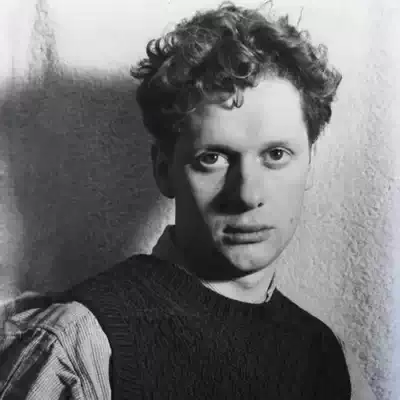
Do Not Go Gentle Into That Good Night

Dylan Thomas
Do not go gentle into that good night, 
Old age should burn and rave at close of day; 
Rage, rage against the dying of the light. 

Though wise men at their end know dark is right, 
Because their words had forked no lightning they 
Do not go gentle into that good night. 

Good men, the last wave by, crying how bright 
Their frail deeds might have danced in a green bay, 
Rage, rage against the dying of the light. 

Wild men who caught and sang the sun in flight, 
And learn, too late, they grieved it on its way, 
Do not go gentle into that good night. 

Grave men, near death, who see with blinding sight 
Blind eyes could blaze like meteors and be gay, 
Rage, rage against the dying of the light. 

And you, my father, there on that sad height, 
Curse, bless, me now with your fierce tears, I pray. 
Do not go gentle into that good night. 
Rage, rage against the dying of the light.
Read full poem

Born on this day

13
Augusto Gil

Augusto Gil was a notable Portuguese poet, known for his lyrical and meditative poetry. His work is marked by the exploration of themes such as love, death, time, and saudade (longing), often with a melancholic and reflective tone. His writing is distinguished by its musicality, rich vocabulary, and use of traditional forms, like the sonnet, adapted to a modern sensibility. A poet of a transitional generation, he managed to reconcile Portuguese poetic heritage with the new aesthetic currents of his time, leaving a legacy of verses that continue to resonate for their emotional depth and formal elegance.

Pedro Ayres de Magalhães

Pedro Ayres de Magalhães was a Portuguese jurist, writer, and politician, a prominent figure in the Arcadian movement in Portugal. His poetic work, although within the canons of Arcadia, reveals a particular sensitivity, exploring bucolic and pastoral themes with a style that anticipates certain trends of Romanticism.

Antunes da Silva

Antunes da Silva was a Portuguese poet whose work belongs to the more lyrical and introspective vein of contemporary poetry. His writing explores the complexity of human emotions, the ephemerality of life, and the search for meaning in a constantly changing world. With a refined language and a sensitive look at reality, Antunes da Silva left a body of work that invites reflection on existence and human relationships.

Avelino de Sousa

Avelino de Sousa was a poet whose work is part of the Portuguese literary landscape. His poetry often explores universal themes through careful language and refined sensitivity. His literary career contributed to the diversity of poetic expression in Portuguese.

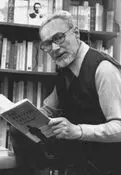
Primo Levi

Primo Levi was an Italian writer, chemist, and Holocaust survivor. He is best known for his detailed account of his experience in Auschwitz, "Is This a Man".

The effable is preferable to the ineffable.
Emilio De Marchi

Emilio De Marchi was an Italian tenor, famous for his interpretations of operas from the verismo and late-Romantic repertoire. He is particularly known for being the first to perform the role of Cavaradossi in Puccini's opera 'Tosca'.

Mário Castrim

Mário Castrim was a Portuguese poet and writer whose works explored the complexity of the human condition, interpersonal relationships, and the ephemerality of life. His writing is marked by dense and imagistic language, often combining a confessional tone with profound existential reflection. Castrim's poetry reveals a refined sensitivity to the nuances of the soul and the contrasts of existence, leaving a unique testimony of his worldview.

Maria José Pinheiro

Maria José Pinheiro is a notable figure in contemporary Portuguese poetry. Her work stands out for its lyrical depth, exploring universal themes such as love, memory, and the passage of time. With careful language and refined sensibility, Pinheiro constructs a poetic universe where introspection intersects with keen observation of the world.

Rafael Morales

Rafael Morales is a Spanish writer, with a work that spans different literary genres, but often leans towards poetry and short fiction. His writing is recognized for its musicality, exploration of universal themes, and a language that combines simplicity with depth.

Died on this day

10
Basílio da Gama

Basílio da Gama was a Luso-Brazilian poet, an important figure of Arcadianism in Portugal and Brazil. His work, marked by classical influence and the idealization of nature, celebrates bucolic life and the figure of the indigenous as a pure and noble being. His poetry, although part of a specific literary context, demonstrates a particular sensibility towards the natural environment and American landscapes, which distinguishes him from many of his contemporaries.

João Álvares Soares

João Álvares Soares was a poet whose work is part of the Portuguese literary context. He dedicated himself to poetry, exploring universal themes and the particularities of the human experience. His writing is marked by lyrical sensitivity and the search for artistic expression through words.

Loyola Rodrigues

Loyola Rodrigues was a poet whose work stood out for its exploration of the human condition, with a lyricism that blended the personal with the universal. His poetry is marked by a deep reflection on time, memory, and the ephemerality of life, expressed through careful language and unique sensitivity. With an introspective poetic voice, Rodrigues addressed themes such as love, loss, and the search for meaning, often using nature as a backdrop for his existential meditations. His work, although sometimes discreet in terms of media recognition, holds a valuable place in the panorama of contemporary poetry, due to its authenticity and depth.

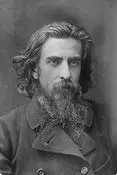
Vladimir Soloviov

Vladimir Solovyov was a prominent Russian philosopher, theologian, poet, and literary critic, considered one of the most important figures in 19th-century Russian thought. His work sought the reconciliation between faith and reason, exploring themes such as the unity of God, Sophia (Divine Wisdom), and 'Theanthropism' (the union of the divine and the human).

D. Francisco da Costa

D. Francisco da Costa was an ecclesiastical and literary figure of the 18th century, whose reflections and writings are part of the Portuguese Enlightenment context. His work, although not predominantly poetic, reflects erudite thought and a concern for moral and spiritual aspects, influenced by the religious fervor and intellectual currents of his time.

Ricardo E. Molinari

Ricardo E. Molinari was a distinguished Argentine poet and literary critic, recognized for his deep connection to the poetic tradition and his ability to evoke vivid and melancholic images. His work is characterized by careful musicality and a refined language, exploring recurring themes such as the passage of time, memory, nature, and introspection. Molinari developed a prolific career that spanned several decades, establishing himself as an influential figure in his country's literary landscape. His poetry, often tinged with subtle melancholy, invites reflection on the human condition and the transience of existence, earning him a respected place among readers and critics for its authenticity and formal mastery.