
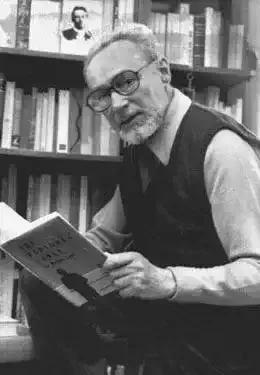
Primo Levi
1918–1987
· lived 68 years
 IT
IT
IT
Primo Levi was an Italian writer, chemist, and Holocaust survivor. He is best known for his detailed account of his experience in Auschwitz, "Is This a Man".
n. 1918-07-31, Turim · m. 1987-04-11, Turim
4,483
Views
Bio
Primo Levi (July 31, 1919 – April 11, 1987) was an Italian writer, chemist, and partisan, as well as a Holocaust survivor. Born in Turin, Levi graduated in chemistry in 1941. In 1943, he joined the anti-fascist resistance but was arrested and sent to the Auschwitz concentration camp. His experience there led him to write the seminal book "Is This a Man" (Se questo è un uomo), a poignant and objective account of his time in the camp. Other important works include "The Truce" (the continuation of "Is This a Man"), "The Periodic Table", and "If Not Now, When?". Levi's writing is marked by its clarity, precision, and deep humanity, exploring themes of memory, identity, and the nature of evil.
Poems
0No poems found
Quotes
12No poems found
Comments (0)
Log in
to post a comment.
No comments yet. Be the first to comment.