

Awards
Griffin Poetry Prize
Description
Origins and Foundation
The Griffin Poetry Prize, founded in 2000 by Canadian philanthropist and businessman Scott Griffin, is widely recognized as one of the most important and generous literary awards dedicated to poetry worldwide. Its main objective is to promote poetry and recognize the work of poets of exceptional merit. The prize is administered by the Griffin Trust for Excellence in Poetry, based in Toronto, Canada.
Prize Structure and Value
The Griffin Poetry Prize annually distinguishes two works of poetry in the English language. One category is for a book of poetry published in Canada by a Canadian poet. The other category is for a book of poetry published in Canada by an international (i.e., non-Canadian) poet. Each of these prizes has a substantial monetary value, currently 100,000 Canadian dollars, making it one of the highest-paying poetry awards in the world. Additionally, there are also consolation prizes for finalists, who receive 10,000 Canadian dollars each.
Eligibility and Selection Criteria
The eligibility criteria are rigorous. Books must be published in English and have been published in Canada in the calendar year preceding the award ceremony. The prize is open to original poetry books, not anthologies or translations (although, in previous years, there was a separate category for translations, which has been discontinued). The selection of the winners is made by a panel of renowned judges, composed of poets, critics, and academics, who evaluate the works based on their literary quality, innovation, depth, and impact.
International Impact and Relevance
The relevance of the Griffin Poetry Prize in the international literary landscape is immense. By offering such high-value awards, the prize not only rewards the selected poets but also attracts significant attention to poetry in general, encouraging reading and discussion about the genre. Its emphasis on poetry published in Canada, while also recognizing international talent, contributes to the visibility and prestige of the Canadian poetic scene on the global stage. The award ceremony, usually held in June, is a landmark event in the literary calendar, attracting poets, publishers, critics, and literature lovers from around the world.
A Personal Tribute
An interesting fact about the prize is its origin. Scott Griffin founded the prize in memory of his mother, a poet and short story writer, who always valued the art of poetry. The generosity of the prize and its exclusive dedication to poetry have solidified its position as one of the cornerstones of contemporary literature, celebrating the poetic voice in all its diversity and strength.
Winners

Durs Grünbein


George McWhirter

George McWhirter is a Canadian poet and novelist, born in Northern Ireland. His work often weaves narratives with elements of memory, history, and identity, exploring the complexities of the human experience, often with a touch of melancholy and humor. He is known for his engaging prose and lyrical poetry, which capture the nuances of his origins and later life, reflecting on displacement and the search for a place in the world.

Roger Reeves


Douglas Kearney

Valzhyna Mort


Sarah Riggs
Sarah Riggs is an American poet, translator, and essayist. Her poetic work is known for its investigation into history, language, landscape, and the complexities of identity. Riggs frequently explores the relationship between text and the physical world, using an interdisciplinary approach that can incorporate visual and contextual elements. As a translator, Riggs plays an important role in bringing French-language poetry to an English-speaking audience, with a focus on contemporary voices. Her translation work, like her own poetry, demonstrates a commitment to depth and nuance, exploring the connections between different cultures and forms of expression.

Don Mee Choi

Susan Howe

Alice Oswald


Norman Dubie
Norman Dubie is an American poet known for his poetry that often delves into historical, mythological, and personal landscapes. His work is characterized by an imaginative approach and an exploration of the complexities of life and consciousness. He teaches at the University of Arizona and has influenced many younger poets with his distinct voice and his ability to weave narratives and images in an engaging way.

Michael Longley

Brenda Hillman

Ghassan Zaqtan


David Harsent

Gjertrud Schnackenberg
Gjertrud Schnackenberg is an American poet whose works are known for their formal precision, lyrical intelligence, and exploration of themes such as memory, identity, and human experience. Her poetry is often marked by deep contemplation and carefully crafted language.

Eiléan Nà Chuilleanáin


C.D. Wright
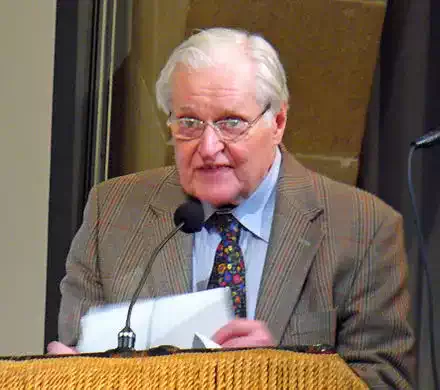
John Ashbery
John Ashbery was one of the most influential American poets of the second half of the 20th century, known for his challenging and innovative poetry. His work explores the nature of language, consciousness, and reality, often through lengthy, stream-of-consciousness poems. Ashbery demonstrated a remarkable ability to blend the colloquial with the sublime, the personal with the impersonal, creating a unique style that defies easy categorization. He was also a respected literary critic and teacher, leaving a lasting legacy on contemporary poetry.

Charles Wright

Kamau Brathwaite

Edward Kamau Brathwaite was a Barbadian poet, historian, and educator, widely regarded as one of the most important voices in Caribbean and post-colonial poetry. His work explores themes of identity, history, culture, and the African diaspora, with a strong emphasis on musicality and the fusion of languages and traditions. Brathwaite is known for his formal innovation, particularly for the development of the "tri-continental" and the "Antillean rhythm," incorporating elements of orality, calypso, and jazz into his poetry. He sought to create an authentic voice that reflected the complexity and richness of the Caribbean experience, challenging colonial structures of language and thought.
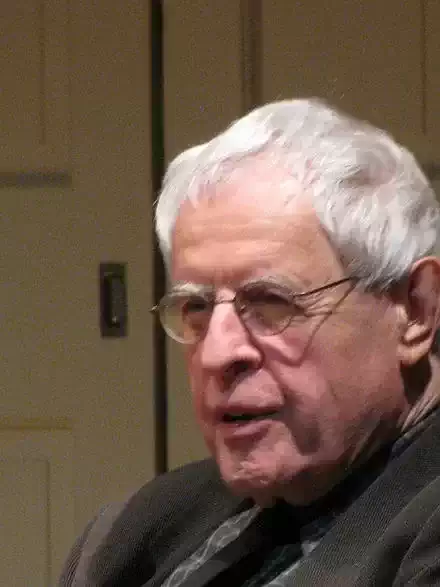
Charles Simic

Charles Simic was a Serbian-American poet, essayist, and translator, known for his poetry that often explores the surreal, the absurd, and the dark, often with a touch of black humor. His work is marked by powerful and unexpected images, drawn from both everyday life and his experiences with war and exile. He is celebrated for his ability to transform the mundane into something mysterious and for his unmistakable poetic voice, which manages to be both intimate and universal. Simic was an influential figure in American poetry, known for his clarity and insight.

August Kleinzahler

Paul Muldoon

Alice Notley

Heather McHugh
Heather McHugh is an acclaimed American poet and essayist, known for her ingenious language and her clever use of wordplay and puns. Her work often addresses the nature of language, perception, and the interconnections between thought and the physical world, with a style that combines intellectual rigor and lyrical sensibility.
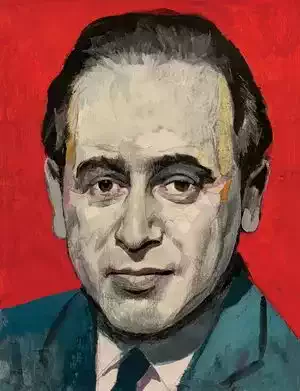
Paul Celan
Paul Celan was a prominent German-language poet, widely regarded as one of the most significant European poets of the 20th century. His work is deeply marked by his experiences during the Holocaust and the loss of his parents, leading to themes of memory, trauma, and the unspeakable nature of suffering. Celan's poetry is characterized by its linguistic innovation, fragmented syntax, and a profound engagement with silence and the limits of language to express profound grief. His work continues to be studied for its unique contribution to post-war literature and its exploration of human resilience and despair.