

Awards
National Book Award for Poetry
National Book Award Poetry
Description
The Seal of Excellence in American Poetry
The National Book Award for Poetry is one of the most prestigious literary awards in the United States, awarded annually by the National Book Foundation. Established in 1950, the award aims to celebrate and promote American literature, recognizing works of poetry that demonstrate originality, depth, and artistic excellence. Over the decades, the award has been an important indicator of the American literary landscape, shedding light on emerging authors and recognizing established voices.
Selection Criteria and Evaluation Process
The selection criteria for the National Book Award for Poetry are rigorous. A panel of judges, composed of renowned poets, critics, and academics, evaluates the submitted works. The initial selection goes through several stages, culminating in the nomination of five finalists. From these finalists, a single winner is chosen. The National Book Foundation emphasizes the importance of works that push the boundaries of poetic form, address themes relevant to contemporary society, and demonstrate exceptional command of language and technique.
History and Evolution of the Award
Originally, the National Book Award encompassed several categories, including fiction, non-fiction, and poetry. However, in 1967, the categories were divided, and the poetry award became an independent distinction. This split allowed for greater focus and specific recognition for poetry, solidifying its importance within the award's context. Over the years, the award has been associated with a wide range of poetic styles, from more traditional lyricism to experimental and avant-garde poetry, reflecting the diversity and vitality of poetic production in the USA.
Cultural Impact and Relevance
The relevance of the National Book Award for Poetry transcends individual recognition. By awarding a book of poetry, the National Book Foundation contributes to the visibility of the poetry genre as a whole, encouraging the reading and discussion of poetry. Winners and finalists often see their works reach a wider audience, with an increase in sales and critical attention. The award also serves as a seal of quality, helping to shape the American literary canon and influence future generations of poets and readers.
The diversity of winners over time also reflects the social and cultural changes in the United States, with the award increasingly recognizing voices from different ethnic, racial, and gender backgrounds.
Curiosities and Legacy
Curiosities about the award include its history of recognizing poets who would later become central figures in American literature, such as Elizabeth Bishop, Robert Lowell, and Adrienne Rich. In some years, the award was given to collective works or to poets who already had an established career, while in others, it served as a springboard for promising careers. The award ceremony is a significant event in the literary calendar, bringing together writers, publishers, agents, and literature lovers to celebrate the art of the written word. Its longevity and associated prestige ensure that the National Book Award for Poetry continues to be a fundamental landmark in American literature.
Winners

Patricia Smith


Lena Khalaf Tuffaha

Lena Khalaf Tuffaha is an American poet and essayist of Syrian origin. Her work explores the complexities of identity, memory, diaspora, and family ties. She moves between personal experience and social observation, offering reflections on belonging and displacement.

Craig Santos Perez

Craig Santos Perez is a Chamorro poet, activist, and scholar (born in Guam) whose work focuses on the interconnections between ecology, colonialism, and Pacific culture. His poetry, often engaged and experimental, addresses environmental threats, the history of colonization, and the resilience of indigenous cultures.

John Keene

MartÃn Espada

Don Mee Choi

Arthur Sze

Justin Phillip Reed
Justin Phillip Reed is an American poet whose work is notable for its exploration of themes such as race, queer identity, spirituality, and the nature of existence. His poetry is known for its sharp intelligence, formal daring, and its ability to move between the personal and the philosophical, often questioning social norms and cultural constructs.

Frank Bidart

Daniel Borzutzky

Robin Coste Lewis
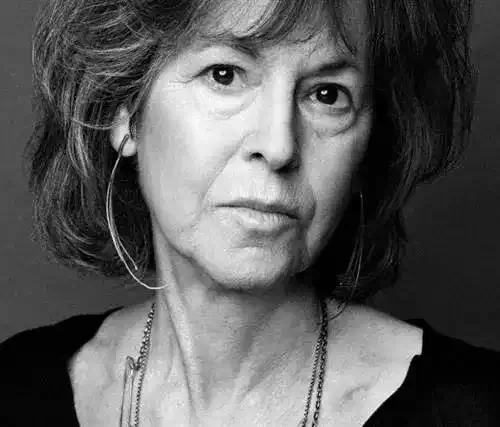
Louise Glück
Louise Glück was an American poet known for her lyrical and introspective writing, which frequently explored themes of loss, desire, family, and nature. Her work is marked by raw emotional intensity, direct language, and careful structure, often revisiting classical myths and fairy tales to explore the human psyche. Throughout her career, Glück received widespread acclaim, culminating in the Nobel Prize in Literature in 2020, solidifying her place as one of the most significant voices in contemporary American poetry.

Mary Szybist

David Ferry

Nikky Finney
Nikky Finney is an American poet and academic known for her work that frequently addresses themes of Black identity, family history, ancestry, and the landscape of the Southern United States. Her poetry is deeply rooted in personal and collective narratives, celebrating the resilience and voice of Black women. Finney is an important figure in contemporary literature, inspiring through her writing and activism.

Terrance Hayes
Terrance Hayes is a contemporary American poet, celebrated for his ability to blend elements of the poetic tradition with current social and cultural issues. His work is known for its fusion of lyrical and political tones, often using imagination and irony to address themes such as race, identity, American history, and the Black experience. Hayes is a poet of great versatility and impact.

Keith Waldrop

Mark Doty

Robert Hass

Nathaniel Mackey

W. S. Merwin

Jean Valentine

C. K. Williams
C. K. Williams was an acclaimed American poet, known for his visceral and often dark approach to modern life. His work frequently explored themes of poverty, crime, sexuality, and the complexities of the human psyche, using direct and unadorned language that resonated with the raw reality of his subjects. He was a master at capturing moments of intensity and vulnerability, painting a poignant portrait of urban experiences and individual struggles.

Ruth Stone

Alan Dugan

Lucille Clifton

Ai

Gerald Stern
Gerald Stern was an American poet whose poems are known for their exuberant energy, ironic humor, and ability to move between the personal and the universal. His work frequently celebrates life, nature, and simple joys, while also addressing the complexities and sorrows of existence. Stern used vibrant and accessible language, often incorporating elements of colloquialism and the American lyrical tradition. His poems invite the reader on a journey of discovery, where imagination and emotion intertwine with reflections on love, family, art, and the search for transcendence.

William Meredith

Hayden Carruth

Stanley Kunitz

James Tate

A.R. Ammons

Mary Oliver

Philip Levine

Charles Wright

Galway Kinnell

William Bronk

Lisel Mueller
Philip Levine

James Merrill

Howard Nemerov

Richard Eberhart
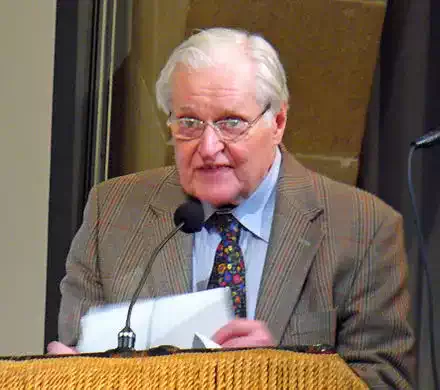
John Ashbery
John Ashbery was one of the most influential American poets of the second half of the 20th century, known for his challenging and innovative poetry. His work explores the nature of language, consciousness, and reality, often through lengthy, stream-of-consciousness poems. Ashbery demonstrated a remarkable ability to blend the colloquial with the sublime, the personal with the impersonal, creating a unique style that defies easy categorization. He was also a respected literary critic and teacher, leaving a lasting legacy on contemporary poetry.

Marilyn Hacker
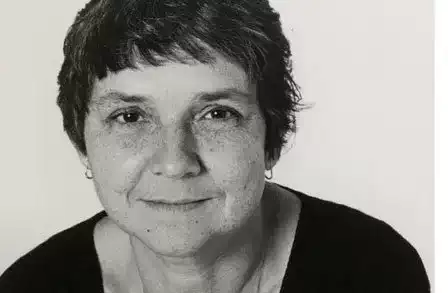
Adrienne Rich
Adrienne Rich was an American poet, essayist, and feminist activist, recognized for her politically engaged poetry and her exploration of identity, sexuality, and social oppression. Throughout her career, her work evolved to address themes of radical feminism, lesbianism, pacifism, and social justice, becoming an influential voice in counterculture movements and gender studies.
A.R. Ammons

Frank O'Hara
Frank O'Hara was an American poet associated with the New York School movement. His work, characterized by distinctive spontaneity and colloquiality, captures the cultural effervescence of 20th-century New York. A poet of everyday life, the city, and personal relationships, O'Hara explored the urban experience with a lyrical and sometimes ironic gaze, leaving a legacy of vibrant and accessible poetry.

Mona Van Duyn
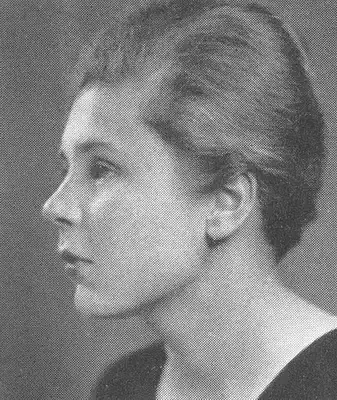
Elizabeth Bishop
Elizabeth Bishop was an American poet renowned for her meticulously crafted, observant, and subtly emotional verse. Her work is characterized by its precise imagery, quiet tone, and profound empathy for the subjects she described, often focusing on landscapes, travel, and the details of everyday life. Despite a relatively small output of published work during her lifetime, she gained significant critical acclaim and is now considered one of the most important American poets of the 20th century. Her poetry is marked by its formal control and deep engagement with the physical world.

John Berryman
John Berryman was a renowned American poet, known for his lyrical intensity and exploration of themes such as pain, identity, madness, and mortality. His most celebrated work, "The Dream Songs," is a monumental piece that earned him the Pulitzer Prize and the National Book Award, establishing him as one of the most important voices in 20th-century American poetry. Berryman struggled with mental health issues throughout his life, and this personal anguish often shines through in his poetry, giving it a brutal honesty and remarkable emotional depth.

Robert Bly
Robert Bly was an American poet, activist, and translator, known for his lyrical and meditative poetry, often exploring themes of nature, spirituality, and the human psyche. He was a prominent figure in the modern poetry movement, particularly associated with "Deep Image," and was a vocal critic of the Vietnam War. Bly also gained recognition for his translations of Scandinavian and Spanish poetry into English, making works by authors such as Neruda and Tranströmer accessible to a wider audience.
James Merrill

James Dickey

Theodore Roethke
Theodore Roethke was an influential American poet known for his profound explorations of nature, the human psyche, and the existential condition. His work, marked by intense lyricism and a strong connection to the natural world, evolved from early symbolism to a more direct and introspective exploration. Roethke is remembered for his formal mastery and his ability to evoke inner and outer landscapes with equal vividness. Considered one of the most important American poets of his generation, Roethke left a lasting legacy through his poetry, which continues to resonate for its emotional honesty and profound observation of the world. His writing is characterized by a distinct musicality and powerful imagery, capturing both the beauty and the anguish of existence.

John Crowe Ransom

William Stafford
Alan Dugan

Randall Jarrell

Robert Lowell
Theodore Roethke
Theodore Roethke was an influential American poet known for his profound explorations of nature, the human psyche, and the existential condition. His work, marked by intense lyricism and a strong connection to the natural world, evolved from early symbolism to a more direct and introspective exploration. Roethke is remembered for his formal mastery and his ability to evoke inner and outer landscapes with equal vividness. Considered one of the most important American poets of his generation, Roethke left a lasting legacy through his poetry, which continues to resonate for its emotional honesty and profound observation of the world. His writing is characterized by a distinct musicality and powerful imagery, capturing both the beauty and the anguish of existence.

Robert Penn Warren

Richard Wilbur

W. H. Auden

W. H. Auden was a British poet, naturalized American, widely considered one of the greatest poets of the 20th century. His work is characterized by thematic and stylistic diversity, addressing issues from social and political matters to intimate reflections on love, death, and faith. Auden stood out for his sharp intellect, mastery of language, and ability to move between the colloquial and the elevated.
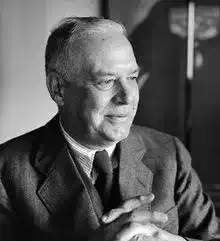
Wallace Stevens
Wallace Stevens was a prominent American Modernist poet. He is known for his meticulously crafted verse that explores the relationship between imagination and reality, the role of the poet in society, and the nature of beauty and perception. His work is characterized by its philosophical depth, vivid imagery, and distinctive use of language, often evoking a sense of rich, sensory experience.

Conrad Aiken

Archibald Mcleish
Archibald MacLeish was an influential American poet, playwright, and essayist. His work is marked by a strong sense of civic responsibility and a deep exploration of American identity and the individual's role in society. MacLeish sought in poetry a way to understand and articulate the complexities of his time, often resorting to historical and mythological themes.

Marianne Moore
Wallace Stevens
Wallace Stevens was a prominent American Modernist poet. He is known for his meticulously crafted verse that explores the relationship between imagination and reality, the role of the poet in society, and the nature of beauty and perception. His work is characterized by its philosophical depth, vivid imagery, and distinctive use of language, often evoking a sense of rich, sensory experience.
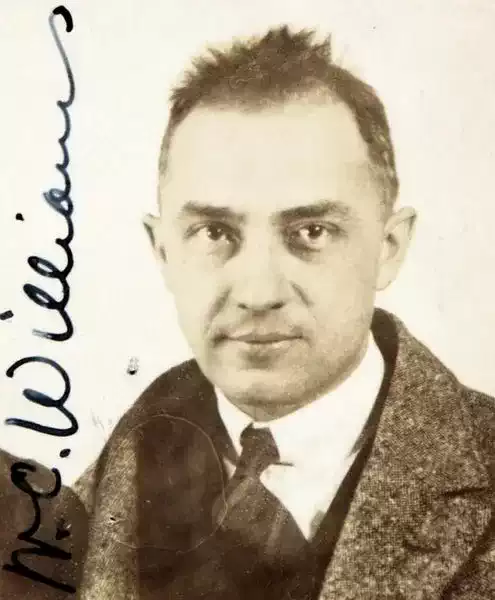
William Carlos Williams
William Carlos Williams was an American poet, physician, and writer closely associated with the Modernist movement. His poetry is characterized by its focus on everyday American life, colloquial speech, and vivid imagery, often drawing inspiration from the ordinary objects and experiences of his surroundings. Williams championed the idea of a distinctly American poetry, free from European influences, and his work significantly impacted the development of Imagism and later poetic movements.