

Awards
Gottfried Keller Preis
Description
History and Origin
The Gottfried Keller Prize is one of the oldest and most respected literary awards in Switzerland, founded in 1921. It is awarded by the Gottfried Keller Foundation, based in Zurich. The prize honors the work of German-language writers, with a strong emphasis on Swiss authors, recognizing their contribution to literature and culture. The prize is named in homage to Gottfried Keller (1819-1890), one of the most important Swiss writers in German, known for his novels and short stories that portray life in 19th-century Switzerland with realism and psychological depth.
Selection Criteria
The selection criteria for the Gottfried Keller Prize are rigorous and focus on literary quality, originality, and the relevance of the author's work. It is not a prize for a specific work, but rather a recognition of the author's entire career and impact. The Gottfried Keller Foundation appoints a jury composed of academics, literary critics, and other experts who evaluate the submissions. The jury's decision is known for its independence and its attention to literary excellence, often distinguishing authors who, although critically acclaimed, may not be as widely known to the general public.
Cultural Relevance
The relevance of the Gottfried Keller Prize lies in its ability to highlight and legitimize authors who shape the German-language literary landscape. Over the decades, the prize has been awarded to prominent figures who have explored themes such as Swiss identity, history, politics, the human condition, and the complexities of modern society. Its connection to Gottfried Keller lends it significant historical and cultural weight, reinforcing the importance of Swiss literary tradition while encouraging innovation and experimentation.
Notable Laureates
Throughout its history, the prize has been awarded to an impressive list of writers, including:
- Hermann Hesse (although he declined the prize)
- Max Frisch
- Friedrich Dürrenmatt
- Peter Bichsel
- Adolf Muschg
- Urs Widmer
- Herta Müller (who would later win the Nobel Prize in Literature)
- Lukas Bärfuss
- Ilma Rakusa
The diversity of styles and genres represented by the laureates demonstrates the breadth of the Foundation's vision and its dedication to recognizing the richness of contemporary literature.
An interesting fact about the prize is that its awarding has sometimes generated debates and discussions in the literary community, reflecting the inherent subjectivity in artistic evaluation and the significance the prize holds.
Legacy and Impact
Its longevity and the quality of its laureates solidify the Gottfried Keller Prize as a fundamental landmark in the German-language literary scene, a seal of quality and recognition that boosts the careers of its winners and enriches cultural heritage.
Winners

Fleur Jaeggy


Noëlle Revaz

Adolf Muschg

Thomas Hürlimann

Pietro de Marchi
Pietro de Marchi is an Italian-speaking Swiss writer, known for his prose that shifts between realism and fantasy, exploring the complexities of identity and memory. His work often reflects on the experience of immigration and cultural shock, with a sensitive eye for human relationships. He is recognized for his ability to create engaging narratives and memorable characters, addressing themes such as exile, the search for belonging, and the influence of the past on the present. De Marchi is an important voice in contemporary Swiss literature.

Gerold Späth

Fabio Pusterla

Klaus Merz

Agota Kristof


Peter Bichsel

Giovanni Orelli

Gerhard Meier

Erika Burkart

Jacques Mercanton

Herbert Lüthy

Hermann Lenz


Philippe Jaccottet
Philippe Jaccottet was a French-language Swiss poet and essayist, widely recognized for his lyrical and reflective work. His poetry explores the relationship between man and nature, the passage of time, memory, and the search for a more attentive gaze upon the world. Jaccottet also distinguished himself as a translator and literary critic, leaving a significant intellectual legacy.

Max Wehrli
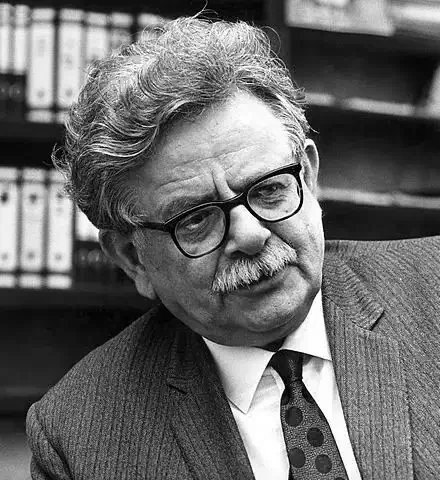
Elias Canetti

Hans Urs von Balthasar

Ignazio Silone


Marcel Raymond

Golo Mann

Edzard Schaper

Meinrad Inglin

Emil Staiger

Maurice Zermatten

Max Rychner

Werner Kaegi

Gertrud von Le Fort

Rudolf Kassner


Fritz Ernst

Robert Faesi

Ernst Gagliardi
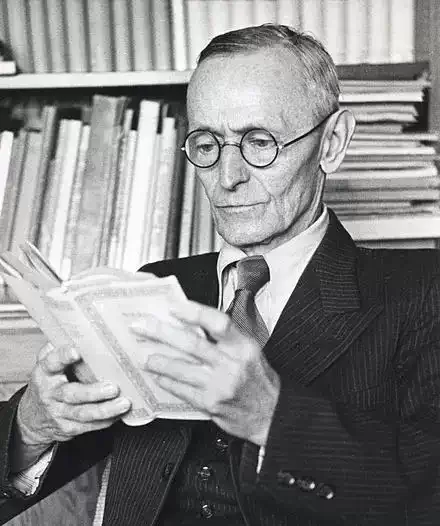
Hermann Hesse
Hermann Hesse was a German-born poet, novelist, and painter who later became a Swiss citizen. Awarded the Nobel Prize in Literature in 1946, his works explore themes of self-discovery, spirituality, and the duality of human nature. Hesse's early life was marked by a search for identity, influenced by his parents' missionary work and his own spiritual leanings. His literary career spanned decades, producing influential novels like 'Siddhartha,' 'Demian,' and 'Steppenwolf,' which resonated with readers seeking meaning in a rapidly changing world.

Hans Carossa

Josef Nadler
Charles-Ferdinand Ramuz
Charles-Ferdinand Ramuz was a French-speaking Swiss writer. He is considered one of the greatest Swiss writers of the 20th century. His works often portray rural life and the Swiss landscape.

Heinrich Federer
