

Poems in this topic
Relationships and Family
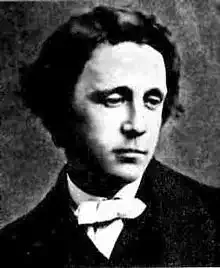
Lewis Carroll
Speak Roughly to Your Little Boy
Speak Roughly to Your Little Boy
And with that she
began nursing her child again, singing a sort of
lullaby to it as she did so, and giving it a violent
shake at the end of every line:
"Speak roughly to your little boy,
And beat him when he sneezes;
He only does it to annoy,
Because he knows it teases."CHORUS
(in which the cook and the baby joined): "
Wow! wow! wow!"While the Duchess
sang the second verse of
the song, she kept tossing the baby violently up
and down, and the poor little thing howled so,
that Alice could hardly hear the words:
"I speak severely to my boy,
I beat him when he sneezes;
For he can thoroughly enjoy
The pepper when he pleases!" CHORUS"Wow! wow! wow!"
214
Lewis Carroll
Photography Extraordinary
Photography Extraordinary
The MilkandWater
School
Alas! she would not hear my prayer!
Yet it were rash to tear my hair;
Disfigured, I should be less fair.
She was unwise, I may say blind;
Once she was lovingly inclined;
Some circumstance has changed her mind.
The StrongMinded
or MatterofFact
School
Well! so my offer was no go!
She might do worse, I told her so;
She was a fool to answer "No".
However, things are as they stood;
Nor would I have her if I could,
For there are plenty more as good.
The Spasmodic or German School
Firebrands and Daggers! hope hath fled!
To atoms dash the doubly dead!
My brain is firemy
heart is lead!
Her soul is flint, and what am I?
Scorch'd by her fierce, relentless eye,
Nothingness is my destiny!
179
Lewis Carroll
Phantasmagoria CANTO IV ( Hys Nouryture )
Phantasmagoria CANTO IV ( Hys Nouryture )
"OH, when I was a little Ghost,
A merry time had we!
Each seated on his favourite post,
We chumped and chawed the buttered toast
They gave us for our tea."
"That story is in print!" I cried.
"Don't say it's not, because
It's known as well as Bradshaw's Guide!"
(The Ghost uneasily replied
He hardly thought it was).
"It's not in Nursery Rhymes? And yet
I almost think it is '
Three little Ghosteses' were set
'On posteses,' you know, and ate
Their 'buttered toasteses.'
"I have the book; so if you doubt it "
I turned to search the shelf.
"Don't stir!" he cried. "We'll do without it:
I now remember all about it;
I wrote the thing myself.
"It came out in a 'Monthly,' or
At least my agent said it did:
Some literary swell, who saw
It, thought it seemed adapted for
The Magazine he edited.
"My father was a Brownie, Sir;
My mother was a Fairy.
The notion had occurred to her,
The children would be happier,
If they were taught to vary.
"The notion soon became a craze;
And, when it once began, she
Brought us all out in different ways One
was a Pixy, two were Fays,
Another was a Banshee;
"The Fetch and Kelpie went to school
And gave a lot of trouble;
Next came a Poltergeist and Ghoul,
And then two Trolls (which broke the rule),
A Goblin, and a Double
"(If that's a snuffbox
on the shelf,"
He added with a yawn,
"I'll take a pinch) next
came an Elf,
And then a Phantom (that's myself),
And last, a Leprechaun.
"One day, some Spectres chanced to call,
Dressed in the usual white:
I stood and watched them in the hall,
And couldn't make them out at all,
They seemed so strange a sight.
"I wondered what on earth they were,
That looked all head and sack;
But Mother told me not to stare,
And then she twitched me by the hair,
And punched me in the back.
"Since then I've often wished that I
Had been a Spectre born.
But what's the use?" (He heaved a sigh.)
"THEY are the ghostnobility,
And look on US with scorn.
"My phantomlife
was soon begun:
When I was barely six,
I went out with an older one And
just at first I thought it fun,
And learned a lot of tricks.
"I've haunted dungeons, castles, towers Wherever
I was sent:
I've often sat and howled for hours,
Drenched to the skin with driving showers,
Upon a battlement.
"It's quite oldfashioned
now to groan
When you begin to speak:
This is the newest thing in tone "
And here (it chilled me to the bone)
He gave an AWFUL squeak.
"Perhaps," he added, "to YOUR ear
That sounds an easy thing?
Try it yourself, my little dear!
It took ME something like a year,
With constant practising.
"And when you've learned to squeak, my man,
And caught the double sob,
You're pretty much where you began:
Just try and gibber if you can!
That's something LIKE a job!
"I'VE tried it, and can only say
I'm sure you couldn't do it, e
ven if you practised night and day,
Unless you have a turn that way,
And natural ingenuity.
"Shakspeare I think it is who treats
Of Ghosts, in days of old,
Who 'gibbered in the Roman streets,'
Dressed, if you recollect, in sheets They
must have found it cold.
"I've often spent ten pounds on stuff,
In dressing as a Double;
But, though it answers as a puff,
It never has effect enough
To make it worth the trouble.
"Long bills soon quenched the little thirst
I had for being funny.
The settingup
is always worst:
Such heaps of things you want at first,
One must be made of money!
"For instance, take a Haunted Tower,
With skull, crossbones,
and sheet;
Blue lights to burn (say) two an hour,
Condensing lens of extra power,
And set of chains complete:
"What with the things you have to hire The
fitting on the robe And
testing all the coloured fire The
outfit of itself would tire
The patience of a Job!
"And then they're so fastidious,
The HauntedHouse
Committee:
I've often known them make a fuss
Because a Ghost was French, or Russ,
Or even from the City!
"Some dialects are objected to For
one, the IRISH brogue is:
And then, for all you have to do,
One pound a week they offer you,
And find yourself in Bogies!
178
Lewis Carroll
My Fancy
My Fancy
I painted her a gushing thing,
With years about a score;
I little thought to find they were
A least a dozen more;
My fancy gave her eyes of blue,
A curly auburn head:
I came to find the blue a green,
The auburn turned to red.
She boxed my ears this morning,
They tingled very much;
I own that I could wish her
A somewhat lighter touch;
And if you ask me how
Her charms might be improved,
I would not have them added to,
But just a few removed!
She has the bear's ethereal grace,
The bland hyaena's laugh,
The footstep of the elephant,
The neck of a giraffe;
I love her still, believe me,
Though my heart its passion hides;
"She's all my fancy painted her,"
But oh! how much besides!
220
Lewis Carroll
Dedication
Dedication
Inscribed to a Dear Child:
In Memory of Golden Summer Hours
And Whispers of a Summer Sea
Girt with a boyish garb for boyish task,
Eager she wields her spade: yet loves as well
Rest on a friendly knee, intent to ask
The tale he loves to tell.
Rude spirits of the seething outer strife,
Unmeet to read her pure and simple spright,
Deem if you list, such hours a waste of life,
Empty of all delight!
Chat on, sweet Maid, and rescue from annoy
Hearts that by wiser talk are unbeguiled.
Ah, happy he who owns that tenderest joy,
The heartlove
of a child!
234
Lewis Carroll
Bessie's Song To Her Doll
Bessie's Song To Her Doll
Matilda Jane, you never look
At any toy or picturebook.
I show you pretty things in vain
You must be blind, Matilda Jane!
I ask you riddles, tell you tales,
But all our conversation fails.
You never answer me again
I fear you're dumb, Matilda Jane!
Matilda darling, when I call,
You never seem to hear at all.
I shout with all my might and main
But you're so deaf, Matilda Jane!
Matilda Jane, you needn't mind,
For, though you're deaf and dumb and blind,
There's some one loves you, it is plain
And that is me, Matilda Jane!
291
Lewis Carroll
A Valentine
A Valentine
Sent to a friend who had complained that I was glad enough to see
him when he came, but didn't seem to miss him if he stayed away.
And cannot pleasures, while they last,
Be actual unless, when past,
They leave us shuddering and aghast,
With anguish smarting?
And cannot friends be firm and fast,
And yet bear parting?
And must I then, at Friendship's call,
Calmly resign the little all
(Trifling, I grant, it is and small)
I have of gladness,
And lend my being to the thrall
Of gloom and sadness?
And think you that I should be dumb,
And full DOLORUM OMNIUM,
Excepting when YOU choose to come
And share my dinner?
At other times be sour and glum
And daily thinner?
Must he then only live to weep,
Who'd prove his friendship true and deep
By day a lonely shadow creep,
At nighttime
languish,
Oft raising in his broken sleep
The moan of anguish?
The lover, if for certain days
His fair one be denied his gaze,
Sinks not in grief and wild amaze,
But, wiser wooer,
He spends the time in writing lays,
And posts them to her.
And if the verse flow free and fast,
Till even the poet is aghast,
A touching Valentine at last
The post shall carry,
When thirteen days are gone and past
Of February.
Farewell, dear friend, and when we meet,
In desert waste or crowded street,
Perhaps before this week shall fleet,
Perhaps tomorrow.
I trust to find YOUR heart the seat
Of wasting sorrow.
213
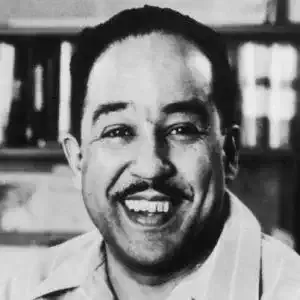
Langston Hughes
When Sue Wears Red
When Sue Wears Red
When Susanna Jones wears red
her face is like an ancient cameo
Turned brown by the ages.
Come with a blast of trumphets, Jesus!
When Susanna Jones wears red
A queen from some time-dead Egyptian night
Walks once again.
Blow trumphets, Jesus!
And the beauty of Susanna Jones in red
Burns in my heart a love-fire sharp like a pain.
Sweet silver trumphets, Jesus!
When Susanna Jones wears red
her face is like an ancient cameo
Turned brown by the ages.
Come with a blast of trumphets, Jesus!
When Susanna Jones wears red
A queen from some time-dead Egyptian night
Walks once again.
Blow trumphets, Jesus!
And the beauty of Susanna Jones in red
Burns in my heart a love-fire sharp like a pain.
Sweet silver trumphets, Jesus!
369
Langston Hughes
To Artina
To Artina
I will take you heart.
I will take your soul out of your body
As though I were God.
I will not be satisfied
With the touch of your hand
Nor the sweet of your lips alone.
I will take your heart for mine.
I will take your soul.
I will be God when it comes to you.
I will take you heart.
I will take your soul out of your body
As though I were God.
I will not be satisfied
With the touch of your hand
Nor the sweet of your lips alone.
I will take your heart for mine.
I will take your soul.
I will be God when it comes to you.
524
Langston Hughes
Sylvester’s Dying Bed
Sylvester’s Dying Bed
I woke up this mornin’
’Bout half-past three.
All the womens in town
Was gathered round me.
Sweet gals was a-moanin’,
“Sylvester’s gonna die!”
And a hundred pretty mamas
Bowed their heads to cry.
I woke up little later
’Bout half-past fo’,
The doctor ‘n’ undertaker’s
Both at ma do’.
Black gals was a-beggin’,
“You can’t leave us here!”
Brown-skins cryin’, “Daddy!
Honey! Baby! Don’t go, dear!”
But I felt ma time’s a-comin’,
And I know’d I’s dyin’ fast.
I seed the River Jerden
A-creepin’ muddy past—
But I’s still Sweet Papa ’Vester,
Yes, sir! Long as life do last!
So I hollers, “Com’ere, babies,
Fo’ to love yo’ daddy right!”
And I reaches up to hug ’em—
When the Lawd put out the light.
Then everything was darkness
In a great ... big ... night.
370
Langston Hughes
Quiet Girl
Quiet Girl
I would liken you
To a night without stars
Were it not for your eyes.
I would liken you
To a sleep without dreams
Were it not for your songs.
I would liken you
To a night without stars
Were it not for your eyes.
I would liken you
To a sleep without dreams
Were it not for your songs.
424
Langston Hughes
Love Song for Lucinda
Love Song for Lucinda
Love
Is a ripe plum
Growing on a purple tree.
Taste it once
And the spell of its enchantment
Will never let you be.
Love
Is a bright star
Glowing in far Southern skies.
Look too hard
And its burning flame
Will always hurt your eyes.
Love
Is a high mountain
Stark in a windy sky.
If you
Would never lose your breath
Do not climb too high.
Love
Is a ripe plum
Growing on a purple tree.
Taste it once
And the spell of its enchantment
Will never let you be.
Love
Is a bright star
Glowing in far Southern skies.
Look too hard
And its burning flame
Will always hurt your eyes.
Love
Is a high mountain
Stark in a windy sky.
If you
Would never lose your breath
Do not climb too high.
420
Langston Hughes
Juke Box Love Song
Juke Box Love Song
I could take the Harlem night
and wrap around you,
Take the neon lights and make a crown,
Take the Lenox Avenue busses,
Taxis, subways,
And for your love song tone their rumble down.
Take Harlem's heartbeat,
Make a drumbeat,
Put it on a record, let it whirl,
And while we listen to it play,
Dance with you till day--
Dance with you, my sweet brown Harlem girl.
418
Langston Hughes
In Time Of Silver Rain
In Time Of Silver Rain
In time of silver rain
The earth puts forth new life again,
Green grasses grow
And flowers lift their heads,
And over all the plain
The wonder spreads
Of Life,
Of Life,
Of life!
In time of silver rain
The butterflies lift silken wings
To catch a rainbow cry,
And trees put forth new leaves to sing
In joy beneath the sky
As down the roadway
Passing boys and girls
Go singing, too,
In time of silver rain When spring
And life
Are new.
In time of silver rain
The earth puts forth new life again,
Green grasses grow
And flowers lift their heads,
And over all the plain
The wonder spreads
Of Life,
Of Life,
Of life!
In time of silver rain
The butterflies lift silken wings
To catch a rainbow cry,
And trees put forth new leaves to sing
In joy beneath the sky
As down the roadway
Passing boys and girls
Go singing, too,
In time of silver rain When spring
And life
Are new.
415
Langston Hughes
Brass Spittoons
Brass Spittoons
Clean the spittoons, boy.
Detroit,
Chicago,
Atlantic City,
Palm Beach.
Clean the spittoons.
The steam in hotel kitchens,
And the smoke in hotel lobbies,
And the slime in hotel spittoons:
Part of my life.
Hey, boy!
A nickel,
A dime,
A dollar,
Two dollars a day.
Hey, boy!
A nickel,
A dime,
A dollar,
Two dollars
Buy shoes for the baby.
House rent to pay.
Gin on Saturday,
Church on Sunday.
My God!
Babies and gin and church
And women and Sunday
All mixed with dimes and
Dollars and clean spittoons
And house rent to pay.
Hey, boy!
A bright bowl of brass is beautiful to the Lord.
Bright polished brass like the cymbals
Of King David’s dancers,
Like the wine cups of Solomon.
Hey, boy!
A clean spittoon on the altar of the Lord.
A clean bright spittoon all newly polished—
At least I can offer that.
Com’mere, boy!
461
Langston Hughes
-50
-50
I’m all alone in this world, she said,
Ain’t got nobody to share my bed,
Ain’t got nobody to hold my hand—
The truth of the matter’s
I ain’t got no man.
Big Boy opened his mouth and said,
Trouble with you is
You ain’t got no head!
If you had a head and used your mind
You could have me with you
All the time.
She answered, Babe, what must I do?
He said, Share your bed—
And your money, too.
324
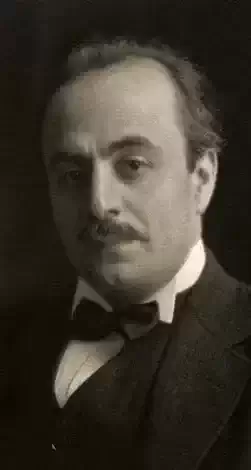
Khalil Gibran
Two Infants II
Two Infants II
A prince stood on the balcony of his palace addressing a great multitude summoned for
the occasion and said, "Let me offer you and this whole fortunate country my
congratulations upon the birth of a new prince who will carry the name of my noble
family, and of whom you will be justly proud. He is the new bearer of a great and
illustrious ancestry, and upon him depends the brilliant future of this realm. Sing and
be merry!" The voices of the throngs, full of joy and thankfulness, flooded the sky with
exhilarating song, welcoming the new tyrant who would affix the yoke of oppression to
their necks by ruling the weak with bitter authority, and exploiting their bodies and
killing their souls. For that destiny, the people were singing and drinking ecstatically to
the heady of the new Emir.
Another child entered life and that kingdom at the same time. While the crowds were
glorifying the strong and belittling themselves by singing praise to a potential despot,
and while the angels of heaven were weeping over the people's weakness and
servitude, a sick woman was thinking. She lived in an old, deserted hovel and, lying in
her hard bed beside her newly born infant wrapped with ragged swaddles, was starving
to death. She was a penurious and miserable young wife neglected by humanity; her
husband had fallen into the trap of death set by the prince's oppression, leaving a
solitary woman to whom God had sent, that night, a tiny companion to prevent her
from working and sustaining life.
As the mass dispersed and silence was restored to the vicinity, the wretched woman
placed the infant on her lap and looked into his face and wept as if she were to baptize
him with tears. And with a hunger weakened voice she spoke to the child saying, "Why
have you left the spiritual world and come to share with me the bitterness of earthly
life? Why have you deserted the angels and the spacious firmament and come to this
miserable land of humans, filled with agony, oppression, and heartlessness? I have
nothing to give you except tears; will you be nourished on tears instead of milk? I have
no silk clothes to put on you; will my naked, shivering arms give you warmth? The little
animals graze in the pasture and return safely to their shed; and the small birds pick
the seeds and sleep placidly between the branches. But you, my beloved, have naught
save a loving but destitute mother."
Then she took the infant to her withered breast and clasped her arms around him as if
wanting to join the two bodies in one, as before. She lifted her burning eyes slowly
toward heaven and cried, "God! Have mercy on my unfortunate countrymen!"
At that moment the clouds floated from the face of the moon, whose beams penetrated
the transom of that poor home and fell upon two corpses.
306
Khalil Gibran
The Widow and Her Son XXI
The Widow and Her Son XXI
Night fell over North Lebanon and snow was covering the villages surrounded by the
Kadeesha Valley, giving the fields and prairies the appearance of a great sheet of
parchment upon which the furious Nature was recording her many deeds. Men came
home from the streets while silence engulfed the night.
In a lone house near those villages lived a woman who sat by her fireside spinning
wool, and at her side was her only child, staring now at the fire and then at his mother.
A terrible roar of thunder shook the house and the little boy shook with fright. He threw
his arms about his mother, seeking protection from Nature in her affection. She took
him to her bosom and kissed him; then she say him on her lap and said, "Do not fear,
my son, for Nature is but comparing her great power to man's weakness. There is a
Supreme Being beyond the falling snow and the heavy clouds and the blowing wind,
and He knows the needs of the earth, for He made it; and He looks upon the weak with
merciful eyes.
"Be brave, my boy. Nature smiles in Spring and laughs in Summer and yawns in
Autumn, but now she is weeping; and with her tears she waters life, hidden under the
earth.
"Sleep, my dear child; your father is viewing us from Eternity. The snow and thunder
bring us closer to him at this time.
"Sleep, my beloved, for this white blanket which makes us cold, keeps the seeds warm,
and these war-like things will produce beautiful flowers when Nisan comes.
"Thus, my child, man cannot reap love until after sad and revealing separation, and
bitter patience, and desperate hardship. Sleep, my little boy; sweet dreams will find
your soul who is unafraid of the terrible darkness of night and the biting frost."
The little boy looked upon his mother with sleep-laden eyes and said, "Mother, my eyes
are heavy, but I cannot go to bed without saying my prayer."
The woman looked at his angelic face, her vision blurred by misted eyes, and said,
"Repeat with me, my boy - 'God, have mercy on the poor and protect them from the
winter; warm their thin-clad bodies with Thy merciful hands; look upon the orphans
who are sleeping in wretched houses, suffering from hunger and cold. Hear, oh Lord,
the call of widows who are helpless and shivering with fear for their young. Open, oh
Lord, the hearts of all humans, that they may see the misery of the weak. Have mercy
upon the sufferers who knock on doors, and lead the wayfarers into warm places.
Watch, oh Lord, over the little birds and protect the trees and fields from the anger of
the storm; for Thou art merciful and full of love.'"
As Slumber captured the boy's spirit, his mother placed him in the bed and kissed his
eyes with quivering lips. Then she went back and sat by the hearth, spinning the wool
to make him raiment.
360
Khalil Gibran
The Life of Love XVI
The Life of Love XVI
Spring
Come, my beloved; let us walk amidst the knolls,
For the snow is water, and Life is alive from its
Slumber and is roaming the hills and valleys.
Let us follow the footprints of Spring into the
Distant fields, and mount the hilltops to draw
Inspiration high above the cool green plains.
Dawn of Spring has unfolded her winter-kept garment
And placed it on the peach and citrus trees; and
They appear as brides in the ceremonial custom of
the Night of Kedre.
The sprigs of grapevine embrace each other like
Sweethearts, and the brooks burst out in dance
Between the rocks, repeating the song of joy;
And the flowers bud suddenly from the heart of
Nature, like foam from the rich heart of the sea.
Come, my beloved; let us drink the last of Winter's
Tears from the cupped lilies, and soothe our spirits
With the shower of notes from the birds, and wander
In exhilaration through the intoxicating breeze.
Let us sit by that rock, where violets hide; let us
Pursue their exchange of the sweetness of kisses.
Summer
Let us go into the fields, my beloved, for the
Time of harvest approaches, and the sun's eyes
Are ripening the grain.
Let us tend the fruit of the earth, as the
Spirit nourishes the grains of Joy from the
Seeds of Love, sowed deep in our hearts.
Let us fill our bins with the products of
Nature, as life fills so abundantly the
Domain of our hearts with her endless bounty.
Let us make the flowers our bed, and the
Sky our blanket, and rest our heads together
Upon pillows of soft hay.
Let us relax after the day's toil, and listen
To the provoking murmur of the brook.
Autumn
Let us go and gather grapes in the vineyard
For the winepress, and keep the wine in old
Vases, as the spirit keeps Knowledge of the
Ages in eternal vessels.
Let us return to our dwelling, for the wind has
Caused the yellow leaves to fall and shroud the
Withering flowers that whisper elegy to Summer.
Come home, my eternal sweetheart, for the birds
Have made pilgrimage to warmth and lest the chilled
Prairies suffering pangs of solitude. The jasmine
And myrtle have no more tears.
Let us retreat, for the tired brook has
Ceased its song; and the bubblesome springs
Are drained of their copious weeping; and
Their cautious old hills have stored away
Their colorful garments.
Come, my beloved; Nature is justly weary
And is bidding her enthusiasm farewell
With quiet and contented melody.
Winter
Come close to me, oh companion of my full life;
Come close to me and let not Winter's touch
Enter between us. Sit by me before the hearth,
For fire is the only fruit of Winter.
Speak to me of the glory of your heart, for
That is greater than the shrieking elements
Beyond our door.
Bind the door and seal the transoms, for the
Angry countenance of the heaven depresses my
Spirit, and the face of our snow-laden fields
Makes my soul cry.
Feed the lamp with oil and let it not dim, and
Place it by you, so I can read with tears what
Your life with me has written upon your face.
Bring Autumn's wine. Let us drink and sing the
Song of remembrance to Spring's carefree sowing,
And Summer's watchful tending, and Autumn's
Reward in harvest.
Come close to me, oh beloved of my soul; the
Fire is cooling and fleeing under the ashes.
Embrace me, for I fear loneliness; the lamp is
Dim, and the wine which we pressed is closing
Our eyes. Let us look upon each other before
They are shut.
Find me with your arms and embrace me; let
Slumber then embrace our souls as one.
Kiss me, my beloved, for Winter has stolen
All but our moving lips.
You are close by me, My Forever.
How deep and wide will be the ocean of Slumber,
And how recent was the dawn!
424
Khalil Gibran
Sail your smile into the air; it will reach and enliven me!
Sail your smile into the air; it will reach and enliven me!
Breathe your fragrance into the air; it will sustain me!
Where are you, me beloved?
Oh, how great is Love!
And how little am I!
Breathe your fragrance into the air; it will sustain me!
Where are you, me beloved?
Oh, how great is Love!
And how little am I!
877

Kazi Nazrul Islam
You Are So Handsome
You Are So Handsome
You are so handsome that I can't take my eye off you,
is that my crime?
The bird that cries beholding the moon doesn't bother the moon.
I watch the flower's gradual unfolding, but the flower
doesn't mind
Nor does the cloud when the admiring bird circles round it.
The sun-flower knows it will never get the sun, and yet
undismay'd
It watches its sovereign, it is content just watching
I've got the gift of vision so that I may see you,
you beautiful being
Let this wish of mine be realized, my dearest one.
[Original: Tumi shundor tai cheye thaki; Translation: Abu Rushd]
859
Kazi Nazrul Islam
Victoress
Victoress
O my queen
Today at last I accept defeat
My battle-flag lies at your feet
My immortal sword of victory
Is tired now and heavy.
I cosign to you the weight of it now,
I make my surrender a wreath round your brow.
O goddess of my life,
When you look at me with tears in your eyes,
Great world-conquering waves seem to roll and rise.
Today in my rebel's chariot of blood, you are the rider;
Your fluttering sari has become Heaven's border;
All my arrows are yours, your garland their quiver
Only by floating in your tears can I now be a conquerer.
[Translation: William Radice]
601