
Ethics and Morality

Kazi Nazrul Islam
Send from Heaven Again
Send again, Hazrat! from Heaven
The message of justice and toleration!
I can no longer see this hateful hitting
between man and man!
Tell, them Hazrat! tell them all
Who pretend to follow thy divine call,
To love all men as the creatures of God!
And to regard all as the creation of God!
The virtue of Justice and Toleration,
Which was yours and which has made
Half the world to believe in you -
That virtue we have not learnt to value!
The slaves and dupes that we are,
The Queen and Hadith we merely hear!
Despised in the world we are
By disrespecting your commands clear!
The suffering humanity we hate,
But we say: We submit to God Compassionate!
[Translation: Mizanur Rahman]
552

John Milton
Paradise Regained: The Third Book
So spake the Son of God; and Satan stood
A while as mute, confounded what to say,
What to reply, confuted and convinced
Of his weak arguing and fallacious drift;
At length, collecting all his serpent wiles,
With soothing words renewed, him thus accosts:
"I see thou know'st what is of use to know,
What best to say canst say, to do canst do;
Thy actions to thy words accord; thy words
To thy large heart give utterance due; thy heart
Contains of good, wise, just, the perfet shape.
Should kings and nations from thy mouth consult,
Thy counsel would be as the oracle
Urim and Thummim, those oraculous gems
On Aaron's breast, or tongue of Seers old
Infallible; or, wert thou sought to deeds
That might require the array of war, thy skill
Of conduct would be such that all the world
Could not sustain thy prowess, or subsist
In battle, though against thy few in arms.
These godlike virtues wherefore dost thou hide?
Affecting private life, or more obscure
In savage wilderness, wherefore deprive
All Earth her wonder at thy acts, thyself
The fame and glory-glory, the reward
That sole excites to high attempts the flame
Of most erected spirits, most tempered pure
AEthereal, who all pleasures else despise,
All treasures and all gain esteem as dross,
And dignities and powers, all but the highest?
Thy years are ripe, and over-ripe. The son
Of Macedonian Philip had ere these
Won Asia, and the throne of Cyrus held
At his dispose; young Scipio had brought down
The Carthaginian pride; young Pompey quelled
The Pontic king, and in triumph had rode.
Yet years, and to ripe years judgment mature,
Quench not the thirst of glory, but augment.
Great Julius, whom now all the world admires,
The more he grew in years, the more inflamed
With glory, wept that he had lived so long
Ingloroious. But thou yet art not too late."
To whom our Saviour calmly thus replied:"
Thou neither dost persuade me to seek wealth
For empire's sake, nor empire to affect
For glory's sake, by all thy argument.
For what is glory but the blaze of fame,
The people's praise, if always praise unmixed?
And what the people but a herd confused,
A miscellaneous rabble, who extol
Things vulgar, and, well weighed, scarce worth the praise?
They praise and they admire they know not what,
And know not whom, but as one leads the other;
And what delight to be by such extolled,
To live upon their tongues, and be their talk?
Of whom to be dispraised were no small praise-
His lot who dares be singularly good.
The intelligent among them and the wise
Are few, and glory scarce of few is raised.
This is true glory and renown-when God,
Looking on the Earth, with approbation marks
The just man, and divulges him through Heaven
To all his Angels, who with true applause
Recount his praises. Thus he did to Job,
When, to extend his fame through Heaven and Earth,
As thou to thy reproach may'st well remember,
He asked thee, 'Hast thou seen my servant Job?'
Famous he was in Heaven; on Earth less known,
Where glory is false glory, attributed
To things not glorious, men not worthy of fame.
They err who count it glorious to subdue
By conquest far and wide, to overrun
Large countries, and in field great battles win,
Great cities by assault. What do these worthies
But rob and spoil, burn, slaughter, and enslave
Peaceable nations, neighbouring or remote,
Made captive, yet deserving freedom more
Than those their conquerors, who leave behind
Nothing but ruin wheresoe'er they rove,
And all the flourishing works of peace destroy;
Then swell with pride, and must be titled Gods,
Great benefactors of mankind, Deliverers,
Worshipped with temple, priest, and sacrifice?
One is the son of Jove, of Mars the other;
Till conqueror Death discover them scarce men,
Rowling in brutish vices, and deformed,
Violent or shameful death their due reward.
But, if there be in glory aught of good;
It may be means far different be attained,
Without ambition, war, or violence-
By deeds of peace, by wisdom eminent,
By patience, temperance. I mention still
Him whom thy wrongs, with saintly patience borne,
Made famous in a land and times obscure;
Who names not now with honour patient Job?
Poor Socrates, (who next more memorable?)
By what he taught and suffered for so doing,
For truth's sake suffering death unjust, lives now
Equal in fame to proudest conquerors.
Yet, if for fame and glory aught be done,
Aught suffered-if young African for fame
His wasted country freed from Punic rage-
The deed becomes unpraised, the man at least,
And loses, though but verbal, his reward.
Shall I seek glory, then, as vain men seek,
Oft not deserved? I seek not mine, but His
Who sent me, and thereby witness whence I am."
To whom the Tempter, murmuring, thus replied:"
Think not so slight of glory, therein least
Resembling thy great Father. He seeks glory,
And for his glory all things made, all things
Orders and governs; nor content in Heaven,
By all his Angels glorified, requires
Glory from men, from all men, good or bad,
Wise or unwise, no difference, no exemption.
Above all sacrifice, or hallowed gift,
Glory he requires, and glory he receives,
Promiscuous from all nations, Jew, or Greek,
Or Barbarous, nor exception hath declared;
From us, his foes pronounced, glory he exacts."
To whom our Saviour fervently replied:
"And reason; since his Word all things produced,
Though chiefly not for glory as prime end,
But to shew forth his goodness, and impart
His good communicable to every soul
Freely; of whom what could He less expect
Than glory and benediction-that is, thanks-
The slightest, easiest, readiest recompense
From them who could return him nothing else,
And, not returning that, would likeliest render
Contempt instead, dishonour, obloquy?
Hard recompense, unsuitable return
For so much good, so much beneficience!
But why should man seek glory, who of his own
Hath nothing, and to whom nothing belongs
But condemnation, ignominy, and shame-
Who, for so many benefits received,
Turned recreant to God, ingrate and false,
And so of all true good himself despoiled;
Yet, sacrilegious, to himself would take
That which to God alone of right belongs?
Yet so much bounty is in God, such grace,
That who advances his glory, not their own,
Them he himself to glory will advance."
So spake the Son of God; and here again
Satan had not to answer, but stood struck
With guilt of his own sin-for he himself,
Insatiable of glory, had lost all;
Yet of another plea bethought him soon:
"Of glory, as thou wilt," said he, "so deem;
Worth or not worth the seeking, let it pass.
But to a Kingdom thou art born-ordained
To sit upon thy father David's throne,
By mother's side thy father, though thy right
Be now in powerful hands, that will not part
Easily from possession won with arms.
Judaea now and all the Promised Land,
Reduced a province under Roman yoke,
Obeys Tiberius, nor is always ruled
With temperate sway: oft have they violated
The Temple, oft the Law, with foul affronts,
Abominations rather, as did once
Antiochus. And think'st thou to regain
Thy right by sitting still, or thus retiring?
So did not Machabeus. He indeed
Retired unto the Desert, but with arms;
And o'er a mighty king so oft prevailed
That by strong hand his family obtained,
Though priests, the crown, and David's throne usurped,
With Modin and her suburbs once content.
If kingdom move thee not, let move thee zeal
And duty-zeal and duty are not slow,
But on Occasion's forelock watchful wait:
They themselves rather are occasion best-
Zeal of thy Father's house, duty to free
Thy country from her heathen servitude.
So shalt thou best fulfil, best verify,
The Prophets old, who sung thy endless reign-
The happier reign the sooner it begins.
Rein then; what canst thou better do the while?"
To whom our Saviour answer thus returned:"
All things are best fulfilled in their due time;
And time there is for all things, Truth hath said.
If of my reign Prophetic Writ hath told
That it shall never end, so, when begin
The Father in his purpose hath decreed-
He in whose hand all times and seasons rowl.
What if he hath decreed that I shall first
Be tried in humble state, and things adverse,
By tribulations, injuries, insults,
Contempts, and scorns, and snares, and violence,
Suffering, abstaining, quietly expecting
Without distrust or doubt, that He may know
What I can suffer, how obey? Who best
Can suffer best can do, best reign who first
Well hath obeyed-just trial ere I merit
My exaltation without change or end.
But what concerns it thee when I begin
My everlasting Kingdom? Why art thou
Solicitous? What moves thy inquisition?
Know'st thou not that my rising is thy fall,
And my promotion will be thy destruction?"
To whom the Tempter, inly racked, replied:"
Let that come when it comes. All hope is lost
Of my reception into grace; what worse?
For where no hope is left is left no fear.
If there be worse, the expectation more
Of worse torments me than the feeling can.
I would be at the worst; worst is my port,
My harbour, and my ultimate repose,
The end I would attain, my final good.
My error was my error, and my crime
My crime; whatever, for itself condemned,
And will alike be punished, whether thou
Reign or reign not-though to that gentle brow
Willingly I could fly, and hope thy reign,
From that placid aspect and meek regard,
Rather than aggravate my evil state,
Would stand between me and thy Father's ire
(Whose ire I dread more than the fire of Hell)
A shelter and a kind of shading cool
Interposition, as a summer's cloud.
If I, then, to the worst that can be haste,
Why move thy feet so slow to what is best?
Happiest, both to thyself and all the world,
That thou, who worthiest art, shouldst be their King!
Perhaps thou linger'st in deep thoughts detained
Of the enterprise so hazardous and high!
No wonder; for, though in thee be united
What of perfection can in Man be found,
Or human nature can receive, consider
Thy life hath yet been private, most part spent
At home, scarce viewed the Galilean towns,
And once a year Jerusalem, few days'
Short sojourn; and what thence couldst thou observe?
The world thou hast not seen, much less her glory,
Empires, and monarchs, and their radiant courts-
Best school of best experience, quickest in sight
In all things that to greatest actions lead.
The wisest, unexperienced, will be ever
Timorous, and loth, with novice modesty
(As he who, seeking asses, found a kingdom)
Irresolute, unhardy, unadventrous.
But I will bring thee where thou soon shalt quit
Those rudiments, and see before thine eyes
The monarchies of the Earth, their pomp and state-
Sufficient introduction to inform
Thee, of thyself so apt, in regal arts,
And regal mysteries; that thou may'st know
How best their opposition to withstand."
With that (such power was given him then), he took
The Son of God up to a mountain high.
It was a mountain at whose verdant feet
A spacious plain outstretched in circuit wide
Lay pleasant; from his side two rivers flowed,
The one winding, the other straight, and left between
Fair champaign, with less rivers interveined,
Then meeting joined their tribute to the sea.
Fertil of corn the glebe, of oil, and wine;
With herds the pasture thronged, with flocks the hills;
Huge cities and high-towered, that well might seem
The seats of mightiest monarchs; and so large
The prospect was that here and there was room
For barren desert, fountainless and dry.
To this high mountain-top the Tempter brought
Our Saviour, and new train of words began:"
Well have we speeded, and o'er hill and dale,
Forest, and field, and flood, temples and towers,
Cut shorter many a league. Here thou behold'st
Assyria, and her empire's ancient bounds,
Araxes and the Caspian lake; thence on
As far as Indus east, Euphrates west,
And oft beyond; to south the Persian bay,
And, inaccessible, the Arabian drouth:
Here, Nineveh, of length within her wall
Several days' journey, built by Ninus old,
Of that first golden monarchy the seat,
And seat of Salmanassar, whose success
Israel in long captivity still mourns;
There Babylon, the wonder of all tongues,
As ancient, but rebuilt by him who twice
Judah and all thy father David's house
Led captive, and Jerusalem laid waste,
Till Cyrus set them free; Persepolis,
His city, there thou seest, and Bactra there;
Ecbatana her structure vast there shews,
And Hecatompylos her hunderd gates;
There Susa by Choaspes, amber stream,
The drink of none but kings; of later fame,
Built by Emathian or by Parthian hands,
The great Seleucia, Nisibis, and there
Artaxata, Teredon, Ctesiphon,
Turning with easy eye, thou may'st behold.
All these the Parthian (now some ages past
By great Arsaces led, who founded first
That empire) under his dominion holds,
From the luxurious kings of Antioch won.
And just in time thou com'st to have a view
Of his great power; for now the Parthian king
In Ctesiphon hath gathered all his host
Against the Scythian, whose incursions wild
Have wasted Sogdiana; to her aid
He marches now in haste. See, though from far,
His thousands, in what martial equipage
They issue forth, steel bows and shafts their arms,
Of equal dread in flight or in pursuit-
All horsemen, in which fight they most excel;
See how in warlike muster they appear,
In rhombs, and wedges, and half-moons, and wings."
He looked, and saw what numbers numberless
The city gates outpoured, light-armed troops
In coats of mail and military pride.
In mail their horses clad, yet fleet and strong,
Prauncing their riders bore, the flower and choice
Of many provinces from bound to bound-
From Arachosia, from Candaor east,
And Margiana, to the Hyrcanian cliffs
Of Caucasus, and dark Iberian dales;
From Atropatia, and the neighbouring plains
Of Adiabene, Media, and the south
Of Susiana, to Balsara's haven.
He saw them in their forms of battle ranged,
How quick they wheeled, and flying behind them shot
Sharp sleet of arrowy showers against the face
Of their pursuers, and overcame by flight;
The field all iron cast a gleaming brown.
Nor wanted clouds of foot, nor, on each horn,
Cuirassiers all in steel for standing fight,
Chariots, or elephants indorsed with towers
Of archers; nor of labouring pioners
A multitude, with spades and axes armed,
To lay hills plain, fell woods, or valleys fill,
Or where plain was raise hill, or overlay
With bridges rivers proud, as with a yoke:
Mules after these, camels and dromedaries,
And waggons fraught with utensils of war.
Such forces met not, nor so wide a camp,
When Agrican, with all his northern powers,
Besieged Albracea, as romances tell,
The city of Gallaphrone, from thence to win
The fairest of her sex, Angelica,
His daughter, sought by many prowest knights,
Both Paynim and the peers of Charlemane.
Such and so numerous was their chivalry;
At sight whereof the Fiend yet more presumed,
And to our Saviour thus his words renewed:"
That thou may'st know I seek not to engage
Thy virtue, and not every way secure
On no slight grounds thy safety, hear and mark
To what end I have brought thee hither, and shew
All this fair sight. Thy kingdom, though foretold
By Prophet or by Angel, unless thou
Endeavour, as thy father David did,
Thou never shalt obtain: prediction still
In all things, and all men, supposes means;
Without means used, what it predicts revokes.
But say thou wert possessed of David's throne
By free consent of all, none opposite,
Samaritan or Jew; how couldst thou hope
Long to enjoy it quiet and secure
Between two such enclosing enemies,
Roman and Parthian? Therefore one of these
Thou must make sure thy own: the Parthian first,
By my advice, as nearer, and of late
Found able by invasion to annoy
Thy country, and captive lead away her kings,
Antigonus and old Hyrcanus, bound,
Maugre the Roman. It shall be my task
To render thee the Parthian at dispose,
Choose which thou wilt, by conquest or by league.
By him thou shalt regain, without him not,
That which alone can truly reinstall thee
In David's royal seat, his true successor-
Deliverance of thy brethren, those Ten Tribes
Whose offspring in his territory yet serve
In Habor, and among the Medes dispersed:
The sons of Jacob, two of Joseph, lost
Thus long from Israel, serving, as of old
Their fathers in the land of Egypt served,
This offer sets before thee to deliver.
These if from servitude thou shalt restore
To their inheritance, then, nor till then,
Thou on the throne of David in full glory,
From Egypt to Euphrates and beyond,
Shalt reign, and Rome or Caesar not need fear."
To whom our Saviour answered thus, unmoved:
"Much ostentation vain of fleshly arm
And fragile arms, much instrument of war,
Long in preparing, soon to nothing brought,
Before mine eyes thou hast set, and in my ear
Vented much policy, and projects deep
Of enemies, of aids, battles, and leagues,
Plausible to the world, to me worth naught.
Means I must use, thou say'st; prediction else
Will unpredict, and fail me of the throne!
My time, I told thee (and that time for thee
Were better farthest off), is not yet come.
When that comes, think not thou to find me slack
On my part aught endeavouring, or to need
Thy politic maxims, or that cumbersome
Luggage of war there shewn me-argument
Of human weakness rather than of strength.
My brethren, as thou call'st them, those Ten Tribes,
I must deliver, if I mean to reign
David's true heir, and his full sceptre sway
To just extent over all Israel's sons!
But whence to thee this zeal? Where was it then
For Israel, or for David, or his throne,
When thou stood'st up his tempter to the pride
Of numbering Israel-which cost the lives
of threescore and ten thousand Israelites
By three days' pestilence? Such was thy zeal
To Israel then, the same that now to me.
As for those captive tribes, themselves were they
Who wrought their own captivity, fell off
From God to worship calves, the deities
Of Egypt, Baal next and Ashtaroth,
And all the idolatries of heathen round,
Besides their other worse than heathenish crimes;
Nor in the land of their captivity
Humbled themselves, or penitent besought
The God of their forefathers, but so died
Impenitent, and left a race behind
Like to themselves, distinguishable scarce
From Gentiles, but by circumcision vain,
And God with idols in their worship joined.
Should I of these the liberty regard,
Who, freed, as to their ancient patrimony,
Unhumbled, unrepentant, unreformed,
Headlong would follow, and to their gods perhaps
Of Bethel and of Dan? No; let them serve
Their enemies who serve idols with God.
Yet He at length, time to himself best known,
Remembering Abraham, by some wondrous call
May bring them back, repentant and sincere,
And at their passing cleave the Assyrian flood,
While to their native land with joy they haste,
As the Red Sea and Jordan once he cleft,
When to the Promised Land their fathers passed.
To his due time and providence I leave them."
So spake Israel's true King, and to the Fiend
Made answer meet, that made void all his wiles.
So fares it when with truth falsehood contends.
551

Rabindranath Tagore
Stray Birds 51 - 60
YOUR idol is shattered in the dust
to prove that God's dust is greater than
your idol.
52
MAN does not reveal himself in his history,
he struggles up through it.
53
WHILE the glass lamp rebukes the earthen for calling it cousin,
the moon rises, and the glass lamp,
with a bland smile, calls her,
'My dear, dear sister.'
54
LIKE the meeting of the seagulls
and the waves we meet and come near.
The seagulls fly off,
the waves roll away and we depart.
55
MY day is done,
and I am like a boat drawn on the beach,
listening to the dance-music of t
he tide in the evening.
56
LIFE is given to us,
we earn it by giving it.
57
WE come nearest to the great
when we are great in humility.
58
THE sparrow is sorry for the peacock
at the burden of its tail.
59
NEVER be afraid of the moments-
thus sings the voice of the everlasting.
60
THE hurricane seeks the shortest road
by the no-road,
and suddenly ends its search in the Nowhere.
553

William Blake
Broken Love
MY Spectre around me night and day
Like a wild beast guards my way;
My Emanation far within
Weeps incessantly for my sin.
‘A fathomless and boundless deep,
There we wander, there we weep;
On the hungry craving wind
My Spectre follows thee behind.
‘He scents thy footsteps in the snow
Wheresoever thou dost go,
Thro’ the wintry hail and rain.
When wilt thou return again?
’Dost thou not in pride and scorn
Fill with tempests all my morn,
And with jealousies and fears
Fill my pleasant nights with tears?
‘Seven of my sweet loves thy knife
Has bereavèd of their life.
Their marble tombs I built with tears,
And with cold and shuddering fears.
‘Seven more loves weep night and day
Round the tombs where my loves lay,
And seven more loves attend each night
Around my couch with torches bright.
‘And seven more loves in my bed
Crown with wine my mournful head,
Pitying and forgiving all
Thy transgressions great and small.
‘When wilt thou return and view
My loves, and them to life renew?
When wilt thou return and live?
When wilt thou pity as I forgive?’
‘O’er my sins thou sit and moan:
Hast thou no sins of thy own?
O’er my sins thou sit and weep,
And lull thy own sins fast asleep.
‘What transgressions I commit
Are for thy transgressions fit.
They thy harlots, thou their slave;
And my bed becomes their grave.
‘Never, never, I return:
Still for victory I burn.
Living, thee alone I’ll have;
And when dead I’ll be thy grave.
‘Thro’ the Heaven and Earth and Hell
Thou shalt never, quell:
I will fly and thou pursue:
Night and morn the flight renew.’
‘Poor, pale, pitiable form
That I follow in a storm;
Iron tears and groans of lead
Bind around my aching head.
‘Till I turn from Female love
And root up the Infernal Grove,
I shall never worthy be
To step into Eternity.
‘And, to end thy cruel mocks,
Annihilate thee on the rocks,
And another form create
To be subservient to my fate.
‘Let us agree to give up love,
And root up the Infernal Grove;
Then shall we return and see
The worlds of happy Eternity.
‘And throughout all Eternity
I forgive you, you forgive me.
As our dear Redeemer said:
“This the Wine, and this the Bread.”’
551

Rudyard Kipling
The Last of the Light Brigade
There were thirty million English who talked of England's might,
There were twenty broken troopers who lacked a bed for the night.
They had neither food nor money, they had neither service nor trade;
They were only shiftless soldiers, the last of the Light Brigade.
They felt that life was fleeting; they knew not that art was long,
That though they were dying of famine, they lived in deathless song.
They asked for a little money to keep the wolf from the door;
And the thirty million English sent twenty pounds and four!
They laid their heads together that were scarred and lined and grey;
Keen were the Russian sabres, but want was keener than they;
And an old Troop-Sergeant muttered, "Let us go to the man who writes
The things on Balaclava the kiddies at school recites."
They went without bands or colours, a regiment ten-file strong,
To look for the Master-singer who had crowned them all in his song;
And, waiting his servant's order, by the garden gate they stayed,
A desolate little cluster, the last of the Light Brigade.
They strove to stand to attention, to straighten the toil-bowed back;
They drilled on an empty stomach, the loose-knit files fell slack;
With stooping of weary shoulders, in garments tattered and frayed,
They shambled into his presence, the last of the Light Brigade.
The old Troop-Sergeant was spokesman, and "Beggin' your pardon," he said,
"You wrote o' the Light Brigade, sir. Here's all that isn't dead.
An' it's all come true what you wrote, sir, regardin' the mouth of hell;
For we're all of us nigh to the workhouse, an, we thought we'd call an' tell.
"No, thank you, we don't want food, sir; but couldn't you take an' write
A sort of 'to be continued' and 'see next page' o' the fight?
We think that someone has blundered, an' couldn't you tell 'em how?
You wrote we were heroes once, sir. Please, write we are starving now."
The poor little army departed, limping and lean and forlorn.
And the heart of the Master-singer grew hot with "the scorn of scorn."
And he wrote for them wonderful verses that swept the land like flame,
Till the fatted souls of the English were scourged with the thing called Shame.
O thirty million English that babble of England's might,
Behold there are twenty heroes who lack their food to-night;
Our children's children are lisping to "honour the charge they made-"
And we leave to the streets and the workhouse the charge of the Light Brigade!
552
Rudyard Kipling
The Gods Of The Copybook Headings
As I pass through my incarnations in every age and race,
I make my proper protestations to the Gods of the Market-Place.
Peering through reverent fingers I watch them flourish and fall.
And the Gods of the Copybook Headings, I notice, outlast them all.
We were living in trees when they met us. They showed us each in turn.
That water would certainly wet us, as Fire would certainly burn:
But we found them lacking in Uplift, Vision, and Breadth of Mind,
So we left them to teach the Gorilas while we followed the March of Mankind.
We moved as the Spirit listed. They never altered their pace,
Being neither clud nor wind-borne like the Gods of the Market-Place;
But they always caught up with our progress, and presently word would come
That a tribe had been wiped off its icefield, or the lights had gone out in Rome.
With the Hopes that our World is built on they were utterly out of touch.
They denied that the Moon was Stilton; they denied she was even Dutch.
They denied that Wishes were Horses; they denied that a Pig had Wings.
So we worshiped the Gods of the Market Who promiced these beautiful things.
When the Cambrian measures were forming, They promiced perpetual peace.
They swore, if we gave them our weapons, that the wars of the tribes would cease.
But when we disarmed They sold us and delivered us bound to our foe,
And the Gods of the Copybook Headings said: 'Stick to the Devil you know.'
On the first Feminian Sandstones we were promiced the Fuller Life
(Which started by loving our neighbor and ended by loving his wife)
Till our women had no more children and the men lost reason and faith,
And the Gods of the Copybook Headings said: 'The Wages of Sin is Death/'
In the Carboniferous Epoch we were promised abundance for all,
By robbing selective Peter to pay for collective Paul;
But, though we had plenty of money, there was nothing our money could buy,
And the Gods of the Copybook Headings said: 'If you don't work you die.'
The the Gods of the Market tumbled, and their smooth-tounged wizards withdrew,
And the hearts of the meanest were humbled and began to belive it was true
That All is not Gold that Glitters, and Two and Two make Four---
And the Gods of the Copybook Headings limped up to explain it once more
As it will be in the future, it was at the birth of Man---
There are only four things certain since Social Progress began:---
That the Dog returns to his Vomit and the Sow returns to her mire,
And the burnt Fool's bandaged finger goes wabbling back to the Fire;
And that after this is accomplished, and the brave new world begins
When all men are paid for existing and no man must pay for his sins,
As surely as Water will wet us, as surely as Fire will burn,
The Gods of the Copybook Headings with terror and slaughter return!
547

Lord Byron
On this Day I Complete my Thirty-Sixth Year
'Tis time the heart should be unmoved,
Since others it hath ceased to move:
Yet, though I cannot be beloved,
Still let me love!
My days are in the yellow leaf;
The flowers and fruits of love are gone;
The worm, the canker, and the grief
Are mine alone!
The fire that on my bosom preys
Is lone as some volcanic isle;
No torch is kindled at its blaze
A
funeral pile.
The hope, the fear, the jealous care,
The exalted portion of the pain
And power of love, I cannot share,
But wear the chain.
But 'tis not thusand
'tis not here
Such
thoughts should shake my soul nor now,
Where glory decks the hero's bier,
Or binds his brow.
The sword, the banner, and the field,
Glory and Greece, around me see!
The Spartan, borne upon his shield,
Was not more free.
Awake! (not Greeceshe
is awake!)
Awake, my spirit! Think through whom
Thy lifeblood
tracks its parent lake,
And then strike home!
Tread those reviving passions down,
Unworthy manhood!unto
thee
Indifferent should the smile or frown
Of beauty be.
If thou regrett'st thy youth, why live?
The land of honourable death
Is here:up
to the field, and give
Away thy breath!
Seek outless
often sought than found
A
soldier's grave, for thee the best;
Then look around, and choose thy ground,
And take thy rest.
546
Lord Byron
Ode To Napoleon Buonaparte
'Expends Annibalem:quot
libras in duce summo
Invenies? — JUVENAL., Sat. X.
I.
Tis donebut
yesterday a King!
And arm'd with Kings to strive
And
now thou art a nameless thing:
So abjectyet
alive!
Is this the man of thousand thrones,
Who strew'd our earth with hostile bones,
And can he thus survive?
Since he, miscall'd the Morning Star,
Nor man nor fiend bath fallen so far.
II.
Illminded
man! why scourge thy kind
Who bow'd so low the knee?
By gazing on thyself grown blind,
Thou taught'st the rest to see.
With might unquestion'd,power
to save,
Thine
only gift hath been the grave
To those that worshipp'd thee;
Nor till thy fall could mortals guess
Ambition's less than littleness!
III.
Thanks for that lesson
It
will teach
To afterwarriors
more
Than high Philosophy can preach,
And vainly preach 'd before.
That spell upon the minds of men
Breaks never to unite again,
That led them to adore
Those Pagod things of sabre sway
With fronts of brass, and feet of clay.
IV.
The triumph and the vanity,
The rapture of the strife
The
earthquake voice of Victory,
To thee the breath of life;
The sword, the sceptre, and that sway
Which man seem'd made but to obey,
Wherewith renown was rife
All
quell'd!Dark
Spirit! what must be
The madness of thy memory!
V.
The Desolator desolate!
The Victor overthrown!
The Arbiter of others' fate
A Suppliant for his own!
Is it some yet imperial hope
That with such change can calmly cope?
Or dread of death alone?
To die a princeor
live a slave
Thy
choice is most ignobly brave!
VI.
He who of old would rend the oak,
Dream'd not of the rebound:
Chain'd by the trunk he vainly broke
Alonehow
look'd he round?
Thou, in the sternness of thy strength,
An equal deed halt done at length,
And darker fate hast found:
He fell, the forest prowlers' prey;
But thou must eat thy heart away!
VII.
The Roman, when his burning heart
Was slaked with blood of Rome,
Threw down the daggerdared
depart,
In savage grandeur, home
He
dared depart in utter scorn
Of men that such a yoke had borne,
Yet left him such a doom!
His only glory was that hour
Of selfupheld
abandon'd power.
VIII.
The Spaniard, when the lust of sway
Had lost its quickening spell,
Cast crowns for rosaries away,
An empire for a cell;
A strict accountant of his beads,
A subtle disputant on creeds,
His dotage trifled well:
Yet better had he neither known
A bigot's shrine, nor despot's throne.
IX.
But thoufrom
thy reluctant hand
The thunderbolt is wrung
Too
late thou leav'st the high command
To which thy weakness clung;
All Evil Spirit as thou art,
It is enough to grieve the heart
To see thine own unstrung;
To think that God's fair world hath been
The footstool of a thing so mean;
X.
And Earth hath spilt her blood for him,
Who thus can hoard his own!
And Monarchs bow'd the trembling limb,
And thank'd him for a throne!
Fair Freedom! we may hold thee dear,
When thus thy mightiest foes their fear
In humblest guise have shown.
Oh! ne'er may tyrant leave behind
A brighter name to lure mankind!
XI.
Thine evil deeds are writ in gore,
Nor written thus in vain
Thy
triumphs tell of fame no more,
Or deepen every stain:
If thou hadst died as honour dies,
Some new Napoleon might arise,
To shame the world again
But
who would soar the solar height,
To set in such a starless night?
XII.
Weigh'd in the balance, hero dust
Is vile as vulgar clay;
Thy scales, Mortality! are just
To all that pass away:
But yet methought the living great
Some higher sparks should animate,
To dazzle and dismay:
Nor deem'd Contempt could thus make mirth
Of these, the Conquerors of the earth.
XIII.
And she, proud Austria's mournful flower,
Thy still imperial bride;
How bears her breast the torturing hour?
Still clings she to thy side?
Must she too bend, must she too share
Thy late repentance, long despair,
Thou throneless Homicide?
If still she loves thee, hoard that gem,'
Tisworth thy vanish'd diadem!
XIV.
Then haste thee to thy sullen Isle,
And gaze upon the sea;
That element may meet thy smile
It
ne'er was ruled by thee!
Or trace with thine all idle hand
In loitering mood upon the sand
That Earth is now as free!
That Corinth's pedagogue hath now
Transferr'd his byword
to thy brow.
XV.
Thou Timour! in his captive's cage
What thoughts will there be thine,
While brooding in thy prison'd rage?
But one'
The world was mine!'
Unless, like he of Babylon,
All sense is with thy sceptre gone,
Life will not long confine
That spirit pour'd so widely forth
So
long obey'dso
little worth!
XVI.
Or, like the thief of fire from heaven,
Wilt thou withstand the shock?
And share with him the unforgiven,
His vulture and his rock!
Foredoom'd by Godby
man accurst,
And that last act, though not thy worst,
The very Fiend's arch mock
He in his fall preserved his pride,
And, if a mortal, had as proudly died!
XVII.
There was a daythere
was an hour,
While earth was Gaul'sGaul
thine
When
that immeasurable power
Unsated to resign
Had been an act of purer fame
Than gathers round Marengo's name,
And gilded thy decline,
Through the long twilight of all time,
Despite some passing clouds of crime.
XVIII.
But thou forsooth must be a king,
And don the purple vest,
As !f that foolish robe could wring
Remembrance from thy breast.
Where is that faded garment? where
The gewgaws thou Overt fond to wear,
The star, the string the crest?
Vain froward child of empire! say,
Are all thy playthings snatched away?
XIX.
Where may the wearied eye repose
When gazing on the Great;
Where neither guilty glory glows,
Nor despicable state?
Yesonethe
firstthe
lastthe
best
The
Cincinnatus of the West,
Whom envy dared not hate,
Bequeath'd the name of Washington,
To make man blush there was but one!
543

Boris Pasternak
Do not fret, do not cry, do not tax...
Do not fret, do not cry, do not tax
Your last strength, and your heart do not torture.
You're alive, you're inside me, intact,
As a buttress, a friend, an adventure.
I've no fear of standing exposed
As a fraud in my faith in the future.
It's not life, not a union of souls
We are breaking off, but a hoax mutual.
From straw mattresses' sick wretchedness
To the fresh air of wide open spaces!
It's my brother and hand. It's addressed
Like a letter, to you, crisp and bracing.
Like an envelope, tear it across,
With Horizon begin correspondence,
Give your speech the sheer Alpian force,
Overcome the sick sense of forlornness.
O'er the bowl of Bavarian lakes
With the marrow of osseous mountains
You will know I was not a glib fake
And of sugared assurances spouter.
Fare ye well and God bless you! Our bond
And our honour aren't tamely domestic.
Like a sprout in the sunlight, unbend,
And then things will assume a new aspect.
545
Boris Pasternak
Imitators
A boat came in; the cliff was baked;
The noisy boat-chain fell and clanked on
The sand-an iron rattle-snake,
A rattling rust among the plankton.
And two got out; and from the cliff
I felt like calling down, 'Forgive me,
But would you kindly throw yourselves
Apart or else into the river?
Your miming is without a fault-
Of course the seeker finds the fancied-
But stop this playing with the boat!
Your model on the cliff resents it.'
541
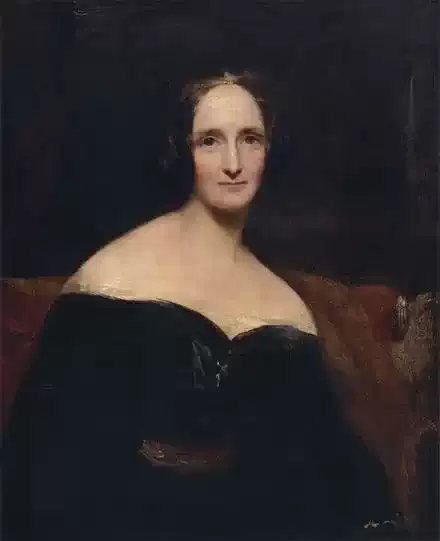
Percy Bysshe Shelley
Hellas
THE world's great age begins anew,
The golden years return,
The earth doth like a snake renew
Her winter weeds outworn;
Heaven smiles, and faiths and empires gleam
Like wrecks of a dissolving dream.
A brighter Hellas rears its mountains
From waves serener far;
A new Peneus rolls his fountains
Against the morning star;
Where fairer Tempes bloom, there sleep
Young Cyclads on a sunnier deep.
A loftier Argo cleaves the main,
Fraught with a later prize;
Another Orpheus sings again,
And loves, and weeps, and dies;
A new Ulysses leaves once more
Calypso for his native shore.
O write no more the tale of Troy,
If earth Death's scroll must be--
Nor mix with Laian rage the joy
Which dawns upon the free,
Although a subtler Sphinx renew
Riddles of death Thebes never knew.
Another Athens shall arise,
And to remoter time
Bequeath, like sunset to the skies,
The splendour of its prime;
And leave, if naught so bright may live,
All earth can take or Heaven can give.
Saturn and Love their long repose
Shall burst, more bright and good
Than all who fell, than One who rose,
Than many unsubdued:
Not gold, not blood, their altar dowers,
But votive tears and symbol flowers.
O cease! must hate and death return?
Cease! must men kill and die?
Cease! drain not to its dregs the urn
Of bitter prophecy!
The world is weary of the past--
O might it die or rest at last!
546
Rabindranath Tagore
The Hero
Mother, let us imagine we are travelling, and passing through a
strange and dangerous country.
You are riding in a palanquin and I am trotting by you on a
red horse.
It is evening and the sun goes down. The waste of Joradighi
lies wan and grey before us. The land is desolate and barren.
You are frightened and thinking-"I know not where we have come
to."
I say to you, "Mother, do not be afraid."
The meadow is prickly with spiky grass, and through it runs
a narrow broken path.
There are no cattle to be seen in the wide field; they have
gone to their village stalls.
It grows dark and dim on the land and sky, and we cannot tell
where we are going.
Suddenly you call me and ask me in a whisper, "What light is
that near the bank?"
Just then there bursts out a fearful yell, and figures come
running towards us.
You sit crouched in your palanquin and repeat the names of the
gods in prayer.
The bearers, shaking in terror, hide themselves in the thorny
bush.
I shout to you, "Don't be afraid, mother. I am here."
With long sticks in their hands and hair all wild about their
heads, they come nearer and nearer.
I shout, "Have a care, you villains! One step more and you are
dead men."
They give another terrible yell and rush forward.
You clutch my hand and say, "Dear boy, for heaven's sake, keep
away from them."
I say, "Mother, just you watch me."
Then I spur my horse for a wild gallop, and my sword and
buckler clash against each other.
The fight becomes so fearful, mother, that it would give you
a cold shudder could you see it from your palanquin.
Many of them fly, and a great number are cut to pieces.
I know you are thinking, sitting all by yourself, that your
boy must be dead by this time.
But I come to you all stained with blood, and say,"Mother, the
fight is over now."
You come out and kiss me, pressing me to your heart, and you
say to yourself,
"I don't know what I should do if I hadn't my boy to escort
me."
A thousand useless things happen day after day, and why
couldn't such a thing come true by chance?
It would be like a story in a book.
My brother would say, "Is it possible? I always thought he was
so delicate!"
Our village people would all say in amazement, "Was it not
lucky that the boy was with his mother?"
547

Ezra Pound
Canto 13
Kung walked
by the dynastic temple
and into the cedar grove,
and then out by the lower river,
And with him Khieu Tchi
and Tian the low speaking
And "we are unknown," said Kung,
"You will take up charioteering?
"Then you will become known,
"Or perhaps I should take up charioterring, or archery?
"Or the practice of public speaking?"
And Tseu-lou said, "I would put the defences in order,"
And Khieu said, "If I were lord of a province
"I would put it in better order than this is."
And Tchi said, "I would prefer a small mountain temple,
"With order in the observances,
with a suitable performance of the ritual,"
And Tian said, with his hand on the strings of his lute
The low sounds continuing
after his hand left the strings,
And the sound went up like smoke, under the leaves,
And he looked after the sound:
"The old swimming hole,
"And the boys flopping off the planks,
"Or sitting in the underbrush playing mandolins."
And Kung smiled upon all of them equally.
And Thseng-sie desired to know:
"Which had answered correctly?"
And Kung said, "They have all answered correctly,
"That is to say, each in his nature."
And Kung raised his cane against Yuan Jang,
Yuan Jang being his elder,
For Yuan Jang sat by the roadside pretending to
be receiving wisdom.
And Kung said
"You old fool, come out of it,
"Get up and do something useful."
And Kung said
"Respect a child's faculties
"From the moment it inhales the clear air,
"But a man of fifty who knows nothng
Is worthy of no respect."
And "When the prince has gathered about him
"All the savants and artists, his riches will be fully employed."
And Kung said, and wrote on the bo leaves:
If a man have not order within him
He can not spread order about him;
And if a man have not order within him
His family will not act with due order;
And if the prince have not order within him
He can not put order in his dominions.
And Kung gave the words "order"
and "brotherly deference"
And said nothing of the "life after death."
And he said
"Anyone can run to excesses,
"It is easy to shoot past the mark,
"It is hard to stand firm in the middle."
And they said: If a man commit murder
Should his father protect him, and hide him?
And Kung said:
He should hide him.
And Kung gave his daughter to Kong-Tchang
Although Kong-Tchang was in prison.
And he gave his niece to Nan-Young
although Nan-Young was out of office.
And Kung said "Wan ruled with moderation,
"In his day the State was well kept,
"And even I can remember
"A day when the historians left blanks in their writings,
"I mean, for things they didn't know,
"But that time seems to be passing.
A day when the historians left blanks in their writings,
But that time seems to be passing."
And Kung said, "Without character you will
"be unable to play on that instrument
"Or to execute the music fit for the Odes.
"The blossoms of the apricot
"blow from the east to the west,
"And I have tried to keep them from falling."
542
John Milton
Sonnet 18
XVIII
Cyriack, whose Grandsire on the Royal Bench
Of Brittish Themis, with no mean applause
Pronounc't and in his volumes taught our Lawes,
Which others at their Barr so often wrench:
To day deep thoughts resolve with me to drench
In mirth, that after no repenting drawes;
Let Euclid rest and Archimedes pause,
And what the Swede intend, and what the French.
To measure life, learn thou betimes, and know
Toward solid good what leads the nearest way;
For other things mild Heav'n a time ordains,
And disapproves that care, though wise in show,
That with superfluous burden loads the day,
And when God sends a cheerful hour, refrains.
542

Alfred Lord Tennyson
The Defence of Lucknow
I
BANNER of England, not for a season, O banner of Britain, hast thou
Floated in conquering battle or flapt to the battle-cry!
Never with mightier glory than when we had rear’d thee on high
Flying at top of the roofs in the ghastly siege of Lucknow—
Shot thro’ the staff or the halyard, but ever we raised thee anew,
And ever upon the topmost roof our banner of England blew.
II.
Frail were the works that defended the hold that we held with our lives—
Women and children among us, God help them, our children and wives!
Hold it we might—and for fifteen days or for twenty at most.
‘Never surrender, I charge you, but every man die at his post!’
Voice of the dead whom we loved, our Lawrence the best of the brave:
Cold were his brows when we kiss’d him—we laid him that night in his grave.
‘Every man die at his post!’ and there hail’d on our houses and halls
Death from their rifle-bullets, and death from their cannon-balls,
Death in our innermost chamber, and death at our slight barricade,
Death while we stood with the musket, and death while we stoopt to the spade,
Death to the dying, and wounds to the wounded, for often there fell,
Striking the hospital wall, crashing thro’ it, their shot and their shell,
Death—for their spies were among us, their marksmen were told of our best,
So that the brute bullet broke thro’ the brain that could think for the rest;
Bullets would sing by our foreheads, and bullets would rain at our feet—
Fire from ten thousand at once of the rebels that girdled us round—
Death at the glimpse of a finger from over the breadth of a street,
Death from the heights of the mosque and the palace, and death in the ground!
Mine? yes, a mine! Countermine! down, down! and creep thro’ the hole!
Keep the revolver in hand! you can hear him—the murderous mole!
Quiet, ah! quiet—wait till the point of the pickaxe be thro’!
Click with the pick, coming nearer and nearer again than before—
Now let it speak, and you fire, and the dark pioneer is no more;
And ever upon the topmost roof our banner of England blew!
III.
Ay, but the foe sprung his mine many times, and it chanced on a day
Soon as the blast of that underground thunderclap echo ‘d away,
Dark thro’ the smoke and the sulphur like so many fiends in their hell—
Cannon-shot, musket-shot, volley on volley, and yell upon yell—
Fiercely on all the defences our myriad enemy fell.
What have they done? where is it? Out yonder. Guard the Redan!
Storm at the Water-gate! storm at the Bailey-gate! storm, and it ran
Surging and swaying all round us, as ocean on every side
Plunges and heaves at a bank that is daily devour’d by the tide—
So many thousands that if they be bold enough, who shall escape?
Kill or be kill’d, live or die, they shall know we are soldiers and men
Ready! take aim at their leaders—their masses are gapp’d with our grape—
Backward they reel like the wave, like the wave flinging forward again,
Flying and foil’d at the last by the handful they could not subdue;
And ever upon the topmost roof our banner of England blew.
IV.
Handful of men as we were, we were English in heart and in limb,
Strong with the strength of the race to command, to obey, to endure,
Each of us fought as if hope for the garrison hung but on him;
Still—could we watch at all points? we were every day fewer and fewer.
There was a whisper among us, but only a whisper that past
‘Children and wives—if the tigers leap into the fold unawares—
Every man die at his post—and the foe may outlive us at last—
Better to fall by the hands that they love, than to fall into theirs!’
Roar upon roar in a moment two mines by the enemy sprung
Clove into perilous chasms our walls and our poor palisades.
Rifleman, true is your heart, but be sure that your hand be as true!
Sharp is the fire of assault, better aimed are your flank fusillades—
Twice do we hurl them to earth from the ladders to which they had clung,
Twice from the ditch where they shelter we drive them with hand-grenades;
And ever upon the topmost roof our banner of England blew.
V.
Then on another wild morning another wild earthquake out-tore
Clean from our lines of defence ten or twelve good paces or more.
Rifleman, high on the roof, hidden there from the light of the sun—
One has leapt up on the breach, crying out: ‘Follow me, follow me!’—
Mark him—he falls! then another, and him too, and down goes he.
Had they been bold enough then, who can tell but the traitors had won?
Boardings and rafters and doors—an embrasure I make way for the gun!
Now double-charge it with grape! It is charged and we fire, and they run.
Praise to our Indian brothers, and let the dark face have his due!
Thanks to the kindly dark faces who fought with us, faithful and few,
Fought with the bravest among us, and drove them, and smote them, and slew,
That ever upon the topmost roof our banner in India blew.
VI.
Men will forget what we suffer and not what we do. We can fight!
But to be soldier all day and be sentinel all thro’ the night—
Ever the mine and assault, our sallies, their lying alarms,
Bugles and drums in the darkness, and shoutings and soundings to arms,
Ever the labour of fifty that had to be done by five,
Ever the marvel among us that one should be left alive,
Ever the day with its traitorous death from the loopholes around,
Ever the night with its coffinless corpse to be laid in the ground,
Heat like the mouth of a hell, or a deluge of cataract skies,
Stench of old offal decaying, and infinite torment of flies.
Thoughts of the breezes of May blowing over an English field,
Cholera, scurvy, and fever, the wound that would not be heal’d,
Lopping away of the limb by the pitiful-pitiless knife,—
Torture and trouble in vain,—for it never could save us a life.
Valour of delicate women who tended the hospital bed,
Horror of women in travail among the dying and dead,
Grief for our perishing children, and never a moment for grief,
Toil and ineffable weariness, faltering hopes of relief,
Havelock baffled, or beaten, or butcher’d for all that we knew—
Then day and night, day and night, coming down on the still-shatter’d walls
Millions of musket-bullets, and thousands of cannon-balls—
But ever upon the topmost roof our banner of England blew.
VII.
Hark cannonade, fusillade! is it true what was told by the scout,
Outram and Havelock breaking their way through the fell mutineers?
Surely the pibroch of Europe is ringing again in our ears!
All on a sudden the garrison utter a jubilant shout,
Havelock’s glorious Highlanders answer with conquering cheers,
Sick from the hospital echo them, women and children come out,
Blessing the wholesome white faces of Havelock’s good fusileers,
Kissing the war-harden’d hand of the Highlander wet with their tears!
Dance to the pibroch!—saved! we are saved!—is it you? is it you?
Saved by the valour of Havelock, saved by the blessing of Heaven!
‘Hold it for fifteen days!’ we have held it for eighty-seven!
And ever aloft on the palace roof the old banner of England blew.
543
Rudyard Kipling
A Carol
Our Lord Who did the Ox command
To kneel to Judah's King,
He binds His frost upon the land
To ripen it for Spring --
To ripen it for Spring, good sirs,
According to His Word.
Which well must be as ye can see --
And who shall judge the Lord?
When we poor fenmen skate the ice
Or shiver on the wold,
We hear the cry of a single tree
That breaks her heart in the cold --
That breaks her heart in the cold, good sirs,
And rendeth by the board.
Which well must be as ye can see --
And who shall judge the Lord?
Her wood is crazed and little worth
Excepting as to burn,
That we may warm and make our mirth
Until the Spring return --
Until the Spring return, good sirs,
When Christians walk abroad;
When well must be as ye can see --
And who shall judge the Lord?
God bless the master of this house,
And all who sleep therein!
And guard the fens from pirate folk,
And keep us all from sin,
To walk in honesty, good sirs,
Of thought and deed ad word!
Which shall befriend our latter end....
And who shall judge the Lord?
546
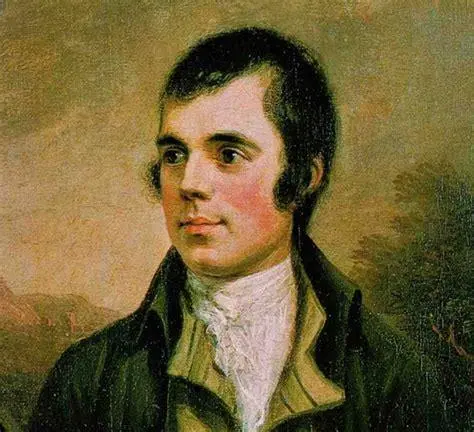
Robert Burns
The Lass That Made the Bed to Me
When Januar' wind was blawing cauld,
As to the north I took my way,
The mirksome night did me enfauld,
I knew na whare to lodge till day:
By my gude luck a maid I met,
Just in the middle o' my care,
And Kindly she did me invite
To walk into a chamber fair.
I bow'd fu' low unto this maid,
And thank'd her for her courtesie;
I bow'd fu' low unto this maid,
An bade her make a bed to me;
She made the bed baith large and wide,
Wi' twa white hands she spread it doun;
She put the cup to her rosy lips,
And drank - "Young man, now sleep ye soun'."
Chorus - The bonie lass made the bed to me,
The braw lass made the bed to me,
I'll ne'er forget till the day I die,
The lass that made the bed to me.
She snatch'd the candle in her hand,
And frae my chamber went wi' speed;
But I call'd her quickly back again,
To lay some mair below my head:
A cod she laid below my head,
And served me with due respect,
And, to salute her wi' a kis,
I put my arms about her neck.
Chorus: -...
"Haud aff your hands, young man! she said,
"And dinna sae uncivil be;
Gif ye hae ony luve for me,
O wrang ma my virginitie."
Her hair was like the links o' gowd,
Her teeth were like the ivorie,
Her cheeks like lilies dipt in wine,
The lass that made the bed to me.
Chorus: -...
Her bosom was the driven snaw,
Twa drifted heaps sae fair to see;
Her limbs the polish'd marble stane,
The lass that made the bed to me.
I kiss'd her o'er and o'er again,
And aye she wist na what to say:
I laid her 'tween me and the wa';
The lassie thocht na lang till day.
Chorus: -...
Upon the morrow when we raise,
I thank'd her for her courtesie;
But aye she blush'd and aye she sigh'd,
And said, "Alas, ye've ruin'd me."
I clasp'd her waist, and kiss'd her syne,
While the tear stood twinklin' in her e'e;
I said, "My lassie, dinna cry,
For ye aye shall make the bed to me."
Chorus: - ...
She took her mither's holland sheets,
An' made them a' in sarks to me;
Blythe and merry may she be,
The lass that made the bed to me.
Chorus: -...
545
John Milton
Psalm 02
Done Aug. 8. 1653. Terzetti.
Why do the Gentiles tumult, and the Nations
Muse a vain thing, the Kings of th'earth upstand
With power, and Princes in their Congregations
Lay deep their plots together through each Land,
Against the Lord and his Messiah dear.
Let us break off; say they, by strength of hand
Their bonds, and cast from us, no more to wear,
Their twisted cords: he who in Heaven doth dwell
Shall laugh, the Lord shall scoff them, then severe
Speak to them in his wrath, and in his fell
And fierce ire trouble them; but I saith hee
Anointed have my King (though ye rebell)
On Sion my holi' hill. A firm decree
I will declare; the Lord to me hath say'd
Thou art my Son I have begotten thee
This day, ask of me, and the grant is made;
As thy possession I on thee bestow
Th'Heathen, and as thy conquest to be sway'd
Earths utmost bounds: them shalt thou bring full low
With Iron Sceptir bruis'd, and them disperse
Like to a potters vessel shiver'd so.
And now be wise at length ye Kings averse
Be taught ye Judges of the earth; with fear
Jehovah serve and let your joy converse
With trembling; Kiss the Son least he appear
In anger and ye perish in the way
If once his wrath take fire like fuel sere.
Happy all those who have in him their stay.
547
Kazi Nazrul Islam
Fanaticism is not Religion!
Bullying, hypocrisy or fanaticism: that's not what religion is all about
According to all scriptures, fanatics are disciples of the devil: no doubt.
The one and only Creator of all: He is the loving Master ever;
That there is more than one Creator, no true religion can claim so; never.
Even then, partnership to God is attributed by Satan the smitten
Yet his judge is only God, no one else: in the Qur'an it is written.
Man can't be Satan's judge or try him; indeed, either to the Hell
or to Heaven, what human power can push him or propel?
'Guide only those who are lost' - this is a divine command,
Any wrongdoing even against the unbelievers: in the Qur'an it is patently banned.
Why do people sin, or why some go astray as human being?
Why some people come to this world handicapped, or without the power of seeing?
Why are some ever-destitutes, and some are ever-so-rich?
Why some always live in peace, while others are destined to trouble's ditch?
Which preacher or Mullah knows its mystery, please tell me
They have carried the load of scriptures - Qur'an, Vedas - like no more than a donkey.
Even to that wretched who did not call Him, as to the provision for his hunger,
Why God did not Himself deprive him, who can communicate to a scripture-monger?
His creation - like the open-wide sky - embraces all, none barred;
His air and wind flows everywhere: mosque, temple, or earth's every corner or yard.
On the basis of faith, the light of His sun and moon does not ever discriminate,
it comes to every home or nation; where does it cause any division or foster hate?
His rain comes in shower flowing in the field and yard of all the faithful,
His fire, water, air serve everyone - to the ingrate and the grateful.
His water brings the blessings of flower and fruit to the garden of every nation,
Who, yet, preaches hatred and division in His love's congregation?
No saint, dervish, yogi, a prophet or a messenger truly divine,
Ever reviled others' faith or religion - who isn't aware of this wisdom so fine?
Under the guise of religion, the bullies and the pretenders have a pact;
they stir up the ignorant mass as part of their vile selfish act.
They foster hatred and prejudice among different faith or nation;
these devils cherish power, while feeding themselves is their only preoccupation.
Under the guise of religious movements, these ugly faces
claim that, if in power, they will help their fellows, or that's how they make their cases.
Fame and medals of aristocrats these Zaminders, loan sharks, and filthy rich get
In reality, they care about none; on their own welfare their eyes are set.
All the wealth they amass, have they ever given anyone anything?
Has ever a homeless found shelter in their fancy, luxurious building?
In the name of nationality or religion, poison is what they spread;
These are poisonous snakes; Finish them - don't you dread!
One is not a believer who doesn't have tolerance or patience - a virtue so auspicious
They are gangs of demons, worse than titans or monsters - utterly vicious.
Those who are oppressors, they have no specific religion or affiliation,
They block people from the divine ray; these friends of darkness believe in no
reconciliation.
They bring agitation and hatred among people, and help break any relation,
They are monsters who snatch away others' food and water in disgraceful jubilation.
We must know that these people in their death's pang,
suffer in this life, as shame over their head does hang.
The ultimate Judge who has no partner, He
punishes whom in just a while, you will, yes you will, see.
We are poor, destitute, oppressed and weak!
To lead us astray those who incessantly tweak;
They breed discord, disturbance, and pursue their selfish fortune,
In the Qur'an God addresses these wretcheds: 'Turn into apes' to play their tune.
[Original: Gorami Dharmo Noy
Translation: Mohammad Omar Farooq ]
544
Lord Byron
Don Juan: Canto The Seventeenth
The world is full of orphans: firstly, those
Who are so in the strict sense of the phrase
(But many a lonely tree the loftier grows
Than others crowded in the forest's maze);
The next are such as are not doomed to lose
Their tender parents in their budding days,
But merely their parental tenderness,
Which leaves them orphans of the heart no less.
The next are 'only children', as they are styled,
Who grow up children only, since the old saw
Pronounces that an 'only' 's a spoilt child.
But not to go too far, I hold it law
That where their education, harsh or mild,
'Transgresses the great bounds of love or awe,
The sufferers, be't in heart or intellect,
Whate'er the cause are orphans in effect.
But to return unto the stricter rule
(As far as words make rules), our common notion
Of orphans paints at once a parish school,
A halfstarved
babe, a wreck upon life's ocean,
A human (what the Italians nickname) 'mule',
A theme for pity or some worse emotion;
Yet, if examined, it might be admitted
The wealthiest orphans are to be more pitied.
Too soon they are parents to themselves; for what
Are tutors, guardians, and so forth, compared
With Nature's genial genitors, so that
A child of Chancery, that Star Chamber ward
(I'll take the likeness I can first come at),
Is like a duckling by Dame Partlett reared
And frights, especially if 'tis a daughter,
The old hen by running headlong to the water.
There is a commonplace book argument,
Which glibly glides from every vulgar tongue
When any dare a new light to present:
'If you are right, then everybody's wrong.'
Suppose the converse of this precedent
So often urged, so loudly and so long:
'If you are wrong, then everybody's right.'
Was ever everybody yet so quite?
Therefore I would solicit free discussion
Upon all points, no matter what or whose,
Because as ages upon ages push on,
The last is apt the former to accuse
Of pillowing its head on a pincushion,
Heedless of pricks because it was obtuse.
What was a paradox becomes a truth or
A something like it, as bear witness Luther.
The sacraments have been reduced to two
And witches unto none, though somewhat late
Since burning aged women (save a few,
Not witches, only bitches, who create
Mischief in families, as some know or knew,
Should still be singed, but slightly let me state)
Has been declared an act of inurbanity,
Malgé Sir Matthew Hale's great humanity.
Great Galileo was debarred the sun,
Because he fixed it, and to stop his talking
How earth could round the solar orbit run,
Found his own legs embargoed from mere walking.
The man was well nigh dead, ere men begun
To think his skull had not some need of caulking,
But now it seems he's right, his notion just,
No doubt a consolation to his dust.
Pythagoras, Locke, Socrates but
pages
Might be filled up, as vainly as before,
With the sad usage of all sorts of sages,
Who in his lifetime each was deemed a bore.
The loftiest minds outrun their tardy ages;
This they must bear with and perhaps much more.
The wise man's sure when he no more can share it, he
Will have a firm post-obit on posterity.
If such doom waits each intellectual giant,
We little people in our lesser way
To life's small rubs should surely be more pliant,
And so for one will I, as well I may.
Would that I were less bilious but
oh fie on't!
Just as I make my mind up everyday
To be a totus teres stoic, sage,
The wind shifts and I fly into a rage.
Temperate I am, yet never had a temper;
Modest I am, yet with some slight assurance;
Changeable too, yet somehow idem semper;
Patient, but not enamoured of endurance;
Cheerful, but sometimes rather apt to whimper;
Mild, but at times a sort of Hercules furens;
So that I almost think that the same skin
For one without has two or three within.
Our hero was in canto the sixteenth
Left in a tender moonlight situation,
Such as enables man to show his strength
Moral or physical On this occasion
Whether his virtue triumphed, or at length
His vice for
he was of a kindling nation Is
more than I shall venture to describe,
Unless some beauty with a kiss should bribe.
I leave the thing a problem, like all things.
The morning came, and breakfast, tea and toast,
Of which most men partake, but no one sings.
The company, whose birth, wealth, worth have cost
My trembling lyre already several strings,
Assembled with our hostess and mine host.
The guests dropped in, the last but one, Her Grace,
The latest, Juan with his virgin face.
Which best is to encounter, ghost or none,
'Twere difficult to say, but Juan looked
As if he had combated with more than one,
Being wan and worn, with eyes that hardly brooked
The light that through the Gothic windows shone.
Her Grace too had a sort of air rebuked,
Seemed pale and shivered, as if she had kept
A vigil or dreamt rather more than slept.
537

William Butler Yeats
September 1913
What need you, being come to sense,
But fumble in a greasy till
And add the halfpence to the pence
And prayer to shivering prayer, until
You have dried the marrow from the bone?
For men were born to pray and save:
Romantic Ireland's dead and gone,
It's with O'Leary in the grave.
Yet they were of a different kind,
The names that stilled your childish play,
They have gone about the world like wind,
But little time had they to pray
For whom the hangman's rope was spun,
And what, God help us, could they save?
Romantic Ireland's dead and gone,
It's with O'Leary in the grave.
Was it for this the wild geese spread
The grey wing upon every tide;
For this that all that blood was shed,
For this Edward Fitzgerald died,
And Robert Emmet and Wolfe Tone,
All that delirium of the brave?
Romantic Ireland's dead and gone,
It's with O'Leary in the grave.
Yet could we turn the years again,
And call those exiles as they were
In all their loneliness and pain,
You'd cry, 'Some woman's yellow hair
Has maddened every mother's son':
They weighed so lightly what they gave.
But let them be, they're dead and gone,
They're with O'Leary in the grave.
536
Alfred Lord Tennyson
Guinevere
Queen Guinevere had fled the court, and sat
There in the holy house at Almesbury
Weeping, none with her save a little maid,
A novice: one low light betwixt them burned
Blurred by the creeping mist, for all abroad,
Beneath a moon unseen albeit at full,
The white mist, like a face-cloth to the face,
Clung to the dead earth, and the land was still.
For hither had she fled, her cause of flight
Sir Modred; he that like a subtle beast
Lay couchant with his eyes upon the throne,
Ready to spring, waiting a chance: for this
He chilled the popular praises of the King
With silent smiles of slow disparagement;
And tampered with the Lords of the White Horse,
Heathen, the brood by Hengist left; and sought
To make disruption in the Table Round
Of Arthur, and to splinter it into feuds
Serving his traitorous end; and all his aims
Were sharpened by strong hate for Lancelot.
For thus it chanced one morn when all the court,
Green-suited, but with plumes that mocked the may,
Had been, their wont, a-maying and returned,
That Modred still in green, all ear and eye,
Climbed to the high top of the garden-wall
To spy some secret scandal if he might,
And saw the Queen who sat betwixt her best
Enid, and lissome Vivien, of her court
The wiliest and the worst; and more than this
He saw not, for Sir Lancelot passing by
Spied where he couched, and as the gardener's hand
Picks from the colewort a green caterpillar,
So from the high wall and the flowering grove
Of grasses Lancelot plucked him by the heel,
And cast him as a worm upon the way;
But when he knew the Prince though marred with dust,
He, reverencing king's blood in a bad man,
Made such excuses as he might, and these
Full knightly without scorn; for in those days
No knight of Arthur's noblest dealt in scorn;
But, if a man were halt or hunched, in him
By those whom God had made full-limbed and tall,
Scorn was allowed as part of his defect,
And he was answered softly by the King
And all his Table. So Sir Lancelot holp
To raise the Prince, who rising twice or thrice
Full sharply smote his knees, and smiled, and went:
But, ever after, the small violence done
Rankled in him and ruffled all his heart,
As the sharp wind that ruffles all day long
A little bitter pool about a stone
On the bare coast.
But when Sir Lancelot told
This matter to the Queen, at first she laughed
Lightly, to think of Modred's dusty fall,
Then shuddered, as the village wife who cries
`I shudder, some one steps across my grave;'
Then laughed again, but faintlier, for indeed
She half-foresaw that he, the subtle beast,
Would track her guilt until he found, and hers
Would be for evermore a name of scorn.
Henceforward rarely could she front in hall,
Or elsewhere, Modred's narrow foxy face,
Heart-hiding smile, and gray persistent eye:
Henceforward too, the Powers that tend the soul,
To help it from the death that cannot die,
And save it even in extremes, began
To vex and plague her. Many a time for hours,
Beside the placid breathings of the King,
In the dead night, grim faces came and went
Before her, or a vague spiritual fear--
Like to some doubtful noise of creaking doors,
Heard by the watcher in a haunted house,
That keeps the rust of murder on the walls--
Held her awake: or if she slept, she dreamed
An awful dream; for then she seemed to stand
On some vast plain before a setting sun,
And from the sun there swiftly made at her
A ghastly something, and its shadow flew
Before it, till it touched her, and she turned--
When lo! her own, that broadening from her feet,
And blackening, swallowed all the land, and in it
Far cities burnt, and with a cry she woke.
And all this trouble did not pass but grew;
Till even the clear face of the guileless King,
And trustful courtesies of household life,
Became her bane; and at the last she said,
`O Lancelot, get thee hence to thine own land,
For if thou tarry we shall meet again,
And if we meet again, some evil chance
Will make the smouldering scandal break and blaze
Before the people, and our lord the King.'
And Lancelot ever promised, but remained,
And still they met and met. Again she said,
`O Lancelot, if thou love me get thee hence.'
And then they were agreed upon a night
(When the good King should not be there) to meet
And part for ever. Vivien, lurking, heard.
She told Sir Modred. Passion-pale they met
And greeted. Hands in hands, and eye to eye,
Low on the border of her couch they sat
Stammering and staring. It was their last hour,
A madness of farewells. And Modred brought
His creatures to the basement of the tower
For testimony; and crying with full voice
`Traitor, come out, ye are trapt at last,' aroused
Lancelot, who rushing outward lionlike
Leapt on him, and hurled him headlong, and he fell
Stunned, and his creatures took and bare him off,
And all was still: then she, `The end is come,
And I am shamed for ever;' and he said,
`Mine be the shame; mine was the sin: but rise,
And fly to my strong castle overseas:
There will I hide thee, till my life shall end,
There hold thee with my life against the world.'
She answered, `Lancelot, wilt thou hold me so?
Nay, friend, for we have taken our farewells.
Would God that thou couldst hide me from myself!
Mine is the shame, for I was wife, and thou
Unwedded: yet rise now, and let us fly,
For I will draw me into sanctuary,
And bide my doom.' So Lancelot got her horse,
Set her thereon, and mounted on his own,
And then they rode to the divided way,
There kissed, and parted weeping: for he past,
Love-loyal to the least wish of the Queen,
Back to his land; but she to Almesbury
Fled all night long by glimmering waste and weald,
And heard the Spirits of the waste and weald
Moan as she fled, or thought she heard them moan:
And in herself she moaned `Too late, too late!'
Till in the cold wind that foreruns the morn,
A blot in heaven, the Raven, flying high,
Croaked, and she thought, `He spies a field of death;
For now the Heathen of the Northern Sea,
Lured by the crimes and frailties of the court,
Begin to slay the folk, and spoil the land.'
And when she came to Almesbury she spake
There to the nuns, and said, `Mine enemies
Pursue me, but, O peaceful Sisterhood,
Receive, and yield me sanctuary, nor ask
Her name to whom ye yield it, till her time
To tell you:' and her beauty, grace and power,
Wrought as a charm upon them, and they spared
To ask it.
So the stately Queen abode
For many a week, unknown, among the nuns;
Nor with them mixed, nor told her name, nor sought,
Wrapt in her grief, for housel or for shrift,
But communed only with the little maid,
Who pleased her with a babbling heedlessness
Which often lured her from herself; but now,
This night, a rumour wildly blown about
Came, that Sir Modred had usurped the realm,
And leagued him with the heathen, while the King
Was waging war on Lancelot: then she thought,
`With what a hate the people and the King
Must hate me,' and bowed down upon her hands
Silent, until the little maid, who brooked
No silence, brake it, uttering, `Late! so late!
What hour, I wonder, now?' and when she drew
No answer, by and by began to hum
An air the nuns had taught her; `Late, so late!'
Which when she heard, the Queen looked up, and said,
`O maiden, if indeed ye list to sing,
Sing, and unbind my heart that I may weep.'
Whereat full willingly sang the little maid.
`Late, late, so late! and dark the night and chill!
Late, late, so late! but we can enter still.
Too late, too late! ye cannot enter now.
`No light had we: for that we do repent;
And learning this, the bridegroom will relent.
Too late, too late! ye cannot enter now.
`No light: so late! and dark and chill the night!
O let us in, that we may find the light!
Too late, too late: ye cannot enter now.
`Have we not heard the bridegroom is so sweet?
O let us in, though late, to kiss his feet!
No, no, too late! ye cannot enter now.'
So sang the novice, while full passionately,
Her head upon her hands, remembering
Her thought when first she came, wept the sad Queen.
Then said the little novice prattling to her,
`O pray you, noble lady, weep no more;
But let my words, the words of one so small,
Who knowing nothing knows but to obey,
And if I do not there is penance given--
Comfort your sorrows; for they do not flow
From evil done; right sure am I of that,
Who see your tender grace and stateliness.
But weigh your sorrows with our lord the King's,
And weighing find them less; for gone is he
To wage grim war against Sir Lancelot there,
Round that strong castle where he holds the Queen;
And Modred whom he left in charge of all,
The traitor--Ah sweet lady, the King's grief
For his own self, and his own Queen, and realm,
Must needs be thrice as great as any of ours.
For me, I thank the saints, I am not great.
For if there ever come a grief to me
I cry my cry in silence, and have done.
None knows it, and my tears have brought me good:
But even were the griefs of little ones
As great as those of great ones, yet this grief
Is added to the griefs the great must bear,
That howsoever much they may desire
Silence, they cannot weep behind a cloud:
As even here they talk at Almesbury
About the good King and his wicked Queen,
And were I such a King with such a Queen,
Well might I wish to veil her wickedness,
But were I such a King, it could not be.'
Then to her own sad heart muttered the Queen,
`Will the child kill me with her innocent talk?'
But openly she answered, `Must not I,
If this false traitor have displaced his lord,
Grieve with the common grief of all the realm?'
`Yea,' said the maid, `this is all woman's grief,
That SHE is woman, whose disloyal life
Hath wrought confusion in the Table Round
Which good King Arthur founded, years ago,
With signs and miracles and wonders, there
At Camelot, ere the coming of the Queen.'
Then thought the Queen within herself again,
`Will the child kill me with her foolish prate?'
But openly she spake and said to her,
`O little maid, shut in by nunnery walls,
What canst thou know of Kings and Tables Round,
Or what of signs and wonders, but the signs
And simple miracles of thy nunnery?'
To whom the little novice garrulously,
`Yea, but I know: the land was full of signs
And wonders ere the coming of the Queen.
So said my father, and himself was knight
Of the great Table--at the founding of it;
And rode thereto from Lyonnesse, and he said
That as he rode, an hour or maybe twain
After the sunset, down the coast, he heard
Strange music, and he paused, and turning--there,
All down the lonely coast of Lyonnesse,
Each with a beacon-star upon his head,
And with a wild sea-light about his feet,
He saw them--headland after headland flame
Far on into the rich heart of the west:
And in the light the white mermaiden swam,
And strong man-breasted things stood from the sea,
And sent a deep sea-voice through all the land,
To which the little elves of chasm and cleft
Made answer, sounding like a distant horn.
So said my father--yea, and furthermore,
Next morning, while he past the dim-lit woods,
Himself beheld three spirits mad with joy
Come dashing down on a tall wayside flower,
That shook beneath them, as the thistle shakes
When three gray linnets wrangle for the seed:
And still at evenings on before his horse
The flickering fairy-circle wheeled and broke
Flying, and linked again, and wheeled and broke
Flying, for all the land was full of life.
And when at last he came to Camelot,
A wreath of airy dancers hand-in-hand
Swung round the lighted lantern of the hall;
And in the hall itself was such a feast
As never man had dreamed; for every knight
Had whatsoever meat he longed for served
By hands unseen; and even as he said
Down in the cellars merry bloated things
Shouldered the spigot, straddling on the butts
While the wine ran: so glad were spirits and men
Before the coming of the sinful Queen.'
Then spake the Queen and somewhat bitterly,
`Were they so glad? ill prophets were they all,
Spirits and men: could none of them foresee,
Not even thy wise father with his signs
And wonders, what has fallen upon the realm?'
To whom the novice garrulously again,
`Yea, one, a bard; of whom my father said,
Full many a noble war-song had he sung,
Even in the presence of an enemy's fleet,
Between the steep cliff and the coming wave;
And many a mystic lay of life and death
Had chanted on the smoky mountain-tops,
When round him bent the spirits of the hills
With all their dewy hair blown back like flame:
So said my father--and that night the bard
Sang Arthur's glorious wars, and sang the King
As wellnigh more than man, and railed at those
Who called him the false son of Gorlos:
For there was no man knew from whence he came;
But after tempest, when the long wave broke
All down the thundering shores of Bude and Bos,
There came a day as still as heaven, and then
They found a naked child upon the sands
Of dark Tintagil by the Cornish sea;
And that was Arthur; and they fostered him
Till he by miracle was approven King:
And that his grave should be a mystery
From all men, like his birth; and could he find
A woman in her womanhood as great
As he was in his manhood, then, he sang,
The twain together well might change the world.
But even in the middle of his song
He faltered, and his hand fell from the harp,
And pale he turned, and reeled, and would have fallen,
But that they stayed him up; nor would he tell
His vision; but what doubt that he foresaw
This evil work of Lancelot and the Queen?'
Then thought the Queen, `Lo! they have set her on,
Our simple-seeming Abbess and her nuns,
To play upon me,' and bowed her head nor spake.
Whereat the novice crying, with clasped hands,
Shame on her own garrulity garrulously,
Said the good nuns would check her gadding tongue
Full often, `and, sweet lady, if I seem
To vex an ear too sad to listen to me,
Unmannerly, with prattling and the tales
Which my good father told me, check me too
Nor let me shame my father's memory, one
Of noblest manners, though himself would say
Sir Lancelot had the noblest; and he died,
Killed in a tilt, come next, five summers back,
And left me; but of others who remain,
And of the two first-famed for courtesy--
And pray you check me if I ask amiss-
But pray you, which had noblest, while you moved
Among them, Lancelot or our lord the King?'
Then the pale Queen looked up and answered her,
`Sir Lancelot, as became a noble knight,
Was gracious to all ladies, and the same
In open battle or the tilting-field
Forbore his own advantage, and the King
In open battle or the tilting-field
Forbore his own advantage, and these two
Were the most nobly-mannered men of all;
For manners are not idle, but the fruit
Of loyal nature, and of noble mind.'
`Yea,' said the maid, `be manners such fair fruit?'
Then Lancelot's needs must be a thousand-fold
Less noble, being, as all rumour runs,
The most disloyal friend in all the world.'
To which a mournful answer made the Queen:
`O closed about by narrowing nunnery-walls,
What knowest thou of the world, and all its lights
And shadows, all the wealth and all the woe?
If ever Lancelot, that most noble knight,
Were for one hour less noble than himself,
Pray for him that he scape the doom of fire,
And weep for her that drew him to his doom.'
`Yea,' said the little novice, `I pray for both;
But I should all as soon believe that his,
Sir Lancelot's, were as noble as the King's,
As I could think, sweet lady, yours would be
Such as they are, were you the sinful Queen.'
So she, like many another babbler, hurt
Whom she would soothe, and harmed where she would heal;
For here a sudden flush of wrathful heat
Fired all the pale face of the Queen, who cried,
`Such as thou art be never maiden more
For ever! thou their tool, set on to plague
And play upon, and harry me, petty spy
And traitress.' When that storm of anger brake
From Guinevere, aghast the maiden rose,
White as her veil, and stood before the Queen
As tremulously as foam upon the beach
Stands in a wind, ready to break and fly,
And when the Queen had added `Get thee hence,'
Fled frighted. Then that other left alone
Sighed, and began to gather heart again,
Saying in herself, `The simple, fearful child
Meant nothing, but my own too-fearful guilt,
Simpler than any child, betrays itself.
But help me, heaven, for surely I repent.
For what is true repentance but in thought--
Not even in inmost thought to think again
The sins that made the past so pleasant to us:
And I have sworn never to see him more,
To see him more.'
And even in saying this,
Her memory from old habit of the mind
Went slipping back upon the golden days
In which she saw him first, when Lancelot came,
Reputed the best knight and goodliest man,
Ambassador, to lead her to his lord
Arthur, and led her forth, and far ahead
Of his and her retinue moving, they,
Rapt in sweet talk or lively, all on love
And sport and tilts and pleasure, (for the time
Was maytime, and as yet no sin was dreamed,)
Rode under groves that looked a paradise
Of blossom, over sheets of hyacinth
That seemed the heavens upbreaking through the earth,
And on from hill to hill, and every day
Beheld at noon in some delicious dale
The silk pavilions of King Arthur raised
For brief repast or afternoon repose
By couriers gone before; and on again,
Till yet once more ere set of sun they saw
The Dragon of the great Pendragonship,
That crowned the state pavilion of the King,
Blaze by the rushing brook or silent well.
But when the Queen immersed in such a trance,
And moving through the past unconsciously,
Came to that point where first she saw the King
Ride toward her from the city, sighed to find
Her journey done, glanced at him, thought him cold,
High, self-contained, and passionless, not like him,
`Not like my Lancelot'--while she brooded thus
And grew half-guilty in her thoughts again,
There rode an armd warrior to the doors.
A murmuring whisper through the nunnery ran,
Then on a sudden a cry, `The King.' She sat
Stiff-stricken, listening; but when armd feet
Through the long gallery from the outer doors
Rang coming, prone from off her seat she fell,
And grovelled with her face against the floor:
There with her milkwhite arms and shadowy hair
She made her face a darkness from the King:
And in the darkness heard his armd feet
Pause by her; then came silence, then a voice,
Monotonous and hollow like a Ghost's
Denouncing judgment, but though changed, the King's:
`Liest thou here so low, the child of one
I honoured, happy, dead before thy shame?
Well is it that no child is born of thee.
The children born of thee are sword and fire,
Red ruin, and the breaking up of laws,
The craft of kindred and the Godless hosts
Of heathen swarming o'er the Northern Sea;
Whom I, while yet Sir Lancelot, my right arm,
The mightiest of my knights, abode with me,
Have everywhere about this land of Christ
In twelve great battles ruining overthrown.
And knowest thou now from whence I come--from him
From waging bitter war with him: and he,
That did not shun to smite me in worse way,
Had yet that grace of courtesy in him left,
He spared to lift his hand against the King
Who made him knight: but many a knight was slain;
And many more, and all his kith and kin
Clave to him, and abode in his own land.
And many more when Modred raised revolt,
Forgetful of their troth and fealty, clave
To Modred, and a remnant stays with me.
And of this remnant will I leave a part,
True men who love me still, for whom I live,
To guard thee in the wild hour coming on,
Lest but a hair of this low head be harmed.
Fear not: thou shalt be guarded till my death.
Howbeit I know, if ancient prophecies
Have erred not, that I march to meet my doom.
Thou hast not made my life so sweet to me,
That I the King should greatly care to live;
For thou hast spoilt the purpose of my life.
Bear with me for the last time while I show,
Even for thy sake, the sin which thou hast sinned.
For when the Roman left us, and their law
Relaxed its hold upon us, and the ways
Were filled with rapine, here and there a deed
Of prowess done redressed a random wrong.
But I was first of all the kings who drew
The knighthood-errant of this realm and all
The realms together under me, their Head,
In that fair Order of my Table Round,
A glorious company, the flower of men,
To serve as model for the mighty world,
And be the fair beginning of a time.
I made them lay their hands in mine and swear
To reverence the King, as if he were
Their conscience, and their conscience as their King,
To break the heathen and uphold the Christ,
To ride abroad redressing human wrongs,
To speak no slander, no, nor listen to it,
To honour his own word as if his God's,
To lead sweet lives in purest chastity,
To love one maiden only, cleave to her,
And worship her by years of noble deeds,
Until they won her; for indeed I knew
Of no more subtle master under heaven
Than is the maiden passion for a maid,
Not only to keep down the base in man,
But teach high thought, and amiable words
And courtliness, and the desire of fame,
And love of truth, and all that makes a man.
And all this throve before I wedded thee,
Believing, "lo mine helpmate, one to feel
My purpose and rejoicing in my joy."
Then came thy shameful sin with Lancelot;
Then came the sin of Tristram and Isolt;
Then others, following these my mightiest knights,
And drawing foul ensample from fair names,
Sinned also, till the loathsome opposite
Of all my heart had destined did obtain,
And all through thee! so that this life of mine
I guard as God's high gift from scathe and wrong,
Not greatly care to lose; but rather think
How sad it were for Arthur, should he live,
To sit once more within his lonely hall,
And miss the wonted number of my knights,
And miss to hear high talk of noble deeds
As in the golden days before thy sin.
For which of us, who might be left, could speak
Of the pure heart, nor seem to glance at thee?
And in thy bowers of Camelot or of Usk
Thy shadow still would glide from room to room,
And I should evermore be vext with thee
In hanging robe or vacant ornament,
Or ghostly footfall echoing on the stair.
For think not, though thou wouldst not love thy lord,
Thy lord hast wholly lost his love for thee.
I am not made of so slight elements.
Yet must I leave thee, woman, to thy shame.
I hold that man the worst of public foes
Who either for his own or children's sake,
To save his blood from scandal, lets the wife
Whom he knows false, abide and rule the house:
For being through his cowardice allowed
Her station, taken everywhere for pure,
She like a new disease, unknown to men,
Creeps, no precaution used, among the crowd,
Makes wicked lightnings of her eyes, and saps
The fealty of our friends, and stirs the pulse
With devil's leaps, and poisons half the young.
Worst of the worst were that man he that reigns!
Better the King's waste hearth and aching heart
Than thou reseated in thy place of light,
The mockery of my people, and their bane.'
He paused, and in the pause she crept an inch
Nearer, and laid her hands about his feet.
Far off a solitary trumpet blew.
Then waiting by the doors the warhorse neighed
At a friend's voice, and he spake again:
`Yet think not that I come to urge thy crimes,
I did not come to curse thee, Guinevere,
I, whose vast pity almost makes me die
To see thee, laying there thy golden head,
My pride in happier summers, at my feet.
The wrath which forced my thoughts on that fierce law,
The doom of treason and the flaming death,
(When first I learnt thee hidden here) is past.
The pang--which while I weighed thy heart with one
Too wholly true to dream untruth in thee,
Made my tears burn--is also past--in part.
And all is past, the sin is sinned, and I,
Lo! I forgive thee, as Eternal God
Forgives: do thou for thine own soul the rest.
But how to take last leave of all I loved?
O golden hair, with which I used to play
Not knowing! O imperial-moulded form,
And beauty such as never woman wore,
Until it became a kingdom's curse with thee--
I cannot touch thy lips, they are not mine,
But Lancelot's: nay, they never were the King's.
I cannot take thy hand: that too is flesh,
And in the flesh thou hast sinned; and mine own flesh,
Here looking down on thine polluted, cries
"I loathe thee:" yet not less, O Guinevere,
For I was ever virgin save for thee,
My love through flesh hath wrought into my life
So far, that my doom is, I love thee still.
Let no man dream but that I love thee still.
Perchance, and so thou purify thy soul,
And so thou lean on our fair father Christ,
Hereafter in that world where all are pure
We two may meet before high God, and thou
Wilt spring to me, and claim me thine, and know
I am thine husband--not a smaller soul,
Nor Lancelot, nor another. Leave me that,
I charge thee, my last hope. Now must I hence.
Through the thick night I hear the trumpet blow:
They summon me their King to lead mine hosts
Far down to that great battle in the west,
Where I must strike against the man they call
My sister's son--no kin of mine, who leagues
With Lords of the White Horse, heathen, and knights,
Traitors--and strike him dead, and meet myself
Death, or I know not what mysterious doom.
And thou remaining here wilt learn the event;
But hither shall I never come again,
Never lie by thy side; see thee no more--
Farewell!'
And while she grovelled at his feet,
She felt the King's breath wander o'er her neck,
And in the darkness o'er her fallen head,
Perceived the waving of his hands that blest.
Then, listening till those armd steps were gone,
Rose the pale Queen, and in her anguish found
The casement: `peradventure,' so she thought,
`If I might see his face, and not be seen.'
And lo, he sat on horseback at the door!
And near him the sad nuns with each a light
Stood, and he gave them charge about the Queen,
To guard and foster her for evermore.
And while he spake to these his helm was lowered,
To which for crest the golden dragon clung
Of Britain; so she did not see the face,
Which then was as an angel's, but she saw,
Wet with the mists and smitten by the lights,
The Dragon of the great Pendragonship
Blaze, making all the night a steam of fire.
And even then he turned; and more and more
The moony vapour rolling round the King,
Who seemed the phantom of a Giant in it,
Enwound him fold by fold, and made him gray
And grayer, till himself became as mist
Before her, moving ghostlike to his doom.
Then she stretched out her arms and cried aloud
`Oh Arthur!' there her voice brake suddenly,
Then--as a stream that spouting from a cliff
Fails in mid air, but gathering at the base
Re-makes itself, and flashes down the vale--
Went on in passionate utterance:
`Gone--my lord!
Gone through my sin to slay and to be slain!
And he forgave me, and I could not speak.
Farewell? I should have answered his farewell.
His mercy choked me. Gone, my lord the King,
My own true lord! how dare I call him mine?
The shadow of another cleaves to me,
And makes me one pollution: he, the King,
Called me polluted: shall I kill myself?
What help in that? I cannot kill my sin,
If soul be soul; nor can I kill my shame;
No, nor by living can I live it down.
The days will grow to weeks, the weeks to months
The months will add themselves and make the years,
The years will roll into the centuries,
And mine will ever be a name of scorn.
I must not dwell on that defeat of fame.
Let the world be; that is but of the world.
What else? what hope? I think there was a hope,
Except he mocked me when he spake of hope;
His hope he called it; but he never mocks,
For mockery is the fume of little hearts.
And blessd be the King, who hath forgiven
My wickedness to him, and left me hope
That in mine own heart I can live down sin
And be his mate hereafter in the heavens
Before high God. Ah great and gentle lord,
Who wast, as is the conscience of a saint
Among his warring senses, to thy knights--
To whom my false voluptuous pride, that took
Full easily all impressions from below,
Would not look up, or half-despised the height
To which I would not or I could not climb--
I thought I could not breathe in that fine air
That pure severity of perfect light--
I yearned for warmth and colour which I found
In Lancelot--now I see thee what thou art,
Thou art the highest and most human too,
Not Lancelot, nor another. Is there none
Will tell the King I love him though so late?
Now--ere he goes to the great Battle? none:
Myself must tell him in that purer life,
But now it were too daring. Ah my God,
What might I not have made of thy fair world,
Had I but loved thy highest creature here?
It was my duty to have loved the highest:
It surely was my profit had I known:
It would have been my pleasure had I seen.
We needs must love the highest when we see it,
Not Lancelot, nor another.'
Here her hand
Grasped, made her vail her eyes: she looked and saw
The novice, weeping, suppliant, and said to her,
`Yea, little maid, for am I not forgiven?'
Then glancing up beheld the holy nuns
All round her, weeping; and her heart was loosed
Within her, and she wept with these and said,
`Ye know me then, that wicked one, who broke
The vast design and purpose of the King.
O shut me round with narrowing nunnery-walls,
Meek maidens, from the voices crying "shame."
I must not scorn myself: he loves me still.
Let no one dream but that he loves me still.
So let me, if you do not shudder at me,
Nor shun to call me sister, dwell with you;
Wear black and white, and be a nun like you,
Fast with your fasts, not feasting with your feasts;
Grieve with your griefs, not grieving at your joys,
But not rejoicing; mingle with your rites;
Pray and be prayed for; lie before your shrines;
Do each low office of your holy house;
Walk your dim cloister, and distribute dole
To poor sick people, richer in His eyes
Who ransomed us, and haler too than I;
And treat their loathsome hurts and heal mine own;
And so wear out in almsdeed and in prayer
The sombre close of that voluptuous day,
Which wrought the ruin of my lord the King.'
She said: they took her to themselves; and she
Still hoping, fearing `is it yet too late?'
Dwelt with them, till in time their Abbess died.
Then she, for her good deeds and her pure life,
And for the power of ministration in her,
And likewise for the high rank she had borne,
Was chosen Abbess, there, an Abbess, lived
For three brief years, and there, an Abbess, past
To where beyond these voices there is peace.
535
Rudyard Kipling
The Reeds of Runnymede
Magna Charta, June ,
At Runnymede, At Runnymede,
What say the reeds at Runnymede?
The lissom reeds that give and take,
That bend so far, but never break,
They keep the sleepy Thames awake
With tales of John at Runnymede.
At Runnymede, at Runnymede,
Oh, hear the reeds at Runnymede:--
"You mustn't sell, delay, deny,
A freeman's right or liberty.
It makes the stubborn Englishry,
We saw 'em roused at Runnymede!
"When through our ranks the Barons came,
With little thought of praise or blame,
But resolute to pay a game,
They lumbered up to Runnymede;
And there they launched in solid time
The first attack on Right Divine--
The curt, uncompromising 'Sign!'
That settled John at Runnymede.
"At Runnymede, at Runnymede,
Your rights were won at Runnymede!
No freeman shall be fined or bound,
Or dispossessed or freehold ground,
Except by lawful judgment found
And passed upon him by his peers.
Forget not, after all these years,
The Charter Signed at Runnymede."
And still when Mob or Monarch lays
Too rude hand on English ways,
The whisper wakes, the shudder plays,
Across the reeds at Runnymede.
And Tames, that knows the moods of kings,
And crowds and priests and suchlike things,
Rolls deep and dreadful as he brings
Their warning down from Runnymede!
533
Lord Byron
Jeptha's Daughter
Since our Country, our God Oh,
my Sire!
Demand that thy Daughter expire;
Since thy triumph was brought by thy vow
Strike
the bosom that's bared for thee now!
And the voice of my mourning is o'er,
And the mountains behold me no more:
If the hand that I love lay me low,
There cannot be pain in the blow!
And of this, oh, my Father! be sure
That
the blood of thy child is as pure
As the blessing I beg ere it flow,
And the last thought that soothes me below.
Though the virgins of Salem lament,
Be the judge and the hero unbent!
I have won the great battle for thee,
And my Father and Country are free!
When this blood of thy giving hath gush'd,
When the voice that thou lovest is hush'd,
Let my memory still be thy pride,
And forget not I smiled as I died!
535