
Ethics and Morality
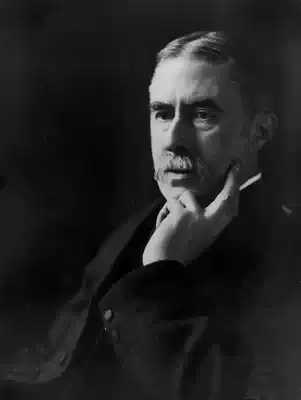
Alfred Edward Housman
The Carpenter's Son
"Here the hangman stops his cart:
Now the best of friends must part.
Fare you well, for ill fare I:
Live, lads, and I will die.
"Oh, at home had I but stayed
'Prenticed to my father's trade,
Had I stuck to plane and adze,
I had not been lost, my lads.
"Then I might have built perhaps
Gallows-trees for other chaps,
Never dangled on my own,
Had I left but ill alone.
"Now, you see, they hang me high,
And the people passing by
Stop to shake their fists and curse;
So 'tis come from ill to worse.
"Here hang I, and right and left
Two poor fellows hang for theft:
All the same's the luck we prove,
Though the midmost hangs for love.
"Comrades all, that stand and gaze,
Walk henceforth in other ways;
See my neck and save your own:
Comrades all, leave ill alone.
"Make some day a decent end,
Shrewder fellows than your friend.
Fare you well, for ill fare I:
Live lads, and I will die."
487

Elizabeth Barrett Browning
Adequacy
NOW, by the verdure on thy thousand hills,
Beloved England, doth the earth appear
Quite good enough for men to overbear
The will of God in, with rebellious wills !
We cannot say the morning-sun fulfils
Ingloriously its course, nor that the clear
Strong stars without significance insphere
Our habitation: we, meantime, our ills
Heap up against this good and lift a cry
Against this work-day world, this ill-spread feast,
As if ourselves were better certainly
Than what we come to. Maker and High Priest,
I ask thee not my joys to multiply,--
Only to make me worthier of the least.
487
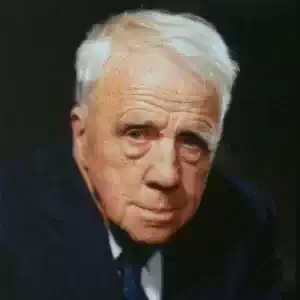
Robert Frost
Out, out--
The buzz-saw snarled and rattled in the yard
And made dust and dropped stove-length sticks of wood,
Sweet-scented stuff when the breeze drew across it.
And from there those that lifted eyes could count
Five mountain ranges one behind the other
Under the sunset far into Vermont.
And the saw snarled and rattled, snarled and rattled,
As it ran light, or had to bear a load.
And nothing happened: day was all but done.
Call it a day, I wish they might have said
To please the boy by giving him the half hour
That a boy counts so much when saved from work.
His sister stood beside them in her apron
To tell them "Supper." At the word, the saw,
As if to prove saws knew what supper meant,
Leaped out at the boy's hand, or seemed to leap--
He must have given the hand. However it was,
Neither refused the meeting. But the hand!
The boy's first outcry was a rueful laugh,
As he swung toward them holding up the hand
Half in appeal, but half as if to keep
The life from spilling. Then the boy saw all--
Since he was old enough to know, big boy
Doing a man's work, though a child at heart--
He saw all spoiled. "Don't let him cut my hand off--
The doctor, when he comes. Don't let him, sister!"
So. But the hand was gone already.
The doctor put him in the dark of ether.
He lay and puffed his lips out with his breath.
And then--the watcher at his pulse took fright.
No one believed. They listened at his heart.
Little--less--nothing!--and that ended it.
No more to build on there. And they, since they
Were not the one dead, turned to their affairs.
489

Rudyard Kipling
The Fall of Jock Gillespie
This fell when dinner-time was done --
'Twixt the first an' the second rub --
That oor mon Jock cam' hame again
To his rooms ahist the Club.
An' syne he laughed, an' syne he sang,
An' syne we thocht him fou,
An' syne he trumped his partner's trick,
An' garred his partner rue.
Then up and spake an elder mon,
That held the Spade its Ace --
God save the lad! Whence comes the licht
"That wimples on his face?"
An' Jock he sniggered, an' Jock he smiled,
An' ower the card-brim wunk: --
"I'm a' too fresh fra' the stirrup-peg,
"May be that I am drunk."
"There's whusky brewed in Galashils
"An' L. L. L. forbye;
"But never liquor lit the lowe
"That keeks fra' oot your eye.
"There's a third o' hair on your dress-coat breast,
"Aboon the heart a wee?"
"Oh! that is fra' the lang-haired Skye
"That slobbers ower me."
"Oh! lang-haired Skyes are lovin' beasts,
"An' terrier dogs are fair,
"But never yet was terrier born,
"Wi' ell-lang gowden hair!
"There's a smirch o' pouther on your breast,
"Below the left lappel?"
"Oh! that is fra' my auld cigar,
"Whenas the stump-end fell."
"Mon Jock, ye smoke the Trichi coarse,
"For ye are short o' cash,
"An' best Havanas Couldna leave
"Sae white an' pure an ash.
"This nicht ye stopped a story braid,
"An' stopped it wi' a curse.
"Last nicht ye told that tale yoursel' --
"An' capped it wi' a worse!
"Oh! we're no fou! Oh! we're no fou!
"But plainly we can ken
"Ye're fallin', fallin' fra the band
"O' cantie single men!"
An' it fell when sirris-shaws were sere,
An' the nichts were lang and mirk,
In braw new breeks, wi' a gowden ring,
Oor Jocke gaed to the Kirk!
489
Rudyard Kipling
The Old Issue
October , -- Outbreak of Boer War
Here is nothing new nor aught unproven," say the Trumpets,
"Many feet have worn it and the road is old indeed.
"It is the King--the King we schooled aforetime! "
(Trumpets in the marshes-in the eyot at Runnymede!)
"Here is neither haste, nor hate, nor anger," peal the Trumpets,
"Pardon for his penitence or pity for his fall.
"It is the King!"--inexorable Trumpets--
(Trumpets round the scaffold af the dawning by Whitehall!)
. . . . . . .
"He hath veiled the Crown And hid the Scepter," warn (he Trum pets,
"He hath changed the fashion of the lies that cloak his will.
"Hard die the Kings--ah hard--dooms hard!" declare the Trumpets,
Trumpets at the gang-plank where the brawling troop-decks fill!
Ancient and Unteachable, abide--abide the Trumpets!
Once again the Trumpets, for the shuddering ground-swell brings
Clamour over ocean of the harsh, pursuing Trumpets--
Trumpets of the Vanguard that have sworn no truce with Kings!
All we have of freedom, all we use or know--
This our fathers bought for us long and long ago.
Ancient Right unnoticed as the breath we draw--
Leave to live by no man's leave, underneath the Law.
Lance and torch and tumult, steel and grey-goose wing
Wrenched it, inch and ell and all, slowly from the king.
Till our fathers 'stablished,, after bloody years,
How our King is one with us, first among his peers.
So they bought us freedom-not at little cost--
Wherefore must we watch the King, lest our gain be lost.
Over all things certain, this is sure indeed,
Suffer not the old King: for we know the breed.
Give no ear to bondsmen bidding us endure.
Whining "He is weak and far"; crying "Time will cure."
(Time himself is witness, till the battle joins,
Deeper strikes the rottenness in the people's loins.)
Give no heed to bondsmen masking war with peace.
Suffer not the old King here or overseas.
They that beg us barter--wait his yielding mood--
Pledge the years we hold in trust-pawn our brother's blood--
Howso' great their clamour, whatsoe'er their claim,
Suffer not the old King under any name!
Here is naught unproven--here is naught to learn.
It is written what shall fall if the King return.
He shall mark our goings, question whence we came,
Set his guards about us, as in Freedom's name.
He shall take a tribute, toll of all our ware;
He shall change our gold for arms--arms we may not bear.
He shall break his Judges if they cross his word;
He shall rule above the Law calling on the Lord.
He shall peep and mutter; and the night shall bring
Watchers 'neath our window, lest we mock the King --
Hate and all division; hosts of hurrying spies;
Money poured in secret, carrion breeding flies.
Strangers of his counsel, hirelings of his pay,
These shall deal our Justice: sell-deny-delay.
We shall drink dishonour, we shall eat abuse
For the Land we look to--for the Tongue we use.
We shall take our station, dirt beneath his feet,
While his hired captains jeer us in the street.
Cruel in the shadow, crafty in the sun,
Far beyond his borders shall his teachings run.
Sloven, sullen, savage, secret, uncontrolled,
Laying on a new land evil of the old--
Long-forgotten bondage, dwarfing heart and brain--
All our fathers died to loose he shall bind again.
Here is nought at venture, random nor untrue
Swings the wheel full-circle, brims the cup anew.
Here is naught unproven, here is nothing hid:
Step for step and word for word--so the old Kings did!
Step by step, and word by word: who is ruled may read.
Suffer not the old Kings: for we know the breed--
All the right they promise--all the wrong they bring.
Stewards of the Judgment, suffer not this King!
490

Robert Browning
A Light Woman
I.
So far as our story approaches the end,
Which do you pity the most of us three?---
My friend, or the mistress of my friend
With her wanton eyes, or me?
II.
My friend was already too good to lose,
And seemed in the way of improvement yet,
When she crossed his path with her hunting-noose
And over him drew her net.
III.
When I saw him tangled in her toils,
A shame, said I, if she adds just him
To her nine-and-ninety other spoils,
The hundredth for a whim!
IV.
And before my friend be wholly hers,
How easy to prove to him, I said,
An eagle's the game her pride prefers,
Though she snaps at a wren instead!
V.
So, I gave her eyes my own eyes to take,
My hand sought hers as in earnest need,
And round she turned for my noble sake,
And gave me herself indeed.
VI.
The eagle am I, with my fame in the world,
The wren is he, with his maiden face.
---You look away and your lip is curled?
Patience, a moment's space!
VII.
For see, my friend goes shaling and white;
He eyes me as the basilisk:
I have turned, it appears, his day to night,
Eclipsing his sun's disk.
VIII.
And I did it, he thinks, as a very thief:
``Though I love her---that, he comprehends---
``One should master one's passions, (love, in chief)
``And be loyal to one's friends!''
IX.
And she,---she lies in my hand as tame
As a pear late basking over a wall;
Just a touch to try and off it came;
'Tis mine,---can I let it fall?
X.
With no mind to eat it, that's the worst!
Were it thrown in the road, would the case assist?
'Twas quenching a dozen blue-flies' thirst
When I gave its stalk a twist.
XI.
And I,---what I seem to my friend, you see:
What I soon shall seem to his love, you guess:
What I seem to myself, do you ask of me?
No hero, I confess.
XII.
'Tis an awkward thing to play with souls,
And matter enough to save one's own:
Yet think of my friend, and the burning coals
He played with for bits of stone!
XIII.
One likes to show the truth for the truth;
That the woman was light is very true:
But suppose she says,---Never mind that youth!
What wrong have I done to you?
XIV.
Well, any how, here the story stays,
So far at least as I understand;
And, Robert Browning, you writer of plays,
Here's a subject made to your hand!
491

Ella Wheeler Wilcox
Christ Crucified
Now ere I slept, my prayer had been that I might see my way
To do the will of Christ, our Lord and Master, day by day;
And with this prayer upon my lips, I knew not that I dreamed,
But suddenly the world of night a pandemonium seemed.
From forest, and from slaughter house, from bull ring, and from stall,
There rose an anguished cry of pain, a loud, appealing call;
As man – the dumb beast’s next of kin – with gun, and whip, and knife,
Went pleasure-seeking through the earth, blood-bent on taking life.
From trap, and cage, and house, and zoo, and street, that awful strain
Of tortured creatures rose and swelled the orchestra of pain.
And then methought the gentle Christ appeared to me and spoke:
‘I called you, but ye answered not’ – and in my fear I woke.
Then next I heard the roar of mills; and moving through the noise,
Like phantoms in an underworld, were little girls and boys.
Their backs were bent, their brows were pale, their eyes were sad and old;
But by the labour of their hands greed added gold to gold.
Again the Presence and the Voice: ‘Behold the crimes I see,
As ye have done it unto these, so have ye done to me.’
Again I slept. I seemed to climb a hard, ascending track;
And just behind me laboured one whose patient face was black.
I pitied him; but hour by hour he gained upon the path;
He stood beside me, stood upright – and then I turned in wrath.
‘Go back! ’ I cried. ‘What right have you to walk beside me here?
For you are black, and I am white.’ I paused struck dumb with fear.
For lo! the black man was not there, but Christ stood in his place;
And oh! the pain, the pain, the pain that looked from his dear face.
Now when I woke, the air was rife with that sweet, rhythmic din
Which tells the world that Christ has come to save mankind from sin.
And through the open door of church and temple passed a throng,
To worship Him, with bended knee with sermon, and with song.
But over all I heard the cry of hunted, mangled things;
Those creatures which are part of God, though they have hoofs and wings.
I saw the mill, the mine, and shop, the little slaves of greed;
I heard the strife of race with race, all sprung from one God-seed.
And then I bowed my head in shame, and in contrition cried –
‘Lo, after nineteen hundred years, Christ still is crucified.’
484
Rudyard Kipling
The Master-Cook
With us there rade a Maister-Cook that came
From the Rochelle which is neere Angouleme.
Littel hee was, but rounder than a topp,
And his small berd hadde dipped in manie a soppe,
His honde was smoother than beseemeth mann's,
And his discoorse was all of marzipans,
Of tripes of Caen, or Burdeux snailes swote,
And Seinte Menhoulde wher cooken pigges-foote.
To Thoulouse and to Bress and Carcasson
For pyes and fowles and chesnottes hadde hee wonne,
Of hammes of Thuringie colde hee prate,
And well hee knew what Princes hadde on plate
At Christmas-tide, from Artois to Gascogne.
Lordinges, quod hee, manne liveth nat alone
By bred, but meates rost and seethed, and broth,
And purchasable deinties, on mine othe.
Honey and hote gingere well liketh hee,
And whales-flesch mortred with spicerie.
For, lat be all how man denie or carpe,"
Him thries a daie his honger maketh sharpe,
And setteth him at boorde with hawkes eyne,
Snuffing what dish is set beforne to deyne,
Nor, till with meate he all--to fill to brim,
None other matter nowher mooveth him.
Lat holie Seintes sterve as bookes boast,
Most mannes soule is in his bellie most.
For, as man thinketh in his hearte is hee,
But, as hee eateth so his thought shall bee.
And Holie Fader's self (with reveraunce)
Oweth to Cooke his port and his presaunce.
Wherebye it cometh past disputison
Cookes over alle men have dominion,
Which follow them as schippe her gouvernail.
Enoff of wordes-beginneth heere my tale:--
484
Rudyard Kipling
Mary, Pity Women!
You call yourself a man,
For all you used to swear,
An' leave me, as you can,
My certain shame to bear?
I 'ear! You do not care --
You done the worst you know.
I 'ate you, grinnin' there. . . .
Ah, Gawd, I love you so!
Nice while it lasted, an' now it is over --
Tear out your 'eart an' good-bye to your lover!
What's the use o' grievin', when the mother that bore you
(Mary, pity women!) knew it all before you?
It aren't no false alarm,
The finish to your fun;
You -- you 'ave brung the 'arm,
An' I'm the ruined one;
An' now you'll off an' run
With some new fool in tow.
Your 'eart? You 'aven't none. . . .
Ah, Gawd, I love you so!
When a man is tired there is naught will bind 'im;
All 'e solemn promised 'e will shove be'ind 'im.
What's the good o' prayin' for The Wrath to strike 'im
(Mary, pity women!), when the rest are like 'im?
What 'ope for me or -- it?
What's left for us to do?
I've walked with men a bit,
But this -- but this is you.
So 'elp me Christ, it's true!
Where can I 'ide or go?
You coward through and through! . . .
Ah, Gawd, I love you so!
All the more you give 'em the less are they for givin' --
Love lies dead, an' you cannot kiss 'im livin'.
Down the road 'e led you there is no returnin'
(Mary, pity women!), but you're late in learnin'!
You'd like to treat me fair?
You can't, because we're pore?
We'd starve? What do I care!
We might, but this is shore!
I want the name -- no more --
The name, an' lines to show,
An' not to be an 'ore. . . .
Ah, Gawd, I love you so!
What's the good o' pleadin', when the mother that bore you
(Mary, pity women!) knew it all before you?
Sleep on 'is promises an' wake to your sorrow
(Mary, pity women!), for we sail to-morrow!
485

Paul Laurence Dunbar
Accountability
FOLKS ain't got no right to censuah othah folks about dey habits;
Him dat giv' de squir'ls de bushtails made de bobtails fu' de rabbits.
Him dat built de gread big mountains hollered out de little valleys,
Him dat made de streets an' driveways wasn't shamed to make de alleys.
We is all constructed diff'ent, d'ain't no two of us de same;
We cain't he'p ouah likes an' dislikes, ef we'se bad we ain't to blame.
Ef we'se good, we need n't show off, case you bet it ain't ouah doin'
We gits into su'ttain channels dat we jes' cain't he'p pu'suin'.
But we all fits into places dat no othah ones could fill,
An' we does the things we has to, big er little, good er ill.
John cain't tek de place o' Henry, Su an' Sally ain't alike;
Bass ain't nuthin' like a suckah, chub ain't nuthin' like a pike.
When you come to think about it, how it's all planned out it's splendid.
Nuthin's done er evah happens, 'dout hit's somefin' dat's intended;
Don't keer whut you does, you has to, an' hit sholy beats de dickens,--
Viney, go put on de kittle, I got one o' mastah's chickens.
485
Rudyard Kipling
Tarrant Moss
I closed and drew for my love's sake
That now is false to me,
And I slew the Reiver of Tarrant Moss
And set Dumeny free.
They have gone down, they have gone down,
They are standing all arow -
Twenty knights in the peat-water,
That never struck a blow!
Their armour shall not dull nor rust,
Their flesh shall not decay,
For Tarrant Moss holds them in trust,
Until the Judgment Day.
Their soul went from them in their youth,
Ah God, that mine had gone,
Whenas I leaned on my love's truth
And not on my sword alone!
Whenas I leaned on lad's belief
And not on my naked blade -
And I slew a thief, and an honest thief,
For the sake of a worthless maid.
They have laid the Reiver low in his place,
They have set me up on high,
But the twenty knights in the peat-water
Are luckier than I!
And ever they give me gold and praise
And ever I mourn my loss -
For I struck the blow for my false love's sake
And not for the Men of the Moss!
487
Rudyard Kipling
The Bell Buoy
They christened my brother of old--
And a saintly name he bears--
They gave him his place to hold
At the head of the belfry-stairs,
Where the minister-towers stand
And the breeding kestrels cry.
Would I change with my brother a league inland?
(Shoal! 'Ware shoal!) Not I!
In the flush of the hot June prime,
O'er sleek flood-tides afire,
I hear him hurry the chime
To the bidding of checked Desire;
Till the sweated ringers tire
And the wild bob-majors die.
Could I wait for my turn in the godly choir?
(Shoal! 'Ware shoal!) Not I!
When the smoking scud is blown--
When the greasy wind-rack lowers--
Apart and at peace and alone,
He counts the changeless hours.
He wars with darkling Powers
(I war with a darkling sea);
Would he stoop to my work in the gusty mirk?
(Shoal! 'Ware shoal!) Not he!
There was never a priest to pray
There was never a hand to toll,
When they made me guard of the bay,
And moored me over the shoal.
I rock, I reel, and I roll--
My four great hammers ply--
Could I speak or be still at the Church's will?
(Shoal! 'Ware shoal!) Not I!
The landward marks have failed,
The fog-bank glides unguessed,
The seaward lights are veiled,
The spent deep feigns her rest:
But my ear is laid to her breast,
I lift to the swell--I cry!
Could I wait in sloth on the Church's oath?
(Shoal! 'Ware shoal!) Not I!
At the careless end of night
I thrill to the nearing screw;
I turn in the clearing light
And I call to the drowsy crew;
And the mud boils foul and blue
As the blind bow backs away.
Will they give me their thanks if they clear the banks?
(Shoal! 'Ware shoal!) Not they!
The beach-pools cake and skim,
The bursting spray-heads freeze,
I gather on crown and rim
The grey, grained ice of the seas,
Where, sheathed from bitt to trees,
The plunging colliers lie.
Would I barter my place for the Church's grace?
(Shoal! 'Ware shoal!) Not I!
Through the blur of the whirling snow,
Or the black of the inky sleet,
The lanterns gather and grow,
And I look for the homeward fleet.
Rattle of block and sheet--
"Ready about-stand by!"
Shall I ask them a fee ere they fetch the quay?
(Shoal! 'Ware shoal!) Not I!
I dip and I surge and I swing
In the rip of the racing tide,
By the gates of doom I sing,
On the horns of death I ride.
A ship-length overside,
Between the course and the sand,
Fretted and bound I bide
Peril whereof I cry.
Would I change with my brother a league inland?
(Shoal! 'Ware shoal!) Not I!
487

Ezra Pound
Homage To Sextus Propertius - VII
Me happy, night, night full of brightness;
Oh couch made happy by iny long delectations;
How many words talked out with abundant candles;
Struggles when the lights were taken away;
Now with bared breasts she wrestled against me,
Tunic spread in delay;
And she then opening my eyelids fallen in sleep,
Her lips upon them; and it was her mouth saying:
Sluggard!
In how many varied embraces, our changing arms,
Her kisses, how many, lingering on my lips.
'Turn not Venus into a blinded motion,
Eyes are the guides of love,
Paris took Helen naked coming from the bed of Menelaus,
Endymion's naked body, bright bait for Diana,'
such at least is the story.
While our fates twine together, sate we our eyes with love;
For long night comes upon you
and a day when no day returns.
Let the gods lay chains upon us
so that no day shall unbind them.
Fool who would set a term to love's madness,
For the sun shall drive with black horses,
earth shall bring wheat from barley,
The flood shall move toward the fountain
Ere love know moderations,
The fish shall swim in dry streams.
No, now while it may be, let not the fruit of life cease.
Dry wreaths drop their petals,
their stalks are woven in baskets,
To-day we take the great breath of lovers,
to-morrow fate shuts us in.
Though you give all your kisses
you give but few.
Nor can I shift my pains to other,
Hers will I be dead,
If she confer such nights upon me,
long is my life, long in years,
If she give me many,
God am I for the time.
484
Rudyard Kipling
Rimmon
-- After Boer War
Duly with knees that feign to quake--
Bent head and shaded brow,--
Yet once again, for my father's sake,
In Rimmon's House I bow.
The curtains part, the trumpet blares,
And the eunuchs howl aloud;
And the gilt, swag-bellied idol glares
Insolent over the crowd.
"This is Rimmon, Lord of the Earth--
"Fear Him and bow the knee!"
And I watch my comrades hide their mirth
That rode to the wars with me.
For we remember the sun and the sand
And the rocks whereon we trod,
Ere we came to a scorched and a scornful land
That did not know our God;
As we remember the sacrifice,
Dead men an hundred laid--
Slain while they served His mysteries,
And that He would not aid--
Not though we gashed ourselves and wept,
For the high-priest bade us wait;
Saying He went on a journey or slept,
Or was drunk or had taken a mate.
(Praise ye Rimmon, King of Kings,
Who ruleth Earth and Sky!
And again I bow as the censer swings
And the God Enthroned goes by.)
Ay, we remember His sacred ark
And the virtuous men that knelt
To the dark and the hush behind the dark
Wherein we dreamed He dwelt;
Until we entered to hale Him out
And found no more than an old
Uncleanly image girded about
The loins with scarlet and gold.
Him we o'erset with the butts of our spears--
Him and his vast designs--
To be scorn of our muleteers
And the jest of our halted line.
By the picket-pins that the dogs defile,
In the dung and the dust He lay,
Till the priests ran and chattered awhile
And we wiped Him and took Him away.
Hushing the matter before it was known,
They returned to our fathers afar,
And hastily set Him afresh on His throne
Because he had won us the war.
Wherefore with knees that feign to quake--
Bent head and shaded brow--
To this dog, for my father's sake,
In the Rimmon's House I bow!
486
Rudyard Kipling
The Dead King
EDWARD VII.
Who in the Realm to-day lays down dear life for the sake of a land more dear?
And, unconcerned for his own estate, toils till the last grudged sands have run?
Let him approach. It is proven here
Our King asks nothing of any man more than Our King himself, has done.
For to him above all was Life good, above all he commanded
Her abundance full-handed.
The peculiar treasure of Kings was his for the taking:
All that men come to in dreams he inherited waking: --
His marvel of world-gathered armies -- one heart and all races;
His seas 'neath his keels when his war-castles foamed to their places;
The thundering foreshores that answered his heralded landing;
The huge lighted cities adoring, the assemblies upstanding;
The Councils of Kings called in haste to learn how he was minded --
The kingdoms, the Powers, and the Glories he dealt with unblinded.
To him came all captains of men, all achievers of glory
Hot from the press of their battles they told him their story.
They revealed him their lives in an hour and, saluting departed,
Joyful to labour afresh -- he had made them new-hearted.
And, since he weighed men from his youth, and no lie long deceived him,
He spoke and exacted the truth, and the basest believed him.
And God poured him an exquisite wine, that was daily renewed to him,
In the clear-welling love of his peoples that daily accrued to him.
Honour and service we gave him, rejoicingly fearless;
Faith absolute, trust beyond speech and a friendship as peerless.
And since he was Master and Servant in all that we asked him,
We leaned hard on his wisdom in all things, knowing not how we tasked him.
For on him each new day laid command, every tyrannous hour,
To confront, or confirm, or make smooth some dread issue of power;
To deliver true, judgment aright at the instant, unaided,
In the strict, level, ultimate phrase that allowed or dissuaded;
To foresee, to allay, to avert from us perils unnumbered,
To stand guard on our gates when he guessed that the watchmen had slumbered;
To win time, to turn hate, to woo folly to service and, mightily schooling
His strength to the use of his Nations, to rule as not ruling.
These were the works of our King; Earth's peace was the proof of them.
God gave him great works to fulfil, and to us the behoof of them.
We accepted his toil as our right -- none spared, none excused him.
When he was bowed by his burden his rest was refused him.
We troubled his age with our weakness -- the blacker our shame to us!
Hearing his People had need of him, straightway he came to us.
As he received so he gave -- nothing grudged, naught denying,
Not even the last gasp of his breath when he strove for us, dying.
For our sakes, without question, he put from him all that he cherished.
Simply as any that serve him he served and he perished.
All that Kings covet was his, and he flung it aside for us.
Simply as any that die in his service he died for us!
Who in the Realm to-day has choice of the easy road or the hard to tread?
And, much concerned for his own estate, would sell his soul to remain in the
sun?
Let him depart nor look on Our dead.
Our King asks nothing of any man more than Our King himself has done.
487

William Shakespeare
Sonnet 118: Like as to make our appetite more keen
Like as to make our appetite more keen
With eager compounds we our palate urge,
As to prevent our maladies unseen,
We sicken to shun sickness when we purge.
Even so being full of your ne'er-cloying sweetness,
To bitter sauces did I frame my feeding;
And, sick of welfare, found a kind of meetness
To be diseased ere that there was true needing.
Thus policy in love t' anticipate
The ills that were not, grew to faults assured,
And brought to medicine a healthful state
Which, rank of goodness, would by ill be cured.
But thence I learn and find the lesson true:
Drugs poison him that so fell sick of you.
485
Ezra Pound
Homage To Sextus Propertius - II
I had been seen in the shade, recumbent on cushioned Helicon,
The water dripping from Bellerophon's horse,
Alba, your kings, and the realm your folk
have constructed with such industry
Shall be yawned out on my lyre with such industry.
My little mouth shall gobble in such great fountains,
'Wherefrom father Ennius, sitting before I came, hath drunk.'
I had rehearsed the Curian brothers, and made remarks
on the Horatian javelin
(Near Q. H. Flaccus' book-stall).
'Of’ royal Aemilia, drawn on the memorial raft,
'Of’ the victorious delay of Fabius, and the left-handed
battle at Cannae,
Of lares fleeing the 'Roman seat' . . .
I had sung of all these
And of Hannibal,
and of Jove protected by geese.
And Phoebus looking upon me from the Castalian tree,
Said then 'You idiot! What are you doing with that water:
‘Who has ordered a book about heroes?
'You need, Propertius, not think
'About acquiring that sort of a reputation.
'Soft fields must be worn by small wheels,
'Your pamphlets will be thrown, thrown often into a chair
'Where a girl waits alone for her lover;
'Why wrench your page out of its course?
'No keel will sink with your genius
'Let another oar churn the water,
'Another wheel, the arena; mid-crowd is as bad as mid-sea.'
He had spoken, and pointed me a place with his plectrum:
Orgies of vintages, an earthern image of Silenus
Strengthened with rushes, Tegaean Pan,
The small birds of the Cytharean mother,
their Punic faces dyed in the Gorgon's lake;
Nine girls, from as many countrysides
bearing her offerings in their unhardened hands,
Such my cohort and setting. And she bound ivy to his thyrsos;
Fitted song to the strings;
Roses twined in her hands.
And one among them looked at me with face offended,
Calliope:
'Content ever to move with white swans!
'Nor will the noise of high horses lead you ever to battle;
Nor will the public criers ever have your name;
in their classic horns,
'Nor Mars shout you in the wood at Aeonium,
Nor where Rome ruins German riches,
'Nor where the Rhine flows with barbarous blood,
and flood carries wounded Suevi.
'Obviously crowned lovers at unknown doors,
'Night dogs, the marks of a drunken scurry,
'These are your images, and from you the sorcerizing of
shut-in young ladies,
'The wounding of austere men by chicane.'
Thus Mistress Calliope,
Dabbling her hands in the fount, thus she
Stiffened our face with the backwash of Philetas the Coan.
485
Rudyard Kipling
The Dutch in the Medway
If wars were won by feasting,
Or victory by song,
Or safety found in sleeping sound,
How England would be strong!
But honour and dominion
Are not maintainéd so,
They're only got by sword and shot,
And this the Dutchmen know!
The moneys that should feed us,
You spend on your delight,
How can you then have sailor-men
To aid you in your fight?
Our fish and cheese are rotten,
Which makes the scurvy grow—
We cannot serve you if we starve,
And this the Dutchmen know!
Our ships in every harbour
Be neither whole nor sound,
And, when we seek to mend a leak,
No oakum can be found,
Or, if it is, the caulkers,
And carpenters also,
For lack of pay have gone away,
And this the Dutchmen know!
Mere powder, guns, and bullets,
We scarce can get at all,
Their price was spent in merriment
And revel at Whitehall,
While we in tattered doublets
From ship to ship must row,
Beseeching friends for odds and ends—
And this the Dutchmen know!
No King will heed our warnings,
No Court will pay our claims—
Our King and Court for their disport
Do sell the very Thames!
For, now De Ruyter's topsails,
Off naked Chatham show,
We dare not meet him with our fleet—
And this the Dutchmen know!
482
Elizabeth Barrett Browning
Exaggeration
WE overstate the ills of life, and take
Imagination (given us to bring down
The choirs of singing angels overshone
By God's clear glory) down our earth to rake
The dismal snows instead, flake following flake,
To cover all the corn; we walk upon
The shadow of hills across a level thrown,
And pant like climbers: near the alder brake
We sigh so loud, the nightingale within
Refuses to sing loud, as else she would.
O brothers, let us leave the shame and sin
Of taking vainly, in a plaintive mood,
The holy name of GRIEF !--holy herein
That by the grief of ONE came all our good.
483
Ella Wheeler Wilcox
The Farewell to Clarimonde
Adieu, Romauld! But thou canst not forget me.
Although no more I haunt thy dreams at night,
Thy hungering heart forever must regret me,
And starve for those lost moments of delight.
Naught shall avail thy priestly rites and duties,
Nor fears of Hell, nor hopes of Heaven beyond:
Before the Cross shall rise my fair form's beauties—-
The lips, the limbs, the eyes of Clarimonde.
Like gall the wine sipped from the sacred chalice
Shall taste to one who knew my red mouth's bliss,
When Youth and Beauty dwelt in Love's own palace,
And life flowed on in one eternal kiss.
Through what strange ways I come, dear heart, to reach thee,
From viewless lands, by paths no man e'er trod!
I braved all fears, all dangers dared, to teach thee
A love more mighty than thy love of God.
Think not in all His Kingdom to discover
Such joys, Romauld, as ours, when fierce yet fond
I clasped thee—kissed thee—crowned thee my one lover:
Thou canst not find another Clarimonde.
I knew all arts of love: he who possessed me
Possessed all women, and could never tire;
A new life dawned for him who once caressed me;
Satiety itself I set on fire.
Inconstancy I chained: men died to win me;
Kings cast by crowns for one hour on my breast:
And all the passionate tide of love within me
I gave to thee, Romauld. Wert thou not blest?
Yet, for the love of God, thy hand hath riven
Our welded souls. But not in prayer well conned,
Not in thy dearly-purchased peace of Heaven,
Canst thou forget those hours with Clarimonde.
483
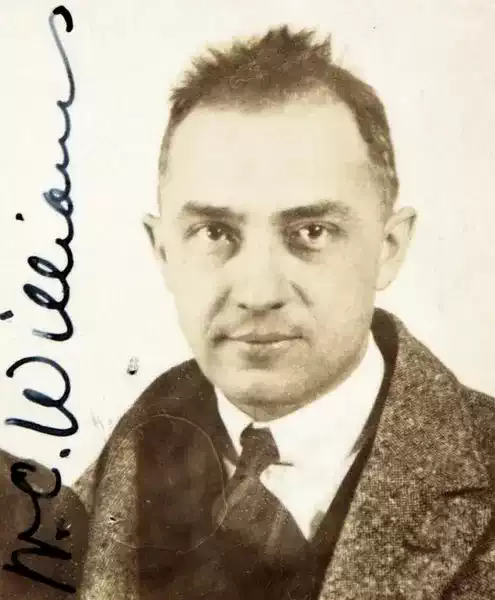
William Carlos Williams
Tract
I will teach you my townspeople
how to perform a funeral
for you have it over a troop
of artistsunless
one should scour the worldyou
have the ground sense necessary.
See! the hearse leads.
I begin with a design for a hearse.
For Christ's sake not blacknor
white either - and not polished!
Let it be whethered - like a farm wagon -
with gilt wheels (this could be
applied fresh at small expense)
or no wheels at all:
a rough dray to drag over the ground.
Knock the glass out!
My God - glass, my townspeople!
For what purpose? Is it for the dead
to look out or for us to see
the flowers or the lack of them -
or what?
To keep the rain and snow from him?
He will have a heavier rain soon:
pebbles and dirt and what not.
Let there be no glass -
and no upholstery, phew!
and no little brass rollers
and small easy wheels on the bottom -
my townspeople, what are you thinking of?
A rough plain hearse then
with gilt wheels and no top at all.
On this the coffin lies
by its own weight.
No wreathes pleaseespecially
no hot house flowers.
Some common memento is better,
something he prized and is known by:
his old clothes - a few books perhaps -
God knows what! You realize
how we are about these things
my townspeople -
something will be found - anything
even flowers if he had come to that.
So much for the hearse.
For heaven's sake though see to the driver!
Take off the silk hat! In fact
that's no place at all for him -
up there unceremoniously
dragging our friend out to his own dignity!
Bring him down - bring him down!
Low and inconspicuous! I'd not have him ride
on the wagon at all - damn him! -
the undertaker's understrapper!
Let him hold the reins
and walk at the side
and inconspicuously too!
Then briefly as to yourselves:
Walk behind - as they do in France,
seventh class, or if you ride
Hell take curtains! Go with some show
of inconvenience; sit openly -
to the weather as to grief.
Or do you think you can shut grief in?
What - from us? We who have perhaps
nothing to lose? Share with us
share with us - it will be money
in your pockets.
Go now
I think you are ready.
483
Rudyard Kipling
At His Execution
I am made all things to all men--
Hebrew, Roman, and Greek--
In each one's tongue I speak,
Suiting to each my word,
That some may be drawn to the Lord!
I am made all things to all men--
In City or Wilderness
Praising the crafts they profess
That some may be drawn to the Lord--
By any means to my Lord!
Since I was overcome
By that great Light and Word,
I have forgot or forgone
The self men call their own
(Being made all things to all men)
So that I might save some
At such small price to the Lord,
As being all things to all men.
I was made all things to all men,
But now my course is done--
And now is my reward...
Ah, Christ, when I stand at Thy Throne
With those I have drawn to the Lord,
Restore me my self again!
483

Lord Byron
To A Vain Lady
Ah! heedless girl! why thus disclose
What ne'er was meant for other ears:
Why thus destroy thine own repose
And dig the source of future tears?
Oh, thou wilt weep, imprudent maid,
While lurking envious foes will smile,
For all the follies thou hast said
Of those who spoke but to beguile.
Vain girl! thy ling'ring woes are nigh,
If thou believ'st what striplings say:
Oh, from the deep temptation fly,
Nor fall the specious spoiler's prey.
Dost thou repeat, in childish boast,
The words man utters to deceive?
Thy peace, thy hope, thy all is lost,
If thou canst venture to believe.
While now amongst thy female peers
Thou tell'st again the soothing tale,
Canst thou not mark the rising sneers
Duplicity in vain would veil?
These tales in secret silence hush,
Nor make thyself the public gaze:
What modest maid without a blush
Recounts a flattering coxcomb's praise?
Will not the laughing boy despise
Her who relates each fond conceit Who,
thinking Heaven is in her eyes,
Yet cannot see the slight deceit?
For she who takes a soft delight
These amorous nothings in revealing,
Must credit all we say or write,
While vanity prevents concealing.
Cease, if you prize your beauty's reign!
No jealousy bids me reprove:
One, who is thus from nature vain,
I pity, but I cannot love.
January 15,1807.
481
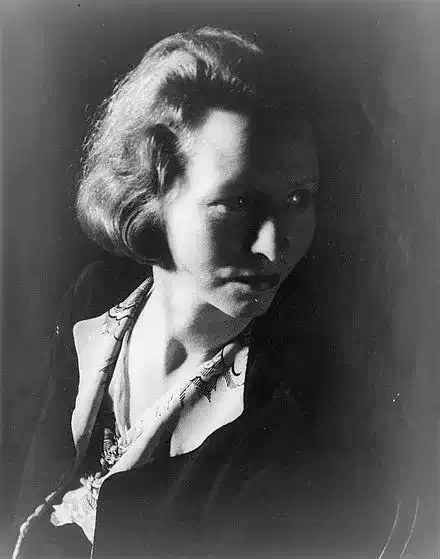
Edna St. Vincent Millay
The True Encounter
"Wolf!" cried my cunning heart
At every sheep it spied,
And roused the countryside.
"Wolf! Wolf!"—and up would start
Good neighbours, bringing spade
And pitchfork to my aid.
At length my cry was known:
Therein lay my release.
I met the wolf alone
And was devoured in peace.
At every sheep it spied,
And roused the countryside.
"Wolf! Wolf!"—and up would start
Good neighbours, bringing spade
And pitchfork to my aid.
At length my cry was known:
Therein lay my release.
I met the wolf alone
And was devoured in peace.
482