
Ethics and Morality

Rudyard Kipling
The Queen's Men
Valour and Innocence
Have latterly gone hence
To certain death by certain shame attended.
Envy--ah! even to tears! --
The fortune of their years
Which, though so few, yet so divinely ended.
Scarce had they lifted up
Life's full and fiery cup,
Than they had set it down untouched before them.
Before their day arose
They beckoned it to close--
Close in confusion and destruction o'er them.
They did not stay to ask
What prize should crown their task--
Well sure that prize was such as no man strives for;
But passed into eclipse,
Her kiss upon their lips--
Even Belphoebe's, whom they gave their lives for!
501

Alfred Lord Tennyson
The Ringlet
'Your ringlets, your ringlets,
That look so golden-gay,
If you will give me one, but one,
To kiss it night and day,
The never chilling touch of Time
Will turn it silver-gray;
And then shall I know it is all true gold
To flame and sparkle and stream as of old.
Till all the comets in heaven are cold,
And all her stars decay.'
'Then take it, love, and put it by;
This cannot change, nor yet can I.'
'My ringlet, my ringlet,
That art so golden-gay,
Now never chilling touch of Time
Can turn thee silver-gray;
And a lad may wink, and a girl may hint,
And a fool may say his say;
For my doubts and fears were all amiss,
And I swear henceforth by this and this,
That a doubt will only come for a kiss,
And a fear to be kiss'd away.'
'Then kiss it, love, and put it by:
If this can change, why so can I.'
O Ringlet, O Ringlet,
I kiss'd you night and day,
And Ringlet, O Ringlet,
You still are golden-gay,
But Ringlet, O Ringlet,
You should be silver-gray:
For what is this which now I'm told,
I that took you for true gold,
She that gave you 's bought and sold,
Sold, sold.
O Ringlet, O Ringlet,
She blush'd a rosy red,
When Ringlet, O Ringlet
She clipt you from her head,
And Ringlet, O Ringlet,
She gave you me, and said,
'Come, kiss it, love and put it by:
If this can change, why so can I.'
O fie, you golden nothing, fie,
You golden lie.
O Ringlet, O Ringlet,
I count you much to blame,
For Ringlet, O Ringlet,
You put me much to shame,
So Ringlet, O Ringlet,
I doom you to the flame.
For what is this which now I learn,
Has given all my faith a turn?
Burn, you glossy heretic, burn,
Burn, burn.
502

Ezra Pound
Canto I
And then went down to the ship,
Set keel to breakers, forth on the godly sea, and
We set up mast and sail on tha swart ship,
Bore sheep aboard her, and our bodies also
Heavy with weeping, so winds from sternward
Bore us out onward with bellying canvas,
Circe's this craft, the trim-coifed goddess.
Then sat we amidships, wind jamming the tiller,
Thus with stretched sail, we went over sea till day's end.
Sun to his slumber, shadows o'er all the ocean,
Came we then to the bounds of deepest water,
To the Kimmerian lands, and peopled cities
Covered with close-webbed mist, unpierced ever
With glitter of sun-rays
Nor with stars stretched, nor looking back from heaven
Swartest night stretched over wretched men there.
The ocean flowing backward, came we then to the place
Aforesaid by Circe.
Here did they rites, Perimedes and Eurylochus,
And drawing sword from my hip
I dug the ell-square pitkin;
Poured we libations unto each the dead,
First mead and then sweet wine, water mixed with white flour.
Then prayed I many a prayer to the sickly death's-head;
As set in Ithaca, sterile bulls of the best
For sacrifice, heaping the pyre with goods,
A sheep to Tiresias only, black and a bell-sheep.
Dark blood flowed in the fosse,
Souls out of Erebus, cadaverous dead, of brides
Of youths and at the old who had borne much;
Souls stained with recent tears, girls tender,
Men many, mauled with bronze lance heads,
Battle spoil, bearing yet dreory arms,
These many crowded about me; with shouting,
Pallor upon me, cried to my men for more beasts;
Slaughtered the heards, sheep slain of bronze;
Poured ointment, cried to the gods,
To Pluto the strong, and praised Proserpine;
Unsheathed the narrow sword,
I sat to keep off the impetuous impotent dead,
Till I should hear Tiresias.
But first Elpenor came, our friend Elpenor,
Unburied, cast on the wide earth,
Limbs that we left in the house of Circe,
Unwept, unwrapped in sepulchre, since toils urged other.
Pitiful spirit.
And I cried in hurried speech:
"Elpenor, how art thou come to this dark coast?
Cam'st thou afoot, outstripping seamen?"
And he in heavy speech:
"Ill fate and abundant wine. I slept in Circe's ingle.
Going down the long ladder unguarded,
I fell against the buttress,
Shattered the nape-nerve, the soul sought Avernus.
But thou, O King, I bid remember me, unwept, unburied,
Heap up mine arms, be tomb by sea-bord, and inscribed:
A man of no fortune, and with a name to come.
And set my oar up, that I swung mid fellows."
And Anticlea came, whom I beat off, and then Tiresias Theban,
Holding his golden wand, knew me, and spoke first:
"A second time? why? man of ill star,
Facing the sunless dead and this joyless region?
Stand from the fosse, leave me my bloody bever
For soothsay."
And I stepped back,
And he stong with the blood, said then: "Odysseus
Shalt return through spiteful Neptune, over dark seas,
Lose all companions." And then Anticlea came.
Lie quiet Divus. I mean, that is Andreas Divus,
In officina Wecheli, 1538, out of Homer.
And he sailed, by Sirens and thence outward and away
And unto Circe.
Venerandam,
In the Creatan's phrase, with the golden crown, Aphrodite,
Cypri munimenta sortita est, mirthful, orichalchi, with golden
Girdles and breast bands, thou with dark eyelids
Bearing the golden bough of Argicida. So that:
497
Rudyard Kipling
What Happened
Hurree Chunder Mookerjee, pride of Bow Bazaar,
Owner of a native press, "Barrishter-at-Lar,"
Waited on the Government with a claim to wear
Sabres by the bucketful, rifles by the pair.
Then the Indian Government winked a wicked wink,
Said to Chunder Mookerjee: "Stick to pen and ink.
They are safer implements, but, if you insist,
We will let you carry arms wheresoe'er you list."
Hurree Chunder Mookerjee sought the gunsmith and
Bought the tubes of Lancaster, Ballard, Dean, and Bland,
Bought a shiny bowie-knife, bought a town-made sword,
Jingled like a carriage-horse when he went abroad.
But the Indian Government, always keen to please,
Also gave permission to horrid men like these --
Yar Mahommed Yusufzai, down to kill or steal,
Chimbu Singh from Bikaneer, Tantia the Bhil;
Killar Khan the Marri chief, Jowar Singh the Sikh,
Nubbee Baksh Punjabi Jat, Abdul Huq Rafiq --
He was a Wahabi; last, little Boh Hla-oo
Took advantage of the Act -- took a Snider too.
They were unenlightened men, Ballard knew them not.
They procured their swords and guns chiefly on the spot;
And the lore of centuries, plus a hundred fights,
Made them slow to disregard one another's rights.
With a unanimity dear to patriot hearts
All those hairy gentlemen out of foreign parts
Said: "The good old days are back -- let us go to war!"
Swaggered down the Grand Trunk Road into Bow Bazaar,
Nubbee Baksh Punjabi Jat found a hide-bound flail;
Chimbu Singh from Bikaneer oiled his Tonk jezail;
Yar Mahommed Yusufzai spat and grinned with glee
As he ground the butcher-knife of the Khyberee.
Jowar Singh the Sikh procured sabre, quoit, and mace,
Abdul Huq, Wahabi, jerked his dagger from its place,
While amid the jungle-grass danced and grinned and jabbered
Little Boh Hla-oo and cleared his dah-blade from the scabbard.
What became of Mookerjee? Smoothly, who can say?
Yar Mahommed only grins in a nasty way,
Jowar Singh is reticent, Chimbu Singh is mute.
But the belts of all of them simply bulge with loot.
What became of Ballard's guns? Afghans black and grubby
Sell them for their silver weight to the men of Pubbi;
And the shiny bowie-knife and the town-made sword are
Hanging in a Marri camp just across the Border.
What became of Mookerjee? Ask Mahommed Yar
Prodding Siva's sacred bull down the Bow Bazaar.
Speak to placid Nubbee Baksh -- question land and sea --
Ask the Indian Congressmen -- only don't ask me!
499

William Blake
I Heard an Angel
I heard an Angel singing
When the day was springing,
'Mercy, Pity, Peace
Is the world's release.'
Thus he sung all day
Over the new mown hay,
Till the sun went down
And haycocks looked brown.
I heard a Devil curse
Over the heath and the furze,
'Mercy could be no more,
If there was nobody poor,
And pity no more could be,
If all were as happy as we.'
At his curse the sun went down,
And the heavens gave a frown.
Down pour'd the heavy rain
Over the new reap'd grain ...
And Miseries' increase
Is Mercy, Pity, Peace.
497

Lord Byron
The Siege and Conquest of Alhama
The Moorish King rides up and down,
Through Granada's royal town;
From Elvira's gate to those
Of Bivarambla on he goes.
Woe is me, Alhama!
Letters to the monarch tell
How Alhama's city fell:
In the fire the scroll he threw,
And the messenger he slew.
Woe is me, Albamal
He quits his mule, and mounts his horse,
And through the street directs his course;
Through the street of Zacatin
To the Alhambra spurring in.
Woe is me, Alhama!
When the Alhambra walls he gain'd,
On the moment he ordain'd
That the trumpet straight should sound
With the silver clarion round.
Woe is me, Alhamal
And when the hollow drums of war
Beat the loud alarm afar,
That the Moors of town and plain
Might answer to the martial strain.
Woe is me, Alhama!
Then the Moors, by this aware,
That bloody Mars recall'd them there,
One by one, and two by two,
To a mighty squadron grew.
Woe is me, Alhama!
Out then spake an aged Moor
In these words the king before,
'Wherefore call on us, oh King?
What may mean this gathering?'
Woe is me, Alhama!
'Friends! ye have, alas! to know
Of a most disastrous blow;
That the Christians, stern and bold,
Have obtain'd Alhama's hold.'
Woe is me, Alhama!
Out then spake old Alfaqui,
With his beard so white to see,
'Good King! thou art justly served,
Good King! this thou hast deserved.
Woe is me, Alhama!
'By thee were slain, in evil hour,
The Abencerrage, Granada's flower;
And strangers were received by thee
Of Cordova the Chivalry.
Woe is me, Alhama!
'And for this, oh King! is sent
On thee a double chastisement:
Thee and thine, thy crown and realm,
One last wreck shall overwhelm.
Woe is me, Alhama!
'He who holds no laws in awe,
He must perish by the law;
And Granada must be won,
And thyself with her undone.'
Woe is me, Alhama!
Fire crashed from out the old Moor's eyes,
The Monarch's wrath began to rise,
Because he answer'd, and because
He spake exceeding well of laws.
Woe is me, Alhama!
'There is no law to say such things
As may disgust the ear of kings:
'Thus, snorting with his choler, said
The Moorish King, and doom'd him dead.
Woe is me, Alhama!
Moor Alfaqui! Moor Alfaqui!
Though thy beard so hoary be,
The King hath sent to have thee seized,
For Alhama's loss displeased.
Woe is me, Alhama!
And to fix thy head upon
High Alhambra's loftiest stone;
That thus for thee should be the law,
And others tremble when they saw.
Woe is me, Alhama!
'Cavalier, and man of worth!
Let these words of mine go forth!
Let the Moorish Monarch know,
That to him I nothing owe.
Woe is me, Alhama!
'But on my soul Alhama weighs,
And on my inmost spirit preys;
And if the King his land hath lost,
Yet others may have lost the most.
Woe is me, Alhama!
'Sires have lost their children, wives
Their lords, and valiant men their lives!
One what best his love might claim
Hath lost, another wealth, or fame.
Woe is me, Alhama!
'I lost a damsel in that hour,
Of all the land the loveliest flower;
Doubloons a hundred I would pay,
And think her ransom cheap that day.'
Woe is me, Alhama!
And as these things the old Moor said,
They sever'd from the trunk his head;
And to the Alhambra's wall with speed
'Twas carried, as the King decreed.
Woe is me, Alhama!
And men and infants therein weep
Their loss, so heavy and so deep;
Granada's ladies, all she rears
Within her walls, burst into tears.
Woe is me, Alhama!
And from the windows o'er the walls
The sable web of mourning falls;
The King weeps as a woman o'er
His loss, for it is much and sore.
Woe is me, Alhama!
498

Ella Wheeler Wilcox
An Inspiration
However the battle is ended,
Though proudly the victor comes
With fluttering flags and prancing nags
And echoing roll of drums.
Still truth proclaims this motto,
In letters of living light, -
No Question is ever settled,
Until it is settled right.
Though the heel of the strong oppressor
May grind the weak to dust,
And the voices of fame with one acclaim
May call him great and just,
Let those who applaud take warning,
And keep this motto in sight, -
No question is ever settled
Until it is settled right.
Let those who have failed take courage;
Tho' the enemy seems to have won,
Tho' his ranks are strong, if he be in the wrong
The battle is not yet done;
For, as sure as the morning follows
The darkest hour of the night,
No question is ever settled
Until it is settled right.
O man bowed down with labor!
O woman, young, yet old!
O heart oppressed in the toiler's breast
And crushed by the power of gold!
Keep on with your weary battle
Against triumphant might;
No question is ever settled
Until it is settled right.
498
Rudyard Kipling
The Changelings
R.N.V.R, Sea Constables
Or ever the battered liners sank
With their passengers to the dark
I was head of a Walworth Bank,
And you were a grocer's clerk.
I was a dealer in stocks and shares,
And you in butters and teas;
And we both abandoned our own affairs
And took to the dreadful seas.
Wet and worry about our ways--
Panic, onset and flight--
Had us in charge for a thousand days
And thousand-year-long night.
We saw more than the nights could hide--
More than the waves could keep--
And--certain faces over the side
Which do not go from our sleep.
We were more tired than words can tell
While the pied craft fled by,
And the swinging mounds of the Western swell
Hoisted us Heavens-high...
Now there is nothing -- not even our rank--
To witness what we have been;
And I am returned to my Walworth Bank
And you to your margarine!
496
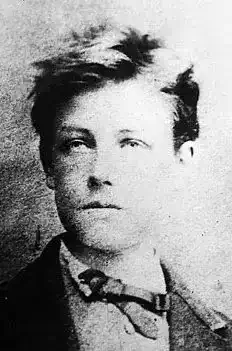
Arthur Rimbaud
Clearance Sale
For what the Jews have not sold,
what neither nobility nor crime have tasted,
what is unknown to monstrous love
and to the infernal probity of the masses!
what neither time nor science need recognize: The Voices restored;
fraternal awakening of all choral and orchestral energies
and their instantaneous application; the opportunity, the only one,
for the release of our senses! For sale Bodies without price,
outside any race, any world, any sex, any lineage! Riches gushing at every step!
Uncontrolled sale of diamonds!
For sale anarchy for the masses;
irrepressible satisfaction for rare connoisseurs;
agonizing death for the faithful and for lovers!
For sale colonization and migrations, sports,
fairylands and incomparable comforts,
and the noise and the movement
and the future they make!
For sale the application of calculations
and the incredible leaps of harmony.
Discoveries and terms never dreamed of,
-- immediate possession.
Wild and infinite flight toward invisible splendors,
toward intangible delights-and
its maddening secrets for every vice
-- and its terrifying gaiety for the mob.
For sale, the bodies, the voices,
the enormous and unquestionable wealth,
that which will never be sold.
Salesmen are not at the end of their stock!
It will be some time before travelers have to turn in their accounts.
498

John Keats
Otho The Great - Act II
SCENE I.
An Ante-chamber in the Castle.
Enter LUDOLPH and SIGIFRED.
Ludolph. No more advices, no more cautioning:
I leave it all to fate to any thing!
I cannot square my conduct to time, place,
Or circumstances; to me 'tis all a mist!
Sigifred. I say no more.
Ludolph. It seems I am to wait
Here in the ante-room; that may be a trifle.
You see now how I dance attendance here,
Without that tyrant temper, you so blame,
Snapping the rein. You have medicin'd me
With good advices; and I here remain,
In this most honourable ante-room,
Your patient scholar.
Sigifred. Do not wrong me, Prince.
By Heavens, I'd rather kiss Duke Conrad's slipper,
When in the morning he doth yawn with pride,
Than see you humbled but a half-degree!
Truth is, the Emperor would fain dismiss
The nobles ere he sees you.
Enter GONFRED from the Council-room.
Ludolph. Well, sir! What?
Gonfred. Great honour to the Prince! The Emperor,
Hearing that his brave son had re-appeared,
Instant dismiss 'd the Council from his sight,
As Jove fans off the clouds. Even now they pass.
[Exit.
Enter the Nobles from the Council-room. They cross the stage,
bowing unth respect to LUDOLPH, he frowning on them.
CONRAD follows. Exeunt Nobles.
Ludolph. Not the discoloured poisons of a fen,
Which he who breathes feels warning of his death,
Could taste so nauseous to the bodily sense,
As these prodigious sycophants disgust
The soul's fine palate.
Conrad. Princely Ludolph, hail!
Welcome, thou younger sceptre to the realm!
Strength to thy virgin crownet's golden buds,
That they, against the winter of thy sire,
May burst, and swell, and flourish round thy brows,
Maturing to a weighty diadem!
Yet be that hour far off; and may he live,
Who waits for thee, as the chapp'd earth for rain.
Set my life's star! I have lived long enough,
Since under my glad roof, propitiously,
Father and son each other re-possess.
Ludolph. Fine wording, Duke! but words could never yet
Forestall the fates; have you not learnt that yet?
Let me look well: your features are the same;
Your gait the same; your hair of the same shade;
As one I knew some passed weeks ago,
Who sung far different notes into mine ears.
I have mine own particular comments on 't;
You have your own, perhaps.
Conrad. My gracious Prince,
All men may err. In truth I was deceived
In your great father's nature, as you were.
Had I known that of him I have since known,
And what you soon will learn, I would have turned
My sword to my own throat, rather than held
Its threatening edge against a good King's quiet:
Or with one word fever'd you, gentle Prince,
Who seem'd to me, as rugged times then went,
Indeed too much oppress'd. May I be bold
To tell the Emperor you will haste to him?
Ludolph. Your Dukedom's privilege will grant so much.
[Exit CONRAD
He's very close to Otho, a tight leech!
Your hand I go. Ha! here the thunder comes
Sullen against the wind! If in two angry brows
My safety lies, then Sigifred, I'm safe.
Enter OTHO and CONRAD.
Otho. Will you make Titan play the lackey-page &
To chattering pigmies? I would have you know
That such neglect of our high Majesty
Annuls all feel of kindred. What is son,
Or friend, or brother, or all ties of blood,
When the whole kingdom, centred in ourself,
Is rudely slighted ? Who am I to wait ?
By Peter's chair! I have upon my tongue
A word to fright the proudest spirit here!
Death! and slow tortures to the hardy fool,
Who dares take such large charter from our smiles!
Conrad, we would be private. Sigifred!
Off! And none pass this way on pain of death!
[Exeunt CONRAD and SIGIFRED,
Ludolph. This was but half expected, my good sire,
Yet I am griev'd at it, to the full height,
As though my hopes of favour had been whole.
Otho. How you indulge yourself! What can you hope for?
Ludolph. Nothing, my liege ; I have to hope for nothing.
I come to greet you as a loving son,
And then depart, if I may be so free,
Seeing that blood of yours in my warm veins
Has not yet mitigated into milk.
Otho. What would you, sir?
Ludolph. A lenient banishment;
So please you let me unmolested pass
This Conrad's gates, to the wide air again.
I want no more. A rebel wants no more.
Otho. And shall I let a rebel loose again
To muster kites and eagles 'gainst my head?
No, obstinate boy, you shall be kept cag'd up,
Serv'd with harsh food, with scum for Sunday-drink.
Ludolph. Indeed!
Otho. And chains too heavy for your life:
I'll choose a gaoler, whose swart monstrous face
Shall be a hell to look upon, and she
Ludolph. Ha!
Otho. Shall be your fair Auranthe.
Ludolph. Amaze! Amaze!
Otho. To-day you marry her.
Ludolph. This is a sharp jest!
Otho. No. None at all. When have I said a lie?
Ludolph. If I sleep not, I am a waking wretch.
Otho. Not a word more. Let me embrace my child.
Ludolph. I dare not. 'Twould pollute so good a father!
heavy crime! that your son's blinded eyes
Could not see all his parent's love aright,
As now I see it. Be not kind to me
Punish me not with favour.
Otho. Are you sure,
Ludolph, you have no saving plea in store?
Ludolph. My father, none!
Otho. Then you astonish me.
Ludolph. No, I have no plea. Disobedience,
Rebellion, obstinacy, blasphemy,
Are all my counsellors. If they can make
My crooked deeds show good and plausible,
Then grant me loving pardon, but not else,
Good Gods! not else, in any way, my liege!
Otho. You are a most perplexing, noble boy.
Ludolph. You not less a perplexing noble father.
Otho. Well, you shall have free passport through the gates.
Farewell!
Ludolph. Farewell! and by these tears believe,
And still remember, I repent in pain
All my misdeeds!
Otho. Ludolph, I will! I will!
But, Ludolph, ere you go, I would enquire
If you, in all your wandering, ever met
A certain Arab haunting in these parts.
Ludolph. No, my good lord, I cannot say I did.
Otho. Make not your father blind before his time;
Nor let these arms paternal hunger more
For an embrace, to dull the appetite
Of my great love for thee, my supreme child!
Come close, and let me breathe into thine ear.
knew you through disguise. You are the Arab!
You can't deny it. [Embracing him.
Ludolph. Happiest of days!
Otho. We'll make it so.
Ludolph. 'Stead of one fatted calf
Ten hecatombs shall bellow out their last,
Smote 'twixt the horns by the death-stunning mace
Of Mars, and all the soldiery shall feast
Nobly as Nimrod's masons, when the towers
Of Nineveh new kiss'd the parted clouds!
Otho. Large as a God speak out, where all is thine.
Ludolph. Aye, father, but the fire in my sad breast
Is quench 'd with inward tears! I must rejoice
For you, whose wings so shadow over me
In tender victory, but for myself
I still must mourn. The fair Auranthe mine!
Too great a boon! I prythee let me ask I
What more than I know of could so have changed
Your purpose touching her?
Otho. At a word, this:
In no deed did you give me more offense
Than your rejection of Erminia.
To my appalling, I saw too good proof
Of your keen-eyed suspicion, she is naught!
Ludolph. You are convinced?
Otho. Aye, spite of her sweet looks.
O, that my brother's daughter should so fall!
Her fame has pass'd into the grosser lips
Of soldiers in their cups.
Lndolph. 'Tis very sad.
Otho. No more of her. Auranthe Ludolph, come!
This marriage be the bond of endless peace! [Exeunt.
SCENE II. The Entrance of GERSA'S Tent in the Hungarian Camp.
Enter ERMINIA.
Erminia. Where! where! where shall I find a messenger?
A trusty soul? A good man in the camp?
Shall I go myself? Monstrous wickedness!
O cursed Conrad devilish Auranthe!
Here is proof palpable as the bright sun!
O for a voice to reach the Emperor's ears!
[Shouts in the Camp.
Enter an HUNGARIAN CAPTAIN.
Captain. Fair prisoner, hear you those joyous shouts?
The king aye, now our king, but still your slave,
Young Gersa, from a short captivity
Has just return'd. He bids me say, bright Dame,
That even the homage of his ranged chiefs
Cures not his keen impatience to behold
Such beauty once again. What ails you, lady?
Erminia. Say, is not that a German, yonder? There!
Captain. Methinks by his stout bearing he should be
Yes 'tis one Albert; a brave German knight,
And much in the emperor's favour.
Erminia. I would fain
Enquire of friends and kinsfolk; how they fared
In these rough times. Brave soldier, as you pass
To royal Gersa with my humble thanks,
Will you send yonder knight to me?
Captain. I will. [Exit.
Ermina. Yes, he was ever known to be a man
Frank, open, generous; Albert I may trust.
proof! proof! proof! Albert's an honest man;
Not Ethelbert the monk, if he were here,
Would I hold more trustworthy. Now!
Enter ALBERT.
Albert. Good Gods!
Lady Erminia! are you prisoner
In this beleaguer 'd camp? Or are you here
Of your own will? You pleas'd to send for me.
By Venus, 'tis a pity I knew not
Your plight before, and, by her Son, I swear
To do you every service you can ask.
What would the fairest?
Erminia. Albert, will you swear?
Albert. I have. Well?
Erminia. Albert, you have fame to lose.
If men, in court and camp, lie not outright,
You should be, from a thousand, chosen forth
To do an honest deed. Shall I confide?
Albert. Aye, anything to me, fair creature. Do;
Dictate my task. Sweet woman,
Erminia. Truce with that.
You understand me not; and, in your speech,
see how far the slander is abroad.
Without proof could you think me innocent?
Albert. Lady, I should rejoice to know you so.
Erminia. If you have any pity for a maid,
Suffering a daily death from evil tongues;
Any compassion for that Emperor's niece,
Who, for your bright sword and clear honesty,
Lifted you from the crowd of common men
Into the lap of honour; save me, knight!
Albert. How? Make it clear; if it be possible,
I, by the banner of Saint Maurice, swear
To right you.
Erminia. Possible! Easy. O my heart!
This letter's not so soil'd but you may read it;
Possible! There that letter! Read read it,
[Gives him a letter.
Albert (reading). 'To the Duke Conrad. Forget the threat you
made at parting, and I will forget to send the Emperor letters and
papers of your's I have become possessed of. His life is no trifle to
me; his death you shall find none to yourself.' (Speaks to himself
‘Tis me my life that's pleaded for! (Reads.) 'He, for his
own sake, will be dumb as the grave. Erminia has my shame fix'd
upon her, sure as a wen. We are safe.
AURANTHE.'A she-devil! A dragon! I her imp!
Fire of Hell! Auranthe lewd demon!
Where got you this? Where? When?
Erminia. I found it in the tent, among some spoils
Which, being noble, fell to Gersa's lot.
Come in, and see. [They go in and return.
Albert. Villainy! Villainy!
Conrad's sword, his corslet, and his helm,
And his letter. Caitiff, he shall feel
Erminia. I see you are thunderstruck. Haste, haste away!
Albert. O I am tortured by this villainy.
Erminia. You needs must be. Carry it swift to Otho;
Tell him, moreover, I am prisoner
Here in this camp, where all the sisterhood,
Forc'd from their quiet cells, are parcell'd out
For slaves among these Huns. Away! Away!
Albert. I am gone.
Erminia. Swift be your steed! Within this hour
The Emperor will see it.
Albert. Ere I sleep:
That I can swear. [Hurries out.
Gersa (without). Brave captains! thanks. Enough
Of loyal homage now!
Enter GERSA.
Erminia. Hail, royal Hun!
Gersa. What means this, fair one? Why in such alarm?
Who was it hurried by me so distract?
It seem'd you were in deep discourse together;
Your doctrine has not been so harsh to him
As to my poor deserts. Come, come, be plain.
I am no jealous fool to kill you both,
Or, for such trifles, rob the adorned world
Of such a beauteous vestal.
Erminia. I grieve, my Lord,
To hear you condescend to ribald phrase.
Gersa. This is too much! Hearken, my lady pure!
Erminia. Silence! and hear the magic of a name
Erminia! I am she, the Emperor's niece!
Prais'd be the Heavens, I now dare own myself!
Gersa. Erminia! Indeed! I've heard of her.
Prythee, fair lady, what chance brought you here?
Erminia. Ask your own soldiers.
Gersa. And you dare own your name.
For loveliness you may and for the rest
My vein is not censorious.
Erminia. Alas! poor me!
‘Tis false indeed.
Gersa. Indeed you are too fair:
the swan, soft leaning on her fledgy breast,
When to the stream she launches, looks not back
With such a tender grace ; nor are her wings
So white as your soul is, if that but be
Twin-picture to your face. Erminia!
To-day, for the first day, I am a king,
Yet would I give my unworn crown away
To know you spotless.
Erminia. Trust me one day more,
Generously, without more certain guarantee,
Than this poor face you deign to praise so much;
After that, say and do whate'er you please.
If I have any knowledge of you, sir,
I think, nay I am sure, you will grieve much
To hear my story. O be gentle to me,
For I am sick and faint with many wrongs,
Tir'd out, and weary-worn with contumelies.
Gersa. Poor lady!
Enter ETHELBERT.
Erminia. Gentle Prince, 'tis false indeed.
Good morrow, holy father! I have had
Your prayers, though I look'd for you in vain.
Ethelbert. Blessings upon you, daughter! Sure you look
Too cheerful for these foul pernicious days.
Young man, you heard this virgin say 'twas false,
‘Tis false, I say. What! can you not employ
Your temper elsewhere, 'mong these burly tents,
But you must taunt this dove, for she hath lost
The Eagle Otho to beat off assault?
Fie! fie! But I will be her guard myself;
In the Emperor's name. I here demand of you
Herself, and all her sisterhood. She false!
Gersa. Peace! peace, old man! I cannot think she is.
Ethelbert. Whom I have known from her first infancy,
Baptized her in the bosom of the Church,
Watch'd her, as anxious husbandmen the grain,
From the first shoot till the unripe mid-May,
Then to the tender ear of her June days,
Which, lifting sweet abroad its timid green,
Is blighted by the touch of calumny;
You cannot credit such a monstrous tale.
Gersa. I cannot. Take her. Fair Erminia,
I follow you to Friedburg, is't not so?
Erminia. Aye, so we purpose.
Ethelbert. Daughter, do you so?
How's this? I marvel! Yet you look not mad.
Erminia. I have good news to tell you, Ethelbert.
Gersa. Ho! ho, there! Guards!
Your blessing, father! Sweet Erminia,
Believe me, I am well nigh sure
Erminia . Farewell!
Short time will show. [Enter Chiefs.
Yes, father Ethelbert,
I have news precious as we pass along.
Ethelbert. Dear daughter, you shall guide me.
Erminia. To no ill.
Gersa. Command an escort to the Friedburg lines.
[Exeunt Chiefs.
Pray let me lead. Fair lady, forget not
Gersa, how he believ'd you innocent.
I follow you to Friedburg with all speed. [Exeunt.
496

Johann Wolfgang von Goethe
A Symbol
THE mason's trade Observe them well,
Resembles life, And watch them revealing
With all its strife,--How solemn feeling
Is like the stir made And wonderment swell
By man on earth's face. The hearts of the brave.
Though weal and woe The voice of the blest,
The future may hide, And of spirits on high
Unterrified Seems loudly to cry:
We onward go "To do what is best,
In ne'er changing race. Unceasing endeavour!
A veil of dread "In silence eterne
Hangs heavier still. Here chaplets are twin'd,
Deep slumbers fill That each noble mind
The stars over-head, Its guerdon may earn.--
And the foot-trodden grave. Then hope ye for ever!"
493

Robert Browning
A Light Woman
I.
So far as our story approaches the end,
Which do you pity the most of us three?---
My friend, or the mistress of my friend
With her wanton eyes, or me?
II.
My friend was already too good to lose,
And seemed in the way of improvement yet,
When she crossed his path with her hunting-noose
And over him drew her net.
III.
When I saw him tangled in her toils,
A shame, said I, if she adds just him
To her nine-and-ninety other spoils,
The hundredth for a whim!
IV.
And before my friend be wholly hers,
How easy to prove to him, I said,
An eagle's the game her pride prefers,
Though she snaps at a wren instead!
V.
So, I gave her eyes my own eyes to take,
My hand sought hers as in earnest need,
And round she turned for my noble sake,
And gave me herself indeed.
VI.
The eagle am I, with my fame in the world,
The wren is he, with his maiden face.
---You look away and your lip is curled?
Patience, a moment's space!
VII.
For see, my friend goes shaling and white;
He eyes me as the basilisk:
I have turned, it appears, his day to night,
Eclipsing his sun's disk.
VIII.
And I did it, he thinks, as a very thief:
``Though I love her---that, he comprehends---
``One should master one's passions, (love, in chief)
``And be loyal to one's friends!''
IX.
And she,---she lies in my hand as tame
As a pear late basking over a wall;
Just a touch to try and off it came;
'Tis mine,---can I let it fall?
X.
With no mind to eat it, that's the worst!
Were it thrown in the road, would the case assist?
'Twas quenching a dozen blue-flies' thirst
When I gave its stalk a twist.
XI.
And I,---what I seem to my friend, you see:
What I soon shall seem to his love, you guess:
What I seem to myself, do you ask of me?
No hero, I confess.
XII.
'Tis an awkward thing to play with souls,
And matter enough to save one's own:
Yet think of my friend, and the burning coals
He played with for bits of stone!
XIII.
One likes to show the truth for the truth;
That the woman was light is very true:
But suppose she says,---Never mind that youth!
What wrong have I done to you?
XIV.
Well, any how, here the story stays,
So far at least as I understand;
And, Robert Browning, you writer of plays,
Here's a subject made to your hand!
491
Rudyard Kipling
Mulholland's Contract
The fear was on the cattle, for the gale was on the sea,
An' the pens broke up on the lower deck an' let the creatures free --
An' the lights went out on the lower deck, an' no one near but me.
I had been singin' to them to keep 'em quiet there,
For the lower deck is the dangerousest, requirin' constant care,
An' give to me as the strongest man, though used to drink and swear.
I see my chance was certain of bein' horned or trod,
For the lower deck was packed with steers thicker'n peas in a pod,
An' more pens broke at every roll -- so I made a Contract with God.
An' by the terms of the Contract, as I have read the same,
If He got me to port alive I would exalt His Name,
An' praise His Holy Majesty till further orders came.
He saved me from the cattle an' He saved me from the sea,
For they found me 'tween two drownded ones where the roll had landed me --
An' a four-inch crack on top of my head, as crazy as could be.
But that were done by a stanchion, an' not by a bullock at all,
An' I lay still for seven weeks convalessing of the fall,
An' readin' the shiny Scripture texts in the Seaman's Hospital.
An' I spoke to God of our Contract, an' He says to my prayer:
"I never puts on My ministers no more than they can bear.
So back you go to the cattle-boats an' preach My Gospel there.
"For human life is chancy at any kind of trade,
But most of all, as well you know, when the steers are mad-afraid;
So you go back to the cattle-boats an' preach 'em as I've said.
"They must quit drinkin' an' swearin', they mustn't knife on a blow,
They must quit gamblin' their wages, and you must preach it so;
For now those boats are more like Hell than anything else I know."
I didn't want to do it, for I knew what I should get,
An' I wanted to preach Religion, handsome an' out of the wet,
But the Word of the Lord were lain on me, an' I done what I was set.
I have been smit an' bruis]\ed, as warned would be the case,
An' turned my cheek to the smiter exactly as Scripture says;
But following that, I knocked him down an' led him up to Grace.
An' we have preaching on Sundays whenever the sea is calm,
An' I use no knife or pistol an' I never take no harm,
For the Lord abideth back of me to guide my fighting arm.
An' I sign for four-pound-ten a month and save the money clear,
An' I am in charge of the lower deck, an' I never lose a steer;
An' I believe in Almighty God an' preach His Gospel here.
The skippers say I'm crazy, but I can prove 'em wrong,
For I am in charge of the lower deck with all that doth belong --
Which they would not give to a lunatic, and the competition so strong!
492
Ella Wheeler Wilcox
Earthly Pride
How baseless is the mightiest earthly pride,
The diamond is but charcoal purified,
The lordliest pearl that decks a monarch’s breast
Is but an insect’s sepulchre at best.
The diamond is but charcoal purified,
The lordliest pearl that decks a monarch’s breast
Is but an insect’s sepulchre at best.
495
Alfred Lord Tennyson
To The Queen
O loyal to the royal in thyself,
And loyal to thy land, as this to thee--
Bear witness, that rememberable day,
When, pale as yet, and fever-worn, the Prince
Who scarce had plucked his flickering life again
From halfway down the shadow of the grave,
Past with thee through thy people and their love,
And London rolled one tide of joy through all
Her trebled millions, and loud leagues of man
And welcome! witness, too, the silent cry,
The prayer of many a race and creed, and clime--
Thunderless lightnings striking under sea
From sunset and sunrise of all thy realm,
And that true North, whereof we lately heard
A strain to shame us 'keep you to yourselves;
So loyal is too costly! friends--your love
Is but a burthen: loose the bond, and go.'
Is this the tone of empire? here the faith
That made us rulers? this, indeed, her voice
And meaning, whom the roar of Hougoumont
Left mightiest of all peoples under heaven?
What shock has fooled her since, that she should speak
So feebly? wealthier--wealthier--hour by hour!
The voice of Britain, or a sinking land,
Some third-rate isle half-lost among her seas?
THERE rang her voice, when the full city pealed
Thee and thy Prince! The loyal to their crown
Are loyal to their own far sons, who love
Our ocean-empire with her boundless homes
For ever-broadening England, and her throne
In our vast Orient, and one isle, one isle,
That knows not her own greatness: if she knows
And dreads it we are fallen. --But thou, my Queen,
Not for itself, but through thy living love
For one to whom I made it o'er his grave
Sacred, accept this old imperfect tale,
New-old, and shadowing Sense at war with Soul,
Ideal manhood closed in real man,
Rather than that gray king, whose name, a ghost,
Streams like a cloud, man-shaped, from mountain peak,
And cleaves to cairn and cromlech still; or him
Of Geoffrey's book, or him of Malleor's, one
Touched by the adulterous finger of a time
That hovered between war and wantonness,
And crownings and dethronements: take withal
Thy poet's blessing, and his trust that Heaven
Will blow the tempest in the distance back
From thine and ours: for some are sacred, who mark,
Or wisely or unwisely, signs of storm,
Waverings of every vane with every wind,
And wordy trucklings to the transient hour,
And fierce or careless looseners of the faith,
And Softness breeding scorn of simple life,
Or Cowardice, the child of lust for gold,
Or Labour, with a groan and not a voice,
Or Art with poisonous honey stolen from France,
And that which knows, but careful for itself,
And that which knows not, ruling that which knows
To its own harm: the goal of this great world
Lies beyond sight: yet--if our slowly-grown
And crowned Republic's crowning common-sense,
That saved her many times, not fail--their fears
Are morning shadows huger than the shapes
That cast them, not those gloomier which forego
The darkness of that battle in the West,
Where all of high and holy dies away.
494
Rudyard Kipling
The Cat That Walked by Himself
Pussy can sit by the fire and sing,
Pussy can climb a tree,
Or play with a silly old cork and string
To 'muse herself, not me.
But I like Binkie my dog, because
He knows how to behave;
So, Binkie's the same as the First Friend was,
And I am the Man in Cave!
Pussy will play Man Friday till
It's time to wet her paw
And make her walk on the window-sill
(For the footprint Crusoe saw)
Then she fluffles her tail and mews,
And scratches and won't attend.
But Binkie will play whatever I choose,
And he is my true First Friend!
Pussy will rub my knees with her head
Pretending she loves me hard;
But the very minute I go to my bed
Pussy runs out in the yard,
And there she stays till the morning-light;
So I know it is only pretend;
But Binkie, he snores at my feet all night,
And he is my Firstest Friend!
493
Johann Wolfgang von Goethe
A Legacy
No living atom comes at last to naught!
Active in each is still the eternal Thought:
Hold fast to Being if thou wouldst be blest.
Being is without end; for changeless laws
Bind that from which the All its glory draws
Of living treasures endlessly possessed.
Unto the wise of old this truth was known,
Such wisdom knit their noble souls in one;
Then hold thou still the lore of ancient days!
To that high power thou ow'st it, son of man,
By whose decree the earth its circuit ran
And all the planets went their various ways.
Then inward turn at once thy searching eyes;
Thence shalt thou see the central truth arise
From which no lofty soul goes e'er astray;
There shalt thou miss no needful guiding sign-
For conscience lives, and still its light divine
Shall be the sun of all thy moral day.
Next shalt thou trust thy senses' evidence,
And fear from them no treacherous offence
While the mind's watchful eye thy road commands:
With lively pleasure contemplate the scene
And roam securely, teachable, serene,
At will throughout a world of fruitful lands.
Enjoy in moderation all life gives:
Where it rejoices in each thing that lives
Let reason be thy guide and make thee see.
Then shall the distant past be present still,
The future, ere it comes, thy vision fill-
Each single moment touch eternity.
Then at the last shalt thou achieve thy quest,
And in one final, firm conviction rest:
What bears for thee true fruit alone is true.
Prove all things, watch the movement of the world
As down the various ways its tribes are whirled;
Take thou thy stand among the chosen few.
Thus hath it been of old; in solitude
The artist shaped what thing to him seemed good,
The wise man hearkened to his own soul's voice.
Thus also shalt thou find thy greatest bliss;
To lead where the elect shall follow-this
And this alone is worth a hero's choice.
494
Ezra Pound
For E. McC
Gone while your tastes were keen to you,
Gone where the grey winds call to you,
By that high fencer, even Death,
Struck of the blade that no man parrieth;
Such is your fence, one saith,
One that hath known you.
Drew you your sword most gallantly
Made you your pass most valiantly
'Gainst that grey fencer, even Death.
Gone as a gust of breath
Faith! no man tarrieth,
‘Se il cor ti manca,’ but it failed thee not!
'Non ti fidar,’ it is the sword that speaks
‘In me.’
Thou trusted'st in thyself and met the blade
'Thout mask or gauntlet, and art laid
As memorable broken blades that be
Kept as bold trophies of old pageantry.
As old Toledos past their days of war
Are kept mnemonic of the strokes they bore,
So art thou with us, being good to keep
In our heart's sword-rack, though thy sword-arm sleep.
ENVOI
Struck of the blade that no man parrieth
Pierced of the point that toucheth lastly all,
'Gainst that grey fencer, even Death,
Behold the shield! He shall not take thee all.
492
Rudyard Kipling
The Disciple
He that hath a Gospel
To loose upon Mankind,
Though he serve it utterly--
Body, soul and mind--
Though he go to Calvary
Daily for its gain--
It is His Disciple
Shall make his labour vain.
He that hath a Gospel
For all earth to own--
Though he etch it on the steel,
Or carve it on the stone--
Not to be misdoubted
Through the after-days--
It is His Disciple
Shall read it many ways.
It is His Disciple
(Ere Those Bones are dust )
Who shall change the Charter,
Who shall split the Trust--
Amplify distinctions,
Rationalize the Claim;
Preaching that the Master
Would have done the same.
It is His Disciple
Who shall tell us how
Much the Master would have scrapped
Had he lived till now--
What he would have modified
Of what he said before.
It is His Disciple
Shall do this and more....
He that hath a Gospel
Whereby Heaven is won
( Carpenter, or cameleer,
Or Maya's dreaming son ),
Many swords shall pierce Him,
Mingling blood with gall;
But His Own Disciple
Shall wound Him worst of all!
492
Ella Wheeler Wilcox
Angel Or Demon
You call me an angel of love and of light,
A being of goodness and heavenly fire,
Sent out from God’s kingdom to guide you aright,
In paths where your spirits may mount and aspire.
You say that I glow like a star on its course,
Like a ray from the alter, a spark from the source.
Now list to my answer; let all the world hear it;
I speak unafraid what I know to be true:
A pure, faithful love is the creative spirit
Which makes women angels! I live in but you.
We are bound soul to soul by life’s holiest laws;
If I am an angel – why, you are the cause.
As my ship skims the sea, I look up from the deck.
Fair, firm at the wheel shines Love’s beautiful form,
And shall I curse the barque that last night went to wreck,
By the Pilot abandoned to darkness and storm?
My craft is no stauncher, she too had been lost –
Had the wheelman deserted, or slept at his post.
I laid down the wealth of my soul at your feet
(Some woman does this for some man every day) .
No desperate creature who walks in the street,
Has a wickeder heart that I might have, I say,
Had you wantonly misused the treasures you woon,
-As so many men with heart riches have done.
This flame from God’s altar, this holy love flame,
That burns like sweet incense for ever for you,
Might now be a wild conflagration of shame,
Had you tortured my heart, or been base or untrue.
For angels and devils are cast in one mould,
Till love guides them upward, or downward, I hold.
I tell you the women who make fervent wives
And sweet tender mothers, had Fate been less fair,
Are the women who might have abandoned their lives
To the madness that springs from and ends in despair.
As the fire on the hearth which sheds brightness around,
Neglected, may level the walls to the ground.
The world makes grave errors in judging these things,
Great good and great evil are born in one breast.
Love horns us and hoofs us – or gives us our wings,
And the best could be worst, as the worst could be best.
You must thank your own worth for what I grew to be,
For the demon lurked under the angel in me.
494
William Blake
I Saw a Chapel
I saw a chapel all of gold
That none did dare to enter in,
And many weeping stood without,
Weeping, mourning, worshipping.
I saw a serpent rise between
The white pillars of the door,
And he forc'd and forc'd and forc'd,
Down the golden hinges tore.
And along the pavement sweet,
Set with pearls and rubies bright,
All his slimy length he drew
Till upon the altar white
Vomiting his poison out
On the bread and on the wine.
So I turn'd into a sty
And laid me down among the swine.
492

Kazi Nazrul Islam
Struggle
You lived for so long,
Now once put your life on the line;
The same hands you use for only prayers,
With weapons let once those shine.
Tearing off the crescent from sky,
Decorate your flag that is crimson red;
Let the seniles live longer
You offer your precious life, go ahead.
[Original: Shadhona (Bengali) ,
Translation: Mohammad Omar Farooq]
495

Robert Frost
The Exposed Nest
You were forever finding some new play.
So when I saw you down on hands and knees
I the meadow, busy with the new-cut hay,
Trying, I thought, to set it up on end,
I went to show you how to make it stay,
If that was your idea, against the breeze,
And, if you asked me, even help pretend
To make it root again and grow afresh.
But 'twas no make-believe with you today,
Nor was the grass itself your real concern,
Though I found your hand full of wilted fern,
Steel-bright June-grass, and blackening heads of clovers.
'Twas a nest full of young birds on the ground
The cutter-bar had just gone champing over
(Miraculously without tasking flesh)
And left defenseless to the heat and light.
You wanted to restore them to their right
Of something interposed between their sight
And too much world at once--could means be found.
The way the nest-full every time we stirred
Stood up to us as to a mother-bird
Whose coming home has been too long deferred,
Made me ask would the mother-bird return
And care for them in such a change of scene
And might out meddling make her more afraid.
That was a thing we could not wait to learn.
We saw the risk we took in doing good,
But dared not spare to do the best we could
Though harm should come of it; so built the screen
You had begun, and gave them back their shade.
All this to prove we cared. Why is there then
No more to tell? We turned to other things.
I haven't any memory--have you?--
Of ever coming to the place again
To see if the birds lived the first night through,
And so at last to learn to use their wings.
487

Elizabeth Barrett Browning
Adequacy
NOW, by the verdure on thy thousand hills,
Beloved England, doth the earth appear
Quite good enough for men to overbear
The will of God in, with rebellious wills !
We cannot say the morning-sun fulfils
Ingloriously its course, nor that the clear
Strong stars without significance insphere
Our habitation: we, meantime, our ills
Heap up against this good and lift a cry
Against this work-day world, this ill-spread feast,
As if ourselves were better certainly
Than what we come to. Maker and High Priest,
I ask thee not my joys to multiply,--
Only to make me worthier of the least.
487