
Ethics and Morality

William Butler Yeats
Three Marching Songs
REMEMBER all those renowned generations,
They left their bodies to fatten the wolves,
They left their homesteads to fatten the foxes,
Fled to far countries, or sheltered themselves
In cavern, crevice, or hole,
Defending Ireland's soul.
Be still, be still, what can be said?
My father sang that song,
But time amends old wrong,
All that is finished, let it fade.
Remember all those renowned generations,
Remember all that have sunk in their blood,
Remember all that have died on the scaffold,
Remember all that have fled, that have stood,
Stood, took death like a tune
On an old,tambourine.
Be still, be still, what can be said?
My father sang that song,
But time amends old wrong,
And all that's finished, let it fade.
Fail, and that history turns into rubbish,
All that great past to a trouble of fools;
Those that come after shall mock at O'Donnell,
Mock at the memory of both O'Neills,
Mock Emmet, mock Parnell,
All the renown that fell.
Be still, be still, what can be said?
My father sang that song,
but time amends old wrong,
And all that's finished, let it fade.
The soldier takes pride in saluting his Captain,
The devotee proffers a knee to his Lord,
Some back a mare thrown from a thoroughbred,,
Troy backed its Helen; Troy died and adored;
Great nations blossom above;
A slave bows down to a slave.
What marches through the mountain pass?
No, no, my son, not yet;
That is an airy spot,
And no man knows what treads the grass.
We know what rascal might has defiled,
The lofty innocence that it has slain,
Were we not born in the peasant's cot
Where men forgive if the belly gain?
More dread the life that we live,
How can the mind forgive?
What marches down the mountain pass?
No, no, my son, not yet;
That is an airy spot,
And no man knows what treads the grass.
What if there's nothing up there at the top?
Where are the captains that govern mankind?
What tears down a tree that has nothing within it?
A blast of the wind, O a marching wind,
March wind, and any old tune.
March, march, and how does it run?
What marches down the mountain pass?
No, no, my son, not yet;
That is an airy spot,
And no man knows what treads the grass.
III
Grandfather sang it under the gallows:
'Hear, gentlemen, ladies, and all mankind:
Money is good and a girl might be better,
But good strong blows are delights to the mind.'
There, standing on the cart,
He sang it from his heart.
<1Robbers had taken his old tambourine,
But he took down the moon
And rattled out a tunc;
Robbers had taken his old tambourinc.>1
'A girl I had, but she followed another,
Money I had, and it went in the night,
Strong drink I had, and it brought me to sorrow,
But a good strong cause and blows are delight.'
All there caught up the tune:
'Oh, on, my darling man.'
Robbers had taken his old tambourine,
But he took down the moon
And rattled out a tune;>1
Robbers had taken his old tambourine.
'Money is good and a girl might be better,
No matter what happens and who takes the fall,
But a good strong cause' -- the rope gave a jerk there,
No more sang he, for his throat was too small;
But he kicked before he died,
He did it out of pride.
<1Robbers had taken his old tambourine,
But he took down the moon
And rattled out a tune;
Robbers had taken his old tambourine.
452
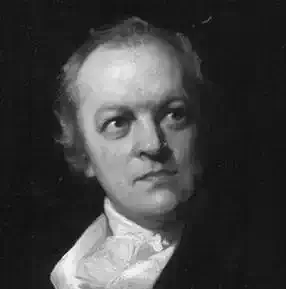
William Blake
If It Is True What the Prophets Write
If it is true, what the Prophets write,
That the heathen gods are all stocks and stones,
Shall we, for the sake of being polite,
Feed them with the juice of our marrow-bones?
And if Bezaleel and Aholiab drew
What the finger of God pointed to their view,
Shall we suffer the Roman and Grecian rods
To compel us to worship them as gods?
They stole them from the temple of the Lord
And worshipp'd them that they might make inspirèd art abhorr'd;
The wood and stone were call'd the holy things,
And their sublime intent given to their kings.
All the atonements of Jehovah spurn'd,
And criminals to sacrifices turn'd.
452

Ezra Pound
Further Instructions
Come, my songs, let us express our baser passions.
Let us express our envy for the man with a steady job and no worry about the future.
You are very idle, my songs,
I fear you will come to a bad end.
You stand about the streets, You loiter at the corners and bus-stops,
You do next to nothing at all.
You do not even express our inner nobilitys,
You will come to a very bad end.
And I? I have gone half-cracked.
I have talked to you so much that I almost see you about me,
Insolent little beasts! Shameless! Devoid of clothing!
But you, newest song of the lot,
You are not old enough to have done much mischief.
I will get you a green coat out of China
With dragons worked upon it.
I will get you the scarlet silk trousers
From the statue of the infant Christ at Santa Maria Novella;
Lest they say we are lacking in taste,
Or that there is no caste in this family.
454
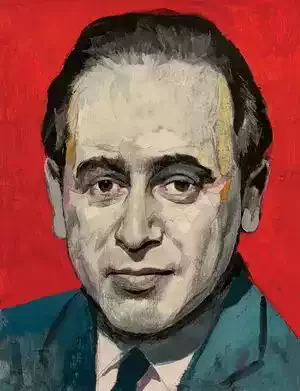
Paul Celan
Cologne
In Kohln, a town of monks and bones,
And pavements fang'd with murderous stones
And rags, and hags, and hideous wenches;
I counted two and seventy stenches,
All well defined, and several stinks!
Ye Nymphs that reign o'er sewers and sinks,
The river Rhine, it is well known,
Doth wash your city of Cologne;
But tell me, Nymphs, what power divine
Shall henceforth wash the river Rhine?
453
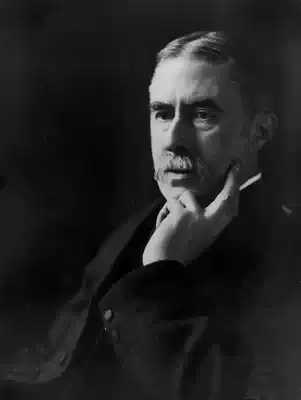
Alfred Edward Housman
The Laws of God, The Laws of Man
The laws of God, the laws of man,
He may keep that will and can;
Not I: let God and man decree
Laws for themselves and not for me;
And if my ways are not as theirs
Let them mind their own affairs.
Their deeds I judge and much condemn,
Yet when did I make laws for them?
Please yourselves, say I, and they
Need only look the other way.
But no, they will not; they must still
Wrest their neighbor to their will,
And make me dance as they desire
With jail and gallows and hell-fire.
And how am I to face the odds
Of man's bedevilment and God's?
I, a stranger and afraid
In a world I never made.
They will be master, right or wrong;
Though both are foolish, both are strong.
And since, my soul, we cannot fly
To Saturn nor to Mercury,
Keep we must, if keep we can,
These foreign laws of God and man.
453

Johann Wolfgang von Goethe
The Garlands
KLOPSTOCK would lead us away from Pindus; no longer for laurel
May we be eager--the homely acorn alone must content us;
Yet he himself his more-than-epic crusade is conducting
High on Golgotha's summit, that foreign gods he may honour!
Yet, on what hill he prefers, let him gather the angels together,
Suffer deserted disciples to weep o'er the grave of the just one:
There where a hero and saint hath died, where a bard breath'd his numbers,
Both for our life and our death an ensample of courage resplendent
And of the loftiest human worth to bequeath,--ev'ry nation
There will joyously kneel in devotion ecstatic, revering
Thorn and laurel garland, and all its charms and its tortures.
454

Ella Wheeler Wilcox
If I Should Die
If I should die, how kind you all would grow!
In that strange hour I would not have one foe.
There are no words too beautiful to say
Of one who goes forevermore away
Across that ebbing tide which has no flow.
With what new lustre my good deeds would glow!
If faults were mine, no one would call them so,
Or speak of me in aught but praise that day,
If I should die.
Ah, friends! before my listening ear lies low,
While I can hear and understand, bestow
That gentle treatment and fond love, I pray,
The lustre of whose late though radiant way
Would gild my grave with mocking light, I know,
If I should die.
454

Claude Mckay
In Bondage
I would be wandering in distant fields
Where man, and bird, and beast, lives leisurely,
And the old earth is kind, and ever yields
Her goodly gifts to all her children free;
Where life is fairer, lighter, less demanding,
And boys and girls have time and space for play
Before they come to years of understanding--
Somewhere I would be singing, far away.
For life is greater than the thousand wars
Men wage for it in their insatiate lust,
And will remain like the eternal stars,
When all that shines to-day is drift and dust
But I am bound with you in your mean graves,
O black men, simple slaves of ruthless slaves.
453

John Clare
The Mores
Far spread the moorey ground a level scene
Bespread with rush and one eternal green
That never felt the rage of blundering plough
Though centurys wreathed spring's blossoms on its brow
Still meeting plains that stretched them far away
In uncheckt shadows of green brown, and grey
Unbounded freedom ruled the wandering scene
Nor fence of ownership crept in between
To hide the prospect of the following eye
Its only bondage was the circling sky
One mighty flat undwarfed by bush and tree
Spread its faint shadow of immensity
And lost itself, which seemed to eke its bounds
In the blue mist the horizon's edge surrounds
Now this sweet vision of my boyish hours
Free as spring clouds and wild as summer flowers
Is faded all - a hope that blossomed free,
And hath been once, no more shall ever be
Inclosure came and trampled on the grave
Of labour's rights and left the poor a slave
And memory's pride ere want to wealth did bow
Is both the shadow and the substance now
The sheep and cows were free to range as then
Where change might prompt nor felt the bonds of men
Cows went and came, with evening morn and night,
To the wild pasture as their common right
And sheep, unfolded with the rising sun
Heard the swains shout and felt their freedom won
Tracked the red fallow field and heath and plain
Then met the brook and drank and roamed again
The brook that dribbled on as clear as glass
Beneath the roots they hid among the grass
While the glad shepherd traced their tracks along
Free as the lark and happy as her song
But now all's fled and flats of many a dye
That seemed to lengthen with the following eye
Moors, loosing from the sight, far, smooth, and blea
Where swopt the plover in its pleasure free
Are vanished now with commons wild and gay
As poet's visions of life's early day
Mulberry-bushes where the boy would run
To fill his hands with fruit are grubbed and done
And hedgrow-briars - flower-lovers overjoyed
Came and got flower-pots - these are all destroyed
And sky-bound mores in mangled garbs are left
Like mighty giants of their limbs bereft
Fence now meets fence in owners' little bounds
Of field and meadow large as garden grounds
In little parcels little minds to please
With men and flocks imprisoned ill at ease
Each little path that led its pleasant way
As sweet as morning leading night astray
Where little flowers bloomed round a varied host
That travel felt delighted to be lost
Nor grudged the steps that he had ta-en as vain
When right roads traced his journeys and again -
Nay, on a broken tree he'd sit awhile
To see the mores and fields and meadows smile
Sometimes with cowslaps smothered - then all white
With daiseys - then the summer's splendid sight
Of cornfields crimson o'er the headache bloomd
Like splendid armys for the battle plumed
He gazed upon them with wild fancy's eye
As fallen landscapes from an evening sky
These paths are stopt - the rude philistine's thrall
Is laid upon them and destroyed them all
Each little tyrant with his little sign
Shows where man claims earth glows no more divine
But paths to freedom and to childhood dear
A board sticks up to notice 'no road here'
And on the tree with ivy overhung
The hated sign by vulgar taste is hung
As tho' the very birds should learn to know
When they go there they must no further go
Thus, with the poor, scared freedom bade goodbye
And much they feel it in the smothered sigh
And birds and trees and flowers without a name
All sighed when lawless law's enclosure came
And dreams of plunder in such rebel schemes
Have found too truly that they were but dreams.
451

Walt Whitman
From Far Dakota's Canons
FROM far Dakota's cañons,
Lands of the wild ravine, the dusky Sioux, the lonesome stretch, the
silence,
Haply to-day a mournful wail, haply a trumpet-note for heroes.
The battle-bulletin,
The Indian ambuscade, the craft, the fatal environment,
The cavalry companies fighting to the last in sternest heroism,
In the midst of their little circle, with their slaughter'd horses
for breastworks,
The fall of Custer and all his officers and men.
Continues yet the old, old legend of our race,
The loftiest of life upheld by death,
The ancient banner perfectly maintain'd,
O lesson opportune, O how I welcome thee!
As sitting in dark days,
Lone, sulky, through the time's thick murk looking in vain for light,
for hope,
From unsuspected parts a fierce and momentary proof,
(The sun there at the centre though conceal'd,
Electric life forever at the centre,)
Breaks forth a lightning flash.
Thou of the tawny flowing hair in battle,
I erewhile saw, with erect head, pressing ever in front, bearing a
bright sword in thy hand,
Now ending well in death the splendid fever of thy deeds,
(I bring no dirge for it or thee, I bring a glad triumphal sonnet,)
Desperate and glorious, aye in defeat most desperate, most glorious,
After thy many battles in which never yielding up a gun or a color
Leaving behind thee a memory sweet to soldiers,
Thou yieldest up thyself.
449
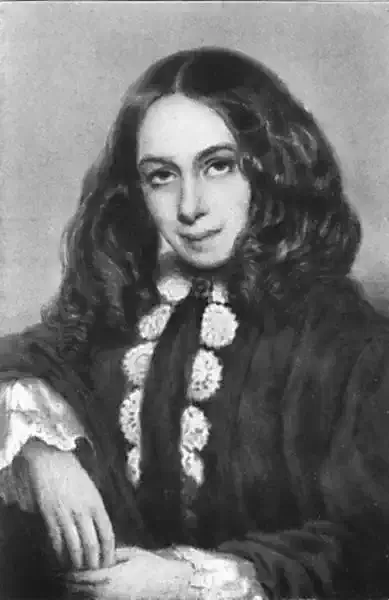
Elizabeth Barrett Browning
The Look
The Saviour looked on Peter. Ay, no word,
No gesture of reproach; the Heavens serene
Though heavy with armed justice, did not lean
Their thunders that way: the forsaken Lord
Looked only, on the traitor. None record
What that look was, none guess; for those who have seen
Wronged lovers loving through a death-pang keen,
Or pale-cheeked martyrs smiling to a sword,
Have missed Jehovah at the judgment-call.
And Peter, from the height of blasphemy-'
I never knew this man '--did quail and fall
As knowing straight THAT GOD; and turned free
And went out speechless from the face of all
And filled the silenc, weeping bitterly.
450

Rudyard Kipling
The Rout of the White Hussars
It was not in the open fight
We threw away the sword,
But in the lonely watching
In the darkness by the ford.
The waters lapped, the night-wind blew,
Full-armed the Fear was born and grew,
And we were flying ere we knew
From panic in the night.
We threw away the sword,
But in the lonely watching
In the darkness by the ford.
The waters lapped, the night-wind blew,
Full-armed the Fear was born and grew,
And we were flying ere we knew
From panic in the night.
448
Ella Wheeler Wilcox
The Khaki Boys Who Were Not At The Front
Oh! it is not just the men who face the guns,
Not the fighters at the Front alone, to-day
Who will bring the longed-for close to the bloody fray, for those
Could not carry on that fray without the ones
Who are working at war's problems far away.
You are all our splendid heroes in the strife,
And we class you with the warriors maimed and scarred,
Though you never have been near enough the battle din to hear,
While you laboured in the dull routine of life
In your khaki suits with sleeves that are not barred.
You have offered up yourselves to save the world;
You have felt the abnegation of the Christ:
And whatever work you do is a noble work and true;
Though it be not done with banners all unfurled,
You will find it has, in sight of God, sufficed.
While you carry back no medals when you go,
Not without you had the fighters borne war's brunt:
So just lift your heads uncowed, for your country will be proud
And its lasting love and honour will bestow
On the khaki boys who were not at the Front.
450
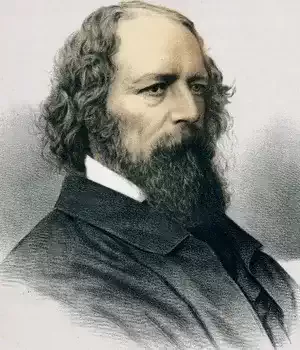
Alfred Lord Tennyson
You Ask Me, Why, Tho' Ill at Ease
You ask me, why, tho' ill at ease,
Within this region I subsist,
Whose spirits falter in the mist,
And languish for the purple seas.
It is the land that freemen till,
That sober-suited Freedom chose,
The land, where girt with friends or foes
A man may speak the thing he will;
A land of settled government,
A land of just and old renown,
Where Freedom slowly broadens down
From precedent to precedent:
Where faction seldom gathers head,
But by degrees to fullness wrought,
The strength of some diffusive thought
Hath time and space to work and spread.
Should banded unions persecute
Opinion, and induce a time
When single thought is civil crime,
And individual freedom mute;
Tho' Power should make from land to land
The name of Britain trebly great-Tho'
every channel of the State
Should fill and choke with golden sand-
Yet waft me from the harbour-mouth,
Wild wind! I seek a warmer sky,
And I will see before I die
The palms and temples of the South.
449
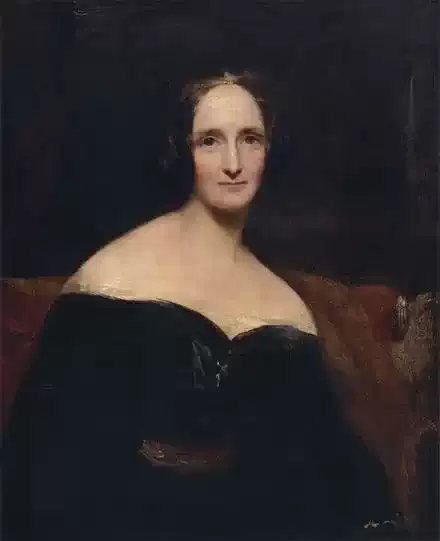
Percy Bysshe Shelley
To The Men Of England
Men of England, wherefore plough
For the lords who lay ye low?
Wherefore weave with toil and care
The rich robes your tyrants wear?
Wherefore feed and clothe and save,
From the cradle to the grave,
Those ungrateful drones who would
Drain your sweat -- nay, drink your blood?
Wherefore, Bees of England, forge
Many a weapon, chain, and scourge,
That these stingless drones may spoil
The forced produce of your toil?
Have ye leisure, comfort, calm,
Shelter, food, love's gentle balm?
Or what is it ye buy so dear
With your pain and with your fear?
The seed ye sow another reaps;
The wealth ye find another keeps;
The robes ye weave another wears;
The arms ye forge another bears.
Sow seed, -- but let no tyrant reap;
Find wealth, -- let no imposter heap;
Weave robes, -- let not the idle wear;
Forge arms, in your defence to bear.
Shrink to your cellars, holes, and cells;
In halls ye deck another dwells.
Why shake the chains ye wrought? Ye see
The steel ye tempered glance on ye.
With plough and spade and hoe and loom,
Trace your grave, and build your tomb,
And weave your winding-sheet, till fair
England be your sepulchre!
449
Elizabeth Barrett Browning
Cheerfulness Taught By Reason
I THINK we are too ready with complaint
In this fair world of God's. Had we no hope
Indeed beyond the zenith and the slope
Of yon gray blank of sky, we might grow faint
To muse upon eternity's constraint
Round our aspirant souls; but since the scope
Must widen early, is it well to droop,
For a few days consumed in loss and taint ?
O pusillanimous Heart, be comforted
And, like a cheerful traveller, take the road
Singing beside the hedge. What if the bread
Be bitter in thine inn, and thou unshod
To meet the flints ? At least it may be said
' Because the way is short, I thank thee, God. '
449
Alfred Edward Housman
On the Idle Hill of Summer
On the idle hill of summer,
Sleepy with the flow of streams,
Far I hear the steady drummer
Drumming like a noise in dreams.
Far and near and low and louder
On the roads of earth go by,
Dear to friends and food for powder,
Soldiers marching, all to die.
East and west on fields forgotten
Bleach the bones of comrades slain,
Lovely lads and dead and rotten;
None that go return again.
Far the calling bugles hollo,
High the screaming fife replies,
Gay the files of scarlet follow:
Woman bore me, I will rise.
449

Lord Byron
Windsor Poetics : Lines Composed On The Occasion Of His Royal Highness The
Prince Regent Being Seen Standing Between The Coffins Of Henry VIII And
Charles I, In The Royal Vault At Windsor
Famed for contemptuous breach of sacred ties,
By headless Charles see heartless Henry lies;
Between them stands another sceptred thing
It
moves, it reignsin
all but name, a king:
Charles to his people, Henry to his wife,
In
him the double tyrant starts to life:
Justice and death have mix'd their dust in vain,
Each royal vampire wakes to life again.
Ah, what can tombs avail!since
these disgorge
The blood and dust of bothto
mould a George.
446
Rudyard Kipling
Wilful Missing
(Deserters)
There is a world outside the one you know,
To which for curiousness 'Ell can't compare--
It is the place where "wilful-missings" go,
As we can testify, for we are there.
You may 'ave read a bullet laid us low,
That we was gathered in "with reverent care"
And buried proper. But it was not so,
As we can testify --for we are there!
They can't be certain--faces alter so
After the old aasvogel 'ad 'is share.
The uniform's the mark by which they go--
And--ain't it odd?--the one we best can spare.
We might 'ave seen our chance to cut the show--
Name, number, record, an 'begin elsewhere--
Leaven'' some not too late-lamented foe
One funeral-private-British-for 'is share.
We may 'ave took it yonder in the Low
Bush-veldt that sends men stragglin' 'unaware
Among the Kaffirs, till their columns go,
An 'they are left past call or count or care.
We might 'ave been your lovers long ago,
'Usbands or children--comfort or despair.
Our death (an' burial) settles all we owe,
An' why we done it is our own affair.
Marry again, and we will not say no,
Nor come to barstardise the kids you bear.
Wait on in 'ope--you've all your life below
Before you'll ever 'ear us on the stair.
There is no need to give our reasons, though
Gawd knows we all 'ad reasons which were fair;
But other people might not judge 'em so--
And now it doesn't matter what they were.
What man can weigh or size another's woe:
There are some things too bitter 'ard to bear.
Suffice it we 'ave finished--Domino!
As we can testify, for we are there,
In the side-world where "wilful-missings " go.
445

William Wordsworth
The Last of The Flock
I
In distant countries have I been,
And yet I have not often seen
A healthy man, a man full grown,
Weep in the public roads, alone.
But such a one, on English ground,
And in the broad highway, I met;
Along the broad highway he came,
His cheeks with tears were wet:
Sturdy he seemed, though he was sad;
And in his arms a Lamb he had.
II
He saw me, and he turned aside,
As if he wished himself to hide:
And with his coat did then essay
To wipe those briny tears away.
I followed him, and said, "My friend,
What ails you? wherefore weep you so?"
--"Shame on me, Sir! this lusty Lamb,
He makes my tears to flow.
To-day I fetched him from the rock;
He is the last of all my flock,
III
"When I was young, a single man,
And after youthful follies ran,
Though little given to care and thought,
Yet, so it was, an ewe I bought;
And other sheep from her I raised,
As healthy sheep as you might see;
And then I married, and was rich
As I could wish to be;
Of sheep I numbered a full score,
And every year increased my store.
IV
"Year after year my stock it grew;
And from this one, this single ewe,
Full fifty comely sheep I raised,
As fine a flock as ever grazed!
Upon the Quantock hills they fed;
They throve, and we at home did thrive:
--This lusty Lamb of all my store
Is all that is alive;
And now I care not if we die,
And perish all of poverty.
V
"Six Children, Sir! had I to feed;
Hard labour in a time of need!
My pride was tamed, and in our grief
I of the Parish asked relief.
They said, I was a wealthy man;
My sheep upon the uplands fed,
And it was fit that thence I took
Whereof to buy us bread.
'Do this: how can we give to you,'
They cried, 'what to the poor is due?'
VI
"I sold a sheep, as they had said,
And bought my little children bread,
And they were healthy with their food
For me--it never did me good.
A woeful time it was for me,
To see the end of all my gains,
The pretty flock which I had reared
With all my care and pains,
To see it melt like snow away--
For me it was a woeful day.
VII
"Another still! and still another!
A little lamb, and then its mother!
It was a vein that never stopped--
Like blood-drops from my heart they dropped.
'Till thirty were not left alive
They dwindled, dwindled, one by one
And I may say, that many a time
I wished they all were gone--
Reckless of what might come at last
Were but the bitter struggle past.
VIII
"To wicked deeds I was inclined,
And wicked fancies crossed my mind;
And every man I chanced to see,
I thought he knew some ill of me:
No peace, no comfort could I find,
No ease, within doors or without;
And, crazily and wearily
I went my work about;
And oft was moved to flee from home,
And hide my head where wild beasts roam.
IX
"Sir! 'twas a precious flock to me,
As dear as my own children be;
For daily with my growing store
I loved my children more and more.
Alas! it was an evil time;
God cursed me in my sore distress;
I prayed, yet every day I thought
I loved my children less;
And every week, and every day,
My flock it seemed to melt away.
X
"They dwindled, Sir, sad sight to see!
From ten to five, from five to three,
A lamb, a wether, and a ewe;--
And then at last from three to two;
And, of my fifty, yesterday
I had but only one:
And here it lies upon my arm,
Alas! and I have none;--
To-day I fetched it from the rock;
It is the last of all my flock."
446
Ella Wheeler Wilcox
Only A Slight Flirtation
‘Twas just a slight flirtation,
And where’s the harm, I pray,
In that amusing pastime
So much in vogue to-day?
Her hand was plighted elsewhere
To one she held most dear,
But why should she sit lonely
When other men are near?
They walked to church together,
They sat upon the shore.
She found him entertaining,
He found her something more.
They rambled in the moonlight;
It made her look so fair,
She let him praise her beauty,
And kiss her flowing hair.
‘Twas just a nice flirtation.
So sad the fellow died.
Was drowned one day while boating,
The week she was a bride.’
A life went out in darkness,
A mother’s fond heart broke,
A maiden pined in secret –
With grief she never spoke.
While robed in bridal whiteness,
Queen of a festal throng,
She moved, whose slight flirtation
Had wrought this triple wrong.
447
William Butler Yeats
The Black Tower
SAY that the men of the old black tower,
Though they but feed as the goatherd feeds,
Their money spent, their wine gone sour,
Lack nothing that a soldier needs,
That all are oath-bound men:
Those banners come not in.
There in the tomb stand the dead upright,
But winds come up from the shore:
They shake when the winds roar,
Old bones upon the mountain shake.
Those banners come to bribe or threaten,
Or whisper that a man's a fool
Who, when his own right king's forgotten,
Cares what king sets up his rule.
If he died long ago
Why do yopu dread us so?
There in the tomb drops the faint moonlight,
But wind comes up from the shore:
They shake when the winds roar,
Old bones upon the mountain shake.
The tower's old cook that must climb and clamber
Catching small birds in the dew of the morn
When we hale men lie stretched in slumber
Swears that he hears the king's great horn.
But he's a lying hound:
Stand we on guard oath-bound!
There in the tomb the dark grows blacker,
But wind comes up from the shore:
They shake when the winds roar,
Old bones upon the mountain shake.
446
Rudyard Kipling
The Song of the Women
How shall she know the worship we would do her?
The walls are high, and she is very far.
How shall the woman's message reach unto her
Above the tumult of the packed bazaar?
Free wind of March, against the lattice blowing,
Bear thou our thanks, lest she depart unknowing.
Go forth across the fields we may not roam in,
Go forth beyond the trees that rim the city,
To whatsoe'er fair place she hath her home in,
Who dowered us with walth of love and pity.
Out of our shadow pass, and seek her singing --
"I have no gifts but Love alone for bringing."
Say that we be a feeble folk who greet her,
But old in grief, and very wise in tears;
Say that we, being desolate, entreat her
That she forget us not in after years;
For we have seen the light, and it were grievous
To dim that dawning if our lady leave us.
By life that ebbed with none to stanch the failing
By Love's sad harvest garnered in the spring,
When Love in ignorance wept unavailing
O'er young buds dead before their blossoming;
By all the grey owl watched, the pale moon viewed,
In past grim years, declare our gratitude!
By hands uplifted to the Gods that heard not,
By fits that found no favor in their sight,
By faces bent above the babe that stirred not,
By nameless horrors of the stifling night;
By ills foredone, by peace her toils discover,
Bid Earth be good beneath and Heaven above her!
If she have sent her servants in our pain
If she have fought with Death and dulled his sword;
If she have given back our sick again.
And to the breast the wakling lips restored,
Is it a little thing that she has wrought?
Then Life and Death and Motherhood be nought.
Go forth, O wind, our message on thy wings,
And they shall hear thee pass and bid thee speed,
In reed-roofed hut, or white-walled home of kings,
Who have been helpen by ther in their need.
All spring shall give thee fragrance, and the wheat
Shall be a tasselled floorcloth to thy feet.
Haste, for our hearts are with thee, take no rest!
Loud-voiced ambassador, from sea to sea
Proclaim the blessing, mainfold, confessed.
Of those in darkness by her hand set free.
Then very softly to her presence move,
And whisper: "Lady, lo, they know and love!"
445
Rudyard Kipling
Outsong in the Jungle
Baloo
For the sake of him who showed
One wise Frog the Jungle-Road,
Keep the Law the Man-Pack make
For thy blind old Baloo's sake!
Clean or tainted, hot or stale,
Hold it as it were the Trail,
Through the day and through the night,
Questing neither left nor right.
For the sake of him who loves
Thee beyond all else that moves,
When thy Pack would make thee pain,
Say: " Tabaqui sings again."
When thy Pack would work thee ill,
Say: "Shere Khan is yet to kill."
When the knife is drawn to slay,
Keep the Law and go thy way.
(Root and honey, palm and spathe,
Guard a cub from harm and scathe!)
Wood and Water, Wind and Tree,
Jungle-Favour go with thee!
Kaa
Anger is the egg of Fear--
Only lidless eyes see clear.
Cobra-poison none may leech--
Even so with Cobra-speech.
Open talk shall call to thee
Strength, whose mate is Courtesy.
Send no lunge beyond thy length.
Lend no rotten bough thy strength.
Gauge thy gape with buck or goat,
Lest thine eye should choke thy throat.
After gorging, wouldst thou sleep ?
Look thy den be hid and deep,
Lest a wrong, by thee forgot,
Draw thy killer to the spot.
East and West and North and South,
Wash thy hide and close thy mouth.
(Pit and rift and blue pool-brim,
Middle-Jungle follow him!)
Wood and Water, Wind and Tree,
Jungle-Favour go with thee!
Bagheera
In the cage my life began;
Well I know the worth of Man.
By the Broken Lock that freed--
Man-cub, ware the Man-cub's breed!
Scenting-dew or starlight pale,
Choose no tangled tree-cat trail.
Pack or council, hunt or den,
Cry no truce with Jackal-Men.
Feed them silence when they say:
"Come with us an easy way."
Feed them silence when they seek
Help of thine to hurt the weak.
Make no bandar's boast of skill;
Hold thy peace above the kill.
Let nor call nor song nor sign
Turn thee from thy hunting-line.
(Morning mist or twilight clear,
Serve him, Wardens of the Deer!)
Wood and Water, Wind and Tree,
Jungle-Favour go with thee!
The Three
On the trail that thou must tread
To the threshold of our dread,
Where the Flower blossoms red;
Through the nights when thou shalt lie
Prisoned from our Mother-sky,
Hearing us, thy loves, go by;
In the dawns when thou. shalt wake
To the toil thou canst not break,
Heartsick for the Jungle's sake;
Wood and Water, Wind air Tree,
Wisdom, Strength, and Courtesy,
Jungle-Favour go with thee!
446