
Ethics and Morality
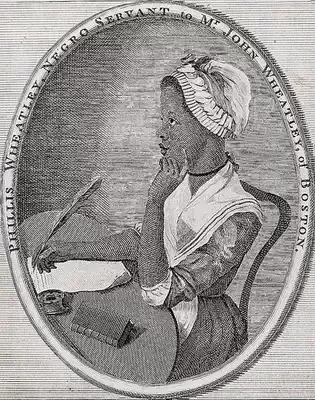
Phillis Wheatley
A Farewell to America
I.
Adieu, New-England's smiling meads,
Adieu, the flow'ry plain:
I leave thine op'ning charms, O spring,
And tempt the roaring main.
II.
In vain for me the flow'rets rise,
And boast their gaudy pride,
While here beneath the northern skies
I mourn for health deny'd.
III.
Celestial maid of rosy hue,
O let me feel thy reign!
I languish till thy face I view,
Thy vanish'd joys regain.
IV.
Susanna mourns, nor can I bear
To see the crystal show'r,
Or mark the tender falling tear
At sad departure's hour;
V.
Not unregarding can I see
Her soul with grief opprest:
But let no sighs, no groans for me,
Steal from her pensive breast.
VI.
In vain the feather'd warblers sing,
In vain the garden blooms,
And on the bosom of the spring
Breathes out her sweet perfumes.
VII.
While for Britannia's distant shore
We sweep the liquid plain,
And with astonish'd eyes explore
The wide-extended main.
VIII.
Lo! Health appears! celestial dame!
Complacent and serene,
With Hebe's mantle o'er her Frame,
With soul-delighting mien.
IX.
To mark the vale where London lies
With misty vapours crown'd,
Which cloud Aurora's thousand dyes,
And veil her charms around.
X.
Why, Phoebus, moves thy car so slow?
So slow thy rising ray?
Give us the famous town to view,
Thou glorious king of day!
XI.
For thee, Britannia, I resign
New-England's smiling fields;
To view again her charms divine,
What joy the prospect yields!
XII.
But thou! Temptation hence away,
With all thy fatal train,
Nor once seduce my soul away,
By thine enchanting strain.
XIII.
Thrice happy they, whose heav'nly shield
Secures their souls from harms,
And fell Temptation on the field
Of all its pow'r disarms!
428

Ella Wheeler Wilcox
The Black Charger
There's a terrible steed that rests not night nor day,
But onward and onward, for ever away,
Through hamlet, through village, through country, through town,
Is heard the dread thud of his hoofs beating down;
Is seen the fierce eye, is felt the hot breath;
And before it, behind it, spreads ruin and death:
By castle, by cottage, by hut, and by hall,
Still faster and fiercer he passes them all.
He breathes on the youth with the face of the morn,
He leaves him a mark for the finger of scorn;
He cries, 'Mount and ride! I will bear you away
To the fair fields of pleasure. Come, mount me, I say!'
And, alas for the youth! he is borne like the wind,
And he leaveth his manhood, his virtue, behind;
And faster, still faster, he speeds down the track,
Where many shall follow, and few shall come back.
He breathes on the heart that is stricken with grief:
'Come, mount me! and fly to the plains of relief.
I will bear you away to the fair fields elysian,
Where your sorrows shall seem but a long-vanished vision.
With the future before you, forgetting the past,
You shall revel in pleasure, rejoicing at last.'
Ah! whoso shall mount shall ride to his doom:
Shall be sunk in the marshes of terror and gloom.
He breathes on the king, and he breathes on the slave;
On the young and the old from the crib to the grave;
On masterly minds, and they wither away
As the flower droops and dies 'neath a torrid sun's ray;
On beautiful souls that are pure as the light,
And they shrivel, polluted with mildew and blight:
The master, the servant, the high and the low,
He bears them all down to the regions of woe.
Ho! ho! temperance clan! rest ye not night nor day:
Watch, watch for the steed! starve him down! block his way!
Throw him into the dust! seize his long, flowing mane!
Bind his terrible limbs till he quivers in pain.
Stab him through to the heart! beat him down till he lies
Stark and stiff on the earth-beat him down till he dies!
Till never by castle, by cottage, by hall,
Shall again pass the black-hearted steed, Alcohol!
429
Ella Wheeler Wilcox
The Creed
Whoever was begotten by pure love,
And came desired and welcome into life,
Is of immaculate conception. He
Whose heart is full of tenderness and truth,
Who loves mankind more than he loves himself,
And cannot find room in his heart for hate,
May be another Christ. We all may be
The Saviours of the world if we believe
In the Divinity which dwells in us
And worship it, and nail our grosser selves,
Our tempers, greeds, and our unworthy aims,
Upon the cross. Who giveth love to all;
Pays kindness for unkindness, smiles for frowns;
And lends new courage to each fainting heart,
And strengthens hope and scatters joy abroad—
He, too, is a Redeemer, Son of God.
429

William Butler Yeats
Three Songs To The One Burden
THE Roaring Tinker if you like,
But Mannion is my name,
And I beat up the common sort
And think it is no shame.
The common breeds the common,
A lout begets a lout,
So when I take on half a score
I knock their heads about.
From mountain to mountain ride the fierce horsemen.
All Mannions come from Manannan,
Though rich on every shore
He never lay behind four walls
He had such character,
Nor ever made an iron red
Nor soldered pot or pan;
His roaring and his ranting
Best please a wandering man.
From mountain to mountain ride the fierce horsemen.
Could Crazy Jane put off old age
And ranting time renew,
Could that old god rise up again
We'd drink a can or two,
And out and lay our leadership
On country and on town,
Throw likely couples into bed
And knock the others down.
From mountain to mountain ride the fierce horsemen.
II
My name is Henry Middleton,
I have a small demesne,
A small forgotten house that's set
On a storm-bitten green.
I scrub its floors and make my bed,
I cook and change my plate,
The post and garden-boy alone
Have keys to my old gate.
From mountain to mountain ride the fierce horsemen.
Though I have locked my gate on them,
I pity all the young,
I know what devil's trade they learn
From those they live among,
Their drink, their pitch-and-toss by day,
Their robbery by night;
The wisdom of the people's gone,
How can the young go straight?
From mountain to mountain ride the fierce horsemen.
When every Sunday afternoon
On the Green Lands I walk
And wear a coat in fashion.
Memories of the talk
Of henwives and of queer old men
Brace me and make me strong;
There's not a pilot on the perch
Knows I have lived so long.
From mountain to mountain ride the fierce horsemen.
III
Come gather round me, players all:
Come praise Nineteen-Sixteen,
Those from the pit and gallery
Or from the painted scene
That fought in the Post Office
Or round the City Hall,
praise every man that came again,
Praise every man that fell.
From mountain to mountain ride the fierce horsemen.
Who was the first man shot that day?
The player Connolly,
Close to the City Hall he died;
Catriage and voice had he;
He lacked those years that go with skill,
But later might have been
A famous, a brilliant figure
Before the painted scene.
From mountain to mountain ride the fierce horsemen.
Some had no thought of victory
But had gone out to die
That Ireland's mind be greater,
Her heart mount up on high;
And yet who knows what's yet to come?
For patrick pearse had said
That in every generation
Must Ireland's blood be shed.
From mountain to mountain ride the fierce horsemen.
426
Ella Wheeler Wilcox
Time's Defeat
Time has made conquest of so many things
That once were mine. Swift-footed, eager youth
That ran to meet the years; bold brigand health,
That broke all laws of reason unafraid,
And laughed at talk of punishment. Close ties
Of blood and friendship, and that joy of life,
Which reads its music in the major key
And will not listen to a minor strain-
These things and many more are spoils of time.
Yet as a conqueror who only storms
The outposts of a town, and finds the fort
Too strong to be assailed, so time retreats
And knows his impotence. He cannot take
My three great jewels from the crown of life;
Love, sympathy, and faith; and year on year
He sees them grow in lustre and in worth,
And glowers by me, plucking at his beard,
And dragging as he goes, a useless scythe.
Once in the dark he plotted with his friend
Grim death, to steal my treasures. Death replied:
'They are immortal, and beyond thy reach:
I could but set them in another sphere,
To shine with greater lustre.'
Time and Death
Passed on together, knowing their defeat;
And I am singing by the road of life.
426

Alfred Lord Tennyson
In Memoriam A. H. H.: 118. Contemplate all this work of Tim
Contemplate all this work of Time,
The giant labouring in his youth;
Nor dream of human love and truth,
As dying Nature's earth and lime;
But trust that those we call the dead
Are breathers of an ampler day
For ever nobler ends. They say,
The solid earth whereon we tread
In tracts of fluent heat began,
And grew to seeming-random forms,
The seeming prey of cyclic storms,
Till at the last arose the man;
Who throve and branch'd from clime to clime,
The herald of a higher race,
And of himself in higher place,
If so he type this work of time
Within himself, from more to more;
Or, crown'd with attributes of woe
Like glories, move his course, and show
That life is not as idle ore,
But iron dug from central gloom,
And heated hot with burning fears,
And dipt in baths of hissing tears,
And batter'd with the shocks of doom
To shape and use. Arise and fly
The reeling Faun, the sensual feast;
Move upward, working out the beast,
And let the ape and tiger die.
424
William Butler Yeats
Meditations In Time Of Civil War
I
Ancestral Houses
SURELY among a rich man s flowering lawns,
Amid the rustle of his planted hills,
Life overflows without ambitious pains;
And rains down life until the basin spills,
And mounts more dizzy high the more it rains
As though to choose whatever shape it wills
And never stoop to a mechanical
Or servile shape, at others' beck and call.
Mere dreams, mere dreams! Yet Homer had not Sung
Had he not found it certain beyond dreams
That out of life's own self-delight had sprung
The abounding glittering jet; though now it seems
As if some marvellous empty sea-shell flung
Out of the obscure dark of the rich streams,
And not a fountain, were the symbol which
Shadows the inherited glory of the rich.
Some violent bitter man, some powerful man
Called architect and artist in, that they,
Bitter and violent men, might rear in stone
The sweetness that all longed for night and day,
The gentleness none there had ever known;
But when the master's buried mice can play.
And maybe the great-grandson of that house,
For all its bronze and marble, 's but a mouse.
O what if gardens where the peacock strays
With delicate feet upon old terraces,
Or else all Juno from an urn displays
Before the indifferent garden deities;
O what if levelled lawns and gravelled ways
Where slippered Contemplation finds his ease
And Childhood a delight for every sense,
But take our greatness with our violence?
What if the glory of escutcheoned doors,
And buildings that a haughtier age designed,
The pacing to and fro on polished floors
Amid great chambers and long galleries, lined
With famous portraits of our ancestors;
What if those things the greatest of mankind
Consider most to magnify, or to bless,
But take our greatness with our bitterness?
II
My House
An ancient bridge, and a more ancient tower,
A farmhouse that is sheltered by its wall,
An acre of stony ground,
Where the symbolic rose can break in flower,
Old ragged elms, old thorns innumerable,
The sound of the rain or sound
Of every wind that blows;
The stilted water-hen
Crossing Stream again
Scared by the splashing of a dozen cows;
A winding stair, a chamber arched with stone,
A grey stone fireplace with an open hearth,
A candle and written page.
Il Penseroso's Platonist toiled on
In some like chamber, shadowing forth
How the daemonic rage
Imagined everything.
Benighted travellers
From markets and from fairs
Have seen his midnight candle glimmering.
Two men have founded here. A man-at-arms
Gathered a score of horse and spent his days
In this tumultuous spot,
Where through long wars and sudden night alarms
His dwinding score and he seemed castaways
Forgetting and forgot;
And I, that after me
My bodily heirs may find,
To exalt a lonely mind,
Befitting emblems of adversity.
III
My Table
Two heavy trestles, and a board
Where Sato's gift, a changeless sword,
By pen and paper lies,
That it may moralise
My days out of their aimlessness.
A bit of an embroidered dress
Covers its wooden sheath.
Chaucer had not drawn breath
When it was forged. In Sato's house,
Curved like new moon, moon-luminous
It lay five hundred years.
Yet if no change appears
No moon; only an aching heart
Conceives a changeless work of art.
Our learned men have urged
That when and where 'twas forged
A marvellous accomplishment,
In painting or in pottery, went
From father unto son
And through the centuries ran
And seemed unchanging like the sword.
Soul's beauty being most adored,
Men and their business took
Me soul's unchanging look;
For the most rich inheritor,
Knowing that none could pass Heaven's door,
That loved inferior art,
Had such an aching heart
That he, although a country's talk
For silken clothes and stately walk.
Had waking wits; it seemed
Juno's peacock screamed.
IV
My Descendants
Having inherited a vigorous mind
From my old fathers, I must nourish dreams
And leave a woman and a man behind
As vigorous of mind, and yet it seems
Life scarce can cast a fragrance on the wind,
Scarce spread a glory to the morning beams,
But the torn petals strew the garden plot;
And there's but common greenness after that.
And what if my descendants lose the flower
Through natural declension of the soul,
Through too much business with the passing hour,
Through too much play, or marriage with a fool?
May this laborious stair and this stark tower
Become a roofless min that the owl
May build in the cracked masonry and cry
Her desolation to the desolate sky.
The primum Mobile that fashioned us
Has made the very owls in circles move;
And I, that count myself most prosperous,
Seeing that love and friendship are enough,
For an old neighbour's friendship chose the house
And decked and altered it for a girl's love,
And know whatever flourish and decline
These stones remain their monument and mine.
V
The Road at My Door
An affable Irregular,
A heavily-built Falstaffian man,
Comes cracking jokes of civil war
As though to die by gunshot were
The finest play under the sun.
A brown Lieutenant and his men,
Half dressed in national uniform,
Stand at my door, and I complain
Of the foul weather, hail and rain,
A pear-tree broken by the storm.
I count those feathered balls of soot
The moor-hen guides upon the stream.
To silence the envy in my thought;
And turn towards my chamber, caught
In the cold snows of a dream.
VI
The Stare's Nest by My Window
The bees build in the crevices
Of loosening masonry, and there
The mother birds bring grubs and flies.
My wall is loosening; honey-bees,
Come build in the empty house of the state.
We are closed in, and the key is turned
On our uncertainty; somewhere
A man is killed, or a house burned,
Yet no cleat fact to be discerned:
Come build in he empty house of the stare.
A barricade of stone or of wood;
Some fourteen days of civil war;
Last night they trundled down the road
That dead young soldier in his blood:
Come build in the empty house of the stare.
We had fed the heart on fantasies,
The heart's grown brutal from the fare;
More Substance in our enmities
Than in our love; O honey-bees,
Come build in the empty house of the stare.
VII
I see Phantoms of Hatred and of the Heart's
Fullness and of the Coming Emptiness
I climb to the tower-top and lean upon broken stone,
A mist that is like blown snow is sweeping over all,
Valley, river, and elms, under the light of a moon
That seems unlike itself, that seems unchangeable,
A glittering sword out of the east. A puff of wind
And those white glimmering fragments of the mist sweep by.
Frenzies bewilder, reveries perturb the mind;
Monstrous familiar images swim to the mind's eye.
'Vengeance upon the murderers,' the cry goes up,
'Vengeance for Jacques Molay.' In cloud-pale rags, or in lace,
The rage-driven, rage-tormented, and rage-hungry troop,
Trooper belabouring trooper, biting at arm or at face,
Plunges towards nothing, arms and fingers spreading wide
For the embrace of nothing; and I, my wits astray
Because of all that senseless tumult, all but cried
For vengeance on the murderers of Jacques Molay.
Their legs long, delicate and slender, aquamarine their eyes,
Magical unicorns bear ladies on their backs.
The ladies close their musing eyes. No prophecies,
Remembered out of Babylonian almanacs,
Have closed the ladies' eyes, their minds are but a pool
Where even longing drowns under its own excess;
Nothing but stillness can remain when hearts are full
Of their own sweetness, bodies of their loveliness.
The cloud-pale unicorns, the eyes of aquamarine,
The quivering half-closed eyelids, the rags of cloud or of lace,
Or eyes that rage has brightened, arms it has made lean,
Give place to an indifferent multitude, give place
To brazen hawks. Nor self-delighting reverie,
Nor hate of what's to come, nor pity for what's gone,
Nothing but grip of claw, and the eye's complacency,
The innumerable clanging wings that have put out the moon.
I turn away and shut the door, and on the stair
Wonder how many times I could have proved my worth
In something that all others understand or share;
But O! ambitious heart, had such a proof drawn forth
A company of friends, a conscience set at ease,
It had but made us pine the more. The abstract joy,
The half-read wisdom of daemonic images,
Suffice the ageing man as once the growing boy.
427
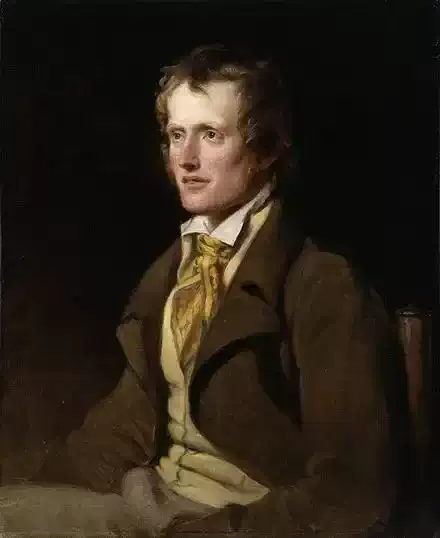
John Clare
The Maid Of Ocram, Or, Lord Gregory
Gay was the Maid of Ocram
As lady eer might be
Ere she did venture past a maid
To love Lord Gregory.
Fair was the Maid of Ocram
And shining like the sun
Ere her bower key was turned on two
Where bride bed lay for none.
And late at night she sought her love--
The snow slept on her skin--
Get up, she cried, thou false young man,
And let thy true love in.
And fain would he have loosed the key
All for his true love's sake,
But Lord Gregory then was fast asleep,
His mother wide awake.
And up she threw the window sash,
And out her head put she:
And who is that which knocks so late
And taunts so loud to me?
It is the Maid of Ocram,
Your own heart's next akin;
For so you've sworn, Lord Gregory,
To come and let me in.
O pause not thus, you know me well,
Haste down my way to win.
The wind disturbs my yellow locks,
The snow sleeps on my skin.--
If you be the Maid of Ocram,
As much I doubt you be,
Then tell me of three tokens
That passed with you and me.--
O talk not now of tokens
Which you do wish to break;
Chilled are those lips you've kissed so warm,
And all too numbed to speak.
You know when in my father's bower
You left your cloak for mine,
Though yours was nought but silver twist
And mine the golden twine.--
If you're the lass of Ocram,
As I take you not to be,
The second token you must tell
Which past with you and me.--
O know you not, O know you not
Twas in my father's park,
You led me out a mile too far
And courted in the dark?
When you did change your ring for mine
My yielding heart to win,
Though mine was of the beaten gold
Yours but of burnished tin,
Though mine was all true love without,
Yours but false love within?
O ask me no more tokens
For fast the snow doth fall.
Tis sad to strive and speak in vain,
You mean to break them all.--
If you are the Maid of Ocram,
As I take you not to be,
You must mention the third token
That passed with you and me.--
Twas when you stole my maidenhead;
That grieves me worst of all.--
Begone, you lying creature, then
This instant from my hall,
Or you and your vile baby
Shall in the deep sea fall;
For I have none on earth as yet
That may me father call.--
O must none close my dying feet,
And must none close my hands,
And may none bind my yellow locks
As death for all demands?
You need not use no force at all,
Your hard heart breaks the vow;
You've had your wish against my will
And you shall have it now.
And must none close my dying feet,
And must none close my hands,
And will none do the last kind deeds
That death for all demands?--
Your sister, she may close your feet,
Your brother close your hands,
Your mother, she may wrap your waist
In death's fit wedding bands;
Your father, he may tie your locks
And lay you in the sands.--
My sister, she will weep in vain,
My brother ride and run,
My mother, she will break her heart;
And ere the rising sun
My father will be looking out-
But find me they will none.
I go to lay my woes to rest,
None shall know where I'm gone.
God must be friend and father both,
Lord Gregory will be none.--
Lord Gregory started up from sleep
And thought he heard a voice
That screamed full dreadful in his ear,
And once and twice and thrice.
Lord Gregory to his mother called:
O mother dear, said he,
I've dreamt the Maid of Ocram
Was floating on the sea.
Lie still, my son, the mother said,
Tis but a little space
And half an hour has scarcely passed
Since she did pass this place.--
O cruel, cruel mother,
When she did pass so nigh
How could you let me sleep so sound
Or let her wander bye?
Now if she's lost my heart must break-I'll
seek her till I die.
He sought her east, he sought her west,
He sought through park and plain;
He sought her where she might have been
But found her not again.
I cannot curse thee, mother,
Though thine's the blame, said he
I cannot curse thee, mother,
Though thou'st done worse to me.
Yet do I curse thy pride that aye
So tauntingly aspires;
For my love was a gay knight's heir,
And my father was a squire's.
And I will sell my park and hall;
And if ye wed again
Ye shall not wed for titles twice
That made ye once so vain.
So if ye will wed, wed for love,
As I was fain to do;
Ye've gave to me a broken heart,
And I'll give nought to you.
Your pride has wronged your own heart's blood;
For she was mine by grace,
And now my lady love is gone
None else shall take her place.
I'll sell my park and sell my hall
And sink my titles too.
Your pride's done wrong enough as now
To leave it more to do.
She owneth none that owned them all
And would have graced them well;
None else shall take the right she missed
Nor in my bosom dwell.--
And then he took and burnt his will
Before his mother's face,
And tore his patents all in two,
While tears fell down apace--
But in his mother's haughty look
Ye nought but frowns might trace.
And then he sat him down to grieve,
But could not sit for pain.
And then he laid him on the bed
And ne'er got up again.
427

Rudyard Kipling
When Earth's Last Picture Is Painted
When Earth's last picture is painted
And the tubes are twisted and dried
When the oldest colors have faded
And the youngest critic has died
We shall rest, and faith, we shall need it
Lie down for an aeon or two
'Till the Master of all good workmen
Shall put us to work anew
And those that were good shall be happy
They'll sit in a golden chair
They'll splash at a ten league canvas
With brushes of comet's hair
They'll find real saints to draw from
Magdalene, Peter, and Paul
They'll work for an age at a sitting
And never be tired at all.
And only the Master shall praise us.
And only the Master shall blame.
And no one will work for the money.
No one will work for the fame.
But each for the joy of the working,
And each, in his separate star,
Will draw the thing as he sees it.
For the God of things as they are!
427
John Clare
The Fallen Elm
Old elm that murmured in our chimney top
The sweetest anthem autumn ever made
And into mellow whispering calms would drop
When showers fell on thy many coloured shade
And when dark tempests mimic thunder made -
While darkness came as it would strangle light
With the black tempest of a winter night
That rocked thee like a cradle in thy root -
How did I love to hear the winds upbraid
Thy strength without - while all within was mute.
It seasoned comfort to our hearts' desire,
We felt that kind protection like a friend
And edged our chairs up closer to the fire,
Enjoying comfort that was never penned.
Old favourite tree, thou'st seen time's changes lower,
Though change till now did never injure thee;
For time beheld thee as her sacred dower
And nature claimed thee her domestic tree.
Storms came and shook thee many a weary hour,
Yet stedfast to thy home thy roots have been;
Summers of thirst parched round thy homely bower
Till earth grew iron - still thy leaves were green.
The children sought thee in thy summer shade
And made their playhouse rings of stick and stone;
The mavis sang and felt himself alone
While in thy leaves his early nest was made,
And I did feel his happiness mine own,
Nought heeding that our friendship was betrayed,
Friend not inanimate - though stocks and stones
There are, and many formed of flesh and bones.
Thou owned a language by which hearts are stirred
Deeper than by a feeling clothed in word,
And speakest now what's known of every tongue,
Language of pity and the force of wrong.
What cant assumes, what hypocrites will dare,
Speaks home to truth and shows it what they are.
I see a picture which thy fate displays
And learn a lesson from thy destiny;
Self-interest saw thee stand in freedom's ways -
So thy old shadow must a tyrant be.
Thou'st heard the knave, abusing those in power,
Bawl freedom loud and then oppress the free;
Thou'st sheltered hypocrites in many a shower,
That when in power would never shelter thee.
Thou'st heard the knave supply his canting powers
With wrong's illusions when he wanted friends;
That bawled for shelter when he lived in showers
And when clouds vanished made thy shade amends -
With axe at root he felled thee to the ground
And barked of freedom - O I hate the sound
Time hears its visions speak, - and age sublime
Hath made thee a disciple unto time.
-It grows the cant term of enslaving tools
To wrong another by the name of right;
Thus came enclosure - ruin was its guide,
But freedom's cottage soon was thrust aside
And workhouse prisons raised upon the site.
Een nature's dwellings far away from men,
The common heath, became the spoiler's prey;
The rabbit had not where to make his den
And labour's only cow was drove away.
No matter - wrong was right and right was wrong,
And freedom's bawl was sanction to the song.
-Such was thy ruin, music-making elm;
The right of freedom was to injure thine:
As thou wert served, so would they overwhelm
In freedom's name the little that is mine.
And there are knaves that brawl for better laws
And cant of tyranny in stronger power
Who glut their vile unsatiated maws
And freedom's birthright from the weak devour.
426
Ella Wheeler Wilcox
They Shall Not Win
Whatever the strength of our foes is now,
Whatever it may have been,
This is our slogan, and this our vow-
They shall not win, they shall not win.
Though out of the darkness they call the aid
Of the evil forces of Sin,
We utter our slogan unafraid-
They shall not win, they shall not win.
We know we are right, and know they are wrong.
So to God above and within-
We make our vow and we sing our song
They shall not win, they shall not win.
It rises over the shriek of shell,
And over the cannons' din:
Our slogan shall scatter the hosts of Hell-
They shall not win, they shall not win.
425
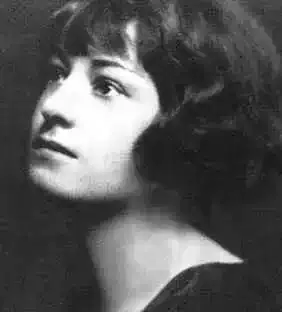
Dorothy Parker
Unfortunate Coincidence
By the time you swear you're his,
Shivering and sighing,
And he vows his passion is
Infinite, undying -
Lady, make a note of this:
One of you is lying.
Shivering and sighing,
And he vows his passion is
Infinite, undying -
Lady, make a note of this:
One of you is lying.
424
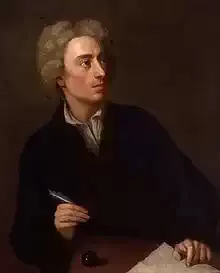
Alexander Pope
The Dunciad: Book II.
High on a gorgeous seat, that far out-shone
Henley's gilt tub, or Flecknoe's Irish throne,
Or that where on her Curlls the public pours,
All-bounteous, fragrant grains and golden showers,
Great Cibber sate: the proud Parnassian sneer,
The conscious simper, and the jealous leer,
Mix on his look: all eyes direct their rays
On him, and crowds turn coxcombs as they gaze.
His peers shine round him with reflected grace,
New edge their dulness, and new bronze their face.
So from the sun's broad beam, in shallow urns
Heaven's twinkling sparks draw light, and point their horns.
Not with more glee, by hands Pontific crown'd,
With scarlet hats wide-waving circled round,
Rome in her Capitol saw Querno sit,
Throned on seven hills, the Antichrist of wit.
And now the queen, to glad her sons, proclaims
By herald hawkers, high heroic games.
They summon all her race: an endless band
Pours forth, and leaves unpeopled half the land.
A motley mixture! in long wigs, in bags,
In silks, in crapes, in garters, and in rags,
From drawing-rooms, from colleges, from garrets,
On horse, on foot, in hacks, and gilded chariots:
All who true dunces in her cause appear'd,
And all who knew those dunces to reward.
Amid that area wide they took their stand,
Where the tall maypole once o'er-looked the Strand,
But now (so Anne and piety ordain)
A church collects the saints of Drury Lane.
With authors, stationers obey'd the call,
(The field of glory is a field for all).
Glory and gain the industrious tribe provoke;
And gentle Dulness ever loves a joke.
A poet's form she placed before their eyes,
And bade the nimblest racer seize the prize;
No meagre, muse-rid mope, adust and thin,
In a dun night-gown of his own loose skin;
But such a bulk as no twelve bards could raise,
Twelve starveling bards of these degenerate days.
All as a partridge plump, full-fed, and fair,
She form'd this image of well-bodied air;
With pert flat eyes she window'd well its head;
A brain of feathers, and a heart of lead;
And empty words she gave, and sounding strain,
But senseless, lifeless! idol void and vain!
Never was dash'd out, at one lucky hit,
A fool, so just a copy of a wit;
So like, that critics said, and courtiers swore,
A wit it was, and call'd the phantom More.
All gaze with ardour: some a poet's name,
Others a sword-knot and laced suit inflame.
But lofty Lintot in the circle rose:
'This prize is mine; who tempt it are my foes;
With me began this genius, and shall end.'
He spoke: and who with Lintot shall contend?
Fear held them mute. Alone, untaught to fear,
Stood dauntless Curll: 'Behold that rival here!
The race by vigour, not by vaunts is won;
So take the hindmost Hell.' He said, and run.
Swift as a bard the bailiff leaves behind,
He left huge Lintot, and out-stripp'd the wind.
As when a dab-chick waddles through the copse
On feet and wings, and flies, and wades, and hops:
So labouring on, with shoulders, hands, and head,
Wide as a wind-mill all his figure spread,
With arms expanded Bernard rows his state,
And left-legg'd Jacob seems to emulate.
Full in the middle way there stood a lake,
Which Curll's Corinna chanced that morn to make:
(Such was her wont, at early dawn to drop
Her evening cates before his neighbour's shop,)
Here fortuned Curll to slide; loud shout the band,
And Bernard! Bernard! rings through all the Strand.
Obscene with filth the miscreant lies bewray'd,
Fallen in the plash his wickedness had laid:
Then first (if poets aught of truth declare)
The caitiff vaticide conceived a prayer:
'Hear, Jove! whose name my bards and I adore,
As much at least as any god's, or more;
And him and his if more devotion warms,
Down with the Bible, up with the Pope's arms.'
A place there is, betwixt earth, air, and seas,
Where, from Ambrosia, Jove retires for ease.
There in his seat two spacious vents appear,
On this he sits, to that he leans his ear,
And hears the various vows of fond mankind;
Some beg an eastern, some a western wind:
All vain petitions, mounting to the sky,
With reams abundant this abode supply;
Amused he reads, and then returns the bills
Sign'd with that ichor which from gods distils.
In office here fair Cloacina stands,
And ministers to Jove with purest hands.
Forth from the heap she pick'd her votary's prayer,
And placed it next him, a distinction rare!
Oft had the goddess heard her servant's call,
From her black grottos near the Temple-wall,
Listening delighted to the jest unclean
Of link-boys vile, and watermen obscene;
Where as he fish'd her nether realms for wit,
She oft had favour'd him, and favours yet.
Renew'd by ordure's sympathetic force,
As oil'd with magic juices for the course,
Vigorous he rises; from the effluvia strong
Imbibes new life, and scours and stinks along;
Repasses Lintot, vindicates the race,
Nor heeds the brown dishonours of his face.
And now the victor stretch'd his eager hand
Where the tall Nothing stood, or seem'd to stand;
A shapeless shade, it melted from his sight,
Like forms in clouds, or visions of the night.
To seize his papers, Curll, was next thy care;
His papers light, fly diverse, toss'd in air;
Songs, sonnets, epigrams the winds uplift,
And whisk them back to Evans, Young, and Swift.
The embroider'd suit at least he deem'd his prey,
That suit an unpaid tailor snatch'd away.
No rag, no scrap, of all the beau, or wit,
That once so flutter'd, and that once so writ.
Heaven rings with laughter: of the laughter vain,
Dulness, good queen, repeats the jest again.
Three wicked imps, of her own Grub Street choir,
She deck'd like Congreve, Addison, and Prior;
Mears, Warner, Wilkins run: delusive thought!
Breval, Bond, Bezaleel, the varlets caught.
Curll stretches after Gay, but Gay is gone,
He grasps an empty Joseph for a John:
So Proteus, hunted in a nobler shape,
Became, when seized, a puppy, or an ape.
To him the goddess: 'Son! thy grief lay down,
And turn this whole illusion on the town:
As the sage dame, experienced in her trade,
By names of toasts retails each batter'd jade;
(Whence hapless Monsieur much complains at Paris
Of wrongs from duchesses and Lady Maries
Be thine, my stationer! this magic gift;
Cook shall be Prior, and Concanen, Swift:
So shall each hostile name become our own,
And we too boast our Garth and Addison.'
With that she gave him (piteous of his case,
Yet smiling at his rueful length of face)
A shaggy tapestry, worthy to be spread
On Codrus' old, or Dunton's modern bed;
Instructive work! whose wry-mouth'd portraiture
Display'd the fates her confessors endure.
Earless on high, stood unabash'd Defoe,
And Tutchin flagrant from the scourge below.
There Ridpath, Roper, cudgell'd might ye view,
The very worsted still look'd black and blue.
Himself among the storied chiefs he spies,
As, from the blanket, high in air he flies,
And oh! (he cried) what street, what lane but knows
Our purgings, pumpings, blanketings, and blows?
In every loom our labours shall be seen,
And the fresh vomit run for ever green!
See in the circle next, Eliza placed,
Two babes of love close clinging to her waist;
Fair as before her works she stands confess'd,
In flowers and pearls by bounteous Kirkall dress'd.
The goddess then: 'Who best can send on high
The salient spout, far-streaming to the sky;
His be yon Juno of majestic size,
With cow-like udders, and with ox-like eyes.
This China Jordan let the chief o'ercome
Replenish, not ingloriously, at home.'
Osborne and Curll accept the glorious strife,
(Though this his son dissuades, and that his wife
One on his manly confidence relies,
One on his vigour and superior size.
First Osborne lean'd against his letter'd post;
It rose, and labour'd to a curve at most.
So Jove's bright bow displays its watery round
(Sure sign, that no spectator shall be drown'd),
A second effort brought but new disgrace,
The wild meander wash'd the artist's face:
Thus the small jet, which hasty hands unlock,
Spurts in the gardener's eyes who turns the cock.
Not so from shameless Curll; impetuous spread
The stream, and smoking flourish'd o'er his head.
So (famed like thee for turbulence and horns)
Eridanus his humble fountain scorns;
Through half the heavens he pours the exalted urn;
His rapid waters in their passage burn.
Swift as it mounts, all follow with their eyes:
Still happy impudence obtains the prize.
Thou triumph'st, victor of the high-wrought day,
And the pleased dame, soft-smiling, lead'st away.
Osborne, through perfect modesty o'ercome,
Crown'd with the Jordan, walks contented home.
But now for authors nobler palms remain;
Room for my lord! three jockeys in his train;
Six huntsmen with a shout precede his chair:
He grins, and looks broad nonsense with a stare.
His honour's meaning Dulness thus express'd,
'He wins this patron, who can tickle best.'
He chinks his purse, and takes his seat of state:
With ready quills the dedicators wait;
Now at his head the dext'rous task commence,
And, instant, fancy feels the imputed sense;
Now gentle touches wanton o'er his face,
He struts Adonis, and affects grimace:
Rolli the feather to his ear conveys,
Then his nice taste directs our operas:
Bentley his mouth with classic flattery opes,
And the puff'd orator bursts out in tropes.
But Welsted most the poet's healing balm
Strives to extract from his soft, giving palm;
Unlucky Welsted! thy unfeeling master,
The more thou ticklest, gripes his fist the faster.
While thus each hand promotes the pleasing pain,
And quick sensations skip from vein to vein;
A youth unknown to Phoebus, in despair,
Puts his last refuge all in Heaven and prayer.
What force have pious vows! The Queen of Love
Her sister sends, her votaress, from above.
As taught by Venus, Paris learn'd the art
To touch Achilles' only tender part;
Secure, through her, the noble prize to carry,
He marches off, his Grace's secretary.
'Now turn to different sports (the goddess cries),
And learn, my sons, the wondrous power of noise.
To move, to raise, to ravish every heart,
With Shakspeare's nature, or with Jonson's art,
Let others aim: 'tis yours to shake the soul
With thunder rumbling from the mustard bowl,
With horns and trumpets now to madness swell,
Now sink in sorrows with a tolling bell;
Such happy arts attention can command,
When fancy flags, and sense is at a stand.
Improve we these. Three cat-calls be the bribe
Of him whose chattering shames the monkey tribe:
And his this drum whose hoarse heroic bass
Drowns the loud clarion of the braying ass.'
Now thousand tongues are heard in one loud din:
The monkey-mimics rush discordant in;
'Twas chattering, grinning, mouthing, jabbering all,
And noise and Norton, brangling and Breval,
Dennis and dissonance, and captious art,
And snip-snap short, and interruption smart,
And demonstration thin, and theses thick,
And major, minor, and conclusion quick.
'Hold' (cried the queen) 'a cat-call each shall win;
Equal your merits! equal is your din!
But that this well-disputed game may end,
Sound forth, nay brayers, and the welkin rend.'
As when the long-ear'd milky mothers wait
At some sick miser's triple-bolted gate,
For their defrauded, absent foals they make
A moan so loud, that all the guild awake;
Sore sighs Sir Gilbert, starting at the bray,
From dreams of millions, and three groats to pay.
So swells each windpipe; ass intones to ass,
Harmonic twang! of leather, horn, and brass;
Such as from labouring lungs the enthusiast blows,
High sound, attemper'd to the vocal nose,
Or such as bellow from the deep divine;
There, Webster! peal'd thy voice, and, Whitfield! thine.
But far o'er all, sonorous Blackmore's strain;
Walls, steeples, skies, bray back to him again.
In Tottenham fields, the brethren, with amaze,
Prick all their ears up, and forget to graze;
'Long Chancery Lane retentive rolls the sound,
And courts to courts return it round and round;
Thames wafts it thence to Rufus' roaring hall,
And Hungerford re-echoes bawl for bawl.
All hail him victor in both gifts of song,
Who sings so loudly, and who sings so long.
This labour past, by Bridewell all descend,
(As morning prayer, and flagellation end)
To where Fleet-ditch with disemboguing streams
Rolls the large tribute of dead dogs to Thames,
The king of dikes! than whom no sluice of mud
With deeper sable blots the silver flood.
'Here strip, my children! here at once leap in,
Here prove who best can dash through thick and thin,
And who the most in love of dirt excel,
Or dark dexterity of groping well.
Who flings most filth, and wide pollutes around
The stream, be his the weekly journals bound;
A pig of lead to him who dives the best;
A peck of coals a-piece shall glad the rest.'
In naked majesty Oldmixon stands,
And, Milo-like, surveys his arms and hands;
Then sighing, thus, 'And am I now threescore?
Ah why, ye gods! should two and two make four?'
He said, and climb'd a stranded lighter's height,
Shot to the black abyss, and plunged downright.
The senior's judgment all the crowd admire,
Who but to sink the deeper, rose the higher.
Next Smedley dived; slow circles dimpled o'er
The quaking mud, that closed, and oped no more.
All look, all sigh, and call on Smedley lost;
'Smedley!' in vain, resounds through all the coast.
Then Hill essay'd; scarce vanish'd out of sight,
He buoys up instant, and returns to light:
He bears no token of the sable streams,
And mounts far off among the swans of Thames.
True to the bottom, see Concanen creep,
A cold, long-winded, native of the deep:
If perseverance gain the diver's prize,
Not everlasting Blackmore this denies:
No noise, no stir, no motion can'st thou make,
The unconscious stream sleeps o'er thee like a lake.
Next plunged a feeble, but a desperate pack,
With each a sickly brother at his back:
Sons of a day! just buoyant on the flood,
Then number'd with the puppies in the mud.
Ask ye their names? I could as soon disclose
The names of these blind puppies as of those.
Fast by, like Niobe (her children gone)
Sits Mother Osborne, stupified to stone!
And monumental brass this record bears,
'These are,-ah no! these were, the gazetteers!'
Not so bold Arnall; with a weight of skull,
Furious he dives, precipitately dull.
Whirlpools and storms his circling arm invest,
With all the might of gravitation bless'd.
No crab more active in the dirty dance,
Downward to climb, and backward to advance.
He brings up half the bottom on his head,
And loudly claims the journals and the lead.
The plunging Prelate, and his ponderous Grace,
With holy envy gave one layman place.
When, lo! a burst of thunder shook the flood,
Slow rose a form, in majesty of mud:
Shaking the horrors of his sable brows,
And each ferocious feature grim with ooze.
Greater he looks, and more than mortal stares:
Then thus the wonders of the deep declares.
First he relates, how sinking to the chin,
Smit with his mien, the mud-nymphs suck'd him in:
How young Lutetia, softer than the down,
Nigrina black, and Merdamante brown,
Vied for his love in jetty bowers below,
As Hylas fair was ravish'd long ago.
Then sung, how, shown him by the nut-brown maids;
A branch of Styx here rises from the shades,
That, tinctured as it runs with Lethe's streams,
And wafting vapours from the land of dreams,
(As under seas Alpheus' secret sluice
Bears Pisa's offerings to his Arethuse,)
Pours into Thames: and hence the mingled wave
Intoxicates the pert, and lulls the grave:
Here brisker vapours o'er the Temple creep,
There, all from Paul's to Aldgate drink and sleep.
Thence to the banks where reverend bards repose,
They led him soft; each reverend bard arose;
And Milbourn chief, deputed by the rest,
Gave him the cassock, surcingle, and vest.
'Receive (he said) these robes which once were mine,
Dulness is sacred in a sound divine.'
He ceased, and spread the robe; the crowd confess
The reverend Flamen in his lengthen'd dress.
Around him wide a sable army stand,
A low-born, cell-bred, selfish, servile band,
Prompt or to guard or stab, to saint or damn,
Heaven's Swiss, who fight for any god, or man.
Through Lud's famed gates, along the well-known Fleet
Rolls the black troop, and overshades the street,
Till showers of sermons, characters, essays,
In circling fleeces whiten all the ways:
So clouds replenish'd from some bog below,
Mount in dark volumes, and descend in snow.
Here stopp'd the goddess; and in pomp proclaims
A gentler exercise to close the games.
'Ye critics! in whose heads, as equal scales,
I weigh what author's heaviness prevails,
Which most conduce to soothe the soul in slumbers,
My Henley's periods, or my Blackmore's numbers,
Attend the trial we propose to make:
If there be man, who o'er such works can wake,
Sleep's all-subduing charms who dares defy,
And boasts Ulysses' ear with Argus' eye;
To him we grant our amplest powers to sit
Judge of all present, past, and future wit;
To cavil, censure, dictate, right or wrong,
Full and eternal privilege of tongue.'
Three college Sophs, and three pert Templars came,
The same their talents, and their tastes the same;
Each prompt to query, answer, and debate,
And smit with love of poesy and prate.
The ponderous books two gentle readers bring;
The heroes sit, the vulgar form a ring.
The clamorous crowd is hush'd with mugs of mum,
Till all, tuned equal, send a general hum.
Then mount the clerks, and in one lazy tone
Through the long, heavy, painful page drawl on;
Soft creeping, words on words, the sense compose,
At every line they stretch, they yawn, they doze.
As to soft gales top-heavy pines bow low
Their heads, and lift them as they cease to blow,
Thus oft they rear, and oft the head decline,
As breathe, or pause, by fits, the airs divine;
And now to this side, now to that they nod,
As verse or prose infuse the drowsy god.
Thrice Budgell aim'd to speak, but thrice suppress'd
By potent Arthur, knock'd his chin and breast.
Toland and Tindal, prompt at priests to jeer,
Yet silent bow'd to Christ's no kingdom here.
Who sate the nearest, by the words o'ercome,
Slept first; the distant nodded to the hum.
Then down are roll'd the books; stretch'd o'er 'em lies
Each gentle clerk, and, muttering, seals his eyes,
As what a Dutchman plumps into the lakes,
One circle first, and then a second makes;
What Dulness dropp'd among her sons impress'd
Like motion from one circle to the rest;
So from the midmost the nutation spreads
Round and more round, o'er all the sea of heads.
At last Centlivre felt her voice to fail,
Motteux himself unfinished left his tale,
Boyer the state, and Law the stage gave o'er,
Morgan and Mandeville could prate no more;
Norton, from Daniel and Ostroea sprung,
Bless'd with his father's front and mother's tongue,
Hung silent down his never-blushing head;
And all was hush'd, as Polly's self lay dead.
Thus the soft gifts of sleep conclude the day,
And stretch'd on bulks, as usual, poets lay.
Why should I sing what bards the nightly Muse
Did slumbering visit, and convey to stews;
Who prouder march'd, with magistrates in state,
To some famed round-house, ever open gate!
How Henley lay inspired beside a sink,
And to mere mortals seem'd a priest in drink;
While others, timely, to the neighbouring Fleet
(Haunt of the Muses!) made their safe retreat?
425

Johann Wolfgang von Goethe
Faithful Eckart
"OH, would we were further! Oh, would we were home,
The phantoms of night tow'rd us hastily come,
The band of the Sorceress sisters.
They hitherward speed, and on finding us here,
They'll drink, though with toil we have fetch'd it, the beer,
And leave us the pitchers all empty."
Thus speaking, the children with fear take to flight,
When sudden an old man appears in their sight:
"Be quiet, child! children, be quiet!
From hunting they come, and their thirst they would still,
So leave them to swallow as much as they will,
And the Evil Ones then will be gracious."
As said, so 'twas done! and the phantoms draw near,
And shadowlike seem they, and grey they appear,
Yet blithely they sip and they revel
The beer has all vanish'd, the pitchers are void;
With cries and with shouts the wild hunters, o'erjoy'd,
Speed onward o'er vale and o'er mountain.
The children in terror fly nimbly tow'rd home,
And with them the kind one is careful to come:
"My darlings, oh, be not so mournful!-
"They'll blame us and beat us, until we are dead."-"
No, no! ye will find that all goes well," he said;
"Be silent as mice, then, and listen!
"And he by whose counsels thus wisely ye're taught,
Is he who with children loves ever to sport.
The trusty and faithful old Eckart.
Ye have heard of the wonder for many a day,
But ne'er had a proof of the marvellous lay,--
Your hands hold a proof most convincing."
They arrive at their home, and their pitchers they place
By the side of their parents, with fear on their face,
Awaiting a beating and scolding.
But see what they're tasting: the choicest of beer!
Though three times and four times they quaff the good cheer
The pitchers remain still unemptied.
The marvel it lasts till the dawning of day;
All people who hear of it doubtless will say:
"What happen'd at length to the pitchers?"
In secret the children they smile, as they wait;
At last, though, they stammer, and stutter, and prate,
And straightway the pitchers were empty.
And if, children, with kindness address'd ye may be,
Whether father, or master, or alderman he,
Obey him, and follow his bidding!
And if 'tis unpleasant to bridle the tongue,
Yet talking is bad, silence good for the young--
And then will the beer fill your pitchers!
426
Johann Wolfgang von Goethe
Three Palinodias - 03 Rain And Rainbow
DURING a heavy storm it chanced
That from his room a cockney glanced
At the fierce tempest as it broke,
While to his neighbour thus he spoke:
"The thunder has our awe inspired,
Our barns by lightning have been fired,--
Our sins to punish, I suppose;
But in return, to soothe our woes,
See how the rain in torrents fell,
Making the harvest promise well!
But it's a rainbow that I spy
Extending o'er the dark-grey sky?
With it I'm sure we may dispense,
The colour'd cheat! The vain pretence!"
Dame Iris straightway thus replied:
"Dost dare my beauty to deride?
In realms of space God station'd me
A type of better worlds to be
To eyes that from life's sorrows rove
In cheerful hope to Heav'n above,
And, through the mists that hover here
God and his precepts blest revere.
Do thou, then, grovel like the swine,
And to the ground thy snout confine,
But suffer the enlighten'd eye
To feast upon my majesty."
425

Henry Wadsworth Longfellow
The Song Of Hiawatha IV: Hiawatha And Mudjekeewis
Out of childhood into manhood
Now had grown my Hiawatha,
Skilled in all the craft of hunters,
Learned in all the lore of old men,
In all youthful sports and pastimes,
In all manly arts and labors.
Swift of foot was Hiawatha;
He could shoot an arrow from him,
And run forward with such fleetness,
That the arrow fell behind him!
Strong of arm was Hiawatha;
He could shoot ten arrows upward,
Shoot them with such strength and swiftness,
That the tenth had left the bow-string
Ere the first to earth had fallen!
He had mittens, Minjekahwun,
Magic mittens made of deer-skin;
When upon his hands he wore them,
He could smite the rocks asunder,
He could grind them into powder.
He had moccasins enchanted,
Magic moccasins of deer-skin;
When he bound them round his ankles,
When upon his feet he tied them,
At each stride a mile he measured!
Much he questioned old Nokomis
Of his father Mudjekeewis;
Learned from her the fatal secret
Of the beauty of his mother,
Of the falsehood of his father;
And his heart was hot within him,
Like a living coal his heart was.
Then he said to old Nokomis,
'I will go to Mudjekeewis,
See how fares it with my father,
At the doorways of the West-Wind,
At the portals of the Sunset!'
From his lodge went Hiawatha,
Dressed for travel, armed for hunting;
Dressed in deer-skin shirt and leggings,
Richly wrought with quills and wampum;
On his head his eagle-feathers,
Round his waist his belt of wampum,
In his hand his bow of ash-wood,
Strung with sinews of the reindeer;
In his quiver oaken arrows,
Tipped with jasper, winged with feathers;
With his mittens, Minjekahwun,
With his moccasins enchanted.
Warning said the old Nokomis,
'Go not forth, O Hiawatha!
To the kingdom of the West-Wind,
To the realms of Mudjekeewis,
Lest he harm you with his magic,
Lest he kill you with his cunning!'
But the fearless Hiawatha
Heeded not her woman's warning;
Forth he strode into the forest,
At each stride a mile he measured;
Lurid seemed the sky above him,
Lurid seemed the earth beneath him,
Hot and close the air around him,
Filled with smoke and fiery vapors,
As of burning woods and prairies,
For his heart was hot within him,
Like a living coal his heart was.
So he journeyed westward, westward,
Left the fleetest deer behind him,
Left the antelope and bison;
Crossed the rushing Esconaba,
Crossed the mighty Mississippi,
Passed the Mountains of the Prairie,
Passed the land of Crows and Foxes,
Passed the dwellings of the Blackfeet,
Came unto the Rocky Mountains,
To the kingdom of the West-Wind,
Where upon the gusty summits
Sat the ancient Mudjekeewis,
Ruler of the winds of heaven.
Filled with awe was Hiawatha
At the aspect of his father.
On the air about him wildly
Tossed and streamed his cloudy tresses,
Gleamed like drifting snow his tresses,
Glared like Ishkoodah, the comet,
Like the star with fiery tresses.
Filled with joy was Mudjekeewis
When he looked on Hiawatha,
Saw his youth rise up before him
In the face of Hiawatha,
Saw the beauty of Wenonah
From the grave rise up before him.
'Welcome!' said he, 'Hiawatha,
To the kingdom of the West-Wind
Long have I been waiting for you
Youth is lovely, age is lonely,
Youth is fiery, age is frosty;
You bring back the days departed,
You bring back my youth of passion,
And the beautiful Wenonah!'
Many days they talked together,
Questioned, listened, waited, answered;
Much the mighty Mudjekeewis
Boasted of his ancient prowess,
Of his perilous adventures,
His indomitable courage,
His invulnerable body.
Patiently sat Hiawatha,
Listening to his father's boasting;
With a smile he sat and listened,
Uttered neither threat nor menace,
Neither word nor look betrayed him,
But his heart was hot within him,
Like a living coal his heart was.
Then he said, 'O Mudjekeewis,
Is there nothing that can harm you?
Nothing that you are afraid of?'
And the mighty Mudjekeewis,
Grand and gracious in his boasting,
Answered, saying, 'There is nothing,
Nothing but the black rock yonder,
Nothing but the fatal Wawbeek!'
And he looked at Hiawatha
With a wise look and benignant,
With a countenance paternal,
Looked with pride upon the beauty
Of his tall and graceful figure,
Saying, 'O my Hiawatha!
Is there anything can harm you?
Anything you are afraid of?'
But the wary Hiawatha
Paused awhile, as if uncertain,
Held his peace, as if resolving,
And then answered, 'There is nothing,
Nothing but the bulrush yonder,
Nothing but the great Apukwa!'
And as Mudjekeewis, rising,
Stretched his hand to pluck the bulrush,
Hiawatha cried in terror,
Cried in well-dissembled terror,
'Kago! kago! do not touch it!'
'Ah, kaween!' said Mudjekeewis,
'No indeed, I will not touch it!'
Then they talked of other matters;
First of Hiawatha's brothers,
First of Wabun, of the East-Wind,
Of the South-Wind, Shawondasee,
Of the North, Kabibonokka;
Then of Hiawatha's mother,
Of the beautiful Wenonah,
Of her birth upon the meadow,
Of her death, as old Nokomis
Had remembered and related.
And he cried, 'O Mudjekeewis,
It was you who killed Wenonah,
Took her young life and her beauty,
Broke the Lily of the Prairie,
Trampled it beneath your footsteps;
You confess it! you confess it!'
And the mighty Mudjekeewis
Tossed upon the wind his tresses,
Bowed his hoary head in anguish,
With a silent nod assented.
Then up started Hiawatha,
And with threatening look and gesture
Laid his hand upon the black rock,
On the fatal Wawbeek laid it,
With his mittens, Minjekahwun,
Rent the jutting crag asunder,
Smote and crushed it into fragments,
Hurled them madly at his father,
The remorseful Mudjekeewis,
For his heart was hot within him,
Like a living coal his heart was.
But the ruler of the West-Wind
Blew the fragments backward from him,
With the breathing of his nostrils,
With the tempest of his anger,
Blew them back at his assailant;
Seized the bulrush, the Apukwa,
Dragged it with its roots and fibres
From the margin of the meadow,
From its ooze the giant bulrush;
Long and loud laughed Hiawatha!
Then began the deadly conflict,
Hand to hand among the mountains;
From his eyry screamed the eagle,
The Keneu, the great war-eagle,
Sat upon the crags around them,
Wheeling flapped his wings above them.
Like a tall tree in the tempest
Bent and lashed the giant bulrush;
And in masses huge and heavy
Crashing fell the fatal Wawbeek;
Till the earth shook with the tumult
And confusion of the battle,
And the air was full of shoutings,
And the thunder of the mountains,
Starting, answered, 'Baim-wawa!'
Back retreated Mudjekeewis,
Rushing westward o'er the mountains,
Stumbling westward down the mountains,
Three whole days retreated fighting,
Still pursued by Hiawatha
To the doorways of the West-Wind,
To the portals of the Sunset,
To the earth's remotest border,
Where into the empty spaces
Sinks the sun, as a flamingo
Drops into her nest at nightfall
In the melancholy marshes.
'Hold!' at length cried Mudjekeewis,
'Hold, my son, my Hiawatha!
'T is impossible to kill me,
For you cannot kill the immortal
I have put you to this trial,
But to know and prove your courage;
Now receive the prize of valor!
'Go back to your home and people,
Live among them, toil among them,
Cleanse the earth from all that harms it,
Clear the fishing-grounds and rivers,
Slay all monsters and magicians,
All the Wendigoes, the giants,
All the serpents, the Kenabeeks,
As I slew the Mishe-Mokwa,
Slew the Great Bear of the mountains.
'And at last when Death draws near you,
When the awful eyes of Pauguk
Glare upon you in the darkness,
I will share my kingdom with you,
Ruler shall you be thenceforward
Of the Northwest-Wind, Keewaydin,
Of the home-wind, the Keewaydin.'
Thus was fought that famous battle
In the dreadful days of Shah-shah,
In the days long since departed,
In the kingdom of the West-Wind.
Still the hunter sees its traces
Scattered far o'er hill and valley;
Sees the giant bulrush growing
By the ponds and water-courses,
Sees the masses of the Wawbeek
Lying still in every valley.
Homeward now went Hiawatha;
Pleasant was the landscape round him,
Pleasant was the air above him,
For the bitterness of anger
Had departed wholly from him,
From his brain the thought of vengeance,
From his heart the burning fever.
Only once his pace he slackened,
Only once he paused or halted,
Paused to purchase heads of arrows
Of the ancient Arrow-maker,
In the land of the Dacotahs,
Where the Falls of Minnehaha
Flash and gleam among the oak-trees,
Laugh and leap into the valley.
There the ancient Arrow-maker
Made his arrow-heads of sandstone,
Arrow-heads of chalcedony,
Arrow-heads of flint and jasper,
Smoothed and sharpened at the edges,
Hard and polished, keen and costly.
With him dwelt his dark-eyed daughter,
Wayward as the Minnehaha,
With her moods of shade and sunshine,
Eyes that smiled and frowned alternate,
Feet as rapid as the river,
Tresses flowing like the water,
And as musical a laughter:
And he named her from the river,
From the water-fall he named her,
Minnehaha, Laughing Water.
Was it then for heads of arrows,
Arrow-heads of chalcedony,
Arrow-heads of flint and jasper,
That my Hiawatha halted
In the land of the Dacotahs?
Was it not to see the maiden,
See the face of Laughing Water
Peeping from behind the curtain,
Hear the rustling of her garments
From behind the waving curtain,
As one sees the Minnehaha
Gleaming, glancing through the branches,
As one hears the Laughing Water
From behind its screen of branches?
Who shall say what thoughts and visions
Fill the fiery brains of young men?
Who shall say what dreams of beauty
Filled the heart of Hiawatha?
All he told to old Nokomis,
When he reached the lodge at sunset,
Was the meeting with his father,
Was his fight with Mudjekeewis;
Not a word he said of arrows,
Not a word of Laughing Water.
424
Rudyard Kipling
The Outlaws
Through learned and laborious years
They set themselves to find
Fresh terrors and undreamed-of fears
To heap upon mankind.
ALl that they drew from Heaven above
Or digged from earth beneath,
They laid into their treasure-trove
And arsenals of death:
While, for well-weighed advantage sake,
Ruler and ruled alike
Built up the faith they meant to break
When the fit hour should strike.
They traded with the careless earth,
And good return it gave:
They plotted by their neighbour's hearth
The means to make him slave.
When all was ready to their hand
They loosed their hidden sword,
And utterly laid waste a land
Their oath was pledged to guard.
Coldly they went about to raise
To life and make more dread
Abominations of old days,
That men believed were dead.
They paid the price to reach their goal
Across a world in flame;
But their own hate slew their own soul
Before that victory came.
426

Robert Louis Stevenson
If This Were Faith
God, if this were enough,
That I see things bare to the buff
And up to the buttocks in mire;
That I ask nor hope nor hire,
Nut in the husk,
Nor dawn beyond the dusk,
Nor life beyond death:
God, if this were faith!
Having felt thy wind in my face
Spit sorrow and disgrace,
Having seen thine evil doom
In Golgotha and Khartoum,
And the brutes, the work of thine hands,
Fill with injustice lands
And stain with blood the sea:
If still in my veins the glee
Of the black night and the sun
And the lost battle, run:
If, an adept,
The iniquitous lists I still accept
With joy, and joy to endure and be withstood,
And still to battle and perish for a dream of good:
God, if that were enough!
If to feel, in the ink of the slough,
And the sink of the mire,
Veins of glory and fire
Run through and transpierce and transpire,
And a secret purpose of glory in every part,
And the answering glory of battle fill my heart;
To thrill with the joy of girded men
To go on for ever and fail and go on again,
And be mauled to the earth and arise,
And contend for the shade of a word and a thing
not seen with the eyes:
With the half of a broken hope for a pillow at night
That somehow the right is the right
And the smooth shall bloom from the rough:
Lord, if that were enough!
422
Johann Wolfgang von Goethe
Epitaph
As a boy, reserved and naughty;
As a youth, a coxcomb and haughty;
As a man, for action inclined;
As a greybeard, fickle in mind.--
Upon thy grave will people read:
This was a very man, indeed!
As a youth, a coxcomb and haughty;
As a man, for action inclined;
As a greybeard, fickle in mind.--
Upon thy grave will people read:
This was a very man, indeed!
422
Ella Wheeler Wilcox
The Jealous Gods
Oh life is wonderful,' she said,
'And all my world is bright;
Can Paradise show fairer skies,
Or more effulgent light?'
(Speak lower, lower, mortal heart,
The jealous gods may hear.)
She turned for answer; but his gaze
Cut past her like a lance,
And shone like flame on one who came
With radiant glance for glance.
(You spoke too loud, O mortal heart,
The jealous gods were near.)
They walked through green and sunlit ways;
And yet the earth seemed black,
For there were three, where two should be;
So runs the world, alack.
(The listening gods, the jealous gods,
They want no Edens here.)
423
Ella Wheeler Wilcox
Curious Story
I heard such a curious story
Of Santa Claus. Once, so they say,
He set out to find what people were kind,
Before he took presents their way.
'This year I will give but to givers,
To those who make presents themselves.'
With a nod of his head, old Santa Claus said
To his band of bright officer elves:
'Go into the homes of the happy
Where Pleasure stands page at the door,
Watch well how they live, and report what they give
To the hordes of God's suffering poor.
Keep track of each cent and each moment,
Yea, tell me each word, too, they use,
To silver line clouds for earth's suffering crowds,
And tell me, too, when they refuse.'
So, into our homes flew the fairies,
Though never a soul of us knew,
And with pencil and book, they sat by us, and took
Each action, if false or if true.
White marks for the deeds done for others,
Black marks for the deeds done for self,
And nobody hid what he said or he did,
For no one, of course, sees an elf.
Well, Christmas came all in its season
And Santa Claus, so I am told,
With a very light pack of small gifts on his back
And his reindeers all left in the fold,
Set out on a leisurely journey,
And finished ere midnight, they say,
And there never had been such surprise and chagrin,
Before on the breaking of day
As there was on that bright Christmas morning
When stockings and cupboards and shelves
Were ransacked and sought in for gifts that were not in-
But wasn't it fun for the elves?
And what did I get? You confuse me-
I got not one thing, and that's true,
But had I suspected my actions detected
I would have had gifts-wouldn't you?
423
Ella Wheeler Wilcox
Sestina
I wandered o'er the vast green plains of youth,
And searched for Pleasure. On a distant height
Fame's silhouette stood sharp against the skies.
Beyond vast crowds that thronged a broad highway
I caught the glimmer of a golden goal,
While from a blooming bower smiled siren Love.
Straight gazing in her eyes, I laughed at Love,
With all the haughty insolence of youth,
As past her bower I strode to seek my goal.
'Now will I climb to glory's dizzy height, '
I said, ' for there above the common way
Doth pleasure dwell companioned by the skies.'
But when I reached that summit near the skies,
So far from man I seemed, so far from Love'
Not here, ' I cried, 'doth Pleasure find her way, '
Seen from the distant borderland of youth.
Fame smiles upon us from her sun-kissed height,
But frowns in shadows when we reach the goal.
Then were mine eyes fixed on that glittering goal,
Dear to all sense-sunk souls beneath the skies.
Gold tempts the artist from the lofty height,
Gold lures the maiden from the arms of Love,
Gold buys the fresh ingenuous heart of youth,
'And gold, ' I said, 'will show me Pleasure's way.'
But ah! the soil and discord of that way,
Where savage hordes rushed headlong to the goal,
Dead to the best impulses of their youth,
Blind to the azure beauty of the skies;
Dulled to the voice of conscience and of love,
They wandered far from Truth's eternal height.
Then Truth spoke to me from that noble height,
Saying: 'Thou didst pass Pleasure on the way,
She with the yearning eyes so full of Love,
Whom thou disdained to seek for glory's goal.'
Two blending paths beneath God's arching skies
Lead straight to Pleasure. Ah, blind heart of youth,
Not up fame's height, not toward the base god's goal,
Doth Pleasure make her way, but 'neath calm skies
Where Duty walks with Love in endless youth.
423
William Butler Yeats
Adam's Curse
WE sat together at one summer's end,
That beautiful mild woman, your close friend,
And you and I, and talked of poetry.
I said, 'A line will take us hours maybe;
Yet if it does not seem a moment's thought,
Our stitching and unstitching has been naught.
Better go down upon your marrow-bones
And scrub a kitchen pavement, or break stones
Like an old pauper, in all kinds of weather;
For to articulate sweet sounds together
Is to work harder than all these, and yet
Be thought an idler by the noisy set
Of bankers, schoolmasters, and clergymen
The martyrs call the world.'
And thereupon
That beautiful mild woman for whose sake
There's many a one shall find out all heartache
On finding that her voice is sweet and low
Replied, 'To be born woman is to know --
Although they do not talk of it at school --
That we must labour to be beautiful.'
I said, 'It's certain there is no fine thing
Since Adam's fall but needs much labouring.
There have been lovers who thought love should be
So much compounded of high courtesy
That they would sigh and quote with learned looks
precedents out of beautiful old books;
Yet now it seems an idle trade enough.'
We sat grown quiet at the name of love;
We saw the last embers of daylight die,
And in the trembling blue-green of the sky
A moon, worn as if it had been a shell
Washed by time's waters as they rose and fell
About the stars and broke in days and years.
I had a thought for no one's but your ears:
That you were beautiful, and that I strove
To love you in the old high way of love;
That it had all seemed happy, and yet we'd grown
As weary-hearted as that hollow moon.
424

Robert Browning
A Pretty Woman
I.
That fawn-skin-dappled hair of hers,
And the blue eye
Dear and dewy,
And that infantine fresh air of hers!
II.
To think men cannot take you, Sweet,
And enfold you,
Ay, and hold you,
And so keep you what they make you, Sweet!
III
You like us for a glance, you know---
For a word's sake
Or a sword's sake,
All's the same, whate'er the chance, you know.
IV.
And in turn we make you ours, we say---
You and youth too,
Eyes and mouth too,
All the face composed of flowers, we say.
V.
All's our own, to make the most of, Sweet---
Sing and say for,
Watch and pray for,
Keep a secret or go boast of, Sweet!
VI.
But for loving, why, you would not, Sweet,
Though we prayed you,
Paid you, brayed you
in a mortar---for you could not, Sweet!
VII.
So, we leave the sweet face fondly there:
Be its beauty
Its sole duty!
Let all hope of grace beyond, lie there!
VIII.
And while the face lies quiet there,
Who shall wonder
That I ponder
A conclusion? I will try it there.
IX.
As,---why must one, for the love foregone,
Scout mere liking?
Thunder-striking
Earth,---the heaven, we looked above for, gone!
X.
Why, with beauty, needs there money be,
Love with liking?
Crush the fly-king
In his gauze, because no honey-bee?
XI.
May not liking be so simple-sweet,
If love grew there
'Twould undo there
All that breaks the cheek to dimples sweet?
XII.
Is the creature too imperfect,
Would you mend it
And so end it?
Since not all addition perfects aye!
XIII.
Or is it of its kind, perhaps,
Just perfection---
Whence, rejection
Of a grace not to its mind, perhaps?
XIV.
Shall we burn up, tread that face at once
Into tinder,
And so hinder
Sparks from kindling all the place at once?
XV.
Or else kiss away one's soul on her?
Your love-fancies!
---A sick man sees
Truer, when his hot eyes roll on her!
XVI.
Thus the craftsman thinks to grace the rose,---
Plucks a mould-flower
For his gold flower,
Uses fine things that efface the rose:
XVII.
Rosy rubies make its cup more rose,
Precious metals
Ape the petals,---
Last, some old king locks it up, morose!
XVIII.
Then how grace a rose? I know a way!
Leave it, rather.
Must you gather?
Smell, kiss, wear it---at last, throw away!
423