
Ethics and Morality

John Greenleaf Whittier
One Of The Signers
O storied vale of Merrimac
Rejoice through all thy shade and shine,
And from his century's sleep call back
A brave and honored son of thine.
Unveil his effigy between
The living and the dead to-day;
The fathers of the Old Thirteen
Shall witness bear as spirits may.
Unseen, unheard, his gray compeers
The shades of Lee and Jefferson,
Wise Franklin reverend with his years
And Carroll, lord of Carrollton!
Be thine henceforth a pride of place
Beyond thy namesake's over-sea,
Where scarce a stone is left to trace
The Holy House of Amesbury.
A prouder memory lingers round
The birthplace of thy true man here
Than that which haunts the refuge found
By Arthur's mythic Guinevere.
The plain deal table where he sat
And signed a nation's title-deed
Is dearer now to fame than that
Which bore the scroll of Runnymede.
Long as, on Freedom's natal morn,
Shall ring the Independence bells,
Give to thy dwellers yet unborn
The lesson which his image tells.
For in that hour of Destiny,
Which tried the men of bravest stock,
He knew the end alone must be
A free land or a traitor's block.
Among those picked and chosen men
Than his, who here first drew his breath,
No firmer fingers held the pen
Which wrote for liberty or death.
Not for their hearths and homes alone,
But for the world their work was done;
On all the winds their thought has flown
Through all the circuit of the sun.
We trace its flight by broken chains,
By songs of grateful Labor still;
To-day, in all her holy fanes,
It rings the bells of freed Brazil.
O hills that watched his boyhood's home,
O earth and air that nursed him, give,
In this memorial semblance, room
To him who shall its bronze outlive!
And thou, O Land he loved, rejoice
That in the countless years to come,
Whenever Freedom needs a voice,
These sculptured lips shall not be dumb!
330
John Greenleaf Whittier
Yorktown
YORKTOWN.
FROM Yorktown's ruins, ranked and still,
Two lines stretch far o'er vale and hill:
Who curbs his steed at head of one?
Hark! the low murmur: Washington!
Who bends his keen, approving glance,
Where down the gorgeous line of France
Shine knightly star and plume of snow?
Thou too art victor, Rochambeau!
The earth which bears this calm array
Shook with the war-charge yesterday,
Ploughed deep with hurrying hoof and wheel,
Shot-sown and bladed thick with steel;
October's clear and noonday sun
Paled in the breath-smoke of the gun,
And down night's double blackness fell,
Like a dropped star, the blazing shell.
Now all is hushed: the gleaming lines
Stand moveless as the neighboring pines;
While through them, sullen, grim, and slow,
The conquered hosts of England go:
O'Hara's brow belies his dress,
Gay Tarleton's troop rides bannerless:
Shout, from thy fired and wasted homes,
Thy scourge, Virginia, captive comes!
Nor thou alone: with one glad voice
Let all thy sister States rejoice;
Let Freedom, in whatever clime
She waits with sleepless eye her time,
Shouting from cave and mountain wood
Make glad her desert solitude,
While they who hunt her quail with fear;
The New World's chain lies broken here!
But who are they, who, cowering, wait
Within the shattered fortress gate?
Dark tillers of Virginia's soil,
Classed with the battle's common spoil,
With household stuffs, and fowl, and swine,
With Indian weed and planters' wine,
With stolen beeves, and foraged corn, —
Are they not men, Virginian born?
Oh, veil your faces, young and brave!
Sleep, Scammel, in thy soldier grave!
Sons of the Northland, ye who set
Stout hearts against the bayonet,
And pressed with steady footfall near
The moated battery's blazing tier,
Turn your scarred faces from the sight,
Let shame do homage to the right!
Lo! fourscore years have passed; and where
The Gallic bugles stirred the air,
And, through breached batteries, side by side,
To victory stormed the hosts allied,
And brave foes grounded, pale with pain,
The arms they might not lift again,
As abject as in that old day
The slave still toils his life away.
Oh, fields still green and fresh in story,
Old days of pride, old names of glory,
Old marvels of the tongue and pen,
Old thoughts which stirred the hearts of men,
Ye spared the wrong; and over all
Behold the avenging shadow fall!
Your world-wide honor stained with shame, —
Your freedom's self a hollow name!
Where's now the flag of that old war?
Where flows its stripe? Where burns its star?
Bear witness, Palo Alto's day,
Dark Vale of Palms, red Monterey,
Where Mexic Freedom, young and weak,
Fleshes the Northern eagle's beak;
Symbol of terror and despair,
Of chains and slaves, go seek it there!
Laugh, Prussia, midst thy iron ranks!
Laugh, Russia, from thy Neva's banks!
Brave sport to see the fledgling born
Of freedom by its parent torn!
Safe now is Speilberg's dungeon cell,
Safe drear Siberia's frozen hell:
With Slavery's flag o'er both unrolled,
What of the New World fears the Old?
330

William Butler Yeats
Symbols
A STORM BEATEN old watch-tower,
A blind hermit rings the hour.
All-destroying sword-blade still
Carried by the wandering fool.
Gold-sewn silk on the sword-blade,
Beauty and fool together laid.
A blind hermit rings the hour.
All-destroying sword-blade still
Carried by the wandering fool.
Gold-sewn silk on the sword-blade,
Beauty and fool together laid.
330
John Greenleaf Whittier
What The Voice Said
MADDENED by Earth's wrong and evil,
'Lord!' I cried in sudden ire,
'From Thy right hand, clothed with thunder,
Shake the bolted fire!
'Love is lost, and Faith is dying;
With the brute the man is sold;
And the dropping blood of labor
Hardens into gold.
'Here the dying wail of Famine,
There the battle's groan of pain;
And, in silence, smooth-faced Mammon
Reaping men like grain.
''Where is God, that we should fear Him?'
Thus the earth-born Titans say
'God! if Thou art living, hear us!'
Thus the weak ones pray.'
'Thou, the patient Heaven upbraiding,'
Spake a solemn Voice within;
'Weary of our Lord's forbearance,
Art thou free from sin?
'Fearless brow to Him uplifting,
Canst thou for His thunders call,
Knowing that to guilt's attraction
Evermore they fall?
'Know'st thou not all germs of evil
In thy heart await their time?
Not thyself, but God's restraining,
Stays their growth of crime.
'Couldst thou boast, O child of weakness!
O'er the sons of wrong and strife,
Were their strong temptations planted
In thy path of life?
'Thou hast seen two streamlets gushing
From one fountain, clear and free,
But by widely varying channels
Searching for the sea.
'Glideth one through greenest valleys,
Kissing them with lips still sweet;
One, mad roaring down the mountains,
Stagnates at their feet.
'Is it choice whereby the Parsee
Kneels before his mother's fire?
In his black tent did the Tartar
Choose his wandering sire?
'He alone, whose hand is bounding
Human power and human will,
Looking through each soul's surrounding,
Knows its good or ill.
'For thyself, while wrong and sorrow
Make to thee their strong appeal,
Coward wert thou not to utter
What the heart must feel.
'Earnest words must needs be spoken
When the warm heart bleeds or burns
With its scorn of wrong, or pity
For the wronged, by turns.
'But, by all thy nature's weakness,
Hidden faults and follies known,
Be thou, in rebuking evil,
Conscious of thine own.
'Not the less shall stern-eyed Duty
To thy lips her trumpet set,
But with harsher blasts shall mingle
Wailings of regret.'
Cease not, Voice of holy speaking,
Teacher sent of God, be near,
Whispering through the day's cool silence,
Let my spirit hear!
So, when thoughts of evil-doers
Waken scorn, or hatred move,
Shall a mournful fellow-feeling
Temper all with love.
330
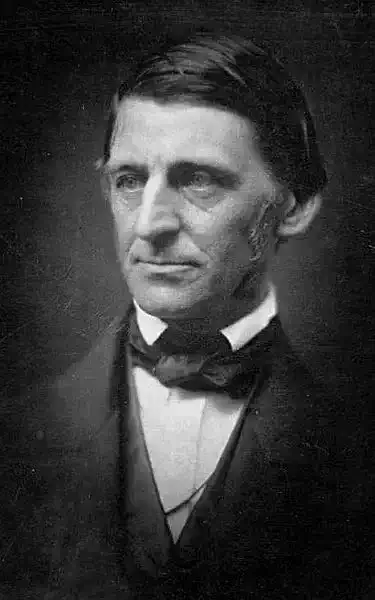
Ralph Waldo Emerson
You have tried famine: no more try it
You have tried famine: no more try it;
Ply us now with a full diet;
Teach your pupils now with plenty,
For one sun supply us twenty:
I have thought it thoroughly over,
State of hermit, state of lover;
We must have society,
We cannot spare variety.
Hear you, then, celestial fellows!
Fits not to be over zealous;
Steads not to work on the clean jump,
Nor wine nor brains perpetual pump;
Men and gods are too extense,—
Could you slacken and condense?
Your rank overgrowths reduce,
Till your kinds abound with juice;
Earth crowded cries, "Too many men,"—
My counsel is, Kill nine in ten,
And bestow the shares of all
On the remnant decimal.
Add their nine lives to this cat;
Stuff their nine brains in his hat;
Make his frame and forces square
With the labors he must dare;
Thatch his flesh, and even his years
With the marble which he rears;
There growing slowly old at ease,
No faster than his planted trees,
He may, by warrant of his age,
In schemes of broader scope engage:
So shall ye have a man of the sphere,
Fit to grace the solar year.
332

Walter de la Mare
The Keys of Morning
While at her bedroom window once,
Learning her task for school,
Little Louisa lonely sat
In the morning clear and cool,
She slanted her small bead-brown eyes
Across the empty street,
And saw Death softly watching her
In the sunshine pale and sweet.
His was a long lean sallow face;
He sat with half-shut eyes,
Like a old sailor in a ship
Becalmed 'neath tropic skies.
Beside him in the dust he had set
His staff and shady hat;
These, peeping small, Louisa saw
Quite clearly where she sat -
The thinness of his coal-black locks,
His hands so long and lean
They scarcely seemed to grasp at all
The keys that hung between:
Both were of gold, but one was small,
And with this last did he
Wag in the air, as if to say,
"Come hither, child, to me!"
Louisa laid her lesson book
On the cold window-sill;
And in the sleepy sunshine house
Went softly down, until
She stood in the half-opened door,
And peeped. But strange to say
Where Death just now had sunning sat
Only a shadow lay:
Just the tall chimney's round-topped cowl,
And the small sun behind,
Had with its shadow in the dust
Called sleepy Death to mind.
But most she thought how strange it was
Two keys that he should bear,
And that, when beckoning, he should wag
The littlest in the air.
331

James Whitcomb Riley
Told By
Coming, clean from the Maryland-end
Of this great National Road of ours,
Through your vast West; with the time to spend,
Stopping for days in the main towns, where
Every citizen seemed a friend,
And friends grew thick as the wayside flowers,--
I found no thing that I might narrate
More singularly strange or queer
Than a thing I found in your sister-state
Ohio,--at a river-town--down here
In my notebook: _Zanesville--situate
On the stream Muskingum--broad and clear,
And navigable, through half the year,
North, to Coshocton; south, as far
As Marietta._--But these facts are
Not of the _story_, but the _scene_
Of the simple little tale I mean
To tell _directly_--from this, straight through
To the _end_ that is best worth listening to:
Eastward of Zanesville, two or three
Miles from the town, as our stage drove in,
I on the driver's seat, and he
Pointing out this and that to me,--
On beyond us--among the rest--
A grovey slope, and a fluttering throng
Of little children, which he 'guessed'
Was a picnic, as we caught their thin
High laughter, as we drove along,
Clearer and clearer. Then suddenly
He turned and asked, with a curious grin,
What were my views on _Slavery? 'Why?'_
I asked, in return, with a wary eye.
'Because,' he answered, pointing his whip
At a little, whitewashed house and shed
On the edge of the road by the grove ahead,-'
Because there are two slaves _there_,' he said-'
Two Black slaves that I've passed each trip
For eighteen years.--Though they've been set free,
They have been slaves ever since!' said he.
And, as our horses slowly drew
Nearer the little house in view,
All briefly I heard the history
Of this little old Negro woman and
Her husband, house and scrap of land;
How they were slaves and had been made free
By their dying master, years ago
In old Virginia; and then had come
North here into a _free_ state--so,
Safe forever, to found a home--
For themselves alone?--for they left South there
Five strong sons, who had, alas!
All been sold ere it came to pass
This first old master with his last breath
Had freed the _parents_.--(He went to death
Agonized and in dire despair
That the poor slave _children_ might not share
Their parents' freedom. And wildly then
He moaned for pardon and died. Amen!)
Thus, with their freedom, and little sum
Of money left them, these two had come
North, full twenty long years ago;
And, settling there, they had hopefully
Gone to work, in their simple way,
Hauling--gardening--raising sweet
Corn, and popcorn.--Bird and bee
In the garden-blooms and the apple-tree
Singing with them throughout the slow
Summer's day, with its dust and heat--
The crops that thirst and the rains that fail;
Or in Autumn chill, when the clouds hung low,
And hand-made hominy might find sale
In the near town-market; or baking pies
And cakes, to range in alluring show
At the little window, where the eyes
Of the Movers' children, driving past,
Grew fixed, till the big white wagons drew
Into a halt that would sometimes last
Even the space of an hour or two--
As the dusty, thirsty travelers made
Their noonings there in the beeches' shade
By the old black Aunty's spring-house, where,
Along with its cooling draughts, were found
Jugs of her famous sweet spruce-beer,
Served with her gingerbread-horses there,
While Aunty's snow-white cap bobbed 'round
Till the children's rapture knew no bound,
As she sang and danced for them, quavering clear
And high the chant of her old slave-days-
'Oh, Lo'd, Jinny! my toes is so',
Dancin' on yo' sandy flo'!'
Even so had they wrought all ways
To earn the pennies, and hoard them, too,--
And with what ultimate end in view?--
They were saving up money enough to be
Able, in time, to buy their own
Five children back.
Ah! the toil gone through!
And the long delays and the heartaches, too,
And self-denials that they had known!
But the pride and glory that was theirs
When they first hitched up their shackly cart
For the long, long journey South.--The start
In the first drear light of the chilly dawn,
With no friends gathered in grieving throng,--
With no farewells and favoring prayers;
But, as they creaked and jolted on,
Their chiming voices broke in song-
''Hail, all hail! don't you see the stars a-fallin'?
Hail, all hail! I'm on my way.
Gideon[1] am
A healin' ba'm--
I belong to the blood-washed army.
Gideon am
A healin' ba'm--
On my way!''
And their _return!_--with their oldest boy
Along with them! Why, their happiness
Spread abroad till it grew a joy
_Universal_--It even reached
And thrilled the town till the _Church_ was stirred
Into suspecting that wrong was wrong!--
And it stayed awake as the preacher preached
A _Real_ 'Love'-text that he had not long
To ransack for in the Holy Word.
And the son, restored, and welcomed so,
Found service readily in the town;
And, with the parents, sure and slow,
_He_ went 'saltin' de cole cash down.'
So with the _next_ boy--and each one
In turn, till _four_ of the five at last
Had been bought back; and, in each case,
With steady work and good homes not
Far from the parents, _they_ chipped in
To the family fund, with an equal grace.
Thus they managed and planned and wrought,
And the old folks throve--Till the night before
They were to start for the lone last son
In the rainy dawn--their money fast
Hid away in the house,--two mean,
Murderous robbers burst the door.
...Then, in the dark, was a scuffle--a fall--
An old man's gasping cry--and then
A woman's fife-like shriek.
...Three men
Splashing by on horseback heard
The summons: And in an instant all
Sprung to their duty, with scarce a word.
And they were _in time_--not only to save
The lives of the old folks, but to bag
Both the robbers, and buck-and-gag
And land them safe in the county-jail--
Or, as Aunty said, with a blended awe
And subtlety,--'Safe in de calaboose whah
De dawgs caint bite 'em!'
--So prevail
The faithful!--So had the Lord upheld
His servants of both deed and prayer,--
HIS the glory unparalleled-_
Theirs_ the reward,--their every son
Free, at last, as the parents were!
And, as the driver ended there
In front of the little house, I said,
All fervently, 'Well done! well done!'
At which he smiled, and turned his head
And pulled on the leaders' lines and--'See!'
He said,--''you can read old Aunty's sign?'
And, peering down through these specs of mine
On a little, square board-sign, I read:
'Stop, traveler, if you think it fit,
And quench your thirst for a-fip-and-a-bit.
The rocky spring is very clear,
And soon converted into beer.'
And, though I read aloud, I could
Scarce hear myself for laugh and shout
Of children--a glad multitude
Of little people, swarming out
Of the picnic-grounds I spoke about.--
And in their rapturous midst, I see
Again--through mists of memory--
A black old Negress laughing up
At the driver, with her broad lips rolled
Back from her teeth, chalk-white, and gums
Redder than reddest red-ripe plums.
He took from her hand the lifted cup
Of clear spring-water, pure and cold,
And passed it to me: And I raised my hat
And drank to her with a reverence that
My conscience knew was justly due
The old black face, and the old eyes, too--
The old black head, with its mossy mat
Of hair, set under its cap and frills
White as the snows on Alpine hills;
Drank to the old _black_ smile, but yet
Bright as the sun on the violet,--
Drank to the gnarled and knuckled old
Black hands whose palms had ached and bled
And pitilessly been worn pale
And white almost as the palms that hold
Slavery's lash while the victim's wail
Fails as a crippled prayer might fail.--
Aye, with a reverence infinite,
I drank to the old black face and head--
The old black breast with its life of light--
The old black hide with its heart of gold.
332

Emily Dickinson
Wolfe demanded during dying
Wolfe demanded during dying
"Which obtain the Day"?
"General, the British"-"Easy"
Answered Wolfe "to die"
Montcalm, his opposing Spirit
Rendered with a smile
"Sweet" said he "my own Surrender
Liberty's beguile"
"Which obtain the Day"?
"General, the British"-"Easy"
Answered Wolfe "to die"
Montcalm, his opposing Spirit
Rendered with a smile
"Sweet" said he "my own Surrender
Liberty's beguile"
329
John Greenleaf Whittier
Song Of The Negro Boatman
Oh, praise an' tanks! De Lord he come
To set de people free;
An' massa tink it day ob doom,
An' we ob jubilee.
De Lord dat heap de Red Sea waves
He jus' as 'trong as den;
He say de word: we las' night slaves;
To-day, de Lord's freemen.
De yam will grow, de cotton blow,
We'll hab de rice an' corn;
Oh nebber you fear, if nebber you hear
De driver blow his horn!
Ole massa on he trabbels gone;
He leaf de land behind:
De Lord's breff blow him furder on,
Like corn-shuck in de wind.
We own de hoe, we own de plough,
We own de hands dat hold;
We sell de pig, we sell de cow,
But nebber chile be sold.
De yam will grow, de cotton blow,
We'll hab de rice an' corn;
Oh nebber you fear, if nebber you hear
De driver blow his horn!
We pray de Lord: he gib us signs
Dat some clay we be free;
De norf-wind tell it to de pines,
De wild-duck to de sea;
We tink it when de church-bell ring,
We dream it in de dream;
De rice-bird mean it when he sing,
De eagle when he scream.
De yam will grow, de cotton blow,
We'll hab de rice an' corn:
Oh nebber you fear, if nebber you hear
De driver blow his horn!
We know de promise nebber fail,
An' nebber lie de word;
So like de 'postles in de jail,
We waited for de Lord
An' now he open ebery door,
An' trow away de key;
He tink we lub him so before,
We lub him better free.
De yam will grow, de cotton blow,
He'll gib de rice an' corn;
Oh nebber you fear, if nebber you hear
De driver blow his horn!
So sing our dusky gondoliers;
And with a secret pain,
And smiles that seem akin to tears,
We hear the wild refrain.
We dare not share the negro's trust,
Nor yet his hope deny;
We only know that God is just,
And every wrong shall die.
Rude seems the song; each swarthy face,
Flame-lighted, ruder still:
We start to think that hapless race
Must shape our good or ill;
That laws of changeless justice bind
Oppressor with oppressed;
And, close as sin and suffering joined,
We march to Fate abreast.
Sing on, poor hearts! your chant shall be
Our sign of blight or bloom,
The Vala-song of Liberty,
Or death-rune of our doom!
328

Henry Lawson
Next Door
Whenever I’m moving my furniture in
Or shifting my furniture out—
Which is nearly as often and risky as Sin
In these days of shifting about—
There isn’t a stretcher, there isn’t a stick,
Nor a mat that belongs to the floor;
There isn’t a pot (Oh, my heart groweth sick!)
That escapes from the glare of Next Door!
The Basilisk Glare of Next Door.
Be it morn, noon or night—be it early or late;
Be it summer or winter or spring,
I cannot sneak down just to list at the gate
For the song that the bottle-ohs sing;
With some bottles to sell that shall bring me a beer,
And lead up to one or two more;
But I feel in my backbone the serpentine sneer,
And the Basilisk Glare of Next Door.
The political woman Next Door.
I really can’t say, being no one of note,
Why she glares at my odds and my ends,
Excepting, maybe, I’m a frivolous Pote,
With one or two frivolous friends,
Who help me to shift and to warm up the house
For three or four glad hours or more,
In a suburb that hasn’t the soul of a louse;
And they’ve got no respect for Next Door!
They don’t give a damn for Next Door
.
329
John Greenleaf Whittier
On Receiving An Eagle's Quill From Lake Superior
All day the darkness and the cold
Upon my heart have lain,
Like shadows on the winter sky,
Like frost upon the pane;
But now my torpid fancy wakes,
And, on thy Eagle's plume,
Rides forth, like Sindbad on his bird,
Or witch upon her broom!
Below me roar the rocking pines,
Before me spreads the lake
Whose long and solemn-sounding waves
Against the sunset break.
I hear the wild Rice-Eater thresh
The grain he has not sown;
I see, with flashing scythe of fire,
The prairie harvest mown!
I hear the far-off voyager's horn;
I see the Yankee's trail,-His
foot on every mountain-pass,
On every stream his sail.
By forest, lake, and waterfall,
I see his pedler show;
The mighty mingling with the mean,
The lofty with the low.
He's whittling by St. Mary's Falls,
Upon his loaded wain;
He's measuring o'er the Pictured Rocks,
With eager eyes of gain.
I hear the mattock in the mine,
The axe-stroke in the dell,
The clamor from the Indian lodge,
The Jesuit chapel bell!
I see the swarthy trappers come
From Mississippi's springs;
And war-chiefs with their painted brows,
And crests of eagle wings.
Behind the scared squaw's birch canoe,
The steamer smokes and raves;
And city lots are staked for sale
Above old Indian graves.
I hear the tread of pioneers
Of nations yet to be;
The first low wash of waves, where soon
Shall roll a human sea.
The rudiments of empire here
Are plastic yet and warm;
The chaos of a mighty world
Is rounding into form!
Each rude and jostling fragment soon
Its fitting place shall find,-The
raw material of a State,
Its muscle and its mind!
And, westering still, the star which leads
The New World in its train
Has tipped with fire the icy spears
Of many a mountain chain.
The snowy cones of Oregon
Are kindling on its way;
And California's golden sands
Gleam brighter in its ray!
Then blessings on thy eagle quill,
As, wandering far and wide,
I thank thee for this twilight dream
And Fancy's airy ride!
Yet, welcomer than regal plumes,
Which Western trappers find,
Thy free and pleasant thoughts, chance sown,
Like feathers on the wind.
Thy symbol be the mountain-bird,
Whose glistening quill I hold;
Thy home the ample air of hope,
And memory's sunset gold!
In thee, let joy with duty join,
And strength unite with love,
The eagle's pinions folding round
The warm heart of the dove!
So, when in darkness sleeps the vale
Where still the blind bird clings
The sunshine of the upper sky
Shall glitter on thy wings!
328

Henry Van Dyke
The Foolish Fir-Tree
A tale that the poet Rückert told
To German children, in days of old;
Disguised in a random, rollicking rhyme
Like a merry mummer of ancient time,
And sent, in its English dress, to please
The little folk of the Christmas trees.
A little fir grew in the midst of the wood
Contented and happy, as young trees should.
His body was straight and his boughs were clean;
And summer and winter the bountiful sheen
Of his needles bedecked him, from top to root,
In a beautiful, all-the-year, evergreen suit.
But a trouble came into his heart one day,
When he saw that the other trees were gay
In the wonderful raiment that summer weaves
Of manifold shapes and kinds of leaves:
He looked at his needles so stiff and small,
And thought that his dress was the poorest of all.
Then jealousy clouded the little tree's mind,
And he said to himself, "It was not very kind
"To give such an ugly old dress to a tree!
"If the fays of the forest would only ask me,
"I'd tell them how I should like to be dressed,—
"In a garment of gold, to bedazzle the rest!"
So he fell asleep, but his dreams were bad.
When he woke in the morning, his heart was glad;
For every leaf that his boughs could hold
Was made of the brightest beaten gold.
I tell you, children, the tree was proud;
He was something above the common crowd;
And he tinkled his leaves, as if he would say
To a pedlar who happened to pass that way,
"Just look at me! don't you think I am fine?
"And wouldn't you like such a dress as mine?"
"Oh, yes!" said the man, "and I really guess
I must fill my pack with your beautiful dress."
So he picked the golden leaves with care,
And left the little tree shivering there.
"Oh, why did I wish for golden leaves?"
The fir-tree said, "I forgot that thieves
"Would be sure to rob me in passing by.
"If the fairies would give me another try,
"I'd wish for something that cost much less,
"And be satisfied with glass for my dress!"
Then he fell asleep; and, just as before,
The fairies granted his wish once more.
When the night was gone, and the sun rose clear,
The tree was a crystal chandelier;
And it seemed, as he stood in the morning light,
That his branches were covered with jewels bright.
"Aha!" said the tree. "This is something great!"
And he held himself up, very proud and straight;
But a rude young wind through the forest dashed,
In a reckless temper, and quickly smashed
The delicate leaves. With a clashing sound
They broke into pieces and fell on the ground,
Like a silvery, shimmering shower of hail,
And the tree stood naked and bare to the gale.
Then his heart was sad; and he cried, "Alas
"For my beautiful leaves of shining glass!
"Perhaps I have made another mistake
"In choosing a dress so easy to break.
"If the fairies only would hear me again
"I'd ask them for something both pretty and plain:
"It wouldn't cost much to grant my request,—
"In leaves of green lettuce I'd like to be dressed!"
By this time the fairies were laughing, I know;
But they gave him his wish in a second; and so
With leaves of green lettuce, all tender and sweet,
The tree was arrayed, from his head to his feet.
"I knew it!" he cried, "I was sure I could find
"The sort of a suit that would be to my mind.
"There's none of the trees has a prettier dress,
"And none as attractive as I am, I guess."
But a goat, who was taking an afternoon walk,
By chance overheard the fir-tree's talk.
So he came up close for a nearer view;—
"My salad!" he bleated, "I think so too!
"You're the most attractive kind of a tree,
"And I want your leaves for my five-o'clock tea."
So he ate them all without saying grace,
And walked away with a grin on his face;
While the little tree stood in the twilight dim,
With never a leaf on a single limb.
Then he sighed and groaned; but his voice was weak—
He was so ashamed that he could not speak.
He knew at last that he had been a fool,
To think of breaking the forest rule,
And choosing a dress himself to please,
Because he envied the other trees.
But it couldn't be helped, it was now too late,
He must make up his mind to a leafless fate!
So he let himself sink in a slumber deep,
But he moaned and he tossed in his troubled sleep,
Till the morning touched him with joyful beam,
And he woke to find it was all a dream.
For there in his evergreen dress he stood,
A pointed fir in the midst of the wood!
His branches were sweet with the balsam smell,
His needles were green when the white snow fell.
And always contented and happy was he,—
The very best kind of a Christmas tree.
329
John Greenleaf Whittier
A Lay Of Old Time
One morning of the first sad Fall,
Poor Adam and his bride
Sat in the shade of Eden's wall-But
on the outer side.
She, blushing in her fig-leaf suit
For the chaste garb of old;
He, sighing o'er his bitter fruit
For Eden's drupes of gold.
Behind them, smiling in the morn,
Their forfeit garden lay,
Before them, wild with rock and thorn,
The desert stretched away.
They heard the air above them fanned,
A light step on the sward,
And lo! they saw before them stand
The angel of the Lord!
'Arise,' he said, 'why look behind,
When hope is all before,
And patient hand and willing mind,
Your loss may yet restore?
'I leave with you a spell whose power
Can make the desert glad,
And call around you fruit and flower
As fair as Eden had.
'I clothe your hands with power to lift
The curse from off your soil;
Your very doom shall seem a gift,
Your loss a gain through Toil.
'Go, cheerful as yon humming-bees,
To labor as to play.'
White glimmering over Eden's trees
The angel passed away.
The pilgrims of the world went forth
Obedient to the word,
And found where'er they tilled the earth
A garden of the Lord!
The thorn-tree cast its evil fruit
And blushed with plum and pear,
And seeded grass and trodden root
Grew sweet beneath their care.
We share our primal parents' fate,
And, in our turn and day,
Look back on Eden's sworded gate
As sad and lost as they.
But still for us his native skies
The pitying Angel leaves,
And leads through Toil to Paradise
New Adams and new Eves!
327
James Whitcomb Riley
Jim
He was jes a plain ever'-day, all-round kind of a jour.,
Consumpted-Iookin'-- but la!
The jokeiest, wittiest, story-tellin', song-singin', laughin'est, jolliest
Feller you ever saw!
Worked at jes coarse work, but you kin bet he was fine enough in his talk,
And his feelin's too!
Lordy! Ef he was on'y back on his bench ag'in to-day, a- carryin' on
Like he ust to do!
Any shopmate'll tell you there never was, on top o' dirt,
A better feller'n Jim!
You want a favor, and couldn't git it anywheres else--
You could git it o' him!
Most free-heartedest man thataway in the world, I guess!
Give up ever' nickel he's worth--
And ef you'd a-wanted it, and named it to him, and it was his,
He'd a-give you the earth!
Allus a reachin' out, Jim was, and a-he'ppin' some
Pore feller onto his feet-He'd
a-never a-keered how hungry he was hisse'f,
So's the feller got somepin' to eat!
Didn't make no differ'nce at all to him how he was dressed,
He ust to say to me--,
'You togg out a tramp purty comfortable in winter-time, a huntin' a job,
And he'll git along!' says he.
Jim didn't have, ner never could git ahead, so overly much
O' this world's goods at a time--.
'Fore now I've saw him, more'n onc't, lend a dollar, and haf to, more'n
likely,
Turn round and borry a dime!
Mebby laugh and joke about it hisse'f fer awhile-- then jerk his coat,
And kindo' square his chin,
Tie on his apern, and squat hisse'f on his old shoe-bench,
And go to peggin' ag'in!
Patientest feller too, I reckon, 'at ever jes natchurly
Coughed hisse'f to death!
Long enough after his voice was lost he'd laugh in a whisper and say
He could git ever'thing but his breath-'
You fellers,' he'd sorto' twinkle his eyes and say,
'Is a-pilin' onto me
A mighty big debt fer that-air little weak-chested ghost o' mine to pack
Through all Eternity!'
Now there was a man 'at jes 'peared-like, to me,
'At ortn't a-never a-died!
'But death hain't a-showin' no favors,' the old boss said-'
On'y to Jim!' and cried:
And Wigger, who puts up the best sewed-work in the shop--
Er the whole blame neighborhood--,
He says, 'When God made Jim, I bet you He didn't do anything else that day
But jes set around and feel good!'
326
Henry Van Dyke
Francis Makemie
(Presbyter of Christ in Americas 1683-1708)
To thee, plain hero of a rugged race,
We bring the meed of praise too long delayed!
Thy fearless word and faithful work have made
For God's Republic firmer path and place
In this New World: thou hast proclaimed the grace
And power of Christ in many a forest glade,
Teaching the truth that leaves men unafraid
Of frowning tyranny or death's dark face.
Oh, who can tell how much we owe to thee,
Makemie, and to labour such as thine,
For all that makes America the shrine
Of faith untrammeled and of conscience free?
Stand here, grey stone, and consecrate the sod
Where rests this brave Scotch-Irish man of God!
326
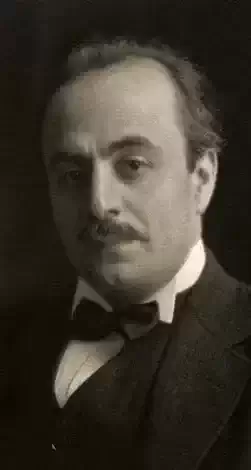
Khalil Gibran
Buying and Selling chapter XI
And a merchant said, "Speak to us of Buying and Selling."
And he answered and said:
To you the earth yields her fruit, and you shall not want if you but know how to fill your
hands.
It is in exchanging the gifts of the earth that you shall find abundance and be satisfied.
Yet unless the exchange be in love and kindly justice, it will but lead some to greed
and others to hunger.
When in the market place you toilers of the sea and fields and vineyards meet the
weavers and the potters and the gatherers of spices, -
Invoke then the master spirit of the earth, to come into your midst and sanctify the
scales and the reckoning that weighs value against value.
And suffer not the barren-handed to take part in your transactions, who would sell
their words for your labour.
To such men you should say,
"Come with us to the field, or go with our brothers to the sea and cast your net;
For the land and the sea shall be bountiful to you even as to us."
And if there come the singers and the dancers and the flute players, - buy of their gifts
also.
For they too are gatherers of fruit and frankincense, and that which they bring, though
fashioned of dreams, is raiment and food for your soul.
And before you leave the marketplace, see that no one has gone his way with empty
hands.
For the master spirit of the earth shall not sleep peacefully upon the wind till the needs
of the least of you are satisfied.
325
John Greenleaf Whittier
Clerical Oppressors
JUST God! and these are they
Who minister at thine altar, God of Right!
Men who their hands with prayer and blessing lay
On Israel's Ark of light!
What! preach, and kidnap men?
Give thanks, and rob thy own afflicted poor?
Talk of thy glorious liberty, and then
Bolt hard the captive's door?
What! servants of thy own
Merciful Son, who came to seek and save
The homeless and the outcast, fettering down
The tasked and plundered slave!
Pilate and Herod, friends!
Chief priests and rulers, as of old, combine!
Just God and holy! is that church, which lends
Strength to the spoiler, thine?
Paid hypocrites, who turn
Judgment aside, and rob the Holy Book
Of those high words of truth which search and burn
In warning and rebuke;
Feed fat, ye locusts, feed!
And, in your tasselled pulpits, thank the Lord
That, from the toiling bondman's utter need,
Ye pile your own full board.
How long, O Lord! how long
Shall such a priesthood barter truth away,
And in Thy name, for robbery and wrong
At Thy own altars pray?
Is not Thy hand stretched forth
Visibly in the heavens, to awe and smite?
Shall not the living God of all the earth,
And heaven above, do right?
Woe, then, to all who grind
Their brethren of a common Father down!
To all who plunder from the immortal mind
Its bright and glorious crown!
Woe to the priesthood! woe
To those whose hire is with the price of blood;
Perverting, darkening, changing, as they go,
The searching truths of God!
Their glory and their might.
Shall perish; and their very names shall be
Vile before all the people, in the light
Of a world's liberty.
Oh, speed the moment on
When Wrong shall cease, and Liberty and Love
And Truth and Right throughout the earth be known
As in their home above.
325
John Greenleaf Whittier
Expostulation
OUR fellow-countrymen in chains!
Slaves, in a land of light and law!
Slaves, crouching on the very plains
Where rolled the storm of Freedom's war!
A groan from Eutaw's haunted wood,
A. wail where Camden's martyrs fell,
By every shrine of patriot blood,
From Moultrie's wall and Jasper's well!
By storied hill and hallowed grot,
By mossy wood and marshy glen,
Whence rang of old the rifle-shot,
And hurrying shout of Marion's men!
The groan of breaking hearts is there,
The falling lash, the fetter's clank!
Slaves, slaves are breathing in that air
Which old De Kalb and Sumter drank!
What, ho! our countrymen in chains!
The whip on woman's shrinking flesh!
Our soil yet reddening with the stains
Caught from her scourging, warm and fresh!
What! mothers from their children riven!
What! God's own image bought and sold!
Americans to market driven,
And bartered as the brute for gold!
Speak! shall their agony of prayer
Come thrilling to our hearts in vain?
To us whose fathers scorned to bear
The paltry menace of a chain;
To us, whose boast is loud and long
Of holy Liberty and Light;
Say, shall these writhing slaves of Wrong
Plead vainly for their plundered Right?
What! shall we send, with lavish breath,
Our sympathies across the wave,
Where Manhood, on the field of death,
Strikes for his freedom or a grave?
Shall prayers go up, and hymns be sung
For Greece, the Moslem fetter spurning,
And millions hail with pen and tongue
Our light on all her altars burning?
Shall Belgium feel, and gallant France,
By Vendome's pile and Schoenbrun's wall,
And Poland, gasping on her lance,
The impulse of our cheering call?
And shall the slave, beneath our eye,
Clank o'er our fields his hateful chain?
And toss his fettered arms on high,
And groan for Freedom's gift, in vain?
Oh, say, shall Prussia's banner be
A refuge for the stricken slave?
And shall the Russian serf go free
By Baikal's lake and Neva's wave?
And shall the wintry-bosomed Dane
Relax the iron hand of pride,
And bid his bondmen cast the chain
From fettered soul and limb aside?
Shall every flap of England's flag
Proclaim that all around are free,
From farthest Ind to each blue crag
That beetles o'er the Western Sea?
And shall we scoff at Europe's kings,
When Freedom's fire is dim with us,
And round our country's altar clings
The damning shade of Slavery's curse?
Go, let us ask of Constantine
To loose his grasp on Poland's throat;
And beg the lord of Mahmoud's line
To spare the struggling Suliote;
Will not the scorching answer come
From turbaned Turk, and scornful Russ
'Go, loose your fettered slaves at home,
Then turn, and ask the like of us!'
Just God! and shall we calmly rest,
The Christian's scorn, the heathen's mirth,
Content to live the lingering jest
And by-word of a mocking Earth?
Shall our own glorious land retain
That curse which Europe scorns to bear?
Shall our own brethren drag the chain
Which not even Russia's menials wear?
Up, then, in Freedom's manly part,
From graybeard eld to fiery youth,
And on the nation's naked heart
Scatter the living coals of Truth!
Up! while ye slumber, deeper yet
The shadow of our fame is growing!
Up! while ye pause, our sun may set
In blood, around our altars flowing!
Oh! rouse ye, ere the storm comes forth,
The gathered wrath of God and man,
Like that which wasted Egypt's earth,
When hail and fire above it ran.
Hear ye no warnings in the air?
Feel ye no earthquake underneath?
Up, up! why will ye slumber where
The sleeper only wakes in death?
Rise now for Freedom! not in strife
Like that your sterner fathers saw,
The awful waste of human life,
The glory and the guilt of war:'
But break the chain, the yoke remove,
And smite to earth Oppression's rod,
With those mild arms of Truth and Love,
Made mighty through the living God!
Down let the shrine of Moloch sink,
And leave no traces where it stood;
Nor longer let its idol drink
His daily cup of human blood;
But rear another altar there,
To Truth and Love and Mercy given,
And Freedom's gift, and Freedom's prayer,
Shall call an answer down from Heaven!
326

Jonathan Swift
Verses on the Death of Dr. Swift, D.S.P.D.
As Rochefoucauld his maxims drew
From Nature, I believe 'em true:
They argue no corrupted mind
In him; the fault is in mankind.
This maxim more than all the rest
Is thought too base for human breast:
'In all distresses of our friends,
We first consult our private ends;
While Nature, kindly bent to ease us,
Points out some circumstance to please us.'
If this perhaps your patience move,
Let reason and experience prove.
We all behold with envious eyes
Our equal rais'd above our size.
Who would not at a crowded show
Stand high himself, keep others low?
I love my friend as well as you
But would not have him stop my view.
Then let him have the higher post:
I ask but for an inch at most.
If in a battle you should find
One, whom you love of all mankind,
Had some heroic action done,
A champion kill'd, or trophy won;
Rather than thus be overtopt,
Would you not wish his laurels cropt?
Dear honest Ned is in the gout,
Lies rack'd with pain, and you without:
How patiently you hear him groan!
How glad the case is not your own!
What poet would not grieve to see
His brethren write as well as he?
But rather than they should excel,
He'd wish his rivals all in hell.
Her end when emulation misses,
She turns to envy, stings and hisses:
The strongest friendship yields to pride,
Unless the odds be on our side.
Vain human kind! fantastic race!
Thy various follies who can trace?
Self-love, ambition, envy, pride,
Their empire in our hearts divide.
Give others riches, power, and station,
'Tis all on me a usurpation.
I have no title to aspire;
Yet, when you sink, I seem the higher.
In Pope I cannot read a line,
But with a sigh I wish it mine;
When he can in one couplet fix
More sense than I can do in six;
It gives me such a jealous fit,
I cry, 'Pox take him and his wit!'
Why must I be outdone by Gay
In my own hum'rous biting way?
Arbuthnot is no more my friend,
Who dares to irony pretend,
Which I was born to introduce,
Refin'd it first, and show'd its use.
St. John, as well as Pultney, knows
That I had some repute for prose;
And, till they drove me out of date,
Could maul a minister of state.
If they have mortify'd my pride,
And made me throw my pen aside;
If with such talents Heav'n has blest 'em,
Have I not reason to detest 'em?
To all my foes, dear Fortune, send
Thy gifts; but never to my friend:
I tamely can endure the first,
But this with envy makes me burst.
Thus much may serve by way of proem:
Proceed we therefore to our poem.
The time is not remote, when I
Must by the course of nature die;
When I foresee my special friends
Will try to find their private ends:
Tho' it is hardly understood
Which way my death can do them good,
Yet thus, methinks, I hear 'em speak:
'See, how the Dean begins to break!
Poor gentleman, he droops apace!
You plainly find it in his face.
That old vertigo in his head
Will never leave him till he's dead.
Besides, his memory decays:
He recollects not what he says;
He cannot call his friends to mind:
Forgets the place where last he din'd;
Plies you with stories o'er and o'er;
He told them fifty times before.
How does he fancy we can sit
To hear his out-of-fashion'd wit?
But he takes up with younger folks,
Who for his wine will bear his jokes.
Faith, he must make his stories shorter,
Or change his comrades once a quarter:
In half the time he talks them round,
There must another set be found.
'For poetry he's past his prime:
He takes an hour to find a rhyme;
His fire is out, his wit decay'd,
His fancy sunk, his Muse a jade.
I'd have him throw away his pen;-
But there's no talking to some men!'
And then their tenderness appears,
By adding largely to my years:
'He's older than he would be reckon'd
And well remembers Charles the Second.
'He hardly drinks a pint of wine;
And that, I doubt, is no good sign.
His stomach too begins to fail:
Last year we thought him strong and hale;
But now he's quite another thing:
I wish he may hold out till spring.'
Then hug themselves, and reason thus:
'It is not yet so bad with us.'
In such a case, they talk in tropes,
And by their fears express their hopes:
Some great misfortune to portend,
No enemy can match a friend.
With all the kindness they profess,
The merit of a lucky guess
(When daily 'How d'ye's' come of course,
And servants answer, 'Worse and worse!')
Would please 'em better, than to tell,
That, 'God be prais'd, the Dean is well.'
Then he who prophecy'd the best
Approves his foresight to the rest:
'You know I always fear'd the worst,
And often told you so at first.'
He'd rather choose that I should die,
Than his prediction prove a lie.
Not one foretells I shall recover;
But all agree to give me over.
Yet, should some neighbour feel a pain
Just in the parts where I complain,
How many a message would he send?
What hearty prayers that I should mend?
Inquire what regimen I kept,
What gave me ease, and how I slept?
And more lament when I was dead,
Than all the sniv'llers round my bed.
My good companions, never fear;
For though you may mistake a year,
Though your prognostics run too fast,
They must be verify'd at last.
Behold the fatal day arrive!
'How is the Dean?'-'He's just alive.'
Now the departing prayer is read;
'He hardly breathes.'-'The Dean is dead.'
Before the passing-bell begun,
The news thro' half the town has run.
'O, may we all for death prepare!
What has he left? and who's his heir?''
I know no more than what the news is;
'Tis all bequeath'd to public uses.''
To public use! a perfect whim!
What had the public done for him?
Mere envy, avarice, and pride:
He gave it all-but first he died.
And had the Dean, in all the nation,
No worthy friend, no poor relation?
So ready to do strangers good,
Forgetting his own flesh and blood?'
Now Grub-Street wits are all employ'd;
With elegies the town is cloy'd:
Some paragraph in ev'ry paper
To curse the Dean or bless the Drapier.
The doctors, tender of their fame,
Wisely on me lay all the blame:
'We must confess his case was nice;
But he would never take advice.
Had he been rul'd, for aught appears,
He might have liv'd these twenty years;
For, when we open'd him, we found
That all his vital parts were sound.'
From Dublin soon to London spread,
'Tis told at Court, the Dean is dead.
Kind Lady Suffolk in the spleen
Runs laughing up to tell the Queen.
The Queen, so gracious, mild, and good,
Cries, 'Is he gone! 'tis time he should.
He's dead, you say; why, let him rot:
I'm glad the medals were forgot.
I promis'd them, I own; but when?
I only was the Princess then;
But now, as consort of a king,
You know, 'tis quite a different thing.'
Now Chartres, at Sir Robert's levee,
Tells with a sneer the tidings heavy:
'Why, is he dead without his shoes?'
Cries Bob, 'I'm sorry for the news:
O, were the wretch but living still,
And in his place my good friend Will!
Or had a mitre on his head,
Provided Bolingbroke were dead!'
Now Curll his shop from rubbish drains:
Three genuine tomes of Swift's remains!
And then, to make them pass the glibber,
Revis'd by Tibbalds, Moore, and Cibber.
He'll treat me as he does my betters,
Publish my will, my life, my letters:
Revive the libels born to die;
Which Pope must bear, as well as I.
Here shift the scene, to represent
How those I love my death lament.
Poor Pope will grieve a month, and Gay
A week, and Arbuthnot a day.
St. John himself will scarce forbear
To bite his pen, and drop a tear.
The rest will give a shrug, and cry,
'I'm sorry-but we all must die!'
Indifference, clad in Wisdom's guise,
All fortitude of mind supplies:
For how can stony bowels melt
In those who never pity felt?
When we are lash'd, they kiss the rod,
Resigning to the will of God.
The fools, my juniors by a year,
Are tortur'd with suspense and fear;
Who wisely thought my age a screen,
When death approach'd, to stand between:
The screen remov'd, their hearts are trembling;
They mourn for me without dissembling.
My female friends, whose tender hearts
Have better learn'd to act their parts,
Receive the news in doleful dumps:
'The Dean is dead: (and what is trumps?)
Then, Lord have mercy on his soul!
(Ladies, I'll venture for the vole.)
Six deans, they say, must bear the pall:
(I wish I knew what king to call.)
Madam, your husband will attend
The funeral of so good a friend.
No, madam, 'tis a shocking sight:
And he's engag'd to-morrow night:
My Lady Club would take it ill,
If he should fail her at quadrille.
He lov'd the Dean-(I lead a heart)
But dearest friends, they say, must part.
His time was come: he ran his race;
We hope he's in a better place.'
Why do we grieve that friends should die?
No loss more easy to supply.
One year is past; a different scene!
No further mention of the Dean;
Who now, alas! no more is miss'd,
Than if he never did exist.
Where's now this fav'rite of Apollo!
Departed:-and his works must follow;
Must undergo the common fate;
His kind of wit is out of date.
Some country squire to Lintot goes,
Inquires for 'Swift in Verse and Prose.'
Says Lintot, 'I have heard the name;
He died a year ago.'-'The same.'
He searcheth all his shop in vain.
'Sir, you may find them in Duck-lane;
I sent them with a load of books,
Last Monday to the pastry-cook's.
To fancy they could live a year!
I find you're but a stranger here.
The Dean was famous in his time,
And had a kind of knack at rhyme.
His way of writing now is past;
The town hath got a better taste;
I keep no antiquated stuff,
But spick and span I have enough.
Pray do but give me leave to show 'em;
Here's Colley Cibber's birth-day poem.
This ode you never yet have seen,
By Stephen Duck, upon the Queen.
Then here's a letter finely penn'd
Against the Craftsman and his friend:
It clearly shows that all reflection
On ministers is disaffection.
Next, here's Sir Robert's vindication,
And Mr. Henley's last oration.
The hawkers have not got 'em yet:
Your honour please to buy a set?
'Here's Woolston's tracts, the twelfth edition;
'Tis read by every politician:
The country members, when in town,
To all their boroughs send them down;
You never met a thing so smart;
The courtiers have them all by heart:
Those maids of honour who can read
Are taught to use them for their creed.
The rev'rend author's good intention
Hath been rewarded with a pension.
He doth an honour to his gown,
By bravely running priestcraft down:
He shows, as sure as God's in Gloucester,
That Jesus was a grand imposter;
That all his miracles were cheats,
Perform'd as jugglers do their feats:
The church had never such a writer;
A shame he hath not got a mitre!'
Suppose me dead; and then suppose
A club assembled at the Rose ;
Where, from discourse of this and that,
I grow the subject of their chat.
And while they toss my name about,
With favour some, and some without,
One, quite indiff'rent in the cause,
My character impartial draws:
'The Dean, if we believe report,
Was never ill receiv'd at Court.
As for his works in verse and prose
I own myself no judge of those;
Nor can I tell what critics thought 'em:
But this I know, all people bought 'em.
As with a moral view design'd
To cure the vices of mankind:
His vein, ironically grave,
Expos'd the fool, and lash'd the knave.
To steal a hint was never known,
But what he writ was all his own.
'He never thought an honour done him,
Because a duke was proud to own him,
Would rather slip aside and choose
To talk with wits in dirty shoes;
Despis'd the fools with stars and garters,
So often seen caressing Chartres.
He never courted men in station,
Nor persons held in admiration;
Of no man's greatness was afraid,
Because he sought for no man's aid.
Though trusted long in great affairs
He gave himself no haughty airs:
Without regarding private ends,
Spent all his credit for his friends;
And only chose the wise and good;
No flatt'rers; no allies in blood:
But succour'd virtue in distress,
And seldom fail'd of good success;
As numbers in their hearts must own,
Who, but for him, had been unknown.
'With princes kept a due decorum,
But never stood in awe before 'em.
He follow'd David's lesson just:
'In princes never put thy trust';
And, would you make him truly sour,
Provoke him with a slave in pow'r.
The Irish senate if you nam'd,
With what impatience he declaim'd!
Fair Liberty was all his cry,
For her he stood prepar'd to die;
For her he boldly stood alone;
For her he oft expos'd his own.
Two kingdoms, just as faction led,
Had set a price upon his head;
But not a traitor could be found
To sell him for six hundred pound.
'Had he but spar'd his tongue and pen
He might have rose like other men:
But pow'r was never in his thought,
And wealth he valu'd not a groat:
Ingratitude he often found,
And pity'd those who meant the wound:
But kept the tenor of his mind,
To merit well of human kind:
Nor made a sacrifice of those
Who still were true, to please his foes.
He labour'd many a fruitless hour
To reconcile his friends in pow'r;
Saw mischief by a faction brewing,
While they pursu'd each other's ruin.
But, finding vain was all his care,
He left the Court in mere despair.
'And, oh! how short are human schemes!
Here ended all our golden dreams.
What St. John's skill in state affairs,
What Ormond's valour, Oxford's cares,
To save their sinking country lent,
Was all destroy'd by one event.
Too soon that precious life was ended,
On which alone our weal depended.
When up a dangerous faction starts,
With wrath and vengeance in their hearts;
By solemn League and Cov'nant bound,
To ruin, slaughter, and confound;
To turn religion to a fable,
And make the government a Babel;
Pervert the law, disgrace the gown,
Corrupt the senate, rob the crown;
To sacrifice old England's glory,
And make her infamous in story:
When such a tempest shook the land,
How could unguarded Virtue stand?
'With horror, grief, despair, the Dean
Beheld the dire destructive scene:
His friends in exile, or the tower,
Himself within the frown of power,
Pursu'd by base envenom'd pens,
Far to the land of slaves and fens;
A servile race in folly nurs'd,
Who truckle most when treated worst.
'By innocence and resolution,
He bore continual persecution,
While numbers to preferment rose,
Whose merits were, to be his foes;
When ev'n his own familiar friends,
Intent upon their private ends,
Like renegadoes now he feels,
Against him lifting up their heels.
'The Dean did by his pen defeat
An infamous destructive cheat;
Taught fools their int'rest how to know,
And gave them arms to ward the blow.
Envy hath own'd it was his doing,
To save that helpless land from ruin;
While they who at the steerage stood,
And reap'd the profit, sought his blood.
'To save them from their evil fate,
In him was held a crime of state.
A wicked monster on the bench,
Whose fury blood could never quench,
As vile and profligate a villain,
As modern Scroggs, or old Tresilian,
Who long all justice had discarded,
Nor fear'd he God, nor man regarded,
Vow'd on the Dean his rage to vent,
And make him of his zeal repent;
But Heav'n his innocence defends,
The grateful people stand his friends.
Not strains of law, nor judge's frown,
Nor topics brought to please the crown,
Nor witness hir'd, nor jury pick'd,
Prevail to bring him in convict.
'In exile, with a steady heart,
He spent his life's declining part;
Where folly, pride, and faction sway,
Remote from St. John, Pope, and Gay.
'His friendships there, to few confin'd,
Were always of the middling kind;
No fools of rank, a mongrel breed,
Who fain would pass for lords indeed:
Where titles gave no right or power
And peerage is a wither'd flower;
He would have held it a disgrace,
If such a wretch had known his face.
On rural squires, that kingdom's bane,
He vented oft his wrath in vain;
Biennial squires to market brought;
Who sell their souls and votes for nought;
The nation stripp'd, go joyful back,
To rob the church, their tenants rack,
Go snacks with thieves and rapparees,
And keep the peace to pick up fees;
In ev'ry job to have a share,
A jail or barrack to repair;
And turn the tax for public roads,
Commodious to their own abodes.
'Perhaps I may allow, the Dean
Had too much satire in his vein;
And seem'd determin'd not to starve it,
Because no age could more deserve it.
Yet malice never was his aim;
He lash'd the vice, but spar'd the name;
No individual could resent,
Where thousands equally were meant.
His satire points at no defect,
But what all mortals may correct;
For he abhorr'd that senseless tribe
Who call it humour when they gibe.
He spar'd a hump, or crooked nose,
Whose owners set not up for beaux.
True genuine dulness mov'd his pity,
Unless it offer'd to be witty.
Those who their ignorance confess'd
He ne'er offended with a jest;
But laugh'd to hear an idiot quote
A verse from Horace, learn'd by rote.
'He knew a hundred pleasant stories
With all the turns of Whigs and Tories:
Was cheerful to his dying day;
And friends would let him have his way.
'He gave the little wealth he had
To build a house for fools and mad;
And show'd by one satiric touch,
No nation wanted it so much.
That kingdom he hath left his debtor,
I wish it soon may have a better.'
327
Emily Dickinson
I like a look of Agony
I like a look of Agony,
Because I know it's true-
Men do not sham Convulsion,
Nor simulate, a Throe-
The Eyes glaze once-and that is Death-
Impossible to feign
The Beads upon the Forehead
By homely Anguish strung.
Because I know it's true-
Men do not sham Convulsion,
Nor simulate, a Throe-
The Eyes glaze once-and that is Death-
Impossible to feign
The Beads upon the Forehead
By homely Anguish strung.
325

William Shakespeare
The Procreation Sonnets (1 - 17)
I
From fairest creatures we desire increase,
That thereby beauty's rose might never die,
But as the riper should by time decease,
His tender heir might bear his memory:
But thou contracted to thine own bright eyes,
Feed'st thy light's flame with self-substantial fuel,
Making a famine where abundance lies,
Thy self thy foe, to thy sweet self too cruel:
Thou that art now the world's fresh ornament,
And only herald to the gaudy spring,
Within thine own bud buriest thy content,
And, tender churl, mak'st waste in niggarding:
Pity the world, or else this glutton be,
To eat the world's due, by the grave and thee.
II
When forty winters shall besiege thy brow,
And dig deep trenches in thy beauty's field,
Thy youth's proud livery so gazed on now,
Will be a totter'd weed of small worth held:
Then being asked, where all thy beauty lies,
Where all the treasure of thy lusty days;
To say, within thine own deep sunken eyes,
Were an all-eating shame, and thriftless praise.
How much more praise deserv'd thy beauty's use,
If thou couldst answer 'This fair child of mine
Shall sum my count, and make my old excuse,'
Proving his beauty by succession thine!
This were to be new made when thou art old,
And see thy blood warm when thou feel'st it cold.
III
Look in thy glass and tell the face thou viewest
Now is the time that face should form another;
Whose fresh repair if now thou not renewest,
Thou dost beguile the world, unbless some mother.
For where is she so fair whose unear'd womb
Disdains the tillage of thy husbandry?
Or who is he so fond will be the tomb
Of his self-love, to stop posterity?
Thou art thy mother's glass and she in thee
Calls back the lovely April of her prime;
So thou through windows of thine age shalt see,
Despite of wrinkles this thy golden time.
But if thou live, remember'd not to be,
Die single and thine image dies with thee.
IV
Unthrifty loveliness, why dost thou spend
Upon thy self thy beauty's legacy?
Nature's bequest gives nothing, but doth lend,
And being frank she lends to those are free:
Then, beauteous niggard, why dost thou abuse
The bounteous largess given thee to give?
Profitless usurer, why dost thou use
So great a sum of sums, yet canst not live?
For having traffic with thy self alone,
Thou of thy self thy sweet self dost deceive:
Then how when nature calls thee to be gone,
What acceptable audit canst thou leave?
Thy unused beauty must be tombed with thee,
Which, used, lives th' executor to be.
V
Those hours, that with gentle work did frame
The lovely gaze where every eye doth dwell,
Will play the tyrants to the very same
And that unfair which fairly doth excel;
For never-resting time leads summer on
To hideous winter, and confounds him there;
Sap checked with frost, and lusty leaves quite gone,
Beauty o'er-snowed and bareness every where:
Then were not summer's distillation left,
A liquid prisoner pent in walls of glass,
Beauty's effect with beauty were bereft,
Nor it, nor no remembrance what it was:
But flowers distill'd, though they with winter meet,
Leese but their show; their substance still lives sweet.
VI
Then let not winter's ragged hand deface,
In thee thy summer, ere thou be distilled:
Make sweet some vial; treasure thou some place
With beauty's treasure ere it be self-killed.
That use is not forbidden usury,
Which happies those that pay the willing loan;
That's for thy self to breed another thee,
Or ten times happier, be it ten for one;
Ten times thy self were happier than thou art,
If ten of thine ten times refigured thee:
Then what could death do if thou shouldst depart,
Leaving thee living in posterity?
Be not self-willed, for thou art much too fair
To be death's conquest and make worms thine heir.
VII
Lo! in the orient when the gracious light
Lifts up his burning head, each under eye
Doth homage to his new-appearing sight,
Serving with looks his sacred majesty;
And having climbed the steep-up heavenly hill,
Resembling strong youth in his middle age,
Yet mortal looks adore his beauty still,
Attending on his golden pilgrimage:
But when from highmost pitch, with weary car,
Like feeble age, he reeleth from the day,
The eyes, 'fore duteous, now converted are
From his low tract, and look another way:
So thou, thyself outgoing in thy noon
Unlooked on diest unless thou get a son.
VIII
Music to hear, why hear'st thou music sadly?
Sweets with sweets war not, joy delights in joy:
Why lov'st thou that which thou receiv'st not gladly,
Or else receiv'st with pleasure thine annoy?
If the true concord of well-tuned sounds,
By unions married, do offend thine ear,
They do but sweetly chide thee, who confounds
In singleness the parts that thou shouldst bear.
Mark how one string, sweet husband to another,
Strikes each in each by mutual ordering;
Resembling sire and child and happy mother,
Who, all in one, one pleasing note do sing:
Whose speechless song being many, seeming one,
Sings this to thee: 'Thou single wilt prove none.'
IX
Is it for fear to wet a widow's eye,
That thou consum'st thy self in single life?
Ah! if thou issueless shalt hap to die,
The world will wail thee like a makeless wife;
The world will be thy widow and still weep
That thou no form of thee hast left behind,
When every private widow well may keep
By children's eyes, her husband's shape in mind:
Look what an unthrift in the world doth spend
Shifts but his place, for still the world enjoys it;
But beauty's waste hath in the world an end,
And kept unused the user so destroys it.
No love toward others in that bosom sits
That on himself such murd'rous shame commits.
X
For shame deny that thou bear'st love to any,
Who for thy self art so unprovident.
Grant, if thou wilt, thou art beloved of many,
But that thou none lov'st is most evident:
For thou art so possessed with murderous hate,
That 'gainst thy self thou stick'st not to conspire,
Seeking that beauteous roof to ruinate
Which to repair should be thy chief desire.
O! change thy thought, that I may change my mind:
Shall hate be fairer lodged than gentle love?
Be, as thy presence is, gracious and kind,
Or to thyself at least kind-hearted prove:
Make thee another self for love of me,
That beauty still may live in thine or thee.
XI
As fast as thou shalt wane, so fast thou grow'st
In one of thine, from that which thou departest;
And that fresh blood which youngly thou bestow'st,
Thou mayst call thine when thou from youth convertest.
Herein lives wisdom, beauty, and increase;
Without this folly, age, and cold decay:
If all were minded so, the times should cease
And threescore year would make the world away.
Let those whom nature hath not made for store,
Harsh, featureless, and rude, barrenly perish:
Look whom she best endow'd, she gave the more;
Which bounteous gift thou shouldst in bounty cherish:
She carv'd thee for her seal, and meant thereby,
Thou shouldst print more, not let that copy die.
XII
When I do count the clock that tells the time,
And see the brave day sunk in hideous night;
When I behold the violet past prime,
And sable curls, all silvered o'er with white;
When lofty trees I see barren of leaves,
Which erst from heat did canopy the herd,
And summer's green all girded up in sheaves,
Borne on the bier with white and bristly beard,
Then of thy beauty do I question make,
That thou among the wastes of time must go,
Since sweets and beauties do themselves forsake
And die as fast as they see others grow;
And nothing 'gainst Time's scythe can make defence
Save breed, to brave him when he takes thee hence.
XIII
O! that you were your self; but, love, you are
No longer yours, than you your self here live:
Against this coming end you should prepare,
And your sweet semblance to some other give:
So should that beauty which you hold in lease
Find no determination; then you were
Yourself again, after yourself's decease,
When your sweet issue your sweet form should bear.
Who lets so fair a house fall to decay,
Which husbandry in honour might uphold,
Against the stormy gusts of winter's day
And barren rage of death's eternal cold?
O! none but unthrifts. Dear my love, you know,
You had a father: let your son say so.
XIV
Not from the stars do I my judgement pluck;
And yet methinks I have Astronomy,
But not to tell of good or evil luck,
Of plagues, of dearths, or seasons' quality;
Nor can I fortune to brief minutes tell,
Pointing to each his thunder, rain and wind,
Or say with princes if it shall go well
By oft predict that I in heaven find:
But from thine eyes my knowledge I derive,
And, constant stars, in them I read such art
As truth and beauty shall together thrive,
If from thyself, to store thou wouldst convert;
Or else of thee this I prognosticate:
Thy end is truth's and beauty's doom and date.
XV
When I consider every thing that grows
Holds in perfection but a little moment,
That this huge stage presenteth nought but shows
Whereon the stars in secret influence comment;
When I perceive that men as plants increase,
Cheered and checked even by the self-same sky,
Vaunt in their youthful sap, at height decrease,
And wear their brave state out of memory;
Then the conceit of this inconstant stay
Sets you most rich in youth before my sight,
Where wasteful Time debateth with decay
To change your day of youth to sullied night,
And all in war with Time for love of you,
As he takes from you, I engraft you new.
XVI
But wherefore do not you a mightier way
Make war upon this bloody tyrant, Time?
And fortify your self in your decay
With means more blessed than my barren rhyme?
Now stand you on the top of happy hours,
And many maiden gardens, yet unset,
With virtuous wish would bear you living flowers,
Much liker than your painted counterfeit:
So should the lines of life that life repair,
Which this, Time's pencil, or my pupil pen,
Neither in inward worth nor outward fair,
Can make you live your self in eyes of men.
To give away yourself, keeps yourself still,
And you must live, drawn by your own sweet skill.
XVII
Who will believe my verse in time to come,
If it were fill'd with your most high deserts?
Though yet heaven knows it is but as a tomb
Which hides your life, and shows not half your parts.
If I could write the beauty of your eyes,
And in fresh numbers number all your graces,
The age to come would say 'This poet lies;
Such heavenly touches ne'er touch'd earthly faces.'
So should my papers, yellow'd with their age,
Be scorn'd, like old men of less truth than tongue,
And your true rights be term'd a poet's rage
And stretched metre of an antique song:
But were some child of yours alive that time,
You should live twice, in it, and in my rhyme.
326

Alexander Pope
Epistles to Several Persons: Epistle IV, To Richard Boyle
Est brevitate opus, ut currat sententia, neu se
Impediat verbis lassas onerantibus aures:
Et sermone opus est modo tristi, saepe jocoso,
Defendente vicem modo Rhetoris atque Poetae,
Interdum urbani, parcentis viribus, atque
Extenuantis eas consulto.
(Horace, Satires, I, x, 17-22)
'Tis strange, the miser should his cares employ
To gain those riches he can ne'er enjoy:
Is it less strange, the prodigal should waste
His wealth to purchase what he ne'er can taste?
Not for himself he sees, or hears, or eats;
Artists must choose his pictures, music, meats:
He buys for Topham, drawings and designs,
For Pembroke, statues, dirty gods, and coins;
Rare monkish manuscripts for Hearne alone,
And books for Mead, and butterflies for Sloane.
Think we all these are for himself? no more
Than his fine wife, alas! or finer whore.
For what his Virro painted, built, and planted?
Only to show, how many tastes he wanted.
What brought Sir Visto's ill got wealth to waste?
Some daemon whisper'd, "Visto! have a taste."
Heav'n visits with a taste the wealthy fool,
And needs no rod but Ripley with a rule.
See! sportive fate, to punish awkward pride,
Bids Bubo build, and sends him such a guide:
A standing sermon, at each year's expense,
That never coxcomb reach'd magnificence!
You show us, Rome was glorious, not profuse,
And pompous buildings once were things of use.
Yet shall (my Lord) your just, your noble rules
Fill half the land with imitating fools;
Who random drawings from your sheets shall take,
And of one beauty many blunders make;
Load some vain church with old theatric state,
Turn arcs of triumph to a garden gate;
Reverse your ornaments, and hang them all
On some patch'd dog-hole ek'd with ends of wall;
Then clap four slices of pilaster on't,
That lac'd with bits of rustic, makes a front.
Or call the winds through long arcades to roar,
Proud to catch cold at a Venetian door;
Conscious they act a true Palladian part,
And, if they starve, they starve by rules of art.
Oft have you hinted to your brother peer,
A certain truth, which many buy too dear:
Something there is more needful than expense,
And something previous ev'n to taste--'tis sense:
Good sense, which only is the gift of Heav'n,
And though no science, fairly worth the sev'n:
A light, which in yourself you must perceive;
Jones and Le Notre have it not to give.
To build, to plant, whatever you intend,
To rear the column, or the arch to bend,
To swell the terrace, or to sink the grot;
In all, let Nature never be forgot.
But treat the goddess like a modest fair,
Nor overdress, nor leave her wholly bare;
Let not each beauty ev'rywhere be spied,
Where half the skill is decently to hide.
He gains all points, who pleasingly confounds,
Surprises, varies, and conceals the bounds.
Consult the genius of the place in all;
That tells the waters or to rise, or fall;
Or helps th' ambitious hill the heav'ns to scale,
Or scoops in circling theatres the vale;
Calls in the country, catches opening glades,
Joins willing woods, and varies shades from shades,
Now breaks, or now directs, th' intending lines;
Paints as you plant, and, as you work, designs.
Still follow sense, of ev'ry art the soul,
Parts answ'ring parts shall slide into a whole,
Spontaneous beauties all around advance,
Start ev'n from difficulty, strike from chance;
Nature shall join you; time shall make it grow
A work to wonder at--perhaps a Stowe.
Without it, proud Versailles! thy glory falls;
And Nero's terraces desert their walls:
The vast parterres a thousand hands shall make,
Lo! Cobham comes, and floats them with a lake:
Or cut wide views through mountains to the plain,
You'll wish your hill or shelter'd seat again.
Ev'n in an ornament its place remark,
Nor in an hermitage set Dr. Clarke.
Behold Villario's ten years' toil complete;
His quincunx darkens, his espaliers meet;
The wood supports the plain, the parts unite,
And strength of shade contends with strength of light;
A waving glow his bloomy beds display,
Blushing in bright diversities of day,
With silver-quiv'ring rills meander'd o'er-Enjoy
them, you! Villario can no more;
Tir'd of the scene parterres and fountains yield,
He finds at last he better likes a field.
Through his young woods how pleas'd Sabinus stray'd,
Or sat delighted in the thick'ning shade,
With annual joy the redd'ning shoots to greet,
Or see the stretching branches long to meet!
His son's fine taste an op'ner vista loves,
Foe to the dryads of his father's groves;
One boundless green, or flourish'd carpet views,
With all the mournful family of yews;
The thriving plants ignoble broomsticks made,
Now sweep those alleys they were born to shade.
At Timon's villa let us pass a day,
Where all cry out, "What sums are thrown away!"
So proud, so grand of that stupendous air,
Soft and agreeable come never there.
Greatness, with Timon, dwells in such a draught
As brings all Brobdingnag before your thought.
To compass this, his building is a town,
His pond an ocean, his parterre a down:
Who but must laugh, the master when he sees,
A puny insect, shiv'ring at a breeze!
Lo, what huge heaps of littleness around!
The whole, a labour'd quarry above ground.
Two cupids squirt before: a lake behind
Improves the keenness of the Northern wind.
His gardens next your admiration call,
On ev'ry side you look, behold the wall!
No pleasing intricacies intervene,
No artful wildness to perplex the scene;
Grove nods at grove, each alley has a brother,
And half the platform just reflects the other.
The suff'ring eye inverted Nature sees,
Trees cut to statues, statues thick as trees;
With here a fountain, never to be play'd;
And there a summerhouse, that knows no shade;
Here Amphitrite sails through myrtle bow'rs;
There gladiators fight, or die in flow'rs;
Unwater'd see the drooping sea horse mourn,
And swallows roost in Nilus' dusty urn.
My Lord advances with majestic mien,
Smit with the mighty pleasure, to be seen:
But soft--by regular approach--not yet-First
through the length of yon hot terrace sweat;
And when up ten steep slopes you've dragg'd your thighs,
Just at his study door he'll bless your eyes.
His study! with what authors is it stor'd?
In books, not authors, curious is my Lord;
To all their dated backs he turns you round:
These Aldus printed, those Du Sueil has bound.
Lo, some are vellum, and the rest as good
For all his Lordship knows, but they are wood.
For Locke or Milton 'tis in vain to look,
These shelves admit not any modern book.
And now the chapel's silver bell you hear,
That summons you to all the pride of pray'r:
Light quirks of music, broken and uneven,
Make the soul dance upon a jig to heaven.
On painted ceilings you devoutly stare,
Where sprawl the saints of Verrio or Laguerre,
On gilded clouds in fair expansion lie,
And bring all paradise before your eye.
To rest, the cushion and soft dean invite,
Who never mentions Hell to ears polite.
But hark! the chiming clocks to dinner call;
A hundred footsteps scrape the marble hall:
The rich buffet well-colour'd serpents grace,
And gaping Tritons spew to wash your face.
Is this a dinner? this a genial room?
No, 'tis a temple, and a hecatomb.
A solemn sacrifice, perform'd in state,
You drink by measure, and to minutes eat.
So quick retires each flying course, you'd swear
Sancho's dread doctor and his wand were there.
Between each act the trembling salvers ring,
From soup to sweet wine, and God bless the King.
In plenty starving, tantaliz'd in state,
And complaisantly help'd to all I hate,
Treated, caress'd, and tir'd, I take my leave,
Sick of his civil pride from morn to eve;
I curse such lavish cost, and little skill,
And swear no day was ever pass'd so ill.
Yet hence the poor are cloth'd, the hungry fed;
Health to himself, and to his infants bread
The lab'rer bears: What his hard heart denies,
His charitable vanity supplies.
Another age shall see the golden ear
Embrown the slope, and nod on the parterre,
Deep harvests bury all his pride has plann'd,
And laughing Ceres reassume the land.
Who then shall grace, or who improve the soil?
Who plants like Bathurst, or who builds like Boyle.
'Tis use alone that sanctifies expense,
And splendour borrows all her rays from sense.
His father's acres who enjoys in peace,
Or makes his neighbours glad, if he increase:
Whose cheerful tenants bless their yearly toil,
Yet to their Lord owe more than to the soil;
Whose ample lawns are not asham'd to feed
The milky heifer and deserving steed;
Whose rising forests, not for pride or show,
But future buildings, future navies, grow:
Let his plantations stretch from down to down,
First shade a country, and then raise a town.
You too proceed! make falling arts your care,
Erect new wonders, and the old repair;
Jones and Palladio to themselves restore,
And be whate'er Vitruvius was before:
Till kings call forth th' ideas of your mind,
Proud to accomplish what such hands design'd,
Bid harbours open, public ways extend,
Bid temples, worthier of the God, ascend;
Bid the broad arch the dang'rous flood contain,
The mole projected break the roaring main;
Back to his bounds their subject sea command,
And roll obedient rivers through the land;
These honours, peace to happy Britain brings,
These are imperial works, and worthy kings.
326

Christina Rossetti
Hopping Frog, Hop Here And Be Seen
Hopping frog, hop here and be seen,
I'll not pelt you with stick or stone:
Your cap is laced and your coat is green;
Good bye, we'll let each other alone.
Plodding toad, plod here and be looked at,
You the finger of scorn is crooked at:
But though you're lumpish, you're harmless too;
You won't hurt me, and I won't hurt you.
I'll not pelt you with stick or stone:
Your cap is laced and your coat is green;
Good bye, we'll let each other alone.
Plodding toad, plod here and be looked at,
You the finger of scorn is crooked at:
But though you're lumpish, you're harmless too;
You won't hurt me, and I won't hurt you.
325
John Donne
The Will
Before I sigh my last gasp, let me breathe,
Great Love, some legacies ; I here bequeath
Mine eyes to Argus, if mine eyes can see ;
If they be blind, then, Love, I give them thee ;
My tongue to Fame ; to ambassadors mine ears ;
To women, or the sea, my tears ;
Thou, Love, hast taught me heretofore
By making me serve her who had twenty more,
That I should give to none, but such as had too much before.
My constancy I to the planets give ;
My truth to them who at the court do live ;
My ingenuity and openness,
To Jesuits ; to buffoons my pensiveness ;
My silence to any, who abroad hath been ;
My money to a Capuchin :
Thou, Love, taught'st me, by appointing me
To love there, where no love received can be,
Only to give to such as have an incapacity.
My faith I give to Roman Catholics ;
All my good works unto the Schismatics
Of Amsterdam ; my best civility
And courtship to an University ;
My modesty I give to soldiers bare ;
My patience let gamesters share :
Thou, Love, taught'st me, by making me
Love her that holds my love disparity,
Only to give to those that count my gifts indignity.
I give my reputation to those
Which were my friends ; mine industry to foes ;
To schoolmen I bequeath my doubtfulness ;
My sickness to physicians, or excess ;
To nature all that I in rhyme have writ ;
And to my company my wit :
Thou, Love, by making me adore
Her, who begot this love in me before,
Taught'st me to make, as though I gave, when I do but restore.
To him for whom the passing-bell next tolls,
I give my physic books ; my written rolls
Of moral counsels I to Bedlam give ;
My brazen medals unto them which live
In want of bread ; to them which pass among
All foreigners, mine English tongue :
Though, Love, by making me love one
Who thinks her friendship a fit portion
For younger lovers, dost my gifts thus disproportion.
Therefore I'll give no more, but I'll undo
The world by dying, because love dies too.
Then all your beauties will be no more worth
Than gold in mines, where none doth draw it forth ;
And all your graces no more use shall have,
Than a sun-dial in a grave :
Thou, Love, taught'st me by making me
Love her who doth neglect both me and thee,
To invent, and practise this one way, to annihilate all three.
324