
Ethics and Morality

James Whitcomb Riley
Plain Sermons
I saw a man--and envied him beside--
Because of this world's goods he had great store;
But even as I envied him, he died,
And left me envious of him no more.
I saw another man--and envied still--
Because he was content with frugal lot;
But as I envied him, the rich man's will
Bequeathed him all, and envy I forgot.
Yet still another man I saw, and he
I envied for a calm and tranquil mind
That nothing fretted in the least degree--
Until, alas! I found that he was blind.
What vanity is envy! for I find
I have been rich in dross of thought, and poor
In that I was a fool, and lastly blind
For never having seen myself before!
337

John Greenleaf Whittier
The Disenthralled
HE had bowed down to drunkenness,
An abject worshipper:
The pride of manhood's pulse had grown
Too faint and cold to stir;
And he had given his spirit up
To the unblessëd thrall,
And bowing to the poison cup,
He gloried in his fall!
There came a change —the cloud rolled off,
And light fell on his brain —
And like the passing of a dream
That cometh not again,
The shadow of the spirit fled.
He saw the gulf before,
He shuddered at the waste behind,
And was a man once more.
He shook the serpent folds away,
That gathered round his heart,
As shakes the swaying forest-oak
Its poison vine apart;
He stood erect; returning pride
Grew terrible within,
And conscience sat in judgment, on
His most familiar sin.
The light of Intellect again
Along his pathway shone;
And Reason like a monarch sat
Upon his olden throne.
The honored and the wise once more
Within his presence came;
And lingered oft on lovely lips
His once forbidden name.
There may be glory in the might,
That treadeth nations down;
Wreaths for the crimson conqueror,
Pride for the kingly crown;
But nobler is that triumph hour,
The disenthralled shall find,
When evil passion boweth down,
Unto the Godlike mind!
337

Emily Dickinson
It dropped so low in my regard
It dropped so low in my regard
I heard it hit the ground,
And go to pieces on the stones
At bottom of my mind;
Yet blamed the fate that fractured, less
Than I reviled myself
For entertaining plated wares
Upon my silver shelf.
I heard it hit the ground,
And go to pieces on the stones
At bottom of my mind;
Yet blamed the fate that fractured, less
Than I reviled myself
For entertaining plated wares
Upon my silver shelf.
335
John Greenleaf Whittier
Hymn II
O HOLY FATHER! just and true
Are all Thy works and words and ways,
And unto Thee alone are due
Thanksgiving and eternal praise!
As children of Thy gracious care,
We veil the eye, we bend the knee,
With broken words of praise and prayer,
Father and God, we come to Thee.
For Thou hast heard, O God of Right,
The sighing of the island slave;
And stretched for him the arm of might,
Not shortened that it could not save.
The laborer sits beneath his vine,
The shackled soul and hand are free;
Thanksgiving! for the work is Thine!
Praise! for the blessing is of Thee!
And oh, we feel Thy presence here,
Thy awful arm in judgment bare!
Thine eye hath seen the bondman's tear;
Thine ear hath heard the bondman's prayer.
Praise! for the pride of man is low,
The counsels of the wise are naught,
The fountains of repentance flow;
What hath our God in mercy wrought?
Speed on Thy work, Lord God of Hosts!
And when the bondman's chain is riven,
And swells from all our guilty coasts
The anthem of the free to Heaven,
Oh, not to those whom Thou hast led,
As with Thy cloud and fire before,
But. unto Thee, in fear and dread,
Be praise and glory evermore.
337

Christina Rossetti
Hurt No Living Thing
Hurt no living thing:
Ladybird, nor butterfly,
Nor moth with dusty wing,
Nor cricket chirping cheerily,
Nor grasshopper so light of leap,
Nor dancing gnat, nor beetle fat,
Nor harmless worms that creep.
Ladybird, nor butterfly,
Nor moth with dusty wing,
Nor cricket chirping cheerily,
Nor grasshopper so light of leap,
Nor dancing gnat, nor beetle fat,
Nor harmless worms that creep.
335
John Greenleaf Whittier
Stanzas for the Times
Is this the land our fathers loved,
The freedom which they toiled to win?
Is this the soil whereon they moved?
Are these the graves they slumber in?
Are we the sons by whom are borne
The mantles which the dead have worn?
And shall we crouch above these graves,
With craven soul and fettered lip?
Yoke in with marked and branded slaves,
And tremble at the driver's whip?
Bend to the earth our pliant knees,
And speak but as our masters please?
Shall outraged Nature cease to feel?
Shall Mercy's tears no longer flow?
Shall ruffian threats of cord and steel,
The dungeon's gloom, the assassin's blow,
Turn back the spirit roused to save
The Truth, our Country, and the slave?
Of human skulls that shrine was made,
Round which the priests of Mexico
Before their loathsome idol prayed;
Is Freedom's altar fashioned so?
And must we yield to Freedom's God,
As offering meet, the negro's blood?
Shall tongue be mute, when deeds are wrought
Which well might shame extremest hell?
Shall freemem lock the indignant thought?
Shall Pity's bosom cease to swell?
Shall Honor bleed?- shall Truth succumb?
Shall pen, and press, and soul be dumb?
No; by each spot of haunted ground,
Where Freedom weeps her children's fall;
By Plymouth's rock, and Bunker's mound;
By Griswold's stained and shattered wall;
By Warren's ghost, by Langdon's shade;
By all the memories of our dead!
By their enlarging souls, which burst
The bands and fetters round them set;
By the free Pilgrim spirit nursed
Within our inmost bosoms, yet,
By all above, around, below,
Be ours the indignant answer,- No!
No; guided by our country's laws,
For truth, and right, and suffering man,
Be ours to strive in Freedom's cause,
As Christians may, as freemen can!
Still pouring on unwilling ears
That truth oppression only fears.
What! shall we guard our neighbor still,
While woman shrieks beneath his rod,
And while he trampels down at will
The image of a common God?
Shall watch and ward be round him set,
Of Northern nerve and bayonet?
And shall we know and share with him
The danger and the growing shame?
And see our Freedom's light grow dim,
Which should have filled the world with flame?
And, writhing, feel, where'er we turn,
A world's reproach around us burn?
Is't not enough that this is borne?
And asks our haughty neighbor more?
Must fetters which his slaves have worn
Clank round the Yankee farmer's door?
Must he be told, beside his plough,
What he must speak, and when, and how?
Must he be told his freedom stands
On Slavery's dark foundations strong;
On breaking hearts and fettered hands,
On robbery, and crime, and wrong?
That all his fathers taught is vain,
That
Freedom's emblem is the chain?
Its life, its soul, from slavery drawn!
False, foul, profane! Go, teach as well
Of holy Truth from Falsehood born!
Of Heaven refreshed by airs from Hell!
Of Virtue in the arms of Vice!
Of Demons planting Paradise!
Rail on, then, brethren of the South,
Ye shall not hear the truth the less;
No seal is on the Yankee's mouth,
No fetter on the Yankee's press!
From our Green Mountains to the sea,
One voice shall thunder, We are free!
336

William Butler Yeats
What Was Lost
I SING what was lost and dread what was won,
I walk in a battle fought over again,
My king a lost king, and lost soldiers my men;
Feet to the Rising and Setting may run,
They always beat on the same small stone.
I walk in a battle fought over again,
My king a lost king, and lost soldiers my men;
Feet to the Rising and Setting may run,
They always beat on the same small stone.
336
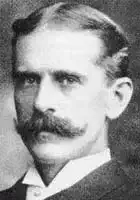
Henry Van Dyke
The Oxford Thrushes
FEBRUARY, 1917
I never thought again to hear
The Oxford thrushes singing clear,
Amid the February rain,
Their sweet, indomitable strain.
A wintry vapor lightly spreads
Among the trees, and round the beds
Where daffodil and jonquil sleep,
Only the snowdrop wakes to weep.
It is not springtime yet. Alas,
What dark, tempestuous days must pass,
Till England's trial by battle cease,
And summer comes again with peace.
The lofty halls, the tranquil towers,
Where Learning in untroubled hours
Held her high court, serene in fame,
Are lovely still, yet not the same.
The novices in fluttering gown
No longer fill the ancient town,
But fighting men in khaki drest--
And in the Schools the wounded rest.
Ah, far away, 'neath stranger skies
Full many a son of Oxford lies,
And whispers from his warrior grave,
"I died to keep the faith you gave."
The mother mourns, but does not fail,
Her courage and her love prevail
O'er sorrow, and her spirit hears
The promise of triumphant years.
Then sing, ye thrushes, in the rain
Your sweet indomitable strain.
Ye bring a word from God on high
And voices in our hearts reply.
336
John Greenleaf Whittier
To Charles Sumner
If I have seemed more prompt to censure wrong
Than praise the right; if seldom to thine ear
My voice hath mingled with the exultant cheer
Borne upon all our Northern winds along;
If I have failed to join the fickle throng
In wide-eyed wonder, that thou standest strong
In victory, surprised in thee to find
Brougham's scathing power with Canning's grace combined;
That he, for whom the ninefold Muses sang,
From their twined arms a giant athlete sprang,
Barbing the arrows of his native tongue
With the spent shafts Latona's archer flung,
To smite the Python of our land and time,
Fell as the monster born of Crissa's slime,
Like the blind bard who in Castalian springs
Tempered the steel that clove the crest of kings,
And on the shrine of England's freedom laid
The gifts of Cumve and of Delphi's' shade,-Small
need hast thou of words of praise from me.
Thou knowest my heart, dear friend, and well canst guess
That, even though silent, I have not the less
Rejoiced to see thy actual life agree
With the large future which I shaped for thee,
When, years ago, beside the summer sea,
White in the moon, we saw the long waves fall
Baffled and broken from the rocky wall,
That, to the menace of the brawling flood,
Opposed alone its massive quietude,
Calm as a fate; with not a leaf nor vine
Nor birch-spray trembling in the still moonshine,
Crowning it like God's peace. I sometimes think
That night-scene by the sea prophetical,
(For Nature speaks in symbols and in signs,
And through her pictures human fate divines),
That rock, wherefrom we saw the billows sink
In murmuring rout, uprising clear and tall
In the white light of heaven, the type of one
Who, momently by Error's host assailed,
Stands strong as Truth, in greaves of granite mailed;
And, tranquil-fronted, listening over all
The tumult, hears the angels say, Well done!
336
John Greenleaf Whittier
The Prisoners Of Naples
I HAVE been thinking of the victims bound
In Naples, dying for the lack of air
And sunshine, in their close, damp cells of pain,
Where hope is not, and innocence in vain
Appeals against the torture and the chain!
Unfortunates! whose crime it was to share
Our common love of freedom, and to dare,
In its behalf, Rome's harlot triple-crowned,
And her base pander, the most hateful thing
Who upon Christian or on Pagan ground
Makes vile the old heroic name of king.
O God most merciful! Father just and kind!
Whom man hath bound let thy right hand unbind.
Or, if thy purposes of good behind
Their ills lie hidden, let the sufferers find
Strong consolations; leave them not to doubt
Thy providential care, nor yet without
The hope which all thy attributes inspire,
That not in vain the martyr's robe of fire
Is worn, nor the sad prisoner's fretting chain;
Since all who suffer for thy truth send forth,
Electrical, with every throb of pain,
Unquenchable sparks, thy own baptismal rain
Of fire and spirit over all the earth,
Making the dead in slavery live again.
Let this great hope be with them, as they lie
Shut from the light, the greenness, and the sky;
From the cool waters and the pleasant breeze,
The smell of flowers, and shade of summer trees;
Bound with the felon lepers, whom disease
And sins abhorred make loathsome; let them share
Pellico's faith, Foresti's strength to bear
Years of unutterable torment, stern and still,
As the chained Titan victor through his will!
Comfort them with thy future; let them see
The day-dawn of Italian liberty;
For that, with all good things, is hid with Thee,
And, perfect in thy thought, awaits its time to be!
I, who have spoken for freedom at the cost
Of some weak friendships, or some paltry prize
Of name or place, and more than I have lost
Have gained in wider reach of sympathies,
And free communion with the good and wise;
May God forbid that I should ever boast
Such easy self-denial, or repine
That the strong pulse of health no more is mine;
That, overworn at noonday, I must yield
To other hands the gleaning of the field;
A tired on-looker through the day's decline.
For blest beyond deserving still, and knowing
That kindly Providence its care is showing
In the withdrawal as in the bestowing,
Scarcely I dare for more or less to pray.
Beautiful yet for me this autumn day
Melts on its sunset hills; and, far away,
For me the Ocean lifts its solemn psalm,
To me the pine-woods whisper; and for me
Yon river, winding through its vales of calm,
By greenest banks, with asters purple-starred,
And gentian bloom and golden-rod made gay,
Flows down in silent gladness to the sea,
Like a pure spirit to its great reward!
Nor lack I friends, long-tried and near and dear,
Whose love is round me like this atmosphere,
Warm, soft, and golden. For such gifts to me
What shall I render, O my God, to thee?
Let me not dwell upon my lighter share
Of pain and ill that human life must bear;
Save me from selfish pining; let my heart,
Drawn from itself in sympathy, forget
The bitter longings of a vain regret,
The anguish of its own peculiar smart.
Remembering others, as I have to-day,
In their great sorrows, let me live alway
Not for myself alone, but have a part,
Such as a frail and erring spirit may,
In love which is of Thee, and which indeed Thou art!
334

Ella Wheeler Wilcox
True Charity
I gave a beggar from my little store
Of well-earned gold. He spent the shining ore
And came again, and yet again, still cold
And hungry, as before.
I gave a thought, and through that thought of mine
He found himself, the man, supreme, divine!
Fed, clothed, and crowned with blessings manifold.
And now he begs no more.
Of well-earned gold. He spent the shining ore
And came again, and yet again, still cold
And hungry, as before.
I gave a thought, and through that thought of mine
He found himself, the man, supreme, divine!
Fed, clothed, and crowned with blessings manifold.
And now he begs no more.
333
Emily Dickinson
Remorse
Remorse -- is Memory -- awake --
Her Parties all astir --
A Presence of Departed Acts --
At window -- and at Door --
Its Past -- set down before the Soul
And lighted with a Match --
Perusal -- to facilitate --
And help Belief to stretch --
Remorse is cureless -- the Disease
Not even God -- can heal --
For 'tis His institution -- and
The Adequate of Hell --
332
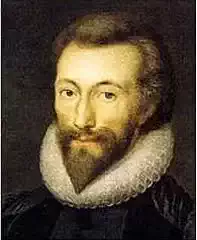
John Donne
Holy Sonnet VI: This Is My Playes Last Scene
This is my playes last scene, here heavens appoint
My pilgrimages last mile; and my race
Idly, yet quickly runne, hath this last pace,
My spans last inch, my minutes latest point,
And gluttonous death, will instantly unjoynt
My body, and soule, and I shall sleepe a space,
But my'ever-waking part shall see that face,
Whose feare already shakes my every joynt;
Then, as my soule, to'heaven her first seate, takes flight,
And earth-borne body, in the earth shall dwell,
So, fall my sinnes, that all may have their right,
To where they're bred, and would presse me, to hell.
Impute me righteous, thus purg'd of evill,
For thus I leave the world, the flesh, the devill.
333
Ella Wheeler Wilcox
The Tulip Bed At Greeley Square
You know that oasis, fresh and fair
In the city desert, as Greeley square?
That bright triangle of scented bloom
That lies surrounded by grime and gloom?
Right in the breast of the seething town
Like a gleaming gem or a wanton’s gown?
Ah, wonderful things that tulip bed
Unto my listening soul has said.
Over the rattle and roar of the street
I hear a chorus of voices sweet,
Day and night, when I pass that way,
And these are the things the voices say:
“Here, in the heart of the foolish strife,
We live a simple and natural life.
“Here, in the midst of the clash and din,
We know what it is to be calm within.
“Here, environed by sin and shame,
We do what we can with our pure white flame.
“We do what we can with our bloom and grace,
To make the city a fairer place.
“It is well to be good though the world is vile,
And so through the dust and the smoke we smile,
“We are but atoms in chaos tossed,
Yet never a purpose for truth was lost.”
Ah, many a sermon is uttered there
By the bed of blossoms in Greeley square.
And he who listens and hears aright,
Is better equipped for the world’s hard fight.
332
John Greenleaf Whittier
At Washington
WITH a cold and wintry noon-light.
On its roofs and steeples shed,
Shadows weaving with t e sunlight
From the gray sky overhead,
Broadly, vaguely, all around me, lies the half-built town outspread.
Through this broad street, restless ever,
Ebbs and flows a human tide,
Wave on wave a living river;
Wealth and fashion side by side;
Toiler, idler, slave and master, in the same quick current glide.
Underneath yon dome, whose coping
Springs above them, vast and tall,
Grave men in the dust are groping.
For the largess, base and small,
Which the hand of Power is scattering, crumbs which from its table fall.
Base of heart! They vilely barter
Honor's wealth for party's place;
Step by step on Freedom's charter
Leaving footprints of disgrace;
For to-day's poor pittance turning from the great hope of their race.
Yet, where festal lamps are throwing
Glory round the dancer's hair,
Gold-tressed, like an angel's, flowing
Backward on the sunset air;
And the low quick pulse of music beats its measure sweet and rare:
There to-night shall woman's glances,
Star-like, welcome give to them;
Fawning fools with shy advances
Seek to touch their garments' hem,
With the tongue of flattery glozing deeds which God and Truth condemn.
From this glittering lie my vision
Takes a broader, sadder range,
Full before me have arisen
Other pictures dark and strange;
From the parlor to the prison must the scene and witness change.
Hark! the heavy gate is swinging
On its hinges, harsh and slow;
One pale prison lamp is flinging
On a fearful group below
Such a light as leaves to terror whatsoe'er it does not show.
Pitying God! Is that a woman
On whose wrist the shackles clash?
Is that shriek she utters human,
Underneath the stinging lash?
Are they men whose eyes of madness from that sad procession flash?
Still the dance goes gayly onward!
What is it to Wealth and Pride
That without the stars are looking
On a scene which earth should hide?
That the slave-ship lies in waiting, rocking on Potomac's tide!
Vainly to that mean Ambition
Which, upon a rival's fall,
Winds above its old condition,
With a reptile's slimy crawl,
Shall the pleading voice of sorrow, shall the slave in anguish call.
Vainly to the child of Fashion,
Giving to ideal woe
Graceful luxury of compassion,
Shall the stricken mourner go;
Hateful seems the earnest sorrow, beautiful the hollow show!
Nay, my words are all too sweeping:
In this crowded human mart,
Feeling is not dead, but sleeping;
Man's strong will and woman's heart,
In the coming strife for Freedom, yet shall bear their generous part.
And from yonder sunny valleys,
Southward in the distance lost,
Freedom yet shall summon allies
Worthier than the North can boast,
With the Evil by their hearth-stones grappling at severer cost.
Now, the soul alone is willing.
Faint the heart and weak the knee;
And as yet no lip is thrilling
With the mighty words, 'Be Free!'
Tarrieth long the land's Good Angel, but his advent is to be!
Meanwhile, turning from the revel
To the prison-cell my sight,
For intenser hate of evil,
For a keener sense of right,
Shaking off thy dust, I thank thee, City of the Slaves, to-night!
'To thy duty now and ever!
Dream no more of rest or stay:
Give to Freedom's great endeavor
All thou art and hast to-day:'
Thus, above the city's murmur, saith a Voice, or seems to say.
Ye with heart and vision gifted
To discern and love the right,
Whose worn faces have been lifted
To the slowly-growing light,
Where from Freedom's sunrise drifted slowly back the murk of night!
Ye who through long years of trial
Still have held your purpose fast,
While a lengthening shade the dial
From the westering sunshine cast,
And of hope each hour's denial seemed an echo of the last!
O my brothers! O my sisters!
Would to God that ye were near,
Gazing with me down the vistas
Of a sorrow strange and drear;
Would to God that ye were listeners to the Voice I seem to hear!
With the storm above us driving,
With the false earth mined below,
Who shall marvel if thus striving
We have counted friend as foe;
Unto one another giving in the darkness blow for blow.
Well it may be that our natures
Have grown sterner and more hard,
And the freshness of their features
Somewhat harsh and battle-scarred,
And their harmonies of feeling overtasked and rudely jarred.
Be it so. It should not swerve us
From a purpose true and brave;
Dearer Freedom's rugged service
Than the pastime of the slave;
Better is the storm above it than the quiet of the grave.
Let us then, uniting, bury
All our idle feuds in dust,
And to future conflicts carry
Mutual faith and common trust;
Always he who most forgiveth in his brother is most just.
From the eternal shadow rounding
All our sun and starlight here,
Voices of our lost ones sounding
Bid us be of heart and cheer,
Through the silence, down the spaces, falling on the inward ear.
Know we not our dead are looking
Downward with a sad surprise,
All our strife of words rebuking
With their mild and loving eyes?
Shall we grieve the holy angels? Shall we cloud their blessed skies?
Let us draw their mantles o'er us,
Which have fallen in our way;
Let us do the work before us,
Cheerly, bravely, while we may,
Ere the long night-silence cometh, and with us it is not day!
334
Emily Dickinson
One dignity delays for all
One dignity delays for all-
One mitred Afternoon-
None can avoid this purple-
None evade this Crown!
Coach, it insures, and footmen-
Chamber, and state, and throng-
Bells, also, in the village
As we ride grand along!
What dignified Attendants!
What service when we pause!
How loyally at parting
Their hundred hats they raise!
Her pomp surpassing ermine
When simple You, and I,
Present our meek escutheon
And claim the rank to die!
334

William Shakespeare
Now, my co-mates and brothers in exile
Now, my co-mates and brothers in exile,
Hath not old customs make this life more sweet
Than that of painted pomp? Are not these woods
More free from peril than the envious court!
Here feel we not the penalty of Adam,
The seasons difference; as the icy fang
And churlish chiding of the winters wind,
Which when it bites and blows upon my body,
Even till I shrink with cold, I smile and say
This is no flattery; these are counsellors
That feelingly persuade me what I am.
Sweet are the uses of adversity;
Which, like the toad, ugly and venomous,
Wears yet a precious jewel in his head;
And this our life, exempt from public haunt,
Finds tongues in trees, books in the running brooks,
Sermons in stones, and good in everything.
I would not change it.
334
Henry Van Dyke
Hudson's Last Voyage
June 22, 1611
THE SHALLOP ON HUDSON BAY
One sail in sight upon the lonely sea
And only one, God knows! For never ship
But mine broke through the icy gates that guard
These waters, greater grown than any since
We left the shores of England. We were first,
My men, to battle in between the bergs
And floes to these wide waves. This gulf is mine;
I name it! and that flying sail is mine!
And there, hull-down below that flying sail,
The ship that staggers home is mine, mine, mine!
My ship Discoverie!
The sullen dogs
Of mutineers, the bitches' whelps that snatched
Their food and bit the hand that nourished them,
Have stolen her. You ingrate Henry Greene,
I picked you from the gutter of Houndsditch,
And paid your debts, and kept you in my house,
And brought you here to make a man of you!
You Robert Juet, ancient, crafty man,
Toothless and tremulous, how many times
Have I employed you as a master's mate
To give you bread? And you Abacuck Prickett,
You sailor-clerk, you salted puritan,
You knew the plot and silently agreed,
Salving your conscience with a pious lie!
Yes, all of you -- hounds, rebels, thieves! Bring back
My ship!
Too late, -- I rave, -- they cannot hear
My voice: and if they heard, a drunken laugh
Would be their answer; for their minds have caught
The fatal firmness of the fool's resolve,
That looks like courage but is only fear.
They'll blunder on, and lose my ship, and drown, --
Or blunder home to England and be hanged.
Their skeletons will rattle in the chains
Of some tall gibbet on the Channel cliffs,
While passing mariners look up and say:
"Those are the rotten bones of Hudson's men
"Who left their captain in the frozen North!"
O God of justice, why hast Thou ordained
Plans of the wise and actions of the brave
Dependent on the aid of fools and cowards?
Look, -- there she goes, -- her topsails in the sun
Gleam from the ragged ocean edge, and drop
Clean out of sight! So let the traitors go
Clean out of mind! We'll think of braver things!
Come closer in the boat, my friends. John King,
You take the tiller, keep her head nor'west.
You Philip Staffe, the only one who chose
Freely to share our little shallop's fate,
Rather than travel in the hell-bound ship, --
Too good an English seaman to desert
These crippled comrades, -- try to make them rest
More easy on the thwarts. And John, my son,
My little shipmate, come and lean your head
Against your father's knee. Do you recall
That April morn in Ethelburga's church,
Five years ago, when side by side we kneeled
To take the sacrament with all our men,
Before the Hopewell left St. Catherine's docks
On our first voyage? It was then I vowed
My sailor-soul and years to search the sea
Until we found the water-path that leads
From Europe into Asia.
I believe
That God has poured the ocean round His world,
Not to divide, but to unite the lands.
And all the English captains that have dared
In little ships to plough uncharted waves, --
Davis and Drake, Hawkins and Frobisher,
Raleigh and Gilbert, -- all the other names, --
Are written in the chivalry of God
As men who served His purpose. I would claim
A place among that knighthood of the sea;
And I have earned it, though my quest should fail!
For, mark me well, the honour of our life
Derives from this: to have a certain aim
Before us always, which our will must seek
Amid the peril of uncertain ways.
Then, though we miss the goal, our search is crowned
With courage, and we find along our path
A rich reward of unexpected things.
Press towards the aim: take fortune as it fares!
I know not why, but something in my heart
Has always whispered, "Westward seek your goal!"
Three times they sent me east, but still I turned
The bowsprit west, and felt among the floes
Of ruttling ice along the Gröneland coast,
And down the rugged shore of Newfoundland,
And past the rocky capes and wooded bays
Where Gosnold sailed, -- like one who feels his way
With outstretched hand across a darkened room, --
I groped among the inlets and the isles,
To find the passage to the Land of Spice.
I have not found it yet, -- but I have found
Things worth the finding!
Son, have you forgot
Those mellow autumn days, two years ago,
When first we sent our little ship Half-Moon, --
The flag of Holland floating at her peak, --
Across a sandy bar, and sounded in
Among the channels, to a goodly bay
Where all the navies of the world could ride?
A fertile island that the redmen called
Manhattan, lay above the bay: the land
Around was bountiful and friendly fair.
But never land was fair enough to hold
The seaman from the calling of the sea.
And so we bore to westward of the isle,
Along a mighty inlet, where the tide
Was troubled by a downward-flowing flood
That seemed to come from far away, -- perhaps
From some mysterious gulf of Tartary?
Inland we held our course; by palisades
Of naked rock where giants might have built
Their fortress; and by rolling hills adorned
With forests rich in timber for great ships;
Through narrows where the mountains shut us in
With frowning cliffs that seemed to bar the stream;
And then through open reaches where the banks
Sloped to the water gently, with their fields
Of corn and lentils smiling in the sun.
Ten days we voyaged through that placid land,
Until we came to shoals, and sent a boat
Upstream to find, -- what I already knew, --
We travelled on a river, not a strait.
But what a river! God has never poured
A stream more royal through a land more rich.
Even now I see it flowing in my dream,
While coming ages people it with men
Of manhood equal to the river's pride.
I see the wigwams of the redmen changed
To ample houses, and the tiny plots
Of maize and green tobacco broadened out
To prosperous farms, that spread o'er hill and dale
The many-coloured mantle of their crops;
I see the terraced vineyard on the slope
Where now the fox-grape loops its tangled vine;
And cattle feeding where the red deer roam;
And wild-bees gathered into busy hives,
To store the silver comb with golden sweet;
And all the promised land begins to flow
With milk and honey. Stately manors rise
Along the banks, and castles top the hills,
And little villages grow populous with trade,
Until the river runs as proudly as the Rhine, --
The thread that links a hundred towns and towers!
And looking deeper in my dream, I see
A mighty city covering the isle
They call Manhattan, equal in her state
To all the older capitals of earth, --
The gateway city of a golden world, --
A city girt with masts, and crowned with spires,
And swarming with a host of busy men,
While to her open door across the bay
The ships of all the nations flock like doves.
My name will be remembered there, for men
Will say, "This river and this isle were found
By Henry Hudson, on his way to seek
The Northwest Passage into Farthest Inde."
Yes! yes! I sought it then, I seek it still, --
My great adventure and my guiding star!
For look ye, friends, our voyage is not done;
We hold by hope as long as life endures!
Somewhere among these floating fields of ice,
Somewhere along this westward widening bay,
Somewhere beneath this luminous northern night,
The channel opens to the Orient, --
I know it, -- and some day a little ship
Will push her bowsprit in, and battle through!
And why not ours, -- to-morrow, -- who can tell?
The lucky chance awaits the fearless heart!
These are the longest days of all the year;
The world is round and God is everywhere,
And while our shallop floats we still can steer.
So point her up, John King, nor'west by north.
We 'l1 keep the honour of a certain aim
Amid the peril of uncertain ways,
And sail ahead, and leave the rest to God.
333
William Shakespeare
Sonnet 1: From fairest creatures we desire increase
From fairest creatures we desire increase,
That thereby beauty's rose might never die,
But as the riper should by time decease,
His tender heir might bear his memory:
But thou, contracted to thine own bright eyes,
Feed'st thy light'st flame with self-substantial fuel,
Making a famine where abundance lies,
Thyself thy foe, to thy sweet self too cruel.
Thou that art now the world's fresh ornament
And only herald to the gaudy spring,
Within thine own bud buriest thy content
And, tender churl, makest waste in niggarding.
Pity the world, or else this glutton be,
To eat the world's due, by the grave and thee.
334
John Greenleaf Whittier
Astraea
'Jove means to settle
Astraea in her seat again,
And let down his golden chain
An age of better metal.'
Ben Johnson 1615
O POET rare and old!
Thy words are prophecies;
Forward the age of gold,
The new Saturnian lies.
The universal prayer
And hope are not in vain;
Rise, brothers! and prepare
The way for Saturn's reign.
Perish shall all which takes
From labor's board and can;
Perish shall all which makes
A spaniel of the man!
Free from its bonds the mind,
The body from the rod;
Broken all chains that bind
The image of our God.
Just men no longer pine
Behind their prison-bars;
Through the rent dungeon shine
The free sun and the stars.
Earth own, at last, untrod
By sect, or caste, or clan,
The fatherhood of God,
The brotherhood of man!
Fraud fail, craft perish, forth
The money-changers driven,
And God's will done on earth,
As now in heaven;
334
James Whitcomb Riley
Man's Devotion
A lover said, 'O Maiden, love me well,
For I must go away:
And should ANOTHER ever come to tell
Of love--What WILL you say?'
And she let fall a royal robe of hair
That folded on his arm
And made a golden pillow for her there;
Her face--as bright a charm
As ever setting held in kingly crown--
Made answer with a look,
And reading it, the lover bended down,
And, trusting, 'kissed the book.'
He took a fond farewell and went away.
And slow the time went by--
So weary--dreary was it, day by day
To love, and wait, and sigh.
She kissed his pictured face sometimes, and said:
'O Lips, so cold and dumb,
I would that you would tell me, if not dead,
Why, why do you not come?'
The picture, smiling, stared her in the face
Unmoved--e'en with the touch
Of tear-drops--HERS--bejeweling the case-'
Twas plain--she loved him much.
And, thus she grew to think of him as gay
And joyous all the while,
And SHE was sorrowing--'Ah, welladay!'
But pictures ALWAYS smile!
And years--dull years--in dull monotony
As ever went and came,
Still weaving changes on unceasingly,
And changing, changed her name.
Was she untrue?--She oftentimes was glad
And happy as a wife;
But ONE remembrance oftentimes made sad
Her matrimonial life.--
Though its few years were hardly noted, when
Again her path was strown
With thorns--the roses swept away again,
And she again alone!
And then--alas! ah THEN!--her lover came:
'I come to claim you now-
My Darling, for I know you are the same,
And I have kept my vow
Through these long, long, long years, and now no more
Shall we asundered be!'
She staggered back and, sinking to the floor,
Cried in her agony:
'I have been false!' she moaned, '_I_ am not true--
I am not worthy now,
Nor ever can I be a wife to YOU--
For I have broke my vow!'
And as she kneeled there, sobbing at his feet,
He calmly spoke--no sign
Betrayed his inward agony--'I count you meet
To be a wife of mine!'
And raised her up forgiven, though untrue;
As fond he gazed on her,
She sighed,--'SO HAPPY!' And she never knew
HE was a WIDOWER.
335

George Herbert
Love (III)
Love bade me welcome: yet my soul drew back,
Guilty of dust and sin.
But quick-ey'd Love, observing me grow slack,
From my first entrance in,
Drew nearer to me, sweetly questioning,
If I lack'd anything.
A guest, I answer'd, worthy to be here:
Love said, You shall be he.
I the unkind, ungrateful? Ah my dear,
I cannot look on thee.
Love took my hand, and smiling did reply,
Who made the eyes but I?
Truth Lord, but I have marr'd them: let my shame
Go where it doth deserve.
And know you not, says Love, who bore the blame?
My dear, then I will serve.
You must sit down, says Love, and tast me meat:
So I did sit and eat.
331
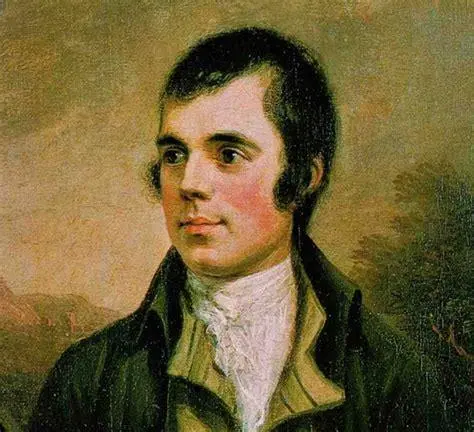
Robert Burns
Address to the Unco Guid
My Son, these maxims make a rule,
An' lump them aye thegither;
The Rigid Righteous is a fool,
The Rigid Wise anither:
The cleanest corn that ere was dight
May hae some pyles o' caff in;
So ne'er a fellow creature slight
For random fits o' daffin.
Solomon.--Eccles. ch. vii. verse
O ye wha are sae guid yoursel',
Sae pious and sae holy,
Ye've nought to do but mark and tell
Your neibours' fauts and folly!
Whase life is like a weel-gaun mill,
Supplied wi' store o' water;
The heapèd happer's ebbing still,
An' still the clap plays clatter.
Hear me, ye venerable core,
As counsel for poor mortals
That frequent pass douce Wisdom's door
For glaikit Folly's portals:
I, for their thoughtless, careless sakes,
Would here propone defences--
Their donsie tricks, their black mistakes,
Their failings and mischances.
Ye see your state wi' theirs compared,
And shudder at the niffer;
But cast a moment's fair regard,
What makes the mighty differ?
Discount what scant occassion gave,
That purity ye pride in;
And (what's aft mair than a' the lave)
Your better art o' hidin.
Think, when your castigated pulse
Gies now and then a wallop,
What ragings must his veins convulse,
That still eternal gallop!
Wi' wind and tide fair i' your tail,
Right on ye scud your sea-way;
But in the teeth o' baith to sail,
It maks a unco lee-way.
See Social Life and Glee sit down,
All joyous and unthinking,
Till, quite transmugrified, they're grown
Debauchery and Drinking:
O would they stay to calculate
Th' external consequences;
Or your more dreaded hell to state
Damnation of expenses!
Ye high, exalted, virtuous dames,
Tied up in godly laces,
Before ye gie poor Frailty names,
Suppose a change o' cases;
A dear-lov'd lad, convenience snug,
A treach'rous inclination--
But let me whisper i' your lug,
Ye're aiblins nae temptation.
Then gently scan your brother man,
Still gentler sister woman;
Tho' they may gang a kennin wrang,
To step aside is human;
One point must still be greatly dark,--
The moving Why they do it;
And just as lamely can ye mark,
How far perhaps they rue it.
Who made the heart, 'tis He alone
Decidedly can try us;
He knows each chord, its various tone,
Each spring, its various bias:
Then at the balance let's be mute,
We never can adjust it;
What's done we partly may compute,
But know not what's resisted.
332
William Butler Yeats
Veronica's Napkin
THE Heavenly Circuit; Berenice's Hair;
Tent-pole of Eden; the tent's drapery;
Symbolical glory of thc earth and air!
The Father and His angelic hierarchy
That made the magnitude and glory there
Stood in the circuit of a needle's eye.
Some found a different pole, and where it stood
A pattern on a napkin dipped in blood.
Tent-pole of Eden; the tent's drapery;
Symbolical glory of thc earth and air!
The Father and His angelic hierarchy
That made the magnitude and glory there
Stood in the circuit of a needle's eye.
Some found a different pole, and where it stood
A pattern on a napkin dipped in blood.
331