
Ethics and Morality

Emily Dickinson
A Secret told
A Secret told-
Ceases to be a Secret-then-
A Secret-kept
That-
can appal but One-
Better of it-continual be afraid-
Than it-
And Whom you told it to-beside-
Ceases to be a Secret-then-
A Secret-kept
That-
can appal but One-
Better of it-continual be afraid-
Than it-
And Whom you told it to-beside-
342
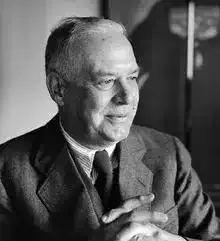
Wallace Stevens
A High-Toned Old Christian Woman
Poetry is the supreme fiction, madame.
Take the moral law and make a nave of it
And from the nave build haunted heaven. Thus,
The conscience is converted into palms,
Like windy citherns hankering for hymns.
We agree in principle. That's clear. But take
The opposing law and make a peristyle,
And from the peristyle project a masque
Beyond the planets. Thus, our bawdiness,
Unpurged by epitaph, indulged at last,
Is equally converted into palms,
Squiggling like saxophones. And palm for palm,
Madame, we are where we began. Allow,
Therefore, that in the planetary scene
Your disaffected flagellants, well-stuffed,
Smacking their muzzy bellies in parade,
Proud of such novelties of the sublime,
Such tink and tank and tunk-a-tunk-tunk,
May, merely may, madame, whip from themselves
A jovial hullabaloo among the spheres.
This will make widows wince. But fictive things
Wink as they will. Wink most when widows wince.
343

John Donne
Holy Sonnet II: As Due By Many Titles I Resign
As due by many titles I resign
My self to Thee, O God; first I was made
By Thee, and for Thee, and when I was decayed
Thy blood bought that, the which before was Thine;
I am Thy son, made with Thy Self to shine,
Thy servant, whose pains Thou hast still repaid,
Thy sheep, thine image, and, till I betrayed
My self, a temple of Thy Spirit divine;
Why doth the devil then usurp on me?
Why doth he steal, nay ravish that's thy right?
Except thou rise and for thine own work fight,
Oh I shall soon despair, when I do see
That thou lov'st mankind well, yet wilt not choose me,
And Satan hates me, yet is loth to lose me.
343

John Greenleaf Whittier
The Freed Islands
A FEW brief years have passed away
Since Britain drove her million slaves
Beneath the tropic's fiery ray:
God willed their freedom; and to-day
Life blooms above those island graves!
He spoke! across the Carib Sea,
We heard the clash of breaking chains,
And felt the heart-throb of the free,
The first, strong pulse of liberty
Which thrilled along the bondman's veins.
Though long delayed, and far, and slow,
The Briton's triumph shall be ours:
Wears slavery here a prouder brow
Than that which twelve short years ago
Scowled darkly from her island bowers?
Mighty alike for good or ill
With mother-land, we fully share
The Saxon strength, the nerve of steel,
The tireless energy of will,
The power to do, the pride to dare.
What she has done can we not do?
Our hour and men are both at hand;
The blast which Freedom's angel blew
O'er her green islands, echoes through
Each valley of our forest land.
Hear it, old Europe! we have sworn
The death of slavery. When it falls,
Look to your vassals in their turn,
Your poor dumb millions, crushed and worn,
Your prisons and your palace walls!
O kingly mockers! scoffing show
What deeds in Freedom's name we do;
Yet know that every taunt ye throw
Across the waters, goads our slow
Progression towards the right and true.
Not always shall your outraged poor,
Appalled by democratic crime,
Grind as their fathers ground before;
The hour which sees our prison door
Swing wide shall be their triumph time.
On then, my brothers! every blow
Ye deal is felt the wide earth through;
Whatever here uplifts the low
Or humbles Freedom's hateful foe,
Blesses the Old World through the New.
Take heart! The promised hour draws near;
I hear the downward beat of wings,
And Freedom's trumpet sounding clear:
'Joy to the people! woe and fear
To new-world tyrants, old-world kings!'
343
John Greenleaf Whittier
Burning Drift-Wood
Before my drift-wood fire I sit,
And see, with every waif I burn,
Old dreams and fancies coloring it,
And folly's unlaid ghosts return.
O ships of mine, whose swift keels cleft
The enchanted sea on which they sailed,
Are these poor fragments only left
Of vain desires and hopes that failed?
Did I not watch from them the light
Of sunset on my towers in Spain,
And see, far off, uploom in sight
The Fortunate Isles I might not gain?
Did sudden lift of fog reveal
Arcadia's vales of song and spring,
And did I pass, with grazing keel,
The rocks whereon the sirens sing?
Have I not drifted hard upon
The unmapped regions lost to man,
The cloud-pitched tents of Prester John,
The palace domes of Kubla Khan?
Did land winds blow from jasmine flowers,
Where Youth the ageless Fountain fills?
Did Love make sign from rose blown bowers,
And gold from Eldorado's hills?
Alas! the gallant ships, that sailed
On blind Adventure's errand sent,
Howe'er they laid their courses, failed
To reach the haven of Content.
And of my ventures, those alone
Which Love had freighted, safely sped,
Seeking a good beyond my own,
By clear-eyed Duty piloted.
O mariners, hoping still to meet
The luck Arabian voyagers met,
And find in Bagdad's moonlit street,
Haroun al Raschid walking yet,
Take with you, on your Sea of Dreams,
The fair, fond fancies dear to youth.
I turn from all that only seems,
And seek the sober grounds of truth.
What matter that it is not May,
That birds have flown, and trees are bare,
That darker grows the shortening day,
And colder blows the wintry air!
The wrecks of passion and desire,
The castles I no more rebuild,
May fitly feed my drift-wood fire,
And warm the hands that age has chilled.
Whatever perished with my ships,
I only know the best remains;
A song of praise is on my lips
For losses which are now my gains.
Heap high my hearth! No worth is lost;
No wisdom with the folly dies.
Burn on, poor shreds, your holocaust
Shall be my evening sacrifice!
Far more than all I dared to dream,
Unsought before my door I see;
On wings of fire and steeds of steam
The world's great wonders come to me,
And holier signs, unmarked before,
Of Love to seek and Power to save, -The
righting of the wronged and poor,
The man evolving from the slave;
And life, no longer chance or fate,
Safe in the gracious Fatherhood.
I fold o'er-wearied hands and wait,
In full assurance of the good.
And well the waiting time must be,
Though brief or long its granted days,
If Faith and Hope and Charity
Sit by my evening hearth-fire's blaze.
And with them, friends whom Heaven has spared,
Whose love my heart has comforted,
And, sharing all my joys, has shared
My tender memories of the dead, -
Dear souls who left us lonely here,
Bound on their last, long voyage, to whom
We, day by day, are drawing near,
Where every bark has sailing room.
I know the solemn monotone
Of waters calling unto me;
I know from whence the airs have blown
That whisper of the Eternal Sea.
As low my fires of drift-wood burn,
I hear that sea's deep sounds increase,
And, fair in sunset light, discern
Its mirage-lifted Isles of Peace.
342

William Shakespeare
Sonnet 151: Love is too young to know what conscience is
Love is too young to know what conscience is;
Yet who knows not conscience is born of love?
Then, gentle cheater, urge not my amiss,
Lest guilty of my faults thy sweet self prove.
For thou betraying me, I do betray
My nobler part to my gross body's treason;
My soul doth tell my body that he may
Triumph in love; flesh stays no farther reason,
But, rising at thy name, doth point out thee
As his triumphant prize. Proud of this pride,
He is contented thy poor drudge to be,
To stand in thy affairs, fall by thy side.
No want of conscience hold it that I call,
Her "love" for whose dear love I rise and fall.
342

Nazim Hikmet
Last Will And Testament
Comrades, if I don't live to see the day
-- I mean,if I die before freedom comes --
take me away
and bury me in a village cemetery in Anatolia.
The worker Osman whom Hassan Bey ordered shot
can lie on one side of me, and on the other side
the martyr Aysha, who gave birth in the rye
and died inside of forty days.
Tractors and songs can pass below the cemetery --
in the dawn light, new people, the smell of burnt gasoline,
fields held in common, water in canals,
no drought or fear of the police.
Of course, we won't hear those songs:
the dead lie stretched out underground
and rot like black branches,
deaf, dumb, and blind under the earth.
But, I sang those songs
before they were written,
I smelled the burnt gasoline
before the blueprints for the tractors were drawn.
As for my neighbors,
the worker Osman and the martyr Aysha,
they felt the great longing while alive,
maybe without even knowing it.
Comrades, if I die before that day, I mean
-- and it's looking more and more likely --
bury me in a village cemetery in Anatolia,
and if there's one handy,
a plane tree could stand at my head,
I wouldn't need a stone or anything.
Moscow, Barviha Hospital
Trans. by Randy Blasing and Mutlu Konuk ()
341

Edna St. Vincent Millay
We Talk of Taxes...
We talk of taxes, and I call you friend;
Well, such you are, -- but well enough we know
How thick about us root, how rankly grow
Those subtle weeds no man has need to tend,
That flourish through neglect, and soon must send
Perfume too sweet upon us and overthrow
Our steady senses; how such matters go
We are aware, and how such matters end.
Yet shall be told no meagre passion here;
With lovers such as we forevermore
Isolde drinks the draught, and Guinevere
Receives the Table's ruin through her door,
Francesca, with the loud surf at her ear,
Lets fall the coloured book upon the floor.
343
Henry Van Dyke
A Prayer for a Mother's Birthday
Lord Jesus, Thou hast known
A mother's love and tender care:
And Thou wilt hear, while for my own
Mother most dear I make this birthday prayer.
Protect her life, I pray,
Who gave the gift of life to me;
And may she know, from day to day,
The deepening glow of Life that comes from Thee.
As once upon her breast
Fearless and well content I lay,
So let her heart, on Thee at rest,
Feel fears depart and troubles fade away.
Her every wish fulfill;
And even if Thou must refuse
In anything, let Thy wise will
A comfort bring such as kind mothers use.
Ah, hold her by the hand,
As once her hand held mine;
And though she may not understand
Life's winding way, lead her in peace divine.
I cannot pay my debt
For all the love that she has given;
But Thou, love's Lord, wilt not forget
Her due reward,--bless her in earth and heaven.
343
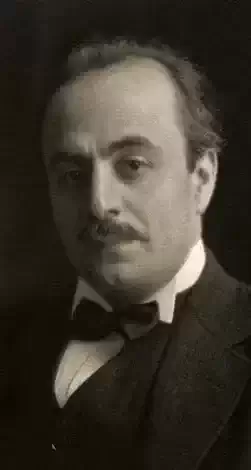
Khalil Gibran
Good and Evil XXII
And one of the elders of the city said, "Speak to us of Good and Evil."
And he answered:
Of the good in you I can speak, but not of the evil.
For what is evil but good tortured by its own hunger and thirst?
Verily when good is hungry it seeks food even in dark caves, and when it thirsts, it
drinks even of dead waters.
You are good when you are one with yourself.
Yet when you are not one with yourself you are not evil.
For a divided house is not a den of thieves; it is only a divided house.
And a ship without rudder may wander aimlessly among perilous isles yet sink not to
the bottom.
You are good when you strive to give of yourself.
Yet you are not evil when you seek gain for yourself.
For when you strive for gain you are but a root that clings to the earth and sucks at her
breast.
Surely the fruit cannot say to the root, "Be like me, ripe and full and ever giving of
your abundance."
For to the fruit giving is a need, as receiving is a need to the root.
You are good when you are fully awake in your speech,
Yet you are not evil when you sleep while your tongue staggers without purpose.
And even stumbling speech may strengthen a weak tongue.
You are good when you walk to your goal firmly and with bold steps.
Yet you are not evil when you go thither limping.
Even those who limp go not backward.
But you who are strong and swift, see that you do not limp before the lame, deeming it
kindness.
You are good in countless ways, and you are not evil when you are not good,
You are only loitering and sluggard.
Pity that the stags cannot teach swiftness to the turtles.
In your longing for your giant self lies your goodness: and that longing is in all of you.
But in some of you that longing is a torrent rushing with might to the sea, carrying the
secrets of the hillsides and the songs of the forest.
And in others it is a flat stream that loses itself in angles and bends and lingers before
it reaches the shore.
But let not him who longs much say to him who longs little, "Wherefore are you slow
and halting?"
For the truly good ask not the naked, "Where is your garment?" nor the houseless,
"What has befallen your house?"
342
Henry Van Dyke
The Proud Lady
When Stiivoren town was in its prime
And queened the Zuyder Zee,
Its ships went out to every clime
With costly merchantry.
A lady dwelt in that rich town,
The fairest in all the land;
She walked abroad in a velvet gown,
With many rings on her hand.
Her hair was bright as the beaten gold,
Her lips as coral red,
Her roving eyes were blue and bold,
And her heart with pride was fed.
For she was proud of her father's ships,
As she watched them gayly pass;
And pride looked out of her eyes and lips
When she saw herself in the glass.
"Now come," she said to the captains ten,
Who were ready to put to sea,
"Ye are all my men and my father's men,
And what will ye do for me?"
"Go north and south, go east and west,
And get me gifts," she said.
"And he who bringeth me home the best,
With that man will I wed."
So they all fared forth, and sought with care
In many a famous mart,
For satins and silks and jewels rare,
To win that lady's heart.
She looked at them all with never a thought,
And careless put them by;
"I am not fain of the things ye brought,
Enough of these have I."
The last that came was the head of the fleet,
His name was Jan Borel;
He bent his knee at the lady's feet,--
In truth he loved her well.
"I've brought thee home the best i' the world,
A shipful of Danzig corn!"
She stared at him long; her red lips curled,
Her blue eyes filled with scorn.
"Now out on thee, thou feckless kerl,
A loon thou art," she said.
"Am I a starving beggar girl?
Shall I ever lack for bread?"
"Go empty all thy sacks of grain
Into the nearest sea,
And never show thy face again
To make a mock of me."
Then Jan Borel, he hoisted sail,
And out to sea he bore;
He passed the Helder in a gale
And came again no more.
But the grains of corn went drifting down
Like devil-scattered seed,
To sow the harbor of the town
With a wicked growth of weed.
The roots were thick and the silt and sand
Were gathered day by day,
Till not a furlong out from land
A shoal had barred the way.
Then Stavoren town saw evil years,
No ships could out or in,
The boats lay rotting at the piers,
And the mouldy grain in the bin.
The grass-grown streets were all forlorn,
The town in ruin stood,
The lady's velvet gown was torn,
Her rings were sold for food.
Her father had perished long ago,
But the lady held her pride,
She walked with a scornful step and slow,
Till at last in her rags she died.
Yet still on the crumbling piers of the town,
When the midnight moon shines free,
woman walks in a velvet gown
And scatters corn in the sea.
340
John Greenleaf Whittier
Requital
As Islam's Prophet, when his last day drew
Nigh to its close, besought all men to say
Whom he had wronged, to whom he then should pay
A debt forgotten, or for pardon sue,
And, through the silence of his weeping friends,
A strange voice cried: 'Thou owest me a debt,'
'Allah be praised!' he answered. 'Even yet
He gives me power to make to thee amends.
O friend! I thank thee for thy timely word.'
So runs the tale. Its lesson all may heed,
For all have sinned in thought, or word, or deed,
Or, like the Prophet, through neglect have erred.
All need forgiveness, all have debts to pay
Ere the night cometh, while it still is day.
340

John Clare
The Shepherds Calendar - February - A Thaw
The snow is gone from cottage tops
The thatch moss glows in brighter green
And eves in quick succession drops
Where grinning ides once hath been
Pit patting Wi a pleasant noise
In tubs set by the cottage door
And ducks and geese wi happy joys
Douse in the yard pond brimming oer
The sun peeps thro the window pane
Which childern mark wi laughing eye
And in the wet street steal again
To tell each other spring is nigh
And as young hope the past recalls
In playing groups will often draw
Building beside the sunny walls
Their spring-play-huts of sticks or straw
And oft in pleasures dreams they hie
Round homsteads by the village side
Scratting the hedgrow mosses bye
Where painted pooty shells abide
Mistaking oft the ivy spray
For leaves that come wi budding spring
And wondering in their search for play
Why birds delay to build and sing
The milkmaid singing leaves her bed
As glad as happy thoughts can be
While magpies chatter oer her head
As jocund in the change as she
Her cows around the closes stray
Nor lingering wait the foddering boy
Tossing the molehills in their play
And staring round in frolic joy
Ploughmen go whistling to their toils
And yoke again the rested plough
And mingling oer the mellow soils
Boys' shouts and whips are noising now
The shepherd now is often seen
By warm banks oer his work to bend
Or oer a gate or stile to lean
Chattering to a passing friend
Odd hive bees fancying winter oer
And dreaming in their combs of spring
Creeps on the slab beside their door
And strokes its legs upon its wing
While wild ones half asleep are humming
Round snowdrop bells a feeble note
And pigions coo of summer coming
Picking their feathers on the cote
The barking dogs by lane and wood
Drive sheep afield from foddering ground
And eccho in her summer mood
Briskly mocks the cheery sound
The flocks as from a prison broke
Shake their wet fleeces in the sun
While following fast a misty smoke
Reeks from the moist grass as they run
Nor more behind his masters heels
The dog creeps oer his winter pace
But cocks his tail and oer the fields
Runs many a wild and random chase
Following in spite of chiding calls
The startld cat wi harmless glee
Scaring her up the weed green walls
Or mossy mottld apple tree
As crows from morning perches flye
He barks and follows them in vain
Een larks will catch his nimble eye
And off he starts and barks again
Wi breathless haste and blinded guess
Oft following where the hare hath gone
Forgetting in his joys excess
His frolic puppy days are done
The gossips saunter in the sun
As at the spring from door to door
Of matters in the village done
And secret newsings mutterd oer
Young girls when they each other meet
Will stand their tales of love to tell
While going on errands down the street
Or fetching water from the well
A calm of pleasure listens round
And almost whispers winter bye
While fancy dreams of summer sounds
And quiet rapture fills the eye
The sun beams on the hedges lye
The south wind murmurs summer soft
And maids hang out white cloaths to dry
Around the eldern skirted croft
Each barns green thatch reeks in the sun
Its mate the happy sparrow calls
And as nest building spring begun
Peeps in the holes about the walls
The wren a sunny side the stack
Wi short tail ever on the strunt
Cockd gadding up above his back
Again for dancing gnats will hunt
The gladdend swine bolt from the sty
And round the yard in freedom run
Or stretching in their slumbers lye
Beside the cottage in the sun
The young horse whinneys to its mate
And sickens from the threshers door
Rubbing the straw yards banded gate
Longing for freedom on the moor
Hens leave their roosts wi cackling calls
To see the barn door free from snow
And cocks flye up the mossy walls
To clap their spangld wings and crow
About the steeples sunny top
The jackdaw flocks resemble spring
And in the stone archd windows pop
Wi summer noise and wanton wing
The small birds think their wants are oer
To see the snow hills fret again
And from the barns chaff litterd door
Betake them to the greening plain
The woodmans robin startles coy
Nor longer at his elbow comes
To peck wi hungers eager joy
Mong mossy stulps the litterd crumbs
Neath hedge and walls that screen the wind
The gnats for play will Hock together
And een poor flyes odd hopes will find
To venture in the mocking weather
From out their hiding holes again
Wi feeble pace they often creep
Along the sun warmd window pane
Like dreaming things that walk in sleep
The mavis thrush wi wild delight
Upon the orchards dripping tree
Mutters to see the day so bright
Spring scraps of young hopes poesy
And oft dame stops her burring wheel
To hear the robins note once more
That tutles while he pecks his meal
From sweet briar hips beside the door
The hedghog from its hollow root
Sees the wood moss clear of snow
And hunts each hedge for fallen fruit
Crab hip and winter bitten sloe
And oft when checkd by sudden fears
As shepherd dog his haunt espies
He rolls up in a ball of spears
And all his barking rage defies
Thus nature of the spring will dream
While south winds thaw but soon again
Frost breaths upon the stiffening stream
And numbs it into ice-the plain
Soon wears its merry garb of white
And icicles that fret at noon
Will eke their icy tails at night
Beneath the chilly stars and moon
Nature soon sickens of her joys
And all is sad and dumb again
Save merry shouts of sliding boys
About the frozen furrowd plain
The foddering boy forgets his song
And silent goes wi folded arms
And croodling shepherds bend along
Crouching to the whizzing storms
339
John Greenleaf Whittier
The Pastoral Letter
So, this is all, — the utmost reach
Of priestly power the mind to fetter!
When laymen think, when women preach,
A war of words, a 'Pastoral Letter!'
Now, shame upon ye, parish Popes!
Was it thus with those, your predecessors,
Who sealed with racks, and fire, and ropes
Their loving-kindness to transgressors?
A 'Pastoral Letter,' grave and dull;
Alas! in hoof and horns and features,
How different is your Brookfield bull
From him who bellows from St. Peter's!
Your pastoral rights and powers from harm,
Think ye, can words alone preserve them?
Your wiser fathers taught the arm
And sword of temporal power to serve them.
Oh, glorious days, when Church and State
Were wedded by your spiritual fathers!
And on submissive shoulders sat
Your Wilsons and your Cotton Mathers,
No vile 'itinerant' then could mar
The beauty of your tranquil Zion,
But at his peril of the scar
Of hangman's whip and branding-iron.
Then, wholesome laws relieved the Church
Of heretic and mischief-maker,
And priest and bailiff joined in search,
By turns, of Papist, witch, and Quaker!
The stocks were at each church's door,
The gallows stood on Boston Common,
A Papist's ears the pillory bore, —
The gallows-rope, a Quaker woman!
Your fathers dealt not as ye deal
With 'non-professing' frantic teachers;
They bored the tongue with red-hot steel,
And flayed the backs of 'female preachers.'
Old Hampton, had her fields a tongue,
And Salem's streets could tell their story,
Of fainting woman dragged along,
Gashed by the whip accursed and gory!
And will ye ask me, why this taunt
Of memories sacred from the scorner?
And why with reckless hand I plant
A nettle on the graves ye honor?
Not to reproach New England's dead
This record from the past I summon,
Of manhood to the scaffold led,
And suffering and heroic woman.
No, for yourselves alone, I turn
The pages of intolerance over,
That, in their spirit, dark and stern,
Ye haply may your own discover!
For, if ye claim the 'pastoral right'
To silence Freedom's voice of warning,
And from your precincts shut the light
Of Freedom's day around ye dawning;
If when an earthquake voice of power
And signs in earth and heaven are showing
That forth, in its appointed hour,
The Spirit of the Lord is going!
And, with that Spirit, Freedom's light
On kindred, tongue, and people breaking,
Whose slumbering millions, at the sight,
In glory and in strength are waking!
When for the sighing of the poor,
And for the needy, God hath risen,
And chains are breaking, and a door
Is opening for the souls in prison!
If then ye would, with puny hands,
Arrest the very work of Heaven,
And bind anew the evil bands
Which God's right arm of power hath riven;
What marvel that, in many a mind,
Those darker deeds of bigot madness
Are closely with your own combined,
Yet 'less in anger than in sadness '?
What marvel, if the people learn
To claim the right of free opinion?
What marvel, if at times they spurn
The ancient yoke of your dominion?
A glorious remnant linger yet,
Whose lips are wet at Freedom's fountains,
The coming of whose welcome feet
Is beautiful upon our mountains!
Men, who the gospel tidings bring
Of Liberty and Love forever,
Whose joy is an abiding spring,
Whose peace is as a gentle river!
But ye, who scorn the thrilling tale
Of Carolina's high-souled daughters,
Which echoes here the mournful wail
Of sorrow from Edisto's waters,
Close while ye may the public ear,
With malice vex, with slander wound them,
The pure and good shall throng to hear,
And tried and manly hearts surround them.
Oh, ever may the power which led
Their way to such a fiery trial,
And strengthened womanhood to tread
The wine-press of such self-denial,
Be round them in an evil land,
With wisdom and with strength from Heaven,
With Miriam's voice, and Judith's hand,
And Deborah's song, for triumph given!
And what are ye who strive with God
Against the ark of His salvation,
Moved by the breath of prayer abroad,
With blessings for a dying nation?
What, but the stubble and the hay
To perish, even as flax consuming,
With all that bars His glorious way,
Before the brightness of His coming?
And thou, sad Angel, who so long
Hast waited for the glorious token,
That Earth from all her bonds of wrong
To liberty and light has broken, —
Angel of Freedom! soon to thee
The sounding trumpet shall be given,
And over Earth's full jubilee
Shall deeper joy be felt in Heaven!
338

Carl Sandburg
The Hangman at Home
What does a hangman think about
When he goes home at night from work?
When he sits down with his wife and
Children for a cup of coffee and a
Plate of ham and eggs, do they ask
Him if it was a good day's work
And everything went well or do they
Stay off some topics and kill about
The weather, baseball, politics
And the comic strips in the papers
And the movies? Do they look at his
Hands when he reaches for the coffee
Or the ham and eggs? If the little
Ones say, Daddy, play horse, here's
A rope--does he answer like a joke:
I seen enough rope for today?
Or does his face light up like a
Bonfire of joy and does he say:
It's a good and dandy world we live
'In. And if a white face moon looks
In through a window where a baby girl
Sleeps and the moon-gleams mix with
Baby ears and baby hair--the hangman--
How does he act then? It must be easy
For him. Anything is easy for a hangman,
I guess.
340
Emily Dickinson
He told a homely tale
He told a homely tale
And spotted it with tears-
Upon his infant face was set
The Cicatrice of years-
All crumpled was the cheek
No other kiss had known
Than flake of snow, divided with
The Redbreast of the Barn-
If Mother-in the Grave-
Or Father-on the Sea-
Or Father in the Firmament-
Or Brethren, had he-
If Commonwealth below,
Or Commonwealth above
Have missed a Barefoot CitizenI've
ransomed it-alive-
340

Robert W. Service
The Song Of The Wage-Slave
When the long, long day is over, and the Big Boss gives me my pay,
I hope that it won't be hell-fire, as some of the parsons say.
And I hope that it won't be heaven, with some of the parsons I've met --
All I want is just quiet, just to rest and forget.
Look at my face, toil-furrowed; look at my calloused hands;
Master, I've done Thy bidding, wrought in Thy many lands --
Wrought for the little masters, big-bellied they be, and rich;
I've done their desire for a daily hire, and I die like a dog in a ditch.
I have used the strength Thou hast given, Thou knowest I did not shirk;
Threescore years of labor -- Thine be the long day's work.
And now, Big Master, I'm broken and bent and twisted and scarred,
But I've held my job, and Thou knowest, and Thou will not judge me hard.
Thou knowest my sins are many, and often I've played the fool --
Whiskey and cards and women, they made me the devil's tool.
I was just like a child with money; I flung it away with a curse,
Feasting a fawning parasite, or glutting a harlot's purse;
Then back to the woods repentant, back to the mill or the mine,
I, the worker of workers, everything in my line.
Everything hard but headwork (I'd no more brains than a kid),
A brute with brute strength to labor, doing as I was bid;
Living in camps with men-folk, a lonely and loveless life;
Never knew kiss of sweetheart, never caress of wife.
A brute with brute strength to labor, and they were so far above --
Yet I'd gladly have gone to the gallows for one little look of Love.
I, with the strength of two men, savage and shy and wild --
Yet how I'd ha' treasured a woman, and the sweet, warm kiss of a child!
Well, 'tis Thy world, and Thou knowest. I blaspheme and my ways be rude;
But I've lived my life as I found it, and I've done my best to be good;
I, the primitive toiler, half naked and grimed to the eyes,
Sweating it deep in their ditches, swining it stark in their styes;
Hurling down forests before me, spanning tumultuous streams;
Down in the ditch building o'er me palaces fairer than dreams;
Boring the rock to the ore-bed, driving the road through the fen,
Resolute, dumb, uncomplaining, a man in a world of men.
Master, I've filled my contract, wrought in Thy many lands;
Not by my sins wilt Thou judge me, but by the work of my hands.
Master, I've done Thy bidding, and the light is low in the west,
And the long, long shift is over . . . Master, I've earned it -- Rest.
341

William Butler Yeats
The Results Of Thought
ACQUAINTANCE; companion;
One dear brilliant woman;
The best-endowed, the elect,
All by their youth undone,
All, all, by that inhuman
Bitter glory wrecked.
But I have straightened out
Ruin, wreck and wrack;
I toiled long years and at length
Came to so deep a thought
I can summon back
All their wholesome strength.
What images are these
That turn dull-eyed away,
Or Shift Time's filthy load,
Straighten aged knees,
Hesitate or stay?
What heads shake or nod?
339
John Donne
Satire II
Sir; though (I thanke God for it) I do hate
Perfectly all this towne, yet there's one state
In all ill things so excellently best,
That hate, towards them, breeds pitty towards the rest.
Though Poetry indeed be such a sinne
As I thinke that brings dearths, and Spaniards in,
Though like the Pestilence and old fashion'd love,
Ridlingly it catch men; and doth remove
Never, till it be sterv'd out; yet their state
Is poore, disarm'd, like Papists, not worth hate.
One,(like a wretch, which at Barre judg'd as dead,
Yet prompts him which stands next, and cannot reade,
And saves his life)gives ideot actors meanes
(Starving himselfe)to live by'his labor'd sceanes;
As in some Organ, Puppits dance above
And bellows pant below, which them do move.
One would move Love by rimes; but witchcrafts charms
Bring not now their old feares, nor their old harmes:
Rammes, and slings now are seely battery,
Pistolets are the best Artillerie.
And they who write to Lords, rewards to get,
Are they not like singers at doores for meat?
And they who write, because all write, have still
That excuse for writing, and for writing ill.
But hee is worst, who (beggarly) doth chaw
Others wits fruits, and in his ravenous maw
Rankly digested, doth those things out-spue,
As his owne things; 'and they are his owne, 'tis true,
For if one eate my meate, though it be knowne
The meate was mine, th'excrement is his owne.
But these do mee no harme, nor they which use
To out-doe Dildoes, and out-usure Jewes;
To'out-drinke the sea, to'out-sweare the Letanie;
Who with sinnes all kindes as familiar bee
As Confessors; and for whose sinfull sake
Schoolemen new tenements in hell must make:
Whose strange sinnes, Canonists could hardly tell
In which Commandements large receit they dwell.
But these punish themselves; the insolence
Of Coscus onely breeds my just offence,
Whom time (which rots all, and makes botches poxe,
And plodding on, must make a calfe an oxe)
Hath made a Lawyer, which was (alas) of late
But a scarce Poet; jollier of this state,
Then are new benefic'd ministers, he throwes
Like nets, or lime-twigs, wheresoere he goes,
His title'of Barrister, on every wench,
And wooes in language of the Pleas, and Bench:
'A motion, Lady.' 'Speake Coscus.' 'I'have beene
In love, ever since tricesimo' of the Queene,
Continuall claimes I'have made, injunctions got
To stay my rivals suit, that hee should not
Proceed.' 'Spare mee.' 'In Hillary terme I went,
You said, If I returne next size in Lent,
I should be in remitter of your grace;
In th'interim my letters should take place
Of affidavits--': words, words, which would teare
The tender labyrinth of a soft maids eare,
More, more, then ten Sclavonians scolding, more
Then when winds in our ruin'd Abbeyes rore.
When sicke with Poetrie,'and possest with muse
Thou wast, and mad, I hop'd; but men which chuse
Law practise for meere gaine, bold soule, repute
Worse then imbrothel'd strumpets prostitute.
Now like an owlelike watchman, hee must walke
His hand still at a bill, now he must talke
Idly, like prisoners, which whole months will sweare
That onely suretiship hath brought them there,
And to'every suitor lye in every thing,
Like a Kings favorite, yea like a King;
Like a wedge in a blocke, wring to the barre,
Bearing like Asses, and more shameless farre
Then carted whores, lye, to the grave Judge; for
Bastardy'abounds not in Kings titles, nor
Symonie'and Sodomy in Churchmens lives,
As these things do in him; by these he thrives.
Shortly ('as the sea) hee'will compasse all our land;
From Scots, to Wight; from Mount, to Dover strand.
And spying heires melting with luxurie,
Satan will not joy at their sinnes, as hee.
For as a thrifty wench scrapes kitching-stuffe,
And barrelling the droppings, and the snuffe,
Of wasting candles, which in thirty yeare
(Relique-like kept) perchance buyes wedding geare;
Peecemeale he gets lands, and spends as much time
Wringing each Acre, as men pulling prime.
In parchments then, large as his fields, hee drawes
Assurances, bigge, as gloss'd civill lawes,
So huge, that men (in our times forwardnesse)
Are Fathers of the Church for writing lesse.
These hee writes not; nor for these written payes,
Therefore spares no length; as in those first dayes
When Luther was profest, he did desire
Short Pater nosters, saying as a Fryer
Each day his beads, but having left those lawes,
Addes to Christs prayer, the Power and glory clause.
But when he sells or changes land, he'impaires
His writings, and (unwatch'd) leaves out, ses heires,
As slily'as any Commenter goes by
Hard words, or sense; or in Divinity
As controverters, in vouch'd texts, leave out
Shrewd words, which might against them cleare the doubt.
Where are those spred woods which cloth'd heretofore
Those bought lands? not built, not burnt within dore.
Where's th'old landlords troops, and almes? In great hals
Carthusian fasts, and fulsome Bachanalls
Equally'I hate; meanes blesse; in rich mens homes
I bid kill some beasts, but no Hecatombs,
None starve, none surfet so; But (Oh) we'allow
Good workes as good, but out of fashion now,
Like old rich wardrops; but my words none drawes
Within the vast reach of th'huge statute lawes.
338

Ella Wheeler Wilcox
The Camp Fire
When night hung low and dew fell damp,
There fell athwart the shadows
The gleaming watchfires of the camp,
Like glow-worms on the meadows.
The sentinel his measured beat
With measured tread was keeping,
While like bronze statues at his feet
Lay tired soldiers, sleeping.
On some worn faces of the men
There crept a homesick yearning,
Which made it almost seem again,
The child-look was returning.
While on full many a youthful brow,
Till now to care a stranger,
The premature grave lines told how
They had grown old through danger.
One, in his slumber, laughed with joy,
The laughing echoes mocked him,
He thought beside his baby boy
He sat and gaily rocked him.
O pitying angels! Thou wert kind
To end this brief elysian,
He found what he no more could find
Save in a dreamer's vision.
The clear note of a mocking bird-
That star of sound-came falling
Down thro' the night; one, wakeful, heard
And answered to the calling,
And then upon the ear there broke
That sweet, pathetic measure,
That song that wakes-as then it woke,
Such mingled pain and pleasure.
One voice at first, and then the sound
Pulsed like a great bell's swinging,
'Tenting to-night on the old camp ground,'
The whole roused camp was singing.
The sense of warfare's discontent
Gave place to warfare's glory;
Right merrily the swift hours went
With song, and jest, and story.
They sang the song of Old John Brown,
Whose march goes on forever;
It made them thirsty for renown,
It fired them with endeavor.
So much of that great heart lives still,
So much of that great spirit-
His very name shoots like a thrill
Through all men when they hear it.
They found in tales of march and fight
New courage as they listened,
And while they watched the weird camp-light,
And while the still stars glistened,
Like some stern comrade's voice, there broke
And swept from hill to valley
'Til all the sleeping echoes woke,-
The bugle's call to rally!
'To arms! to arms! the foe is near!'
Ah, brave hearts were ye equal
To hearing through without one fear
The whole tale's bloody sequel?
The laurel wreath, the victor's cry,
These are not all of glory;
The gaping wound, the glazing eye,
They, too, are in the story.
And when again their tents were spread,
And by campfires they slumbered,
The missing faces of the dead
The living ones outnumbered.
And yet, their memories animate
The hearts that still survive them,
And holy seems the task, and great,
For one hour to revive them.
339
Khalil Gibran
Eating and Drinking chapter VI
Then an old man, a keeper of an inn, said, "Speak to us of Eating and Drinking."
And he said:
Would that you could live on the fragrance of the earth, and like an air plant be
sustained by the light.
But since you must kill to eat, and rob the young of its mother's milk to quench your
thirst, let it then be an act of worship,
And let your board stand an altar on which the pure and the innocent of forest and
plain are sacrificed for that which is purer and still more innocent in many.
When you kill a beast say to him in your heart,
"By the same power that slays you, I to am slain; and I too shall be consumed. For the
law that delivered you into my hand shall deliver me into a mightier hand.
Your blood and my blood is naught but the sap that feeds the tree of heaven."
And when you crush an apple with your teeth, say to it in your heart,
"Your seeds shall live in my body,
And the buds of your tomorrow shall blossom in my heart,
And your fragrance shall be my breath,
And together we shall rejoice through all the seasons."
And in the autumn, when you gather the grapes of your vineyard for the winepress,
say in you heart,
"I too am a vineyard, and my fruit shall be gathered for the winepress,
And like new wine I shall be kept in eternal vessels."
And in winter, when you draw the wine, let there be in your heart a song for each cup;
And let there be in the song a remembrance for the autumn days, and for the vineyard,
and for the winepress.
339

Johann Wolfgang von Goethe
Found
Once through the forest
Alone I went;
To seek for nothing
My thoughts were bent.
I saw i' the shadow
A flower stand there
As stars it glisten'd,
As eyes 'twas fair.
I sought to pluck it,-
It gently said:
'Shall I be gather'd
Only to fade?'
With all its roots
I dug it with care,
And took it home
To my garden fair.
In silent corner
Soon it was set;
There grows it ever,
There blooms it yet.
340
Edna St. Vincent Millay
Conscientious Objector
I shall die, but
that is all that I shall do for Death.
I hear him leading his horse out of the stall;
I hear the clatter on the barn-floor.
He is in haste; he has business in Cuba,
business in the Balkans, many calls to make this morning.
But I will not hold the bridle
while he clinches the girth.
And he may mount by himself:
I will not give him a leg up.
Though he flick my shoulders with his whip,
I will not tell him which way the fox ran.
With his hoof on my breast, I will not tell him where
the black boy hides in the swamp.
I shall die, but that is all that I shall do for Death;
I am not on his pay-roll.
I will not tell him the whereabout of my friends
nor of my enemies either.
Though he promise me much,
I will not map him the route to any man's door.
Am I a spy in the land of the living,
that I should deliver men to Death?
Brother, the password and the plans of our city
are safe with me; never through me Shall you be overcome.
338

James Whitcomb Riley
Heat-Lightning
There was a curious quiet for a space
Directly following: and in the face
Of one rapt listener pulsed the flush and glow
Of the heat-lightning that pent passions throw
Long ere the crash of speech.--He broke the spell--
The host:--The Traveler's story, told so well,
He said, had wakened there within his breast
A yearning, as it were, to know _the rest_--
That all unwritten sequence that the Lord
Of Righteousness must write with flame and sword,
Some awful session of His patient thought--
Just then it was, his good old mother caught
His blazing eye--so that its fire became
But as an ember--though it burned the same.
It seemed to her, she said, that she had heard
It was the _Heavenly_ Parent never erred,
And not the _earthly_ one that had such grace:
'Therefore, my son,' she said, with lifted face
And eyes, 'let no one dare anticipate
The Lord's intent. While _He_ waits, _we_ will wait'
And with a gust of reverence genuine
Then Uncle Mart was aptly ringing in-
''_If the darkened heavens lower,
Wrap thy cloak around thy form;
Though the tempest rise in power,
God is mightier than the storm!_''
Which utterance reached the restive children all
As something humorous. And then a call
For _him_ to tell a story, or to 'say
A funny piece.' His face fell right away:
He knew no story worthy. Then he must
_Declaim_ for them: In that, he could not trust
His memory. And then a happy thought
Struck some one, who reached in his vest and brought
Some scrappy clippings into light and said
There was a poem of Uncle Mart's he read
Last April in '_The Sentinel_.' He had
It there in print, and knew all would be glad
To hear it rendered by the author.
And,
All reasons for declining at command
Exhausted, the now helpless poet rose
And said: 'I am discovered, I suppose.
Though I have taken all precautions not
To sign my name to any verses wrought
By my transcendent genius, yet, you see,
Fame wrests my secret from me bodily;
So I must needs confess I did this deed
Of poetry red-handed, nor can plead
One whit of unintention in my crime--
My guilt of rhythm and my glut of rhyme.-
'Maenides rehearsed a tale of arms,
And Naso told of curious metat_mur_phoses;
Unnumbered pens have pictured woman's charms,
While crazy _I_'ve made poetry _on purposes!_'
In other words, I stand convicted--need
I say--by my own doing, as I read.
336