
Ethics and Morality

Henry Wadsworth Longfellow
The Village Blacksmith
Under a spreading chestnut tree
The village smithy stands;
The smith, a might man is he,
With large and sinewy hands;
And the muscles of his brawney arms
Are strong as iron bands.
His hair is crisp, and black, and long,
His face is like the tan;
His brow is wet with honest sweat,
He earns what'er he can,
And looks the whole word in the face,
For he owes not any man.
Week in, week out, from morn till night,
You can hear the bellows blow;
You can hear him swing his might sledge,
With measure beat and slow,
Like a sexton ringing the village bell,
When the evening sun is low.
And children coming home from school
Look in the open door;
They love to see the flaming forge,
And hear the bellows roar.
And catch the flaming sparks that fly
Like chaff from a threshing floor.
He goes on Sunday to the church,
And sits among his boys;
He hears the parson pray and preach,
He hears his daughter's voice,
Singing in the choir,
And it makes his heart rejoice.
It sounds to him like his mother's voice,
Singing in Paradise!
He needs must think of her once more,
How in the grave she lies;
And with his hard, rough hands he wipes
A tear out of his eyes.
Toiing, -- rejoicing, -- sorrowing,
Onward in life he goes;
Each morning sees some task begin,
Each evening sees it close;
Something attempted, something done,
Has earned his night's repose.
Thanks, thanks to thee, my worthy friend,
For the lesson thou has taught!
Thus at the flaming forge of life
Our fortunes must be wrought;
Thus on its sounding anvil shaped
Each burning deed and thought.
349
Henry Wadsworth Longfellow
Flower-De-Luce: To-Morrow
'Tis late at night, and in the realm of sleep
My little lambs are folded like the flocks;
From room to room I hear the wakeful clocks
Challenge the passing hour, like guards that keep
Their solitary watch on tower and steep;
Far off I hear the crowing of the cocks,
And through the opening door that time unlocks
Feel the fresh breathing of To-morrow creep.
To-morrow! the mysterious, unknown guest,
Who cries to me: 'Remember Barmecide,
And tremble to be happy with the rest.'
And I make answer: 'I am satisfied;
I dare not ask; I know not what is best;
God hath already said what shall betide.'
351
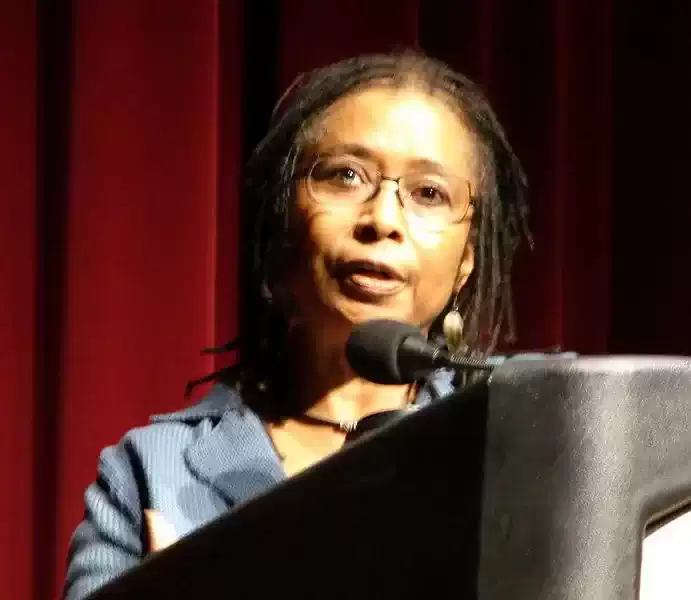
Alice Walker
To Change The World Enough
To change the world enough
you must cease to be afraid
of the poor.
We experience your fear as the least pardonable of
humiliations; in the past
it has sent us scurrying off
daunted and ashamed
into the shadows.
Now,
the world ending
the only one all of us have known
we seek the same
fresh light
you do:
the same high place
and ample table.
The poor always believe
there is room enough
for all of us;
the very rich never seem to have heard
of this.
In us there is wisdom of how to share
loaves and fishes
however few;
we do this everyday.
Learn from us,
we ask you.
We enter now
the dreaded location
of Earth's reckoning;
no longer far
off
or hidden in books
that claim to disclose
revelations;
it is here.
We must walk together without fear.
There is no path without us
350

John Greenleaf Whittier
George L. Stearns
He has done the work of a true man,-Crown
him, honor him, love him.
Weep, over him, tears of woman,
Stoop manliest brows above him!
O dusky mothers and daughters,
Vigils of mourning keep for him!
Up in the mountains, and down by the waters,
Lift up your voices and weep for him,
For the warmest of hearts is frozen,
The freest of hands is still;
And the gap in our picked and chosen
The long years may not fill.
No duty could overtask him,
No need his will outrun;
Or ever our lips could ask him,
His hands the work had done.
He forgot his own soul for others,
Himself to his neighbor lending;
He found the Lord in his suffering brothers,
And not in the clouds descending.
So the bed was sweet to die on,
Whence he saw the doors wide swung
Against whose bolted iron
The strength of his life was flung.
And he saw ere his eye was darkened
The sheaves of the harvest-bringing,
And knew while his ear yet hearkened
The voice of the reapers singing.
Ah, well! The world is discreet;
There are plenty to pause and wait;
But here was a man who set his feet
Sometimes in advance of fate;
Plucked off the old bark when the inner
Was slow to renew it,
And put to the Lord's work the sinner
When saints failed to do it.
Never rode to the wrong's redressing
A worthier paladin.
Shall he not hear the blessing,
'Good and faithful, enter in!'
348

William Butler Yeats
Responsibilities - Introduction
Pardon, old fathers, if you still remain
Somewhere in ear-shot for the story's end,
Old Dublin merchant "free of the ten and four"
Or trading out of Galway into Spain;
Old country scholar, Robert Emmet's friend,
A hundred-year-old memory to the poor;
Merchant and scholar who have left me blood
That has not passed through any huckster's loin,
Soldiers that gave, whatever die was cast:
A Butler or an Armstrong that withstood
Beside the brackish waters of the Boyne
James and his Irish when the Dutchman crossed;
Old merchant skipper that leaped overboard
After a ragged hat in Biscay Bay;
You most of all, silent and fierce old man,
Because the daily spectacle that stirred
My fancy, and set my boyish lips to say,
"Only the wasteful virtues earn the sun";
Pardon that for a barren passion's sake,
Although I have come close on forty-nine,
I have no child, I have nothing but a book,
Nothing but that to prove your blood and mine.
348
John Greenleaf Whittier
Abraham Davenport
In the old days (a custom laid aside
With breeches and cocked hats) the people sent
Their wisest men to make the public laws.
And so, from a brown homestead, where the Sound
Drinks the small tribute of the Mianas,
Waved over by the woods of Rippowams,
And hallowed by pure lives and tranquil deaths,
Stamford sent up to the councils of the State
Wisdom and grace in Abraham Davenport.
'T was on a May-day of the far old year
Seventeen hundred eighty, that there fell
Over the bloom and sweet life of the Spring,
Over the fresh earth and the heaven of noon,
A horror of great darkness, like the night
In day of which the Norland sagas tell,-
The Twilight of the Gods. The low-hung sky
Was black with ominous clouds, save where its rim
Was fringed with a dull glow, like that which climbs
The crater's sides from the red hell below.
Birds ceased to sing, and all the barn-yard fowls
Roosted; the cattle at the pasture bars
Lowed, and looked homeward; bats on leathern wings
Flitted abroad; the sounds of labor died;
Men prayed, and women wept; all ears grew sharp
To hear the doom-blast of the trumpet shatter
The black sky, that the dreadful face of Christ
Might look from the rent clouds, not as he looked
A loving guest at Bethany, but stern
As Justice and inexorable Law.
Meanwhile in the old State House, dim as ghosts,
Sat the lawgivers of Connecticut,
Trembling beneath their legislative robes.
'It is the Lord's Great Day! Let us adjourn,'
Some said; and then, as if with one accord,
All eyes were turned to Abraham Davenport.
He rose, slow cleaving with his steady voice
The intolerable hush. 'This well may be
The Day of Judgment which the world awaits;
But be it so or not, I only know
My present duty, and my Lord's command
To occupy till He come. So at the post
Where He hath set me in His providence,
I choose, for one, to meet Him face to face,-No
faithless servant frightened from my task,
But ready when the Lord of the harvest calls;
And therefore, with all reverence, I would say,
Let God do His work, we will see to ours.
Bring in the candles.' And they brought them in.
Then by the flaring lights the Speaker read,
Albeit with husky voice and shaking hands,
An act to amend an act to regulate
The shad and alewive fisheries. Whereupon
Wisely and well spake Abraham Davenport,
Straight to the question, with no figures of speech
Save the ten Arab signs, yet not without
The shrewd dry humor natural to the man
His awe-struck colleagues listening all the while,
Between the pauses of his argument,
To hear the thunder of the wrath of God
Break from the hollow trumpet of the cloud.
And there he stands in memory to this day,
Erect, self-poised, a rugged face, half seen
Against the background of unnatural dark,
A witness to the ages as they pass,
That simple duty hath no place for fear.
. . . . .
He ceased: just then the ocean seemed
To lift a half-faced moon in sight;
And, shore-ward, o'er the waters gleamed,
From crest to crest, a line of light,
Such as of old, with solemn awe,
The fishers by Gennesaret saw,
When dry-shod o'er it walked the Son of God,
Tracking the waves with light where'er his sandals trod.
Silently for a space each eye
Upon that sudden glory turned
Cool from the land the breeze blew by,
The tent-ropes flapped, the long beach churned
Its waves to foam; on either hand
Stretched, far as sight, the hills of sand;
With bays of marsh, and capes of bush and tree,
The wood's black shore-line loomed beyond the meadowy sea.
The lady rose to leave. 'One song,
Or hymn,' they urged, 'before we part.'
And she, with lips to which belong
Sweet intuitions of all art,
Gave to the winds of night a strain
Which they who heard would hear again;
And to her voice the solemn ocean lent,
Touching its harp of sand, a deep accompaniment.
347

Robert Browning
After
Take the cloak from his face, and at first
Let the corpse do its worst!
How he lies in his rights of a man!
Death has done all death can.
And, absorbed in the new life he leads,
He recks not, he heeds
Nor his wrong nor my vengeance; both strike
On his senses alike,
And are lost in the solemn and strange
Surprise of the change.
Ha, what avails death to erase
His offence, my disgrace?
I would we were boys as of old
In the field, by the fold:
His outrage, God's patience, man's scorn
Were so easily borne!
I stand here now, he lies in his place:
Cover the face!
347

Thomas Hardy
Ah, Are You Digging on My Grave?
"Ah, are you digging on my grave,
My loved one? -- planting rue?"
-- "No: yesterday he went to wed
One of the brightest wealth has bred.
'It cannot hurt her now,' he said,
'That I should not be true.'"
"Then who is digging on my grave,
My nearest dearest kin?"
-- "Ah, no: they sit and think, 'What use!
What good will planting flowers produce?
No tendance of her mound can loose
Her spirit from Death's gin.'"
"But someone digs upon my grave?
My enemy? -- prodding sly?"
-- "Nay: when she heard you had passed the Gate
That shuts on all flesh soon or late,
She thought you no more worth her hate,
And cares not where you lie.
"Then, who is digging on my grave?
Say -- since I have not guessed!"
-- "O it is I, my mistress dear,
Your little dog , who still lives near,
And much I hope my movements here
Have not disturbed your rest?"
"Ah yes! You dig upon my grave...
Why flashed it not to me
That one true heart was left behind!
What feeling do we ever find
To equal among human kind
A dog's fidelity!"
"Mistress, I dug upon your grave
To bury a bone, in case
I should be hungry near this spot
When passing on my daily trot.
I am sorry, but I quite forgot
It was your resting place."
347
John Greenleaf Whittier
Bryant On His Birthday
We praise not now the poet's art,
The rounded beauty of his song;
Who weighs him from his life apart
Must do his nobler nature wrong.
Not for the eye, familiar grown
With charms to common sight denied,
The marvellous gift he shares alone
With him who walked on Rydal-side;
Not for rapt hymn nor woodland lay,
Too grave for smiles, too sweet for tears;
We speak his praise who wears to-day
The glory of his seventy years.
When Peace brings Freedom in her train,
Let happy lips his songs rehearse;
His life is now his noblest strain,
His manhood better than his verse!
Thank God! his hand on Nature's keys
Its cunning keeps at life's full span;
But, dimmed and dwarfed, in times like these,
The poet seems beside the man!
So be it! let the garlands die,
The singer's wreath, the painter's meed,
Let our names perish, if thereby
Our country may be saved and freed!
348

William Shakespeare
Sonnet 49: Against that time, if ever that time come
Against that time, if ever that time come,
When I shall see thee frown on my defects,
When as thy love hath cast his utmost sum,
Call'd to that audit by advised respects;
Against that time when thou shalt strangely pass
And scarcely greet me with that sun thine eye,
When love, converted from the thing it was,
Shall reasons find of settled gravity,-Against
that time do I ensconce me here
Within the knowledge of mine own desert,
And this my hand against myself uprear,
To guard the lawful reasons on thy part:
To leave poor me thou hast the strength of laws,
Since why to love I can allege no cause.
347
Robert Browning
The Glove
(PETER RONSARD _loquitur_.)
``Heigho!'' yawned one day King Francis,
``Distance all value enhances!
``When a man's busy, why, leisure
``Strikes him as wonderful pleasure:
`` 'Faith, and at leisure once is he?
``Straightway he wants to be busy.
``Here we've got peace; and aghast I'm
``Caught thinking war the true pastime.
``Is there a reason in metre?
``Give us your speech, master Peter!''
I who, if mortal dare say so,
Ne'er am at loss with my Naso,
``Sire,'' I replied, ``joys prove cloudlets:
``Men are the merest Ixions''---
Here the King whistled aloud, ``Let's
``---Heigho---go look at our lions!''
Such are the sorrowful chances
If you talk fine to King Francis.
And so, to the courtyard proceeding,
Our company, Francis was leading,
Increased by new followers tenfold
Before be arrived at the penfold;
Lords, ladies, like clouds which bedizen
At sunset the western horizon.
And Sir De Lorge pressed 'mid the foremost
With the dame he professed to adore most.
Oh, what a face! One by fits eyed
Her, and the horrible pitside;
For the penfold surrounded a hollow
Which led where the eye scarce dared follow,
And shelved to the chamber secluded
Where Bluebeard, the great lion, brooded.
The King bailed his keeper, an Arab
As glossy and black as a scarab,*
And bade him make sport and at once stir
Up and out of his den the old monster.
They opened a hole in the wire-work
Across it, and dropped there a firework,
And fled: one's heart's beating redoubled;
A pause, while the pit's mouth was troubled,
The blackness and silence so utter,
By the firework's slow sparkling and sputter;
Then earth in a sudden contortion
Gave out to our gaze her abortion.
Such a brute! Were I friend Clement Marot
(Whose experience of nature's but narrow,
And whose faculties move in no small mist
When he versifies David the Psalmist)
I should study that brute to describe you
_Illim Juda Leonem de Tribu_.
One's whole blood grew curdling and creepy
To see the black mane, vast and heapy,
The tail in the air stiff and straining,
The wide eyes, nor waxing nor waning,
As over the barrier which bounded
His platform, and us who surrounded
The barrier, they reached and they rested
On space that might stand him in best stead:
For who knew, he thought, what the amazement,
The eruption of clatter and blaze meant,
And if, in this minute of wonder,
No outlet, 'mid lightning and thunder,
Lay broad, and, his shackles all shivered,
The lion at last was delivered?
Ay, that was the open sky o'erhead!
And you saw by the flash on his forehead,
By the hope in those eyes wide and steady,
He was leagues in the desert already,
Driving the flocks up the mountain,
Or catlike couched hard by the fountain
To waylay the date-gathering negress:
So guarded he entrance or egress.
``How he stands!'' quoth the King: ``we may well swear,
(``No novice, we've won our spurs elsewhere
``And so can afford the confession,)
``We exercise wholesome discretion
``In keeping aloof from his threshold;
``Once hold you, those jaws want no fresh hold,
``Their first would too pleasantly purloin
``The visitor's brisket or surloin:
``But who's he would prove so fool-hardy?
``Not the best man of Marignan, pardie!''
The sentence no sooner was uttered,
Than over the rails a glove flattered,
Fell close to the lion, and rested:
The dame 'twas, who flung it and jested
With life so, De Lorge had been wooing
For months past; he sat there pursuing
His suit, weighing out with nonchalance
Fine speeches like gold from a balance.
Sound the trumpet, no true knight's a tarrier!
De Lorge made one leap at the barrier,
Walked straight to the glove,---while the lion
Neer moved, kept his far-reaching eye on
The palm-tree-edged desert-spring's sapphire,
And the musky oiled skin of the Kaffir,---
Picked it up, and as calmly retreated,
Leaped back where the lady was seated,
And full in the face of its owner
Flung the glove.
``Your heart's queen, you dethrone her?
``So should I!''---cried the King---``'twas mere vanity,
``Not love, set that task to humanity!''
Lords and ladies alike turned with loathing
From such a proved wolf in sheep's clothing.
Not so, I; for I caught an expression
In her brow's undisturbed self-possession
Amid the Court's scoffing and merriment,---
As if from no pleasing experiment
She rose, yet of pain not much heedful
So long as the process was needful,---
As if she had tried in a crucible,
To what ``speeches like gold'' were reducible,
And, finding the finest prove copper,
Felt the smoke in her face was but proper;
To know what she had _not_ to trust to,
Was worth all the ashes and dust too.
She went out 'mid hooting and laughter;
Clement Marot stayed; I followed after,
And asked, as a grace, what it all meant?
If she wished not the rash deed's recalment?
``For I''---so I spoke---``am a poet:
``Human nature,---behoves that I know it!''
She told me, ``Too long had I heard
``Of the deed proved alone by the word:
``For my love---what De Lorge would not dare!
``With my scorn---what De Lorge could compare!
``And the endless descriptions of death
``He would brave when my lip formed a breath,
``I must reckon as braved, or, of course,
``Doubt his word---and moreover, perforce,
``For such gifts as no lady could spurn,
``Must offer my love in return.
``When I looked on your lion, it brought
``All the dangers at once to my thought,
``Encountered by all sorts of men,
``Before he was lodged in his den,---
``From the poor slave whose club or bare hands
``Dug the trap, set the snare on the sands,
``With no King and no Court to applaud,
``By no shame, should he shrink, overawed,
``Yet to capture the creature made shift,
``That his rude boys might laugh at the gift,
``---To the page who last leaped o'er the fence
``Of the pit, on no greater pretence
``Than to get back the bonnet he dropped,
``Lest his pay for a week should be stopped.
``So, wiser I judged it to make
``One trial what `death for my sake'
``Really meant, while the power was yet mine,
``Than to wait until time should define
``Such a phrase not so simply as I,
``Who took it to mean just `to die.'
``The blow a glove gives is but weak:
``Does the mark yet discolour my cheek?
``But when the heart suffers a blow,
``Will the pain pass so soon, do you know?''
I looked, as away she was sweeping,
And saw a youth eagerly keeping
As close as he dared to the doorway.
No doubt that a noble should more weigh
His life than befits a plebeian;
And yet, had our brute been Nemean---
(I judge by a certain calm fervour
The youth stepped with, forward to serve her)
---He'd have scarce thought you did him the worst turn
If you whispered ``Friend, what you'd get, first earn!''
And when, shortly after, she carried
Her shame from the Court, and they married,
To that marriage some happiness, maugre
The voice of the Court, I dared augur.
For De Lorge, he made women with men vie,
Those in wonder and praise, these in envy;
And in short stood so plain a head taller
That he wooed and won ... how do you call her?
The beauty, that rose in the sequel
To the King's love, who loved her a week well.
And 'twas noticed he never would honour
De Lorge (who looked daggers upon her)
With the easy commission of stretching
His legs in the service, and fetching
His wife, from her chamber, those straying
Sad gloves she was always mislaying,
While the King took the closet to chat in,---
But of course this adventure came pat in.
And never the King told the story,
How bringing a glove brought such glory,
But the wife smiled---``His nerves are grown firmer:
``Mine he brings now and utters no murmur.''
_Venienti occurrite morbo!_
With which moral I drop my theorbo.
* A beetle.
346
Henry Van Dyke
Work
Let me but do my work from day to day,
In field or forest, at the desk or loom,
In roaring market-place or tranquil room;
Let me but find it in my heart to say,
When vagrant wishes beckon me astray,
"This is my work; my blessing, not my doom;
"Of all who live, I am the one by whom
"This work can best be done in the right way."
Then shall I see it not too great, nor small,
To suit my spirit and to prove my powers;
Then shall I cheerful greet the labouring hours,
And cheerful turn, when the long shadows fall
At eventide, to play and love and rest,
Because I know for me my work is best.
345

James Whitcomb Riley
George Mullen's Confession
For the sake of guilty conscience, and the heart that ticks the
time
Of the clockworks of my nature, I desire to say that I'm
A weak and sinful creature, as regards my daily walk
The last five years and better. It ain't worth while to talk-
I've been too mean to tell it! I've been so hard, you see,
And full of pride, and--onry--now there's the word for me--
Just onry--and to show you, I'll give my history
With vital points in question, and I think you'll all agree.
I was always stiff and stubborn since I could recollect,
And had an awful temper, and never would reflect;
And always into trouble--I remember once at school
The teacher tried to flog me, and I reversed that rule.
O I was bad I tell you! And it's a funny move
That a fellow wild as I was could ever fall in love;
And it's a funny notion that an animal like me,
Under a girl's weak fingers was as tame as tame could be!
But it's so, and sets me thinking of the easy way she had
Of cooling down my temper--though I'd be fighting mad.
'My Lion Queen' I called her--when a spell of mine occurred
She'd come in a den of feelings and quell them with a word.
I'll tell you how she loved me--and what her people thought:
When I asked to marry Annie they said 'they reckoned not--
That I cut too many didoes and monkey-shines to suit
Their idea of a son-in-law, and I could go, to boot!'
I tell you that thing riled me! Why, I felt my face turn white,
And my teeth shut like a steel trap, and the fingers of my right
Hand pained me with their pressure--all the rest's a mystery
Till I heard my Annie saying--'I'm going, too, you see.'
We were coming through the gateway, and she wavered for a spell
When she heard her mother crying and her raving father yell
That she wa'n't no child of his'n--like an actor in a play
We saw at Independence, coming through the other day.
Well! that's the way we started. And for days and weeks and
months
And even years we journeyed on, regretting never once
Of starting out together upon the path of life--
Akind o' sort o' husband, but a mighty loving wife,--
And the cutest little baby--little Grace--I see her now
A-standin' on the pig-pen as her mother milked the cow--
And I can hear her shouting--as I stood unloading straw,-'
I'm ain't as big as papa, but I'm biggerest'n ma.'
Now folks that never married don't seem to understand
That a little baby's language is the sweetest ever planned--
Why, I tell you it's pure music, and I'll just go on to say
That I sometimes have a notion that the angels talk that way!
There's a chapter in this story I'd be happy to destroy;
I could burn it up before you with a mighty sight of joy;
But I'll go ahead and give it--not in detail, no, my friend,
For it takes five years of reading before you find the end.
My Annie's folks relented--at least, in some degree;
They sent one time for Annie, but they didn't send for me.
The old man wrote the message with a heart as hot and dry
As a furnace--'Annie Mullen, come and see your mother die.'
I saw the slur intended--why I fancied I could see
The old man shoot the insult like a poison dart at me;
And in that heat of passion I swore an inward oath
That if Annie pleased her father she could never please us both.
I watched her--dark and sullen--as she hurried on her shawl;
I watched her--calm and cruel, though I saw her tear-drops fall;
I watched her--cold and heartless, though I heard her moaning,
call
For mercy from high Heaven--and I smiled throughout it all.
Why even when she kissed me, and her tears were on my brow,
As she murmured, 'George, forgive me--I must go to mother now!'
Such hate there was within me that I answered not at all,
But calm, and cold and cruel, I smiled throughout it all.
But a shadow in the doorway caught my eye, and then the face
Full of innocence and sunshine of little baby Grace.
And I snatched her up and kissed her, and I softened through and
through
For a minute when she told me 'I must kiss her muvver too.'
I remember, at the starting, how I tried to freeze again
As I watched them slowly driving down the little crooked lane--
When Annie shouted something that ended in a cry,
And how I tried to whistle and it fizzled in a sigh.
I remember running after, with a glimmer in my sight--
Pretending I'd discovered that the traces wasn't right;
And the last that I remember, as they disappeared from view,
Was little Grace a-calling, 'I see papa! Howdy-do!'
And left alone to ponder, I again took up my hate
For the old man who would chuckle that I was desolate;
And I mouthed my wrongs in mutters till my pride called up the
pain
His last insult had given me--until I smiled again
Till the wild beast in my nature was raging in the den--
With no one now to quell it, and I wrote a letter then
Full of hissing things, and heated with so hot a heat of hate
That my pen flashed out black lightning at a most terrific rate.
I wrote that 'she had wronged me when she went away from me--
Though to see her dying mother 'twas her father's victory,
And a woman that could waver when her husband's pride was rent
Was no longer worthy of it.' And I shut the house and went.
To tell of my long exile would be of little good--
Though I couldn't half-way tell it, and I wouldn't if I could!
I could tell of California--of a wild and vicious life;
Of trackless plains, and mountains, and the Indian's
scalping-knife.
I could tell of gloomy forests howling wild with threats of
death;
I could tell of fiery deserts that have scorched me with their
breath;
I could tell of wretched outcasts by the hundreds, great and
small,
And could claim the nasty honor of the greatest of them all.
I could tell of toil and hardship; and of sickness and disease,
And hollow-eyed starvation, but I tell you, friend, that these
Are trifles in comparison with what a fellow feels
With that bloodhound, Remorsefulness, forever at his heels.
I remember--worn and weary of the long, long years of care,
When the frost of time was making early harvest of my hair--
I remember, wrecked and hopeless of a rest beneath the sky,
My resolve to quit the country, and to seek the East, and die.
I remember my long journey, like a dull, oppressive dream,
Across the empty prairies till I caught the distant gleam
Of a city in the beauty of its broad and shining stream
On whose bosom, flocked together, float the mighty swans of
steam.
I remember drifting with them till I found myself again
In the rush and roar and rattle of the engine and the train;
And when from my surroundings something spoke of child and wife,
It seemed the train was rumbling through a tunnel in my life.
Then I remember something--like a sudden burst of light--
That don't exactly tell it, but I couldn't tell it right--
A something clinging to me with its arms around my neck--
A little girl, for instance--or an angel, I expect--
For she kissed me, cried and called me 'her dear papa,' and I
felt
My heart was pure virgin gold, and just about to melt--
And so it did--it melted in a mist of gleaming rain
When she took my hand and whispered, 'My mama's on the train.'
There's some things I can dwell on, and get off pretty well,
But the balance of this story I know I couldn't tell;
So I ain't going to try it, for to tell the reason why-I'm
so chicken-hearted lately I'd be certain 'most to cry.
346
William Shakespeare
Sonnet 9: Is it for fear to wet a widow's eye
Is it for fear to wet a widow's eye,
That thou consum'st thy self in single life?
Ah, if thou issueless shalt hap to die,
The world will wail thee like a makeless wife.
The world will be thy widow and still weep,
That thou no form of thee hast left behind,
When every private widow well may keep,
By children's eyes, her husband's shape in mind.
Look what an unthrift in the world doth spend
Shifts but his place, for still the world enjoys it;
But beauty's waste hath in the world an end,
And kept unused the user so destroys it.
No love toward others in that bosom sits
That on himself such murd'rous shame commits.
346
William Butler Yeats
A Man Young And Old: II. Human Dignity
Like the moon her kindness is,
If kindness I may call
What has no comprehension in't,
But is the same for all
As though my sorrow were a scene
Upon a painted wall.
So like a bit of stone I lie
Under a broken tree.
I could recover if I shrieked
My heart's agony
To passing bird, but I am dumb
From human dignity.
If kindness I may call
What has no comprehension in't,
But is the same for all
As though my sorrow were a scene
Upon a painted wall.
So like a bit of stone I lie
Under a broken tree.
I could recover if I shrieked
My heart's agony
To passing bird, but I am dumb
From human dignity.
345
John Donne
To Sir Henry Wotton At His Going Ambassador To Venice
AFTER those reverend papers, whose soul is
Our good and great king's loved hand and fear'd name ;
By which to you he derives much of his,
And, how he may, makes you almost the same,
A taper of his torch, a copy writ
From his oiginal, and a fair beam
Of the same warm and dazzling sun, though it
Must in another sphere his virtue stream ;
After those learned papers which your hand
Hath stored with notes of use and pleasures too,
From which rich treasury you may command
Fit matter whether you will write or do ;
After those loving papers where friends send,
With glad grief to your sea-ward steps, farewell,
Which thicken on you now, as prayers ascend
To heaven in troops, at a good man's passing-bell ;
Admit this honest paper, and allow
It such an audience as yourself would ask ;
What you must say at Venice, this means now,
And hath for nature, what you have for task.
To swear much love, not to be changed before
Honour, alone will to your fortune fit ;
Nor shall I then honour your fortune, more
Than I have done your honour, wanting it.
But 'tis an easier load, though both oppress,
To want, than govern greatness, for we are
In that, our own and only business,
In this, we must for others' vices care.
'Tis therefore well your spirits now are placed
In their last furnace, in activity ;
Which fits them—schools and courts and wars o'erpast—
To touch and test in any best degree.
For me—if there be such a thing as I—
Fortune—if there be such a thing as she—
Spies that I bear so well her tyranny,
That she thinks nothing else so fit for me.
But, though she part us, to hear my oft prayers
For your increase, God is as near me here ;
And to send you what I shall beg, His stairs
In length and ease are alike everywhere.
345
John Donne
Community
Good we must love, and must hate ill,
For ill is ill, and good good still ;
But there are things indifferent,
Which wee may neither hate, nor love,
But one, and then another prove,
As we shall find our fancy bent.
If then at first wise Nature had
Made women either good or bad,
Then some wee might hate, and some choose ;
But since she did them so create,
That we may neither love, nor hate,
Only this rests, all all may use.
If they were good it would be seen ;
Good is as visible as green,
And to all eyes itself betrays.
If they were bad, they could not last ;
Bad doth itself, and others waste ;
So they deserve nor blame, nor praise.
But they are ours as fruits are ours ;
He that but tastes, he that devours,
And he that leaves all, doth as well ;
Changed loves are but changed sorts of meat ;
And when he hath the kernel eat,
Who doth not fling away the shell?
345

Robert W. Service
A Casualty
That boy I took in the car last night,
With the body that awfully sagged away,
And the lips blood-crisped, and the eyes flame-bright,
And the poor hands folded and cold as clay --
Oh, I've thought and I've thought of him all the day.
For the weary old doctor says to me:
"He'll only last for an hour or so.
Both of his legs below the knee
Blown off by a bomb. . . . So, lad, go slow,
And please remember, he doesn't know."
So I tried to drive with never a jar;
And there was I cursing the road like mad,
When I hears a ghost of a voice from the car:
"Tell me, old chap, have I `copped it' bad?"
So I answers "No," and he says, "I'm glad."
"Glad," says he, "for at twenty-two
Life's so splendid, I hate to go.
There's so much good that a chap might do,
And I've fought from the start and I've suffered so.
'Twould be hard to get knocked out now, you know."
"Forget it," says I; then I drove awhile,
And I passed him a cheery word or two;
But he didn't answer for many a mile,
So just as the hospital hove in view,
Says I: "Is there nothing that I can do?"
Then he opens his eyes and he smiles at me;
And he takes my hand in his trembling hold;
"Thank you -- you're far too kind," says he:
"I'm awfully comfy -- stay . . . let's see:
I fancy my blanket's come unrolled --
My feet, please wrap 'em -- they're cold . . . they're cold."
344
Henry Wadsworth Longfellow
Tales Of A Wayside Inn : Part 2. Interlude III.
'What was the end? I am ashamed
Not to remember Reynard's fate;
I have not read the book of late;
Was he not hanged?' the Poet said.
The Student gravely shook his head,
And answered: 'You exaggerate.
There was a tournament proclaimed,
And Reynard fought with Isegrim
The Wolf, and having vanquished him,
Rose to high honor in the State,
And Keeper of the Seals was named!'
At this the gay Sicilian laughed:
'Fight fire with fire, and craft with craft;
Successful cunning seems to be
The moral of your tale,' said he.
'Mine had a better, and the Jew's
Had none at all, that I could see;
His aim was only to amuse.'
Meanwhile from out its ebon case
His violin the Minstrel drew,
And having tuned its strings anew,
Now held it close in his embrace,
And poising in his outstretched hand
The bow, like a magician's wand,
He paused, and said, with beaming face:
'Last night my story was too long;
To-day I give you but a song,
An old tradition of the North;
But first, to put you in the mood,
I will a little while prelude,
And from this instrument draw forth
Something by way of overture.'
He played; at first the tones were pure
And tender as a summer night,
The full moon climbing to her height,
The sob and ripple of the seas,
The flapping of an idle sail;
And then by sudden and sharp degrees
The multiplied, wild harmonies
Freshened and burst into a gale;
A tempest howling through the dark,
A crash as of some shipwrecked bark.
A loud and melancholy wail.
Such was the prelude to the tale
Told by the Minstrel; and at times
He paused amid its varying rhymes,
And at each pause again broke in
The music of his violin,
With tones of sweetness or of fear,
Movements of trouble or of calm,
Creating their own atmosphere;
As sitting in a church we hear
Between the verses of the psalm
The organ playing soft and clear,
Or thundering on the startled ear.
344

Ella Wheeler Wilcox
Is It Best?
O mother who sips sweetened liquors!
Look down at the child on your breast;
Think, think of the rough path before him,
And ask yourself then, 'Is it best?
Shall I foster a love for this poison,
Instil the thirst into his veins?
In the fountain he seeks at my bosom
Sow the rank seeds of death, grief, and pains?
'Shall I give him the thirst of the drunkard,
Bequeath him the weapons of crime?
Can we look for a glass of pure water
Dipped up from a fountain of slime?
Can we look for brave men, strong and noble,
Where the parents drink poison for food?
When the body and soul are corrupted,
Can we look for the works to be good?'
Oh! think of the future before him!
There are perils you cannot remove.
Yet this, the great highway of sorrow-
Oh! guard him from this with your love.
There are rough paths enough in the future
For the feet of the child on your breast;
And lower the glass you are lifting,
And ask yourself, then, 'Is it best?'
344
Henry Wadsworth Longfellow
Christmas Bells
"I heard the bells on Christmas Day
Their old familiar carols play,
And wild and sweet
The words repeat
Of peace on earth, good-will to men!
And thought how, as the day had come,
The belfries of all Christendom
Had rolled along
The unbroken song
Of peace on earth, good-will to men!
Till, ringing, singing on its way,
The world revolved from night to day,
A voice, a chime
A chant sublime
Of peace on earth, good-will to men!
Then from each black accursed mouth
The cannon thundered in the South,
And with the sound
The carols drowned
Of peace on earth, good-will to men!
It was as if an earthquake rent
The hearth-stones of a continent,
And made forlorn
The households born
Of peace on earth, good-will to men!
And in despair I bowed my head;
"There is no peace on earth," I said;
"For hate is strong,
And mocks the song
Of peace on earth, good-will to men!"
Then pealed the bells more loud and deep:
"God is not dead; nor doth he sleep!
The Wrong shall fail,
The Right prevail,
With peace on earth, good-will to men!"
342

Emily Dickinson
A Secret told
A Secret told-
Ceases to be a Secret-then-
A Secret-kept
That-
can appal but One-
Better of it-continual be afraid-
Than it-
And Whom you told it to-beside-
Ceases to be a Secret-then-
A Secret-kept
That-
can appal but One-
Better of it-continual be afraid-
Than it-
And Whom you told it to-beside-
342

Nazim Hikmet
Last Will And Testament
Comrades, if I don't live to see the day
-- I mean,if I die before freedom comes --
take me away
and bury me in a village cemetery in Anatolia.
The worker Osman whom Hassan Bey ordered shot
can lie on one side of me, and on the other side
the martyr Aysha, who gave birth in the rye
and died inside of forty days.
Tractors and songs can pass below the cemetery --
in the dawn light, new people, the smell of burnt gasoline,
fields held in common, water in canals,
no drought or fear of the police.
Of course, we won't hear those songs:
the dead lie stretched out underground
and rot like black branches,
deaf, dumb, and blind under the earth.
But, I sang those songs
before they were written,
I smelled the burnt gasoline
before the blueprints for the tractors were drawn.
As for my neighbors,
the worker Osman and the martyr Aysha,
they felt the great longing while alive,
maybe without even knowing it.
Comrades, if I die before that day, I mean
-- and it's looking more and more likely --
bury me in a village cemetery in Anatolia,
and if there's one handy,
a plane tree could stand at my head,
I wouldn't need a stone or anything.
Moscow, Barviha Hospital
Trans. by Randy Blasing and Mutlu Konuk ()
341
William Shakespeare
Sonnet 151: Love is too young to know what conscience is
Love is too young to know what conscience is;
Yet who knows not conscience is born of love?
Then, gentle cheater, urge not my amiss,
Lest guilty of my faults thy sweet self prove.
For thou betraying me, I do betray
My nobler part to my gross body's treason;
My soul doth tell my body that he may
Triumph in love; flesh stays no farther reason,
But, rising at thy name, doth point out thee
As his triumphant prize. Proud of this pride,
He is contented thy poor drudge to be,
To stand in thy affairs, fall by thy side.
No want of conscience hold it that I call,
Her "love" for whose dear love I rise and fall.
342