
Ethics and Morality

William Butler Yeats
The Great Day
HURRAH for revolution and more cannon-shot!
A beggar upon horseback lashes a beggar on foot.
Hurrah for revolution and cannon come again!
The beggars have changed places, but the lash goes on.
A beggar upon horseback lashes a beggar on foot.
Hurrah for revolution and cannon come again!
The beggars have changed places, but the lash goes on.
310

Robert Browning
Among the Rocks
Oh, good gigantic smile o' the brown old earth,
This autumn morning! How he sets his bones
To bask i' the sun, and thrusts out knees and feet
For the ripple to run over in its mirth;
Listening the while, where on the heap of stones
The white breast of the sea-lark twitters sweet.
That is the doctrine, simple, ancient, true;
Such is life's trial, as old earth smiles and knows.
If you loved only what were worth your love,
Love were clear gain, and wholly well for you:
Make the low nature better by your throes!
Give earth yourself, go up for gain above!
309

John Greenleaf Whittier
The Shadow And The Light
The fourteen centuries fall away
Between us and the Afric saint,
And at his side we urge, to-day,
The immemorial quest and old complaint.
No outward sign to us is given,-From
sea or earth comes no reply;
Hushed as the warm Numidian heaven
He vainly questioned bends our frozen sky.
No victory comes of all our strife,-From
all we grasp the meaning slips;
The Sphinx sits at the gate of life,
With the old question on her awful lips.
In paths unknown we hear the feet
Of fear before, and guilt behind;
We pluck the wayside fruit, and eat
Ashes and dust beneath its golden rind.
From age to age descends unchecked
The sad bequest of sire to son,
The body's taint, the mind's defect;
Through every web of life the dark threads run.
Oh, why and whither? God knows all;
I only know that He is good,
And that whatever may befall
Or here or there, must be the best that could.
Between the dreadful cherubim
A Father's face I still discern,
As Moses looked of old on Him,
And saw His glory into goodness turn!
For He is merciful as just;
And so, by faith correcting sight,
I bow before His will, and trust
Howe'er they seem He doeth all things right.
And dare to hope that Tie will make
The rugged smooth, the doubtful plain;
His mercy never quite forsake;
His healing visit every realm of pain;
That suffering is not His revenge
Upon His creatures weak and frail,
Sent on a pathway new and strange
With feet that wander and with eyes that fail;
That, o'er the crucible of pain,
Watches the tender eye of Love
The slow transmuting of the chain
Whose links are iron below to gold above!
Ah me! we doubt the shining skies,
Seen through our shadows of offence,
And drown with our poor childish cries
The cradle-hymn of kindly Providence.
And still we love the evil cause,
And of the just effect complain
We tread upon life's broken laws,
And murmur at our self-inflicted pain;
We turn us from the light, and find
Our spectral shapes before us thrown,
As they who leave the sun behind
Walk in the shadows of themselves alone.
And scarce by will or strength of ours
We set our faces to the day;
Weak, wavering, blind, the Eternal Powers
Alone can turn us from ourselves away.
Our weakness is the strength of sin,
But love must needs be stronger far,
Outreaching all and gathering in
The erring spirit and the wandering star.
A Voice grows with the growing years;
Earth, hushing down her bitter cry,
Looks upward from her graves, and hears,
'The Resurrection and the Life am I.'
O Love Divine!--whose constant beam
Shines on the eyes that will not see,
And waits to bless us, while we dream
Thou leavest us because we turn from thee!
All souls that struggle and aspire,
All hearts of prayer by thee are lit;
And, dim or clear, thy tongues of fire
On dusky tribes and twilight centuries sit.
Nor bounds, nor clime, nor creed thou know'st,
Wide as our need thy favors fall;
The white wings of the Holy Ghost
Stoop, seen or unseen, o'er the heads of all.
O Beauty, old yet ever new!
Eternal Voice, and Inward Word,
The Logos of the Greek and Jew,
The old sphere-music which the Samian heard!
Truth, which the sage and prophet saw,
Long sought without, but found within,
The Law of Love beyond all law,
The Life o'erflooding mortal death and sin!
Shine on us with the light which glowed
Upon the trance-bound shepherd's way.
Who saw the Darkness overflowed
And drowned by tides of everlasting Day.
Shine, light of God!--make broad thy scope
To all who sin and suffer; more
And better than we dare to hope
With Heaven's compassion make our longings poor!
306
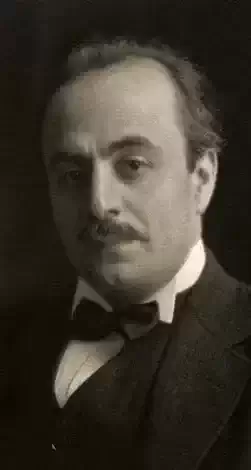
Khalil Gibran
Two Infants II
A prince stood on the balcony of his palace addressing a great multitude summoned for
the occasion and said, "Let me offer you and this whole fortunate country my
congratulations upon the birth of a new prince who will carry the name of my noble
family, and of whom you will be justly proud. He is the new bearer of a great and
illustrious ancestry, and upon him depends the brilliant future of this realm. Sing and
be merry!" The voices of the throngs, full of joy and thankfulness, flooded the sky with
exhilarating song, welcoming the new tyrant who would affix the yoke of oppression to
their necks by ruling the weak with bitter authority, and exploiting their bodies and
killing their souls. For that destiny, the people were singing and drinking ecstatically to
the heady of the new Emir.
Another child entered life and that kingdom at the same time. While the crowds were
glorifying the strong and belittling themselves by singing praise to a potential despot,
and while the angels of heaven were weeping over the people's weakness and
servitude, a sick woman was thinking. She lived in an old, deserted hovel and, lying in
her hard bed beside her newly born infant wrapped with ragged swaddles, was starving
to death. She was a penurious and miserable young wife neglected by humanity; her
husband had fallen into the trap of death set by the prince's oppression, leaving a
solitary woman to whom God had sent, that night, a tiny companion to prevent her
from working and sustaining life.
As the mass dispersed and silence was restored to the vicinity, the wretched woman
placed the infant on her lap and looked into his face and wept as if she were to baptize
him with tears. And with a hunger weakened voice she spoke to the child saying, "Why
have you left the spiritual world and come to share with me the bitterness of earthly
life? Why have you deserted the angels and the spacious firmament and come to this
miserable land of humans, filled with agony, oppression, and heartlessness? I have
nothing to give you except tears; will you be nourished on tears instead of milk? I have
no silk clothes to put on you; will my naked, shivering arms give you warmth? The little
animals graze in the pasture and return safely to their shed; and the small birds pick
the seeds and sleep placidly between the branches. But you, my beloved, have naught
save a loving but destitute mother."
Then she took the infant to her withered breast and clasped her arms around him as if
wanting to join the two bodies in one, as before. She lifted her burning eyes slowly
toward heaven and cried, "God! Have mercy on my unfortunate countrymen!"
At that moment the clouds floated from the face of the moon, whose beams penetrated
the transom of that poor home and fell upon two corpses.
307
John Greenleaf Whittier
Hymn of The Dunkers
KLOSTER KEDAR, EPHRATA, PENNSYLVANIA (1738)
SISTER MARIA CHRISTINA sings
Wake, sisters, wake! the day-star shines;
Above Ephrata's eastern pines
The dawn is breaking, cool and calm.
Wake, sisters, wake to prayer and psalm!
Praised be the Lord for shade and light,
For toil by day, for rest by night!
Praised be His name who deigns to bless
Our Kedar of the wilderness!
Our refuge when the spoiler's hand
Was heavy on our native land;
And freedom, to her children due,
The wolf and vulture only knew.
We praised Him when to prison led,
We owned Him when the stake blazed red;
We knew, whatever might befall,
His love and power were over all.
He heard our prayers; with outstretched arm
He led us forth from cruel harm;
Still, wheresoe'er our steps were bent,
His cloud and fire before us went!
The watch of faith and prayer He set,
We kept it then, we keep it yet.
At midnight, crow of cock, or noon,
He cometh sure, He cometh soon.
He comes to chasten, not destroy,
To purge the earth from sin's alloy.
At last, at last shall all confess
His mercy as His righteousness.
The dead shall live, the sick be whole,
The scarlet sin be white as wool;
No discord mar below, above,
The music of eternal love!
Sound, welcome trump, the last alarm!
Lord God of hosts, make bare thine arm,
Fulfil this day our long desire,
Make sweet and clean the world with fire!
Sweep, flaming besom, sweep from sight
The lies of time; be swift to smite,
Sharp sword of God, all idols down,
Genevan creed and Roman crown.
Quake, earth, through all thy zones, till all
The fanes of pride and priesteraft fall;
And lift thou up in place of them
Thy gates of pearl, Jerusalem!
Lo! rising from baptismal flame,
Transfigured, glorious, yet the same,
Within the heavenly city's bound
Our Kloster Kedar shall be found.
He cometh soon! at dawn or noon
Or set of sun, He cometh soon.
Our prayers shall meet Him on His way;
Wake, sisters, wake! arise and pray!
306

Henry Lawson
Beaten Back
BEATEN back in sad dejection,
After years of weary toil
On that burning hot selection
Where the drought has gorged his spoil.
All in vain ’gainst him, the vulture,
I have battled without rest—
In the van of agriculture,
Marching out into the West.
Now the eagle-hawks are feeding
On my perished stock that reek
Where the water-holes receding
Long had left the burning creek.
I must labour without pity—
I the pick and spade must wield
In the streetways of the city
Or upon another’s field!
Can it be my reason’s rocking,
For I feel a burning hate
For the God who, only mocking,
Sent the prayed-for rain too late?
Pour, ye mocking rains, and rattle
On the bare, brown, grassless plain,
On the shrivelled hides of cattle
That shall ne’er want grass again!
Rush, ye yellow floods, to Murray,
Over thirsty creek-banks foam;
And o’er all, ye black clouds, hurry;
Ye can bring not back my home!
305

Anonymous
Edward, Edward
'WHY does your brand sae drop wi' blude,
Edward, Edward?
Why does your brand sae drop wi' blude,
And why sae sad gang ye, O?'
'O I hae kill'd my hawk sae gude,
Mither, mither;
O I hae kill'd my hawk sae gude,
And I had nae mair but he, O.'
'Your hawk's blude was never sae red,
Edward, Edward;
Your hawk's blude was never sae red,
My dear son, I tell thee, O.'
'O I hae kill'd my red-roan steed,
Mither, mither;
O I hae kill'd my red-roan steed,
That erst was sae fair and free, O.'
'Your steed was auld, and ye hae got mair,
Edward, Edward;
Your steed was auld, and ye hae got mair;
Some other dule ye dree, O.'
'O I hae kill'd my father dear,
Mither, mither;
O I hae kill'd my father dear,
Alas, and wae is me, O!'
'And whatten penance will ye dree for that,
Edward, Edward?
Whatten penance will ye dree for that?
My dear son, now tell me, O.'
'I'll set my feet in yonder boat,
Mither, mither;
I'll set my feet in yonder boat,
And I'll fare over the sea, O.'
'And what will ye do wi' your tow'rs and your ha',
Edward, Edward?
And what will ye do wi' your tow'rs and your ha',
That were sae fair to see, O?'
'I'll let them stand till they doun fa',
Mither, mither;
I'll let them stand till they doun fa',
For here never mair maun I be, O.'
'And what will ye leave to your bairns and your wife,
Edward, Edward?
And what will ye leave to your bairns and your wife,
When ye gang owre the sea, O?'
'The warld's room: let them beg through life,
Mither, mither;
The warld's room: let them beg through life;
For them never mair will I see, O.'
'And what will ye leave to your ain mither dear,
Edward, Edward?
And what will ye leave to your ain mither dear,
My dear son, now tell me, O?'
'The curse of hell frae me sall ye bear,
Mither, mither;
The curse of hell frae me sall ye bear:
Sic counsels ye gave to me, O!'
Edward, Edward?
Why does your brand sae drop wi' blude,
And why sae sad gang ye, O?'
'O I hae kill'd my hawk sae gude,
Mither, mither;
O I hae kill'd my hawk sae gude,
And I had nae mair but he, O.'
'Your hawk's blude was never sae red,
Edward, Edward;
Your hawk's blude was never sae red,
My dear son, I tell thee, O.'
'O I hae kill'd my red-roan steed,
Mither, mither;
O I hae kill'd my red-roan steed,
That erst was sae fair and free, O.'
'Your steed was auld, and ye hae got mair,
Edward, Edward;
Your steed was auld, and ye hae got mair;
Some other dule ye dree, O.'
'O I hae kill'd my father dear,
Mither, mither;
O I hae kill'd my father dear,
Alas, and wae is me, O!'
'And whatten penance will ye dree for that,
Edward, Edward?
Whatten penance will ye dree for that?
My dear son, now tell me, O.'
'I'll set my feet in yonder boat,
Mither, mither;
I'll set my feet in yonder boat,
And I'll fare over the sea, O.'
'And what will ye do wi' your tow'rs and your ha',
Edward, Edward?
And what will ye do wi' your tow'rs and your ha',
That were sae fair to see, O?'
'I'll let them stand till they doun fa',
Mither, mither;
I'll let them stand till they doun fa',
For here never mair maun I be, O.'
'And what will ye leave to your bairns and your wife,
Edward, Edward?
And what will ye leave to your bairns and your wife,
When ye gang owre the sea, O?'
'The warld's room: let them beg through life,
Mither, mither;
The warld's room: let them beg through life;
For them never mair will I see, O.'
'And what will ye leave to your ain mither dear,
Edward, Edward?
And what will ye leave to your ain mither dear,
My dear son, now tell me, O?'
'The curse of hell frae me sall ye bear,
Mither, mither;
The curse of hell frae me sall ye bear:
Sic counsels ye gave to me, O!'
307
John Greenleaf Whittier
Lines on A Fly-Leaf
I need not ask thee, for my sake,
To read a book which well may make
Its way by native force of wit
Without my manual sign to it.
Its piquant writer needs from me
No gravely masculine guaranty,
And well might laugh her merriest laugh
At broken spears in her behalf;
Yet, spite of all the critics tell,
I frankly own I like her well.
It may be that she wields a pen
Too sharply nibbed for thin-skinned men,
That her keen arrows search and try
The armor joints of dignity,
And, though alone for error meant,
Sing through the air irreverent.
I blame her not, the young athlete
Who plants her woman's tiny feet,
And dares the chances of debate
Where bearded men might hesitate,
Who, deeply earnest, seeing well
The ludicrous and laughable,
Mingling in eloquent excess
Her anger and her tenderness,
And, chiding with a half-caress,
Strives, less for her own sex than ours,
With principalities and powers,
And points us upward to the clear
Sunned heights of her new atmosphere.
Heaven mend her faults!--I will not pause
To weigh and doubt and peck at flaws,
Or waste my pity when some fool
Provokes her measureless ridicule.
Strong-minded is she? Better so
Than dulness set for sale or show,
A household folly, capped and belled
In fashion's dance of puppets held,
Or poor pretence of womanhood,
Whose formal, flavorless platitude
Is warranted from all offence
Of robust meaning's violence.
Give me the wine of thought whose head
Sparkles along the page I read,-Electric
words in which I find
The tonic of the northwest wind;
The wisdom which itself allies
To sweet and pure humanities,
Where scorn of meanness, hate of wrong,
Are underlaid by love as strong;
The genial play of mirth that lights
Grave themes of thought, as when, on nights
Of summer-time, the harmless blaze
Of thunderless heat-lightning plays,
And tree and hill-top resting dim
And doubtful on the sky's vague rim,
Touched by that soft and lambent gleam,
Start sharply outlined from their dream.
Talk not to me of woman's sphere,
Nor point with Scripture texts a sneer,
Nor wrong the manliest saint of all
By doubt, if he were here, that Paul
Would own the heroines who have lent
Grace to truth's stern arbitrament,
Foregone the praise to woman sweet,
And cast their crowns at Duty's feet;
Like her, who by her strong Appeal
Made Fashion weep and Mammon feel,
Who, earliest summoned to withstand
The color-madness of the land,
Counted her life-long losses gain,
And made her own her sisters' pain;
Or her who, in her greenwood shade,
Heard the sharp call that Freedom made,
And, answering, struck from Sappho's lyre
Of love the Tyrtman carmen's fire
Or that young girl,--Domremy's maid
Revived a nobler cause to aid,-Shaking
from warning finger-tips
The doom of her apocalypse;
Or her, who world-wide entrance gave
To the log-cabin of the slave,
Made all his want and sorrow known,
And all earth's languages his own.
306
William Butler Yeats
Death
NOR dread nor hope attend
A dying animal;
A man awaits his end
Dreading and hoping all;
Many times he died,
Many times rose again.
A great man in his pride
Confronting murderous men
Casts derision upon
Supersession of breath;
He knows death to the bone --
Man has created death.
A dying animal;
A man awaits his end
Dreading and hoping all;
Many times he died,
Many times rose again.
A great man in his pride
Confronting murderous men
Casts derision upon
Supersession of breath;
He knows death to the bone --
Man has created death.
306
Henry Lawson
The Teams
A cloud of dust on the long white road,
And the teams go creeping on
Inch by inch with the weary load;
And by the power of the green-hide goad
The distant goal is won.
With eyes half-shut to the blinding dust,
And necks to the yokes bent low,
The beasts are pulling as bullocks must;
And the shining tires might almost rust
While the spokes are turning slow.
With face half-hid 'neath a broad-brimmed hat
That shades from the heat's white waves,
And shouldered whip with its green-hide plait,
The driver plods with a gait like that
Of his weary, patient slaves.
He wipes his brow, for the day is hot,
And spits to the left with spite;
He shouts at `Bally', and flicks at `Scot',
And raises dust from the back of `Spot',
And spits to the dusty right.
He'll sometimes pause as a thing of form
In front of a settler's door,
And ask for a drink, and remark `It's warm,
Or say `There's signs of a thunder-storm';
But he seldom utters more.
But the rains are heavy on roads like these;
And, fronting his lonely home,
For weeks together the settler sees
The teams bogged down to the axletrees,
Or ploughing the sodden loam.
And then when the roads are at their worst,
The bushman's children hear
The cruel blows of the whips reversed
While bullocks pull as their hearts would burst,
And bellow with pain and fear.
And thus with little of joy or rest
Are the long, long journeys done;
And thus -- 'tis a cruel war at the best --
Is distance fought in the mighty West,
And the lonely battles won.
307

Emily Dickinson
The Province of the Saved
The Province of the Saved
Should be the Art-To save-
Through Skill obtained in Themselves-
The Science of the Grave
No Man can understand
But He that hath endured
The Dissolution-in Himself-
That Man-be qualified
To qualify Despair
To Those who failing new-
Mistake Defeat for Death-Each time-
Till acclimated-to-
Should be the Art-To save-
Through Skill obtained in Themselves-
The Science of the Grave
No Man can understand
But He that hath endured
The Dissolution-in Himself-
That Man-be qualified
To qualify Despair
To Those who failing new-
Mistake Defeat for Death-Each time-
Till acclimated-to-
306
Emily Dickinson
To put this World down, like a Bundle
To put this World down, like a Bundle-
And walk steady, away,
Requires Energy-possibly Agony'
Tis the Scarlet way
Trodden with straight renunciation
By the Son of God-
Later, his faint Confederates
Justify the Road-
Flavors of that old Crucifixion-
Filaments of Bloom, Pontius Pilate sowed-
Strong Clusters, from Barabbas' Tomb-
Sacrament, Saints partook before us-
Patent, every drop,
With the Brand of the Gentile Drinker
Who indorsed the Cup-
305
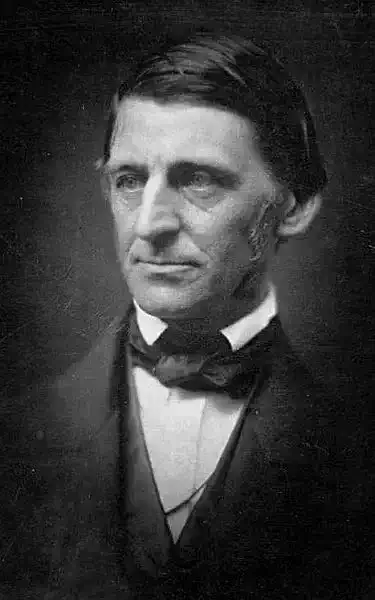
Ralph Waldo Emerson
Forebearance
Hast thou named all the birds without a gun;
Loved the wood-rose, and left it on its stalk;
At rich men's tables eaten bread and pulse;
Unarmed, faced danger with a heart of trust;
And loved so well a high behavior
In man or maid, that thou from speech refrained,
Nobility more nobly to repay?—
O be my friend, and teach me to be thine!
Loved the wood-rose, and left it on its stalk;
At rich men's tables eaten bread and pulse;
Unarmed, faced danger with a heart of trust;
And loved so well a high behavior
In man or maid, that thou from speech refrained,
Nobility more nobly to repay?—
O be my friend, and teach me to be thine!
306
Emily Dickinson
Wert Thou but ill—that I might show thee
Wert Thou but ill—that I might show thee
How long a Day I could endure
Though thine attention stop not on me
Nor the least signal, Me assure—
Wert Thou but Stranger in ungracious country—
And Mine—the Door
Thou paused at, for a passing bounty—
No More—
Accused—wert Thou—and Myself—Tribunal—
Convicted—Sentenced—Ermine—not to Me
Half the Condition, thy Reverse—to follow—
Just to partake—the infamy—
The Tenant of the Narrow Cottage, wert Thou—
Permit to be
The Housewife in thy low attendance
Contenteth Me—
No Service hast Thou, I would not achieve it—
To die—or live—
The first—Sweet, proved I, ere I saw thee—
For Life—be Love—
304

George Herbert
Providence
O Sacred Providence, who from end to end
Strongly and sweetly movest! shall I write,
And not of thee, through whom my fingers bend
To hold my quill? shall they not do thee right?
Of all the creatures both in sea and land
Onely to Man thou hast made known thy wayes,
And put the penne alone into his hand,
And made him Secretarie of thy praise.
Beasts fain would sing; birds dittie to their notes;
Trees would be tuning on their native lute
To thy renown: but all their hands and throats
Are brought to Man, while they are lame and mute.
Man is the worlds high Priest: he doth present
The sacrifice for all; while they below
Unto the service mutter an assent,
Such as springs use that fall, and windes that blow.
He that to praise and laud thee doth refrain,
Doth not refrain unto himself alone,
But robs a thousand who would praise thee fain,
And doth commit a world of sinne in one.
The beasts say, Eat me: but, if beasts must teach,
The tongue is yours to eat, but mine to praise.
The trees say, Pull me: but the hand you stretch,
Is mine to write, as it is yours to raise.
Wherefore, most sacred Spirit, I here present
For me and all my fellows praise to thee:
And just it is that I should pay the rent,
Because the benefit accrues to me.
We all acknowledge both thy power and love
To be exact, transcendent, and divine;
Who dost so strongly and so sweetly move,
While all things have their will, yet none but thine.
For either thy command, or thy permission
Lay hands on all: they are thy right and left.
The first puts on with speed and expedition;
The other curbs sinnes stealing pace and theft.
Nothing escapes them both; all must appeare,
And be dispos'd, and dress'd, and tun'd by thee,
Who sweetly temper'st all. If we could heare
Thy skill and art, what musick would it be!
Thou art in small things great, not small in any:
Thy even praise can neither rise, nor fall.
Thou art in all things one, in each thing many:
For thou art infinite in one and all.
Tempests are calm to thee; they know thy hand,
And hold it fast, as children do their fathers,
Which crie and follow. Thou hast made poore sand
Check the proud sea, ev'n when it swells and gathers.
Thy cupboard serves the world: the meat is set,
Where all may reach: no beast but knows his feed.
Birds teach us hawking; fishes have their net:
The great prey on the lesse, they on some weed.
Nothing ingendred doth prevent his meat:
Flies have their table spread, ere they appeare.
Some creatures have in winter what to eat;
Others do sleep, and envie not their cheer.
How finely dost thou times and seasons spin.
And make a twist checker'd with night and day!
Which as it lengthens windes, and windes us in,
As bouls go on, but turning all the way.
Each creature hath a wisdome for his good.
The pigeons feed their tender off-spring, crying,
When they are callow; but withdraw their food
When they are fledge, that need may teach them flying.
Bees work for man; and yet they never bruise
Their masters flower, but leave it, having done,
As fair as ever, and as fit to use;
So both the flower doth stay, and hony run.
Sheep eat the grasse, and dung the ground for more:
Trees after bearing drop their leaves for soil:
Springs vent their streams, and by expense get store:
Clouds cool by heat, and baths by cooling boil.
Who hath the vertue to expresse the rare
And curious vertues both of herbs and stones?
Is there a herb for that? O that thy care
Would show a root, that gives expressions!
And if an herb hath power, what have the starres?
A rose, besides his beautie, is a cure.
Doubtlesse our plagues and plentie, peace and warres
Are there much surer then our art is sure.
Thou hast hid metals: man may take them thence;
But at his peril: when he digs the place,
He makes a grave; as if the thing had sense,
And threatned man, that he should fill the space.
Ev'n poysons praise thee. Should a thing be lost?
Should creatures want for want of heed their due?
Since where are poysons, antidots are most:
The help stands close, and keeps the fear in view.
The sea, which seems to stop the traveller,
Is by a ship the speedier passage made.
The windes, who think they rule the mariner,
Are rul'd by him, and taught to serve his trade.
And as thy house is full, so I adore
Thy curious art in marshalling thy goods.
The hills and health abound; the vales with store;
The South with marble; North with furres & woods.
Hard things are glorious; easie things good cheap.
The common all men have; that which is rare,
Men therefore seek to have, and care to keep.
The healthy frosts with summer-fruits compare.
Light without winde is glasse: warm without weight
Is wooll and furres: cool without closenesse, shade:
Speed without pains, a horse: tall without height,
A servile hawk: low without losse, a spade.
All countreys have enough to serve their need:
If they seek fine things, thou dost make them run
For their offence; and then dost turn their speed
To be commerce and trade from sunne to sunne.
Nothing wears clothes, but Man; nothing doth need
But he to wear them. Nothing useth fire,
But Man alone, to show his heav'nly breed:
And onely he hath fuell in desire.
When th'earth was dry, thou mad'st a sea of wet:
When that lay gather'd, thou didst broach the mountains:
When yet some places could no moisture get,
The windes grew gard'ners, and the clouds good fountains.
Rain, do not hurt my flowers; but gently spend
Your hony drops: presse not to smell them here:
When they are ripe, their odour will ascend,
And at your lodging with their thanks appeare.
How harsh are thorns to pears! and yet they make
A better hedge, and need lesse reparation.
How smooth are silks compared with a stake,
Or with a stone! yet make no good foundation.
Sometimes thou dost divide thy gifts to man,
Sometimes unite. The Indian nut alone
Is clothing, meat and trencher, drink and kan,
Boat, cable, sail and needle, all in one.
Most herbs that grow in brooks, are hot and dry.
Cold fruits warm kernells help against the winde.
The lemmons juice and rinde cure mutually.
The whey of milk doth loose, the milk doth binde.
Thy creatures leap not, but expresse a feast,
Where all the guests sit close, and nothing wants.
Frogs marry fish and flesh; bats, bird and beast;
Sponges, non-sense and sense; mines, th'earth & plants.
To show thou art not bound, as if thy lot
Were worse then ours; sometimes thou shiftest hands.
Most things move th'under-jaw; the Crocodile not.
Most things sleep lying; th’ Elephant leans or stands.
But who hath praise enough? nay who hath any?
None can expresse thy works, but he that knows them:
And none can know thy works, which are so many,
And so complete, but onely he that owes them.
All things that are, though they have sev'rall wayes,
Yet in their being joyn with one advise
To honour thee: and so I give thee praise
In all my other hymnes, but in this twice.
Each thing that is, although in use and name
It go for one, hath many wayes in store
To honour thee; and so each hymne thy fame
Extolleth many wayes, yet this one more.
304
Emily Dickinson
I should not dare to leave my friend
I should not dare to leave my friend,
Because-because if he should die
While I was gone-and I-too late-
Should reach the Heart that wanted me-
If I should disappoint the eyes
That hunted-hunted so-to see-
And could not bear to shut until
They "noticed" me-they noticed me-
If I should stab the patient faith
So sure I'd come-so sure I'd come-
It listening-listening-went to sleep-
Telling my tardy name-
My Heart would wish it broke before-
Since breaking then-since breaking then-
Were useless as next morning's sun-
Where midnight frosts-had lain!
303
Henry Lawson
The Patriotic League
Behold! the biased foes of Right
Are conscious of their danger,
They’re startled by the dawning light,
So very long a stranger.
And fearing for their rotting laws—
Whose reign is nearly ended—
To study out the People’s cause
At last they’ve condescended.
“And this they call the ‘People’s Cause’,
Why this is insurrection!
They would revoke the very laws
We made for our protection!
An equal right with us they claim!
They’ll rob us by and by, sir!
We’ll form a league and steal a name
And tell another lie, sir.”
They took to gloss a base intrigue
A name that was demotic.
They stole a name and formed a league
And called it “Patriotic”.
They’ve resurrected ancient lies—
The world had most forgotten—
The liars think the world will rise
To back a Cause that’s rotten.
I know their creed, and know it well,
Too mean are its creators
To hope for heaven, or fear the hell
They’d make for agitators.
Old as the hills—and quite as dense
Though shaking like a jelly.
Time honoured to magnificence,
Religion of the Belly!
304
Emily Dickinson
I cautious, scanned my little life
I cautious, scanned my little life-
I winnowed what would fade
From what would last till Heads like mine
Should be a-dreaming laid.
I put the latter in a Barn-
The former, blew away.
I went one winter morning
And lo - my priceless Hay
Was not upon the "Scaffold"-
Was not upon the "Beam"-
And from a thriving Farmer-
A Cynic, I became.
Whether a Thief did it-
Whether it was the wind-
Whether Deity's guiltless-
My business is, to find!
So I begin to ransack!
How is it Hearts, with Thee?
Art thou within the little Barn
Love provided Thee?
303

John Keats
Sonnet XIII. Addressed To Haydon
High-mindedness, a jealousy for good,
A loving-kindness for the great man's fame,
Dwells here and there with people of no name,
In noisome alley, and in pathless wood:
And where we think the truth least understood,
Oft may be found a 'singleness of aim,'
That ought to frighten into hooded shame
A money-mongering, pitiable brood.
How glorious this affection for the cause
Of steadfast genius, toiling gallantly!
What when a stout unbending champion awes
Envy and malice to their native sty?
Unnumbered souls breathe out a still applause,
Proud to behold him in his country's eye.
304
Henry Lawson
The Triumph of the People
LO, the gods of Vice and Mammon from their pinnacles are hurled
By the workers’ new religion, which is oldest in the world;
And the earth will feel her children treading firmly on the sod,
For the triumph of the People is the victory of God.
Not the victory of Churches, nor of Punishment and Wrath,
Not the triumph of the sceptic, throwing shadows on the path,
But of Christ and love and mercy o’er the Monarch and the Rod,
For the harvest of the Saviour is the aftermath of God.
O the Light of Revelation, since the reign of Care began,
Has been shining through the ages on the darkened eyes of man.
And the willing slave of Error—he is senseless as a clod—
For the simple Book of Nature is the written scroll of God.
Who will dare to say the sunlight on the pregnant Earth was shed
That the few might rest and fatten, while the many fight for bread?
Lo, there springs a common garden, where the foot of Greed hath trod,
For the victory of Labour was the prophecy of God.
Mother Earth, in coming seasons, shall fulfil her motherhood;
Then the children of her bosom never more shall want for food,
And oppression shall no longer grind the people iron-shod;
For the lifted hand of Labour is the upraised hand of God.
305

Spike Milligan
Unto Us...
Somewhere at some time
They committed themselves to me
And so, I was!
Small, but I WAS!
Tiny, in shape
Lusting to live
I hung in my pulsing cave.
Soon they knew of me
My mother --my father.
I had no say in my being
I lived on trust
And love
Tho' I couldn't think
Each part of me was saying
A silent 'Wait for me
I will bring you love!'
I was taken
Blind, naked, defenseless
By the hand of one
Whose good name
Was graven on a brass plate
in Wimpole Street,
and dropped on the sterile floor
of a foot operated plastic waste
bucket.
There was no Queens Counsel
To take my brief.
The cot I might have warmed
Stood in Harrod's shop window.
When my passing was told
My father smiled.
No grief filled my empty space.
My death was celebrated
With tickets to see Danny la Rue
Who was pretending to be a woman
Like my mother was.
304

D.H. Lawrence
The Ocean's Song
We walked amongst the ruins famed in story
Of Rozel-Tower,
And saw the boundless waters stretch in glory
And heave in power.
O Ocean vast! We heard thy song with wonder,
Whilst waves marked time.
"Appear, O Truth!" thou sang'st with tone of thunder,
"And shine sublime!
"The world's enslaved and hunted down by beagles,
To despots sold.
Souls of deep thinkers, soar like mighty eagles!
The Right uphold.
"Be born! arise! o'er the earth and wild waves bounding,
Peoples and suns!
Let darkness vanish; tocsins be resounding,
And flash, ye guns!
"And you who love no pomps of fog or glamour,
Who fear no shocks,
Brave foam and lightning, hurricane and clamour,--
Exiles: the rocks!"
304
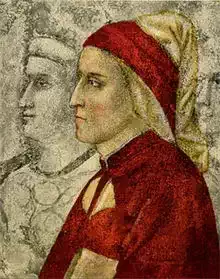
Dante Alighieri
Ulysses' Last Voyage
I launched her with my small remaining band
and, putting out to sea, we set the main
on that lone ship and said farewell to land.
Far to starboard rose the coast of Spain,
astern was Sardi, Islas at our bow,
and soon we saw Morocco port abeam.
Though I and comrades now were old and slow,
we hauled till nightfall for the narrow sound
where Hercules had shown what not to do,
by setting marks for men to stay behind.
At dawn the starboard lookout made Seville,
and at the straits stood Ceuta t'other hand.
'Brothers,' I shouted, 'who have had the will
to come through danger, and have reached the west!
our time awake is brief from now until
the senses die, and so I say we test
the sun's own motion and do not forego
the worlds beyond, unknown and peopleless.
Think of the roots from which you sprang, and show
that you are human: not unconscious brutes
but made to follow virtue and to know.'
303
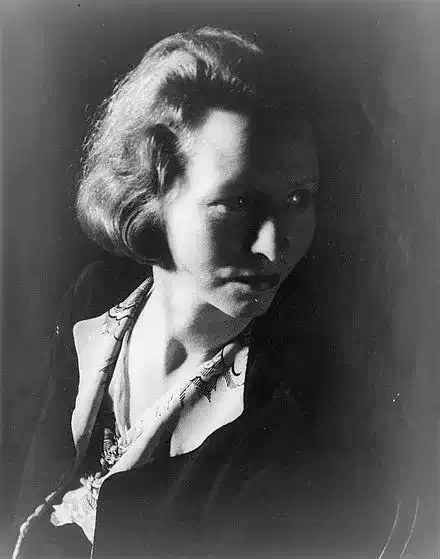
Edna St. Vincent Millay
Not Even My Pride Shall Suffer Much
Not even my pride shall suffer much;
Not even my pride at all, maybe,
If this ill-timed, intemperate clutch
Be loosed by you and not by me,
Will suffer; I have been so true
A vestal to that only pride
Wet wood cannot extinguish, nor
Sand, nor its embers scattered, for,
See all these years, it has not died.
And if indeed, as I dare think,
You cannot push this patient flame,
By any breath your lungs could store,
Even for a moment to the floor
To crawl there, even for a moment crawl,
What can you mix for me to drink
That shall deflect me? What you do
Is either malice, crude defense
Of ego, or indifference:
I know these things as well as you;
You do not dazzle me at all—
Some love, and some simplicity,
Might well have been the death of me—
303