
Ethics and Morality

Dorothy Parker
They Part
And if, my friend, you'd have it end,
There's naught to hear or tell.
But need you try to black my eye
In wishing me farewell.
Though I admit an edged wit
In woe is warranted,
May I be frank? . . . Such words as "-"
Are better left unsaid.
There's rosemary for you and me;
But is it usual, dear,
To hire a man, and fill a van
By way of souvenir?
301

Emily Dickinson
What did They do since I saw Them?
What did They do since I saw Them?
Were They industrious?
So many questions to put Them
Have I the eagerness
That could I snatch Their Faces
That could Their lips reply
Not till the last was answered
Should They start for the Sky.
Not if Their Party were waiting,
Not if to talk with Me
Were to Them now, Homesickness
After Eternity.
Not if the Just suspect me
And offer a Reward
Would I restore my Booty
To that Bold Person, God-
302

Walter de la Mare
How Sleep the Brave
Nay, nay, sweet England, do not grieve!
Not one of these poor men who died
But did within his soul believe
That death for thee was glorified.
Ever they watched it hovering near
That mystery 'yond thought to plumb,
Perchance sometimes in loathèd fear
They heard cold Danger whisper, Come! --
Heard and obeyed. O, if thou weep
Such courage and honour, beauty, care,
Be it for joy that those who sleep
Only thy joy could share.
302

Henry Lawson
The Cab Lamps
The crescent moon and clock tower are fair above the wall
Across the smothered lanes of ’Loo, the stifled vice and all,
And in the shadow yonder—like cats that wait for scraps—
The crowding cabs seem waiting—for you and me, perhaps.
The cab lamps are watching as they watched for you and me,
The cab lamps are a-watching and they watch unblinkingly.
The sea breeze in Macleay Street and star-angels over all,
But the slinking cabs of darkness keep their watch beside the wall.
Oh! the years we slipped like months—and the months like a day—
When our cabs slid from the stand—touched the kerb and sped away—
Oh! the cloak on girlish shoulders—Oh! the theatres and light!
And the private rooms and supper that were all in a night!
Oh! the rickshaw in Colombo! And the flat that no one knew,
Where the cab lamps watched Haymarket—London cabs for me and you.
Oh! the gay run “Home” by Paris when the world was ours to play
And the wild run back by Frisco that seems all in a day.
Oh! the cab lamps and rose curtains, when the lie called love seemed true,
While an honest wife and husband suffered by the lanes of ’Loo.
Oh! the health and strength and beauty and the money with its power—
And those two good lives we ruined that was all in an hour.
But the night policeman’s coming with a sharp suspicious eye,
And he’d shift us “quick and lively” to the sweet by and by.
So we’ll seek our frowsy bedroom, if the old hag lets us through—
Where our folks died broken-hearted in the cruel lanes of ’Loo.
The cab lamps are watching as they watched across the sea,
The cab lamps are watching, and they watch for you and me.
For you and me they waited, when the thing called love seemed true,
But the bull’s-eye of our midnight must not flash on me—and you.
301

John Greenleaf Whittier
Massachusetts To Virginia
The blast from Freedom's Northern hills, upon its Southern way,
Bears greeting to Virginia from Massachusetts Bay:
No word of haughty challenging, nor battle bugle's peal,
Nor steady tread of marching files, nor clang of horsemen's steel,
No trains of deep-mouthed cannon along our highways go;
Around our silent arsenals untrodden lies the snow;
And to the land-breeze of our ports, upon their errands far,
A thousand sails of commerce swell, but none are spread for war.
We hear thy threats, Virginia! thy stormy words and high
Swell harshly on the Southern winds which melt along our sky;
Yet not one brown, hard hand foregoes its honest labor here,
No hewer of our mountain oaks suspends his axe in fear.
Wild are the waves which lash the reefs along St. George's bank;
Cold on the shores of Labrador the fog lies white and dank;
Through storm, and wave, and blinding mist, stout are the hearts which man
The fishing-smacks of Marblehead, the sea-boats of Cape Ann.
The cold north light and wintry sun glare on their icy forms,
Bent grimly o'er their straining lines or wrestling with the storms;
Free as the winds they drive before, rough as the waves they roam,
They laugh to scorn the slaver's threat against their rocky home.
What means the Old Dominion? Hath she forgot the day
When o'er her conquered valleys swept the Briton's steel array?
How, side by side with sons of hers, the Massachusetts men
Encountered Tarleton's charge of fire, and stout Cornwallis, then?
Forgets she how the Bay State, in answer to the call
Of her old House of Burgesses, spoke out from Faneuil Hall?
When, echoing back her Henry's cry, came pulsing on each breath
Of Northern winds the thrilling sounds of 'Liberty or Death!'
What asks the Old Dominion? If now her sons have proved
False to their fathers' memory, false to the faith they loved;
If she can scoff at Freedom, and its great charter spurn,
Must we of Massachusetts from truth and duty turn?
We hunt your bondmen, flying from Slavery's hateful hell;
Our voices, at your bidding, take up the bloodhound's yell;
We gather, at your summons, above our fathers' graves,
From Freedom's holy altar-horns to tear your wretched slaves!
Thank God! not yet so vilely can Massachusetts bow;
The spirit of her early time is with her even now;
Dream not because her Pilgrim blood moves slow and calm and cool,
She thus can stoop her chainless neck, a sister's slave and tool!
All that a sister State should do, all that a free State may,
Heart, hand, and purse we proffer, as in our early day;
But that one dark loathsome burden ye must stagger with alone,
And reap the bitter harvest which ye yourselves have sown!
Hold, while ye may, your struggling slaves, and burden God's free air
With woman's shriek beneath the lash, and manhood's wild despair;
Cling closer to the 'cleaving curse' that writes upon your plains
The blasting of Almighty wrath against a land of chains.
Still shame your gallant ancestry, the cavaliers of old,
By watching round the shambles where human flesh is sold;
Gloat o'er the new-born child, and count his market value, when
The maddened mother's cry of woe shall pierce the slaver's den!
Lower than plummet soundeth, sink the Virginia name;
Plant, if ye will, your fathers' graves with rankest weeds of shame;
Be, if ye will, the scandal of God's fair universe;
We wash our hands forever of your sin and shame and curse.
A voice from lips whereon the coal from Freedom's shrine hath been,
Thrilled, as but yesterday, the hearts of Berkshire's mountain men:
The echoes of that solemn voice are sadly lingering still
In all our sunny valleys, on every wind-swept hill.
And when the prowling man-thief came hunting for his prey
Beneath the very shadow of Bunker's shaft of gray,
How, through the free lips of the son, the father's warning spoke;
How, from its bonds of trade and sect, the Pilgrim city broke!
A hundred thousand right arms were lifted up on high,
A hundred thousand voices sent back their loud reply;
Through the thronged towns of Essex the startling summons rang,
And up from bench and loom and wheel her young mechanics sprang!
The voice of free, broad Middlesex, of thousands as of one,
The shaft of Bunker calling to that Lexington;
From Norfolk's ancient villages, from Plymouth's rocky bound
To where Nantucket feels the arms of ocean close to her round;
From rich and rural Worcester, where through the calm repose
Of cultured vales and fringing woods the gentle Nashua flows,
To where Wachuset's wintry blasts the mountain larches stir,
Swelled up to Heaven the thrilling cry of 'God save Latimer!'
And sandy Barnstable rose up, wet with the salt sea spray;
And Bristol sent her answering shout down Narragansett Bay!
Along the broad Connecticut old Hampden felt the thrill,
And the cheer of Hampshire's woodmen swept down from Holyoke Hill.
The voice of Massachusetts! Of her free sons and daughters,
Deep calling unto deep aloud, the sound of many waters!
Against the burden of that voice what tyrant power shall stand?
No fetters in the Bay State! No slave upon her land!
Look to it well, Virginians! In calmness we have borne,
In answer to our faith and trust, your insult and your scorn;
You've spurned our kindest counsels; you've hunted for our lives;
And shaken round our hearths and homes your manacles and gyves!
We wage no war, we lift no arm, we fling no torch within
The fire-damps of the quaking mine beneath your soil of sin;
We leave ye with your bondmen, to wrestle, while ye can,
With the strong upward tendencies and God-like soul of man!
But for us and for our children, the vow which we have given
For freedom and humanity is registered in heaven;
No slave-hunt in our borders, - no pirate on our strand!
No fetters in the Bay State, - no slave upon our land!
301
John Greenleaf Whittier
To George B. Cheever
So spake Esaias: so, in words of flame,
Tekoa's prophet-herdsman smote with blame
The traffickers in men, and put to shame,
All earth and heaven before,
The sacerdotal robbers of the poor.
All the dread Scripture lives for thee again,
To smite like lightning on the hands profane
Lifted to bless the slave-whip and the chain.
Once more the old Hebrew tongue
Bends with the shafts of God a bow new-strung!
Take up the mantle which the prophets wore;
Warn with their warnings, show the Christ once more
Bound, scourged, and crucified in His blameless poor;
And shake above our land
The unquenched bolts that blazed in Hosea's hand!
Not vainly shalt thou cast upon our years
The solemn burdens of the Orient seers,
And smite with truth a guilty nation's ears.
Mightier was Luther's word
Than Seckingen's mailed arm or Hutton's sword!
302
John Greenleaf Whittier
Daniel Neall
I.
FRIENDof the Slave, and yet the friend of all;
Lover of peace, yet ever foremost when
The need of battling Freedom called for men
To plant the banner on the outer wall;
Gentle and kindly, ever at distress
Melted to more than woman's tenderness,
Yet firm and steadfast, at his duty's post
Fronting the violence of a maddened host,
Like some-gray rock from which the waves are tossed!
Knowing his deeds of love, men questioned not
The faith of one whose walk and word were right;
Who tranquilly in Life's great task-field wrought,
And, side by side with evil, scarcely caught
A stain upon his pilgrim garb of white:
Prompt to redress another's wrong, his own
Leaving to Time and Truth and Penitence alone.
II.
Such was our friend. Formed on the good old plan,
A true and brave and downright honest man!
He blew no trumpet in the market-place,
Nor in the church with hypocritic face
Supplied with cant the lack of Christian grace;
Loathing pretence, he did with cheerful will
What others talked of while their hands were still;
And, while 'Lord, Lord!' the pious tyrants cried,
Who, in the poor, their Master crucified,
His daily prayer, far better understood.
In acts than words, was simply doing good.
So calm, so constant was his rectitude,
That by his loss alone we know its worth,
And feel how true a man has walked with us on earth.
301
Dorothy Parker
Partial Comfort
Whose love is given over-well
Shall look on Helen's face in hell,
Whilst those whose love is thin and wise
May view John Knox in Paradise.
Shall look on Helen's face in hell,
Whilst those whose love is thin and wise
May view John Knox in Paradise.
302
John Greenleaf Whittier
Proem
I LOVE the old melodious lays
Which softly melt the ages through,
The songs of Spenser’s golden days,
Arcadian Sidney’s silvery phrase,
Sprinkling our noon of time with freshest morning dew.
Yet, vainly in my quiet hours
To breathe their marvellous notes I try;
I feel them, as the leaves and flowers
In silence feel the dewy showers,
And drink with glad, still lips the blessing of the sky.
The rigor of a frozen clime,
The harshness of an untaught ear,
The jarring words of one whose rhyme
Beat often Labor’s hurried time,
Or Duty’s rugged march through storm and strife, are here.
Of mystic beauty, dreamy grace,
No rounded art the lack supplies;
Unskilled the subtle lines to trace,
Or softer shades of Nature’s face,
I view her common forms with unanointed eyes.
Nor mine the seer-like power to show
The secrets of the heart and mind;
To drop the plummet-line below
Our common world of joy and woe,
A more intense despair or brighter hope to find.
Yet here at least an earnest sense
Of human right and weal is shown;
A hate of tyranny intense,
And hearty in its vehemence,
As if my brother’s pain and sorrow were my own.
O Freedom! if to me belong
Nor mighty Milton’s gift divine,
Nor Marvell’s wit and graceful song,
Still with a love as deep and strong
As theirs, I lay, like them, my best gifts on thy shrine!
302
John Greenleaf Whittier
Official Piety
A PIOUS magistrate! sound his praise throughout
The wondering churches. Who shall henceforth doubt
That the long-wished millennium draweth nigh?
Sin in high places has become devout,
Tithes mint, goes painful-faced, and prays its lie
Straight up to Heaven, and calls it piety!
The pirate, watching from his bloody deck
The weltering galleon, heavy with the gold
Of Acapulco, holding death in check
While prayers are said, brows crossed, and beads are told;
The robber, kneeling where the wayside cross
On dark Abruzzo tells of life's dread loss
From his own carbine, glancing still abroad
For some new victim, offering thanks to God!
Rome, listening at her altars to the cry
Of midnight Murder, while her hounds of hell
Scour France, from baptized cannon and holy bell
And thousand-throated priesthood, loud and high,
Pealing Te Deums to the shuddering sky,
'Thanks to the Lord, who giveth victory!'
What prove these, but that crime was ne'er so black
As ghostly cheer and pious thanks to lack?
Satan is modest. At Heaven's door he lays
His evil offspring, and, in Scriptural phrase
And saintly posture, gives to God the praise
And honor of the monstrous progeny.
What marvel, then, in our own time to see
His old devices, smoothly acted o'er, —
Official piety, locking fast the door
Of Hope against three million souls of men, —
Brothers, God's children, Christ's redeemed, — and then,
With uprolled eyeballs and on bended knee,
Whining a prayer for help to hide the key!
303

Robert W. Service
Winnie
When I went by the meadow gate
The chestnut mare would trot to meet me,
And as her coming I would wait,
She'd whinney high as if to greet me.
And I would kiss her silky nose,
And stroke her neck until it glistened,
And speak soft words: I don't suppose
She understand - but how she listened!
Then in the war-net I was caught,
Returning three black winters older;
And when the little mare I sought
The farmer told me he had sold her.
And so time passed - when in the street
One day I heard a plaintive whinney
That roused a recollection sweet,
So then I turned and there was Winnie.
I vow she knew me, mooning there.
She raised her nose for me to fondle,
And though I'd lost an arm I'll swear
She kissed the empty sleeve a-dangle.
But oh it cut me to the heart,
Though I was awful glad to meet her,
For lo! she dragged a tinker's cart
And stumbled weakly as he beat her.
Just skin and bone, a sorry hack!
Say, fellow, you may think it funny:
I made a deal and bought her back,
Though it took all my bonus money.
And she'll be in the meadow there,
As long as I have dough for spending . . .
Gee! I'll take care of that old mare "
Sweetheart! you'll have a happy ending."
299

Henry Wadsworth Longfellow
Tales Of A Wayside Inn : Part 3. The Musician's Tale; The Mother's Ghost
Svend Dyring he rideth adown the glade;
I myself was young!
There he hath wooed him so winsome a maid;
Fair words gladden so many a heart.
Together were they for seven years,
And together children six were theirs.
Then came Death abroad through the land,
And blighted the beautiful lily-wand.
Svend Dyring he rideth adown the glade,
And again hath he wooed him another maid,
He hath wooed him a maid and brought home a bride,
But she was bitter and full of pride.
When she came driving into the yard,
There stood the six children weeping so hard.
There stood the small children with sorrowful heart;
From before her feet she thrust them apart.
She gave to them neither ale nor bread;
'Ye shall suffer hunger and hate,' she said.
She took from them their quilts of blue,
And said: 'Ye shall lie on the straw we strew.'
She took from them the great waxlight;
'Now ye shall lie in the dark at night.'
In the evening late they cried with cold;
The mother heard it under the mould.
The woman heard it the earth below:
'To my little children I must go.'
She standeth before the Lord of all:
'And may I go to my children small?'
She prayed him so long, and would not cease,
Until he bade her depart in peace.
'At cock-crow thou shalt return again;
Longer thou shalt not there remain!'
She girded up her sorrowful bones,
And rifted the walls and the marble stones.
As through the village she flitted by,
The watch-dogs howled aloud to the sky.
When she came to the castle gate,
There stood her eldest daughter in wait.
'Why standest thou here, dear daughter mine?
How fares it with brothers and sisters thine?'
'Never art thou mother of mine,
For my mother was both fair and fine.
'My mother was white, with cheeks of red,
But thou art pale, and like to the dead.'
'How should I be fair and fine?
I have been dead; pale cheeks are mine.
'How should I be white and red,
So long, so long have I been dead?'
When she came in at the chamber door,
There stood the small children weeping sore.
One she braided, another she brushed,
The third she lifted, the fourth she hushed.
The fifth she took on her lap and pressed,
As if she would suckle it at her breast.
Then to her eldest daughter said she,
'Do thou bid Svend Dyring come hither to me.'
Into the chamber when he came
She spake to him in anger and shame.
'I left behind me both ale and bread;
My children hunger and are not fed.
'I left behind me quilts of blue;
My children lie on the straw ye strew.
'I left behind me the great waxlight;
My children lie in the dark at night.
'If I come again unto your hall,
As cruel a fate shall you befall!
'Now crows the cock with feathers red;
Back to the earth must all the dead.
'Now crows the cock with feathers swart;
The gates of heaven fly wide apart.
'Now crows the cock with feathers white;
I can abide no longer to-night.'
Whenever they heard the watch-dogs wail,
They gave the children bread and ale.
Whenever they heard the watch-dogs bay,
They feared lest the dead were on their way.
Whenever they heard the watch-dogs bark;
I myself was young!
They feared the dead out there in the dark.
Fair words gladden so many a heart.
I myself was young!
There he hath wooed him so winsome a maid;
Fair words gladden so many a heart.
Together were they for seven years,
And together children six were theirs.
Then came Death abroad through the land,
And blighted the beautiful lily-wand.
Svend Dyring he rideth adown the glade,
And again hath he wooed him another maid,
He hath wooed him a maid and brought home a bride,
But she was bitter and full of pride.
When she came driving into the yard,
There stood the six children weeping so hard.
There stood the small children with sorrowful heart;
From before her feet she thrust them apart.
She gave to them neither ale nor bread;
'Ye shall suffer hunger and hate,' she said.
She took from them their quilts of blue,
And said: 'Ye shall lie on the straw we strew.'
She took from them the great waxlight;
'Now ye shall lie in the dark at night.'
In the evening late they cried with cold;
The mother heard it under the mould.
The woman heard it the earth below:
'To my little children I must go.'
She standeth before the Lord of all:
'And may I go to my children small?'
She prayed him so long, and would not cease,
Until he bade her depart in peace.
'At cock-crow thou shalt return again;
Longer thou shalt not there remain!'
She girded up her sorrowful bones,
And rifted the walls and the marble stones.
As through the village she flitted by,
The watch-dogs howled aloud to the sky.
When she came to the castle gate,
There stood her eldest daughter in wait.
'Why standest thou here, dear daughter mine?
How fares it with brothers and sisters thine?'
'Never art thou mother of mine,
For my mother was both fair and fine.
'My mother was white, with cheeks of red,
But thou art pale, and like to the dead.'
'How should I be fair and fine?
I have been dead; pale cheeks are mine.
'How should I be white and red,
So long, so long have I been dead?'
When she came in at the chamber door,
There stood the small children weeping sore.
One she braided, another she brushed,
The third she lifted, the fourth she hushed.
The fifth she took on her lap and pressed,
As if she would suckle it at her breast.
Then to her eldest daughter said she,
'Do thou bid Svend Dyring come hither to me.'
Into the chamber when he came
She spake to him in anger and shame.
'I left behind me both ale and bread;
My children hunger and are not fed.
'I left behind me quilts of blue;
My children lie on the straw ye strew.
'I left behind me the great waxlight;
My children lie in the dark at night.
'If I come again unto your hall,
As cruel a fate shall you befall!
'Now crows the cock with feathers red;
Back to the earth must all the dead.
'Now crows the cock with feathers swart;
The gates of heaven fly wide apart.
'Now crows the cock with feathers white;
I can abide no longer to-night.'
Whenever they heard the watch-dogs wail,
They gave the children bread and ale.
Whenever they heard the watch-dogs bay,
They feared lest the dead were on their way.
Whenever they heard the watch-dogs bark;
I myself was young!
They feared the dead out there in the dark.
Fair words gladden so many a heart.
299

James Whitcomb Riley
If I Knew What Poets Know
If I knew what poets know,
Would I write a rhyme
Of the buds that never blow
In the summer-time?
Would I sing of golden seeds
Springing up in ironweeds?
And of rain-drops turned to snow,
If I knew what poets know?
Did I know what poets do,
Would I sing a song
Sadder than the pigeon's coo
When the days are long?
Where I found a heart in pain,
I would make it glad again;
And the false should be the true,
Did I know what poets do.
If I knew what poets know,
I would find a theme
Sweeter than the placid flow
Of the fairest dream:
I would sing of love that lives
On the errors it forgives;
And the world would better grow
If I knew what poets know.
300
Henry Wadsworth Longfellow
The Saga of King Olaf: VIII. Gudrun
On King Olaf's bridal night
Shines the moon with tender light,
And across the chamber streams
Its tide of dreams.
At the fatal midnight hour,
When all evil things have power,
In the glimmer of the moon
Stands Gudrun.
Close against her heaving breast
Something in her hand is pressed;
Like an icicle, its sheen
Is cold and keen.
On the cairn are fixed her eyes
Where her murdered father lies,
And a voice remote and drear
She seems to hear.
What a bridal night is this!
Cold will be the dagger's kiss;
Laden with the chill of death
Is its breath.
Like the drifting snow she sweeps
To the couch where Olaf sleeps;
Suddenly he wakes and stirs,
His eyes meet hers.
'What is that,' King Olaf said,
'Gleams so bright above my head?
Wherefore standest thou so white
In pale moonlight?'
''T is the bodkin that I wear
When at night I bind my hair;
It woke me falling on the floor;
'T is nothing more.'
'Forests have ears, and fields have eyes;
Often treachery lurking lies
Underneath the fairest hair!
Gudrun beware!'
Ere the earliest peep of morn
Blew King Olaf's bugle-horn;
And forever sundered ride
Bridegroom and bride!
299
John Greenleaf Whittier
Randolph Of Roanoke
O Mother Earth! upon thy lap
Thy weary ones receiving,
And o'er them, silent as a dream,
Thy grassy mantle weaving,
Fold softly in thy long embrace
That heart so worn and broken,
And cool its pulse of fire beneath
Thy shadows old and oaken.
Shut out from him the bitter word
And serpent hiss of scorning;
Nor let the storms of yesterday
Disturb his quiet morning.
Breathe over him forgetfulness
Of all save deeds of kindness,
And, save to smiles of grateful eyes,
Press down his lids in blindness.
There, where with living ear and eye
He heard Potomac's flowing,
And, through his tall ancestral trees,
Saw autumn's sunset glowing,
He sleeps, still looking to the west,
Beneath the dark wood shadow,
As if he still would see the sun
Sink down on wave and meadow.
Bard, Sage, and Tribune! in himself
All moods of mind contrasting, The
tenderest wail of human woe,
The scorn like lightning blasting;
The pathos which from rival eyes
Unwilling tears could summon,
The stinging taunt, the fiery burst
Of hatred scarcely human!
Mirth, sparkling like a diamond shower,
From lips of life-long sadness;
Clear picturings of majestic thought
Upon a ground of madness;
And over all Romance and Song
A classic beauty throwing,
And laurelled Clio at his side
Her storied pages showing.
All parties feared him: each in turn
Beheld its schemes disjointed,
As right or left his fatal glance
And spectral finger pointed.
Sworn foe of Cant, he smote it down
With trenchant wit unsparing,
And, mocking, rent with ruthless hand
The robe Pretence was wearing.
Too honest or too proud to feign
A love he never cherished,
Beyond Virginia's border line
His patriotism perished.
While others hailed in distant skies
Our eagle's dusky pinion,
He only saw the mountain bird
Stoop o'er his Old Dominion!
Still through each change of fortune strange
Racked nerve, and brain all burning,
His loving faith in Mother-land
Knew never shade of turning;
By Britain's lakes, by Neva's tide,
Whatever sky was o'er him,
He heard her rivers' rushing sound,
Her blue peaks rose before him.
He held his slaves, yet made withal
No false and vain pretences,
Nor paid a lying priest to seek
For Scriptural defences.
His harshest words of proud rebuke,
His bitterest taunt and scorning,
Fell fire-like on the Northern brow
That bent to him in fawning.
He held his slaves; yet kept the while
His reverence for the Human;
In the dark vassals of his will
He saw but Man and Woman!
No hunter of God's outraged poor
His Roanoke valley entered;
No trader in the souls of men
Across his threshold ventured.
And when the old and wearied man
Lay down for his last sleeping,
And at his side, a slave no more,
His brother-man stood weeping,
His latest thought, his latest breath,
To Freedom's duty giving,
With failing tongue and trembling hand
The dying blest the living.
Oh, never bore his ancient State
A truer son or braver!
None trampling with a calmer scorn
On foreign hate or favor.
He knew her faults, yet never stooped
His proud and manly feeling
To poor excuses of the wrong
Or meanness of concealing.
But none beheld with clearer eye
The plague-spot o'er her spreading
None heard more sure the steps of Doom
Along her future treading.
For her as for himself he spake,
When, his gaunt frame upbracing,
He traced with dying hand 'Remorse!'
And perished in the tracing.
As from the grave where Henry sleeps,
From Vernon's weeping willow,
And from the grassy pall which hides
The Sage of Monticello,
So from the leaf-strewn burial-stone
Of Randolph's lowly dwelling,
Virginia! o'er thy land of slaves
A warning voice is swelling!
And hark! from thy deserted fields
Are sadder warnings spoken,
From quenched hearths, where thy exiled sons
Their household gods have broken.
The curse is on thee, - wolves for men,
And briers for corn-sheaves giving!
Oh, more than all thy dead renown
Were now one hero living!
299
James Whitcomb Riley
Philiper Flash
Young Philiper Flash was a promising lad,
His intentions were good--but oh, how sad
For a person to think
How the veriest pink
And bloom of perfection may turn out bad.
Old Flash himself was a moral man,
And prided himself on a moral plan,
Of a maxim as old
As the calf of gold,
Of making that boy do what he was told.
And such a good mother had Philiper Flash;
Her voice was as soft as the creamy plash
Of the milky wave
With its musical lave
That gushed through the holes of her patent churn-dash;--
And the excellent woman loved Philiper so,
She could cry sometimes when he stumped his toe,--
And she stroked his hair
With such motherly care
When the dear little angel learned to swear.
Old Flash himself would sometimes say
That his wife had 'such a ridiculous way,-She'd,
humor that child
Till he'd soon be sp'iled,
And then there'd be the devil to pay!'
And the excellent wife, with a martyr's look,
Would tell old Flash himself 'he took
No notice at all
Of the bright-eyed doll
Unless when he spanked him for getting a fall!'
Young Philiper Flash, as time passed by,
Grew into 'a boy with a roguish eye':
He could smoke a cigar,
And seemed by far
The most promising youth.--'He's powerful sly,
Old Flash himself once told a friend,
'Every copper he gets he's sure to spend--
And,' said he, 'don't you know
If he keeps on so
What a crop of wild oats the boy will grow!'
But his dear good mother knew Philiper's ways
So--well, she managed the money to raise;
And old Flash himself
Was 'laid on the shelf,'
(In the manner of speaking we have nowadays).
For 'gracious knows, her darling child,
If he went without money he'd soon grow wild.'
So Philiper Flash
With a regular dash
'Swung on to the reins,' and went 'slingin' the cash.'
As old Flash himself, in his office one day,
Was shaving notes in a barberous way,
At the hour of four
Death entered the door
And shaved the note on his life, they say.
And he had for his grave a magnificent tomb,
Though the venturous finger that pointed 'Gone Home,'
Looked white and cold
From being so bold,
As it feared that a popular lie was told.
Young Philiper Flash was a man of style
When he first began unpacking the pile
Of the dollars and dimes
Whose jingling chimes
Had clinked to the tune of his father's smile;
And he strewed his wealth with such lavish hand,
His rakish ways were the talk of the land,
And gossipers wise
Sat winking their eyes
(A certain foreboding of fresh surprise).
A 'fast young man' was Philiper Flash,
And wore 'loud clothes' and a weak mustache,
And 'done the Park,'
For an 'afternoon lark,'
With a very fast horse of 'remarkable dash.'
And Philiper handled a billiard-cue
About as well as the best he knew,
And used to say
'He could make it pay
By playing two or three games a day.'
And Philiper Flash was his mother's joy,
He seemed to her the magic alloy
That made her glad,
When her heart was sad,
With the thought that 'she lived for her darling boy.'
His dear good mother wasn't aware
How her darling boy relished a 'tare.'--
She said 'one night
He gave her a fright
By coming home late and ACTING tight.'
Young Philiper Flash, on a winterish day,
Was published a bankrupt, so they say--
And as far as I know
I suppose it was so,
For matters went on in a singular way;
His excellent mother, I think I was told,
Died from exposure and want and cold;
And Philiper Flash,
With a horrible slash,
Whacked his jugular open and went to smash.
300

Gwendolyn Brooks
A Penitent Considers Another Coming of Mary
For Reverend Theodore Richardson
If Mary came would Mary
Forgive, as Mothers may,
And sad and second Saviour
Furnish us today?
She would not shake her head and leave
This military air,
But ratify a modern hay,
And put her Baby there.
Mary would not punish men—
If Mary came again.
If Mary came would Mary
Forgive, as Mothers may,
And sad and second Saviour
Furnish us today?
She would not shake her head and leave
This military air,
But ratify a modern hay,
And put her Baby there.
Mary would not punish men—
If Mary came again.
299
Emily Dickinson
Renunciation
Renunciation -- is a piercing Virtue --
The letting go
A Presence -- for an Expectation --
Not now --
The putting out of Eyes --
Just Sunrise --
Lest Day -Day's
Great Progenitor --
Outvie
Renunciation -- is the Choosing
Against itself --
Itself to justify
Unto itself --
When larger function --
Make that appear --
Smaller -- that Covered Vision -- Here --
299

Thomas Hardy
A Wife in London (December, )
I--The Tragedy
She sits in the tawny vapour
That the City lanes have uprolled,
Behind whose webby fold on fold
Like a waning taper
The street-lamp glimmers cold.
A messenger's knock cracks smartly,
Flashed news is in her hand
Of meaning it dazes to understand
Though shaped so shortly:
He--has fallen--in the far South Land . . .
II--The Irony
'Tis the morrow; the fog hangs thicker,
The postman nears and goes:
A letter is brought whose lines disclose
By the firelight flicker
His hand, whom the worm now knows:
Fresh--firm--penned in highest feather -
Page-full of his hoped return,
And of home-planned jaunts by brake and burn
In the summer weather,
And of new love that they would learn.
301
Robert W. Service
The Blood-Red Fourragere
What was the blackest sight to me
Of all that campaign?
A naked woman tied to a tree
With jagged holes where her breasts should be,
Rotting there in the rain.
On we pressed to the battle fray,
Dogged and dour and spent.
Sudden I heard my Captain say:
"Voilà! Kultur has passed this way,
And left us a monument."
So I looked and I saw our Colonel there,
And his grand head, snowed with the years,
Unto the beat of the rain was bare;
And, oh, there was grief in his frozen stare,
And his cheeks were stung with tears!
Then at last he turned from the woeful tree,
And his face like stone was set;
"Go, march the Regiment past," said he,
"That every father and son may see,
And none may ever forget."
Oh, the crimson strands of her hair downpoured
Over her breasts of woe;
And our grim old Colonel leaned on his sword,
And the men filed past with their rifles lowered,
Solemn and sad and slow.
But I'll never forget till the day I die,
As I stood in the driving rain,
And the jaded columns of men slouched by,
How amazement leapt into every eye,
Then fury and grief and pain.
And some would like madmen stand aghast,
With their hands upclenched to the sky;
And some would cross themselves as they passed,
And some would curse in a scalding blast,
And some like children cry.
Yea, some would be sobbing, and some would pray,
And some hurl hateful names;
But the best had never a word to say;
They turned their twitching faces away,
And their eyes were like hot flames.
They passed; then down on his bended knee
The Colonel dropped to the Dead:
"Poor martyred daughter of France!" said he,
"O dearly, dearly avenged you'll be
Or ever a day be sped!"
Now they hold that we are the best of the best,
And each of our men may wear,
Like a gash of crimson across his chest,
As one fierce-proved in the battle-test,
The blood-red Fourragere.
For each as he leaps to the top can see,
Like an etching of blood on his brain,
A wife or a mother lashed to a tree,
With two black holes where her breasts should be,
Left to rot in the rain.
So we fight like fiends, and of us they say
That we neither yield nor spare.
Oh, we have the bitterest debt to pay. . . .
Have we paid it? -- Look -- how we wear to-day
Like a trophy, gallant and proud and gay,
Our blood-red Fourragere.
299
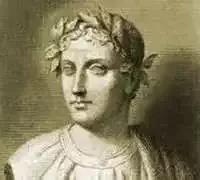
Horácio
BkII:X The Golden Mean
You’ll live more virtuously, my Murena,
by not setting out to sea, while you’re in dread
of the storm, or hugging fatal shores
too closely, either.
Whoever takes delight in the golden mean,
safely avoids the squalor of a shabby house,
and, soberly, avoids the regal palace
that incites envy.
The tall pine’s more often shaken by the wind,
and it’s a high tower that falls with a louder
crash, while the mountainous summits are places
where lightning strikes.
The heart that is well prepared for any fate
hopes in adversity, fears prosperity.
Though Jupiter brings us all the unlovely
winters: he also
takes them away again. If there’s trouble now
it won’t always be so: sometimes Apollo
rouses the sleeping Muse with his lyre, when he’s
not flexing his bow.
Appear brave and resolute in difficult
times: and yet be wise and take in all your sails
when they’re swollen by too powerful
a following wind.
299
Thomas Hardy
At A Bridal
WHEN you paced forth, to wait maternity,
A dream of other offspring held my mind,
Compounded of us twain as Love designed;
Rare forms, that corporate now will never be!
Should I, too, wed as slave to Mode's decree,
And each thus found apart, of false desire,
A stolid line, whom no high aims will fire
As had fired ours could ever have mingled we;
And, grieved that lives so matched should miscompose,
Each mourn the double waste; and question dare
To the Great Dame whence incarnation flows,
Why those high-purposed children never were:
What will she answer? That she does not care
If the race all such sovereign types unknows.
298
Henry Lawson
Cameron's Heart
The diggings were just in their glory when Alister Cameron came,
With recommendations, he told me, from friends and a parson `at hame';
He read me his recommendations -- he called them a part of his plant --
The first one was signed by an Elder, the other by Cameron's aunt.
The meenister called him `ungodly -- a stray frae the fauld o' the Lord',
And his aunt set him down as a spendthrift, `a rebel at hame and abroad'.
He got drunk now and then and he gambled (such heroes are often the same);
That's all they could say in connection with Alister Cameron's name.
He was straight and he stuck to his country
and spoke with respect of his kirk;
He did his full share of the cooking, and more than his share of the work.
And many a poor devil then, when his strength and his money were spent,
Was sure of a lecture -- and tucker, and a shakedown in Cameron's tent.
He shunned all the girls in the camp,
and they said he was proof to the dart --
That nothing but whisky and gaming had ever a place in his heart;
He carried a packet about him, well hid, but I saw it at last,
And -- well, 'tis a very old story -- the story of Cameron's past:
A ring and a sprig o' white heather, a letter or two and a curl,
A bit of a worn silver chain, and the portrait of Cameron's girl.
. . . . .
It chanced in the first of the Sixties that Ally and I and McKean
Were sinking a shaft on Mundoorin, near Fosberry's puddle-machine.
The bucket we used was a big one, and rather a weight when 'twas full,
Though Alister wound it up easy, for he had the strength of a bull.
He hinted at heart-disease often, but, setting his fancy apart,
I always believed there was nothing the matter with Cameron's heart.
One day I was working below -- I was filling the bucket with clay,
When Alister cried, `Pack it on, mon! we ought to be bottomed to-day.'
He wound, and the bucket rose steady and swift to the surface until
It reached the first log on the top,
where it suddenly stopped, and hung still.
I knew what was up in a moment when Cameron shouted to me:
`Climb up for your life by the footholes.
I'LL STICK TAE TH' HAUN'LE -- OR DEE!'
And those were the last words he uttered.
He groaned, for I heard him quite plain -There's
nothing so awful as that when it's wrung from a workman in pain.
The strength of despair was upon me; I started, and scarcely drew breath,
But climbed to the top for my life in the fear of a terrible death.
And there, with his waist on the handle, I saw the dead form of my mate,
And over the shaft hung the bucket, suspended by Cameron's weight.
I wonder did Alister think of the scenes in the distance so dim,
When Death at the windlass that morning took cruel advantage of him?
He knew if the bucket rushed down it would murder or cripple his mate --
His hand on the iron was closed with a grip that was stronger than Fate;
He thought of my danger, not his, when he felt in his bosom the smart,
And stuck to the handle in spite of the Finger of Death on his heart.
297
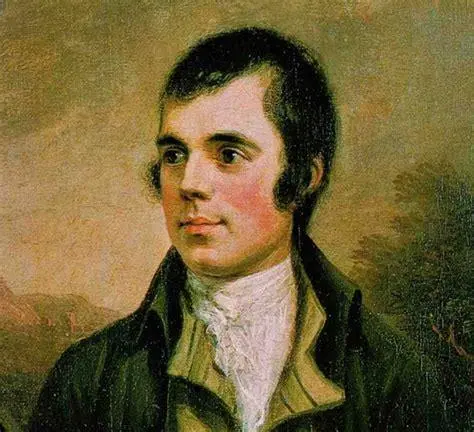
Robert Burns
The Wounded Hare
Inhuman man! curse on thy barb'rous art,
And blasted by thy murder-aiming eye;
May never pity soothe thee with a sigh,
Nor never pleasure glad thy cruel heart!
Go live, poor wanderer of the wood and field,
The bitter little of life that remains!
No more the thickening brakes and verdant plains
To thee shall home, or food, or pastime yield.
Seek, mangled wretch, some place of wonted rest,
No more of rest, but now of dying bed!
The sheltering rushes whistling o'er thy head,
The cold earth with thy bloody bosom Crest.
Oft as by winding Nith I, musing, wait
The sober eve, or hail the cheerful dawn,
I'll miss thee sporting o'er the dewy lawn,
And curse the ruffian's aim, and mourn thy hapless fate.
296