
Ethics and Morality

John Greenleaf Whittier
Our Country
WE give thy natal day to hope,
O Country of our love and prayer!
Thy way is down no fatal slope,
But up to freer sun and air.
Tried as by furnace-fires, and yet
By God's grace only stronger made,
In future tasks before thee set
Thou shalt not lack the old-time aid.
The fathers sleep, but men remain
As wise, as true, and brave as they;
Why count the loss and not the gain?
The best is that we have to-day.
Whate'er of folly, shame, or crime,
Withhin thy mighty bounds transpires,
With speed defying space and time
Comes to us on the accusing wires;
While of thy wealth of noble deeds,
Thy homes of peace, thy votes unsold,
The love that pleads for human needs,
The wrong redressed, but half is told!
We read each felon's chronicle,
His acts, his words, his gallows-mood;
We know the single sinner well
And not the nine and ninety good.
Yet if, on daily scandals fed,
We seem at times to doubt thy worth,
We know thee still, when all is said,
The best and dearest spot on earth.
From the warm Mexic Gulf, or where
Belted with flowers Los Angeles
Basks in the semi-tropic air,
To where Katahdin's cedar trees
Are dwarfed and bent by Northern winds,
Thy plenty's horn is yearly filled;
Alone, the rounding century finds
Thy liberal soil by free hands tilled.
A refuge for the wronged and poor,
Thy generous heart has borne the blame
That, with them, through thy open door,
The old world's evil outcasts came.
But, with thy just and equal rule,
And labor's need and breadth of lands,
Free press and rostrum, church and school,
Thy sure, if slow, transforming hands
Shall mould even them to thy design,
Making a blessing of the ban;
And Freedom's chemistry combine
The alien elements of man.
The power that broke their prison bar
And set the dusky millions free,
And welded in the flame of war
The Union fast to Liberty,
Shall if not deal with other ills,
Redress the red man's grievance, break
The Circean cup which shames and kills
And Labor full requital make?
Alone to such as fitly bear
Thy civic honors bid them fall?
And call thy daughters forth to share
The rights and duties pledged to all?
Give every child his right of school,
Merge private greed in public good,
And spare a treasury overfull
The tax upon a poor man's food?
No lack was in thy primal stock,
No weakling founders builded here;
Thine were the men of Plymouth Rock,
The Huguenot and Cavalier;
And they whose firm endurance gained
The freedom of the souls of men,
Whose hands, unstained with blood, maintained
The swordless commonwealth of Penn.
And thine shall be the power of all
To do the work which duty bids,
And make the people's council hall
As lasting as the Pyramids!
Well have thy later years made good
Thy brave-said word a century back,
The pledge of human brotherhood,
The equal claim of white and black.
That word still echoes round the world,
And all who hear it turn to thee,
And read upon thy flag unfurled
The prophecies of destiny.
Thy great world-lesson all shall learn,
The nations in thy school shall sit,
Earth's farthest mountain-tops shall burn
With watch-fires from thy own uplit.
Great without seeking to be great
By fraud or conquest, rich in gold,
But richer in the large estate
Of virtue which thy children hold,
With peace that comes of purity
And strength to simple justice due,
So runs our loyal dream of thee;
God of our fathers! make it true.
O Land of lands! to thee we give
Our prayers, our hopes, our service free;
For thee thy sons shall nobly live,
And at thy need shall die for thee!
297
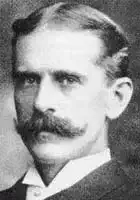
Henry Van Dyke
Stars and the Soul
To Charles A. Young, Astronomer
"Two things," the wise man said, "fill me with awe:
The starry heavens and the moral law."
Nay, add another wonder to thy roll, --
The living marvel of the human soul!
Born in the dust and cradled in the dark,
It feels the fire of an immortal spark,
And learns to read, with patient, searching eyes,
The splendid secret of the unconscious skies.
For God thought Light before He spoke the word;
The darkness understood not, though it heard:
But man looks up to where the planets swim,
And thinks God's thoughts of glory after Him.
What knows the star that guides the sailor's way,
Or lights the lover's bower with liquid ray,
Of toil and passion, danger and distress,
Brave hope, true love, and utter faithfulness?
But human hearts that suffer good and ill,
And hold to virtue with a loyal will,
Adorn the law that rules our mortal strife
With star-surpassing victories of life.
So take our thanks, dear reader of the skies,
Devout astronomer, most humbly wise,
For lessons brighter than the stars can give,
And inward light that helps us all to live.
The world has brought the laurel-leaves to crown
The star-discoverer's name with high renown;
Accept the flower of love we lay with these
For influence sweeter than the Pleiades!
298

James Whitcomb Riley
Let Us Forget
Let us forget. What matters it that we
Once reigned o'er happy realms of long-ago,
And talked of love, and let our voices low,
And ruled for some brief sessions royally?
What if we sung, or laughed, or wept maybe?
It has availed not anything, and so
Let it go by that we may better know
How poor a thing is lost to you and me.
But yesterday I kissed your lips, and yet
Did thrill you not enough to shake the dew
From your drenched lids--and missed, with no regret,
Your kiss shot back, with sharp breaths failing you;
And so, to-day, while our worn eyes are wet
With all this waste of tears, let us forget!
298

Emily Dickinson
I have never seen Volcanoes
I have never seen "Volcanoes"-
But, when Travellers tell
How those old-phlegmatic mountains
Usually so still-
Bear within-appalling Ordnance,
Fire, and smoke, and gun,
Taking Villages for breakfast,
And appalling Men-
If the stillness is Volcanic
In the human face
When upon a pain Titanic
Features keep their place-
If at length the smouldering anguish
Will not overcome-
And the palpitating Vineyard
In the dust, be thrown?
If some loving Antiquary,
On Resumption Morn,
Will not cry with joy "Pompeii"!
To the Hills return!
296
John Greenleaf Whittier
At Eventide
Poor and inadequate the shadow-play
Of gain and loss, of waking and of dream,
Against life's solemn background needs must seem
At this late hour. Yet, not unthankfully,
I call to mind the fountains by the way,
The breath of flowers, the bird-song on the spray,
Dear friends, sweet human loves, the joy of giving
And of receiving, the great boon of living
In grand historic years when Liberty
Had need of word and work, quick sympathies
For all who fail and suffer, song's relief,
Nature's uncloying loveliness; and chief,
The kind restraining hand of Providence,
The inward witness, the assuring sense
Of an Eternal Good which overlies
The sorrow of the world, Love which outlives
All sin and wrong, Compassion which forgives
To the uttermost, and Justice whose clear eyes
Through lapse and failure look to the intent,
And judge our frailty by the life we meant.
298
John Greenleaf Whittier
The Golden Wedding Of Longwood
With fifty years between you and your well-kept wedding vow,
The Golden Age, old friends of mine, is not a fable now.
And, sweet as has life's vintage been through all your pleasant past,
Still, as at Cana's marriage-feast, the best wine is the last!
Again before me, with your names, fair Chester's landscape comes,
Its meadows, woods, and ample barns, and quaint, stone-builded homes.
The smooth-shorn vales, the wheaten slopes, the boscage green and soft,
Of which their poet sings so well from towered Cedarcroft.
And lo! from all the country-side come neighbors, kith and kin;
From city, hamlet, farm-house old, the wedding guests come in.
And they who, without scrip or purse, mob-hunted, travel-worn,
In Freedom's age of martyrs came, as victors now return.
Older and slower, yet the same, files in the long array,
And hearts are light and eyes are glad, though heads are badger-gray.
The fire-tried men of Thirty-eight who saw with me the fall,
Midst roaring flames and shouting mob, of Pennsylvania Hall;
And they of Lancaster who turned the cheeks of tyrants pale,
Singing of freedom through the grates of Moyamensing jail!
And haply with them, all unseen, old comrades, gone before,
Pass, silently as shadows pass, within your open door,-
The eagle face of Lindley Coates, brave Garrett's daring zeal,
Christian grace of Pennock, the steadfast heart of Neal.
Ah me! beyond all power to name, the worthies tried and true,
Grave men, fair women, youth and maid, pass by in hushed review.
Of varying faiths, a common cause fused all their hearts in one.
God give them now, whate'er their names, the peace of duty done!
How gladly would I tread again the old-remembered places,
Sit down beside your hearth once more and look in the dear old faces!
And thank you for the lessons your fifty years are teaching,
For honest lives that louder speak than half our noisy preaching;
For your steady faith and courage in that dark and evil time,
When the Golden Rule was treason, and to feed the hungry, crime;
For the poor slave's house of refuge when the hounds were on his track,
And saint and sinner, church and state, joined hands to send him back.
Blessings upon you!--What you did for each sad, suffering one,
So homeless, faint, and naked, unto our Lord was done!
Fair fall on Kennett's pleasant vales and Longwood's bowery ways
The mellow sunset of your lives, friends of my early days.
May many more of quiet years be added to your sum,
And, late at last, in tenderest love, the beckoning angel come.
Dear hearts are here, dear hearts are there, alike below, above;
Our friends are now in either world, and love is sure of love.
296

Robert W. Service
Abandoned Dog
They dumped it on the lonely road,
Then like a streak they sped;
And as along the way I strode
I thought that it was dead:
And then I saw that yelping pup
Rise, race to catch them up.
You know how silly wee dogs are.
It thought they were in fun.
Trying to overtake their car
I saw it run and run:
But as they faster, faster went,
It stumbled, sore and spent.
I found it prone upon the way;
Of life was little token.
As limply in the dust it lay
I thought its heart was broken:
Then one dim eye it opened and
It sought to like my hand.
Of course I took it gently up
And brought it to my wife
Who loves all dogs, and now that pup
Shares in our happy life:
Yet how I curse the bastards who
Its good luck never knew!
296
Robert W. Service
Decorations
My only medals are the scars
I've won in weary, peacetime wars,
A-fighting for my little brood,
To win them shelter, shoon and food;
But most of all to give them faith
In God's good mercy unto death.
My sons have medals gleaming bright,
Proud trophies won in foreign fight;
But though their crosses bravely shine,
My boys can show no wounds like mine -
Grim gashes dolorously healed,
And inner ailings unrevealed.
Life-lasting has my battle been,
My enemy a fierce machine;
And I am marked by many a blow
In conflict with a tireless foe,
Till warped and bent beneath the beat
Of life's unruth I own defeat.
Yet strip me bare and you will see
A worthy warrior I be;
Although no uniform I've worn,
By wounds of labour I am torn;
Leave the their ribbands and their stars . . .
Behold! I proudly prize my scars.
296
James Whitcomb Riley
Limitations Of Genius
The audience entire seemed pleased--indeed
_Extremely_ pleased. And little Maymie, freed
From her task of instructing, ran to show
Her wondrous colored picture to and fro
Among the company.
'And how comes it,' said
Some one to Mr. Hammond, 'that, instead
Of the inventor's life you did not choose
The _artist's?_--since the world can better lose
A cutting-box or reaper than it can
A noble picture painted by a man
Endowed with gifts this drawing would suggest'--
Holding the picture up to show the rest.
'_There now!_' chimed in the wife, her pale face lit
Like winter snow with sunrise over it,-'
That's what _I'm_ always asking him.--But _he_-_
Well_, as he's answering _you_, he answers _me_,--
With that same silent, suffocating smile
He's wearing now!'
For quite a little while
No further speech from anyone, although
All looked at Mr. Hammond and that slow,
Immutable, mild smile of his. And then
The encouraged querist asked him yet again
_Why was it_, and etcetera--with all
The rest, expectant, waiting 'round the wall,--
Until the gentle Mr. Hammond said
He'd answer with a '_parable_,' instead--
About 'a dreamer' that he used to know-'
An artist'--'master'--_all_--in _embryo_.
296

Henry Wadsworth Longfellow
Tales Of A Wayside Inn : Part 1. Interlude V.
A strain of music closed the tale,
A low, monotonous, funeral wail,
That with its cadence, wild and sweet,
Made the long Saga more complete.
'Thank God,' the Theologian said,
'The reign of violence is dead,
Or dying surely from the world;
While Love triumphant reigns instead,
And in a brighter sky o'erhead
His blessed banners are unfurled.
And most of all thank God for this:
The war and waste of clashing creeds
Now end in words, and not in deeds,
And no one suffers loss, or bleeds,
For thoughts that men call heresies.
'I stand without here in the porch,
I hear the bell's melodious din,
I hear the organ peal within,
I hear the prayer, with words that scorch
Like sparks from an inverted torch,
I hear the sermon upon sin,
With threatenings of the last account.
And all, translated in the air,
Reach me but as our dear Lord's Prayer,
And as the Sermon on the Mount.
'Must it be Calvin, and not Christ?
Must it be Athanasian creeds,
Or holy water, books, and beads?
Must struggling souls remain content
With councils and decrees of Trent?
And can it be enough for these
The Christian Church the year embalms
With evergreens and boughs of palms,
And fills the air with litanies?
'I know that yonder Pharisee
Thanks God that he is not like me;
In my humiliation dressed,
I only stand and beat my breast,
And pray for human charity.
'Not to one church alone, but seven,
The voice prophetic spake from heaven;
And unto each the promise came,
Diversified, but still the same;
For him that overcometh are
The new name written on the stone,
The raiment white, the crown, the throne,
And I will give him the Morning Star!
'Ah! to how many Faith has been
No evidence of things unseen,
But a dim shadow, that recasts
The creed of the Phantasiasts,
For whom no Man of Sorrows died,
For whom the Tragedy Divine
Was but a symbol and a sign,
And Christ a phantom crucified!
'For others a diviner creed
Is living in the life they lead.
The passing of their beautiful feet
Blesses the pavement of the street
And all their looks and words repeat
Old Fuller's saying, wise and sweet,
Not as a vulture, but a dove,
The Holy Ghost came from above.
'And this brings back to me a tale
So sad the hearer well may quail,
And question if such things can be;
Yet in the chronicles of Spain
Down the dark pages runs this stain,
And naught can wash them white again,
So fearful is the tragedy.'
296
Henry Wadsworth Longfellow
Tales Of A Wayside Inn : Part 1. The Student's Tale; The Falcon of Ser Federigo
One summer morning, when the sun was hot,
Weary with labor in his garden-plot,
On a rude bench beneath his cottage eaves,
Ser Federigo sat among the leaves
Of a huge vine, that, with its arms outspread,
Hung its delicious clusters overhead.
Below him, through the lovely valley flowed
The river Arno, like a winding road,
And from its banks were lifted high in air
The spires and roofs of Florence called the Fair;
To him a marble tomb, that rose above
His wasted fortunes and his buried love.
For there, in banquet and in tournament,
His wealth had lavished been, his substance spent,
To woo and lose, since ill his wooing sped,
Monna Giovanna, who his rival wed,
Yet ever in his fancy reigned supreme,
The ideal woman of a young man's dream.
Then he withdrew, in poverty and pain,
To this small farm, the last of his domain,
His only comfort and his only care
To prune his vines, and plant the fig and pear;
His only forester and only guest
His falcon, faithful to him, when the rest,
Whose willing hands had found so light of yore
The brazen knocker of his palace door,
Had now no strength to lift the wooden latch,
That entrance gave beneath a roof of thatch.
Companion of his solitary ways,
Purveyor of his feasts on holidays,
On him this melancholy man bestowed
The love with which his nature overflowed.
And so the empty-handed years went round,
Vacant, though voiceful with prophetic sound,
And so, that summer morn, he sat and mused
With folded, patient hands, as he was used,
And dreamily before his half-closed sight
Floated the vision of his lost delight.
Beside him, motionless, the drowsy bird
Dreamed of the chase, and in his slumber heard
The sudden, scythe-like sweep of wings, that dare
The headlong plunge through eddying gulfs of air,
Then, starting broad awake upon his perch,
Tinkled his bells, like mass-bells in a church,
And, looking at his master, seemed to say,
'Ser Federigo, shall we hunt to-day?'
Ser Federigo thought not of the chase;
The tender vision of her lovely face,
I will not say he seems to see, he sees
In the leaf-shadows of the trellises,
Herself, yet not herself; a lovely child
With flowing tresses, and eyes wide and wild,
Coming undaunted up the garden walk,
And looking not at him, but at the hawk.
'Beautiful falcon!' said he, 'would that I
Might hold thee on my wrist, or see thee fly!'
The voice was hers, and made strange echoes start
Through all the haunted chambers of his heart,
As an aeolian harp through gusty doors
Of some old ruin its wild music pours.
'Who is thy mother, my fair boy?' he said,
His hand laid softly on that shining head.
'Monna Giovanna. Will you let me stay
A little while, and with your falcon play?
We live there, just beyond your garden wall,
In the great house behind the poplars tall.'
So he spake on; and Federigo heard
As from afar each softly uttered word,
And drifted onward through the golden gleams
And shadows of the misty sea of dreams,
As mariners becalmed through vapors drift,
And feel the sea beneath them sink and lift,
And hear far off the mournful breakers roar,
And voices calling faintly from the shore!
Then, waking from his pleasant reveries
He took the little boy upon his knees,
And told him stories of his gallant bird,
Till in their friendship he became a third.
Monna Giovanna, widowed in her prime,
Had come with friends to pass the summer time
In her grand villa, half-way up the hill,
O'erlooking Florence, but retired and still;
With iron gates, that opened through long lines
Of sacred ilex and centennial pines,
And terraced gardens, and broad steps of stone,
And sylvan deities, with moss o'ergrown,
And fountains palpitating in the heat,
And all Val d'Arno stretched beneath its feet.
Here in seclusion, as a widow may,
The lovely lady whiled the hours away,
Pacing in sable robes the statued hall,
Herself the stateliest statue among all,
And seeing more and more, with secret joy,
Her husband risen and living in her boy,
Till the lost sense of life returned again,
Not as delight, but as relief from pain.
Meanwhile the boy, rejoicing in his strength,
Stormed down the terraces from length to length;
The screaming peacock chased in hot pursuit,
And climbed the garden trellises for fruit.
But his chief pastime was to watch the flight
Of a gerfalcon, soaring into sight,
Beyond the trees that fringed the garden wall,
Then downward stooping at some distant call;
And as he gazed full often wondered he
Who might the master of the falcon be,
Until that happy morning, when he found
Master and falcon in the cottage ground.
And now a shadow and a terror fell
On the great house, as if a passing-bell
Tolled from the tower, and filled each spacious room
With secret awe, and preternatural gloom;
The petted boy grew ill, and day by day
Pined with mysterious malady away.
The mother's heart would not be comforted;
Her darling seemed to her already dead,
And often, sitting by the sufferer's side,
'What can I do to comfort thee?' she cried.
At first the silent lips made no reply,
But moved at length by her importunate cry,
'Give me,' he answered, with imploring tone,
'Ser Federigo's falcon for my own!'
No answer could the astonished mother make;
How could she ask, e'en for her darling's sake,
Such favor at a luckless lover's hand,
Well knowing that to ask was to command?
Well knowing, what all falconers confessed,
In all the land that falcon was the best,
The master's pride and passion and delight,
And the sole pursuivant of this poor knight.
But yet, for her child's sake, she could no less
Than give assent to soothe his restlessness,
So promised, and then promising to keep
Her promise sacred, saw him fall asleep.
The morrow was a bright September morn;
The earth was beautiful as if new-born;
There was that nameless splendor everywhere,
That wild exhilaration in the air,
Which makes the passers in the city street
Congratulate each other as they meet.
Two lovely ladies, clothed in cloak and hood,
Passed through the garden gate into the wood,
Under the lustrous leaves, and through the sheen
Of dewy sunshine showering down between.
The one, close-hooded, had the attractive grace
Which sorrow sometimes lends a woman's face;
Her dark eyes moistened with the mists that roll
From the gulf-stream of passion in the soul;
The other with her hood thrown back, her hair
Making a golden glory in the air,
Her cheeks suffused with an auroral blush,
Her young heart singing louder than the thrush.
So walked, that morn, through mingled light and shade,
Each by the other's presence lovelier made,
Monna Giovanna and her bosom friend,
Intent upon their errand and its end.
They found Ser Federigo at his toil,
Like banished Adam, delving in the soil;
And when he looked and these fair women spied,
The garden suddenly was glorified;
His long-lost Eden was restored again,
And the strange river winding through the plain
No longer was the Arno to his eyes,
But the Euphrates watering Paradise!
Monna Giovanna raised her stately head,
And with fair words of salutation said:
'Ser Federigo, we come here as friends,
Hoping in this to make some poor amends
For past unkindness. I who ne'er before
Would even cross the threshold of your door,
I who in happier days such pride maintained,
Refused your banquets, and your gifts disdained,
This morning come, a self-invited guest,
To put your generous nature to the test,
And breakfast with you under your own vine.'
To which he answered: 'Poor desert of mine,
Not your unkindness call it, for if aught
Is good in me of feeling or of thought,
From you it comes, and this last grace outweighs
All sorrows, all regrets of other days.'
And after further compliment and talk,
Among the asters in the garden walk
He left his guests; and to his cottage turned,
And as he entered for a moment yearned
For the lost splendors of the days of old,
The ruby glass, the silver and the gold,
And felt how piercing is the sting of pride,
By want embittered and intensified.
He looked about him for some means or way
To keep this unexpected holiday;
Searched every cupboard, and then searched again,
Summoned the maid, who came, but came in vain;
'The Signor did not hunt to-day,' she said,
'There's nothing in the house but wine and bread.'
Then suddenly the drowsy falcon shook
His little bells, with that sagacious look,
Which said, as plain as language to the ear,
'If anything is wanting, I am here!'
Yes, everything is wanting, gallant bird!
The master seized thee without further word.
Like thine own lure, he whirled thee round; ah me!
The pomp and flutter of brave falconry,
The bells, the jesses, the bright scarlet hood,
The flight and the pursuit o'er field and wood,
All these forevermore are ended now;
No longer victor, but the victim thou!
Then on the board a snow-white cloth he spread,
Laid on its wooden dish the loaf of bread,
Brought purple grapes with autumn sunshine hot,
The fragrant peach, the juicy bergamot;
Then in the midst a flask of wine he placed,
And with autumnal flowers the banquet graced.
Ser Federigo, would not these suffice
Without thy falcon stuffed with cloves and spice?
When all was ready, and the courtly dame
With her companion to the cottage came,
Upon Ser Federigo's brain there fell
The wild enchantment of a magic spell!
The room they entered, mean and low and small,
Was changed into a sumptuous banquet-hall,
With fanfares by aerial trumpets blown;
The rustic chair she sat on was a throne;
He ate celestial food, and a divine
Flavor was given to his country wine,
And the poor falcon, fragrant with his spice,
A peacock was, or bird of paradise!
When the repast was ended, they arose
And passed again into the garden-close.
Then said the lady, 'Far too well I know,
Remembering still the days of long ago,
Though you betray it not with what surprise
You see me here in this familiar wise.
You have no children, and you cannot guess
What anguish, what unspeakable distress
A mother feels, whose child is lying ill,
Nor how her heart anticipates his will.
And yet for this, you see me lay aside
All womanly reserve and check of pride,
And ask the thing most precious in your sight,
Your falcon, your sole comfort and delight,
Which if you find it in your heart to give,
My poor, unhappy boy perchance may live.'
Ser Federigo listens, and replies,
With tears of love and pity in his eyes:
'Alas, dear lady! there can be no task
So sweet to me, as giving when you ask.
One little hour ago, if I had known
This wish of yours, it would have been my own.
But thinking in what manner I could best
Do honor to the presence of my guest,
I deemed that nothing worthier could be
Than what most dear and precious was to me,
And so my gallant falcon breathed his last
To furnish forth this morning our repast.'
In mute contrition, mingled with dismay,
The gentle lady turned her eyes away,
Grieving that he such sacrifice should make,
And kill his falcon for a woman's sake,
Yet feeling in her heart a woman's pride,
That nothing she could ask for was denied;
Then took her leave, and passed out at the gate
With footstep slow and soul disconsolate.
Three days went by, and lo! a passing-bell
Tolled from the little chapel in the dell;
Ten strokes Ser Federigo heard, and said,
Breathing a prayer, 'Alas! her child is dead!'
Three months went by; and lo! a merrier chime
Rang from the chapel bells at Christmas-time;
The cottage was deserted, and no more
Ser Federigo sat beside its door,
But now, with servitors to do his will,
In the grand villa, half-way up the hill,
Sat at the Christmas feast, and at his side
Monna Giovanna, his beloved bride,
Never so beautiful, so kind, so fair,
Enthroned once more in the old rustic chair,
High-perched upon the back of which there stood
The image of a falcon carved in wood,
And underneath the inscription, with date,
'All things come round to him who will but wait.'
294
Robert W. Service
Afternoon Tea
As I was saying . . . (No, thank you; I never take cream with my tea;
Cows weren't allowed in the trenches -- got out of the habit, y'see.)
As I was saying, our Colonel leaped up like a youngster of ten:
"Come on, lads!" he shouts, "and we'll show 'em," and he sprang to the head of the
men.
Then some bally thing seemed to trip him, and he fell on his face with a slam. . . .
Oh, he died like a true British soldier, and the last word he uttered was "Damn!"
And hang it! I loved the old fellow, and something just burst in my brain,
And I cared no more for the bullets than I would for a shower of rain.
'Twas an awf'ly funny sensation (I say, this is jolly nice tea);
I felt as if something had broken; by gad! I was suddenly free.
Free for a glorified moment, beyond regulations and laws,
Free just to wallow in slaughter, as the chap of the Stone Age was.
So on I went joyously nursing a Berserker rage of my own,
And though all my chaps were behind me, feeling most frightf'ly alone;
With the bullets and shells ding-donging, and the "krock" and the swish of the shrap;
And I found myself humming "Ben Bolt" . . . (Will you pass me the sugar, old chap?
Two lumps, please). . . . What was I saying? Oh yes, the jolly old dash;
We simply ripped through the barrage, and on with a roar and a crash.
My fellows -- Old Nick couldn't stop 'em. On, on they went with a yell,
Till they tripped on the Boches' sand-bags, -- nothing much left to tell:
A trench so tattered and battered that even a rat couldn't live;
Some corpses tangled and mangled, wire you could pass through a sieve.
The jolly old guns had bilked us, cheated us out of our show,
And my fellows were simply yearning for a red mix-up with the foe.
So I shouted to them to follow, and on we went roaring again,
Battle-tuned and exultant, on in the leaden rain.
Then all at once a machine gun barks from a bit of a bank,
And our Major roars in a fury: "We've got to take it on flank."
He was running like fire to lead us, when down like a stone he comes,
As full of "typewriter" bullets as a pudding is full of plums.
So I took his job and we got 'em. . . . By gad! we got 'em like rats;
Down in a deep shell-crater we fought like Kilkenny cats.
'Twas pleasant just for a moment to be sheltered and out of range,
With someone you saw to go for -- it made an agreeable change.
And the Boches that missed my bullets, my chaps gave a bayonet jolt,
And all the time, I remember, I whistled and hummed "Ben Bolt".
Well, that little job was over, so hell for leather we ran,
On to the second line trenches, -- that's where the fun began.
For though we had strafed 'em like fury, there still were some Boches about,
And my fellows, teeth set and eyes glaring, like terriers routed 'em out.
Then I stumbled on one of their dug-outs, and I shouted: "Is anyone there?"
And a voice, "Yes, one; but I'm wounded," came faint up the narrow stair;
And my man was descending before me, when sudden a cry! a shot!
(I say, this cake is delicious. You make it yourself, do you not?)
My man? Oh, they killed the poor devil; for if there was one there was ten;
So after I'd bombed 'em sufficient I went down at the head of my men,
And four tried to sneak from a bunk-hole, but we cornered the rotters all right;
I'd rather not go into details, 'twas messy that bit of the fight.
But all of it's beastly messy; let's talk of pleasanter things:
The skirts that the girls are wearing, ridiculous fluffy things,
So short that they show. . . . Oh, hang it! Well, if I must, I must.
We cleaned out the second trench line, bomb and bayonet thrust;
And on we went to the third one, quite calloused to crumping by now;
And some of our fellows who'd passed us were making a deuce of a row;
And my chaps -- well, I just couldn't hold 'em; (It's strange how it is with gore;
In some ways it's just like whiskey: if you taste it you must have more.)
Their eyes were like beacons of battle; by gad, sir! they COULDN'T be calmed,
So I headed 'em bang for the bomb-belt, racing like billy-be-damned.
Oh, it didn't take long to arrive there, those who arrived at all;
The machine guns were certainly chronic, the shindy enough to appal.
Oh yes, I omitted to tell you, I'd wounds on the chest and the head,
And my shirt was torn to a gun-rag, and my face blood-gummy and red.
I'm thinking I looked like a madman; I fancy I felt one too,
Half naked and swinging a rifle. . . . God! what a glorious "do".
As I sit here in old Piccadilly, sipping my afternoon tea,
I see a blind, bullet-chipped devil, and it's hard to believe that it's me;
I see a wild, war-damaged demon, smashing out left and right,
And humming "Ben Bolt" rather loudly, and hugely enjoying the fight.
And as for my men, may God bless 'em! I've loved 'em ever since then:
They fought like the shining angels; they're the pick o' the land, my men.
And the trench was a reeking shambles, not a Boche to be seen alive --
So I thought; but on rounding a traverse I came on a covey of five;
And four of 'em threw up their flippers, but the fifth chap, a sergeant, was game,
And though I'd a bomb and revolver he came at me just the same.
A sporty thing that, I tell you; I just couldn't blow him to hell,
So I swung to the point of his jaw-bone, and down like a ninepin he fell.
And then when I'd brought him to reason, he wasn't half bad, that Hun;
He bandaged my head and my short-rib as well as the Doc could have done.
So back I went with my Boches, as gay as a two-year-old colt,
And it suddenly struck me as rummy, I still was a-humming "Ben Bolt".
And now, by Jove! how I've bored you. You've just let me babble away;
Let's talk of the things that matter -- your car or the newest play. . . .
294

Jonathan Swift
Ballad
A WONDERFUL age
Is now on the stage:
I'll sing you a song, if I can,
How modern Whigs,
Dance forty-one jigs,
But God bless our gracious Queen Anne.
The kirk with applause
Is established by laws
As the orthodox church of the nation.
The bishops do own
It's as good as their own.
And this, Sir, is call'd moderation.
It's no riddle now
To let you see how
A church by oppression may speed;
Nor is't banter or jest,
That the kirk faith is best
On the other side of the Tweed.
For no soil can suit
With every fruit,
Even so, Sir, it is with religion;
The best church by far
Is what grows where you are,
Were it Mahomet's ass or his pigeon.
Another strange story
That vexes the Tory,
But sure there's no mystery in it,
That a pension and place
Give communicants grace,
Who design to turn tail the next minute.
For if it be not strange,
That religion should change,
As often as climates and fashions;
Then sure there's no harm,
That one should conform.
To serve their own private occasions.
Another new dance,
Which of late they advance,
Is to cry up the birth of Pretender,
And those that dare own
The queen heir to the crown,
Are traitors, not fit to defend her.
The subject's most loyal
That hates the blood royal,
And they for employments have merit,
Who swear queen and steeple
Were made by the people,
And neither have right to inherit.
The monarchy's fixt,
By making on't mixt,
And by non-resistance o'erthrown;
And preaching obedience
Destroys our allegiance,
And thus the Whigs prop up the throne.
That viceroy is best,
That would take off the test,
And made a sham speech to attempt it;
But being true blue,
When he found 'twould not do,
Swore, damn him, if ever he meant it.
'Tis no news that Tom Double
The nation should bubble,
Nor is't any wonder or riddle,
That a parliament rump
Should play hop, step, and jump,
And dance any jig to his fiddle.
But now, sir, they tell,
How Sacheverell,
By bringing old doctrines in fashion,
Hath, like a damn'd rogue,
Brought religion in vogue,
And so open'd the eyes of the nation.
Then let's pray without spleen,
May God bless the queen,
And her fellow-monarchs the people;
May they prosper and thrive,
Whilst I am alive,
And so may the church with the steeple.
294

Henry Lawson
Send Round the Hat
Now this is the creed from the Book of the Bush –
Should be simple and plain to a dunce:
"If a man’s in a hole you must pass round the hat –
Were he jail-bird or gentleman once."
Should be simple and plain to a dunce:
"If a man’s in a hole you must pass round the hat –
Were he jail-bird or gentleman once."
294
Emily Dickinson
I meant to have but modest needs
I meant to have but modest needs-
Such as Content-and Heaven-
Within my income-these could lie
And Life and I-keep even-
But since the last-included both-
It would suffice my Prayer
But just for One-to stipulate-
And Grace would grant the Pair-
And so-upon this wise-I prayed-
Great Spirit-Give to me
A Heaven not so large as Yours,
But large enough-for me-
A Smile suffused Jehovah's face-
The Cherubim-withdrew-
Grave Saints stole out to look at me-
And showed their dimples-too-
I left the Place, with all my might-
I threw my Prayer away-
The Quiet Ages picked it up-
And Judgment-twinkled-too-
Tat one so honest-be extant-
It take the Tale for true-
That "Whatsoever Ye shall ask-
Itself be given You"-
But I, grown shrewder-scan the Skies
With a suspicious Air-
As Children-swindled for the first
All Swindlers-be-infer-
295

Carl Sandburg
Government
The Government -- I heard about the Government and
I went out to find it. I said I would look closely at
it when I saw it.
Then I saw a policeman dragging a drunken man to
the callaboose. It was the Government in action.
I saw a ward alderman slip into an office one morning
and talk with a judge. Later in the day the judge
dismissed a case against a pickpocket who was a
live ward worker for the alderman. Again I saw
this was the Government, doing things.
I saw militiamen level their rifles at a crowd of
workingmen who were trying to get other workingmen
to stay away from a shop where there was a strike
on. Government in action.
Everywhere I saw that Government is a thing made of
men, that Government has blood and bones, it is
many mouths whispering into many ears, sending
telegrams, aiming rifles, writing orders, saying
"yes" and "no."
Government dies as the men who form it die and are laid
away in their graves and the new Government that
comes after is human, made of heartbeats of blood,
ambitions, lusts, and money running through it all,
money paid and money taken, and money covered
up and spoken of with hushed voices.
A Government is just as secret and mysterious and sensitive
as any human sinner carrying a load of germs,
traditions and corpuscles handed down from
fathers and mothers away back.
294
Robert W. Service
Young Fellow My Lad
"Where are you going, Young Fellow My Lad,
On this glittering morn of May?"
"I'm going to join the Colours, Dad;
They're looking for men, they say."
"But you're only a boy, Young Fellow My Lad;
You aren't obliged to go."
"I'm seventeen and a quarter, Dad,
And ever so strong, you know."
* * * *
"So you're off to France, Young Fellow My Lad,
And you're looking so fit and bright."
"I'm terribly sorry to leave you, Dad,
But I feel that I'm doing right."
"God bless you and keep you, Young Fellow My Lad,
You're all of my life, you know."
"Don't worry. I'll soon be back, dear Dad,
And I'm awfully proud to go."
* * * *
"Why don't you write, Young Fellow My Lad?
I watch for the post each day;
And I miss you so, and I'm awfully sad,
And it's months since you went away.
And I've had the fire in the parlour lit,
And I'm keeping it burning bright
Till my boy comes home; and here I sit
Into the quiet night.
* * * *
"What is the matter, Young Fellow My Lad?
No letter again to-day.
Why did the postman look so sad,
And sigh as he turned away?
I hear them tell that we've gained new ground,
But a terrible price we've paid:
God grant, my boy, that you're safe and sound;
But oh I'm afraid, afraid."
* * * *
"They've told me the truth, Young Fellow My Lad:
You'll never come back again:
(Oh God! the dreams and the dreams I've had,
and the hopes I've nursed in vain!)
For you passed in the night, Young Fellow My Lad,
And you proved in the cruel test
Of the screaming shell and the battle hell
That my boy was one of the best.
"So you'll live, you'll live, Young Fellow My Lad,
In the gleam of the evening star,
In the wood-note wild and the laugh of the child,
In all sweet things that are.
And you'll never die, my wonderful boy,
While life is noble and true;
For all our beauty and hope and joy
We will owe to our lads like you."
294
Henry Wadsworth Longfellow
Frithiof's Temptation. (From The Swedish)
Spring is coming, birds are twittering, forests leaf, and smiles the sun,
And the loosened torrents downward, singing, to the ocean run;
Glowing like the cheek of Freya, peeping rosebuds 'gin to ope,
And in human hearts awaken love of life, and joy, and hope.
Now will hunt the ancient monarch, and the queen shall join the sport:
Swarming in its gorgeous splendor, is assembled all the Court;
Bows ring loud, and quivers rattle, stallions paw the ground alway,
And, with hoods upon their eyelids, scream the falcons for their prey.
See, the Queen of the Chase advances! Frithiof, gaze not at the sight!
Like a star upon a spring-cloud sits she on her palfrey white.
Half of Freya, half of Rota, yet more beauteous than these two,
And from her light hat of purple wave aloft the feathers blue.
Gaze not at her eyes' blue heaven, gaze not at her golden hair!
Oh beware! her waist is slender, full her bosom is, beware!
Look not at the rose and lily on her cheek that shifting play,
List not to the voice beloved, whispering like the wind of May.
Now the huntsman's band is ready. Hurrah! over hill and dale!
Horns ring, and the hawks right upward to the hall of Odin sail.
All the dwellers in the forest seek in fear their cavern homes,
But, with spear outstretched before her, after them the Valkyr comes.
. . . . . . . . . .
Then threw Frithiof down his mantle, and upon the greensward spread,
And the ancient king so trustful laid on Frithiof's knee his head,
Slept as calmly as the hero sleepeth, after war's alarm,
On his shield, or as an infant sleeps upon its mother's arm.
As he slumbers, hark! there sings a coal-black bird upon the bough;
'Hasten, Frithiof, slay the old man, end your quarrel at a blow:
Take his queen, for she is thine, and once the bridal kiss she gave,
Now no human eye beholds thee, deep and silent is the grave,'
Frithiof listens; hark! there sings a snow-white bird upon the bough:
'Though no human eye beholds thee, Odin's eye beholds thee now.
Coward! wilt thou murder sleep, and a defenceless old man slay!
Whatsoe'er thou winn'st, thou canst not win a hero's fame this way.'
Thus the two wood-birds did warble: Frithiof took his war-sword good,
With a shudder hurled it from him, far into the gloomy wood.
Coal-black bird flies down to Nastrand, but on light, unfolded wings,
Like the tone of harps, the other, sounding towards the sun, upsprings.
Straight the ancient king awakens. 'Sweet has been my sleep,' he said;
'Pleasantly sleeps one in the shadow, guarded by a brave man's blade.
But where is thy sword, O stranger? Lightning's brother, where is he?
Who thus parts you, who should never from each other parted be?'
'It avails not,' Frithiof answered; 'in the North are other swords:
Sharp, O monarch! is the sword's tongue, and it speaks not peaceful words;
Murky spirits dwell in steel blades, spirits from the Niffelhem;
Slumber is not safe before them, silver locks but anger them.'
294
Henry Wadsworth Longfellow
Death Of Archbishop Turpin. (From The French)
The Archbishop, whom God loved in high degree,
Beheld his wounds all bleeding fresh and free;
And then his cheek more ghastly grew and wan,
And a faint shudder through his members ran.
Upon the battle-field his knee was bent;
Brave Roland saw, and to his succor went,
Straightway his helmet from his brow unlaced,
And tore the shining hauberk from his breast.
Then raising in his arms the man of God,
Gently he laid him on the verdant sod.
Rest, Sire,' he cried,--'for rest thy suffering needs.'
The priest replied, 'Think but of warlike deeds!
The field is ours; well may we boast this strife!
But death steals on,--there is no hope of life;
In paradise, where Almoners live again,
There are our couches spread, there shall we rest from pain.
Sore Roland grieved; nor marvel I, alas!
That thrice he swooned upon the thick green grass.
When he revived, with a loud voice cried he,
'O Heavenly Father! Holy Saint Marie!
Why lingers death to lay me in my grave!
Beloved France! how have the good and brave
Been torn from thee, and left thee weak and poor!'
Then thoughts of Aude, his lady-love, came o'er
His spirit, and he whispered soft and slow,
'My gentle friend!--what parting full of woe!
Never so true a liegeman shalt thou see;-Whate'er
my fate, Christ's benison on thee!
Christ, who did save from realms of woe beneath,
The Hebrew Prophets from the second death.'
Then to the Paladins, whom well he knew,
He went, and one by one unaided drew
To Turpin's side, well skilled in ghostly lore;--
No heart had he to smile, but, weeping sore,
He blessed them in God's name, with faith that He
Would soon vouchsafe to them a glad eternity.
The Archbishop, then, on whom God's benison rest,
Exhausted, bowed his head upon his breast;--
His mouth was full of dust and clotted gore,
And many a wound his swollen visage bore.
Slow beats his heart, his panting bosom heaves,
Death comes apace,--no hope of cure relieves.
Towards heaven he raised his dying hands and prayed
That God, who for our sins was mortal made,
Born of the Virgin, scorned and crucified,
In paradise would place him by His side.
Then Turpin died in service of Charlon,
In battle great and eke great orison;-'
Gainst Pagan host alway strong champion;
God grant to him His holy benison.
294

Alice Walker
Blessed Are The Poor In Spirit
Did you ever understand this?
If my spirit was poor, how could I enter heaven?
Was I depressed?
Understanding editing,
I see how a comma, removed or inserted
with careful plan,
can change everything.
I was reminded of this
when a poor young man
in Tunisia
desperate to live
and humiliated for trying
set himself ablaze;
I felt uncomfortably warm
as if scalded by his shame.
I do not have to sell vegetables from a cart as he did
or live in narrow rooms too small for spacious thought;
and, at this late date,
I do not worry that someone will
remove every single opportunity
for me to thrive.
Still, I am connected to, inseparable from,
this young man.
Blessed are the poor, in spirit, for theirs is the kingdom of heaven.
Jesus. (Commas restored) .
Jesus was as usual talking about solidarity: about how we join with others
and, in spirit, feel the world, and suffering, the same as them.
This is the kingdom of owning the other as self, the self as other;
that transforms grief into
peace and delight.
I, and you, might enter the heaven
of right here
through this door.
In this spirit, knowing we are blessed,
we might remain poor
294
Carl Sandburg
I Am The People, The Mob
I Am the people--the mob--the crowd--the mass.
Do you know that all the great work of the world is
done through me?
I am the workingman, the inventor, the maker of the
world's food and clothes.
I am the audience that witnesses history. The Napoleons
come from me and the Lincolns. They die. And
then I send forth more Napoleons and Lincolns.
I am the seed ground. I am a prairie that will stand
for much plowing. Terrible storms pass over me.
I forget. The best of me is sucked out and wasted.
I forget. Everything but Death comes to me and
makes me work and give up what I have. And I
forget.
Sometimes I growl, shake myself and spatter a few red
drops for history to remember. Then--I forget.
When I, the People, learn to remember, when I, the
People, use the lessons of yesterday and no longer
forget who robbed me last year, who played me for
a fool--then there will be no speaker in all the world
say the name: 'The People,' with any fleck of a
sneer in his voice or any far-off smile of derision.
The mob--the crowd--the mass--will arrive then.
295

William Butler Yeats
From The 'Antigone'
Overcome -- O bitter sweetness,
Inhabitant of the soft cheek of a girl --
The rich man and his affairs,
The fat flocks and the fields' fatness,
Mariners, rough harvesters;
Overcome Gods upon Parnassus;
Overcome the Empyrean; hurl
Heaven and Earth out of their places,
That in the Same calamity
Brother and brother, friend and friend,
Family and family,
City and city may contend,
By that great glory driven wild.
Pray I will and sing I must,
And yet I weep -- Oedipus' child
Descends into the loveless dust.
295
John Greenleaf Whittier
Garibaldi
In trance and dream of old, God's prophet saw
The casting down of thrones. Thou, watching lone
The hot Sardinian coast-line, hazy-hilled,
Where, fringing round Caprera's rocky zone
With foam, the slow waves gather and withdraw,
Behold'st the vision of the seer fulfilled,
And hear'st the sea-winds burdened with a sound
Of falling chains, as, one by one, unbound,
The nations lift their right hands up and swear
Their oath of freedom. From the chalk-white wall
Of England, from the black Carpathian range,
Along the Danube and the Theiss, through all
The passes of the Spanish Pyrenees,
And from the Seine's thronged banks, a murmur strange
And glad floats to thee o'er thy summer seas
On the salt wind that stirs thy whitening hair,--
The song of freedom's bloodless victories!
Rejoice, O Garibaldi! Though thy sword
Failed at Rome's gates, and blood seemed vainly poured
Where, in Christ's name, the crowned infidel
Of France wrought murder with the arms of hell
On that sad mountain slope whose ghostly dead,
Unmindful of the gray exorcist's ban,
Walk, unappeased, the chambered Vatican,
And draw the curtains of Napoleon's bed!
God's providence is not blind, but, full of eyes,
It searches all the refuges of lies;
And in His time and way, the accursed things
Before whose evil feet thy battle-gage
Has clashed defiance from hot youth to age
Shall perish. All men shall be priests and kings,
One royal brotherhood, one church made free
By love, which is the law of liberty
295
Jonathan Swift
A Satirical Elegy on the Death of a Late Famous General
"His Grace! impossible! what, dead!
Of old age too, and in his bed!
And could that mighty warrior fall,
And so inglorious, after all?
Well, since he's gone, no matter how,
The last loud trump must wake him now;
And, trust me, as the noise grows stronger,
He'd wish to sleep a little longer.
And could he be indeed so old
As by the newspapers we're told?
Threescore, I think, is pretty high;
'Twas time in conscience he should die!
This world he cumber'd long enough;
He burnt his candle to the snuff;
And that's the reason, some folks think,
He left behind so great a stink.
Behold his funeral appears,
Nor widows' sighs, nor orphans' tears,
Wont at such times each heart to pierce,
Attend the progress of his hearse.
But what of that? his friends may say,
He had those honours in his day.
True to his profit and his pride,
He made them weep before he died
Come hither, all ye empty things!
Ye bubbles rais'd by breath of kings!
Who float upon the tide of state;
Come hither, and behold your fate!
Let pride be taught by this rebuke,
How very mean a thing's a duke;
From all his ill-got honours flung,
Turn'd to that dirt from whence he sprung"
295