
Ethics and Morality

Henry Wadsworth Longfellow
The Jewish Cemetery at Newport
How strange it seems! These Hebrews in their graves,
Close by the street of this fair seaport town,
Silent beside the never-silent waves,
At rest in all this moving up and down!
The trees are white with dust, that o'er their sleep
Wave their broad curtains in the southwind's breath,
While underneath these leafy tents they keep
The long, mysterious Exodus of Death.
And these sepulchral stones, so old and brown,
That pave with level flags their burial-place,
Seem like the tablets of the Law, thrown down
And broken by Moses at the mountain's base.
The very names recorded here are strange,
Of foreign accent, and of different climes;
Alvares and Rivera interchange
With Abraham and Jacob of old times.
"Blessed be God! for he created Death!"
The mourner said, "and Death is rest and peace!"
Then added, in the certainty of faith,
"And giveth Life that nevermore shall cease."
Closed are the portals of their Synagogue,
No Psalms of David now the silence break,
No Rabbi reads the ancient Decalogue
In the grand dialect the Prophets spake.
Gone are the living, but the dead remain,
And not neglected; for a hand unseen,
Scattering its bounty, like a summer rain,
Still keeps their graves and their remembrance green.
How came they here? What burst of Christian hate,
What persecution, merciless and blind,
Drove o'er the sea -that desert desolate -
These Ishmaels and Hagars of mankind?
They lived in narrow streets and lanes obscure,
Ghetto and Judenstrass, in mirk and mire;
Taught in the school of patience to endure
The life of anguish and the death of fire.
All their lives long, with the unleavened bread
And bitter herbs of exile and its fears,
The wasting famine of the heart they fed,
And slaked its thirst with marah of their tears.
Anathema maranatha! was the cry
That rang from town to town, from street to street:
At every gate the accursed Mordecai
Was mocked and jeered, and spurned by Christian feet.
Pride and humiliation hand in hand
Walked with them through the world where'er they went;
Trampled and beaten were they as the sand,
And yet unshaken as the continent.
For in the background figures vague and vast
Of patriarchs and of prophets rose sublime,
And all the great traditions of the Past
They saw reflected in the coming time.
And thus forever with reverted look
The mystic volume of the world they read,
Spelling it backward, like a Hebrew book,
Till life became a Legend of the Dead.
But ah! what once has been shall be no more!
The groaning earth in travail and in pain
Brings forth its races, but does not restore,
And the dead nations never rise again.
293

Henry Lawson
A Derry on a Cove
’Twas in the felon’s dock he stood, his eyes were black and blue;
His voice with grief was broken, and his nose was broken, too;
He muttered, as that broken nose he wiped upon his cap—
‘It’s orfal when the p’leece has got a derry on a chap.
‘I am a honest workin’ cove, as any bloke can see,
‘It’s just because the p’leece has got a derry, sir, on me;
‘Oh, yes, the legal gents can grin, I say it ain’t no joke—
‘It’s cruel when the p’leece has got a derry on a bloke.’
‘Why don’t you go to work?’ he said (he muttered, ‘Why don’t you?’).
‘Yer honer knows as well as me there ain’t no work to do.
‘And when I try to find a job I’m shaddered by a trap—
‘It’s awful when the p’leece has got a derry on a chap.’
I sigh’d and shed a tearlet for that noble nature marred,
But, ah! the Bench was rough on him, and gave him six months’ hard.
He only said, ‘Beyond the grave you’ll cop it hot, by Jove!
‘There ain’t no angel p’leece to get a derry on a cove.’
293

Gwendolyn Brooks
The Ballad of Rudolph Reed
Rudolph Reed was oaken.
His wife was oaken too.
And his two good girls and his good little man
Oakened as they grew.
"I am not hungry for berries.
I am not hungry for bread.
But hungry hungry for a house
Where at night a man in bed
"May never hear the plaster
Stir as if in pain.
May never hear the roaches
Falling like fat rain.
"Where never wife and children need
Go blinking through the gloom.
Where every room of many rooms
Will be full of room.
"Oh my home may have its east or west
Or north or south behind it.
All I know is I shall know it,
And fight for it when I find it."
The agent's steep and steady stare
Corroded to a grin.
Why you black old, tough old hell of a man,
Move your family in!
Nary a grin grinned Rudolph Reed,
Nary a curse cursed he,
But moved in his House. With his dark little wife,
And his dark little children three.
A neighbor would look, with a yawning eye
That squeezed into a slit.
But the Rudolph Reeds and children three
Were too joyous to notice it.
For were they not firm in a home of their own
With windows everywhere
And a beautiful banistered stair
And a front yard for flowers and a back for grass?
The first night, a rock, big as two fists.
The second, a rock big as three.
But nary a curse cursed Rudolph Reed.
(Though oaken as man could be.)
The third night, a silvery ring of glass.
Patience arched to endure,
But he looked, and lo! small Mabel's blood
Was staining her gaze so pure.
Then up did rise our Roodoplh Reed
And pressed the hand of his wife,
And went to the door with a thirty-four
And a beastly butcher knife.
He ran like a mad thing into the night
And the words in his mouth were stinking.
By the time he had hurt his first white man
He was no longer thinking.
By the time he had hurt his fourth white man
Rudolph Reed was dead.
His neighbors gathered and kicked his corpse.
"Nigger--" his neighbors said.
Small Mabel whimpered all night long,
For calling herself the cause.
Her oak-eyed mother did no thing
But change the bloody gauze.
292

George Herbert
Life
I made a posie, while the day ran by:
Here will I smell my remnant out, and tie
My life within this band.
But time did becken to the flowers, and they
By noon most cunningly did steal away
And wither'd in my hand.
My hand was next to them, and then my heart:
I took, without more thinking, in good part
Times gentle admonition:
Who did so sweetly deaths sad taste convey
Making my minde to smell my fatall day;
Yet sugring the suspicion.
Farewell deare flowers, sweetly your time ye spent,
Fit, while ye liv'd, for smell or ornament,
And after death for cures.
I follow straight without complaints or grief,
Since if my sent be good, I care not, if
It be as short as yours.
292

John Greenleaf Whittier
To Pennsylvania
O STATE prayer-founded! never hung
Such choice upon a people's tongue,
Such power to bless or ban,
As that which makes thy whisper Fate,
For which on thee the centuries wait,
And destinies of man!
Across thy Alleghanian chain,
With groanings from a land in pain,
The west-wind finds its way:
Wild-wailing from Missouri's flood
The crying of thy children's blood
Is in thy ears to-day!
And unto thee in Freedom's hour
Of sorest need God gives the power
To ruin or to save;
To wound or heal, to blight or bless
With fertile field or wilderness,
A free home or a grave!
Then let thy virtue match the crime,
Rise to a level with the time;
And, if a son of thine
Betray or tempt thee, Brutus-like
For Fatherland and Freedom strike
As Justice gives the sign.
Wake, sleeper, from thy dream of ease,
The great occasion's forelock seize;
And let the north-wind strong,
And golden leaves of autumn, be
Thy coronal of Victory
And thy triumphal song.
292
Henry Lawson
The Drovers
Shrivelled leather, rusty buckles, and the rot is in our knuckles,
Scorched for months upon the pommel while the brittle rein hung free;
Shrunken eyes that once were lighted with fresh boyhood, dull and blighted—
And the sores upon our eyelids are unpleasant sights to see.
And our hair is thin and dying from the ends, with too long lying
In the night dews on the ashes of the Dry Countree.
Yes, we’ve seen ’em ‘bleaching whitely’ where the salt-bush sparkles brightly,
But their grins were over-friendly, so we passed and let them be.
And we’ve seen them ‘rather recent,’ and we’ve stopped to hide ’em decent
When they weren’t nice to handle and they weren’t too nice to see;
We have heard the dry bones rattle under fifteen hundred cattle—
Seen the rags go up in dust-clouds and the brittle joints kicked free;
But there’s little time to tarry, if you wish to live and marry,
When the cattle shy at something in the Dry Countree.
No, you needn’t fear the blacks on the Never Never tracks—
For the Myall in his freedom’s an uncommon sight to see;
Oh! we do not stick at trifles—and the trackers sneak their rifles,
And go strolling in the gloaming while the sergeant’s yarning free:
Round the Myalls creep the trackers—there’s a sound like firing crackers
And—the blacks are getting scarcer in the Dry Countree.
(Goes an unprotected maiden-’cross the clearing carrion-laden—
Oh they ride ’em down on horseback in the Dry Countree.)
But you don’t know what might happen when a tank is but a trap on
Roofs of hell, and there is nothing but the blaze of hell to see;
And the phantom water’s lapping—and no limb for saddle-strapping—
Better carry your revolver through the Dry Countree.
But I’m feeling gay and frisky, come with me and have a whisky!
Change of hells is all we live for (that’s my mate that’s got D.T.);
We have fought through hell’s own weather, he and I and death together—
Oh, the devil grins to greet us from the Dry Countree!
293
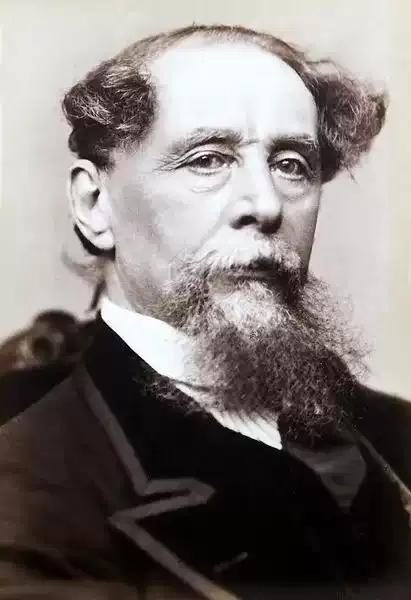
Charles Dickens
The Hymn Of The Wiltshire Laborers
O God! who by Thy prophet's hand
Didst smite the rocky brake,
Whence water came, at Thy command,
Thy people's thirst to slake;
Strike, now, upon this granite wall,
Stern, obdurate, and high;
And let some drops of pity fall
For us who starve and die!
The God who took a little child
And set him in the midst,
And promised him His mercy mild,
As, by Thy Son, Thou didst:
Look down upon our children dear,
So gaunt, so cold, so spare,
And let their images appear
Where lords and gentry are!
O God! teach them to feel how we,
When our poor infants droop,
Are weakened in our trust in Thee,
And how our spirits stoop;
For, in Thy rest, so bright and fair,
All tears and sorrows sleep:
And their young looks, so full of care,
Would make Thine angels weep!
The God who with His finger drew
The judgment coming on,
Write, for these men, what must ensue,
Ere many years be gone!
O God! whose bow is in the sky,
Let them not brave and dare,
Until they look (too late) on high,
And see an Arrow there!
O God, remind them! In the bread
They break upon the knee,
These sacred words may yet be read,
'In memory of Me!'
O God! remind them of His sweet
Compassion for the poor,
And how He gave them Bread to eat,
And went from door to door!
292

Wilfred Owen
Disabled
He sat in a wheeled chair, waiting for dark,
And shivered in his ghastly suit of grey,
Legless, sewn short at elbow. Through the park
Voices of boys rang saddening like a hymn,
Voices of play and pleasure after day,
Till gathering sleep had mothered them from him.
About this time Town used to swing so gay
When glow-lamps budded in the light blue trees,
And girls glanced lovelier as the air grew dim,-
In the old times, before he threw away his knees.
Now he will never feel again how slim
Girls' waists are, or how warm their subtle hands.
All of them touch him like some queer disease.
There was an artist silly for his face,
For it was younger than his youth, last year.
Now, he is old; his back will never brace;
He's lost his colour very far from here,
Poured it down shell-holes till the veins ran dry,
And half his lifetime lapsed in the hot race
And leap of purple spurted from his thigh.
One time he liked a blood-smear down his leg,
After the matches, carried shoulder-high.
It was after football, when he'd drunk a peg,
He thought he'd better join. - He wonders why.
Someone had said he'd look a god in kilts,
That's why; and maybe, too, to please his Meg,
Aye, that was it, to please the giddy jilts
He asked to join. He didn't have to beg;
Smiling they wrote his lie: aged nineteen years.
Germans he scarcely thought of; all their guilt,
And Austria's, did not move him. And no fears
Of Fear came yet. He drought of jewelled hills
For daggers in plaid socks; of smart salutes;
And care of arms; and leave; and pay arrears;
Esprit de corps; and hints for young recruits.
And soon, he was drafted out with drums and cheers.
Some cheered him home, but not as crowds cheer Goal.
Only a solemn man who brought him fruits
Thanked him; and then enquired about his soul.
Now, he will spend a few sick years in institutes,
And do what things the rules consider wise,
And take whatever pity they may dole.
Tonight he noticed how the women's eyes
Passed from him to the strong men that were whole.
How cold and late it is! Why don't they come
And put him into bed? Why don't they come?
292
John Greenleaf Whittier
The Mantle Of St. John De Matha. A Legend Of
A STRONG and mighty Angel,
Calm, terrible, and bright,
The cross in blended red and blue
Upon his mantle white!
Two captives by him kneeling,
Each on his broken chain,
Sang praise to God who raiseth
The dead to life again!
Dropping his cross-wrought mantle,
'Wear this,' the Angel said;
'Take thou, O Freedom's priest, its sign, —
The white, the blue, and red.'
Then rose up John de Matha
In the strength the Lord Christ gave,
And begged through all the land of France
The ransom of the slave.
The gates of tower and castle
Before him open flew,
The drawbridge at his coming fell,
The door-bolt backward drew.
For all men owned his errand,
And paid his righteous tax;
And the hearts of lord and peasant
Were in his hands as wax.
At last, outbound from Tunis,
His bark her anchor weighed,
Freighted with seven-score Christian souls
Whose ransom he had paid.
But, torn by Paynim hatred,
Her sails in tatters hung;
And on the wild waves, rudderless,
A shattered hulk she swung.
'God save us!' cried the captain,
'For naught can man avail;
Oh, woe betide the ship that lacks
Her rudder and her sail!
'Behind us are the Moormen;
At sea we sink or strand:
There's death upon the water,
There's death upon the land!'
Then up spake John de Matha:
'God's errands never fail!
Take thou the mantle which I wear,
And make of it a sail.'
They raised the cross-wrought mantle,
The blue, the white, the red;
And straight before the wind off-shore
The ship of Freedom sped.
'God help us!' cried the seamen,
'For vain is mortal skill:
The good ship on a stormy sea
Is drifting at its will.'
Then up spake John de Matha:
'My mariners, never fear!
The Lord whose breath has filled her sail
May well our vessel steer!'
So on through storm and darkness
They drove for weary hours;
And lo! the third gray morning shone
On Ostia's friendly towers.
And on the walls the watchers
The ship of mercy knew, —
They knew far off its holy cross,
The red, the white, and blue.
And the bells in all the steeples
Rang out in glad accord,
To welcome home to Christian soil
The ransomed of the Lord.
So runs the ancient legend
By bard and painter told;
And lo! the cycle rounds again,
The new is as the old!
With rudder foully broken,
And sails by traitors torn,
Our country on a midnight sea
Is waiting for the morn.
Before her, nameless terror;
Behind, the pirate foe;
The clouds are black above her,
The sea is white below.
The hope of all who suffer,
The dread of all who wrong,
She drifts in darkness and in storm,
How long, O Lord! how long?
But courage, O my mariners!
Ye shall not suffer wreck,
While up to God the freedman's prayers
Are rising from your deck.
Is not your sail the banner
Which God hath blest anew,
The mantle that De Matha wore,
The red, the white, the blue?
Its hues are all of heaven, —
The red of sunset's dye,
The whiteness of the moon-lit cloud,
The blue of morning's sky.
Wait cheerily, then, O mariners,
For daylight and for land;
The breath of God is in your sail,
Your rudder is His hand.
Sail on, sail on, deep-freighted
With blessings and with hopes;
The saints of old with shadowy hands
Are pulling at your ropes.
Behind ye holy martyrs
Uplift the palm and crown;
Before ye unborn ages send
Their benedictions down.
Take heart from John de Matha! —
God's errands never fail!
Sweep on through storm and darkness,
The thunder and the hail!
Sail on! The morning cometh,
The port ye yet shall win;
And all the bells of God shall ring
The good ship bravely in!
290
John Greenleaf Whittier
The Proclamation
SAINT PATRICK, slave to Milcho of the herds
Of Ballymena, wakened with these words:
'Arise, and flee
Out from the land of bondage, and be free!'
Glad as a soul in pain, who hears from heaven
The angels singing of his sins forgiven,
And, wondering, sees
His prison opening to their golden keys,
He rose a man who laid him down a slave,
Shook from his locks the ashes of the grave,
And outward trod
Into the glorious liberty of God.
He east the symbols of his shame away;
And, passing where the sleeping Milcho lay,
Though back and limb
Smarted with wrong, he prayed, 'God pardon him!'
So went he forth; but in God's time he came
To light on Uilline's hills a holy flame;
And, dying, gave
The land a saint that lost him as a slave.
O dark, sad millions, patiently and dumb
Waiting for God, your hour at last has come,
And freedom's song
Breaks the long silence of your night of wrong!
Arise and flee! shake off the vile restraint
Of ages; but, like Ballymena's saint,
The oppressor spare,
Heap only on his head the coals of prayer.
Go forth, like him! like him return again,
To bless the land whereon in bitter pain
Ye toiled at first,
And heal with freedom what your slavery cursed.
291
John Greenleaf Whittier
The Men Of Old
WELL speed thy mission, bold Iconoclast!
Yet all unworthy of its trust thou art,
If, with dry eye, and cold, unloving heart,
Thou tread'st the solemn Pantheon of the Past,
By the great Future's dazzling hope made blind
To all the beauty, power, and truth behind.
Not without reverent awe shouldst thou put by
The cypress branches and the amaranth blooms,
Where, with clasped hands of prayer, upon their tombs
The effigies of old confessors lie,
God's witnesses; the voices of His will,
Heard in the slow march of the centuries still!
Such were the men at whose rebuking frown,
Dark with God's wrath, the tyrant's knee went down;
Such from the terrors of the guilty drew
The vassal's freedom and the poor man's due.
St. Anselm (may he rest forevermore
In Heaven's sweet peace!) forbade, of old, the sale
Of men as slaves, and from the sacred pale
Hurled the Northumbrian buyers of the poor.
To ransom souls from bonds and evil fate
St. Ambrose melted down the sacred plate, —
Image of saint, the chalice, and the pix,
Crosses of gold, and silver candlesticks.
'Man is worth more than temples!' he replied
To such as came his holy work to chide.
And brave Cesarius, stripping altars bare,
And coining from the Abbey's golden hoard
The captive's freedom, answered to the prayer
Or threat of those whose fierce zeal for the Lord
Stifled their love of man, — 'An earthen dish
The last sad supper of the Master bore:
Most miserable sinners! do ye wish
More than your Lord, and grudge His dying poor
What your own pride and not His need requires?
Souls, than these shining gauds, He values more;
Mercy, not sacrifice, His heart desires!'
O faithful worthies! resting far behind
In your dark ages, since ye fell asleep,
Much has been done for truth and human-kind;
Shadows are scattered wherein ye groped blind;
Man claims his birthright, freer pulses leap
Through peoples driven in your day like sheep;
Yet, like your own, our age's sphere of light,
Though widening still, is walled around by night;
With slow, reluctant eye, the Church has read,
Skeptic at heart, the lessons of its Head;
Counting, too oft, its living members less
Than the wall's garnish and the pulpit's dress;
World-moving zeal with power to bless and feed
Life's fainting pilgrims, to their utter need,
Instead of bread, holds out the stone of creed;
Sect builds and worships where its wealth and pride
And vanity stand shrined and deified,
Careless that in the shadow of its walls
God's living temple into ruin falls.
We need, methinks, the prophet-hero still,
Saints true of life, and martyrs strong of will,
To tread the land, even now, as Xavier trod
The streets of God, barefoot, with his bell,
Proclaiming freedom in the name of God,
And startling tyrants with the fear of hell!
Soft words, smooth prophecies, are doubtless well;
But to rebuke the age's popular crime,
We need the souls of fire, the hearts of that old time!
291
Henry Wadsworth Longfellow
The Saga of King Olaf: XIX. King Olaf's War-Horns
'Strike the sails!' King Olaf said;
'Never shall men of mine take flight;
Never away from battle I fled,
Never away from my foes!
Let God dispose
Of my life in the fight!'
'Sound the horns!' said Olaf the King;
And suddenly through the drifting brume
The blare of the horns began to ring,
Like the terrible trumpet shock
Of Regnarock,
On the Day of Doom!
Louder and louder the war-horns sang
Over the level floor of the flood;
All the sails came down with a clang,
And there in the mist overhead
The sun hung red
As a drop of blood.
Drifting down on the Danish fleet
Three together the ships were lashed,
So that neither should turn and retreat;
In the midst, but in front of the rest
The burnished crest
Of the Serpent flashed.
King Olaf stood on the quarter-deck,
With bow of ash and arrows of oak,
His gilded shield was without a fleck,
His helmet inlaid with gold,
And in many a fold
Hung his crimson cloak.
On the forecastle Ulf the Red
Watched the lashing of the ships;
'If the Serpent lie so far ahead,
We shall have hard work of it here,'
Said he with a sneer
On his bearded lips.
King Olaf laid an arrow on string,
'Have I a coward on board?' said he.
'Shoot it another way, O King!'
Sullenly answered Ulf,
The old sea-wolf;
'You have need of me!'
In front came Svend, the King of the Danes,
Sweeping down with his fifty rowers;
To the right, the Swedish king with his thanes;
And on board of the Iron Beard
Earl Eric steered
To the left with his oars.
'These soft Danes and Swedes,' said the King,
'At home with their wives had better stay,
Than come within reach of my Serpent's sting:
But where Eric the Norseman leads
Heroic deeds
Will be done to-day!'
Then as together the vessels crashed,
Eric severed the cables of hide,
With which King Olaf's ships were lashed,
And left them to drive and drift
With the currents swift
Of the outward tide.
Louder the war-horns growl and snarl,
Sharper the dragons bite and sting!
Eric the son of Hakon Jarl
A death-drink salt as the sea
Pledges to thee,
Olaf the King!
290

Emily Dickinson
Not that We did, shall be the test
Not that We did, shall be the test
When Act and Will are done
But what Our Lord infers We would
Had We diviner been-
When Act and Will are done
But what Our Lord infers We would
Had We diviner been-
291

Thomas Hardy
Then and Now
When battles were fought
With a chivalrous sense of should and ought,
In spirit men said,
"End we quick or dead,
Honour is some reward!
Let us fight fair -- for our own best or worst;
So, Gentlemen of the Guard,
Fire first!"
In the open they stood,
Man to man in his knightlihood:
They would not deign
To profit by a stain
On the honourable rules,
Knowing that practise perfidy no man durst
Who in the heroic schools
Was nurst.
But now, behold, what
Is war with those where honour is not!
Rama laments
Its dead innocents;
Herod howls: "Sly slaughter
Rules now! Let us, by modes once called accurst,
Overhead, under water,
Stab first."
292
Thomas Hardy
The Puzzled Game-Birds
They are not those who used to feed us
When we were young--they cannot be -
These shapes that now bereave and bleed us?
They are not those who used to feed us, -
For would they not fair terms concede us?
- If hearts can house such treachery
They are not those who used to feed us
When we were young--they cannot be!
When we were young--they cannot be -
These shapes that now bereave and bleed us?
They are not those who used to feed us, -
For would they not fair terms concede us?
- If hearts can house such treachery
They are not those who used to feed us
When we were young--they cannot be!
291
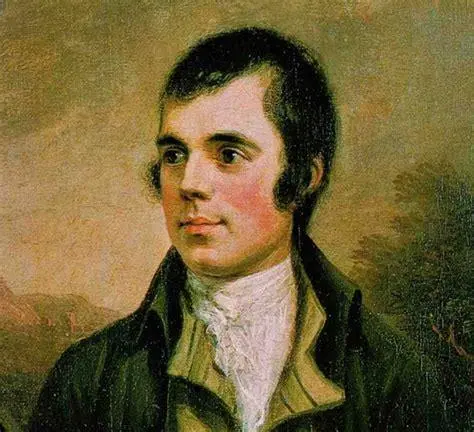
Robert Burns
Handsome Nell
O, once I lov'd a bonnie lass,
Aye, and I love her still;
And whilst that virtue warms my breast
I'll love my handsome Nell.
As bonnie lasses I hae seen,
And mony full as braw,
But for a modest gracefu' mien
The like I never saw.
A bonnie lass, I will confess,
Is pleasant to the ee,
But without some letter qualities
She's no a lass for me.
But Nellie's looks are blithe and sweet,
And what is best of a'
Her reputation is complete,
And fair without a flaw.
She dresses aye sae clean and neat,
Both decent and genteel;
And then there's something in her gait
Gars ony dress look weel.
A gaudy dress and gentle air
May slightly touch the heart,
But it's innocence and modesty
That polishes the dart.
'Tis this in Nelly pleases me,
'Tis this enchants my soul
For absolutely in my breast
She reigns without control.
290
Henry Wadsworth Longfellow
Consolation. (To M. Duperrier, Gentleman Of Aix In Provence, On The Death Of His Daughter)
Will then, Duperrier, thy sorrow be eternal?
And shall the sad discourse
Whispered within thy heart, by tenderness paternal,
Only augment its force?
Thy daughter's mournful fate, into the tomb descending
By death's frequented ways,
Has it become to thee a labyrinth never ending,
Where thy lost reason strays?
I know the charms that made her youth a benediction:
Nor should I be content,
As a censorious friend, to solace thine affliction
By her disparagement.
But she was of the world, which fairest things exposes
To fates the most forlorn;
A rose, she too hath lived as long as live the roses,
The space of one brief morn.
* * * * *
Death has his rigorous laws, unparalleled, unfeeling;
All prayers to him are vain;
Cruel, he stops his ears, and, deaf to our appealing,
He leaves us to complain.
The poor man in his hut, with only thatch for cover,
Unto these laws must bend;
The sentinel that guards the barriers of the Louvre
Cannot our kings defend.
To murmur against death, in petulant defiance,
Is never for the best;
To will what God doth will, that is the only science
That gives us any rest.
288
Thomas Hardy
Her Dilemma
THE two were silent in a sunless church,
Whose mildewed walls, uneven paving-stones,
And wasted carvings passed antique research;
And nothing broke the clock's dull monotones.
Leaning against a wormy poppy-head,
So wan and worn that he could scarcely stand,
--For he was soon to die,--he softly said,
"Tell me you love me!"--holding hard her hand.
She would have given a world to breathe "yes" truly,
So much his life seemed hanging on her mind,
And hence she lied, her heart persuaded throughly,
'Twas worth her soul to be a moment kind.
But the sad need thereof, his nearing death,
So mocked humanity that she shamed to prize
A world conditioned thus, or care for breath
Where Nature such dilemmas could devise.
289
Thomas Hardy
The Alarm
In Memory of one of the Writer's Family who was a Volunteer during the War
with Napoleon
In a ferny byway
Near the great South-Wessex Highway,
A homestead raised its breakfast-smoke aloft;
The dew-damps still lay steamless, for the sun had made no sky-way,
And twilight cloaked the croft.
'Twas hard to realize on
This snug side the mute horizon
That beyond it hostile armaments might steer,
Save from seeing in the porchway a fair woman weep with eyes on
A harnessed Volunteer.
In haste he'd flown there
To his comely wife alone there,
While marching south hard by, to still her fears,
For she soon would be a mother, and few messengers were known there
In these campaigning years.
'Twas time to be Good-bying,
Since the assembly-hour was nighing
In royal George's town at six that morn;
And betwixt its wharves and this retreat were ten good miles of hieing
Ere ring of bugle-horn.
"I've laid in food, Dear,
And broached the spiced and brewed, Dear;
And if our July hope should antedate,
Let the char-wench mount and gallop by the halterpath and wood, Dear,
And fetch assistance straight.
"As for Buonaparte, forget him;
He's not like to land! But let him,
Those strike with aim who strike for wives and sons!
And the war-boats built to float him; 'twere but wanted to upset him
A slat from Nelson's guns!
"But, to assure thee,
And of creeping fears to cure thee,
If he should be rumored anchoring in the Road,
Drive with the nurse to Kingsbere; and let nothing thence allure thee
Till we've him safe-bestowed.
"Now, to turn to marching matters:--
I've my knapsack, firelock, spatters,
Crossbelts, priming-horn, stock, bay'net, blackball, clay,
Pouch, magazine, flints, flint-box that at every quick-step clatters;
...My heart, Dear; that must stay!"
--With breathings broken
Farewell was kissed unspoken,
And they parted there as morning stroked the panes;
And the Volunteer went on, and turned, and twirled his glove for
token,
And took the coastward lanes.
When above He'th Hills he found him,
He saw, on gazing round him,
The Barrow-Beacon burning--burning low,
As if, perhaps, uplighted ever since he'd homeward bound him;
And it meant: Expect the Foe!
Leaving the byway,
And following swift the highway,
Car and chariot met he, faring fast inland;
"He's anchored, Soldier!" shouted some:
"God save thee, marching thy way,
Th'lt front him on the strand!"
He slowed; he stopped; he paltered
Awhile with self, and faltered,
"Why courting misadventure shoreward roam?
To Molly, surely! Seek the woods with her till times have altered;
Charity favors home.
"Else, my denying
He would come she'll read as lying--
Think the Barrow-Beacon must have met my eyes--
That my words were not unwareness, but deceit of her, while trying
My life to jeopardize.
"At home is stocked provision,
And to-night, without suspicion,
We might bear it with us to a covert near;
Such sin, to save a childing wife, would earn it Christ's remission,
Though none forgive it here!"
While thus he, thinking,
A little bird, quick drinking
Among the crowfoot tufts the river bore,
Was tangled in their stringy arms, and fluttered, well-nigh sinking,
Near him, upon the moor.
He stepped in, reached, and seized it,
And, preening, had released it
But that a thought of Holy Writ occurred,
And Signs Divine ere battle, till it seemed him Heaven had pleased it
As guide to send the bird.
"O Lord, direct me!...
Doth Duty now expect me
To march a-coast, or guard my weak ones near?
Give this bird a flight according, that I thence know to elect me
The southward or the rear."
He loosed his clasp; when, rising,
The bird--as if surmising--
Bore due to southward, crossing by the Froom,
And Durnover Great-Field and Fort, the soldier clear advising--
Prompted he wist by Whom.
Then on he panted
By grim Mai-Don, and slanted
Up the steep Ridge-way, hearkening betwixt whiles,
Till, nearing coast and harbor, he beheld the shore-line planted
With Foot and Horse for miles.
Mistrusting not the omen,
He gained the beach, where Yeomen,
Militia, Fencibles, and Pikemen bold,
With Regulars in thousands, were enmassed to meet the Foemen,
Whose fleet had not yet shoaled.
Captain and Colonel,
Sere Generals, Ensigns vernal,
Were there, of neighbor-natives, Michel, Smith,
Meggs, Bingham, Gambier, Cunningham, roused by the hued nocturnal
Swoop on their land and kith.
But Buonaparte still tarried;
His project had miscarried;
At the last hour, equipped for victory,
The fleet had paused; his subtle combinations had been parried
By British strategy.
Homeward returning
Anon, no beacons burning,
No alarms, the Volunteer, in modest bliss,
Te Deum sang with wife and friends: "We praise Thee, Lord, discerning
That Thou hast helped in this!"
290
Henry Lawson
A Fantasy of War
From Australia
.
OH, tell me, God of Battles! Oh, say what is to come!
The King is in his trenches, the millionaire at home;
The Kaiser with his toiling troops, the Czar is at the front.
Oh! Tell me, God of Battles! Who bears the battle’s brunt?
The Queen knits socks for soldiers, the Empress does the same,
And know no more than peasant girls which nation is to blame.
The wounded live to fight again, or live to slave for bread;
The Slain have graves above the Slain—the Dead are with the Dead.
The widowed young shall wed or not, the widowed old remain—
And all the nations of the world prepare for war again!
But ere that time shall be, O God, say what shall here befall!
Ten millions at the battle fronts, and we’re five millions all!
The world You made was wide, O God, the world we made is small.
We toiled not as our fathers toiled, for
Sport was all our boast;
And so we built our cities, Lord, like warts, upon the coast.
From Europe
.
The seer stood on the mountain side, the witch was in her cave;
The gipsy with his caravan, the sailor on the wave;
The sophist in his easy chair, with ne’er a soul to save,
The factory slaves went forth to slave, the peasant to the field;
The women worked in winter there for one-tenth of the yield;
The village Granny nursed their babes to give them time to slave;
The child was in the cradle, and the grandsire in his grave.
The rich man slumbered in his chair, full fed with wine and meat;
The lady in her carriage sat, the harlot walked the street
With paint upon her cheek and neck, through winter’s snow and sleet.
We saw the pride of Wealth go mad, and Misery increase—
And still the God of Gods was dumb and all the world was Peace!
The wizard on the mountain side, he drew a rasping breath,
For he was old and near to life, as he was near to death;
And he looked out and saw the star they saw at Nazareth.
“Two thousand years have passed,” he said. “A thousand years,” he said.
“A hundred years have passed,” he said, “and, lo! the star is red!
The time has come at last,” he said, and bowed his hoary head.
He laid him on the mountain-side—and so the seer was dead.
And so the Eastern Star was red, and it was red indeed—
We saw the Red Star in the South, but we took little heed.
(The Prophet in his garret starved or drank himself to death.)
The witch was mumbling in her hole before the dawn was grey;
The witch she took a crooked stick and prodded in the clay;
She doddered round and mumbled round as is the beldame’s way.
“Four children shall be born,” she said, “four children at a birth;
Four children of a peasant brood—and what shall come on earth?
Four of the poorest peasantry that Europe knows,” she said,
“And all the nations of the world shall count their gory dead!”
The babes are born in Italy—and all the world is red!
The Ship
The world You gave was wide, O Lord, and wars were far away!
The goal was just as near, O Lord, to-morrow or to-day!
The tree You grew was stout and sound to carve the plank and keel.
(And when the darkness hid the sky Your hand was on the wheel.)
The pine You grew was straight and tall to fashion spar and mast.
Our sails and gear from flax and hemp were stout and firm and fast.
You gave the metal from the mine and taught the carpenter
To fasten plank and rib and beam, and sheath and iron her.
The world You made was wide, O Lord, with signs on sea and sky;
And all the stars were true, O Lord, you gave to steer her by.
More graceful than the albatross upon the morning breeze.
Ah me! she was the fairest thing that ever sailed the seas;
And when the madness of mankind burns out at last in war,
The world may yet behold the day she’ll sail the seas once more.
We were not satisfied, O Lord, we were not satisfied;
We stole Your electricity to fortify our pride!
You gave the horse to draw our loads, You gave the horse to ride;
But we must fly above the Alps and race beneath the tide.
We searched in sacred places for the things we did not need;
Your anger shook our cities down—and yet we took no heed.
We robbed the water and the air to give us “energy,”
As we’d exhaust Thy secret store of electricity.
The day may come—and such a day!—when we shall need all three.
And lest Thou shouldst not understand our various ways and whys,
We cut Thy trees for paper, Lord, where-on to print our lies.
We sent the grand Titanic forth, for pleasure, gold and show;
And all her skeletons of wealth and jewels lie below.
For fame or curiosity, for pride, and greed, or trade,
We sought to know all things and make all things that Thou hast made!
From Pole to Pole we sought to speak, and Heaven’s powers employ—
Our cruisers feverishly seek such language to destroy.
We shaped all things for war, and now the Sister Nations wade
Knee-deep in white man’s blood to wreck all things that we have made!
For in the rottenness of Peace—worse than this bitter strife!—
We murdered the Humanity and Poetry of Life.
The Bells and the Child
.
The gongs are in the temple—the bells are in the tower;
The “tom-tom” in the jungle and the town clock tells the hour;
And all Thy feathered kind at morn have testified Thy power.
Did ever statesman save a land or science save a soul?—
Did ever Tower of Babel stand or war-drums cease to roll?—
Or wedding-bells to ring, O Lord—or requiems to toll?
Did ever child in cradle laid—born of a healthy race—
Cease for an hour, all unafraid, to testify Thy grace?
That shook its rattle from its bed in its proud father’s face?
Cathedral bells must cease awhile, because of Pride and Sin,
That never failed a wedding-morn that hailed a king and queen,
Or failed to peal for victory that brave men died to win.
(Or failed to ring the Old Year out and ring the New Year in.)
The world You made was wide, O God!—O God, ’tis narrow now—
And all its ways must run with blood, for we knew more than Thou!
And millions perish at the guns or rot beside the plough,
For we knew more than Thou.
.
OH, tell me, God of Battles! Oh, say what is to come!
The King is in his trenches, the millionaire at home;
The Kaiser with his toiling troops, the Czar is at the front.
Oh! Tell me, God of Battles! Who bears the battle’s brunt?
The Queen knits socks for soldiers, the Empress does the same,
And know no more than peasant girls which nation is to blame.
The wounded live to fight again, or live to slave for bread;
The Slain have graves above the Slain—the Dead are with the Dead.
The widowed young shall wed or not, the widowed old remain—
And all the nations of the world prepare for war again!
But ere that time shall be, O God, say what shall here befall!
Ten millions at the battle fronts, and we’re five millions all!
The world You made was wide, O God, the world we made is small.
We toiled not as our fathers toiled, for
Sport was all our boast;
And so we built our cities, Lord, like warts, upon the coast.
From Europe
.
The seer stood on the mountain side, the witch was in her cave;
The gipsy with his caravan, the sailor on the wave;
The sophist in his easy chair, with ne’er a soul to save,
The factory slaves went forth to slave, the peasant to the field;
The women worked in winter there for one-tenth of the yield;
The village Granny nursed their babes to give them time to slave;
The child was in the cradle, and the grandsire in his grave.
The rich man slumbered in his chair, full fed with wine and meat;
The lady in her carriage sat, the harlot walked the street
With paint upon her cheek and neck, through winter’s snow and sleet.
We saw the pride of Wealth go mad, and Misery increase—
And still the God of Gods was dumb and all the world was Peace!
The wizard on the mountain side, he drew a rasping breath,
For he was old and near to life, as he was near to death;
And he looked out and saw the star they saw at Nazareth.
“Two thousand years have passed,” he said. “A thousand years,” he said.
“A hundred years have passed,” he said, “and, lo! the star is red!
The time has come at last,” he said, and bowed his hoary head.
He laid him on the mountain-side—and so the seer was dead.
And so the Eastern Star was red, and it was red indeed—
We saw the Red Star in the South, but we took little heed.
(The Prophet in his garret starved or drank himself to death.)
The witch was mumbling in her hole before the dawn was grey;
The witch she took a crooked stick and prodded in the clay;
She doddered round and mumbled round as is the beldame’s way.
“Four children shall be born,” she said, “four children at a birth;
Four children of a peasant brood—and what shall come on earth?
Four of the poorest peasantry that Europe knows,” she said,
“And all the nations of the world shall count their gory dead!”
The babes are born in Italy—and all the world is red!
The Ship
The world You gave was wide, O Lord, and wars were far away!
The goal was just as near, O Lord, to-morrow or to-day!
The tree You grew was stout and sound to carve the plank and keel.
(And when the darkness hid the sky Your hand was on the wheel.)
The pine You grew was straight and tall to fashion spar and mast.
Our sails and gear from flax and hemp were stout and firm and fast.
You gave the metal from the mine and taught the carpenter
To fasten plank and rib and beam, and sheath and iron her.
The world You made was wide, O Lord, with signs on sea and sky;
And all the stars were true, O Lord, you gave to steer her by.
More graceful than the albatross upon the morning breeze.
Ah me! she was the fairest thing that ever sailed the seas;
And when the madness of mankind burns out at last in war,
The world may yet behold the day she’ll sail the seas once more.
We were not satisfied, O Lord, we were not satisfied;
We stole Your electricity to fortify our pride!
You gave the horse to draw our loads, You gave the horse to ride;
But we must fly above the Alps and race beneath the tide.
We searched in sacred places for the things we did not need;
Your anger shook our cities down—and yet we took no heed.
We robbed the water and the air to give us “energy,”
As we’d exhaust Thy secret store of electricity.
The day may come—and such a day!—when we shall need all three.
And lest Thou shouldst not understand our various ways and whys,
We cut Thy trees for paper, Lord, where-on to print our lies.
We sent the grand Titanic forth, for pleasure, gold and show;
And all her skeletons of wealth and jewels lie below.
For fame or curiosity, for pride, and greed, or trade,
We sought to know all things and make all things that Thou hast made!
From Pole to Pole we sought to speak, and Heaven’s powers employ—
Our cruisers feverishly seek such language to destroy.
We shaped all things for war, and now the Sister Nations wade
Knee-deep in white man’s blood to wreck all things that we have made!
For in the rottenness of Peace—worse than this bitter strife!—
We murdered the Humanity and Poetry of Life.
The Bells and the Child
.
The gongs are in the temple—the bells are in the tower;
The “tom-tom” in the jungle and the town clock tells the hour;
And all Thy feathered kind at morn have testified Thy power.
Did ever statesman save a land or science save a soul?—
Did ever Tower of Babel stand or war-drums cease to roll?—
Or wedding-bells to ring, O Lord—or requiems to toll?
Did ever child in cradle laid—born of a healthy race—
Cease for an hour, all unafraid, to testify Thy grace?
That shook its rattle from its bed in its proud father’s face?
Cathedral bells must cease awhile, because of Pride and Sin,
That never failed a wedding-morn that hailed a king and queen,
Or failed to peal for victory that brave men died to win.
(Or failed to ring the Old Year out and ring the New Year in.)
The world You made was wide, O God!—O God, ’tis narrow now—
And all its ways must run with blood, for we knew more than Thou!
And millions perish at the guns or rot beside the plough,
For we knew more than Thou.
289

Dylan Thomas
The Hand That Signed the Paper
The hand that signed the paper felled a city;
Five sovereign fingers taxed the breath,
Doubled the globe of dead and halved a country;
These five kings did a king to death.
The mighty hand leads to a sloping shoulder,
The finger joints are cramped with chalk;
A goose's quill has put an end to murder
That put an end to talk.
The hand that signed the treaty bred a fever,
And famine grew, and locusts came;
Great is the hand that holds dominion over
Man by a scribbled name.
The five kings count the dead but do not soften
The crusted wound nor pat the brow;
A hand rules pity as a hand rules heaven;
Hands have no tears to flow.
289
Emily Dickinson
'They Have Not Chosen Me,' He Said
'They have not chosen me,' he said,
'But I have chosen them!'
Brave—Broken hearted statement—
Uttered in Bethlehem!
I could not have told it,
But since Jesus dared—
Sovereign! Know a Daisy
They dishonor shared!
'But I have chosen them!'
Brave—Broken hearted statement—
Uttered in Bethlehem!
I could not have told it,
But since Jesus dared—
Sovereign! Know a Daisy
They dishonor shared!
289
John Greenleaf Whittier
The Witch of Wenham
I.
Along Crane River's sunny slopes
Blew warm the winds of May,
And over Naumkeag's ancient oaks
The green outgrew the gray.
The grass was green on Rial-side,
The early birds at will
Waked up the violet in its dell,
The wind-flower on its hill.
'Where go you, in your Sunday coat,
Son Andrew, tell me, pray.'
For striped perch in Wenham Lake
I go to fish to-day.'
'Unharmed of thee in Wenham Lake
The mottled perch shall be
A blue-eyed witch sits on the bank
And weaves her net for thee.
'She weaves her golden hair; she sings
Her spell-song low and faint;
The wickedest witch in Salem jail
Is to that girl a saint.'
'Nay, mother, hold thy cruel tongue;
God knows,' the young man cried,
'He never made a whiter soul
Than hers by Wenham side.
'She tends her mother sick and blind,
And every want supplies;
To her above the blessed Book
She lends her soft blue eyes.
'Her voice is glad with holy songs,
Her lips are sweet with prayer;
Go where you will, in ten miles round
Is none more good and fair.'
'Son Andrew, for the love of God
And of thy mother, stay!'
She clasped her hands, she wept aloud,
But Andrew rode away.
'O reverend sir, my Andrew's soul
The Wenham witch has caught;
She holds him with the curled gold
Whereof her snare is wrought.
'She charms him with her great blue eyes,
She binds him with her hair;
Oh, break the spell with holy words,
Unbind him with a prayer!'
'Take heart,' the painful preacher said,
'This mischief shall not be;
The witch shall perish in her sins
And Andrew shall go free.
'Our poor Ann Putnam testifies
She saw her weave a spell,
Bare-armed, loose-haired, at full of moon,
Around a dried-up well.
''Spring up, O well!' she softly sang
The Hebrew's old refrain
(For Satan uses Bible words),
Till water flowed a-main.
'And many a goodwife heard her speak
By Wenham water words
That made the buttercups take wings
And turn to yellow birds.
'They say that swarming wild bees seek
The hive at her command;
And fishes swim to take their food
From out her dainty hand.
'Meek as she sits in meeting-time,
The godly minister
Notes well the spell that doth compel
The young men's eyes to her.
'The mole upon her dimpled chin
Is Satan's seal and sign;
Her lips are red with evil bread
And stain of unblest wine.
'For Tituba, my Indian, saith
At Quasycung she took
The Black Man's godless sacrament
And signed his dreadful book.
'Last night my sore-afflicted child
Against the young witch cried.
To take her Marshal Herrick rides
Even now to Wenham side.'
The marshal in his saddle sat,
His daughter at his knee;
'I go to fetch that arrant witch,
Thy fair playmate,' quoth he.
'Her spectre walks the parsonage,
And haunts both hall and stair;
They know her by the great blue eyes
And floating gold of hair.'
'They lie, they lie, my father dear!
No foul old witch is she,
But sweet and good and crystal-pure
As Wenham waters be.'
'I tell thee, child, the Lord hath set
Before us good and ill,
And woe to all whose carnal loves
Oppose His righteous will.
'Between Him and the powers of hell
Choose thou, my child, to-day
No sparing hand, no pitying eye,
When God commands to slay!'
He went his way; the old wives shook
With fear as he drew nigh;
The children in the dooryards held
Their breath as he passed by.
Too well they knew the gaunt gray horse
The grim witch-hunter rode
The pale Apocalyptic beast
By grisly Death bestrode.
II.
Oh, fair the face of Wenham Lake
Upon the young girl's shone,
Her tender mouth, her dreaming eyes,
Her yellow hair outblown.
By happy youth and love attuned
To natural harmonies,
The singing birds, the whispering wind,
She sat beneath the trees.
Sat shaping for her bridal dress
Her mother's wedding gown,
When lo! the marshal, writ in hand,
From Alford hill rode down.
His face was hard with cruel fear,
He grasped the maiden's hands
'Come with me unto Salem town,
For so the law commands!'
'Oh, let me to my mother say
Farewell before I go!'
He closer tied her little hands
Unto his saddle bow.
'Unhand me,' cried she piteously,
'For thy sweet daughter's sake.'
'I'll keep my daughter safe,' he said,
'From the witch of Wenham Lake.'
'Oh, leave me for my mother's sake,
She needs my eyes to see.'
'Those eyes, young witch, the crows shall peck
From off the gallows-tree.'
He bore her to a farm-house old,
And up its stairway long,
And closed on her the garret-door
With iron bolted strong.
The day died out, the night came down
Her evening prayer she said,
While, through the dark, strange faces seemed
To mock her as she prayed.
The present horror deepened all
The fears her childhood knew;
The awe wherewith the air was filled
With every breath she drew.
And could it be, she trembling asked,
Some secret thought or sin
Had shut good angels from her heart
And let the bad ones in?
Had she in some forgotten dream
Let go her hold on Heaven,
And sold herself unwittingly
To spirits unforgiven?
Oh, weird and still the dark hours passed;
No human sound she heard,
But up and down the chimney stack
The swallows moaned and stirred.
And o'er her, with a dread surmise
Of evil sight and sound,
The blind bats on their leathern wings
Went wheeling round and round.
Low hanging in the midnight sky
Looked in a half-faced moon.
Was it a dream, or did she hear
Her lover's whistled tune?
She forced the oaken scuttle back;
A whisper reached her ear
'Slide down the roof to me,' it said,
'So softly none may hear.'
She slid along the sloping roof
Till from its eaves she hung,
And felt the loosened shingles yield
To which her fingers clung.
Below, her lover stretched his hands
And touched her feet so small;
'Drop down to me, dear heart,' he said,
'My arms shall break the fall.'
He set her on his pillion soft,
Her arms about him twined;
And, noiseless as if velvet-shod,
They left the house behind.
But when they reached the open way,
Full free the rein he cast;
Oh, never through the mirk midnight
Rode man and maid more fast.
Along the wild wood-paths they sped,
The bridgeless streams they swam;
At set of moon they passed the Bass,
At sunrise Agawam.
At high noon on the Merrimac
The ancient ferryman
Forgot, at times, his idle oars,
So fair a freight to scan.
And when from off his grounded boat
He saw them mount and ride,
'God keep her from the evil eye,
And harm of witch!' he cried.
The maiden laughed, as youth will laugh
At all its fears gone by;
'He does not know,' she whispered low,
'A little witch am I.'
All day he urged his weary horse,
And, in the red sundown,
Drew rein before a friendly door
In distant Berwick town.
A fellow-feeling for the wronged
The Quaker people felt;
And safe beside their kindly hearths
The hunted maiden dwelt,
Until from off its breast the land
The haunting horror threw,
And hatred, born of ghastly dreams,
To shame and pity grew.
Sad were the year's spring morns, and sad
Its golden summer day,
But blithe and glad its withered fields,
And skies of ashen gray;
For spell and charm had power no more,
The spectres ceased to roam,
And scattered households knelt again
Around the hearths of home.
And when once more by Beaver Dam
The meadow-lark outsang,
And once again on all the hills
The early violets sprang,
And all the windy pasture slopes
Lay green within the arms
Of creeks that bore the salted sea
To pleasant inland farms,
The smith filed off the chains he forged,
The jail-bolts backward fell;
And youth and hoary age came forth
Like souls escaped from hell.
288
Henry Lawson
Here's Luck
Old Time is tramping close to-day—you hear his bluchers fall,
A mighty change is on the way, an’ God protect us all;
Some dust’ll fly from beery coats—at least it’s been declared.
I’m glad that wimin has the votes—but just a trifle scared.
I’m just a trifle scared—For why? The wimin mean to rule;
It makes me feel like days gone by when I was caned at school.
The days of men is nearly dead—of double moons and stars—
They’ll soon put out our pipes, ’tis said, an’ close the public bars.
No more we’ll take a glass of ale when pushed with care an’ strife,
An’chuckle home with that old tale we used to tell the wife.
We’ll laugh an’joke an’ sing no more with jolly beery chums,
An’ shout ‘Here’s luck!’ while waitin’ for the luck that never comes.
Did we prohibit swillin’ tea clean out of common-sense
Or legislate on gossipin’ across a backyard fence?
Did we prohibit bustles—or the hoops when they was here?
The wimin never think of this—they want to stop our beer.
The track o’ life is dry enough, an’ crossed with many a rut,
But, oh! we’ll find it long an’ rough when all the pubs is shut,
When all the pubs is shut, an’ gone the doors we used to seek,
An’ we go toilin’, thirstin’ on through Sundays all the week.
For since the days when pubs was ‘inns’—in years gone past’n’ far—
Poor sinful souls have drowned their sins an’ sorrers at the bar;
An’ though at times it led to crimes, an’ debt, and such complaints—
I scarce dare think about the time when all mankind is saints.
’Twould make the bones of Bacchus leap an’ break his coffin lid;
And Burns’s ghost would wail an’ weep as Bobby never did.
But let the preachers preach in style, an’ rave and rant—’n’ buck,
I rather guess they’ll hear awhile the old war-cry: ‘Here’s Luck!’
The world might wobble round the sun, an’ all the banks go bung,
But pipes’ll smoke an’ liquor run while Auld Lang Syne is sung.
While men are driven through the mill, an’ flinty times is struck,
They’ll find a private entrance still! Here’s Luck, old man—Here’s Luck!
289