
Money and Wealth

Christina Rossetti
My Dream
Hear now a curious dream I dreamed last night
Each word whereof is weighed and sifted truth.
I stood beside Euphrates while it swelled
Like overflowing Jordan in its youth:
It waxed and coloured sensibly to sight;
Till out of myriad pregnant waves there welled
Young crocodiles, a gaunt blunt-featured crew,
Fresh-hatched perhaps and daubed with birthday dew.
The rest if I should tell, I fear my friend
My closest friend would deem the facts untrue;
And therefore it were wisely left untold;
Yet if you will, why, hear it to the end.
Each crocodile was girt with massive gold
And polished stones that with their wearers grew:
But one there was who waxed beyond the rest,
Wore kinglier girdle and a kingly crown,
Whilst crowns and orbs and sceptres starred his breast.
All gleamed compact and green with scale on scale,
But special burnishment adorned his mail
And special terror weighed upon his frown;
His punier brethren quaked before his tail,
Broad as a rafter, potent as a flail.
So he grew lord and master of his kin:
But who shall tell the tale of all their woes?
An execrable appetite arose,
He battened on them, crunched, and sucked them in.
He knew no law, he feared no binding law,
But ground them with inexorable jaw:
The luscious fat distilled upon his chin,
Exuded from his nostrils and his eyes,
While still like hungry death he fed his maw;
Till every minor crocodile being dead
And buried too, himself gorged to the full,
He slept with breath oppressed and unstrung claw.
Oh marvel passing strange which next I saw:
In sleep he dwindled to the common size,
And all the empire faded from his coat.
Then from far off a winged vessel came,
Swift as a swallow, subtle as a flame:
I know not what it bore of freight or host,
But white it was as an avenging ghost.
It levelled strong Euphrates in its course;
Supreme yet weightless as an idle mote
It seemed to tame the waters without force
Till not a murmur swelled or billow beat:
Lo, as the purple shadow swept the sands,
The prudent crocodile rose on his feet
And shed appropriate tears and wrung his hands.
What can it mean? you ask. I answer not
For meaning, but myself must echo, What?
And tell it as I saw it on the spot.
209

Emily Dickinson
I made slow Riches but my Gain
I made slow Riches but my Gain
Was steady as the Sun
And every Night, it numbered more
Than the preceding One
All Days, I did not earn the same
But my perceiveless Gain
Inferred the less by Growing than
The Sum that it had grown.
Was steady as the Sun
And every Night, it numbered more
Than the preceding One
All Days, I did not earn the same
But my perceiveless Gain
Inferred the less by Growing than
The Sum that it had grown.
205

Robert W. Service
Dumb Swede
With barbwire hooch they filled him full,
Till he was drunker than all hell,
And then they peddled him the bull
About a claim they had to sell.
A thousand bucks they made him pay,
Knowing that he had nothing more,
And when he begged it back next day,
And wept! - they kicked him from the door.
They reckoned they were mighty slick,
Them two tinhorns from Idaho;
That poor dumb Swede could swing a pick,
but that was all he'd ever know.
So sitting in a poker game,
They lost the price for which they sold
To that bonehead a poor dud claim
That didn't have a speck of gold.
My story's true as gospel creed
Of these bright boys from Idaho;
They made a sucker of that Swede
And laughed to see the poor boob go,
And work like nigger on his ground,
Bucked by the courage of despair . . .
Till lo! A rich pay-streak he found,
That made him twice a millionaire.
So two smart Alecs, mighty sick,
Begged jobs at fifteen bucks a day.
Then said the Swede: "Give each a pick
And let them sweat to make their pay."
And though he don't know what it means,
Folks call that Swede "magnanimous"
-But picking nuggets big as beans,
you oughta' hear them fellers cuss!
205

Jonathan Swift
On An Ill-Managed House
LET me thy properties explain:
A rotten cabin dropping rain:
Chimneys, with scorn rejecting smoke;
Stools, tables, chairs, and bedsteads broke.
Here elements have lost their uses,
Air ripens not, nor earth produces:
In vain we make poor Sheelah toil,
Fire will not roast, nor water boil.
Through all the valleys, hills, and plains,
The Goddess Want, in triumph reigns:
And her chief officers of state,
Sloth, Dirt, and Theft, around her wait.
202

Henry Lawson
For there's a swellin' in my heart -- a tightness in my throat --
For there's a swellin' in my heart -- a tightness in my throat --
We are for'ard when there's trouble! We are for'ard when there's graft!
But the men who never battle always seem to travel aft;
With their dressin'-cases, aft,
With their swell pyjamas, aft --
Yes! the idle and the careless, they have ease an' comfort, aft.
I feel so low an' wretched, as I mooch about the deck,
That I'm ripe for jumpin' over -- an' I wish there was a wreck!
We are driven to New Zealand to be shot out over there --
Scarce a shillin' in our pockets, nor a decent rag to wear,
With the everlastin' worry lest we don't get into graft --
There is little left to land for if you cannot travel aft;
No anxiety abaft,
They have stuff to land with, aft --
Oh, there's little left to land for if you cannot travel aft;
But it's grand at sea this mornin', an' Creation almost speaks,
Sailin' past the Bay of Islands with its pinnacles an' peaks,
With the sunny haze all round us an' the white-caps on the blue,
An' the orphan rocks an' breakers -- Oh, it's glorious sailin' through!
To the south a distant steamer, to the west a coastin' craft,
An' we see the beauty for'ard, better than if we were aft;
Spite of op'ra-glasses, aft;
But, ah well, they're brothers aft --
Nature seems to draw us closer -- bring us nearer fore-'n'-aft.
What's the use of bein' bitter? What's the use of gettin' mad?
What's the use of bein' narrer just because yer luck is bad?
What's the blessed use of frettin' like a child that wants the moon?
There is broken hearts an' trouble in the gilded first saloon!
We are used to bein' shabby -- we have got no overdraft --
We can laugh at troubles for'ard that they couldn't laugh at aft;
Spite o' pride an' tone abaft
(Keepin' up appearance, aft)
There's anxiety an' worry in the breezy cabins aft.
But the curse o' class distinctions from our shoulders shall be hurled,
An' the influence of woman revolutionize the world;
There'll be higher education for the toilin' starvin' clown,
An' the rich an' educated shall be educated down;
An' we all will meet amidships on this stout old earthly craft,
An' there won't be any friction 'twixt the classes fore-'n'-aft.
We'll be brothers, fore-'n'-aft!
Yes, an' sisters, fore-'n'-aft!
When the people work together, and there ain't no fore-'n'-aft.
199
Robert W. Service
Tim
My brother Tim has children ten,
While I have none.
Maybe that's why he's toiling when
To ease I've won.
But though I would some of his brood
Give hearth and care,
I know that not a one he would
Have heart to spare.
'Tis children that have kept him poor;
He's clad them neat.
They've never wanted, I am sure,
For bite to eat.
And though their future may be dim,
They laugh a lot.
Am I tearful for Brother Tim?
Oh no, I'm not.
I know he goes to work each day
With flagging feet.
'Tis hard, even with decent pay,
To make ends meet.
But when my sterile home I see,
So smugly prim,
Although my banker bows to me,
I envy Tim.
198
Robert W. Service
Stamp Collector
My worldly wealth I hoard in albums three,
My life collection of rare postage stamps;
My room is cold and bare as you can see,
My coat is old and shabby as a tramp's;
Yet more to me than balances in banks,
My albums three are worth a million francs.
I keep them in that box beside my bed,
For who would dream such treasures it could hold;
But every day I take them out and spread
Each page, to gloat like miser o'er his gold:
Dearer to me than could be child or wife,
I would defend them with my very life.
They are my very life, for every night
over my catalogues I pore and pore;
I recognize rare items with delight,
Nothing I read but philatelic lore;
And when some specimen of choice I buy,
In all the world there's none more glad than I.
Behold my gem, my British penny black;
To pay its price I starved myself a year;
And many a night my dinner I would lack,
But when I bought it, oh, what radiant cheer!
Hitler made war that day - I did not care,
So long as my collection he would spare.
Look - my triangular Cape of Good Hope.
To purchase it I had to sell my car.
Now in my pocket for some sous I grope
To pay my omnibus when home is far,
And I am cold and hungry and footsore,
In haste to add some beauty to my store.
This very day, ah, what a joy was mine,
When in a dingy dealer's shop I found
This franc vermillion, eighteen forty-nine . . .
How painfully my heart began to pound!
(It's weak they say), I paid the modest price
And tremblingly I vanished in a trice.
But oh, my dream is that some day of days,
I might discover a Mauritius blue,
poking among the stamp-bins of the quais;
Who knows! They say there are but two;
Yet if a third one I should spy,
I think - God help me! I should faint and die. . . .
Poor Monsieur Pns, he's cold and dead,
One of those stamp-collecting cranks.
His garret held no crust of bread,
But albums worth a million francs.
on them his income he would spend,
By philatelic frenzy driven:
What did it profit in the end. . .
You can't take stamps to Heaven.
197
Robert W. Service
The Ballad Of The Northern Lights
One of the Down and Out--that's me. Stare at me well, ay, stare!
Stare and shrink--say! you wouldn't think that I was a millionaire.
Look at my face, it's crimped and gouged--one of them death-mask things;
Don't seem the sort of man, do I, as might be the pal of kings?
Slouching along in smelly rags, a bleary-eyed, no-good bum;
A knight of the hollow needle, pard, spewed from the sodden slum.
Look me all over from head to foot; how much would you think I was worth?
A dollar? a dime? a nickel? Why, I'm the wealthest man on earth.
No, don't you think that I'm off my base. You'll sing a different tune
If only you'll let me spin my yarn. Come over to this saloon;
Wet my throat--it's as dry as chalk, and seeing as how it's you,
I'll tell the tale of a Northern trail, and so help me God, it's true.
I'll tell of the howling wilderness and the haggard Arctic heights,
Of a reckless vow that I made, and how I staked the Northern Lights.
Remember the year of the Big Stampede and the trail of Ninety-eight,
When the eyes of the world were turned to the North, and the hearts of men elate;
Hearts of the old dare-devil breed thrilled at the wondrous strike,
And to every man who could hold a pan came the message, "Up and hike".
Well, I was there with the best of them, and I knew I would not fail.
You wouldn't believe it to see me now; but wait till you've heard my tale.
You've read of the trail of Ninety-eight, but its woe no man may tell;
It was all of a piece and a whole yard wide, and the name of the brand was "Hell".
We heard the call and we staked our all; we were plungers playing blind,
And no man cared how his neighbor fared, and no man looked behind;
For a ruthless greed was born of need, and the weakling went to the wall,
And a curse might avail where a prayer would fail, and the gold lust crazed us all.
Bold were we, and they called us three the "Unholy Trinity";
There was Ole Olson, the Sailor Swede, and the Dago Kid and me.
We were the discards of the pack, the foreloopers of Unrest,
Reckless spirits of fierce revolt in the ferment of the West.
We were bound to win and we revelled in the hardships of the way.
We staked our ground and our hopes were crowned, and we hoisted out the pay.
We were rich in a day beyond our dreams, it was gold from the grass-roots down;
But we weren't used to such sudden wealth, and there was the siren town.
We were crude and careless frontiersmen, with much in us of the beast;
We could bear the famine worthily, but we lost our heads at the feast.
The town looked mighty bright to us, with a bunch of dust to spend,
And nothing was half too good them days, and everyone was our friend.
Wining meant more than mining then, and life was a dizzy whirl,
Gambling and dropping chunks of gold down the neck of a dance-hall girl;
Till we went clean mad, it seems to me, and we squandered our last poke,
And we sold our claim, and we found ourselves one bitter morning--broke.
The Dago Kid he dreamed a dream of his mother's aunt who died--
In the dawn-light dim she came to him, and she stood by his bedside,
And she said: "Go forth to the highest North till a lonely trail ye find;
Follow it far and trust your star, and fortune will be kind."
But I jeered at him, and then there came the Sailor Swede to me,
And he said: "I dreamed of my sister's son, who croaked at the age of three.
From the herded dead he sneaked and said: `Seek you an Arctic trail;
'Tis pale and grim by the Polar rim, but seek and ye shall not fail.'"
And lo! that night I too did dream of my mother's sister's son,
And he said to me: "By the Arctic Sea there's a treasure to be won.
Follow and follow a lone moose trail, till you come to a valley grim,
On the slope of the lonely watershed that borders the Polar brim."
Then I woke my pals, and soft we swore by the mystic Silver Flail,
'Twas the hand of Fate, and to-morrow straight we would seek the lone moose trail.
We watched the groaning ice wrench free, crash on with a hollow din;
Men of the wilderness were we, freed from the taint of sin.
The mighty river snatched us up and it bore us swift along;
The days were bright, and the morning light was sweet with jewelled song.
We poled and lined up nameless streams, portaged o'er hill and plain;
We burnt our boat to save the nails, and built our boat again;
We guessed and groped, North, ever North, with many a twist and turn;
We saw ablaze in the deathless days the splendid sunsets burn.
O'er soundless lakes where the grayling makes a rush at the clumsy fly;
By bluffs so steep that the hard-hit sheep falls sheer from out the sky;
By lilied pools where the bull moose cools and wallows in huge content;
By rocky lairs where the pig-eyed bears peered at our tiny tent.
Through the black canyon's angry foam we hurled to dreamy bars,
And round in a ring the dog-nosed peaks bayed to the mocking stars.
Spring and summer and autumn went; the sky had a tallow gleam,
Yet North and ever North we pressed to the land of our Golden Dream.
So we came at last to a tundra vast and dark and grim and lone;
And there was the little lone moose trail, and we knew it for our own.
By muskeg hollow and nigger-head it wandered endlessly;
Sorry of heart and sore of foot, weary men were we.
The short-lived sun had a leaden glare and the darkness came too soon,
And stationed there with a solemn stare was the pinched, anaemic moon.
Silence and silvern solitude till it made you dumbly shrink,
And you thought to hear with an outward ear the things you thought to think.
Oh, it was wild and weird and wan, and ever in camp o' nights
We would watch and watch the silver dance of the mystic Northern Lights.
And soft they danced from the Polar sky and swept in primrose haze;
And swift they pranced with their silver feet, and pierced with a blinding blaze.
They danced a cotillion in the sky; they were rose and silver shod;
It was not good for the eyes of man--'twas a sight for the eyes of God.
It made us mad and strange and sad, and the gold whereof we dreamed
Was all forgot, and our only thought was of the lights that gleamed.
Oh, the tundra sponge it was golden brown, and some was a bright blood-red;
And the reindeer moss gleamed here and there like the tombstones of the dead.
And in and out and around about the little trail ran clear,
And we hated it with a deadly hate and we feared with a deadly fear.
And the skies of night were alive with light, with a throbbing, thrilling flame;
Amber and rose and violet, opal and gold it came.
It swept the sky like a giant scythe, it quivered back to a wedge;
Argently bright, it cleft the night with a wavy golden edge.
Pennants of silver waved and streamed, lazy banners unfurled;
Sudden splendors of sabres gleamed, lightning javelins were hurled.
There in our awe we crouched and saw with our wild, uplifted eyes
Charge and retire the hosts of fire in the battlefield of the skies.
But all things come to an end at last, and the muskeg melted away,
And frowning down to bar our path a muddle of mountains lay.
And a gorge sheered up in granite walls, and the moose trail crept betwixt;
'Twas as if the earth had gaped too far and her stony jaws were fixt.
Then the winter fell with a sudden swoop, and the heavy clouds sagged low,
And earth and sky were blotted out in a whirl of driving snow.
We were climbing up a glacier in the neck of a mountain pass,
When the Dago Kid slipped down and fell into a deep crevasse.
When we got him out one leg hung limp, and his brow was wreathed with pain,
And he says: "'Tis badly broken, boys, and I'll never walk again.
It's death for all if ye linger here, and that's no cursed lie;
Go on, go on while the trail is good, and leave me down to die."
He raved and swore, but we tended him with our uncouth, clumsy care.
The camp-fire gleamed and he gazed and dreamed with a fixed and curious stare.
Then all at once he grabbed my gun and he put it to his head,
And he says: "I'll fix it for you, boys"--them are the words he said.
So we sewed him up in a canvas sack and we slung him to a tree;
And the stars like needles stabbed our eyes, and woeful men were we.
And on we went on our woeful way, wrapped in a daze of dream,
And the Northern Lights in the crystal nights came forth with a mystic gleam.
They danced and they danced the devil-dance over the naked snow;
And soft they rolled like a tide upshoaled with a ceaseless ebb and flow.
They rippled green with a wondrous sheen, they fluttered out like a fan;
They spread with a blaze of rose-pink rays never yet seen of man.
They writhed like a brood of angry snakes, hissing and sulphur pale;
Then swift they changed to a dragon vast, lashing a cloven tail.
It seemed to us, as we gazed aloft with an everlasting stare,
The sky was a pit of bale and dread, and a monster revelled there.
We climbed the rise of a hog-back range that was desolate and drear,
When the Sailor Swede had a crazy fit, and he got to talking queer.
He talked of his home in Oregon and the peach trees all in bloom,
And the fern head-high, and the topaz sky, and the forest's scented gloom.
He talked of the sins of his misspent life, and then he seemed to brood,
And I watched him there like a fox a hare, for I knew it was not good.
And sure enough in the dim dawn-light I missed him from the tent,
And a fresh trail broke through the crusted snow, and I knew not where it went.
But I followed it o'er the seamless waste, and I found him at shut of day,
Naked there as a new-born babe--so I left him where he lay.
Day after day was sinister, and I fought fierce-eyed despair,
And I clung to life, and I struggled on, I knew not why nor where.
I packed my grub in short relays, and I cowered down in my tent,
And the world around was purged of sound like a frozen continent.
Day after day was dark as death, but ever and ever at nights,
With a brilliancy that grew and grew, blazed up the Northern Lights.
They rolled around with a soundless sound like softly bruised silk;
They poured into the bowl of the sky with the gentle flow of milk.
In eager, pulsing violet their wheeling chariots came,
Or they poised above the Polar rim like a coronal of flame.
From depths of darkness fathomless their lancing rays were hurled,
Like the all-combining search-lights of the navies of the world.
There on the roof-pole of the world as one bewitched I gazed,
And howled and grovelled like a beast as the awful splendors blazed.
My eyes were seared, yet thralled I peered through the parka hood nigh blind;
But I staggered on to the lights that shone, and never I looked behind.
There is a mountain round and low that lies by the Polar rim,
And I climbed its height in a whirl of light, and I peered o'er its jagged brim;
And there in a crater deep and vast, ungained, unguessed of men,
The mystery of the Arctic world was flashed into my ken.
For there these poor dim eyes of mine beheld the sight of sights--
That hollow ring was the source and spring of the mystic Northern Lights.
Then I staked that place from crown to base, and I hit the homeward trail.
Ah, God! it was good, though my eyes were blurred, and I crawled like a sickly snail.
In that vast white world where the silent sky communes with the silent snow,
In hunger and cold and misery I wandered to and fro.
But the Lord took pity on my pain, and He led me to the sea,
And some ice-bound whalers heard my moan, and they fed and sheltered me.
They fed the feeble scarecrow thing that stumbled out of the wild
With the ravaged face of a mask of death and the wandering wits of a child--
A craven, cowering bag of bones that once had been a man.
They tended me and they brought me back to the world, and here I am.
Some say that the Northern Lights are the glare of the Arctic ice and snow;
And some that it's electricity, and nobody seems to know.
But I'll tell you now--and if I lie, may my lips be stricken dumb-It's
a mine, a mine of the precious stuff that men call radium.
I'ts a million dollars a pound, they say, and there's tons and tons in sight.
You can see it gleam in a golden stream in the solitudes of night.
And it's mine, all mine--and say! if you have a hundred plunks to spare,
I'll let you have the chance of your life, I'll sell you a quarter share.
You turn it down? Well, I'll make it ten, seeing as you are my friend.
Nothing doing? Say! don't be hard--have you got a dollar to lend?
Just a dollar to help me out, I know you'll treat me white;
I'll do as much for you some day . . . God bless you, sir; good-night.
192
Robert W. Service
Two Children
Give me your hand, oh little one!
Like children be we two;
Yet I am old, my day is done
That barely breaks for you.
A baby-basket hard you hold,
With in it cherries four:
You cherish them as men do gold,
And count them o'er.
And then you stumble in your walk;
The cherries scattered lie.
You pick them up with foolish talk
And foolish glad am I,
When you wipe one quite clean of dust
And give it unto me;
So in the baby-basket just
Are three.
All this is simple, I confess,
A moment piled with peace;
Yet loving men have died for less,
And will till time shall cease. . . .
A silken hand in crinkled one-O
Little Innocence!
O blessed moment in the son
E'er I go hence!
188
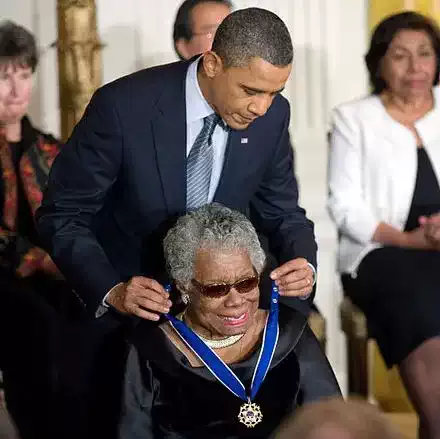
Maya Angelou
Momma Welfare Roll
Her arms semaphore fat triangles,
Pudgy hands bunched on layered hips
Where bones idle under years of fatback
And lima beans.
Her jowls shiver in accusation
Of crimes clichéd by
Repetition. Her children, strangers
To childhood's toys, play
Best the games of darkened doorways,
Rooftop tag, and know the slick feel of
Other people's property.
Too fat to whore,
Too mad to work,
Searches her dreams for the
Lucky sign and walks bare-handed
Into a den of bereaucrats for
Her portion.
'They don't give me welfare.
I take it.'
191

Wilfred Owen
A Terre
(Being the philosophy of many Soldiers.)
Sit on the bed; I'm blind, and three parts shell,
Be careful; can't shake hands now; never shall.
Both arms have mutinied against me -- brutes.
My fingers fidget like ten idle brats.
I tried to peg out soldierly -- no use!
One dies of war like any old disease.
This bandage feels like pennies on my eyes.
I have my medals? -- Discs to make eyes close.
My glorious ribbons? -- Ripped from my own back
In scarlet shreds. (That's for your poetry book.)
A short life and a merry one, my brick!
We used to say we'd hate to live dead old, --
Yet now . . . I'd willingly be puffy, bald,
And patriotic. Buffers catch from boys
At least the jokes hurled at them. I suppose
Little I'd ever teach a son, but hitting,
Shooting, war, hunting, all the arts of hurting.
Well, that's what I learnt, -- that, and making money.
Your fifty years ahead seem none too many?
Tell me how long I've got? God! For one year
To help myself to nothing more than air!
One Spring! Is one too good to spare, too long?
Spring wind would work its own way to my lung,
And grow me legs as quick as lilac-shoots.
My servant's lamed, but listen how he shouts!
When I'm lugged out, he'll still be good for that.
Here in this mummy-case, you know, I've thought
How well I might have swept his floors for ever,
I'd ask no night off when the bustle's over,
Enjoying so the dirt. Who's prejudiced
Against a grimed hand when his own's quite dust,
Less live than specks that in the sun-shafts turn,
Less warm than dust that mixes with arms' tan?
I'd love to be a sweep, now, black as Town,
Yes, or a muckman. Must I be his load?
O Life, Life, let me breathe, -- a dug-out rat!
Not worse than ours the existences rats lead --
Nosing along at night down some safe vat,
They find a shell-proof home before they rot.
Dead men may envy living mites in cheese,
Or good germs even. Microbes have their joys,
And subdivide, and never come to death,
Certainly flowers have the easiest time on earth.
"I shall be one with nature, herb, and stone."
Shelley would tell me. Shelley would be stunned;
The dullest Tommy hugs that fancy now.
"Pushing up daisies," is their creed, you know.
To grain, then, go my fat, to buds my sap,
For all the usefulness there is in soap.
D'you think the Boche will ever stew man-soup?
Some day, no doubt, if . . .
Friend, be very sure
I shall be better off with plants that share
More peaceably the meadow and the shower.
Soft rains will touch me, -- as they could touch once,
And nothing but the sun shall make me ware.
Your guns may crash around me. I'll not hear;
Or, if I wince, I shall not know I wince.
Don't take my soul's poor comfort for your jest.
Soldiers may grow a soul when turned to fronds,
But here the thing's best left at home with friends.
My soul's a little grief, grappling your chest,
To climb your throat on sobs; easily chased
On other sighs and wiped by fresher winds.
Carry my crying spirit till it's weaned
To do without what blood remained these wounds.
187
Henry Lawson
Who’ll Wear the Beaten Colours?
Who’ll wear the beaten colours—and cheer the beaten men?
Who’ll wear the beaten colours, till our time comes again?
Where sullen crowds are densest, and fickle as the sea,
Who’ll wear the beaten colours, and wear them home with me?
We closed the bars and gambling dens and voted straight and clean,
Our women walked while motor cars were whirling round the scene,
The Potts Point Vote was one for Greed and Ease and Luxury
With all to hold, and coward gold, and beaten folk are we.
Who’ll wear the beaten colours, with hands and pockets clean?
(I wore the beaten colours since I was seventeen)
I wore them up, and wore them down, Outback and across the sea—
Who’ll wear the beaten colours, and wear them home with me?
We wore them back from Ladysmith to where the peace was signed,
And wore them through the London streets where Jingoes howled behind.
We wore them to the Queen’s Hall, while England yelled “Pro-Boers!”
And sat them over victory while London banged the doors.1
We wore them from Port Arthur round till all sunk in the sea—
(Who’ll wear the white man’s colours, and wear them home with me?)
I’ve worn them through with gentlemen, with work-slaves and alone—
Who’ll wear the beaten colours, boys, and wear them on his own?
There’s one would look with startled eyes and shrink while I caressed,
Came I not with the colours of the conquered on my breast.
And twenty thousand Bushmen would stand with hands behind
And scorn in all their faces for the coward of his kind.
Who’ll wear the beaten colours and raise the voice they drowned—
It may be when we march again, they’ll bear some other sound—
Who’ll pin the beaten colours on and drive the beaten pen—
It may be other steel and ink when we march out again.
185
Robert W. Service
The Logger
In the moonless, misty night, with my little pipe alight,
I am sitting by the camp-fire's fading cheer;
Oh, the dew is falling chill on the dim, deer-haunted hill,
And the breakers in the bay are moaning drear.
The toilful hours are sped, the boys are long abed,
And I alone a weary vigil keep;
In the sightless, sullen sky I can hear the night-hawk cry,
And the frogs in frenzied chorus from the creek.
And somehow the embers' glow brings me back the long ago,
The days of merry laughter and light song;
When I sped the hours away with the gayest of the gay
In the giddy whirl of fashion's festal throng.
Oh, I ran a grilling race and I little recked the pace,
For the lust of youth ran riot in my blood;
But at last I made a stand in this God-forsaken land
Of the pine-tree and the mountain and the flood.
And now I've got to stay, with an overdraft to pay,
For pleasure in the past with future pain;
And I'm not the chap to whine, for if the chance were mine
I know I'd choose the old life once again.
With its woman's eyes a-shine, and its flood of golden wine;
Its fever and its frolic and its fun;
The old life with its din, its laughter and its sin -And
chuck me in the gutter when it's done.
Ah, well! it's past and gone, and the memory is wan,
That conjures up each old familiar face;
And here by fortune hurled, I am dead to all the world,
And I've learned to lose my pride and keep my place.
My ways are hard and rough, and my arms are strong and tough,
And I hew the dizzy pine till darkness falls;
And sometimes I take a dive, just to keep my heart alive,
Among the gay saloons and dancing halls.
In the distant, dinful town just a little drink to drown
The cares that crowd and canker in my brain;
Just a little joy to still set my pulses all a-thrill,
Then back to brutish labour once again.
And things will go on so until one day I shall know
That Death has got me cinched beyond a doubt;
Then I'll crawl away from sight, and morosely in the night
My weary, wasted life will peter out.
Then the boys will gather round, and they'll launch me in the ground,
And pile the stones the timber wolf to foil;
And the moaning pine will wave overhead a nameless grave,
Where the black snake in the sunshine loves to coil.
And they'll leave me there alone, and perhaps with softened tone
Speak of me sometimes in the camp-fire's glow,
As a played-out, broken chum, who has gone to Kingdom Come,
And who went the pace in England long ago.
174
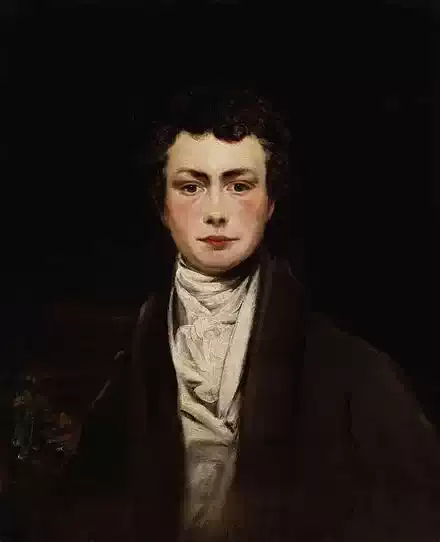
Thomas Moore
Memorabilia of Last Week
Monday, March ,
The Budget - quite charming and witty - no hearing,
For plaudits and laughs, the good things that were in it; --
Great comfort to find, though the Speech isn't cheering,
That all its gay auditors were, every minute.
What, still more prosperity! - mercy upon us,
"This boy'll be the death of me" - oft as, already,
Such smooth Budgeteers have genteelly undone us,
For Ruin made easy there's no one like Freddy.
Tuesday
Much grave apprehension express'd by the Peers,
Lest -- calling to life the old Peachums and Lockitts --
The large stock of gold we're to have in three years,
Should all find its way into highwayman's pockets![]
Wednesday
Little doing - for sacred, oh Wednesday, thou art
To the seven-o'-clock joys of full many a table --
When the Members all meet, to make much of that part
With which they so rashly fell out in the Fable.
It appear'd, though, to-night, that - as churchwardens, yearly,
Eat up a small baby - those cormorant sinners,
The Bankrupt-Commissioners bolt very nearly
A moderate-siz'd bankrupt, tout chaud, for their dinners![]
Nota bene - a rumour to-day, in the City,
"Mr. R-b-ns-n just has resign'd" - what a pity!
The Bulls and the Bears all fell a sobbing,
When they heard of the fate of poor Cock Robin;
While thus, to the nursery tune, so pretty,
A murmuring Stock-dove breath'd her ditty: --
"Alas, poor Robin, he crow'd as long
And as sweet as a prosperous Cock could crow;
Was a pitch too high for Robin to go.
Who'll make his shroud?"
"I," said the Bank, "though he play'd me a prank,
When I have a rag, poor Rob shall be roll'd in 't,
With many a pound I'll paper him round,
Like a plump rouleau - without the gold in 't."
170
Robert W. Service
My Dentist
Sitting in the dentist's chair,
Wishing that I wasn't there,
To forget and pass the time
I have made this bit of rhyme.
I had a rendez-vous at ten;
I rushed to get in line,
But found a lot of dames and men
Had waited there since nine;
I stared at them, then in an hour
Was blandly ushered in;
But though my face was grim and sour
He met me with a grin.
He told me of his horse of blood,
And how it "also ran",
He plans to own a racing stud (
He seems a wealthy man.)
And then he left me there until
I growled: "At any rate,
I hope he'll not charge in his bill
For all the time I wait."
His wife has sables on her back,
With jewels she's ablaze;
She drives a stately Cadillac,
And I'm the mug who pays:
At least I'm one of those who peer
With pessimistic gloom
At magazines of yester-year
In his damn waiting room.
I am a Christian Scientist;
I don't believe in pain;
My dentist had a powerful wrist,
He tries and tries in vain
To make me grunt or groan or squeal
With probe or rasp or drill. . . .
But oh, what agony I feel
When HE PRESENTS HIS BILL!
Sitting in the dental chair,
Don't you wish you weren't there:
Well, your cup of woe to fill,
Just think of his infernal bill.
171
Robert W. Service
Our Pote
A pote is sure a goofy guy;
He ain't got guts like you or I
To tell the score;
He ain't goy gumption 'nuff to know
The game of life's to get the dough,
Then get some more.
Take Brother Bill, he used to be
The big shot of the family,
The first at school;
But since about a year ago,
Through readin' Longfeller and Poe,
He's most a fool.
He mopes around with dimwit stare;
You might as well jest not be there,
The way he looks;
You'd think he shuns the human race,
The how he buries down his face
In highbrow books.
I've seen him stand for near an hour,
Jest starin' at a simple flower
Sich waste o' time;
The scribblin' on an envelope . . .
Why, most of all his silly dope
Don't even rhyme.
Now Brother's Jim's an engineer,
And Brother Tim's a bank cashier,
While I keep store;
Yet Bill, the brightest of the flock,
Might be a lawyer or a doc,
And then some more.
But no, he moons and loafs about,
As if he tried to figger out
Why skies are blue;
Instead o' gittin' down to grips
Wi' life an' stackin' up the chips
Like me an' you.
* * * * * * * * * *
Well, since them final lines I wrote,
We're mournin' for our Brother Pote:
Bill crossed the sea
And solved his problem with the beat,
For now he lies in peace and rest
In Normandie.
He died the bravest of the brave,
And here I'm standin' by his grave
So far from home;
With just a wooden cross to tell
How in the blaze of battle hell
As gloriously there he fell Bill
wrote his "pome".
166
Wilfred Owen
Uriconium: an Ode
It lieth low near merry England's heart
Like a long-buried sin; and Englishmen
Forget that in its death their sires had part.
And, like a sin, Time lays it bare again
To tell of races wronged,
And ancient glories suddenly overcast,
And treasures flung to fire and rabble wrath.
If thou hast ever longed
To lift the gloomy curtain of Time Past,
And spy the secret things that Hades hath,
Here through this riven ground take such a view.
The dust, that fell unnoted as a dew,
Wrapped the dead city's face like mummy-cloth:
All is as was: except for worm and moth.
Since Jove was worshipped under Wrekin's shade
Or Latin phrase was writ in Shropshire stone,
Since Druid chaunts desponded in this glade
Or Tuscan general called that field his own,
How long ago? How long?
How long since wanderers in the Stretton Hills
Met men of shaggy hair and savage jaw,
With flint and copper prong,
Aiming behind their dikes and thorny grilles?
Ah! those were days before the axe and saw,
Then were the nights when this mid-forest town
Held breath to hear the wolves come yelping down,
And ponderous bears 'long Severn lifted paw,
And nuzzling boars ran grunting through the shaw.
Ah me! full fifteen hundred times the wheat
Hath risen, and bowed, and fallen to human hunger
Since those imperial days were made complete.
The weary moon hath waxen old and younger
These eighteen thousand times
Without a shrine to greet her gentle ray.
And other temples rose; to Power and Pelf,
And chimed centurial chimes
Until their very bells are worn away.
While King by King lay cold on vaulted shelf
And wars closed wars, and many a Marmion fell,
And dearths and plagues holp sire and son to hell;
And old age stiffened many a lively elf
And many a poet's heart outdrained itself.
I had forgot that so remote an age
Beyond the horizon of our little sight,
Is far from us by no more spanless gauge
Than day and night, succeeding day and night,
Until I looked on Thee,
Thou ghost of a dead city, or its husk!
But even as we could walk by field and hedge
Hence to the distant sea
So, by the rote of common dawn and dusk,
We travel back to history's utmost edge.
Yea, when through thy old streets I took my way,
And recked a thousand years as yesterday,
Methought sage fancy wrought a sacrilege
To steal for me such godly privilege!
For here lie remnants from a banquet table -
Oysters and marrow-bones, and seeds of grape -
The statement of whose age must sound a fable;
And Samian jars, whose sheen and flawless shape
Look fresh from potter's mould.
Plasters with Roman finger-marks impressed;
Bracelets that from the warm Italian arm
Might seem to be scarce cold;
And spears - the same that pushed the Cymry west-
Unblunted yet; with tools of forge and farm
Abandoned, as a man in sudden fear
Drops what he holds to help his swift career:
For sudden was Rome's flight, and wild the alarm.
The Saxon shock was like Vesuvius' qualm.
O ye who prate of modern art and craft .
Mark well that Gaulish brooch, and test that screw!
Art's fairest buds on antique stem are graft.
Under the sun is nothing wholly new!
At Viricon today
The village anvil rests on Roman base
And in a garden, may be seen a bower
With pillars for its stay
That anciently in basilic had place.
The church's font is but a pagan dower:
A Temple's column, hollowed into this.
So is the glory of our artifice,
Our pleasure and our worship, but the flower
Of Roman custom and of Roman power.
O ye who laugh and, living as if Time
Meant but the twelve hours ticking round your dial,
Find it too short for thee, watch the sublime,
Slow, epochal time-registers awhile,
Which are Antiquities.
O ye who weep and call all your life too long
And moan: Was ever sorrow like to mine?
Muse on the memories
That sad sepulchral stones and ruins prolong.
Here might men drink of wonder like strong wine
And feel ephemeral troubles soothed and curbed.
Yet farmers, wroth to have their laws disturbed,
Are sooner roused for little loss to pine
Than we are moved by mighty woes long syne.
Above this reverend ground, what traveller checks?
Yet cities such as these one time would breed
Apocalyptic visions of world-wrecks.
Let Saxon men return to them, and heed!
They slew and burnt,
But after, prized what Rome had given away
Out of her strength and her prosperity.
Have they yet learnt
The precious truth distilled from Rome's decay?
Ruins! On England's heart press heavily!
For Rome hath left us more than walls and words
And better yet shall leave; and more than herds
Or land or gold gave the Celts to us in fee;
E'en Blood, which makes poets sing and prophets see.
162

Siegfried Sassoon
The Goldsmith
This job’s the best I’ve done.’ He bent his head
Over the golden vessel that he’d wrought.
A bird was singing. But the craftsman’s thought
Is a forgotten language, lost and dead.
He sighed and stretch’d brown arms. His friend came in
And stood beside him in the morning sun.
The goldwork glitter’d.... ‘That’s the best I’ve done.
‘And now I’ve got a necklace to begin.’
This was at Gnossos, in the isle of Crete...
A girl was selling flowers along the street.
128

Ella Wheeler Wilcox
What I Have Seen #4
I saw a youth, one of God's favored few,
Crowned with beauty, and talents, and health;
He had climbed the steep pathway, and cut his way through
To the summit of glory and wealth.
The day is breaking, hearts are waking,
Refreshed for the field of labor:
Arise, arise, like the king of the skies,
With a greeting for friend and neighbor.
He had toiled hard for the honors he'd won,
He had climbed over high rocks, forded streams;
Braved the bleak winter snow, the hot summer sun,
He was reaching the goal of his dreams.
The day hangs around us, the sun hath bound us
With fetters silken and yellow:
Flow, flow away, fleeting day,
Golden-hearted and mellow.
I saw the youth lift a mug to his mouth,
Drink the last drop of the fearful first glass!
Ah! his veins thrill in a fierce, scorching drouth,
He fills it again, again drinks it! alas!
The day is dying, hearts are sighing,
Crushed with a weight of sorrow:
Sleep, oh! sleep, in a slumber deep,
And wait for a bright to-morrow.
I saw him low in the dust at my feet,
Gone beauty, health, wealth, strength, talents, all;
From the summit of Fame to the slime of the street,
He had bartered his soul for the fiend Alcohol.
The night hangs o'er us, the wind's wild chorus
Shrieks like a demons' revel:
Weep, sob, weep, for the fog is deep,
And the world is sold to the devil.
14
Previous
Page 12