
Money and Wealth

Robert W. Service
Artist
He gave a picture exhibition,
Hiring a little empty shop.
Above its window: FREE ADMISSION
Cajoled the passers-by to stop;
Just to admire - no need to purchase,
Although his price might have been low:
But no proud artist ever urges
Potential buyers at his show.
Of course he badly needed money,
But more he needed moral aid.
Some people thought his pictures funny,
Too ultra-modern, I'm afraid.
His painting was experimental,
Which no poor artist can afford-
That is, if he would pay the rental
And guarantee his roof and board.
And so some came and saw and sniggered,
And some a puzzled brow would crease;
And some objected: "Well, I'm jiggered!"
What price Picasso and Matisse?
The artist sensitively quivered,
And stifled many a bitter sigh,
But day by day his hopes were shivered
For no one ever sought to buy.
And then he had a brilliant notion:
Half of his daubs he labeled: SOLD.
And lo! he viewed with queer emotion
A public keen and far from cold.
Then (strange it is beyond the telling),
He saw the people round him press:
His paintings went - they still are selling...
Well, nothing succeeds like success.
239
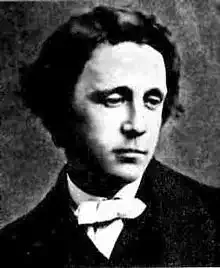
Lewis Carroll
A Game of Fives
Five little girls, of Five, Four, Three, Two, One:
Rolling on the hearthrug, full of tricks and fun.
Five rosy girls, in years from Ten to Six:
Sitting down to lessons no
more time for tricks.
Five growing girls, from Fifteen to Eleven:
Music, Drawing, Languages, and food enough for seven!
Five winsome girls, from Twenty to Sixteen:
Each young man that calls, I say "Now tell me which you MEAN!"
Five dashing girls, the youngest Twentyone:
But, if nobody proposes, what is there to be done?
Five showy girls but
Thirty is an age
When girls may be ENGAGING, but they somehow don't ENGAGE.
Five dressy girls, of Thirtyone
or more:
So gracious to the shy young men they snubbed so much before!
Five PASSE girls Their
age? Well, never mind!
We jog along together, like the rest of human kind:
But the quondam "careless bachelor" begins to think he knows
The answer to that ancient problem "how the money goes"!
233

Christina Rossetti
What Will You Give Me For My Pound?
What will you give me for my pound?
Full twenty shillings round.
What will you give me for my shilling?
Twelve pence to give I'm willing.
What will you give me for my penny?
Four farthings, just so many.
Full twenty shillings round.
What will you give me for my shilling?
Twelve pence to give I'm willing.
What will you give me for my penny?
Four farthings, just so many.
231
Robert W. Service
The Search
I bought a young and lovely bride,
Paying her father gold;
Lamblike she rested by my side,
As cold as ice is cold.
No love in her could I awake,
Even for pity's sake.
I bought rich books I could not read,
And pictures proud and rare;
Reproachfully they seemed to plead
And hunger for my care;
But to their beauty I was blind,
Even as is a hind.
The bearded merchants heard my cry:
'I'll give all I posses
If only, only I can buy
A little happiness.'
Alas! I sought without avail:
They had not that for sale.
I gave my riches to the poor
And dared the desert lone;
Now of God's heaven I am sure
Though I am rag and bone . . .
Aye, richer than the Aga Khan,
At last--a happy man.
233

William Wordsworth
Simon Lee, The Old Huntsman
In the sweet shire of Cardigan,
Not far from pleasant Ivor-hall,
An old Man dwells, a little man,--
'Tis said he once was tall.
Full five-and-thirty years he lived
A running huntsman merry;
And still the centre of his cheek
Is red as a ripe cherry.
No man like him the horn could sound,
And hill and valley rang with glee
When Echo bandied, round and round,
The halloo of Simon Lee.
In those proud days, he little cared
For husbandry or tillage;
To blither tasks did Simon rouse
The sleepers of the village.
He all the country could outrun,
Could leave both man and horse behind;
And often, ere the chase was done,
He reeled, and was stone-blind.
And still there's something in the world
At which his heart rejoices;
For when the chiming hounds are out,
He dearly loves their voices!
But, oh the heavy change!--bereft
Of health, strength, friends, and kindred, see!
Old Simon to the world is left
In liveried poverty.
His Master's dead,--and no one now
Dwells in the Hall of Ivor;
Men, dogs, and horses, all are dead;
He is the sole survivor.
And he is lean and he is sick;
His body, dwindled and awry,
Rests upon ankles swoln and thick;
His legs are thin and dry.
One prop he has, and only one,
His wife, an aged woman,
Lives with him, near the waterfall,
Upon the village Common.
Beside their moss-grown hut of clay,
Not twenty paces from the door,
A scrap of land they have, but they
Are poorest of the poor.
This scrap of land he from the heath
Enclosed when he was stronger;
But what to them avails the land
Which he can till no longer?
Oft, working by her Husband's side,
Ruth does what Simon cannot do;
For she, with scanty cause for pride,
Is stouter of the two.
And, though you with your utmost skill
From labour could not wean them,
'Tis little, very little--all
That they can do between them.
Few months of life has he in store
As he to you will tell,
For still, the more he works, the more
Do his weak ankles swell.
My gentle Reader, I perceive
How patiently you've waited,
And now I fear that you expect
Some tale will be related.
O Reader! had you in your mind
Such stores as silent thought can bring,
O gentle Reader! you would find
A tale in every thing.
What more I have to say is short,
And you must kindly take it:
It is no tale; but, should you think,
Perhaps a tale you'll make it.
One summer-day I chanced to see
This old Man doing all he could
To unearth the root of an old tree,
A stump of rotten wood.
The mattock tottered in his hand;
So vain was his endeavour,
That at the root of the old tree
He might have worked for ever.
"You're overtasked, good Simon Lee,
Give me your tool," to him I said;
And at the word right gladly he
Received my proffered aid.
I struck, and with a single blow
The tangled root I severed,
At which the poor old Man so long
And vainly had endeavoured.
The tears into his eyes were brought,
And thanks and praises seemed to run
So fast out of his heart, I thought
They never would have done.
--I've heard of hearts unkind, kind deeds
With coldness still returning;
Alas! the gratitude of men
Hath oftener left me mourning.
231
William Wordsworth
Is ample, and some little might be stored
Wherewith to cheer him in the winter time."
Thus talking of that Peasant, we approached
Close to the spot where with his rod and line
He stood alone; whereat he turned his head
To greet us--and we saw a Mam worn down
By sickness, gaunt and lean, with sunken cheeks
And wasted limbs, his legs so long and lean
That for my single self I looked at them,
Forgetful of the body they sustained.--
Too weak to labour in the harvest field,
The Man was using his best skill to gain
A pittance from the dead unfeeling lake
That knew not of his wants. I will not say
What thoughts immediately were ours, nor how
The happy idleness of that sweet morn,
With all its lovely images, was changed
To serious musing and to self-reproach.
Nor did we fail to see within ourselves
What need there is to be reserved in speech,
And temper all our thoughts with charity.
--Therefore, unwilling to forget that day,
My Friend, Myself, and She who then received
The same admonishment, have called the place
By a memorial name, uncouth indeed
As e'er by mariner was given to bay
Or foreland, on a new-discovered coast;
And POINT RASH-JUDGMENT is the name it bears.
230
Robert W. Service
The Cow-Juice Cure
The clover was in blossom, an' the year was at the June,
When Flap-jack Billy hit the town, likewise O'Flynn's saloon.
The frost was on the fodder an' the wind was growin' keen,
When Billy got to seein' snakes in Sullivan's shebeen.
Then in meandered Deep-hole Dan, once comrade of the cup:
"Oh Billy, for the love of Mike, why don't ye sober up?
I've got the gorgus recipay, 'tis smooth an' slick as silk --
Jest quit yer strangle-holt on hooch, an' irrigate with milk.
Lackteeal flooid is the lubrication you require;
Yer nervus frame-up's like a bunch of snarled piano wire.
You want to get it coated up with addypose tishoo,
So's it will work elastic-like, an' milk's the dope for you."
Well, Billy was complyable, an' in a month it's strange,
That cow-juice seemed to oppyrate a most amazin' change.
"Call up the water-wagon, Dan, an' book my seat," sez he.
"'Tis mighty queer," sez Deep-hole Dan, "'twas just the same with
me."
They shanghaied little Tim O'Shane, they cached him safe away,
An' though he objurgated some, they "cured" him night an' day;
An' pretty soon there came the change amazin' to explain:
"I'll never take another drink," sez Timothy O'Shane.
They tried it out on Spike Muldoon, that toper of renown;
They put it over Grouch McGraw, the terror of the town.
They roped in "tanks" from far and near, an' every test was sure,
An' like a flame there ran the fame of Deep-hole's Cow-juice Cure.
"It's mighty queer," sez Deep-hole Dan, "I'm puzzled through and through;
It's only milk from Riley's ranch, no other milk will do."
An' it jest happened on that night with no predictive plan,
He left some milk from Riley's ranch a-settin' in a pan;
An' picture his amazement when he poured that milk next day --
There in the bottom of the pan a dozen "colours" lay.
"Well, what d'ye know 'bout that," sez Dan; "Gosh ding my dasted eyes,
We've been an' had the Gold Cure, Bill, an' none of us was wise.
The milk's free-millin' that's a cinch; there's colours everywhere.
Now, let us figger this thing out -- how does the dust git there?
`Gold from the grass-roots down', they say -- why, Bill! we've got it cold --
Them cows what nibbles up the grass, jest nibbles up the gold.
We're blasted, bloomin' millionaires; dissemble an' lie low:
We'll follow them gold-bearin' cows, an' prospect where they go."
An' so it came to pass, fer weeks them miners might be found
A-sneakin' round on Riley's ranch, an' snipin' at the ground;
Till even Riley stops an' stares, an' presently allows:
"Them boys appear to take a mighty interest in cows."
An' night an' day they shadowed each auriferous bovine,
An' panned the grass-roots on their trail, yet nivver gold they seen.
An' all that season, secret-like, they worked an' nothin' found;
An' there was colours in the milk, but none was in the ground.
An' mighty desperate was they, an' down upon their luck,
When sudden, inspirationlike, the source of it they struck.
An' where d'ye think they traced it to? it grieves my heart to tell --
In the black sand at the bottom of that wicked milkman's well.
231
Lewis Carroll
Fame's Penny-Trumpet
Blow, blow your trumpets till they crack,
Ye little men of little souls!
And bid them huddle at your back Goldsucking
leeches, shoals on shoals!
Fill all the air with hungry wails "
Reward us, ere we think or write!
Without your Gold mere Knowledge fails
To sate the swinish appetite!"
And, where great Plato paced serene,
Or Newton paused with wistful eye,
Rush to the chace with hoofs unclean
And Babelclamour
of the sty
Be yours the pay: be theirs the praise:
We will not rob them of their due,
Nor vex the ghosts of other days
By naming them along with you.
They sought and found undying fame:
They toiled not for reward nor thanks:
Their cheeks are hot with honest shame
For you, the modern mountebanks!
Who preach of Justice plead
with tears
That Love and Mercy should abound While
marking with complacent ears
The moaning of some tortured hound:
Who prate of Wisdom nay,
forbear,
Lest Wisdom turn on you in wrath,
Trampling, with heel that will not spare,
The vermin that beset her path!
Go, throng each other's drawingrooms,
Ye idols of a petty clique:
Strut your brief hour in borrowed plumes,
And make your pennytrumpets
squeak.
Deck your dull talk with pilfered shreds
Of learning from a nobler time,
And oil each other's little heads
With mutual Flattery's golden slime:
And when the topmost height ye gain,
And stand in Glory's ether clear,
And grasp the prize of all your pain So
many hundred pounds a year
Then let Fame's banner be unfurled!
Sing Paeans for a victory won!
Ye tapers, that would light the world,
And cast a shadow on the Sun
Who still shall pour His rays sublime,
One crystal flood, from East to West,
When YE have burned your little time
And feebly flickered into rest!
227
Robert W. Service
Two Words
'God' is composed of letters three,
But if you put an 'l'
Before the last it seems to me
A synonym for Hell.
For all of envy, greed and hate
The human heart can hold
Respond unto the devil's bait
Of Gold.
When God created Gold to be
For our adorning fit,
I little think he dreamed that we
Would come to worship it.
But when you ruefully have scanned
The chronicles of Time,
You'll find that lucre lends a hand
To Crime.
So if you are a millionaire,
To be of Heaven sure,
Give every penny you can spare
Unto the sick and poor.
From Gold strike out the evil 'ell,'
And so with letters odd
You can with peace of spirit spell
Just GOD.
224
Robert W. Service
The Man From Eldorado
He's the man from Eldorado, and he's just arrived in town,
In moccasins and oily buckskin shirt.
He's gaunt as any Indian, and pretty nigh as brown;
He's greasy, and he smells of sweat and dirt.
He sports a crop of whiskers that would shame a healthy hog;
Hard work has racked his joints and stooped his back;
He slops along the sidewalk followed by his yellow dog,
But he's got a bunch of gold-dust in his sack.
He seems a little wistful as he blinks at all the lights,
And maybe he is thinking of his claim
And the dark and dwarfish cabin where he lay and dreamed at nights,
(Thank God, he'll never see the place again!)
Where he lived on tinned tomatoes, beef embalmed and sourdough bread,
On rusty beans and bacon furred with mould;
His stomach's out of kilter and his system full of lead,
But it's over, and his poke is full of gold.
He has panted at the windlass, he has loaded in the drift,
He has pounded at the face of oozy clay;
He has taxed himself to sickness, dark and damp and double shift,
He has labored like a demon night and day.
And now, praise God, it's over, and he seems to breathe again
Of new-mown hay, the warm, wet, friendly loam;
He sees a snowy orchard in a green and dimpling plain,
And a little vine-clad cottage, and it's--Home.
II
He's the man from Eldorado, and he's had a bite and sup,
And he's met in with a drouthy friend or two;
He's cached away his gold-dust, but he's sort of bucking up,
So he's kept enough to-night to see him through.
His eye is bright and genial, his tongue no longer lags;
`His heart is brimming o'er with joy and mirth;
He may be far from savory, he may be clad in rags,
`But to-night he feels as if he owns the earth.
Says he: "Boys, here is where the shaggy North and I will shake;
I thought I'd never manage to get free.
I kept on making misses; but at last I've got my stake;
There's no more thawing frozen muck for me.
I am going to God's Country, where I'll live the simple life;
I'll buy a bit of land and make a start;
I'll carve a little homestead, and I'll win a little wife,
And raise ten little kids to cheer my heart."
They signified their sympathy by crowding to the bar;
They bellied up three deep and drank his health.
He shed a radiant smile around and smoked a rank cigar;
They wished him honor, happiness and wealth.
They drank unto his wife to be--that unsuspecting maid;
They drank unto his children half a score;
And when they got through drinking very tenderly they laid
The man from Eldorado on the floor.
III
He's the man from Eldorado, and he's only starting in
To cultivate a thousand-dollar jag.
His poke is full of gold-dust and his heart is full of sin,
And he's dancing with a girl called Muckluck Mag.
She's as light as any fairy; she's as pretty as a peach;
She's mistress of the witchcraft to beguile;
There's sunshine in her manner, there is music in her speech,
And there's concentrated honey in her smile.
Oh, the fever of the dance-hall and the glitter and the shine,
The beauty, and the jewels, and the whirl,
The madness of the music, the rapture of the wine,
The languorous allurement of a girl!
She is like a lost madonna; he is gaunt, unkempt and grim;
But she fondles him and gazes in his eyes;
Her kisses seek his heavy lips, and soon it seems to him
He has staked a little claim in Paradise.
"Who's for a juicy two-step?" cries the master of the floor;
The music throbs with soft, seductive beat.
There's glitter, gilt and gladness; there are pretty girls galore;
There's a woolly man with moccasins on feet.
They know they've got him going; he is buying wine for all;
They crowd around as buzzards at a feast,
Then when his poke is empty they boost him from the hall,
And spurn him in the gutter like a beast.
He's the man from Eldorado, and he's painting red the town;
Behind he leaves a trail of yellow dust;
In a whirl of senseless riot he is ramping up and down;
There's nothing checks his madness and his lust.
And soon the word is passed around--it travels like a flame;
They fight to clutch his hand and call him friend,
The chevaliers of lost repute, the dames of sorry fame;
Then comes the grim awakening--the end.
IV
He's the man from Eldorado, and he gives a grand affair;
There's feasting, dancing, wine without restraint.
The smooth Beau Brummels of the bar, the faro men, are there;
The tinhorns and purveyors of red paint;
The sleek and painted women, their predacious eyes aglow-Sure
Klondike City never saw the like;
Then Muckluck Mag proposed the toast, "The giver of the show,
The livest sport that ever hit the pike."
The "live one" rises to his feet; he stammers to reply-And
then there comes before his muddled brain
A vision of green vastitudes beneath an April sky,
And clover pastures drenched with silver rain.
He knows that it can never be, that he is down and out;
Life leers at him with foul and fetid breath;
And then amid the revelry, the song and cheer and shout,
He suddenly grows grim and cold as death.
He grips the table tensely, and he says: "Dear friends of mine,
I've let you dip your fingers in my purse;
I've crammed you at my table, and I've drowned you in my wine,
And I've little left to give you but--my curse.
I've failed supremely in my plans; it's rather late to whine;
My poke is mighty weasened up and small.
I thank you each for coming here; the happiness is mine-And
now, you thieves and harlots, take it all."
He twists the thong from off his poke; he swings it o'er his head;
The nuggets fall around their feet like grain.
They rattle over roof and wall; they scatter, roll and spread;
The dust is like a shower of golden rain.
The guests a moment stand aghast, then grovel on the floor;
They fight, and snarl, and claw, like beasts of prey;
And then, as everybody grabbed and everybody swore,
The man from Eldorado slipped away.
V
He's the man from Eldorado, and they found him stiff and dead,
Half covered by the freezing ooze and dirt.
A clotted Colt was in his hand, a hole was in his head,
And he wore an old and oily buckskin shirt.
His eyes were fixed and horrible, as one who hails the end;
The frost had set him rigid as a log;
And there, half lying on his breast, his last and only friend,
There crouched and whined a mangy yellow dog.
223

Henry Lawson
The Legend of Mammon Castle
IN THE days that will be olden after many years are gone,
Ere the world emerged from darkness floating out into the dawn,
On a mountain rising steeply from the depth of marsh and wood
Raised in scorn above the lowlands Mammon Castle proudly stood—
Mammon Castle, built of marble that was cut and reared with pain
By the poor and starving wretches who were serfs on that domain—
All the jewel-studded windows shone at sunset like a fire,
And a diamond was flashing from the needle of the spire.
Now the nobles held the castle by a title that was old,
And they drank from crystal goblets and they ate from plates of gold;
The coffers of the castle they were plenished by the thralls,
And many were the revels that were held in Mammon’s halls.
And the plunder from the toilers more than paid for silks and wine,
So the flower-beds were bordered with the jewels of the mine,
All the serfs were taught to worship both the lady and the lord,
And the nobles taught their children to be wiser far than God.
But a vassal preached sedition and in a gloomy hour
Came the wild and haggard vassals to the gate of Mammon Tower;
They asked for food and shelter and were answered by a blow,
And, rising in their anger, soon they laid the castle low.
The jewels of the castle went to buy the people bread,
And according to his labour was the toiler clothed and fed.
And with the wood and marble—my dreaming tells me so—
Many little homes were builded in the valleys down below.
225

Edward Lear
Limerick: There was an Old Man of Kilkenny
There was an Old Man of Kilkenny,
Who never had more than a penny;
He spent all that money,
In onions and honey,
That wayward Old Man of Kilkenny.
Who never had more than a penny;
He spent all that money,
In onions and honey,
That wayward Old Man of Kilkenny.
221
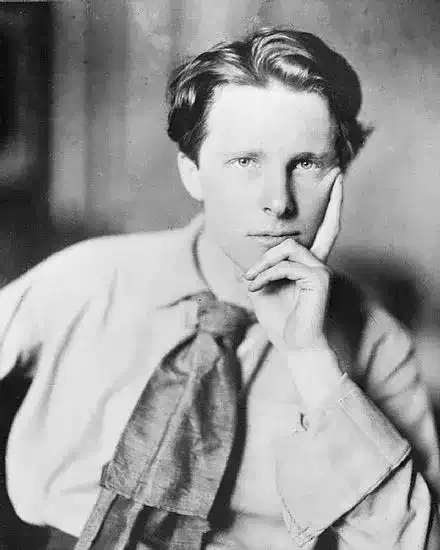
Rupert Brooke
Sonnet Reversed
Hand trembling towards hand; the amazing lights
Of heart and eye. They stood on supreme heights.
Ah, the delirious weeks of honeymoon!
Soon they returned, and, after strange adventures,
Settled at Balham by the end of June.
Their money was in Can. Pacs. B. Debentures,
And in Antofagastas. Still he went
Cityward daily; still she did abide
At home. And both were really quite content
With work and social pleasures. Then they died.
They left three children (besides George, who drank):
The eldest Jane, who married Mr Bell,
William, the head-clerk in the County Bank,
And Henry, a stock-broker, doing well.
222
Robert W. Service
Jane
My daughter Jane makes dresses
For beautiful Princesses;
But though she's plain is Jane,
Of needlework she's vain,
And makes such pretty things
For relatives of Kings.
She reads the picture papers
Where Royalties cut capers,
And often says to me:
'How wealthy they must be,
That nearly every day
A new robe they can pay.'
Says I: 'If your Princesses
Could fabric pretty dresses,
Though from a throne they stem
I would think more of them.
Peeress and shopgirl are
To my mind on a par.'
Says Jane: 'But for their backing
I might be sewing sacking.
Instead, I work with joy
In exquisite employ,
Embroidering rich dresses
For elegant Princesses . . .
Damn social upsetters
Who criticise their betters!'
217
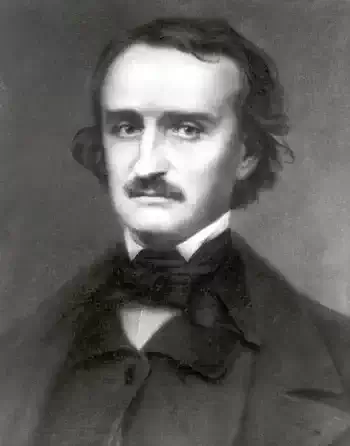
Edgar Allan Poe
Epigram For Wall Street
I'll tell you a plan for gaining wealth,
Better than banking, trade or leases —
Take a bank note and fold it up,
And then you will find your money in creases!
This wonderful plan, without danger or loss,
Keeps your cash in your hands, where nothing can trouble it;
And every time that you fold it across,
'Tis as plain as the light of the day that you double it!
218
Robert W. Service
Rich Poor Man
We pitied him because
He lived alone;
His tiny cottage was
His only own.
His little garden had
A wall around;
Yet never was so glad
A bit of ground.
It seemed to fair rejoice
With flowers and fruit;
With blooms it found a voice
When ours was muts.
It smiled without a pause
In gracious glow:
I think it was because
He loved it so.
He had no news to read,
No rent to pay;
His vegetable need
He plucked each day.
His grateful garden gave
Him ample fare;
He lived without a crave,
Without a care.
His bread and milk and tea
Were all he bought;
To us he seemed to be
A sorry lot . . .
But when we're dead and gone,
With all our fuss,
I guess he'll carry on,
And laugh at us.
218
Robert W. Service
Kail Yard Bard
A very humble pen I ply
Beneath a cottage thatch;
And in the sunny hours I try
To till my cabbage patch;
And in the gloaming glad am I
To lift the latch.
I do not plot to pile up pelf,
With jowl and belly fat;
To simple song I give myself,
And seek no gain at that:
Content if milk is on the shelf
To feed the cat.
I joy that haleness I possess,
Though fame has passed me by;
And see such gold of happiness
A-shining in the sky,
I wonder who has won success,
Proud men or I?
I do not grieve that I am poor,
And by the world unknown;
Free as the wind, serene and sure,
In peace I live alone.
'Tis better to be bard obscure
Than King on Throne.
217
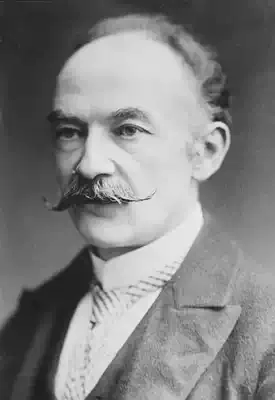
Thomas Hardy
Satires of Circumstance in Fifteen Glimpses VIII: In the St
He enters, and mute on the edge of a chair
Sits a thin-faced lady, a stranger there,
A type of decayed gentility;
And by some small signs he well can guess
That she comes to him almost breakfastless.
"I have called -- I hope I do not err --
I am looking for a purchaser
Of some score volumes of the works
Of eminent divines I own, --
Left by my father -- though it irks
My patience to offer them." And she smiles
As if necessity were unknown;
"But the truth of it is that oftenwhiles
I have wished, as I am fond of art,
To make my rooms a little smart,
And these old books are so in the way."
And lightly still she laughs to him,
As if to sell were a mere gay whim,
And that, to be frank, Life were indeed
To her not vinegar and gall,
But fresh and honey-like; and Need
No household skeleton at all.
220

Jonathan Swift
Market Women’s Cries
APPLES
COME buy my fine wares,
Plums, apples and pears.
A hundred a penny,
In conscience too many:
Come, will you have any?
My children are seven,
I wish them in Heaven;
My husband ’s a sot,
With his pipe and his pot,
Not a farthen will gain them,
And I must maintain them.
ONIONS
Come, follow me by the smell,
Here are delicate onions to sell;
I promise to use you well.
They make the blood warmer,
You’ll feed like a farmer;
For this is every cook’s opinion,
No savoury dish without an onion;
But, lest your kissing should be spoiled,
Your onions must be thoroughly boiled:
Or else you may spare
Your mistress a share,
The secret will never be known:
She cannot discover
The breath of her lover,
But think it as sweet as her own.
HERRINGS
Be not sparing,
Leave off swearing.
Buy my herring
Fresh from Malahide,
Better never was tried.
Come, eat them with pure fresh butter and mustard,
Their bellies are soft, and as white as a custard.
Come, sixpence a dozen, to get me some bread,
Or, like my own herrings, I soon shall be dead.
216

Emily Dickinson
Smiling back from Coronation
Smiling back from Coronation
May be Luxury-
On the Heads that started with us
Being's
Peasantry-
Recognizing in Procession
Ones We former knew-
When Ourselves were also dusty-
Centuries ago-
Had the Triumph no Conviction
Of how many be
Stimulated-
by the Contrast-
Unto Misery-
May be Luxury-
On the Heads that started with us
Being's
Peasantry-
Recognizing in Procession
Ones We former knew-
When Ourselves were also dusty-
Centuries ago-
Had the Triumph no Conviction
Of how many be
Stimulated-
by the Contrast-
Unto Misery-
216
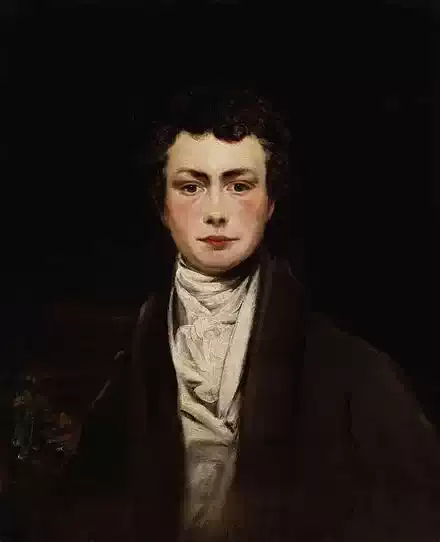
Thomas Moore
The Ghost of Miltiades
The Ghost of Miltiades came at night,
And he stood by the bed of the Benthamite,
And he said, in a voice, that thrill'd the frame,
"If ever the sound of Marathon's name
Hath fir'd they blood or flush'd thy brow,
Lover of Liberty, rise thee now!"
The Benthamite, yawning, left his bed --
Away to the Stock Exchange he sped,
And he found the Scrip of Greece so high,
That it fir'd his blood, it flush'd his eye,
And oh, 'twas a sight to see,
For never was Greek more Greek than he!
And still as the premium higher went,
His ecstas rose - so much per cent.,
(As we see in a glass, that tells the weather,
The heat and the silver rise together,)
And Liberty sung from the patriot's lip,
While a voice from pocket whisper'd "Scrip!"
The Ghost of Miltiades came again; --
He smil'd as the pale moon smiles through rain,
For his soul was glad at the patriot strain;
(And poor, dear ghost -- how little he knew
The jobs and the tricks of the Philhellene crew!)
"Blessings and thanks!" was all he said,
Then, melting away, like a night-dream, fled!
The Benthamite hears -- amaz'd that ghosts
Could be such fools -- and away he posts,
A patriot still? Ah no, ah no --
Goddess of Freedom, thy scrip is low,
And, warm and fond as they lovers are,
Thou triest their passion, when under par.
The Benthamite's ardour fast decays,
By turns he weeps, and swears, and prays,
And wishes the d--l had Crescent and Cross,
Ere he had been forc'd to sell at a loss.
They quote thim the Stock of various nations,
But, spite of his classical associations,
Lord how he loathes the Greek quotations!
"Who'll buy my Scrip! Who'll buy my Scrip?"
Is now the theme of the patriot's lip,
And he runs to tell how hard his lot is
To Messrs. Orlando and Luriottis,
And says, "Oh Greece, for Liberty's sake,
Do buy my Scrip and I vow to break
Those dark, unholy bonds of thine --
If you'll only consent to buy up mine!"
The Ghost of Miltiades came once more; --
His brow, like the night, was lowering o'er,
And he said, with a look that flash'd dismay,
"Of Liberty's foes the worst are they
Who turn to a trade her cause divine,
And gamble for gold on Freedom's shrine!"
Thus saying, the Ghost, as he took his flight,
Gave a Parthian kick to the Benthamite,
Which sent him, whimpering, off to Jerry --
And vanish'd away to the Stygian ferry!
214
Robert W. Service
My Will
I've made my Will. I don't believe
In luxury and wealth;
And to those loving ones who grieve
My age and frailing health
I give the meed to soothe their ways
That they may happy be,
And pass serenely all their days
In snug security.
That duty done, I leave behind
The all I have to give
To crippled children and the blind
Who lamentably live;
Hoping my withered hand may freight
To happiness a few
Poor innocents whom cruel fate
Has cheated of their due.
A am no grey philanthropist,
Too humble is my lot
Yet how I'm glad to give the grist
My singing mill has brought.
For I have had such lyric days,
So rich, so full, so sweet,
That I with gratitude and praise
Would make my life complete.
I'VE MADE MY WILL: now near the end,
At peace with all mankind,
To children lame I would be friend,
And brother to the blind . . .
And if there be a God, I pray
He bless my last bequest,
And in His love and pity say:
"Good servant,--rest!"
214
Thomas Moore
The Sinking Fund Cried
["Now what, we ask, is become of this Sinking Fund - these eight millions of surplus
above expenditure, which were to reduce the interest of the national debt by the
amount of four hundred thousand pounds annually? Where, indeed, is the Sinking Fund
itself?" - The Times]
Take your bell, take your bell,
Good Crier, and tell
To the Bulls and the Bears, till their ears are stunn'd,
That, lost or stolen,
Or fall'n through a hole in
The Treasury floor, is the Sinking Fund!
O yes! O yes!
Can anybody guess
What the deuce has become of this Treasury wonder?
It has Pitt's name on't,
All brass, in the front,
And R--b--ns--n's scrawl'd with a goose-quill under.
Folks well knew what
Would soon be its lot,
When Frederick or Jenky set hobnobbing,[]
And said to each other,
"Suppose, dear brother,
We make this funny old Fund worth robbing."
We are come, alas!
To a very pretty pass --
Eight Hundred Millions of score, to pay,
With but Five in the till,
To discharge the bill,
And even that Five too, whipp'd away!
Stop thief! stop thief! --
From the Sub to the Chief,
These Genmen of Finance are plundering cattle --
Call the watch, call Bougham
Tell Joseph Hume,
That best of Charleys, to spring his rattle.
Whoever will bring
This aforesaid thing
To the well-known house of Robinson and Jenkin,
Shall be paid, with thanks,
In the notes of banks,
Whose Funds have all learn'd "the Art of Sinking."
O yes! O yes!
Can any body guess
What the devil has become of the Treasury wonder?
It has Pitt's name on 't,
All brass, in the front,
And R--b--ns--n's, scrawl'd with a goose-quill under.
211

Anonymous
My bag and me they sundered us
My bag and me they sundered us,
’Twas stuffed from string to sauleen,
My bag of bags they sundered us!
Yourself and I, mo stóreen,
At every hour of night and day,
Through road and lane and bohreen
Without complaint we made our way,
Till one sore day a carman
In pity took us from the road,
And faced us towards Dungarvan
Where mortal sin hath firm abode.
An allalu mo wauleen,
Without a hole or rent in it,
’Twas stuffed from string to sauleen,
My half-year’s rent was pent in it!
My curses attend Dungarvan,
Her boats, her borough, and her fish,
May every woe that mars man
Come dancing down upon her dish!
For all the rogues behind you,
From Slaney’s bank to Shannon’s tide,
Are but poor scholars, mind you,
To the rogues you’d meet in Abbeyside!
An allalu mo wauleen,
My little bag I treasured it,
’Twas stuffed from string to sauleen,
A thousand times I measured it!
’Twas stuffed from string to sauleen,
My bag of bags they sundered us!
Yourself and I, mo stóreen,
At every hour of night and day,
Through road and lane and bohreen
Without complaint we made our way,
Till one sore day a carman
In pity took us from the road,
And faced us towards Dungarvan
Where mortal sin hath firm abode.
An allalu mo wauleen,
Without a hole or rent in it,
’Twas stuffed from string to sauleen,
My half-year’s rent was pent in it!
My curses attend Dungarvan,
Her boats, her borough, and her fish,
May every woe that mars man
Come dancing down upon her dish!
For all the rogues behind you,
From Slaney’s bank to Shannon’s tide,
Are but poor scholars, mind you,
To the rogues you’d meet in Abbeyside!
An allalu mo wauleen,
My little bag I treasured it,
’Twas stuffed from string to sauleen,
A thousand times I measured it!
207