
Money and Wealth

Henry Lawson
As Ireland Wore the Green
BY RIGHT of birth in southern land I send my warning forth.
I see my country ruined by the wrongs that damned the North.
And shall I stand with fireless eyes and still and silent mouth
While Mammon builds his Londons on the fair fields of the South?
CHORUS:
O must we hide our colour
In fear of Mammon’s spleen?
Or shall we wear the bonnie blue
As Ireland wore the green?
As Ireland wore the green, my friends!
As Ireland wore the green!
Aye, we will wear our colour still,
As Ireland wore the green!
I see the shade of poverty fall on each sunny scene.
And slums and alley-ways extend where fields were evergreen.
There is a law that stamps the flower of freedom as it springs;
And this upon a soil that’s trod by prouder feet than kings’.
And must I hide my colour
In fear of Mammon’s spleen?
Or shall I wear the bonnie blue
As Ireland wore the green?
As Ireland wore the green, my friends!
As Ireland swore the green!
Aye, I will wear my colour yet,
As Ireland wore the green!
Out there beyond the lonely range our fathers toiled for years
’Neath all the hardships that beset true-hearted pioneers;
And our brave mothers journeyed there to do the work of men
On those great awful plains that were unfit for women then.
Then must we hide our colour
In fear of Mammon’s spleen?
Or shall we wear the bonnie blue
As Ireland swore the green?
As Ireland wore the green, my friends!
As Ireland wore the green!
Aye, we shall wear our colour still,
As Ireland wore the green!
O shall the fields our fathers won be yielded to the few
Who never touched the axe or spade, and hardships never knew?
Shall lordly robbers rule the land and build their mansions high,
And ladies flaunt their jewelled plumes where our brave mothers lie?
O must we hide our colour
In fear of Mammnon’s spleen?
Or shall the wear the bonnie blue
As Ireland wore the green?
As Ireland wore the green, my friends!
As Ireland wore the green!
Aye, the will wear our colour yet,
As Ireland wore the green!
What though our stalwart fathers came from every land on earth,
We will be loyal to the land that gives our children birth.
We’ll show our banner to the sun—the Southern Cross displayed—
And join our strength together for the home our fathers made.
Let cowards hide their colour
For fear of Mammon’s spleen!
But I will wear my bonnie blue
As Ireland swore the green!
As Ireland swore the green, my friends!
As Ireland wore the green!
Aye, I will wear my colour still,
As Ireland swore the green!
We’ll light the lamp of hope above the alley and the slum,
And teach the poor and drill them for the war that is to come.
We’ll send our songs recruiting far beneath the western sky,
And wake the towns and let them know the day of deeds is nigh.
And the twill wear our colour
In spite of Mammon’s spleen!
O the will wear the bonnie blue
As Ireland wore the green!
As Ireland wore the green, my friends!
As Ireland wore the green!
Aye, the will wear our colour yet,
As Ireland wore the green!
256

Robert W. Service
Successful Failure
I wonder if successful men
Are always happy?
And do they sing with gusto when
Springtime is sappy?
Although I am of snow-white hair
And nighly mortal,
Each time I sniff the April air
I chortle.
I wonder if a millionaire
Jigs with enjoyment,
Having such heaps of time to spare
For daft employment.
For as I dance the Highland Fling
My glee is muckle,
And doping out new songs to sing
I chuckle.
I wonder why so soon forgot
Are fame and riches;
Let cottage comfort be my lot
With well-worn britches.
As in a pub a poor unknown,
Brown ale quaffing,
To think of all I'll never own,-I'm
laughing.
254
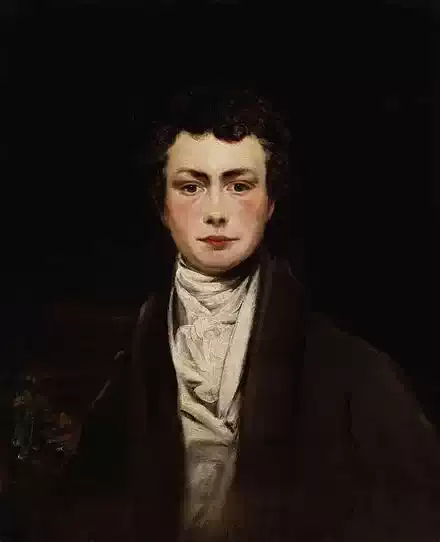
Thomas Moore
An Incantation
Come with me, and we will blow
Lots of bubbles, as we go;
Bubbles bright as ever Hope
Drew from fancy -- or from soap;
Bright as e'er the South Sea sent
from its frothy element!
Come with me, and we will blow
Lots of bubbles, as we go.
Mix the lather, Johnny W--lks,
Thou, who rhym'st so well to bilks;
Mix the lather - who can be
Fitter for such task than thee,
Great M.P. for Sudsbury!
For the frothy charm is ripe,
Puffing Peter bring thy pipe, --
Thou, whom ancient Coventry,
Once so dearly lov'd, that she
Knew not which to her was sweeter,
Peeping Tom or Puffing Peter; --
Puff the bubbles high in air,
Puff thy best to keep them there.
Bravo, bravo, Peter M--re!
Now the rainbow humbugs soar,
Glitt'ring all with golden hues,
Such as haunt the dreams of Jews; --
Some reflecting mines that lie
Under Chili's glowing sky,
Some, those virgin pearls that sleep
Cloister'd in the southern deep;
Others, as if lent a ray
Form the streaming Milky Way,
Glist'ning o'er with curds and whey
From the cows of Alderney.
Now's the moment -- who shall first
Catch the buble, ere they burst?
Run, ye Squires, ye Viscounts, run,
Br-gd-n, T-ynh-m, P-lm-t-n; --
John W--lks junior runs beside ye!
Take the good the knaves provide ye!
See, with upturn'd eyes and hands,
Where the Shareman, Bri-gd-n, stands,
Gaping for the froth to fall
Down his gullet - lye and all.
See!---But hark my time is out --
Now, like some great water-spout,
Scaterr'd by the cannon's thunder,
Burst, ye bubbles, burst asunder!
251
Robert W. Service
The Key Of The Street
"Miss Rosemary," I dourly said,
"Our balance verges on the red,
We must cut down our overhead.
One of the staff will have to go.
There's Mister Jones, he's mighty slow,
Although he does his best, I know.
"A deer old man; I like him well,
But age, alas! will always tell.
Miss Rosemary, please ring the bell
And tell old Jones to step this way . . .
Oh dear, oh dear, it isn't gay
To say the things I have to say.
"Come in and sit down, Mister Jones."
He thanks me in sepulchral tones.
Poor chap! I hear his creaking bones.
"Have a cigar? And how's your wife?
What's that! You're fearing for her life -
A cancer and the surgeon's knife. . . .
"Yes, operations are so dear,
But it's your comfort and your cheer
To know your job's so steady here."
These are his words; so meek and mild,
He looks just like a simple child . . .
Go! darn it! Suddenly I'm riled.
And so I say: "That's just too bad.
But Mister Jones. it's very sad,
You know what losses we have had.
We must cut down in times like these,
So here's a cheque, Oh take it please '
Twill help to pay your doctor's fees.
"And just to show how I appraise
Your work - despite these doleful days
I'm giving you . . . a little raise."
Said Rosemary: "Old Jones is crying."
Thought I: "Yes, each week I'll be sighing,
When from my pocket I am prying
Ten bucks to keep his wife from dying."
252
Henry Lawson
I'd Back Again the World
She's not like an empress,
And crowned with raven hair,
She is not “pert an’ bonny,”
Nor “winsome, wee, an’ fair.”
But when a man’s in trouble,
And darkest shadows fall,
She’s just a little woman
I’d back against them all.
I’d back against them all,
When friends on rocks are hurled—
Oh, she’s the little woman
I’d back against the world.
She has her little temper
(As all the world can know)
When things are running smoothly,
She sometimes lets it go;
But when the sea is stormy,
And clouds are like a pall,
Oh, she’s the little woman
I’d back against them all.
I’d back against the world,
When darkest shadows fall—
Oh, she’s the little woman
I’d back against them all.
She’s had to stand at business
Till she was fit to drop;
She has to count the pennies
When she goes to the shop.
She has no land or terrace,
Nor money in the bank,
And, save what’s in her ownself,
No influence nor rank.
No influence nor rank
While darker shadows fall—
Oh, she’s a little woman
I’d back against them all.
It will not last for ever,
As old time goes his rounds,
Where now she counts the pennies
She yet shall count the pounds.
And those who laugh to see her,
Or pass her unawares,
Shall stand beside her motor car,
And bow her up the stairs.
And bow her up the stairs,
When foes on rocks are hurled—
For she’s the little woman
I’ll back against the world.
Or may I slave in prisons,
In mental misery,
And no one write a letter,
And no one visit me!
And may I rot with paupers,
A ditch without a stone,
My work be never quoted,
And my grave be never known.
My work be never quoted,
When friends on rocks are hurled—
Ah! she’s a little woman
I’d back against the world.
249
Horácio
BkII:XV Excess
Not long now and our princely buildings will leave
few acres under the plough, ornamental
waters appearing everywhere, spread
wider than the Lucrine Lake is, plane trees,
without vines, will drive out the elms: and violet
beds, and myrtles, and all the wealth of perfumes
will scatter their scent through olive groves
that gave their crops for a former owner.
Then thick laurel branches will shut out the sun’s
raging. It wasn’t the case under Romulus,
or long-haired Cato, it wasn’t the rule,
that our ancient predecessors ordained.
Private property was modest in their day,
the common lands vast: no private citizen
had a portico, measuring tens
of feet, laid out facing the shady north,
nor did the laws allow ordinary turf
to be scorned for altars, ordering cities
and the gods’ temples, to be adorned,
at public expense, with rarest marbles.
247
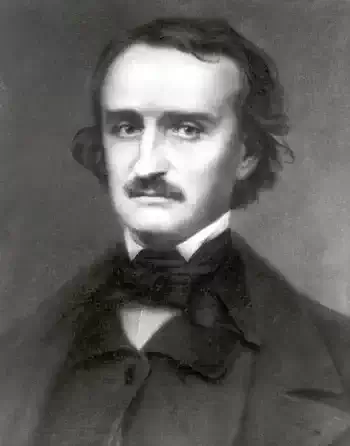
Edgar Allan Poe
To --
The bowers whereat, in dreams, I see
The wantonest singing birds,
Are lips- and all thy melody
Of lip-begotten words
Thine eyes, in Heaven of heart enshrined,
Then desolately fall,
O God! on my funereal mind
Like starlight on a pall
Thy heart- thy heart!- I wake and sigh,
And sleep to dream till day
Of the truth that gold can never buy
Of
the baubles that it may.
246
Robert W. Service
The Twins
There were two brothers, John and James,
And when the town went up in flames,
To save the house of James dashed John,
Then turned, and lo! his own was gone.
And when the great World War began,
To volunteer John promptly ran;
And while he learned live bombs to lob,
James stayed at home and -- sneaked his job.
John came home with a missing limb;
That didn't seem to worry him;
But oh, it set his brain awhirl
To find that James had -- sneaked his girl!
Time passed. John tried his grief to drown;
To-day James owns one-half the town;
His army contracts riches yield;
And John? Well, search the Potter's Field.
244
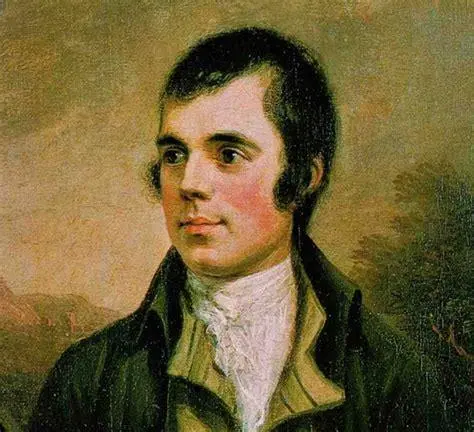
Robert Burns
Tibbie Dunbar
O, wilt thou go wi' me,
Sweet Tibbie Dunbar?
O, wilt thou go wi' me,
Sweet Tibbie Dunbar?
Wilt thou ride on a horse,
Or be drawn in a car,
Or walk by my side,
O sweet Tibbie Dunbar?
I care na thy daddie,
His lands and his money,
I care na thy kin
Sae high and sae lordly;
But say thou wilt ha'e me
For better for waur—
And come in thy coatie,
Sweet Tibbie Dunbar!
Sweet Tibbie Dunbar?
O, wilt thou go wi' me,
Sweet Tibbie Dunbar?
Wilt thou ride on a horse,
Or be drawn in a car,
Or walk by my side,
O sweet Tibbie Dunbar?
I care na thy daddie,
His lands and his money,
I care na thy kin
Sae high and sae lordly;
But say thou wilt ha'e me
For better for waur—
And come in thy coatie,
Sweet Tibbie Dunbar!
245
Robert W. Service
The Parson's Son
This is the song of the parson's son, as he squats in his shack alone,
On the wild, weird nights, when the Northern Lights shoot up from the frozen zone,
And it's sixty below, and couched in the snow the hungry huskies moan:
"I'm one of the Arctic brotherhood, I'm an old-time pioneer.
I came with the first -- O God! how I've cursed this Yukon -- but still I'm here.
I've sweated athirst in its summer heat, I've frozen and starved in its cold;
I've followed my dreams by its thousand streams, I've toiled and moiled for its gold.
"Look at my eyes -- been snow-blind twice; look where my foot's half gone;
And that gruesome scar on my left cheek, where the frost-fiend bit to the bone.
Each one a brand of this devil's land, where I've played and I've lost the game,
A broken wreck with a craze for `hooch', and never a cent to my name.
"This mining is only a gamble; the worst is as good as the best;
I was in with the bunch and I might have come out right on top with the rest;
With Cormack, Ladue and Macdonald -- O God! but it's hell to think
Of the thousands and thousands I've squandered on cards and women and drink.
"In the early days we were just a few, and we hunted and fished around,
Nor dreamt by our lonely camp-fires of the wealth that lay under the ground.
We traded in skins and whiskey, and I've often slept under the shade
Of that lone birch tree on Bonanza, where the first big find was made.
"We were just like a great big family, and every man had his squaw,
And we lived such a wild, free, fearless life beyond the pale of the law;
Till sudden there came a whisper, and it maddened us every man,
And I got in on Bonanza before the big rush began.
"Oh, those Dawson days, and the sin and the blaze, and the town all open wide!
(If God made me in His likeness, sure He let the devil inside.)
But we all were mad, both the good and the bad, and as for the women, well --
No spot on the map in so short a space has hustled more souls to hell.
"Money was just like dirt there, easy to get and to spend.
I was all caked in on a dance-hall jade, but she shook me in the end.
It put me queer, and for near a year I never drew sober breath,
Till I found myself in the bughouse ward with a claim staked out on death.
"Twenty years in the Yukon, struggling along its creeks;
Roaming its giant valleys, scaling its god-like peaks;
Bathed in its fiery sunsets, fighting its fiendish cold --
Twenty years in the Yukon . . . twenty years -- and I'm old.
"Old and weak, but no matter, there's `hooch' in the bottle still.
I'll hitch up the dogs to-morrow, and mush down the trail to Bill.
It's so long dark, and I'm lonesome -- I'll just lay down on the bed;
To-morrow I'll go . . . to-morrow . . . I guess I'll play on the red.
". . . Come, Kit, your pony is saddled. I'm waiting, dear, in the court . . .
. . . Minnie, you devil, I'll kill you if you skip with that flossy sport . . .
. . . How much does it go to the pan, Bill? . . . play up, School, and play the game . . .
. . . Our Father, which art in heaven, hallowed be Thy name . . ."
This was the song of the parson's son, as he lay in his bunk alone,
Ere the fire went out and the cold crept in, and his blue lips ceased to moan,
And the hunger-maddened malamutes had torn him flesh from bone.
244
Robert W. Service
The Ballad Of Hank The Finn
Now Fireman Flynn met Hank the Finn where lights of Lust-land glow;
"Let's leave," says he, "the lousy sea, and give the land a show.
I'm fed up to the molar mark with wallopin' the brine;
I feel the bloody barnacles a-carkin' on me spine.
Let's hit the hard-boiled North a crack, where creeks are paved with gold."
"You count me in," says Hank the Finn. "Ay do as Ay ban told."
And so they sought the Lonely Land and drifted down its stream,
Where sunny silence round them spanned, as dopey as a dream.
But to the spell of flood and fell their gold-grimed eyes were blind;
By pine and peak they paused to seek, but nothing did they find;
No yellow glint of dust to mint, just mud and mocking sand,
And a hateful hush that seemed to crush them down on every hand.
Till Fireman Flynn grew mean as sin, and cursed his comrade cold,
But Hank the Finn would only grin, and . . . do as he was told.
Now Fireman Flynn had pieces ten of yellow Yankee gold,
Which every night he would invite his partner to behold.
"Look hard," says he; "It's all you'll see in this god-blasted land;
But you fret, I'm gonna let you hold them i your hand.
Yeah! Watch 'em gleam, then go and dream they're yours to have and hold."
Then Hank the Finn would scratch his chin and . . . do as he was told.
But every night by camp-fire light, he'd incubate his woes,
And fan the hate of mate for mate, the evil Artic knows.
In dreams the Lapland withes gloomed like gargoyles overhead,
While the devils three of Helsinkee came cowering by his bed.
"Go take," said they, "the yellow loot he's clinking in his belt,
And leave the sneaking wolverines to snout around his pelt.
Last night he called you Swedish scum, from out the glory-hole;
To-day he said you were a bum, and damned your mother's soul.
Go, plug with lead his scurvy head, and grab his greasy gold . . ."
Then Hank the Finn saw red within, and . . . did as he was told.
So in due course the famous Force of Men Who Get Their Man,
Swooped down on sleeping Hank the Finn, and popped him in the can.
And in due time his grievous crime was judged without a plea,
And he was dated up to swing upon the gallows tree.
Then Sheriff gave a party in the Law's almighty name,
He gave a neck-tie party, and he asked me to the same.
There was no hooch a-flowin' and his party wasn't gay,
For O our hearts were heavy at the dawning of the day.
There was no band a-playin' and the only dancin' there
Was Hank the Fin interpretin' his solo in the air.
We climbed the scaffold steps and stood beside the knotted rope.
We watched the hooded hangman and his eyes were dazed with dope.
The Sheriff was in evening dress; a bell began to toll,
A beastly bell that struck a knell of horror to the soul.
As if the doomed one was myself, I shuddered, waiting there.
I spoke no word, then . . . then I heard his step upon the stair;
His halting foot, moccasin clad . . . and then I saw him stand
Between a weeping warder and a priest with Cross in hand.
And at the sight a murmur rose of terror and of awe,
And all them hardened gallows fans were sick at what they saw:
For as he towered above the mob, his limbs with leather triced,
By all that's wonderful, I swear, his face was that of Christ.
Now I ain't no blaspheming cuss, so don't you start to shout.
You see, his beard had grown so long it framed his face about.
His rippling hair was long and fair, his cheeks were spirit-pale,
His face was bright with holy light that made us wince and quail.
He looked at us with eyes a-shine, and sore were we confused,
As if he were the Judge divine, and we were the accused.
Aye, as serene he stood between the hangman and the cord,
You would have sworn, with anguish torn, he was the Blessed Lord.
The priest was wet with icy sweat, the Sheriff's lips were dry,
And we were staring starkly at the man who had to die.
"Lo! I am raised above you all," his pale lips seemed to say,
"For in a moment I shall leap to God's Eternal Day.
Am I not happy! I forgive you each for what you do;
Redeemed and penitent I go, with heart of love for you."
So there he stood in mystic mood, with scorn sublime of death.
I saw him gently kiss the Cross, and then I held by breath.
That blessed smile was blotted out; they dropped the hood of black;
They fixed the noose around his neck, the rope was hanging slack.
I heard him pray, I saw him sway, then . . . then he was not there;
A rope, a ghastly yellow rope was jerking in the air;
A jigging rope that soon was still; a hush as of the tomb,
And Hank the Finn, that man of sin, had met his rightful doom.
His rightful doom! Now that's the point. I'm wondering, because
I hold a man is what he is, and never what he was.
You see, the priest had filled that guy so full of holy dope,
That at the last he came to die as pious as the Pope.
A gentle ray of sunshine made a halo round his head.
I thought to see a sinner - lo! I saw a Saint instead.
Aye, as he stood as martyrs stand, clean-cleansed of mortal dross,
I think he might have gloried had . . . WE NAILED HIM TO A CROSS.
245
Henry Lawson
In the Storm that is to come
By our place in the midst of the furthest seas we were fated to stand alone -
When the nations fly at each other's throats let Australia look to her own;
Let her spend her gold on the barren west, let her keep her men at home;
For the South must look to the South for strength in the storm that is to come.
Now who shall gallop from cape to cape, and who shall defend our shores -
The crowd that stand on the kerb agape and glares at the cricket scores?
And who will hold the invader back when the shells tear up the ground -
The weeds that yelp by the cycling track while a nigger scorches round?
There may be many to man the forts in the big towns beside the sea -
But the East will call to the West for scouts in the storm that is to be:
The West cries out to the East in drought, but the coastal towns are dumb;
And the East must look to the West for food in the war that is to come.
The rain comes down on the Western land and the rivers run to waste,
When the city folk rush for the special tram in their childless, senseless haste,
And never a pile of a lock we drive - but a few mean tanks we scratch -
For the fate of a nation is nought compared with the turn of a cricket match!
There's a gutter of mud where there spread a flood from the land-long western creeks,
There is dust and drought on the plains far out where the water lay for weeks,
There's a pitiful dam where a dyke should stretch and a tank where a lake should be,
And the rain goes down through the silt and sand and the floods waste into the seas.
We'll fight for Britain or for Japan, we will fling the land's wealth out;
While every penny and every man should be used to fight the drought.
God helps the nation that helps itself, and the water brings the rain,
And a deadlier foe than the world could send is loose on the western plain.
I saw a vision in days gone by and would dream that dream again
Of the days when the Darling shall not back her billabongs up in vain.
There were reservoirs and grand canals where the Dry Country had been,
And a glorious network of aqueducts, and the fields were always green.
I have seen so long in the land I love what the land I love might be,
Where the Darling rises from Queensland rains and the floods run into the sea.
And it is our fate that we'll wake to late to the truth that we were blind,
With a foreign foe at our harbour gate and a blazing drought behind!
244
Henry Lawson
The Men Who Made Australia
There'll be royal times in Sydney for the Cuff and Collar Push,
There’ll be lots of dreary drivel and clap-trap
From the men who own Australia, but who never knew the Bush,
And who could not point their runs out on the map.
Oh, the daily Press will grovel as it never did before,
There’ll be many flags of welcome in the air,
And the Civil Service poet, he shall write odes by the score—
But the men who made the land will not be there.
You shall meet the awful Lady of the latest Birthday Knight—
(She is trying to be English, don’t-cher-know?)
You shall hear the empty mouthing of the champion blatherskite,
You shall hear the boss of local drapers blow.
There’ll be ‘majahs’ from the counter, tailors’ dummies from the fleet,
And to represent Australia here to-day,
There’s the today with his card-case and his cab in Downing-street;
But the men who made Australia—where are they?
Call across the blazing sand wastes of the Never-Never Land!
There are some who will not answer yet awhile,
Some whose bones rot in the mulga or lie bleaching on the sand,
Died of thirst to win the land another mile.
Thrown from horses, ripped by cattle, lost on deserts; and the weak,
Mad through loneliness or drink (no matter which),
Drowned in floods or dead of fever by the sluggish slimy creek—
These are men who died to make the Wool-Kings rich.
Call across the scrubby ridges where they clear the barren soil,
And the gaunt Bush-women share the work of men—
Toil and loneliness for ever—hardship, loneliness and toil—
Where the brave drought-ruined farmer starts again!
Call across the boundless sheep-runs of a country cursed for sheep—
Call across the awful scrublands west of Bourke!
But they have no time to listen—they have scarcely time to sleep—
For the men who conquer deserts have to work.
Dragged behind the crawling sheep-flock on the hot and dusty plain,
They must make a cheque to feed the wife and kids—
Riding night-watch round the cattle in the pelting, freezing rain,
While world-weariness is pressing down the lids.
And away on far out-stations, seldom touched by Heaven’s breath,
In a loneliness that smothers love and hate—
Where they never take white women—there they live the living death
With a half-caste or a black-gin for a mate.
They must toil to save the gaunt stock in the blazing months of drought,
When the stinging, blinding blight is in men’s eyes—
On the wretched, burnt selections, on the big runs further out
Where the sand-storm rises lurid to the skies.
Not to profit when the grass is waving waist-high after rain,
And the mighty clip of wool comes rolling in—
For the Wool-King goes to Paris with his family again
And the gold that souls are sacrificed to win.
There are carriages in waiting for the swells from over-sea,
There are banquets in the latest London style,
While the men who made Australia live on damper, junk and tea—
But the quiet voices whisper, ‘Wait a while!’
For the sons of all Australia, they were born to conquer fate—
And, where charity and friendship are sincere,
Where a sinner is a brother and a stranger is a mate,
There the future of a nation’s written clear.
Aye, the cities claim the triumphs of a land they do not know,
But all empty is the day they celebrate!
For the men who made Australia federated long ago,
And the men to rule Australia—they can wait.
Though the bed may be the rough bunk or the gum leaves or the sand,
And the roof for half the year may be the sky—
There are men amongst the Bushmen who were born to save the land!
And they’ll take their places sternly by-and-by.
There’s a whisper on the desert though the sunset breeze hath died
In the scrubs, though not a breath to stir a bough,
There’s a murmur, not of waters, down the Lachlan River side,
’Tis the spirit of Australia waking now!
There’s the weird hymn of the drought-night on the western water-shed,
Where the beds of unlocked rivers crack and parch;
’Tis the dead that we have buried, and our great unburied dead,
Who are calling now on living men to march!
Round the camp fire of the fencers by the furthest panel west,
In the men’s hut by the muddy billabong,
On the Great North-Western Stock-routes where the drovers never rest,
They are sorting out the right things from the wrong.
In the shearers’ hut the slush lamp shows a haggard, stern-faced man
Preaching war against the Wool-King to his mates;
And wherever go the billy, water-bag and frying-pan,
They are drafting future histories of states!
243

Thomas Hardy
No Buyers
A Load of brushes and baskets and cradles and chairs
Labours along the street in the rain:
With it a man, a woman, a pony with whiteybrown hairs. --
The man foots in front of the horse with a shambling sway
At a slower tread than a funeral train,
While to a dirge-like tune he chants his wares,
Swinging a Turk's-head brush (in a drum-major's way
When the bandsmen march and play).
A yard from the back of the man is the whiteybrown pony's nose:
He mirrors his master in every item of pace and pose:
He stops when the man stops, without being told,
And seems to be eased by a pause; too plainly he's old,
Indeed, not strength enough shows
To steer the disjointed waggon straight,
Which wriggles left and right in a rambling line,
Deflected thus by its own warp and weight,
And pushing the pony with it in each incline.
The woman walks on the pavement verge,
Parallel to the man:
She wears an apron white and wide in span,
And carries a like Turk's-head, but more in nursing-wise:
Now and then she joins in his dirge,
But as if her thoughts were on distant things,
The rain clams her apron till it clings. --
So, step by step, they move with their merchandize,
And nobody buys.
243
Robert Burns
Here's A Health To Them That's Awa
Here's a health to them that's awa,
Here's a health to them that's awa
And wha winna wish guid luck to our cause,
May never guid luck be their fa'!
It's guid to be merry and wise,
It's guid to be honest and true,
It's guid to support Caledonia's cause
And bide by the buff and the blue.
Here's a health to them that's awa,
Here's a health to them that's awa!
Here's a health to Charlie, the chief o' the clan,
Altho that his band be sma'!
May Liberty meet wi success,
May Prudence protect her frae evil!
May tyrants and Tyranny tine i' the mist
And wander their way to the Devil!
Here's a health to them that's awa,
Here's a health to them that's awa;
Here's a health to Tammie, the Norlan' laddie,
That lives at the lug o' the Law!
Here's freedom to thern that wad read,
Here's freedom to them that would write!
There's nane ever fear'd that the truth should be heard,
But they whom the truth would indite!
Here's a health to them that's awa,
An here's to them that's awa!
Here's to Maitland and Wycombe! let wha does na like 'em
Be built in a hole in the wa'!
Here's timmer that's red at the heart,
Here's fruit that is sound at the core,
And may he that wad turn the buff and blue coat
Be turn'd to the back o' the door!
Here's a health to them that's awa,
Here's a health to them that's awa,
Here's Chieftain M'Leod, a chieftain worth gowd,
Tho' bred amang mountains o' snaw!
Here's friends on baith sides o' the Firth,
And friends on baith sides o' the Tweed,
And wha wad betray old Albion's right,
May they never eat of her bread!
242
Robert Burns
For a' That and a' That
Is there, for honest poverty,
That hings his head, an' a' that?
The coward slave, we pass him by,
We dare be poor for a' that!
For a' that, an' a' that,
Our toils obscure, an' a' that;
The rank is but the guinea's stamp;
The man's the gowd for a' that,
What tho' on hamely fare we dine,
Wear hoddin-gray, an' a' that;
Gie fools their silks, and knaves their wine,
A man's a man for a' that.
For a' that, an' a' that,
Their tinsel show an' a' that;
The honest man, tho' e'er sae poor,
Is king o' men for a' that.
Ye see yon birkie, ca'd a lord
Wha struts, an' stares, an' a' that;
Tho' hundreds worship at his word,
He's but a coof for a' that:
For a' that, an' a' that,
His riband, star, an' a' that,
The man o' independent mind,
He looks and laughs at a' that.
A prince can mak a belted knight,
A marquis, duke, an' a' that;
But an honest man's aboon his might,
Guid faith he mauna fa' that!
For a' that, an' a' that,
Their dignities, an' a' that,
The pith o' sense, an' pride o' worth,
Are higher rank than a' that.
Then let us pray that come it may,
As come it will for a' that,
That sense and worth, o'er a' the earth,
May bear the gree, an' a' that.
For a' that, an' a' that,
It's coming yet, for a' that,
That man to man, the warld o'er,
Shall brothers be for a' that.
240
Henry Lawson
Eureka
Roll up, Eureka's heroes, on that grand Old Rush afar,
For Lalor's gone to join you in the big camp where you are;
Roll up and give him welcome such as only diggers can,
For well he battled for the rights of miner and of Man.
In that bright golden country that lies beyond our sight,
The record of his honest life shall be his Miner's Right;
But many a bearded mouth shall twitch, and many a tear be shed,
And many a grey old digger sigh to hear that Lalor's dead.
Yet wipe your eyes, old fossickers, o'er worked-out fields that roam,
You need not weep at parting from a digger going home.
Now from the strange wild seasons past, the days of golden strife,
Now from the Roaring Fifties comes a scene from Lalor's life:
All gleaming white amid the shafts o'er gully, hill and flat
Again I see the tents that form the camp at Ballarat.
I hear the shovels and the picks, and all the air is rife
With the rattle of the cradles and the sounds of digger-life;
The clatter of the windlass-boles, as spinning round they go,
And then the signal to his mate, the digger's cry, "Below!"
From many a busy pointing-forge the sound of labour swells,
The tinkling of the anvils is as clear as silver bells.
I hear the broken English from the mouth of many a one
From every state and nation that is known beneath the sun;
The homely tongue of Scotland and the brogue of Ireland blend
With the dialects of England, right from Berwick to Lands End;
And to the busy concourse here the States have sent a part,
The land of gulches that has been immortalised by Harte;
The land where long from mining-camps the blue smoke upward curled;
The land that gave the "Partner" true and "Mliss" unto the world;
The men from all the nations in the New World and the Old,
All side by side, like brethren here, are delving after gold.
But suddenly the warning cries are heard on every side
As closing in around the field, a ring of troopers ride,
Unlicensed diggers are the game--their class and want are sins,
And so with all its shameful scenes, the digger hunt begins.
The men are seized who are too poor the heavy tax to pay,
Chained man to man as convicts were, and dragged in gangs away.
Though in the eyes of many a man the menace scarce was hid,
The diggers' blood was slow to boil, but scalded when it did.
But now another match is lit that soon must fire the charge
"Roll up! Roll up!" the poignant cry awakes the evening air,
And angry faces surge like waves around the speakers there.
"What are our sins that we should be an outlawed class?" they say,
"Shall we stand by while mates are seized and dragged like lags away?
Shall insult be on insult heaped? Shall we let these things go?"
And with a roar of voices comes the diggers' answer--"No!"
The day has vanished from the scene, but not the air of night
Can cool the blood that, ebbing back, leaves brows in anger white.
Lo, from the roof of Bentley's Inn the flames are leaping high;
They write "Revenge!" in letters red across the smoke-dimmed sky.
"To arms! To arms!" the cry is out; "To arms and play your part;
For every pike upon a pole will find a tyrant's heart!"
Now Lalor comes to take the lead, the spirit does not lag,
And down the rough, wild diggers kneel beneath the Diggers' Flag;
Then, rising to their feet, they swear, while rugged hearts beat high,
To stand beside their leader and to conquer or to die!
Around Eureka's stockade now the shades of night close fast,
Three hundred sleep beside their arms, and thirty sleep their last.
About the streets of Melbourne town the sound of bells is borne
That call the citizens to prayer that fateful Sabbath morn;
But there upon Eureka's hill, a hundred miles away,
The diggers' forms lie white and still above the blood-stained clay.
The bells that toll the diggers' death might also ring a knell
For those few gallant soldiers, dead, who did their duty well.
The sight of murdered heroes is to hero-hearts a goad,
A thousand men are up in arms upon the Creswick road,
And wildest rumours in the air are flying up and down,
'Tis said the men of Ballarat will march on Melbourne town.
But not in vain those diggers died. Their comrades may rejoice,
For o'er the voice of tyranny is heard the people's voice;
It says: "Reform your rotten law, the diggers' wrongs make right,
Or else with them, our brothers now, we'll gather to the fight."
'Twas of such stuff the men were made who saw our nation born,
And such as Lalor were the men who led the vanguard on;
And like such men may we be found, with leaders such as they,
In the roll-up of Australians on our darkest, grandest day!
240
Robert Burns
O Tibbie, I Hae Seen The Day
Tune - "Invercauld's Reel, or Strathspey."
Choir. - O Tibbie, I hae seen the day,
Ye wadna been sae shy;
For laik o' gear ye lightly me,
But, trowth, I care na by.
Yestreen I met you on the moor,
Ye spak na, but gaed by like stour;
Ye geck at me because I'm poor,
But fient a hair care I.
O Tibbie, I hae seen the day, &c.
When coming hame on Sunday last,
Upon the road as I cam past,
Ye snufft and ga'e your head a cast-
But trowth I care't na by.
O Tibbie, I hae seen the day, &c.
I doubt na, lass, but ye may think,
Because ye hae the name o' clink,
That ye can please me at a wink,
Whene'er ye like to try.
O Tibbie, I hae seen the day, &c.
But sorrow tak' him that's sae mean,
Altho' his pouch o' coin were clean,
Wha follows ony saucy quean,
That looks sae proud and high.
O Tibbie, I hae seen the day, &c.
Altho' a lad were e'er sae smart,
If that he want the yellow dirt,
Ye'll cast your head anither airt,
And answer him fu' dry.
O Tibbie, I hae seen the day, &c.
But, if he hae the name o' gear,
Ye'll fasten to him like a brier,
Tho' hardly he, for sense or lear,
Be better than the kye.
O Tibbie, I hae seen the day, &c.
But, Tibbie, lass, tak' my advice:
Your daddie's gear maks you sae nice;
The deil a ane wad speir your price,
Were ye as poor as I.
O Tibbie, I hae seen the day, &c.
There lives a lass beside yon park,
I'd rather hae her in her sark,
Than you wi' a' your thousand mark;
That gars you look sae high.
O Tibbie, I hae seen the day, &c.
240

Anonymous
Ubi sunt qui ante nos fuerunt?
Were beth they that biforen us weren,
Houndes ladden and havekes beren,
And hadden feld and wode?
The riche levedies in hoere bour,
That wereden gold in hoere tressour,
With hoere brightte rode;
Eten and drounken, and maden hem glad;
Hoere lif was al with gamen i-lad,
Men kneleden hem biforen;
They beren hem wel swithe heye;
And in a twincling of an eye
Hoere soules weren forloren.
Were is that lawhing and that song,
That trayling and that proude gong,
Tho havekes and tho houndes?
Al that joye is went away,
That wele is comen to weylaway,
To manye harde stoundes.
Hoere paradis they nomen here,
And nou they lyen in helle i-fere;
The fuir hit brennes hevere:
Long is ay, and long is o,
Long is wy, and long is wo;
Thennes ne cometh they nevere.
240

Emily Dickinson
My Reward for Being, was This
My Reward for Being, was This.
My premium-My Bliss-
An Admiralty, less-
A Sceptre-penniless-
And Realms-just Dross-
When Thrones accost my Hands-
With "Me, Miss, Me"I'll
unroll Thee-
Dominions dowerless-beside this GraceElection-
Vote-
The Ballots of Eternity, will show just that.
My premium-My Bliss-
An Admiralty, less-
A Sceptre-penniless-
And Realms-just Dross-
When Thrones accost my Hands-
With "Me, Miss, Me"I'll
unroll Thee-
Dominions dowerless-beside this GraceElection-
Vote-
The Ballots of Eternity, will show just that.
237
Robert W. Service
Tom
That Tom was poor was sure a pity,
Such guts for learning had the lad;
He took to Greek like babe to titty,
And he was mathematic mad.
I loved to prime him up with knowledge,
A brighter lad I never knew;
I dreamed that he would go to college
And there be honoured too.
But no! His Dad said, "Son, I need you
To keep the kettle on the boil;
No longer can I clothe and feed you,
Buy study books and midnight oil.
I carry on as best I'm able,
A humble tailor, as you know;
And you must squat cross-legged a table
And learn to snip and sew."
And that is what poor Tom is doing.
He bravely makes the best of it;
But as he "fits" you he is knowing
That he himself is a misfit;
And thinks as he fulfils his calling,
With patient heart yet deep distaste,
Like clippings from his shears down-falling,
--He, too, is Waste.
239
Emily Dickinson
No matter—now—Sweet
No matter—now—Sweet—
But when I'm Earl—
Won't you wish you'd spoken
To that dull Girl?
Trivial a Word—just—
Trivial—a Smile—
But won't you wish you'd spared one
When I'm Earl?
I shan't need it—then—
Crests—will do—
Eagles on my Buckles—
On my Belt—too—
Ermine—my familiar Gown—
Say—Sweet—then
Won't you wish you'd smiled—just—
Me upon?
238
Robert W. Service
Artist
He gave a picture exhibition,
Hiring a little empty shop.
Above its window: FREE ADMISSION
Cajoled the passers-by to stop;
Just to admire - no need to purchase,
Although his price might have been low:
But no proud artist ever urges
Potential buyers at his show.
Of course he badly needed money,
But more he needed moral aid.
Some people thought his pictures funny,
Too ultra-modern, I'm afraid.
His painting was experimental,
Which no poor artist can afford-
That is, if he would pay the rental
And guarantee his roof and board.
And so some came and saw and sniggered,
And some a puzzled brow would crease;
And some objected: "Well, I'm jiggered!"
What price Picasso and Matisse?
The artist sensitively quivered,
And stifled many a bitter sigh,
But day by day his hopes were shivered
For no one ever sought to buy.
And then he had a brilliant notion:
Half of his daubs he labeled: SOLD.
And lo! he viewed with queer emotion
A public keen and far from cold.
Then (strange it is beyond the telling),
He saw the people round him press:
His paintings went - they still are selling...
Well, nothing succeeds like success.
239
Henry Lawson
Let’s Be Fools To-Night
We, three men of commerce,
Striving wealth to raise,
See but little promise
In the coming days;
Though our hearts are brittle,
Hardened near to stone,
We can think a little
Of the seasons flown.
Lily days and rose days:
Youthful days so bright;
We were fools in those days,
Let’s be fools to-night.
We, three men of commerce,
Men of business we,
Gave but little promise
Of what we would be
When we wandered urchins—
Foes of law and rule—
Fearing only birchings
And the village school.
Lily days and rose days,
Boyhood’s days so bright;
We were fools in those days,
Let’s be fools to-night.
We, three men of commerce,
Men of business we,
Gave but little promise
Of ability
When we lived in riot;
Never drew the line,
Hating peace and quiet,
Loving maids and wine.
Days when money goes—days
When men’s hearts are right;
We were fools in those days,
Let’s be fools to-night.
We must wear to-morrow
All our worldly marks,
Calm looks for our sorrow,
Stern looks for our clerks,
Who, from trouble shrinking,
Tasting earthly joys,
Hate us, little thinking
Ever we were boys.
Days when kindness flows—days
When men’s hearts are white;
We’ve been wise since those days,
Let’s be fools to-night.
237