
Money and Wealth

Henry Lawson
A Bush Girl
She's milking in the rain and dark,
As did her mother in the past.
The wretched shed of poles and bark,
Rent by the wind, is leaking fast.
She sees the “home-roof” black and low,
Where, balefully, the hut-fire gleams—
And, like her mother, long ago,
She has her dreams; she has her dreams.
The daybreak haunts the dreary scene,
The brooding ridge, the blue-grey bush,
The “yard” where all her years have been,
Is ankle-deep in dung and slush;
She shivers as the hour drags on,
Her threadbare dress of sackcloth seems—
But, like her mother, years agone,
She has her dreams; she has her dreams.
The sullen “breakfast” where they cut
The blackened “junk.” The lowering face,
As though a crime were in the hut,
As though a curse was on the place;
The muttered question and reply,
The tread that shakes the rotting beams,
The nagging mother, thin and dry—
God help the girl! She has her dreams.
Then for “th’ separator” start,
Most wretched hour in all her life,
With “horse” and harness, dress and cart,
No Chinaman would give his “wife”;
Her heart is sick for light and love,
Her face is often fair and sweet,
And her intelligence above
The minds of all she’s like to meet.
She reads, by slush-lamp light, may be,
When she has dragged her dreary round,
And dreams of cities by the sea
(Where butter’s up, so much the pound),
Of different men from those she knows,
Of shining tides and broad, bright streams;
Of theatres and city shows,
And her release! She has her dreams.
Could I gain her a little rest,
A little light, if but for one,
I think that it would be the best
Of any good I may have done.
But, after all, the paths we go
Are not so glorious as they seem,
And—if t’will help her heart to know—
I’ve had my dream. ’Twas but a dream.
274

Emily Dickinson
Reverse cannot befall
Reverse cannot befall
That fine Prosperity
Whose Sources are interior-
As soon-Adversity
A Diamond-overtake
In far-Bolivian Ground-
Misfortune hath no implement
Could mar it-if it found-
That fine Prosperity
Whose Sources are interior-
As soon-Adversity
A Diamond-overtake
In far-Bolivian Ground-
Misfortune hath no implement
Could mar it-if it found-
274

James Whitcomb Riley
John McKeen
John McKeen, in his rusty dress,
His loosened collar, and swarthy throat,
His face unshaven, and none the less,
His hearty laugh and his wholesomeness,
And the wealth of a workman's vote!
Bring him, O Memory, here once more,
And tilt him back in his Windsor chair
By the kitchen stove, when the day is o'er
And the light of the hearth is across the floor,
And the crickets everywhere!
And let their voices be gladly blent
With a watery jingle of pans and spoons,
And a motherly chirrup of sweet content,
And neighborly gossip and merriment,
And old-time fiddle-tunes!
Tick the clock with a wooden sound,
And fill the hearing with childish glee
Of rhyming riddle, or story found
In the Robinson Crusoe, leather-bound
Old book of the Used-to-be!
John McKeen of the Past! Ah John,
To have grown ambitious in worldly ways--!
To have rolled your shirt-sleeves down, to don
A broadcloth suit, and forgetful, gone
Out on election days!
John ah, John! Did it prove your worth
To yield you the office you still maintain--?
To fill your pockets, but leave the dearth
Of all the happier things on earth
To the hunger of heart and brain?
Under the dusk of your villa trees,
Edging the drives where your blooded span
Paw the pebbles and wait your ease--,
Where are the children about your knees,
And the mirth, and the happy man?
The blinds of your mansion are battened to;
Your faded wife is a close recluse;
And your 'finished' daughters will doubtless do
Dutifully all that is willed of you,
And marry as you shall choose--!
But O for the old-home voices, blent
With the watery jingle of pans and spoons,
And the motherly chirrup of glad content,
And neighborly gossip and merriment,
And the old-time fiddle-tunes!
273
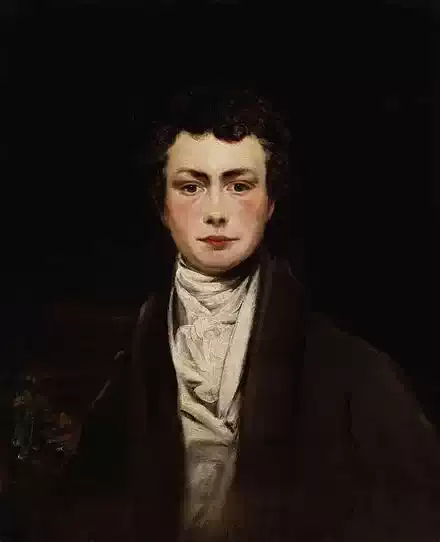
Thomas Moore
Enigma
Come riddle-me-ree, come riddle-me-ree,
And tell me, what my name may be.
I am nearly one hundred and thirty years old,
And therefore no chicken, as you may suppose; --
Though a dwarf in my youth (as my nurses have told),
I have, ev'ry year since, been outgrowing my clothes;
Till, at last, such a corpulent giant I stand,
That if folks were to furnish me now with a suit,
It would take ev'ry morsel of scrip in the land
But to measure my bulk from the head to the foot.
Hence, they who maintain me, grown sick of my stature,
To cover me nothing but rags will supply;
And the doctors declare that, in due course of nature,
About the year in rags I shall die.
Meanwhile I stalk hungry and bloated around,
An object of int'rest, most painful, to all;
In the warehouse, the cottage, the palace I'm found,
Holding citizen, peasant, and king in my thrall.
Then riddle-me-ree, oh riddle-me-ree,
Come, tell me what my name may be.
When the lord of the counting-house bends o'er his book,
Bright pictures of profit delighting to draw,
O'er his shoulders with large cipher eye-balls I look,
And down drops the pen from his paralyz'd paw!
When the Premier lies dreaming of dear Waterloo,
And expects through another to caper and prank it,
You'd laugh did you see, when I bellow out "Boo!"
How he hides his brave Waterloo head in the blanket.
When mighty Belshazzar brims high in the hall
His cup, full of gout, to Gaul's overthrow,
Lo, "Eight Hundred Millions" I write on the wall,
And the cup falls to earth and -- the gout to his toe!
But the joy of my heart is when largely I cram
My maw with the fruits of the Squirearchy's acres,
And, knowing who made me the thing that I am,
Like the monster of Frankenstein, worry my makers.
Then riddle-me-ree, come, riddle-me-ree,
And tell, if thou knows't, who I may be.
272
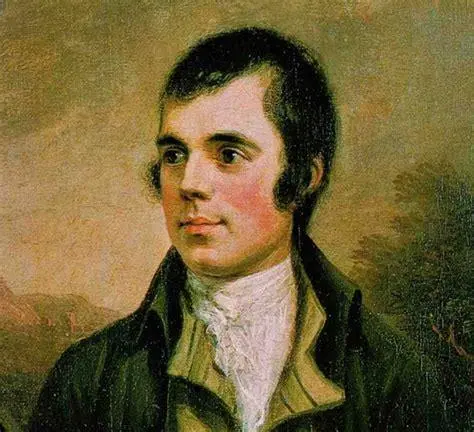
Robert Burns
Green Grow The Rashes
Green grow the rashes, O!
Green grow the rashes, O!
The sweetest hours that e'er I spend,
Are spent amang the lasses, O!
There's nought but care on every han'
In every hour that passes, O;
What signifies the life o' man,
An 'twere na for the lasses, O?
The warl'ly race may riches chase,
An' riches still may fly them, O;
An' though at last they catch them fast,
Their hearts can ne'er enjoy them, O.
But gi'e me a canny hour at e'en,
My arms about my dearie, O,
An' warl'ly cares an' warl'ly men
May a' gae tapsalteerie, O!
For you sae douce, ye sneer at this,
Ye're nought but senseless asses, O;
The wisest man the warl' e'er saw,
He dearly loved the lasses, O.
Auld Nature swears the lovely dears
Her noblest work she classes, O;
Her 'prentice han' she tried on man,
An' then she made the lasses, O.
270
Thomas Moore
Drink To Her
Drink to her who long
Hath waked the poet's sigh,
The girl who gave to song
What gold could never buy.
Oh! woman's heart was made
For minstrel hands alone;
By other fingers play'd,
It yields not half the tone.
Then here's to her who long
Hath waked the poet's sigh,
The girl who gave to song
What gold could never buy.
At Beauty's door of glass,
When Wealth and Wit once stood,
They ask'd her, "which might pass?"
She answer'd, "he who could."
With golden key Wealth thought
To pass -- but 'twould not do:
While Wit a diamond brought,
Which cut his bright way through.
So here's to her who long
Hath waked the poet's sigh,
The girl who gave to song
What gold could never buy.
The love that seeks a home
Where wealth or grandeur shines,
Is like the gloomy gnome,
That dwells in dark mines.
But oh! the poet's love
Can boast a brighter sphere;
Its native home's above,
Though woman keeps it here.
Then drink to her who long
Hath waked the poet's sigh,
The girl who gave to song
What gold could never buy.
Hath waked the poet's sigh,
The girl who gave to song
What gold could never buy.
Oh! woman's heart was made
For minstrel hands alone;
By other fingers play'd,
It yields not half the tone.
Then here's to her who long
Hath waked the poet's sigh,
The girl who gave to song
What gold could never buy.
At Beauty's door of glass,
When Wealth and Wit once stood,
They ask'd her, "which might pass?"
She answer'd, "he who could."
With golden key Wealth thought
To pass -- but 'twould not do:
While Wit a diamond brought,
Which cut his bright way through.
So here's to her who long
Hath waked the poet's sigh,
The girl who gave to song
What gold could never buy.
The love that seeks a home
Where wealth or grandeur shines,
Is like the gloomy gnome,
That dwells in dark mines.
But oh! the poet's love
Can boast a brighter sphere;
Its native home's above,
Though woman keeps it here.
Then drink to her who long
Hath waked the poet's sigh,
The girl who gave to song
What gold could never buy.
270
Henry Lawson
Everyone's Friend
“Nobody's enemy save his own”—
(What shall it be in the end?)—
Still by the nick-name he is known—
“Everyone’s Friend.”
“Nobody’s Enemy” stands alone
While he has money to lend,
“Nobody’s Enemy” holds his own,
“Everyone’s Friend”
“Nobody’s Enemy” down and out—
Game to the end—
And he mostly dies with no one about—
“Everyone’s Friend.”
268

Robert W. Service
The Joy Of Being Poor
I
Let others sing of gold and gear, the joy of being rich;
But oh, the days when I was poor, a vagrant in a ditch!
When every dawn was like a gem, so radiant and rare,
And I had but a single coat, and not a single care;
When I would feast right royally on bacon, bread and beer,
And dig into a stack of hay and doze like any peer;
When I would wash beside a brook my solitary shirt,
And though it dried upon my back I never took a hurt;
When I went romping down the road contemptuous of care,
And slapped Adventure on the back -- by Gad! we were a pair;
When, though my pockets lacked a coin, and though my coat was old,
The largess of the stars was mine, and all the sunset gold;
When time was only made for fools, and free as air was I,
And hard I hit and hard I lived beneath the open sky;
When all the roads were one to me, and each had its allure . . .
Ye Gods! these were the happy days, the days when I was poor.
II
Or else, again, old pal of mine, do you recall the times
You struggled with your storyettes, I wrestled with my rhymes;
Oh, we were happy, were we not? -- we used to live so "high"
(A little bit of broken roof between us and the sky);
Upon the forge of art we toiled with hammer and with tongs;
You told me all your rippling yarns, I sang to you my songs.
Our hats were frayed, our jackets patched, our boots were down at heel,
But oh, the happy men were we, although we lacked a meal.
And if I sold a bit of rhyme, or if you placed a tale,
What feasts we had of tenderloins and apple-tarts and ale!
And yet how often we would dine as cheerful as you please,
Beside our little friendly fire on coffee, bread and cheese.
We lived upon the ragged edge, and grub was never sure,
But oh, these were the happy days, the days when we were poor.
III
Alas! old man, we're wealthy now, it's sad beyond a doubt;
We cannot dodge prosperity, success has found us out.
Your eye is very dull and drear, my brow is creased with care,
We realize how hard it is to be a millionaire.
The burden's heavy on our backs -- you're thinking of your rents,
I'm worrying if I'll invest in five or six per cents.
We've limousines, and marble halls, and flunkeys by the score,
We play the part . . . but say, old chap, oh, isn't it a bore?
We work like slaves, we eat too much, we put on evening dress;
We've everything a man can want, I think . . . but happiness.
Come, let us sneak away, old chum; forget that we are rich,
And earn an honest appetite, and scratch an honest itch.
Let's be two jolly garreteers, up seven flights of stairs,
And wear old clothes and just pretend we aren't millionaires;
And wonder how we'll pay the rent, and scribble ream on ream,
And sup on sausages and tea, and laugh and loaf and dream.
And when we're tired of that, my friend, oh, you will come with me;
And we will seek the sunlit roads that lie beside the sea.
We'll know the joy the gipsy knows, the freedom nothing mars,
The golden treasure-gates of dawn, the mintage of the stars.
We'll smoke our pipes and watch the pot, and feed the crackling fire,
And sing like two old jolly boys, and dance to heart's desire;
We'll climb the hill and ford the brook and camp upon the moor . . .
Old chap, let's haste, I'm mad to taste the Joy of Being Poor.
269
Robert Burns
Fareweel To A'Our Scottish Fame
Fareweel to a' our Scottish fame,
Fareweel our ancient glory;
Fareweel ev'n to the Scottish name,
Sae famed in martial story!
Now Sark rins over Solway sands,
And Tweed rins to the ocean,
To mark where England's province stands—
Such a parcel of rogues in a nation!
What force or guile could not subdue
Thro' many warlike ages,
Is wrought now by a coward few,
For hireling traitor's wages.
The English steel we could disdain,
Secure in valour's station;
But English gold has been our bane—
Such a parcel of rogues in a nation!
O, would or I had seen the day
That treason thus could sell us,
My auld grey head had lien in clay
Wi' Bruce and loyal Wallace!
But pith and power, till my last hour,
I'll mak this declaration:
We're bought and sold for English gold—
Such a parcel of rogues in a nation!
268
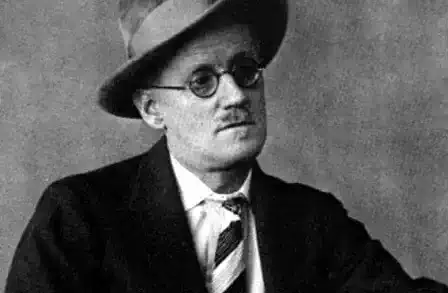
James Joyce
A Memory of the Players in a Mirror at Midnight
They mouth love's language. Gnash
The thirteen teeth
Your lean jaws grin with. Lash
Your itch and quailing, nude greed of the flesh.
Love's breath in you is stale, worded or sung,
As sour as cat's breath,
Harsh of tongue.
This grey that stares
Lies not, stark skin and bone.
Leave greasy lips their kissing. None
Will choose her what you see to mouth upon.
Dire hunger holds his hour.
Pluck forth your heart, saltblood, a fruit of tears.
Pluck and devour!
267
Henry Lawson
As far as your Rifles Cover
Do you think, you slaves of a thousand years to poverty, wealth and pride,
You can crush the spirit that has been free in a land that's new and wide?
When you've scattered the last of the farmer bands, and the war for a while is over,
You will hold the land – ay, you'll hold the land – the land that your rifles cover.
Till your gold has levelled each mountain range where a wounded man can hide,
Till your gold has lighted the moonless night on the plains where the rebels ride;
Till the future is proved, and the past is bribed from the son of the land's dead lover –
You may hold the land – you may hold the land just as far as your rifles cover.
266

Ogden Nash
One From One Leaves Two
Higgledy piggledy, my black hen,
She lays eggs for gentlemen.
Gentlemen come every day
To count what my black hen doth lay.
If perchance she lays too many,
They fine my hen a pretty penny;
If perchance she fails to lay,
The gentlemen a bonus pay.
Mumbledy pumbledy, my red cow,
She’s cooperating now.
At first she didn’t understand
That milk production must be planned;
She didn’t understand at first
She either had to plan or burst,
But now the government reports
She’s giving pints instead of quarts.
Fiddle de dee, my next-door neighbors,
They are giggling at their labors.
First they plant the tiny seed,
Then they water, then they weed,
Then they hoe and prune and lop,
They they raise a record crop,
Then they laugh their sides asunder,
And plow the whole caboodle under.
Abracadabra, thus we learn
The more you create, the less you earn.
The less you earn, the more you’re given,
The less you lead, the more you’re driven,
The more destroyed, the more they feed,
The more you pay, the more they need,
The more you earn, the less you keep,
And now I lay me down to sleep.
I pray the Lord my soul to take
If the tax-collector hasn’t got it before I wake.
266

Jonathan Swift
Mrs Frances Haris's Petition
To their Excellencies the Lords Justices of Ireland,
The humble petition of Frances Harris,
Who must starve and die a maid if it miscarries;
Humble sheweth, that I went to warm myself in Lady Betty's chamber, because I
was cold;
And I had in a purse seven pounds, four shillings, and sixpence, (besides
farthings) in money and gold;
So because I had been buying things for my lady last night,
I was resolved to tell my money, to see if it was right.
Now, you must know, because my trunk has a very bad lock,
Therefore all the money I have, which, God knows, is a very small stock,
I keep in my pocket, tied about my middle, next my smock.
So when I went to put up my purse, as God would have it, my smock was unripped,
And instead of putting it into my pocket, down it slipped;
Then the bell rung, and I went down to put my lady to bed;
And, God knows, I thought my money was as safe as my maidenhead.
So, when I came up again, I found my pocket feel very light;
But when I searched, and missed my purse, Lord! I thought I should have sunk
outright.
'Lord! madam,' says Mary, 'how d'ye do?' -'Indeed,' says I, 'never worse:
But pray, Mary, can you tell what I have done with my purse?'
'Lord help me!' says Mary, 'I never stirred out of this place!'
'Nay,' said I, 'I had it in Lady Betty's chamber, that's a plain case.'
So Mary got me to bed, and covered me up warm:
However, she stole away my garters, that I might do myself no harm.
So I tumbled and tossed all night, as you may very well think,
But hardly ever set my eyes together, or slept a wink.
So I was a-dreamed, methought, that I went and searched the folks round,
And in a corner of Mrs Duke's box, tied in a rag, the money was found.
So next morning we told Whittle, and he fell a swearing:
Then my dame Wadgar came, and she, you know, is thick of hearing.
'Dame,' says I, as loud as I could bawl, 'do you know what a loss I have had?'
'Nay,' says she, 'my Lord Colway's folks are all very sad:
For my Lord Dromedary comes a Tuesday without fail.'
'Pugh!' said I, 'but that's not the business that I ail.'
Says Cary, says he, 'I have been a servant this five and twenty years come
spring,
And in all the places I lived I never heard of such a thing.'
'Yes,' says the steward, 'I remember when I was at my Lord Shrewsbury's,
Such a thing as this happened, just about the time of gooseberries.'
So I went to the party suspected, and I found her full of grief:
(Now, you must know, of all things in the world I hate a thief:)
However, I was resolved to bring the discourse slily about:
'Mrs Duke,' said I, 'here's an ugly accident has happened out:
'Tis not that I value the money three skips of a louse:
But the thing I stand upon is the credit of the house.
'Tis true, seven pounds, four shillings, and sixpence makes a great hole in my
wages:
Besides, as they say, service is no inheritance in these ages.
Now, Mrs Duke, you know, and everybody understands,
That though 'tis hard to judge, yet money can't go without hands.'
'The devil take me!' said she, (blessing herself,) 'if ever I saw't!'
So she roared like a bedlam, as though I had called her all to naught.
So, you know, what could I say to her any more?
I e'en left her, and came away as wise as I was before.
Well; but then they would have had me gone to the cunning man:
'No,' said I, ''tis the same thing, the CHAPLAIN will be here anon.'
So the Chaplain came in. Now the servants say he is my sweetheart,
Because he's always in my chamber, and I always take his part.
So, as the devil would have it, before I was aware, out I blundered,
'Parson,' said I, 'can you cast a nativity, when a body's plundered?'
(Now you must know, he hates to be called Parson, like the devil!)
'Truly,' says he, 'Mrs Nab, it might become you to be more civil;
If your money be gone, as a learned Divine says, d'ye see,
You are no text for my handling; so take that from me:
I was never taken for a Conjurer before, I'd have you to know.'
'Lord!' said I, 'don't be angry, I am sure I never thought you so;
You know I honour the cloth; I design to be a Parson's wife;
I never took one in your coat for a conjurer in all my life.'
With that he twisted his girdle at me like a rope, as who should say,
`Now you may go hang yourself for me!' and so went away.
Well: I thought I should have swooned. 'Lord!' said I, 'what shall I do?
I have lost my money, and shall lose my true love too!'
Then my lord called me: 'Harry,' said my lord, 'don't cry;
I'll give you something toward thy loss: 'And,' says my lady, 'so will I.'
Oh! but, said I, what if, after all, the Chaplain won't come to?
For that, he said (an't please your Excellencies), I must petition you.
The premisses tenderly considered, I desire your Excellencies' protection,
And that I may have a share in next Sunday's collection;
And, over and above, that I may have your Excellencies' letter,
With an order for the Chaplain aforesaid, or, instead of him, a better:
And then your poor petitioner, both night and day,
Or the Chaplain (for 'tis his trade,) as in duty bound, shall ever pray.
266
Horácio
BkIII:XXIV Destructive Wealth
Though you’re richer than the untouched
riches of Araby, than wealthy India,
and you fill the land, and inshore
waters, with your deposits of builders’ rubble:
if dread Necessity fixes
her adamantine nails in your highest rooftops,
you’ll not free your spirit from fear,
nor free your very being from the noose of death.
Better to live like Scythians
in the Steppes, whose wagons haul their movable homes,
that’s custom, or the fierce Getae,
whose unallocated acres produce their fruits,
their harvests of rye, in common,
where cultivation’s not decided for more than
a year, and when one turn is done,
it’s carried on by other hands, as a duty.
There, as their own, the unselfish
women raise those children who have lost their mothers:
and the richly dowered wife never
rules her husband, or believes in shining lovers.
Their greatest dowry’s their parents’
virtue, and their own chastity, which is careful
of another’s husband, in pure
loyalty, sin is wrong and death’s its penalty.
O whoever would end impious
killing, and civil disorder, and would desire
to have ‘City Father’ inscribed
on their statues, let them be braver, and rein in
unbridled licence, and win fame
among posterity: since we, alas, for shame,
filled with envy, hate chaste virtue,
and only seek it when it’s hidden from our eyes.
What use are sad lamentations,
if crime is never suppressed by its punishment?
What use are all these empty laws
without the behaviour that should accompany them?
if neither those parts of the Earth
enclosed by heat, nor those far confines of the North,
snow frozen solid on the ground,
deter the trader, if cunning sailors conquer
the stormy seas, if poverty,
is considered a great disgrace, and directs us
to do and to bear everything,
and abandon the arduous paths of virtue?
Let’s send our jewels, our precious
stones, our destructive gold, to the Capitol, while
the crowd applauds, and raises its strident clamour,
or ship them to the nearest sea,
as causes of our deepest ills,
if we truly repent of all our wickedness.
Let the source of our perverted
greed be lost, and then let our inadequate minds
be trained in more serious things.
The inexperienced noble youth is unskilled
at staying in the saddle, he
fears to hunt, and he’s much better at playing games,
whether you order him to fool
with a Greek hoop, or you prefer forbidden dice,
while his father’s perjured trust cheats
his partner and his friends, hurrying to amass
money for his unworthy heir.
While it’s true that in this way his ill-gotten gains
increase, yet there’s always something
lacking in a fortune forever incomplete.
264
Henry Lawson
The Old Stockman's Lament
Wrap me up in me stockwhip and blanket,
And bury me deep down below,
Where this piffle and sham won’t disgust me,
In the land where the coolibahs grow;
For I’ve stayed with some well-to-do people,
And I’ve dined with some middle-class folk;
And I’ve sorrowed by clock-tower and steeple
Till my heart for the Commonwealth’s broke.
They have flown in another direction,
Who used to clack-clack by the hour
Of “this awful Freetrade and Protection,”
Of our dear darling member “in power,”
And the Higher Religion for Dossers,
And the Need of an Object for Drunks—
Now they’re all of them Red or Blue Crossers,
With their tails sticking out of their trunks.
There are citified Martins in dozens—
The Darling Point Martins the pick—
Who used to be horrified cousins
Of a Martin we knew as “Mad Mick.”
He is hanging out somewhere where French is;
But they heard he’d enlisted—somehow,
And ’twould paralyse Mick in the trenches
To know how he’s glorified now.
You remember the George Henry Crosses?
They’ve packed up twelve trunks in despair.
He’s the boss of the back-station bosses,
And Ernie’s the son and the heir.
He has never put hands on a wether,
Nor heard a pithed store-bullock grunt;
So they’re taking the mailboat to England
To see Ernie safe to the Front.
And each of the war-going parsons
Costs many a heart-breaking tear—
Like that caddish young cub of old Carson’s,
All found and four hundred a year.
He feels not a word that he preaches,
But he will not be criticised there,
Where, out where the flying shell screeches,
Poor Tommy must fight, sweat and swear.
“Our relatives, too” (hang the Censor!)
Each girl has a tear on her cheek.
Cousin Roger has gone as dispenser
(Expenses and three pounds a week.
More risky than list’ning to sermons,
As some of our fellows will find,
Is a fierce fortnight’s fight with the Germans
In front—and with Roger behind.)
And the Girls, they are writing like blazes,
And Auntie is moaning like hell;
And I wish I was under the daisies—
Or the bluegum would do just as well.
So I want to be wropped in me blanket,
And buried down—deep down—below;
Where this cant and this cackle won’t reach me—
In the land where the coolibahs grow.
264
Robert W. Service
Plebeian Plutocrat
I own a gorgeous Cadillac,
A chauffeur garbed in blue;
And as I sit behind his back
His beefy neck I view.
Yet let me whisper, though you may
Think me a queer old cuss,
From Claude I often sneak away
To board a bus.
A democrat, I love the crowd,
The bustle and the din;
The market wives who gab aloud
As they go out and in.
I chuckle as I pay my dime,
With mien meticulous:
You can't believe how happy I'm;
Aboard a bus.
The driver of my Cadillac
Has such a haughty sneer;
I'm sure he would give me the sack
If he beheld me here.
His horror all my friends would share
Could they but see me thus:
A gleeful multi-millionaire
Aboard a bus.
262
Jonathan Swift
On A Pair Of Dice
We are little brethren twain,
Arbiters of loss and gain,
Many to our counters run,
Some are made, and some undone:
But men find it to their cost,
Few are made, but numbers lost.
Though we play them tricks for ever,
Yet they always hope our favour.
Arbiters of loss and gain,
Many to our counters run,
Some are made, and some undone:
But men find it to their cost,
Few are made, but numbers lost.
Though we play them tricks for ever,
Yet they always hope our favour.
262

John Greenleaf Whittier
Lines On The Portrait Of A Celebrated Publisher
A MOONY breadth of virgin face,
By thought unviolated;
A patient mouth, to take from scorn
The hook with bank-notes baited!
Its self-complacent sleekness shows
How thrift goes with the fawner;
An unctuous unconcern of all
Which nice folks call dishonor!
A pleasant print to peddle out
In lands of rice and cotton;
The model of that face in dough
Would make the artist's fortune.
For Fame to thee has come unsought,
While others vainly woo her,
In proof how mean a thing can make
A great man of its doer.
To whom shall men thyself compare,
Since common models fail 'em,
Save classic goose of ancient Rome,
Or sacred ass of Balaam?
The gabble of that wakeful goose
Saved Rome from sack of Brennus;
The braying of the prophet's ass
Betrayed the angel's menace!
So when Guy Fawkes, in petticoats,
And azure-tinted hose on,
Was twisting from thy love-lorn sheets
The slow-match of explosion —
An earthquake blast that would have tossed
The Union as a feather,
Thy instinct saved a perilled land
And perilled purse together.
Just think of Carolina's sage
Sent whirling like a Dervis,
Of Quattlebum in middle air
Performing strange drill-service!
Doomed like Assyria's lord of old,
Who fell before the Jewess,
Or sad Abimelech, to sigh,
'Alas! a woman slew us!'
Thou saw'st beneath a fair disguise
The danger darkly lurking,
And maiden bodice dreaded more
Than warrior's steel-wrought jerkin.
How keen to scent the hidden plot!
How prompt wert thou to balk it,
With patriot zeal and pedler thrift,
For country and for pocket!
Thy likeness here is doubtless well,
But higher honor's due it;
On auction-block and negro-jail
Admiring eyes should view it.
Or, hung aloft, it well might grace
The nation's senate-chamber —
A greedy Northern bottle-fly
Preserved in Slavery's amber!
262
Henry Lawson
Coomera
THERE’S a pretty little story with a touch of moonlit glory
Comes from Beenleigh on the Logan, but we don’t know if it’s true;
For we scarcely dare to credit ev’rything they say who edit
Those unhappy country papers ’twixt the ocean and Barcoo.
’Twas the man who owned the wherry at the first Coomera ferry
Who was sitting cold and lonely while he counted out his tin;
When the cloudy curtain lifting let the moonlight on a drifting
Boat, that floated down the river with a pallid form therein.
And they say that Sergeant Carey (with the man who ran the ferry),
Started down to save the body from the cruel heartless sea,
And in spite of wind and water, soon they reached the barque and caught her;
And they tied the boat behind them while they wondered “who was he?”
O the moon shone bright as ever as they towed him up the river,
And they found within the pocket that was nearest to his breast—
Just an antidote for sorrow, that would tide him o’er the morrow—
(Flask of Brandy); but we’d better draw the curtain o’er the rest.
Yet, in case the point’s too finely drawn (we know we joke divinely),
And the reader fails to see it with a magnifying glass,
We will say the man who floated, while the moonlight o’er him gloated,
Was not dead and gone to heaven—he was only drunk, alas!THERE’S a pretty little
story with a touch of moonlit glory
Comes from Beenleigh on the Logan, but we don’t know if it’s true;
For we scarcely dare to credit ev’rything they say who edit
Those unhappy country papers ’twixt the ocean and Barcoo.
’Twas the man who owned the wherry at the first Coomera ferry
Who was sitting cold and lonely while he counted out his tin;
When the cloudy curtain lifting let the moonlight on a drifting
Boat, that floated down the river with a pallid form therein.
And they say that Sergeant Carey (with the man who ran the ferry),
Started down to save the body from the cruel heartless sea,
And in spite of wind and water, soon they reached the barque and caught her;
And they tied the boat behind them while they wondered “who was he?”
O the moon shone bright as ever as they towed him up the river,
And they found within the pocket that was nearest to his breast—
Just an antidote for sorrow, that would tide him o’er the morrow—
(Flask of Brandy); but we’d better draw the curtain o’er the rest.
Yet, in case the point’s too finely drawn (we know we joke divinely),
And the reader fails to see it with a magnifying glass,
We will say the man who floated, while the moonlight o’er him gloated,
Was not dead and gone to heaven—he was only drunk, alas!
Comes from Beenleigh on the Logan, but we don’t know if it’s true;
For we scarcely dare to credit ev’rything they say who edit
Those unhappy country papers ’twixt the ocean and Barcoo.
’Twas the man who owned the wherry at the first Coomera ferry
Who was sitting cold and lonely while he counted out his tin;
When the cloudy curtain lifting let the moonlight on a drifting
Boat, that floated down the river with a pallid form therein.
And they say that Sergeant Carey (with the man who ran the ferry),
Started down to save the body from the cruel heartless sea,
And in spite of wind and water, soon they reached the barque and caught her;
And they tied the boat behind them while they wondered “who was he?”
O the moon shone bright as ever as they towed him up the river,
And they found within the pocket that was nearest to his breast—
Just an antidote for sorrow, that would tide him o’er the morrow—
(Flask of Brandy); but we’d better draw the curtain o’er the rest.
Yet, in case the point’s too finely drawn (we know we joke divinely),
And the reader fails to see it with a magnifying glass,
We will say the man who floated, while the moonlight o’er him gloated,
Was not dead and gone to heaven—he was only drunk, alas!THERE’S a pretty little
story with a touch of moonlit glory
Comes from Beenleigh on the Logan, but we don’t know if it’s true;
For we scarcely dare to credit ev’rything they say who edit
Those unhappy country papers ’twixt the ocean and Barcoo.
’Twas the man who owned the wherry at the first Coomera ferry
Who was sitting cold and lonely while he counted out his tin;
When the cloudy curtain lifting let the moonlight on a drifting
Boat, that floated down the river with a pallid form therein.
And they say that Sergeant Carey (with the man who ran the ferry),
Started down to save the body from the cruel heartless sea,
And in spite of wind and water, soon they reached the barque and caught her;
And they tied the boat behind them while they wondered “who was he?”
O the moon shone bright as ever as they towed him up the river,
And they found within the pocket that was nearest to his breast—
Just an antidote for sorrow, that would tide him o’er the morrow—
(Flask of Brandy); but we’d better draw the curtain o’er the rest.
Yet, in case the point’s too finely drawn (we know we joke divinely),
And the reader fails to see it with a magnifying glass,
We will say the man who floated, while the moonlight o’er him gloated,
Was not dead and gone to heaven—he was only drunk, alas!
For we scarcely dare to credit ev’rything they say who edit
Those unhappy country papers ’twixt the ocean and Barcoo.
’Twas the man who owned the wherry at the first Coomera ferry
Who was sitting cold and lonely while he counted out his tin;
When the cloudy curtain lifting let the moonlight on a drifting
Boat, that floated down the river with a pallid form therein.
And they say that Sergeant Carey (with the man who ran the ferry),
Started down to save the body from the cruel heartless sea,
And in spite of wind and water, soon they reached the barque and caught her;
And they tied the boat behind them while they wondered “who was he?”
O the moon shone bright as ever as they towed him up the river,
And they found within the pocket that was nearest to his breast—
Just an antidote for sorrow, that would tide him o’er the morrow—
(Flask of Brandy); but we’d better draw the curtain o’er the rest.
Yet, in case the point’s too finely drawn (we know we joke divinely),
And the reader fails to see it with a magnifying glass,
We will say the man who floated, while the moonlight o’er him gloated,
Was not dead and gone to heaven—he was only drunk, alas!
259
Horácio
BkII:II Money
Crispus, silver concealed in the greedy earth
has no colour, and you are an enemy
to all such metal unless, indeed, it gleams
from sensible use.
Proculeius will be famous in distant
ages for his generous feelings towards
his brothers: enduring fame will carry him
on its tireless wings.
You may rule a wider kingdom by taming
a greedy spirit, than by joining Spain
to far-off Libya, while Carthaginians
on both sides, serve one.
A fatal dropsy grows worse with indulgence,
the patient can’t rid himself of thirst unless
his veins are free of illness, and his pale flesh
of watery languor.
Though Phraates is back on the Armenian
throne, Virtue, differing from the rabble, excludes
him from the blessed, and instructs the people
not to misuse words,
instead conferring power, and security
of rule, and lasting laurels, on him alone
who can pass by enormous piles of treasure
without looking back.
259
Henry Lawson
To-Morrow
When you’re suffering hard for your sins, old man,
When you wake to trouble and sleep ill—
Oh, this is the clack of the middle class,
‘Win back the respect of the people!’
You are weak, you’re a fool, or a drunken brute
When you’re deep in trouble and sorrow;
But walk down the street in a decent suit,
And their hats will be off to-morrow! Old Chap—
And their hats will be off to-morrow!
They cant and they cackle—‘Redeem the Past!’
Who never had past worth redeeming:
Your soul seems dead, but you’ll find at last
That somewhere your soul lay dreaming.
You may stagger down-hill in a beer-stained coat,
You may loaf, you may cadge and borrow—
But walk down the street with a ten-pound note
And their hats will be off to-morrow! Old Man—
Yes, their hats will be off to-morrow!
But stick to it, man! for your old self’s sake,
Though to brood on the past is human;
Hold up for the sake of the mate who was true,
And the sake of the Other Woman.
And as for the rest, you may take off your hat
And banish all signs of sorrow;
You may take their hands, but in spite of that,
Can they win your respect to-morrow? Old Man—
Can they win your respect to-morrow?
259
Henry Lawson
When The Duke of Clarence Died
Let us sing in tear-choked numbers how the Duke of Clarence went,
Just to make a royal sorrow rather more pre-eminent.
Ladies sighed and sobbed and drivelled—toadies spoke with bated breath,
And the banners floating half-mast made a mockery of death,
And they said Australia sorrowed for the Prince’s death—they lied!
She had done with kings and princes ere the Duke of Clarence died.
What’s a death in lofty places? What’s a noble birth?—say I—
To the poor who die in hundreds, as a man should never die?
Can they shed a tear, or sorrow for a royal dunce’s fate?
No! for royalty has taught them how to sing the songs of hate;
O’er the sounds of grief in Europe, and the lands across the tide
Rose the growl of revolution, when the Duke of Clarence died.
We—it matters not how lonely our o’er-burdened lives are spent—
Claim in common with a Clarence, straight from Adam our descent!
Even the man they call a “bastard” has a lineage to himself,
Though he traces not his fathers through the sordid line of Guelph,
And, perhaps in some foul garret in his misery and pride,
One of Nature’s Kings was dying when the Duke of Clarence died.
Ah! the workgirl’s bloodless fingers, in the plundered human hive,
Sew the banners of rebellion, while the kings and princes thrive;
In the cold of northern winter—in the south in dust and heat—
Weary workmen preach sedition at the corners of the street.
They pre-eminent in sorrow! ’tis pre-eminence in cheek;
We shall hear what care and pain is when the slums begin to speak;
Hundreds starved to pay the shadow of a crown upon his head!
Yellow gold (at last impotent) fought with death beside his bed.
And, perhaps, a Prince of Nature sat despairing by the side
Of a noble mother STARVING when the Duke of Clarence died.
Ignoble living—splendid dead! behold the pomp of royal woe!
Lo, the funeral! battle-hero never yet was buried so.
Who and what was he? What has he done to benefit mankind?
Has he nought to show Saint Peter save a royal race behind?
Who is worthy? Who is noble? God! shall gold alone decide?
Better men like dogs were buried ere the Duke of Clarence died.
Thrones of earth and earthly rulers soon shall all be swept aside,
And ’twere better for his comfort that the Duke of Clarence died.
258
Henry Lawson
The Pavement Stones :A Song of the Unemployed
WHEN first I came to town, resolved
To fight my way alone,
No prouder foot than mine e’er trod
Upon the pavement stone;
But I am one in thousands,
And why should I repine?
The pavement stones have broken springs
In stronger feet than mine.
I brought to aid me all the hope
And energy of youth;
And in my heart I felt the strength
Of plain bucolic truth:
The independence nourished
Amid the hills and trees—
But, ah! the city hath a cure
For qualities like these.
I wonder oft how e’er I made
The efforts that I made,
For after three long weary years
I taught myself a trade.
And two more years and I was free
With strength and hope elate,
For “he that hath a trade,” they say,
“Hath also an estate.”
I tramped the streets and looked for work
And begged for work in vain,
Until I recked not, though I ne’er
Might touch my tools again.
I tramped the streets despairing;
My cheeks grew white and thin;
I felt the pavement wearing through
The leather, sock, and skin.
The bitter war goes on between
The idlers and the drones,
Until the hearts of men grow cold
And hard as pavement stones;
But I am one amid the crowd,
Then why should I repine?
The pavement stones have broken springs
In stronger feet than mine.
257
Thomas Moore
All In a Family Way
My banks are all furnished with rags,
So thick, even Freddy can't thin 'em;
I've torn up my old money-bags,
Having little or nought to put in 'em.
My tradesman are smashing by dozens,
But this is all nothing, they say;
For bankrupts, since Adam, are cousins,
So, it's all in the family way.
My Debt not a penny takes from me,
As sages the matter explain; --
Bob owes it to Tom and then Tommy
Just owes it to Bob back again.
Since all have thus taken to owing,
There's nobody left that can pay;
And this is the way to keep going, --
All quite in the family way.
My senators vote away millions,
To put in Prosperity's budget;
And though it were billions or trillions,
The generous rogues wouldn't grudge it.
'Tis all but a family hop,
'Twas Pitt began dancing the hay;
Hands round! -- why the deuce should we stop?
'Tis all in the family way.
My labourers used to eat mutton,
As any great man of the State does;
And now the poor devils are put on
Small rations of tea and potatoes.
But cheer up John, Sawney and Paddy,
The King is your father, they say;
So ev'n if you starve for your Daddy,
'Tis all in the family way.
My rich manufacturers tumble,
My poor ones have nothing to chew;
And, even if themselves do not grumble,
Their stomachs undoubtedly do.
But coolly to fast en famille,
Is as good for the soul as to pray;
And famine itself is genteel,
When one starves in a family way.
I have found out a secret for Freddy,
A secret for next Budget day;
Though, perhaps he may know it already,
As he, too, 's a sage in his way.
When next for the Treasury scene he
Announces "the Devil to pay",
Let him write on the bills, "Nota bene,
'Tis all in the family way."
255