
Money and Wealth

John Keats
Sonnet XIII. Addressed To Haydon
High-mindedness, a jealousy for good,
A loving-kindness for the great man's fame,
Dwells here and there with people of no name,
In noisome alley, and in pathless wood:
And where we think the truth least understood,
Oft may be found a 'singleness of aim,'
That ought to frighten into hooded shame
A money-mongering, pitiable brood.
How glorious this affection for the cause
Of steadfast genius, toiling gallantly!
What when a stout unbending champion awes
Envy and malice to their native sty?
Unnumbered souls breathe out a still applause,
Proud to behold him in his country's eye.
304

James Whitcomb Riley
Philiper Flash
Young Philiper Flash was a promising lad,
His intentions were good--but oh, how sad
For a person to think
How the veriest pink
And bloom of perfection may turn out bad.
Old Flash himself was a moral man,
And prided himself on a moral plan,
Of a maxim as old
As the calf of gold,
Of making that boy do what he was told.
And such a good mother had Philiper Flash;
Her voice was as soft as the creamy plash
Of the milky wave
With its musical lave
That gushed through the holes of her patent churn-dash;--
And the excellent woman loved Philiper so,
She could cry sometimes when he stumped his toe,--
And she stroked his hair
With such motherly care
When the dear little angel learned to swear.
Old Flash himself would sometimes say
That his wife had 'such a ridiculous way,-She'd,
humor that child
Till he'd soon be sp'iled,
And then there'd be the devil to pay!'
And the excellent wife, with a martyr's look,
Would tell old Flash himself 'he took
No notice at all
Of the bright-eyed doll
Unless when he spanked him for getting a fall!'
Young Philiper Flash, as time passed by,
Grew into 'a boy with a roguish eye':
He could smoke a cigar,
And seemed by far
The most promising youth.--'He's powerful sly,
Old Flash himself once told a friend,
'Every copper he gets he's sure to spend--
And,' said he, 'don't you know
If he keeps on so
What a crop of wild oats the boy will grow!'
But his dear good mother knew Philiper's ways
So--well, she managed the money to raise;
And old Flash himself
Was 'laid on the shelf,'
(In the manner of speaking we have nowadays).
For 'gracious knows, her darling child,
If he went without money he'd soon grow wild.'
So Philiper Flash
With a regular dash
'Swung on to the reins,' and went 'slingin' the cash.'
As old Flash himself, in his office one day,
Was shaving notes in a barberous way,
At the hour of four
Death entered the door
And shaved the note on his life, they say.
And he had for his grave a magnificent tomb,
Though the venturous finger that pointed 'Gone Home,'
Looked white and cold
From being so bold,
As it feared that a popular lie was told.
Young Philiper Flash was a man of style
When he first began unpacking the pile
Of the dollars and dimes
Whose jingling chimes
Had clinked to the tune of his father's smile;
And he strewed his wealth with such lavish hand,
His rakish ways were the talk of the land,
And gossipers wise
Sat winking their eyes
(A certain foreboding of fresh surprise).
A 'fast young man' was Philiper Flash,
And wore 'loud clothes' and a weak mustache,
And 'done the Park,'
For an 'afternoon lark,'
With a very fast horse of 'remarkable dash.'
And Philiper handled a billiard-cue
About as well as the best he knew,
And used to say
'He could make it pay
By playing two or three games a day.'
And Philiper Flash was his mother's joy,
He seemed to her the magic alloy
That made her glad,
When her heart was sad,
With the thought that 'she lived for her darling boy.'
His dear good mother wasn't aware
How her darling boy relished a 'tare.'--
She said 'one night
He gave her a fright
By coming home late and ACTING tight.'
Young Philiper Flash, on a winterish day,
Was published a bankrupt, so they say--
And as far as I know
I suppose it was so,
For matters went on in a singular way;
His excellent mother, I think I was told,
Died from exposure and want and cold;
And Philiper Flash,
With a horrible slash,
Whacked his jugular open and went to smash.
300

Henry Lawson
Middleton's Rouseabout
Tall and freckled and sandy,
Face of a country lout;
This was the picture of Andy,
Middleton's Rouseabout.
Type of a coming nation,
In the land of cattle and sheep,
Worked on Middleton's station,
`Pound a week and his keep.'
On Middleton's wide dominions
Plied the stockwhip and shears;
Hadn't any opinions,
Hadn't any `idears'.
Swiftly the years went over,
Liquor and drought prevailed;
Middleton went as a drover,
After his station had failed.
Type of a careless nation,
Men who are soon played out,
Middleton was: -- and his station
Was bought by the Rouseabout.
Flourishing beard and sandy,
Tall and robust and stout;
This is the picture of Andy,
Middleton's Rouseabout.
Now on his own dominions
Works with his overseers;
Hasn't any opinions,
Hasn't any `idears'.
299

Emily Dickinson
A Tongue—to tell Him I am true!
A Tongue—to tell Him I am true!
Its fee—to be of Gold—
Had Nature—in Her monstrous House
A single Ragged Child—
To earn a Mine—would run
That Interdicted Way,
And tell Him—Charge thee speak it plain—
That so far—Truth is True?
And answer What I do—
Beginning with the Day
That Night—begun—
Nay—Midnight—'twas—
Since Midnight—happened—say—
If once more—Pardon—Boy—
The Magnitude thou may
Enlarge my Message—If too vast
Another Lad—help thee—
Thy Pay—in Diamonds—be—
And His—in solid Gold—
Say Rubies—if He hesitate—
My Message—must be told—
Say—last I said—was This—
That when the Hills—come down—
And hold no higher than the Plain—
My Bond—have just begun—
And when the Heavens—disband—
And Deity conclude—
Then—look for me. Be sure you say—
Least Figure—on the Road—
296
James Whitcomb Riley
In Bohemia
Ha! My dear! I'm back again--
Vendor of Bohemia's wares!
Lordy! How it pants a man
Climbing up those awful stairs!
Well, I've made the dealer say
Your sketch _might_ sell, anyway!
And I've made a publisher
Hear my poem, Kate, my dear.
In Bohemia, Kate, my dear--
Lodgers in a musty flat
On the top floor--living here
Neighborless, and used to that,--
Like a nest beneath the eaves,
So our little home receives
Only guests of chirping cheer-We'll
be happy, Kate, my dear!
Under your north-light there, you
At your easel, with a stain
On your nose of Prussian blue,
Paint your bits of shine and rain;
With my feet thrown up at will
O'er my littered window-sill,
I write rhymes that ring as clear
As your laughter, Kate, my dear.
Puff my pipe, and stroke my hair--
Bite my pencil-tip and gaze
At you, mutely mooning there
O'er your 'Aprils' and your 'Mays!'
Equal inspiration in
Dimples of your cheek and chin,
And the golden atmosphere
Of your paintings, Kate, my dear!
_Trying_! Yes, at times it is,
To clink happy rhymes, and fling
On the canvas scenes of bliss,
When we are half famishing!--
When your 'jersey' rips in spots,
And your hat's 'forget-me-nots'
Have grown tousled, old and sere--
It is trying, Kate, my dear!
But--as sure--_some_ picture sells,
And--sometimes--the poetry--
Bless us! How the parrot yells
His acclaims at you and me!
How we revel then in scenes
Of high banqueting!--sardines-Salads--
olives--and a sheer
Pint of sherry, Kate, my dear!
Even now I cross your palm,
With this great round world of gold!-'
Talking wild?' Perhaps I am--
Then, this little five-year-old!--
Call it anything you will,
So it lifts your face until
I may kiss away that tear
Ere it drowns me, Kate, my dear.
296
James Whitcomb Riley
Where The Children Used To Play
The old farm-home is Mother's yet and mine,
And filled it is with plenty and to spare--,
But we are lonely here in life's decline,
Though fortune smiles around us everywhere:
We look across the gold
Of the harvests, as of old--
The corn, the fragrant clover, and the hay;
But most we turn our gaze,
As with eyes of other days,
To the orchard where the children used to play.
O from our life's full measure
And rich hoard of worldly treasure
We often turn our weary eyes away,
And hand in hand we wander
Down the old path winding yonder
To the orchard where the children used to play.
Our sloping pasture-lands are filled with herds;
The barn and granary-bins are bulging o'ver;
The grove's a paradise of singing birds--
The woodland brook leaps laughing by the door;
Yet lonely, lonely still,
Let us prosper as we will,
Our old hearts seem so empty everyway--
We can only through a mist
See the faces we have kissed
In the orchard where the children used to play.
O from our life's full measure
And rich hoard of worldly treasure
We often turn our weary eyes away,
And hand in hand we wander
Down the old path winding yonder
To the orchard where the children used to play.
294

Carl Sandburg
Government
The Government -- I heard about the Government and
I went out to find it. I said I would look closely at
it when I saw it.
Then I saw a policeman dragging a drunken man to
the callaboose. It was the Government in action.
I saw a ward alderman slip into an office one morning
and talk with a judge. Later in the day the judge
dismissed a case against a pickpocket who was a
live ward worker for the alderman. Again I saw
this was the Government, doing things.
I saw militiamen level their rifles at a crowd of
workingmen who were trying to get other workingmen
to stay away from a shop where there was a strike
on. Government in action.
Everywhere I saw that Government is a thing made of
men, that Government has blood and bones, it is
many mouths whispering into many ears, sending
telegrams, aiming rifles, writing orders, saying
"yes" and "no."
Government dies as the men who form it die and are laid
away in their graves and the new Government that
comes after is human, made of heartbeats of blood,
ambitions, lusts, and money running through it all,
money paid and money taken, and money covered
up and spoken of with hushed voices.
A Government is just as secret and mysterious and sensitive
as any human sinner carrying a load of germs,
traditions and corpuscles handed down from
fathers and mothers away back.
294
Emily Dickinson
When Diamonds are a Legend
When Diamonds are a Legend,
And Diadems-a Tale-
I Brooch and Earrings for Myself,
Do sow, and Raise for sale-
And tho' I'm scarce accounted,
My Art, a Summer Day-had PatronsOnce-
it was a Queen-
And once-a Butterfly-
And Diadems-a Tale-
I Brooch and Earrings for Myself,
Do sow, and Raise for sale-
And tho' I'm scarce accounted,
My Art, a Summer Day-had PatronsOnce-
it was a Queen-
And once-a Butterfly-
292

Jonathan Swift
The Fable Of Midas
Midas, we are in story told,
Turn'd every thing he touch'd to gold:
He chipp'd his bread; the pieces round
Glitter'd like spangles on the ground:
A codling, ere it went his lip in,
Would straight become a golden pippin.
He call'd for drink; you saw him sup
Potable gold in golden cup:
His empty paunch that he might fill,
He suck'd his victuals thro' a quill.
Untouch'd it pass'd between his grinders,
Or't had been happy for gold-finders:
He cock'd his hat, you would have said
Mambrino's helm adorn'd his head;
Whene'er he chanced his hands to lay
On magazines of corn or hay,
Gold ready coin'd appear'd instead
Of paltry provender and bread;
Hence, we are by wise farmers told
Old hay is equal to old gold:
And hence a critic deep maintains
We learn'd to weigh our gold by grains.
This fool had got a lucky hit;
And people fancied he had wit,
Two gods their skill in music tried
And both chose Midas to decide:
He against Ph[oelig]bus' harp decreed,
And gave it for Pan's oaten reed:
The god of wit, to show his grudge,
Clapt asses' ears upon the judge,
A goodly pair, erect and wide,
Which he could neither gild nor hide.
And now the virtue of his hands
Was lost among Pactolus' sands,
Against whose torrent while he swims
The golden scurf peels off his limbs:
Fame spreads the news, and people travel
From far, to gather golden gravel;
Midas, exposed to all their jeers,
Had lost his art, and kept his ears.
This tale inclines the gentle reader
To think upon a certain leader;
To whom, from Midas down, descends
That virtue in the fingers' ends.
What else by perquisites are meant,
By pensions, bribes, and three per cent.?
By places and commissions sold,
And turning dung itself to gold?
By starving in the midst of store,
As t'other Midas did before?
None e'er did modern Midas chuse
Subject or patron of his muse,
But found him thus their merit scan,
That Phoebus must give place to Pan:
He values not the poet's praise,
Nor will exchange his plums for bays.
To Pan alone rich misers call;
And there's the jest, for Pan is ALL.
Here English wits will be to seek,
Howe'er, 'tis all one in the Greek.
Besides, it plainly now appears
Our Midas, too, has ass's ears:
Where every fool his mouth applies,
And whispers in a thousand lies;
Such gross delusions could not pass
Thro' any ears but of an ass.
But gold defiles with frequent touch,
There's nothing fouls the hand so much;
And scholars give it for the cause
Of British Midas' dirty paws;
Which, while the senate strove to scour,
They wash'd away the chemic power.
While he his utmost strength applied,
To swim against this popular tide,
The golden spoils flew off apace,
Here fell a pension, there a place:
The torrent merciless imbibes
Commissions, perquisites, and bribes,
By their own weight sunk to the bottom;
Much good may't do 'em that have caught 'em!
And Midas now neglected stands,
With ass's ears, and dirty hands.
293

John Greenleaf Whittier
Valuation
THE old Squire said, as he stood by his gate,
And his neighbor, the Deacon, went by,
'In spite of my bank stock and real estate,
You are better off, Deacon, than I.
'We're both growing old, and the end's drawing near,
You have less of this world to resign,
But in Heaven's appraisal your assets, I fear,
Will reckon up greater than mine.
'They say I am rich, but I'm feeling so poor,
I wish I could swap with you even
The pounds I have lived for and laid up in store
For the shillings and pence you have given.'
'Well, Squire,' said the Deacon, with shrewd
common sense,
While his eye had a twinkle of fun,
'Let your pounds take the way of my shillings
and pence,
And the thing can be easily done!'
290
Emily Dickinson
It was given to me by the Gods
It was given to me by the Gods-
When I was a little Girl-
They given us Presents most-you know-
When we are new-and small.
I kept it in my Hand-
I never put it down-
I did not dare to eat-or sleep-
For fear it would be gone-
I heard such words as "Rich"-
When hurrying to school-
From lips at Corners of the Streets-
And wrestled with a smile.
Rich! 'Twas Myself-was rich-
To take the name of Gold-
And Gold to own-in solid Bars-
The Difference-made me bold-
290

Edna St. Vincent Millay
Lines for a Grave-Stone
Man alive, that mournst thy lot,
Desiring what thou hast not got,
Money, beauty, love, what not;
Deeming it blesseder to be
A rotted man, than live to see
So rude a sky as covers thee;
Deeming thyself of all unblest
And wretched souls the wretchedest,
Longing to die and be at rest;
Know: that however grim the fate
Which sent thee forth to meditate
Upon my enviable state,
Here lieth one who would resign
Gladly his lot, to shoulder thine.
Give me thy coat; get into mine.
290

Ogden Nash
Lines Indited With All The Depravity Of Poverty
One way to be very happy is to be very rich
For then you can buy orchids by the quire and bacon by the flitch.
And yet at the same time People don't mind if you only tip them a dime,
Because it's very funny
But somehow if you're rich enough you can get away with spending
water like money
While if you're not rich you can spend in one evening your salary for
the year
And everybody will just stand around and jeer.
If you are rich you don't have to think twice about buying a judge or a
horse,
Or a lower instead of an upper, or a new suit, or a divorce,
And you never have to say When,
And you can sleep every morning until nine or ten,
All of which
Explains why I should like very, very much to be very, very rich.
291
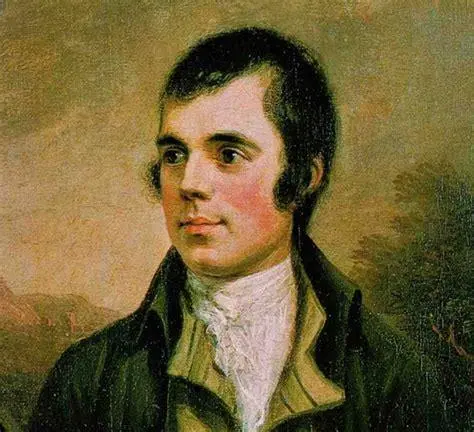
Robert Burns
Scotch Drink
Let other poets raise a fracas
Bout vines, and wines, an drucken Bacchus,
An crabbit names an stories wrack us,
An grate our lug:
I sing the juice Scotch bear can mak us,
In glass or Jug.
O thou, my Muse! guid auld Scotch drink!
Whether thro' wimplin worms thou jink,
Or, richly brown, ream owre the brink,
In glorious faem
Inspire me, till I lisp an wink,
To sing thy name!
Let husky wheat the haughs adorn,
An aits set up their awnie horn,
An Pease and beans, at e'en or morn,
Perfume the plain:
Leeze me on thee, John Barleycorn,
Thou king o' grain!
On thee aft Scotland chows her cood,
In souple scones, the wale o' food!
Or tumbling in the boiling flood
Wi' kail an beef;
But when thou pours thy strong heart's blood
There thou shines chief.
Food fills the wame, an keeps us livin;
Tho life's a gift no worth receivin
When heavy-dragg'd wi pine an grievin;
But oil'd by thee
The wheels o' life gae down-hill, scrievin,
Wi' rattlin glee.
Thou clears the head o' doited Lear,
Thou cheers the heart o' drooping Care;
Thou strings the nerves o' Labour sair,
At 's weary toil;
Thou ev'n brightens dark Despair
Wi' gloomy smile.
Aft, clad in massy siller weed,
Wi gentles thou erscts thy head;
Yet humbly kind in time o' need,
The poor man's wine:
His wee drap parritch, or his bread,
Thou kitchens fine.
Thou art the life o' public haunts;
But thee, what were our fairs and rants?
Ev'n godly meetings o' the saunts,
By thee inspir'd,
When, gaping, they besiege the tents,
Are doubly fir'd.
That merry night we get the corn in,
O sweetly, then, thou reams the horn
Or reekin on a New-Year mornin
In cog or bicker,
An just a wee drap sp'ritual burn in,
An gusty sucker!
When Vulcan gies his bellows breath,
An ploughmen gather wi their graith,
O rare! to see thee fizz an freath
I' th' lugget caup!
Then Burnewin comes on like death
At every chaup.
Nae mercy, then, for airn or steel:
The brawnie, bainie, ploughman chiel,
Brings hard owrehip, wi sturdy wheel,
The strong forehammer,
Till block an studdie ring an reel,
Wi dinsome clamour.
When skirlin' weanies see the light,
Thou maks the gossips clatter bright,
How fumblin coofs their dearies slight;
Wae worth the name!
Nae howdie gets a social night,
Or plack frae them.
When neebors anger at a plea,
An just as wud as wud can be,
How easy can the barley-brie
Cement the quarrel!
It's aye the cheapest lawyer's fee,
To taste the barrel.
Alake! that e'er my Muse has reason,
To wyte her countrymen wi' treason!
But monie daily weet their weason
Wi' liquors nice,
An hardly, in a winter season,
E'er spier her price.
Wae worth that brandy, burnin trash!
Fell source o' monie a pain an brash!
Twins monie a poor, doylt, drucken hash
O' half his days;
An sends, beside, auld Scotland's cash
To her warst faes.
Ye Scots, wha wish auld Scotland well!
Ye chief, to you my tale I tell,
Poor, plackless devils like mysel!
It sets you ill
Wi' bitter, dearthfu' wines to mell,
Or foreign gill.
May gravels round his blather wrench,
An gouts torment him, inch by inch,
Wha twists his gruntle wi' a glunch
O' sour disdain
Out owre a glass o' whisky-punch
Wi honest men!
O Whisky! soul o' plays an pranks!
Accept a Bardie's gratefu thanks!
When wanting thee, what tuneless cranks
Are my poor verses!
Thou comes---they rattle i' their ranks,
At ither's arses!
Thee, Ferintosh! O sadly lost!
Scotland lament frae coast to coast!
Now colic grips, an barkin hoast
May kill us a';
For loyal Eorbes' charter'd boast
Is taen awa!
They curst horse-leeches o' th' Excise,
Wha mak the whisky stells their prize!
Haud up thy han', Deil! ance, twice, thrice!
There, seize the blinkers!
An bake them up in brunstane pies
For poor damn'd drinkers.
Fortune! if thou'll but gie me still
Hale breeks, a scone, an whisky gill,
An rowth o' rhyme to rave at will,
Tak a' the rest,
An deal't about as thy blind skill
Directs thee best.
292
Jonathan Swift
Robin And Harry
Robin to beggars with a curse,
Throws the last shilling in his purse;
And when the coachman comes for pay,
The rogue must call another day.
Grave Harry, when the poor are pressing
Gives them a penny and God's blessing;
But always careful of the main,
With twopence left, walks home in rain.
Robin from noon to night will prate,
Run out in tongue, as in estate;
And, ere a twelvemonth and a day,
Will not have one new thing to say.
Much talking is not Harry's vice;
He need not tell a story twice:
And, if he always be so thrifty,
His fund may last to five-and-fifty.
It so fell out that cautious Harry,
As soldiers use, for love must marry,
And, with his dame, the ocean cross'd;
(All for Love, or the World well Lost!)
Repairs a cabin gone to ruin,
Just big enough to shelter two in;
And in his house, if anybody come,
Will make them welcome to his modicum
Where Goody Julia milks the cows,
And boils potatoes for her spouse;
Or darns his hose, or mends his breeches,
While Harry's fencing up his ditches.
Robin, who ne'er his mind could fix,
To live without a coach-and-six,
To patch his broken fortunes, found
A mistress worth five thousand pound;
Swears he could get her in an hour,
If gaffer Harry would endow her;
And sell, to pacify his wrath,
A birth-right for a mess of broth.
Young Harry, as all Europe knows,
Was long the quintessence of beaux;
But, when espoused, he ran the fate
That must attend the married state;
From gold brocade and shining armour,
Was metamorphosed to a farmer;
His grazier's coat with dirt besmear'd;
Nor twice a-week will shave his beard.
Old Robin, all his youth a sloven,
At fifty-two, when he grew loving,
Clad in a coat of paduasoy,
A flaxen wig, and waistcoat gay,
Powder'd from shoulder down to flank,
In courtly style addresses Frank;
Twice ten years older than his wife,
Is doom'd to be a beau for life;
Supplying those defects by dress,
Which I must leave the world to guess.
285

Robert W. Service
The Wedding Ring
I pawned my sick wife's wedding ring,
To drink and make myself a beast.
I got the most that it would bring,
Of golden coins the very least.
With stealth into her room I crept
And stole it from her as she slept.
I do not think that she will know,
As in its place I left a band
Of brass that has a brighter glow
And gleamed upon her withered hand.
I do not think that she can tell
The change - she does not see too well.
Pray God, she doesn't find me out.
I'd rather far I would be dead.
Yet yesterday she seemed to doubt,
And looking at me long she said:
"My finger must have shrunk, because
My ring seems bigger than it was."
She gazed at it so wistfully,
And one big tear rolled down her cheek.
Said she: "You'll bury it with me . . ."
I was so moved I could not speak.
Oh wretched me! How whisky can
Bring out the devil in a man!"
And yet I know she loves me still,
As on the morn that we were wed;
And darkly guess I also will
Be doomed the day that she is dead.
And yet I swear, before she's gone,
I will retrieve her ring from pawn.
I'll get it though I have to steal,
Then when to ease her bitter pain
They give her sleep oh I will feel
Her hand and slip it on again;
Through tears her wasted face I'll see,
And pray to God: "Oh pity me!"
285
Robert Burns
In The Character Of A Ruined Farmer
Tune - "Go from my window, Love, do."
The sun he is sunk in the west,
All creatures retired to rest,
While here I sit, all sore beset,
With sorrow, grief, and woe:
And it's O, fickle Fortune, O!
The prosperous man is asleep,
Nor hears how the whirlwinds sweep;
But Misery and I must watch
The surly tempest blow:
And it's O, fickle Fortune, O!
There lies the dear partner of my breast;
Her cares for a moment at rest:
Must I see thee, my youthful pride,
Thus brought so very low!
And it's O, fickle Fortune, O!
There lie my sweet babies in her arms;
No anxious fear their little hearts alarms;
But for their sake my heart does ache,
With many a bitter throe:
And it's O, fickle Fortune, O!
I once was by Fortune carest:
I once could relieve the distrest:
Now life's poor support, hardly earn'd
My fate will scarce bestow:
And it's O, fickle Fortune, O!
No comfort, no comfort I have!
How welcome to me were the grave!
But then my wife and children dear-
O, wither would they go!
And it's O, fickle Fortune, O!
O whither, O whither shall I turn!
All friendless, forsaken, forlorn!
For, in this world, Rest or Peace
I never more shall know!
And it's O, fickle Fortune, O!
281
Robert W. Service
The Tunnel
Toil's a tunnel, there's no way out
For fellows, the like o' me;
A beggar wi' only a crust an' a clout
At the worst o' the worst is free;
but I work to eat, an' I eat to work;
It's always the same old round,
And I dassent fail for the day I shirk
They'll shovel me underground.
I guess God meant it to be that way,
For a man must make his bread;
I was born to bondage, to earn my pay,
To slave to the day I'm dead;
To live in a tunnel, to die in a ditch That's
just what us fellows do;
For the poor must be makin' the rich more rich,
An' the many must serve the few.
Aye, we live in a tunnel, most o' us,
A-fearin' to lose our job;
But who has the right to gripe an' cuss
So the goblet's hot on the hob.
An' I mustn't be havin' the wife complain,
An' I can't let the childer fast:
So I'll toil in my tunnel an' drag my chain,
Clank! Clank! Clank! to the last.
281
Jonathan Swift
On Gold
All-ruling tyrant of the earth,
To vilest slaves I owe my birth,
How is the greatest monarch blest,
When in my gaudy livery drest!
No haughty nymph has power to run
From me; or my embraces shun.
Stabb'd to the heart, condemn'd to flame,
My constancy is still the same.
The favourite messenger of Jove,
And Lemnian god, consulting strove
To make me glorious to the sight
Of mortals, and the gods' delight.
Soon would their altar's flame expire
If I refused to lend them fire.
By fate exalted high in place,
Lo, here I stand with double face:
Superior none on earth I find;
But see below me all mankind
Yet, as it oft attends the great,
I almost sink with my own weight.
At every motion undertook,
The vulgar all consult my look.
I sometimes give advice in writing,
But never of my own inditing.
I am a courtier in my way;
For those who raised me, I betray;
And some give out that I entice
To lust, to luxury, and dice.
Who punishments on me inflict,
Because they find their pockets pickt.
By riding post, I lose my health,
And only to get others wealth.
282
Henry Lawson
The Bursting of the Boom
The shipping-office clerks are ‘short,’ the manager is gruff—
‘They cannot make reductions,’ and ‘the fares are low enough.’
They ship us West with cattle, and we go like cattle too;
And fight like dogs three times a day for what we get to chew. . . .
We’ll have the pick of empty bunks and lots of stretching room,
And go for next to nothing at the Bursting of the Boom.
So wait till the Boom bursts!—we’ll all get a show:
Then when the Boom bursts is our time to go.
We’ll meet ’em coming back in shoals, with looks of deepest gloom,
But we’re the sort that battle through at the Bursting of the Boom.
The captain’s easy-going when Fremantle comes in sight;
He can’t say when you’ll get ashore—perhaps tomorrow night;
Your coins are few, the charges high; you must not linger here—
You’ll get your boxes from the hold when she’s ‘longside the pier.’
The launch will foul the gangway, and the trembling bulwarks loom
Above a fleet of harbour craft—at the Bursting of the Boom.
So wait till the Boom bursts!—we’ll all get a show;
He’ll ‘take you for a bob, sir,’ and where you want to go.
He’ll ‘take the big portmanteau, sir, if he might so presume’—
You needn’t hump your luggage at the Bursting of the Boom.
It’s loafers—Customs-loafers—and you pay and pay again;
They hinder you and cheat you from the gangway to the train;
The pubs and restaurants are full—they haven’t room for more;
They charge us each three shillings for a shakedown on the floor;
But, ‘Show this gentleman upstairs—the first front parlour room.
‘We’ll see about your luggage, sir’—at the Bursting of the Boom.
So wait till the Boom bursts!—we’ll all get a show;
And wait till the Boom bursts, and swear mighty low.
‘We mostly charge a pound a week. How do you like the room?’
And ‘Show this gentleman the bath’—at the Bursting of the Boom.
I go down to the timber-yard (I cannot face the rent)
To get some strips of oregon to frame my hessian tent;
To buy some scraps of lumber for a table or a shelf:
The boss comes up and says I might just look round for myself ;
The foreman grunts and turns away as silent as the tomb—
The boss himself will wait on me at the Bursting of the Boom.
So wait till the Boom bursts!—we’ll all get a load.
‘You had better take those scraps, sir, they’re only in the road.’
‘Now, where the hell’s the carter?’ you’ll hear the foreman fume;
And, ‘Take that timber round at once!’ at the Bursting of the Boom.
Each one-a-penny grocer, in his box of board and tin,
Will think it condescending to consent to take you in;
And not content with twice as much as what is just and right,
They charge and cheat you doubly, for the Boom is at its height.
It’s‘Take it now or leave it now;’ ‘your money or your room;’
But ‘Who’s attending Mr. Brown?’ at the Bursting of the Boom.
So wait till the Boom bursts!—and take what you can get,
‘There’s not the slightest hurry, and your bill ain’t ready yet.’
They’ll call and get your orders until the crack o’ doom,
And send them round directly, at the Bursting of the Boom.
No Country and no Brotherhood—such things are dead and cold;
A camp from all the lands or none, all mad for love of gold ;
Where T’othersider number one makes slave of number two,
And the vilest women of the world the vilest ways pursue;
And men go out and slave and bake and die in agony
In western hells that God forgot, where never man should be.
I feel a prophet in my heart that speaks the one word ‘Doom!’
And aye you’ll hear the Devil laugh at the Bursting of the Boom.
281
Robert W. Service
Roulette
I'll wait until my money's gone
Before I take the sleeping pills;
Then when they find me in the dawn,
Remote from earthly ails and ills
They'll say: "She's broke, the foreign bitch!"
And dump me in the common ditch.
So thought I, of all hope bereft,
And by my evil fate obsessed;
A thousand franks was all I'd left
Of that fair fortune I possessed.
...I throw it on the table there,
And wait, with on my lips a prayer.
I fear my very life's at stake;
My note is lying on the Red . . .
I know I'll lose it, then I'll take
My pills and sleep until I'm dead . . .
Oh God of mercy, understand!
In pity guide the croupier's hand.
My heart beats hard, my lips are dry;
I feel I cannot bear to look.
I dread to hear the croupier's cry,
I'll sit down in this quiet nook.
The lights go dim, my senses reel . . .
See! Jesus Christ is at the wheel.
* * * * * * *
Kind folks arouse me from my trance.
"The Red has come ten times," they say.
"Oh do not risk another chance;
Please, Lady, take your gains away,
And to the Lord of Luck give thanks You've
won nigh half a million franks."
Aye, call me just a daft old dame;
I knit and sew to make my bread,
And nevermore I'll play that game,
For I've a glory in my head. . . .
Ah well I know, to stay my fall,
'Twas our dear Lord who spun the ball.
280
Jonathan Swift
Stella At Wood Park, A House Of Charles Ford, Esq., Near Dublin
Don Carlos, in a merry spight,
Did Stella to his house invite:
He entertain'd her half a year
With generous wines and costly cheer.
Don Carlos made her chief director,
That she might o'er the servants hector.
In half a week the dame grew nice,
Got all things at the highest price:
Now at the table head she sits,
Presented with the nicest bits:
She look'd on partridges with scorn,
Except they tasted of the corn:
A haunch of ven'son made her sweat,
Unless it had the right fumette.
Don Carlos earnestly would beg,
'Dear Madam, try this pigeon's leg;'
Was happy, when he could prevail
To make her only touch a quail.
Through candle-light she view'd the wine,
To see that ev'ry glass was fine.
At last, grown prouder than the devil
With feeding high, and treatment civil,
Don Carlos now began to find
His malice work as he design'd.
The winter sky began to frown:
Poor Stella must pack off to town;
From purling streams and fountains bubbling,
To Liffey's stinking tide in Dublin:
From wholesome exercise and air
To sossing in an easy-chair:
From stomach sharp, and hearty feeding,
To piddle like a lady breeding:
From ruling there the household singly.
To be directed here by Dingley:
From every day a lordly banquet,
To half a joint, and God be thank it:
From every meal Pontac in plenty,
To half a pint one day in twenty:
From Ford attending at her call,
To visits of Archdeacon Wall:
From Ford, who thinks of nothing mean,
To the poor doings of the Dean:
From growing richer with good cheer,
To running out by starving here.
But now arrives the dismal day;
She must return to Ormond Quay.
The coachman stopt; she look'd, and swore
The rascal had mistook the door:
At coming in, you saw her stoop;
The entry brush'd against her hoop:
Each moment rising in her airs,
She curst the narrow winding stairs:
Began a thousand faults to spy;
The ceiling hardly six feet high;
The smutty wainscot full of cracks:
And half the chairs with broken backs:
Her quarter's out at Lady-day;
She vows she will no longer stay
In lodgings like a poor Grisette,
While there are houses to be let.
Howe'er, to keep her spirits up,
She sent for company to sup:
When all the while you might remark,
She strove in vain to ape Wood Park.
Two bottles call'd for, (half her store,
The cupboard could contain but four
A supper worthy of herself,
Five nothings in five plates of delf.
Thus for a week the farce went on;
When, all her country savings gone,
She fell into her former scene,
Small beer, a herring, and the Dean.
Thus far in jest: though now, I fear,
You think my jesting too severe;
But poets, when a hint is new,
Regard not whether false or true:
Yet raillery gives no offence,
Where truth has not the least pretence;
Nor can be more securely placed
Than on a nymph of Stella's taste.
I must confess your wine and vittle
I was too hard upon a little:
Your table neat, your linen fine;
And, though in miniature, you shine:
Yet, when you sigh to leave Wood Park,
The scene, the welcome, and the spark,
To languish in this odious town,
And pull your haughty stomach down,
We think you quite mistake the case,
The virtue lies not in the place:
For though my raillery were true,
A cottage is Wood Park with you.
279
Henry Lawson
When His Heart Is Growing Bitter
When his heart is growing bitter and his hair is growing grey,
And he hears the debt-collector knocking several times a day,
And the shrill voice of the Missus, blame, reiterate, accuse—
Then the poet who was famous feels inclined to damn the muse— .....
When he hears a sudden rapping—rapping at his chamber door,
Then he knows it's no good trying to write poems any more,
Then he bursts from out his chamber and he grabs his battered hat,
And he cadges Two Bob somewhere and gets beered up on his pat.
276

Gwendolyn Brooks
The Lovers of the Poor
arrive. The Ladies from the Ladies' Betterment League
Arrive in the afternoon, the late light slanting
In diluted gold bars across the boulevard brag
Of proud, seamed faces with mercy and murder hinting
Here, there, interrupting, all deep and debonair,
The pink paint on the innocence of fear;
Walk in a gingerly manner up the hall.
Cutting with knives served by their softest care,
Served by their love, so barbarously fair.
Whose mothers taught: You'd better not be cruel!
You had better not throw stones upon the wrens!
Herein they kiss and coddle and assault
Anew and dearly in the innocence
With which they baffle nature. Who are full,
Sleek, tender-clad, fit, fiftyish, a-glow, all
Sweetly abortive, hinting at fat fruit,
Judge it high time that fiftyish fingers felt
Beneath the lovelier planes of enterprise.
To resurrect. To moisten with milky chill.
To be a random hitching-post or plush.
To be, for wet eyes, random and handy hem.
Their guild is giving money to the poor.
The worthy poor. The very very worthy
And beautiful poor. Perhaps just not too swarthy?
perhaps just not too dirty nor too dim
Nor--passionate. In truth, what they could wish
Is--something less than derelict or dull.
Not staunch enough to stab, though, gaze for gaze!
God shield them sharply from the beggar-bold!
The noxious needy ones whose battle's bald
Nonetheless for being voiceless, hits one down.
But it's all so bad! and entirely too much for them.
The stench; the urine, cabbage, and dead beans,
Dead porridges of assorted dusty grains,
The old smoke, heavy diapers, and, they're told,
Something called chitterlings. The darkness. Drawn
Darkness, or dirty light. The soil that stirs.
The soil that looks the soil of centuries.
And for that matter the general oldness. Old
Wood. Old marble. Old tile. Old old old.
Not homekind Oldness! Not Lake Forest, Glencoe.
Nothing is sturdy, nothing is majestic,
There is no quiet drama, no rubbed glaze, no
Unkillable infirmity of such
A tasteful turn as lately they have left,
Glencoe, Lake Forest, and to which their cars
Must presently restore them. When they're done
With dullards and distortions of this fistic
Patience of the poor and put-upon.
They've never seen such a make-do-ness as
Newspaper rugs before! In this, this 'flat,'
Their hostess is gathering up the oozed, the rich
Rugs of the morning (tattered! the bespattered. . . .)
Readies to spread clean rugs for afternoon.
Here is a scene for you. The Ladies look,
In horror, behind a substantial citizeness
Whose trains clank out across her swollen heart.
Who, arms akimbo, almost fills a door.
All tumbling children, quilts dragged to the floor
And tortured thereover, potato peelings, soft-
Eyed kitten, hunched-up, haggard, to-be-hurt.
Their League is allotting largesse to the Lost.
But to put their clean, their pretty money, to put
Their money collected from delicate rose-fingers
Tipped with their hundred flawless rose-nails seems...
They own Spode, Lowestoft, candelabra,
Mantels, and hostess gowns, and sunburst clocks,
Turtle soup, Chippendale, red satin 'hangings,'
Aubussons and Hattie Carnegie. They Winter
In Palm Beach; cross the Water in June; attend,
When suitable, the nice Art Institute;
Buy the right books in the best bindings; saunter
On Michigan, Easter mornings, in sun or wind.
Oh Squalor! This sick four-story hulk, this fibre
With fissures everywhere! Why, what are bringings
Of loathe-love largesse? What shall peril hungers
So old old, what shall flatter the desolate?
Tin can, blocked fire escape and chitterling
And swaggering seeking youth and the puzzled wreckage
Of the middle passage, and urine and stale shames
And, again, the porridges of the underslung
And children children children. Heavens! That
Was a rat, surely, off there, in the shadows? Long
And long-tailed? Gray? The Ladies from the Ladies'
Betterment League agree it will be better
To achieve the outer air that rights and steadies,
To hie to a house that does not holler, to ring
Bells elsetime, better presently to cater
To no more Possibilities, to get
Away. Perhaps the money can be posted.
Perhaps they two may choose another Slum!
Some serious sooty half-unhappy home!--
Where loathe-love likelier may be invested.
Keeping their scented bodies in the center
Of the hall as they walk down the hysterical hall,
They allow their lovely skirts to graze no wall,
Are off at what they manage of a canter,
And, resuming all the clues of what they were,
Try to avoid inhaling the laden air.
275