
Money and Wealth

Emily Dickinson
Finding is the first Act
Finding is the first Act
The second, loss,
Third, Expedition for
The "Golden Fleece"
Fourth, no Discovery-
Fifth, no Crew-
Finally, no Golden FleeceJason-
sham-too.
The second, loss,
Third, Expedition for
The "Golden Fleece"
Fourth, no Discovery-
Fifth, no Crew-
Finally, no Golden FleeceJason-
sham-too.
334

Henry Lawson
Victory
The schools marched in procession in happiness and pride,
The city bands before them, the soldiers marched beside;
Oh, starched white frocks and sashes and suits that high schools wear,
The boy scout and the boy lout and all the rest were there,
And all flags save Australia's flag waved high in sun and air!
The Girls' High School, and Grammar School and colleges of stone
Flew all flags from their walls and towers – all flags except our own!
And down here in the alleys where Premiers never come,
Nor candidate, nor delegate, nor sound of fife and drum,
They packed them on the lorries, seared children of the slum.
Each face seemed soiled and faded, though scrubbed with household soap,
And older than a mother-face, but with less sign of hope:
The knowledge of things evil, of drunken wreck and hag,
Of sordid sounds and voices, the everlasting "nag" –
Oh, men without a battle-song! Oh, men without a flag!
They breed a nation's strength behind each shabby little door,
Where rent-collectors knock for aye, and Christ shall knock no more;
The sounds that hurt the mother's heart affright the children there –
Alarm-clocks on an empty tin, the tin tray on a chair;
For weary folk are hard to wake in hot and heavy air.
They sang in Pride's Procession that Mammon might endure –
Oh, wistful singing faces, the children of the poor!
Oh, hideous fiends of commerce! Oh, ghouls of business strife!
I wait the coming of the things to wake the land to life;
The flag without a cross or bar, the drum without a fife!
331

William Butler Yeats
Symbols
A STORM BEATEN old watch-tower,
A blind hermit rings the hour.
All-destroying sword-blade still
Carried by the wandering fool.
Gold-sewn silk on the sword-blade,
Beauty and fool together laid.
A blind hermit rings the hour.
All-destroying sword-blade still
Carried by the wandering fool.
Gold-sewn silk on the sword-blade,
Beauty and fool together laid.
330
Emily Dickinson
I never told the buried gold
I never told the buried gold
Upon the hill-that lies-
I saw the sun-his plunder done
Crouch low to guard his prize.
He stood as near
As stood you here-
A pace had been between-
Did but a snake bisect the brake
My life had forfeit been.
That was a wondrous booty-
I hope 'twas honest gained.
Those were the fairest ingots
That ever kissed the spade!
Whether to keep the secret-
Whether to reveal-
Whether as I ponder
Kidd will sudden sail-
Could a shrewd advise me
We might e'en divide-
Should a shrewd betray me-
Atropos decide!
328

James Whitcomb Riley
Jim
He was jes a plain ever'-day, all-round kind of a jour.,
Consumpted-Iookin'-- but la!
The jokeiest, wittiest, story-tellin', song-singin', laughin'est, jolliest
Feller you ever saw!
Worked at jes coarse work, but you kin bet he was fine enough in his talk,
And his feelin's too!
Lordy! Ef he was on'y back on his bench ag'in to-day, a- carryin' on
Like he ust to do!
Any shopmate'll tell you there never was, on top o' dirt,
A better feller'n Jim!
You want a favor, and couldn't git it anywheres else--
You could git it o' him!
Most free-heartedest man thataway in the world, I guess!
Give up ever' nickel he's worth--
And ef you'd a-wanted it, and named it to him, and it was his,
He'd a-give you the earth!
Allus a reachin' out, Jim was, and a-he'ppin' some
Pore feller onto his feet-He'd
a-never a-keered how hungry he was hisse'f,
So's the feller got somepin' to eat!
Didn't make no differ'nce at all to him how he was dressed,
He ust to say to me--,
'You togg out a tramp purty comfortable in winter-time, a huntin' a job,
And he'll git along!' says he.
Jim didn't have, ner never could git ahead, so overly much
O' this world's goods at a time--.
'Fore now I've saw him, more'n onc't, lend a dollar, and haf to, more'n
likely,
Turn round and borry a dime!
Mebby laugh and joke about it hisse'f fer awhile-- then jerk his coat,
And kindo' square his chin,
Tie on his apern, and squat hisse'f on his old shoe-bench,
And go to peggin' ag'in!
Patientest feller too, I reckon, 'at ever jes natchurly
Coughed hisse'f to death!
Long enough after his voice was lost he'd laugh in a whisper and say
He could git ever'thing but his breath-'
You fellers,' he'd sorto' twinkle his eyes and say,
'Is a-pilin' onto me
A mighty big debt fer that-air little weak-chested ghost o' mine to pack
Through all Eternity!'
Now there was a man 'at jes 'peared-like, to me,
'At ortn't a-never a-died!
'But death hain't a-showin' no favors,' the old boss said-'
On'y to Jim!' and cried:
And Wigger, who puts up the best sewed-work in the shop--
Er the whole blame neighborhood--,
He says, 'When God made Jim, I bet you He didn't do anything else that day
But jes set around and feel good!'
326
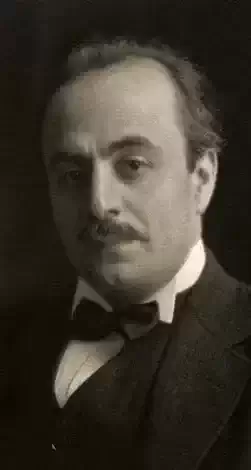
Khalil Gibran
Buying and Selling chapter XI
And a merchant said, "Speak to us of Buying and Selling."
And he answered and said:
To you the earth yields her fruit, and you shall not want if you but know how to fill your
hands.
It is in exchanging the gifts of the earth that you shall find abundance and be satisfied.
Yet unless the exchange be in love and kindly justice, it will but lead some to greed
and others to hunger.
When in the market place you toilers of the sea and fields and vineyards meet the
weavers and the potters and the gatherers of spices, -
Invoke then the master spirit of the earth, to come into your midst and sanctify the
scales and the reckoning that weighs value against value.
And suffer not the barren-handed to take part in your transactions, who would sell
their words for your labour.
To such men you should say,
"Come with us to the field, or go with our brothers to the sea and cast your net;
For the land and the sea shall be bountiful to you even as to us."
And if there come the singers and the dancers and the flute players, - buy of their gifts
also.
For they too are gatherers of fruit and frankincense, and that which they bring, though
fashioned of dreams, is raiment and food for your soul.
And before you leave the marketplace, see that no one has gone his way with empty
hands.
For the master spirit of the earth shall not sleep peacefully upon the wind till the needs
of the least of you are satisfied.
325
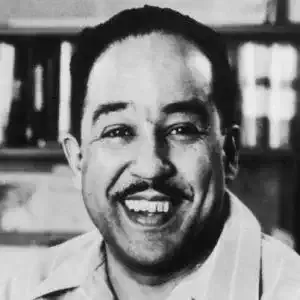
Langston Hughes
50-50
I’m all alone in this world, she said,
Ain’t got nobody to share my bed,
Ain’t got nobody to hold my hand—
The truth of the matter’s
I ain’t got no man.
Big Boy opened his mouth and said,
Trouble with you is
You ain’t got no head!
If you had a head and used your mind
You could have me with you
All the time.
She answered, Babe, what must I do?
He said, Share your bed—
And your money, too.
325
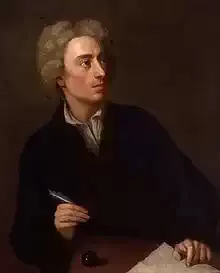
Alexander Pope
Epistles to Several Persons: Epistle IV, To Richard Boyle
Est brevitate opus, ut currat sententia, neu se
Impediat verbis lassas onerantibus aures:
Et sermone opus est modo tristi, saepe jocoso,
Defendente vicem modo Rhetoris atque Poetae,
Interdum urbani, parcentis viribus, atque
Extenuantis eas consulto.
(Horace, Satires, I, x, 17-22)
'Tis strange, the miser should his cares employ
To gain those riches he can ne'er enjoy:
Is it less strange, the prodigal should waste
His wealth to purchase what he ne'er can taste?
Not for himself he sees, or hears, or eats;
Artists must choose his pictures, music, meats:
He buys for Topham, drawings and designs,
For Pembroke, statues, dirty gods, and coins;
Rare monkish manuscripts for Hearne alone,
And books for Mead, and butterflies for Sloane.
Think we all these are for himself? no more
Than his fine wife, alas! or finer whore.
For what his Virro painted, built, and planted?
Only to show, how many tastes he wanted.
What brought Sir Visto's ill got wealth to waste?
Some daemon whisper'd, "Visto! have a taste."
Heav'n visits with a taste the wealthy fool,
And needs no rod but Ripley with a rule.
See! sportive fate, to punish awkward pride,
Bids Bubo build, and sends him such a guide:
A standing sermon, at each year's expense,
That never coxcomb reach'd magnificence!
You show us, Rome was glorious, not profuse,
And pompous buildings once were things of use.
Yet shall (my Lord) your just, your noble rules
Fill half the land with imitating fools;
Who random drawings from your sheets shall take,
And of one beauty many blunders make;
Load some vain church with old theatric state,
Turn arcs of triumph to a garden gate;
Reverse your ornaments, and hang them all
On some patch'd dog-hole ek'd with ends of wall;
Then clap four slices of pilaster on't,
That lac'd with bits of rustic, makes a front.
Or call the winds through long arcades to roar,
Proud to catch cold at a Venetian door;
Conscious they act a true Palladian part,
And, if they starve, they starve by rules of art.
Oft have you hinted to your brother peer,
A certain truth, which many buy too dear:
Something there is more needful than expense,
And something previous ev'n to taste--'tis sense:
Good sense, which only is the gift of Heav'n,
And though no science, fairly worth the sev'n:
A light, which in yourself you must perceive;
Jones and Le Notre have it not to give.
To build, to plant, whatever you intend,
To rear the column, or the arch to bend,
To swell the terrace, or to sink the grot;
In all, let Nature never be forgot.
But treat the goddess like a modest fair,
Nor overdress, nor leave her wholly bare;
Let not each beauty ev'rywhere be spied,
Where half the skill is decently to hide.
He gains all points, who pleasingly confounds,
Surprises, varies, and conceals the bounds.
Consult the genius of the place in all;
That tells the waters or to rise, or fall;
Or helps th' ambitious hill the heav'ns to scale,
Or scoops in circling theatres the vale;
Calls in the country, catches opening glades,
Joins willing woods, and varies shades from shades,
Now breaks, or now directs, th' intending lines;
Paints as you plant, and, as you work, designs.
Still follow sense, of ev'ry art the soul,
Parts answ'ring parts shall slide into a whole,
Spontaneous beauties all around advance,
Start ev'n from difficulty, strike from chance;
Nature shall join you; time shall make it grow
A work to wonder at--perhaps a Stowe.
Without it, proud Versailles! thy glory falls;
And Nero's terraces desert their walls:
The vast parterres a thousand hands shall make,
Lo! Cobham comes, and floats them with a lake:
Or cut wide views through mountains to the plain,
You'll wish your hill or shelter'd seat again.
Ev'n in an ornament its place remark,
Nor in an hermitage set Dr. Clarke.
Behold Villario's ten years' toil complete;
His quincunx darkens, his espaliers meet;
The wood supports the plain, the parts unite,
And strength of shade contends with strength of light;
A waving glow his bloomy beds display,
Blushing in bright diversities of day,
With silver-quiv'ring rills meander'd o'er-Enjoy
them, you! Villario can no more;
Tir'd of the scene parterres and fountains yield,
He finds at last he better likes a field.
Through his young woods how pleas'd Sabinus stray'd,
Or sat delighted in the thick'ning shade,
With annual joy the redd'ning shoots to greet,
Or see the stretching branches long to meet!
His son's fine taste an op'ner vista loves,
Foe to the dryads of his father's groves;
One boundless green, or flourish'd carpet views,
With all the mournful family of yews;
The thriving plants ignoble broomsticks made,
Now sweep those alleys they were born to shade.
At Timon's villa let us pass a day,
Where all cry out, "What sums are thrown away!"
So proud, so grand of that stupendous air,
Soft and agreeable come never there.
Greatness, with Timon, dwells in such a draught
As brings all Brobdingnag before your thought.
To compass this, his building is a town,
His pond an ocean, his parterre a down:
Who but must laugh, the master when he sees,
A puny insect, shiv'ring at a breeze!
Lo, what huge heaps of littleness around!
The whole, a labour'd quarry above ground.
Two cupids squirt before: a lake behind
Improves the keenness of the Northern wind.
His gardens next your admiration call,
On ev'ry side you look, behold the wall!
No pleasing intricacies intervene,
No artful wildness to perplex the scene;
Grove nods at grove, each alley has a brother,
And half the platform just reflects the other.
The suff'ring eye inverted Nature sees,
Trees cut to statues, statues thick as trees;
With here a fountain, never to be play'd;
And there a summerhouse, that knows no shade;
Here Amphitrite sails through myrtle bow'rs;
There gladiators fight, or die in flow'rs;
Unwater'd see the drooping sea horse mourn,
And swallows roost in Nilus' dusty urn.
My Lord advances with majestic mien,
Smit with the mighty pleasure, to be seen:
But soft--by regular approach--not yet-First
through the length of yon hot terrace sweat;
And when up ten steep slopes you've dragg'd your thighs,
Just at his study door he'll bless your eyes.
His study! with what authors is it stor'd?
In books, not authors, curious is my Lord;
To all their dated backs he turns you round:
These Aldus printed, those Du Sueil has bound.
Lo, some are vellum, and the rest as good
For all his Lordship knows, but they are wood.
For Locke or Milton 'tis in vain to look,
These shelves admit not any modern book.
And now the chapel's silver bell you hear,
That summons you to all the pride of pray'r:
Light quirks of music, broken and uneven,
Make the soul dance upon a jig to heaven.
On painted ceilings you devoutly stare,
Where sprawl the saints of Verrio or Laguerre,
On gilded clouds in fair expansion lie,
And bring all paradise before your eye.
To rest, the cushion and soft dean invite,
Who never mentions Hell to ears polite.
But hark! the chiming clocks to dinner call;
A hundred footsteps scrape the marble hall:
The rich buffet well-colour'd serpents grace,
And gaping Tritons spew to wash your face.
Is this a dinner? this a genial room?
No, 'tis a temple, and a hecatomb.
A solemn sacrifice, perform'd in state,
You drink by measure, and to minutes eat.
So quick retires each flying course, you'd swear
Sancho's dread doctor and his wand were there.
Between each act the trembling salvers ring,
From soup to sweet wine, and God bless the King.
In plenty starving, tantaliz'd in state,
And complaisantly help'd to all I hate,
Treated, caress'd, and tir'd, I take my leave,
Sick of his civil pride from morn to eve;
I curse such lavish cost, and little skill,
And swear no day was ever pass'd so ill.
Yet hence the poor are cloth'd, the hungry fed;
Health to himself, and to his infants bread
The lab'rer bears: What his hard heart denies,
His charitable vanity supplies.
Another age shall see the golden ear
Embrown the slope, and nod on the parterre,
Deep harvests bury all his pride has plann'd,
And laughing Ceres reassume the land.
Who then shall grace, or who improve the soil?
Who plants like Bathurst, or who builds like Boyle.
'Tis use alone that sanctifies expense,
And splendour borrows all her rays from sense.
His father's acres who enjoys in peace,
Or makes his neighbours glad, if he increase:
Whose cheerful tenants bless their yearly toil,
Yet to their Lord owe more than to the soil;
Whose ample lawns are not asham'd to feed
The milky heifer and deserving steed;
Whose rising forests, not for pride or show,
But future buildings, future navies, grow:
Let his plantations stretch from down to down,
First shade a country, and then raise a town.
You too proceed! make falling arts your care,
Erect new wonders, and the old repair;
Jones and Palladio to themselves restore,
And be whate'er Vitruvius was before:
Till kings call forth th' ideas of your mind,
Proud to accomplish what such hands design'd,
Bid harbours open, public ways extend,
Bid temples, worthier of the God, ascend;
Bid the broad arch the dang'rous flood contain,
The mole projected break the roaring main;
Back to his bounds their subject sea command,
And roll obedient rivers through the land;
These honours, peace to happy Britain brings,
These are imperial works, and worthy kings.
325

Carl Sandburg
Mill-Doors
You never come back.
I say good-by when I see you going in the doors,
The hopeless open doors that call and wait
And take you then for—how many cents a day?
How many cents for the sleepy eyes and fingers?
I say good-by because I know they tap your wrists,
In the dark, in the silence, day by day,
And all the blood of you drop by drop,
And you are old before you are young.
You never come back.
322

Nazim Hikmet
A Spring Piece Left In The Middle
Taut, thick fingers punch
the teeth of my typewriter.
Three words are down on paper
in capitals:
SPRING
SPRING
SPRING...
And me -- poet, proofreader,
the man who's forced to read
two thousand bad lines
every day
for two liras--
why,
since spring
has come, am I
still sitting here
like a ragged
black chair?
My head puts on its cap by itself,
I fly out of the printer's,
I'm on the street.
The lead dirt of the composing room
on my face,
seventy-five cents in my pocket.
SPRING IN THE AIR...
In the barbershops
they're powdering
the sallow cheeks
of the pariah of Publishers Row.
And in the store windows
three-color bookcovers
flash like sunstruck mirrors.
But me,
I don't have even a book of ABC's
that lives on this street
and carries my name on its door!
But what the hell...
I don't look back,
the lead dirt of the composing room
on my face,
seventy-five cents in my pocket,
SPRING IN THE AIR...
*
The piece got left in the middle.
It rained and swamped the lines.
But oh! what I would have written...
The starving writer sitting on his three-thousand-page
three-volume manuscript
wouldn't stare at the window of the kebab joint
but with his shining eyes would take
the Armenian bookseller's dark plump daughter by storm...
The sea would start smelling sweet.
Spring would rear up
like a sweating red mare
and, leaping onto its bare back,
I'd ride it
into the water.
Then
my typewriter would follow me
every step of the way.
I'd say:
"Oh, don't do it!
Leave me alone for an hour..."
then
my head-my hair failing out--
would shout into the distance:
"I AM IN LOVE..."
*
I'm twenty-seven,
she's seventeen.
"Blind Cupid,
lame Cupid,
both blind and lame Cupid
said, Love this girl,"
I was going to write;
I couldn't say it
but still can!
But if
it rained,
if the lines I wrote got swamped,
if I have twenty-five cents left in my pocket,
what the hell...
Hey, spring is here spring is here spring
spring is here!
My blood is budding inside me!
and April
Trans. by Randy Blasing and Mutlu Konuk ()
324
Emily Dickinson
A Planted Life-diversified
A Planted Life-diversified
With Gold and Silver Pain
To prove the presence of the Ore
In Particles-'tis when
A Value struggle-it exist-
A Power-will proclaim
Although Annihilation pile
Whole Chaoses on Him-
With Gold and Silver Pain
To prove the presence of the Ore
In Particles-'tis when
A Value struggle-it exist-
A Power-will proclaim
Although Annihilation pile
Whole Chaoses on Him-
321
Emily Dickinson
I know where Wells grow—Droughtless Wells
I know where Wells grow—Droughtless Wells—
Deep dug—for Summer days—
Where Mosses go no more away—
And Pebble—safely plays—
It's made of Fathoms—and a Belt—
A Belt of jagged Stone—
Inlaid with Emerald—half way down—
And Diamonds—jumbled on—
It has no Bucket—Were I rich
A Bucket I would buy—
I'm often thirsty—but my lips
Are so high up—You see—
I read in an Old fashioned Book
That People "thirst no more"—
The Wells have Buckets to them there—
It must mean that—I'm sure—
Shall We remember Parching—then?
Those Waters sound so grand—
I think a little Well—like Mine—
Dearer to understand—
319

Christina Rossetti
Wee Wee Husband
Wee wee husband,
Give me some money,
I have no comfits,
And I have no honey.
Wee wee wifie,
I have no money,
Milk, nor meat, nor bread to eat,
Comfits, nor honey.
Give me some money,
I have no comfits,
And I have no honey.
Wee wee wifie,
I have no money,
Milk, nor meat, nor bread to eat,
Comfits, nor honey.
319

Claude Mckay
Homing Swallows
Swift swallows sailing from the Spanish main,
O rain-birds racing merrily away
From hill-tops parched with heat and sultry plain
Of wilting plants and fainting flowers, say--
When at the noon-hour from the chapel school
The children dash and scamper down the dale,
Scornful of teacher's rod and binding rule
Forever broken and without avail,
Do they still stop beneath the giant tree
To gather locusts in their childish greed,
And chuckle when they break the pods to see
The golden powder clustered round the seed?
315
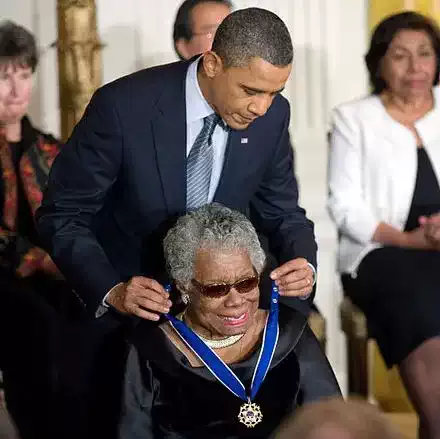
Maya Angelou
Alone
Lying, thinking
Last night
How to find my soul a home
Where water is not thirsty
And bread loaf is not stone
I came up with one thing
And I don't believe I'm wrong
That nobody,
But nobody
Can make it out here alone.
Alone, all alone
Nobody, but nobody
Can make it out here alone.
There are some millionaires
With money they can't use
Their wives run round like banshees
Their children sing the blues
They've got expensive doctors
To cure their hearts of stone.
But nobody
No, nobody
Can make it out here alone.
Alone, all alone
Nobody, but nobody
Can make it out here alone.
Now if you listen closely
I'll tell you what I know
Storm clouds are gathering
The wind is gonna blow
The race of man is suffering
And I can hear the moan,
'Cause nobody,
But nobody
Can make it out here alone.
Alone, all alone
Nobody, but nobody
Can make it out here alone.
317
William Butler Yeats
Oil And Blood
IN tombs of gold and lapis lazuli
Bodies of holy men and women exude
Miraculous oil, odour of violet.
But under heavy loads of trampled clay
Lie bodies of the vampires full of blood;
Their shrouds are bloody and their lips are wet.
Bodies of holy men and women exude
Miraculous oil, odour of violet.
But under heavy loads of trampled clay
Lie bodies of the vampires full of blood;
Their shrouds are bloody and their lips are wet.
315
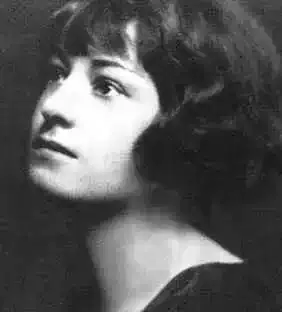
Dorothy Parker
One Perfect Rose
A single flow'r he sent me, since we met.
All tenderly his messenger he chose;
Deep-hearted, pure, with scented dew still wet -
One perfect rose.
I knew the language of the floweret;
'My fragile leaves,' it said, 'his heart enclose.'
Love long has taken for his amulet
One perfect rose.
Why is it no one ever sent me yet
One perfect limousine, do you suppose?
Ah no, it's always just my luck to get
One perfect rose.
312
Emily Dickinson
I gained it so
I gained it so-
By Climbing slow-
By Catching at the Twigs that grow
Between the Bliss-and me-
It hung so high
As well the Sky
Attempt by Strategy-
I said I gained it
This-
was all-
Look, how I clutch it
Lest it fall-
And I a Pauper go-
Unfitted by an instant's Grace
For the Contented-Beggar's face
I wore-an hour ago-
312
James Whitcomb Riley
A New Year's Time At Willards's
The Hired Man Talks
There's old man Willards; an' his wife;
An' Marg'et-- S'repty's sister--; an'
There's me-- an' I'm the hired man;
An' Tomps McClure, you better yer life!
Well now, old Willards hain't so bad,
Considerin' the chance he's had.
Of course, he's rich, an' sleeps an' eats
Whenever he's a mind to: Takes
An' leans back in the Amen-seats
An' thanks the Lord fer all he makes--.
That's purty much all folks has got
Ag'inst the old man, like as not!
But there's his woman-- jes the turn
Of them-air two wild girls o' hern-Marg'et
an' S'repty-- allus in
Fer any cuttin'-up concern--
Church festibals, and foolishin'
Round Christmas-trees, an' New Year's sprees--
Set up to watch the Old Year go
An' New Year come-- sich things as these;
An' turkey-dinners, don't you know!
S'repty's younger, an' more gay,
An' purtier, an' finer dressed
Than Marg'et is-- but, lawzy-day!
She hain't the independentest!
'Take care!' old Willards used to say,
'Take care--! Let Marg'et have her way,
An' S'repty, you go off an' play
On your melodeum--!' But, best
Of all, comes Tomps! An' I'll be bound,
Ef he hain't jes the beatin'est
Young chap in all the country round!
Ef you knowed Tomps you'd like him, shore!
They hain't no man on top o' ground
Walks into my affections more--!
An' all the Settlement'll say
That Tomps was liked jes thataway
By ever'body, till he tuk
A shine to S'repty Willards--. Then
You'd ort'o see the old man buck
An' h'ist hisse'f, an' paw the dirt,
An' hint that 'common workin'-men
That didn't want their feelin's hurt
'Ud better hunt fer 'comp'ny' where
The folks was pore an' didn't care--!'
The pine-blank facts is--, the old man,
Last Christmas was a year ago,
Found out some presents Tomps had got
Fer S'repty, an' hit made him hot--
Set down an' tuk his pen in hand
An' writ to Tomps an' told him so
On legal cap, in white an' black,
An' give him jes to understand
'No Christmas-gifts o' 'lily-white'
An' bear's-ile could fix matters right,'
An' wropped 'em up an' sent 'em back!
Well, S'repty cried an' snuffled round
Consid'able. But Marg'et she
Toed out another sock, an' wound
Her knittin' up, an' drawed the tea,
An' then set on the supper-things,
An' went up in the loft an' dressed--
An' through it all you'd never guessed
What she was up to! An' she brings
Her best hat with her an her shawl,
An' gloves, an' redicule, an' all,
An' injirubbers, an' comes down
An' tells 'em she's a-goin' to town
To he'p the Christmas goin's-on
Her Church got up. An' go she does--
The best hosswoman ever was!
'An' what'll We do while you're gone?'
The old man says, a-tryin' to be
Agreeable. 'Oh! You?' says she--,
'You kin jaw S'repty, like you did,
An' slander Tomps!' An' off she rid!
Now, this is all I'm goin' to tell
Of this-here story-- that is, I
Have done my very level best
As fur as this, an' here I 'dwell,'
As auctioneers says, winkin' sly:
Hit's old man Willards tells the rest.
2
The Old Man Talks
Adzackly jes one year ago,
This New Year's day, Tomps comes to me--
In my own house, an' whilse the folks
Was gittin' dinner--, an' he pokes
His nose right in, an' says, says he:
'I got yer note-- an' read it slow!
You don't like me, ner I don't you,'
He says--, 'we're even there, you know!
But you've said, furder that no gal
Of yourn kin marry me, er shall,
An' I'd best shet off comin', too!'
An' then he says--, 'Well, them's Your views--;
But havin' talked with S'repty, we
Have both agreed to disagree
With your peculiar notions-- some;
An', that s the reason, I refuse
To quit a-comin' here, but come--
Not fer to threat, ner raise no skeer
An' spile yer turkey-dinner here--,
But jes fer S'repty's sake, to sheer
Yer New Year's. Shall I take a cheer?'
Well, blame-don! Ef I ever see
Sich impidence! I couldn't say
Not nary word! But Mother she
Sot out a cheer fer Tomps, an' they
Shuk hands an' turnt their back on me.
Then I riz-- mad as mad could be--!
But Marg'et says--, 'Now, Pap! You set
Right where you're settin'--! Don't you fret!
An' Tomps-- you warm yer feet!' says she,
'An throw yer mitts an' comfert on
The bed there! Where is S'repty gone!
The cabbage is a-scortchin'! Ma,
Stop cryin' there an' stir the slaw!'
Well--! What was Mother cryin' fer--?
I half riz up-- but Marg'et's chin
Hit squared-- an' I set down ag'in--
I allus was afeard o' her,
I was, by jucks! So there I set,
Betwixt a sinkin'-chill an' sweat,
An' scuffled with my wrath, an' shet
My teeth to mighty tight, you bet!
An' yit, fer all that I could do,
I eeched to jes git up an' whet
The carvin'-knife a rasp er two
On Tomps's ribs-- an' so would you--!
Fer he had riz an' faced around,
An' stood there, smilin', as they brung
The turkey in, all stuffed an' browned--
Too sweet fer nose, er tooth, er tongue!
With sniffs o' sage, an' p'r'aps a dash
Of old burnt brandy, steamin'-hot
Mixed kindo' in with apple-mash
An' mince-meat, an' the Lord knows what!
Nobody was a-talkin' then,
To 'filiate any awk'ardness--
No noise o' any kind but jes
The rattle o' the dishes when
They'd fetch 'em in an' set 'em down,
An' fix an' change 'em round an' round,
Like women does-- till Mother says--,
'Vittels is ready; Abner, call
Down S'repty-- she's up-stairs, I guess--.'
And Marg'et she says, 'Ef you bawl
Like that, she'll not come down at all!
Besides, we needn't wait till she
Gits down! Here Temps, set down by me,
An' Pap: say grace...!' Well, there I was--!
What could I do! I drapped my head
Behind my fists an' groaned; an' said--:
'Indulgent Parent! In Thy cause
We bow the head an' bend the knee
An' break the bread, an' pour the wine,
Feelin'--' (The stair-door suddently
Went bang! An' S'repty flounced by me--)
'Feelin',' I says, 'this feast is Thine--
This New Year's feast--' an' rap-rap-rap!
Went Marg'ets case-knife on her plate--
An' next, I heerd a sasser drap--,
Then I looked up, an' strange to state,
There S'repty set in Tomps lap--
An' huggin' him, as shore as fate!
An' Mother kissin' him k-slap!
An' Marg'et-- she chips in to drap
The ruther peert remark to me--:
'That 'grace' o' yourn,' she says, 'won't 'gee'--
This hain't no 'New Year's feast,'' says she--,
'This is a' Infair-Dinner, Pap!'
An' so it was--! Be'n married fer
Purt' nigh a week--! 'Twas Marg'et planned
The whole thing fer 'em, through an' through.
I'm rickonciled; an' understand,
I take things jes as they occur--,
Ef Marg'et liked Tomps, Tomps 'ud do--!
But I-says-I, a-holt his hand--,
'I'm glad you didn't marry Her-'
Cause Marg'et's my guardeen-- yes-sir--!
An' S'repty's good enough fer you!'
311
Emily Dickinson
What would I give to see his face?
What would I give to see his face?
I'd give-I'd give my life-of course-
But that is not enough!
Stop just a minute-let me think!
I'd give my biggest Bobolink!
That makes two-Him-and Life!
You know who "June" is
I'd
give her-
Roses a day from Zanzibar-
And Lily tubes-like WellsBees-
by the furlong-
Straits of Blue
Navies of Butterflies-sailed thro'-
And dappled Cowslip Dells-
Then I have "shares" in Primrose "Banks"-
Daffodil Dowries-spicy "Stocks"Dominions-
broad as Dew-
Bags of Doublons-adventurous Bees
Brought me-from firmamental seas-
And Purple-from Peru
Now-have I bought it"
Shylock"? Say!
Sign me the Bond!
"I vow to pay
To Her-who pledges this-
One hour-of her Sovereign's face"!
Ecstatic Contract!
Niggard Grace!
My Kingdom's worth of Bliss!
312
Emily Dickinson
Publication
Publication -- is the Auction
Of the Mind of Man --
Poverty -- be justifying
For so foul a thing
Possibly -- but We -- would rather
From Our Garret go
White -- Unto the White Creator --
Than invest -- Our Snow --
Thought belong to Him who gave it --
Then -- to Him Who bear
Its Corporeal illustration -- Sell
The Royal Air --
In the Parcel -- Be the Merchant
Of the Heavenly Grace --
But reduce no Human Spirit
To Disgrace of Price --
308
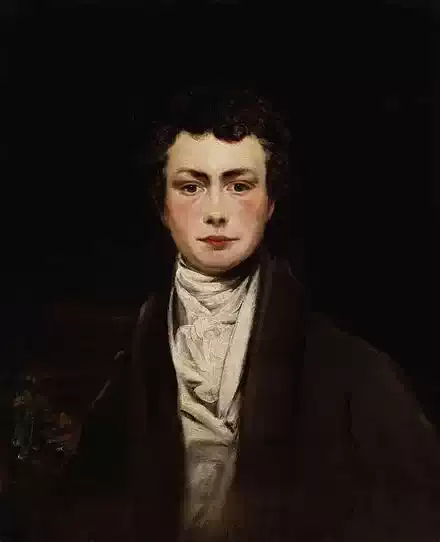
Thomas Moore
Cotton and Corn
Said Cotton to Corn, t'other day,
As they met and exchang'd salute--
(Squire Corn in his carriage so gay,
Poor Cotton, half famish'd on foot):
"Great Squire, if it isn't uncivil
To hint at starvation before you,
Look down on a poor hungry devil,
And give him some bread, I implore you!"
Quoth Corn, then, in answer to Cotton,
Perceiving he meant to make free --
"Low fellow, you've surely forgotten
The distance between you and me!
To expect that we, Peers of high birth,
Should waste our illustrious acres,
For no other purpose on earth
Than to fatten curst calico-makers! --
That Biships to hobbins should bend --
Should stoop from their Bench's sublimity,
Great dealers in lawn, to befriend
Such contemptible dealers in dimity!
"No -- vile Manufacture! ne'er harbour
A hope to be fed at our boards; --
Base offspring of Arkwright the barber,
What claim canst thou have upon Lords?
"No -- thanks to the taxes and debt,
And the triumph of paper o'er guineas,
Our race of Lord Jemmys, as yet,
May defy your whole rabble of Jennys!"
So saying -- whip, crack and away
Went Corn in his chaise through the throng,
So headlong, I heard them all say,
"Squire Corn would be down, before long."
309

Robert W. Service
Munition Maker
I am the Cannon King, behold!
I perish on a throne of gold.
With forest far and turret high,
Renowned and rajah-rich am I.
My father was, and his before,
With wealth we owe to war on war;
But let no potentate be proud . . .
There are no pockets in a shroud.
By nature I am mild and kind,
To gentleness and ruth inclined;
And though the pheasants over-run
My woods I will not touch a gun.
Yet while each monster that I forge
Thunders destruction form its gorge.
Death's whisper is, I vow, more loud . . .
There are no pockets in a shroud.
My time is short, my ships at sea
Already seem like ghosts to me;
My millions mock me I am poor
As any beggar at my door.
My vast dominion I resign,
Six feet of earth to claim is mine,
Brooding with shoulders bitter-bowed . . .
There are no pockets in a shroud.
Dear God, let me purge my heart,
And be of heaven's hope a part!
Flinging my fortune's foul increase
To fight for pity, love and peace.
Oh that I could with healing fare,
And pledged to poverty and prayer
Cry high above the cringing crowd:
"Ye fools! Be not Mammon cowed . . .
There are no pockets in a shroud."
308
Khalil Gibran
Two Infants II
A prince stood on the balcony of his palace addressing a great multitude summoned for
the occasion and said, "Let me offer you and this whole fortunate country my
congratulations upon the birth of a new prince who will carry the name of my noble
family, and of whom you will be justly proud. He is the new bearer of a great and
illustrious ancestry, and upon him depends the brilliant future of this realm. Sing and
be merry!" The voices of the throngs, full of joy and thankfulness, flooded the sky with
exhilarating song, welcoming the new tyrant who would affix the yoke of oppression to
their necks by ruling the weak with bitter authority, and exploiting their bodies and
killing their souls. For that destiny, the people were singing and drinking ecstatically to
the heady of the new Emir.
Another child entered life and that kingdom at the same time. While the crowds were
glorifying the strong and belittling themselves by singing praise to a potential despot,
and while the angels of heaven were weeping over the people's weakness and
servitude, a sick woman was thinking. She lived in an old, deserted hovel and, lying in
her hard bed beside her newly born infant wrapped with ragged swaddles, was starving
to death. She was a penurious and miserable young wife neglected by humanity; her
husband had fallen into the trap of death set by the prince's oppression, leaving a
solitary woman to whom God had sent, that night, a tiny companion to prevent her
from working and sustaining life.
As the mass dispersed and silence was restored to the vicinity, the wretched woman
placed the infant on her lap and looked into his face and wept as if she were to baptize
him with tears. And with a hunger weakened voice she spoke to the child saying, "Why
have you left the spiritual world and come to share with me the bitterness of earthly
life? Why have you deserted the angels and the spacious firmament and come to this
miserable land of humans, filled with agony, oppression, and heartlessness? I have
nothing to give you except tears; will you be nourished on tears instead of milk? I have
no silk clothes to put on you; will my naked, shivering arms give you warmth? The little
animals graze in the pasture and return safely to their shed; and the small birds pick
the seeds and sleep placidly between the branches. But you, my beloved, have naught
save a loving but destitute mother."
Then she took the infant to her withered breast and clasped her arms around him as if
wanting to join the two bodies in one, as before. She lifted her burning eyes slowly
toward heaven and cried, "God! Have mercy on my unfortunate countrymen!"
At that moment the clouds floated from the face of the moon, whose beams penetrated
the transom of that poor home and fell upon two corpses.
307