
Money and Wealth
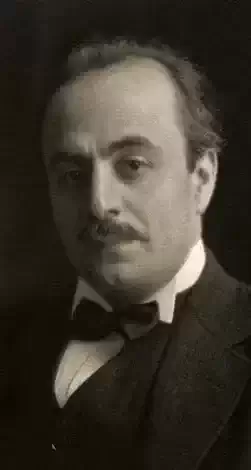
Khalil Gibran
Vision X
There in the middle of the field, by the side of a crystalline stream, I saw a bird-cage
whose rods and hinges were fashioned by an expert's hands. In one corner lay a dead
bird, and in another were two basins -- one empty of water and the other of seeds. I
stood there reverently, as if the lifeless bird and the murmur of the water were worthy
of deep silence and respect -- something worth of examination and meditation by the
heard and conscience.
As I engrossed myself in view and thought, I found that the poor creature had died of
thirst beside a stream of water, and of hunger in the midst of a rich field, cradle of life;
like a rich man locked inside his iron safe, perishing from hunger amid heaps of gold.
Before my eyes I saw the cage turned suddenly into a human skeleton, and the dead
bird into a man's heart which was bleeding from a deep wound that looked like the lips
of a sorrowing woman. A voice came from that wound saying, "I am the human heart,
prisoner of substance and victim of earthly laws.
"In God's field of Beauty, at the edge of the stream of life, I was imprisoned in the cage
of laws made by man.
"In the center of beautiful Creation I died neglected because I was kept from enjoying
the freedom of God's bounty.
"Everything of beauty that awakens my love and desire is a disgrace, according to
man's conceptions; everything of goodness that I crave is but naught, according to his
judgment.
"I am the lost human heart, imprisoned in the foul dungeon of man's dictates, tied with
chains of earthly authority, dead and forgotten by laughing humanity whose tongue is
tied and whose eyes are empty of visible tears."
All these words I heard, and I saw them emerging with a stream of ever thinning blood
from that wounded heart.
More was said, but my misted eyes and crying should prevented further sight or
hearing.
366

Claude Mckay
Alfonso, Dressing to Wait at Table
Alfonso is a handsome bronze-hued lad
Of subtly-changing and surprising parts;
His moods are storms that frighten and make glad,
His eyes were made to capture women's hearts.
Down in the glory-hole Alfonso sings
An olden song of wine and clinking glasses
And riotous rakes; magnificently flings
Gay kisses to imaginary lasses.
Alfonso's voice of mellow music thrills
Our swaying forms and steals our hearts with joy;
And when he soars, his fine falsetto trills
Are rarest notes of gold without alloy.
But, O Alfonso! wherefore do you sing
Dream-songs of carefree men and ancient places?
Soon we shall be beset by clamouring
Of hungry and importunate palefaces.
366

James Whitcomb Riley
The Hoosier Folk-Child
The Hoosier Folk-Child--all unsung--
Unlettered all of mind and tongue;
Unmastered, unmolested--made
Most wholly frank and unafraid:
Untaught of any school--unvexed
Of law or creed--all unperplexed--
Unsermoned, aye, and undefiled,
An all imperfect-perfect child--
A type which (Heaven forgive us!) you
And I do tardy honor to,
And so, profane the sanctities
Of our most sacred memories.
Who, growing thus from boy to man,
That dares not be American?
Go, Pride, with prudent underbuzz--
Go _whistle_! as the Folk-Child does.
The Hoosier Folk-Child's world is not
Much wider than the stable-lot
Between the house and highway fence
That bounds the home his father rents.
His playmates mostly are the ducks
And chickens, and the boy that 'shucks
Corn by the shock,' and talks of town,
And whether eggs are 'up' or 'down,'
And prophesies in boastful tone
Of 'owning horses of his own,'
And 'being his own man,' and 'when
He gets to be, what he'll do then.'--
Takes out his jack-knife dreamily
And makes the Folk-Child two or three
Crude corn-stalk figures,--a wee span
Of horses and a little man.
The Hoosier Folk-Child's eyes are wise
And wide and round as Brownies' eyes:
The smile they wear is ever blent
With all-expectant wonderment,--
On homeliest things they bend a look
As rapt as o'er a picture-book,
And seem to ask, whate'er befall,
The happy reason of it all:--
Why grass is all so glad a green,
And leaves--and what their lispings mean;--
Why buds grow on the boughs, and why
They burst in blossom by and by--
As though the orchard in the breeze
Had shook and popped its _popcorn-trees_,
To lure and whet, as well they might,
Some seven-league giant's appetite!
The Hoosier Folk-Child's chubby face
Has scant refinement, caste or grace,--
From crown to chin, and cheek to cheek,
It bears the grimy water-streak
Of rinsings such as some long rain
Might drool across the window-pane
Wherethrough he peers, with troubled frown,
As some lorn team drives by for town.
His brow is elfed with wispish hair,
With tangles in it here and there,
As though the warlocks snarled it so
At midmirk when the moon sagged low,
And boughs did toss and skreek and shake,
And children moaned themselves awake,
With fingers clutched, and starting sight
Blind as the blackness of the night!
The Hoosier Folk-Child!--Rich is he
In all the wealth of poverty!
He owns nor title nor estate,
Nor speech but half articulate,--
He owns nor princely robe nor crown;--
Yet, draped in patched and faded brown,
He owns the bird-songs of the hills--
The laughter of the April rills;
And his are all the diamonds set.
In Morning's dewy coronet,--
And his the Dusk's first minted stars
That twinkle through the pasture-bars,
And litter all the skies at night
With glittering scraps of silver light;--
The rainbow's bar, from rim to rim,
In beaten gold, belongs to him.
366

Emily Dickinson
You're right—
You're right—"the way is narrow"—
And "difficult the Gate"—
And "few there be"—Correct again—
That "enter in—thereat"—
'Tis Costly—So are purples!
'Tis just the price of Breath—
With but the "Discount" of the Grave—
Termed by the Brokers—"Death"!
And after that—there's Heaven—
The Good Man's—"Dividend"—
And Bad Men—"go to Jail"—
I guess—
363

Carl Sandburg
Clark Street Bridge
Dust of the feet
And dust of the wheels,
Wagons and people going,
All day feet and wheels.
Now. . .
. . Only stars and mist
A lonely policeman,
Two cabaret dancers,
Stars and mist again,
No more feet or wheels,
No more dust and wagons.
Voices of dollars
And drops of blood
. . . . .
Voices of broken hearts,
. . Voices singing, singing,
. . Silver voices, singing,
Softer than the stars,
Softer than the mist.
359

Robert Browning
Popularity
I.
Stand still, true poet that you are!
I know you; let me try and draw you.
Some night you'll fail us: when afar
You rise, remember one man saw you,
Knew you, and named a star!
II.
My star, God's glow-worm! Why extend
That loving hand of his which leads you
Yet locks you safe from end to end
Of this dark world, unless he needs you,
just saves your light to spend?
III.
His clenched hand shall unclose at last,
I know, and let out all the beauty:
My poet holds the future fast,
Accepts the coming ages' duty,
Their present for this past.
IV.
That day, the earth's feast-master's brow
Shall clear, to God the chalice raising;
``Others give best at first, but thou
``Forever set'st our table praising,
``Keep'st the good wine till now!''
V.
Meantime, I'll draw you as you stand,
With few or none to watch and wonder:
I'll say---a fisher, on the sand
By Tyre the old, with ocean-plunder,
A netful, brought to land.
VI.
Who has not heard how Tyrian shells
Enclosed the blue, that dye of dyes
Whereof one drop worked miracles,
And coloured like Astarte's<*> eyes
Raw silk the merchant sells?
VII.
And each bystander of them all
Could criticize, and quote tradition
How depths of blue sublimed some pall
---To get which, pricked a king's ambition
Worth sceptre, crown and ball.
VIII.
Yet there's the dye, in that rough mesh,
The sea has only just o'erwhispered!
Live whelks, each lip's beard dripping fresh,
As if they still the water's lisp heard
Through foam the rock-weeds thresh.
IX.
Enough to furnish Solomon
Such hangings for his cedar-house,
That, when gold-robed he took the throne
In that abyss of blue, the Spouse
Might swear his presence shone
X.
Most like the centre-spike of gold
Which burns deep in the blue-bell's womb,
What time, with ardours manifold,
The bee goes singing to her groom,
Drunken and overbold.
XI.
Mere conchs! not fit for warp or woof!
Till cunning come to pound and squeeze
And clarify,---refine to proof
The liquor filtered by degrees,
While the world stands aloof.
XII.
And there's the extract, flasked and fine,
And priced and saleable at last!
And Hobbs, Nobbs, Stokes and Nokes combine
To paint the future from the past,
Put blue into their line.
XIII.
Hobbs hints blue,---Straight he turtle eats:
Nobbs prints blue,---claret crowns his cup:
Nokes outdares Stokes in azure feats,---
Both gorge. Who fished the murex<*> up?
What porridge had John Keats?
* The Syrian Venus.
* Molluscs from which the famous Tyrian
* purple dye was obtained.
360
Emily Dickinson
It would have starved a Gnat
It would have starved a Gnat-
To live so small as I-
And yet I was a living Child-
With Food's necessity
Upon me-like a Claw-
I could no more remove
Than I could coax a Leech away-
Or make a Dragon-move-
Not like the Gnat-had I-
The privilege to fly
And seek a Dinner for myself-
How mightier He-than I-
Nor like Himself-the Art
Upon the Window Pane
To gad my little Being out-
And not begin-again-
358

William Butler Yeats
The Choice
The intellect of man is forced to choose
perfection of the life, or of the work,
And if it take the second must refuse
A heavenly mansion, raging in the dark.
When all that story's finished, what's the news?
In luck or out the toil has left its mark:
That old perplexity an empty purse,
Or the day's vanity, the night's remorse.
perfection of the life, or of the work,
And if it take the second must refuse
A heavenly mansion, raging in the dark.
When all that story's finished, what's the news?
In luck or out the toil has left its mark:
That old perplexity an empty purse,
Or the day's vanity, the night's remorse.
358

Ogden Nash
Introspective Reflection
I would live all my life in nonchalance and insouciance
Were it not for making a living, which is rather a nouciance.
Were it not for making a living, which is rather a nouciance.
356
Carl Sandburg
It Is Much
Women of night life amid the lights
Where the line of your full, round throats
Matches in gleam the glint of your eyes
And the ring of your heart-deep laughter:
It is much to be warm and sure of to-morrow.
Women of night life along the shadows,
Lean at your throats and skulking the walls,
Gaunt as a bitch worn to the bone,
Under the paint of your smiling faces:
It is much to be warm and sure of to-morrow.
354

Edward Lear
The Two Old Bachelors
Two old Bachelors were living in one house;
One caught a Muffin, the other caught a Mouse.
Said he who caught the Muffin to him who caught the Mouse,-'
This happens just in time! For we've nothing in the house,
'Save a tiny slice of lemon nd a teaspoonful of honey,
'And what to do for dinner -- since we haven't any money?
'And what can we expect if we haven't any dinner,
'But to loose our teeth and eyelashes and keep on growing thinner?'
Said he who caught the Mouse to him who caught the Muffin,-'
We might cook this little Mouse, if we had only some Stuffin'!
'If we had but Sage and
Onion we could do extremely well,
'But how to get that Stuffin' it is difficult to tell'--
Those two old Bachelors ran quickly to the town
And asked for Sage and Onions as they wandered up and down;
They borrowed two large Onions, but no Sage was to be found
In the Shops, or in the Market, or in all the Gardens round.
But some one said, -- 'A hill there is, a little to the north,
'And to its purpledicular top a narrow way leads forth;-'
And there among the rugged rocks abides an ancient Sage,-'
An earnest Man, who reads all day a most perplexing page.
'Climb up, and seize him by the toes! -- all studious as he sits,-'
And pull him down, -- and chop him into endless little bits!
'Then mix him with your Onion, (cut up likewise into Scraps,)-'
When your Stuffin' will be ready -- and very good: perhaps.'
Those two old Bachelors without loss of time
The nearly purpledicular crags at once began to climb;
And at the top, among the rocks, all seated in a nook,
They saw that Sage, a reading of a most enormous book.
'You earnest Sage!' aloud they cried, 'your book you've read enough in!-'
We wish to chop you into bits to mix you into Stuffin'!'--
But that old Sage looked calmly up, and with his awful book,
At those two Bachelors' bald heads a certain aim he took;-and
over crag and precipice they rolled promiscuous down,--
At once they rolled, and never stopped in lane or field or town,--
And when they reached their house, they found (besides their want
of Stuffin',)
The Mouse had fled; -- and, previously, had eaten up the Muffin.
They left their home in silence by the once convivial door.
And from that hour those Bachelors were never heard of more.
353
James Whitcomb Riley
A Canary At The Farm
Folks has be'n to town, and Sahry
Fetched 'er home a pet canary--,
And of all the blame', contrary,
Aggervatin' things alive!
I love music-- that I love it
When it's free-- and plenty of it--;
But I kindo' git above it,
At a dollar-eighty-five!
Reason's plain as I'm a-sayin'--,
Jes' the idy, now, o' layin'
Out yer money, and a-payin'
Fer a willer-cage and bird,
When the medder-larks is wingin'
Round you, and the woods is ringin'
With the beautifullest singin'
That a mortal ever heard!
Sahry's sot, tho'--. So I tell her
He's a purty little feller,
With his wings o' creamy-yeller,
And his eyes keen as a cat;
And the twitter o' the critter
'Pears to absolutely glitter!
Guess I'll haf to go and git her
A high-priceter cage 'n that!
353
James Whitcomb Riley
Ike Walton's Prayer
I crave, dear Lord,
No boundless hoard
Of gold and gear,
Nor jewels fine,
Nor lands, nor kine,
Nor treasure-heaps of anything.-
Let but a little hut be mine
Where at the hearthstore I may hear
The cricket sing,
And have the shine
Of one glad woman's eyes to make,
For my poor sake,
Our simple home a place divine;-
Just the wee cot-the cricket's chirr-
Love, and the smiling face of her.
I pray not for
Great riches, nor
For vast estates, and castle-halls,-
Give me to hear the bare footfalls
Of children o’er
An oaken floor,
New-risen with sunshine, or bespread
With but the tiny coverlet
And pillow for the baby’s head;
And pray Thou, may
The door stand open and the day
Send ever in a gentle breeze,
With fragrance from the locust-trees,
And drowsy moan of doves, and blur
Of robin-chirps, and drove of bees,
With afterhushes of the stir
Of intermingling sounds, and then
The good-wife and the smile of her
Filling the silences again-
The cricket’s call,
And the wee cot,
Dear Lord of all,
Deny me not!
I pray not that
Men tremble at
My power of place
And lordly sway, -
I only pray for simple grace
To look my neighbor in the face
Full honestly from day to day-
Yield me this horny palm to hold,
And I’ll not pray
For gold;-
The tanned face, garlanded with mirth,
It hath the kingliest smile on earth
The swart brow, diamonded with sweat,
Hath never need of coronet.
And so I reach,
Dear Lord, to Thee,
And do beseech
Thou givest me
The wee cot, and the cricket’s chirr,
Love, and the glad sweet face of her.
353
Carl Sandburg
The Right To Grief
To Certain Poets About to Die
Take your fill of intimate remorse, perfumed sorrow,
Over the dead child of a millionaire,
And the pity of Death refusing any check on the bank
Which the millionaire might order his secretary to
scratch off
And get cashed.
Very well,
You for your grief and I for mine.
Let me have a sorrow my own if I want to.
I shall cry over the dead child of a stockyards hunky.
His job is sweeping blood off the floor.
He gets a dollar seventy cents a day when he works
And it's many tubs of blood he shoves out with a broom
day by day.
Now his three year old daughter
Is in a white coffin that cost him a week's wages.
Every Saturday night he will pay the undertaker fifty
cents till the debt is wiped out.
The hunky and his wife and the kids
Cry over the pinched face almost at peace in the white box.
They remember it was scrawny and ran up high doctor bills.
They are glad it is gone for the rest of the family now
will have more to eat and wear.
Yet before the majesty of Death they cry around the coffin
And wipe their eyes with red bandanas and sob when
the priest says, "God have mercy on us all."
I have a right to feel my throat choke about this.
You take your grief and I mine--see?
To-morrow there is no funeral and the hunky goes back
to his job sweeping blood off the floor at a dollar
seventy cents a day.
All he does all day long is keep on shoving hog blood
ahead of him with a broom.
352
Carl Sandburg
Ice Handler
I know an ice handler who wears a flannel shirt with pearl buttons the size of a dollar,
And he lugs a hundred-pound hunk into a saloon ice-box, helps himself to cold ham
and rye bread,
Tells the bartender it’s hotter than yesterday and will be hotter yet to-morrow, by
Jesus,
And is on his way with his head in the air and a hard pair of fists.
He spends a dollar or so every Saturday night on a two hundred pound woman who
washes dishes in the Hotel Morrison.
He remembers when the union was organized he broke the noses of two scabs and
loosened the nuts so the wheels came off six different wagons one morning, and he
came around and watched the ice melt in the street.
All he was sorry for was one of the scabs bit him on the knuckles of the right hand so
they bled when he came around to the saloon to tell the boys about it.
350
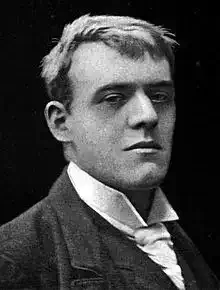
Hilaire Belloc
On Vital Statistics
Ill fares the land to hast'ning ills a prey (1)
Where wealth accumulates and men decay.'
But how much more unfortunate are those
Where wealth declines and population grows!
(1)This line is execrable; and I note it.
I quote it as the faulty poet wrote it.
Where wealth accumulates and men decay.'
But how much more unfortunate are those
Where wealth declines and population grows!
(1)This line is execrable; and I note it.
I quote it as the faulty poet wrote it.
351

Walter de la Mare
Off the Ground
Three jolly Farmers
Once bet a pound
Each dance the others would
Off the ground.
Out of their coats
They slipped right soon,
And neat and nicesome
Put each his shoon.
One--Two--Three!
And away they go,
Not too fast,
And not too slow;
Out from the elm-tree's
Noonday shadow,
Into the sun
And across the meadow.
Past the schoolroom,
With knees well bent,
Fingers a flicking,
They dancing went.
Up sides and over,
And round and round,
They crossed click-clacking
The Parish bound;
By Tupman's meadow
They did their mile,
Tee-to-tum
On a three-barred stile.
Then straight through Whipham,
Downhill to Week,
Footing it lightsome,
But not too quick,
Up fields to Watchet
And on through Wye,
Till seven fine churches
They'd seen slip by --
Seven fine churches,
And five old mills,
Farms in the valley,
And sheep on the hills;
Old Man's Acre
And Dead Man's Pool
All left behind,
As they danced through Wool.
And Wool gone by,
Like tops that seem
To spin in sleep
They danced in dream:
Withy -- Wellover --
Wassop -- Wo --
Like an old clock
Their heels did go.
A league and a league
And a league they went,
And not one weary,
And not one spent.
And log, and behold!
Past Willow-cum-Leigh
Stretched with its waters
The great green sea.
Says Farmer Bates,
'I puffs and I blows,
What's under the water,
Why, no man knows !'
Says Farmer Giles,
'My mind comes weak,
And a good man drownded
Is far to seek. '
But Farmer Turvey,
On twirling toes,
Up's with his gaiters,
And in he goes:
Down where the mermaids
Pluck and play
On their twangling harps
In a sea-green day;
Down where the mermaids
Finned and fair,
Sleek with their combs
Their yellow hair. . . .
Bates and Giles --
On the shingle sat,
Gazing at Turvey's
Floating hat.
But never a ripple
Nor bubble told
Where he was supping
Off plates of gold.
Never an echo
Rilled through the sea
Of the feasting and dancing
And minstrelsy.
They called -- called -- called;
Came no reply:
Nought but the ripples'
Sandy sigh.
Then glum and silent
They sat instead,
Vacantly brooding
On home and bed,
Till both together
Stood up and said: --
'Us knows not, dreams not,
Where you be,
Turvey, unless
In the deep blue sea;
But axcusing silver --
And it comes most willing --
Here's us two paying our forty shilling;
For it's sartin sure, Turvey,
Safe and sound,
You danced us a square, Turvey,
Off the ground.'
350

Robert Louis Stevenson
Still I Love To Rhyme
STILL I love to rhyme, and still more, rhyming, to wander
Far from the commoner way;
Old-time trills and falls by the brook-side still do I ponder,
Dreaming to-morrow to-day.
Come here, come, revive me, Sun-God, teach me, Apollo,
Measures descanted before;
Since I ancient verses, I emulous follow,
Prints in the marbles of yore.
Still strange, strange, they sound in old-young raiment invested,
Songs for the brain to forget -
Young song-birds elate to grave old temples benested
Piping and chirruping yet.
Thoughts? No thought has yet unskilled attempted to flutter
Trammelled so vilely in verse;
He who writes but aims at fame and his bread and his butter,
Won with a groan and a curse.
344

Henry Van Dyke
The Proud Lady
When Stiivoren town was in its prime
And queened the Zuyder Zee,
Its ships went out to every clime
With costly merchantry.
A lady dwelt in that rich town,
The fairest in all the land;
She walked abroad in a velvet gown,
With many rings on her hand.
Her hair was bright as the beaten gold,
Her lips as coral red,
Her roving eyes were blue and bold,
And her heart with pride was fed.
For she was proud of her father's ships,
As she watched them gayly pass;
And pride looked out of her eyes and lips
When she saw herself in the glass.
"Now come," she said to the captains ten,
Who were ready to put to sea,
"Ye are all my men and my father's men,
And what will ye do for me?"
"Go north and south, go east and west,
And get me gifts," she said.
"And he who bringeth me home the best,
With that man will I wed."
So they all fared forth, and sought with care
In many a famous mart,
For satins and silks and jewels rare,
To win that lady's heart.
She looked at them all with never a thought,
And careless put them by;
"I am not fain of the things ye brought,
Enough of these have I."
The last that came was the head of the fleet,
His name was Jan Borel;
He bent his knee at the lady's feet,--
In truth he loved her well.
"I've brought thee home the best i' the world,
A shipful of Danzig corn!"
She stared at him long; her red lips curled,
Her blue eyes filled with scorn.
"Now out on thee, thou feckless kerl,
A loon thou art," she said.
"Am I a starving beggar girl?
Shall I ever lack for bread?"
"Go empty all thy sacks of grain
Into the nearest sea,
And never show thy face again
To make a mock of me."
Then Jan Borel, he hoisted sail,
And out to sea he bore;
He passed the Helder in a gale
And came again no more.
But the grains of corn went drifting down
Like devil-scattered seed,
To sow the harbor of the town
With a wicked growth of weed.
The roots were thick and the silt and sand
Were gathered day by day,
Till not a furlong out from land
A shoal had barred the way.
Then Stavoren town saw evil years,
No ships could out or in,
The boats lay rotting at the piers,
And the mouldy grain in the bin.
The grass-grown streets were all forlorn,
The town in ruin stood,
The lady's velvet gown was torn,
Her rings were sold for food.
Her father had perished long ago,
But the lady held her pride,
She walked with a scornful step and slow,
Till at last in her rags she died.
Yet still on the crumbling piers of the town,
When the midnight moon shines free,
woman walks in a velvet gown
And scatters corn in the sea.
340

Robert W. Service
The Song Of The Wage-Slave
When the long, long day is over, and the Big Boss gives me my pay,
I hope that it won't be hell-fire, as some of the parsons say.
And I hope that it won't be heaven, with some of the parsons I've met --
All I want is just quiet, just to rest and forget.
Look at my face, toil-furrowed; look at my calloused hands;
Master, I've done Thy bidding, wrought in Thy many lands --
Wrought for the little masters, big-bellied they be, and rich;
I've done their desire for a daily hire, and I die like a dog in a ditch.
I have used the strength Thou hast given, Thou knowest I did not shirk;
Threescore years of labor -- Thine be the long day's work.
And now, Big Master, I'm broken and bent and twisted and scarred,
But I've held my job, and Thou knowest, and Thou will not judge me hard.
Thou knowest my sins are many, and often I've played the fool --
Whiskey and cards and women, they made me the devil's tool.
I was just like a child with money; I flung it away with a curse,
Feasting a fawning parasite, or glutting a harlot's purse;
Then back to the woods repentant, back to the mill or the mine,
I, the worker of workers, everything in my line.
Everything hard but headwork (I'd no more brains than a kid),
A brute with brute strength to labor, doing as I was bid;
Living in camps with men-folk, a lonely and loveless life;
Never knew kiss of sweetheart, never caress of wife.
A brute with brute strength to labor, and they were so far above --
Yet I'd gladly have gone to the gallows for one little look of Love.
I, with the strength of two men, savage and shy and wild --
Yet how I'd ha' treasured a woman, and the sweet, warm kiss of a child!
Well, 'tis Thy world, and Thou knowest. I blaspheme and my ways be rude;
But I've lived my life as I found it, and I've done my best to be good;
I, the primitive toiler, half naked and grimed to the eyes,
Sweating it deep in their ditches, swining it stark in their styes;
Hurling down forests before me, spanning tumultuous streams;
Down in the ditch building o'er me palaces fairer than dreams;
Boring the rock to the ore-bed, driving the road through the fen,
Resolute, dumb, uncomplaining, a man in a world of men.
Master, I've filled my contract, wrought in Thy many lands;
Not by my sins wilt Thou judge me, but by the work of my hands.
Master, I've done Thy bidding, and the light is low in the west,
And the long, long shift is over . . . Master, I've earned it -- Rest.
341
Emily Dickinson
It dropped so low in my regard
It dropped so low in my regard
I heard it hit the ground,
And go to pieces on the stones
At bottom of my mind;
Yet blamed the fate that fractured, less
Than I reviled myself
For entertaining plated wares
Upon my silver shelf.
I heard it hit the ground,
And go to pieces on the stones
At bottom of my mind;
Yet blamed the fate that fractured, less
Than I reviled myself
For entertaining plated wares
Upon my silver shelf.
335

William Shakespeare
Sonnet 4: Unthrifty loveliness, why dost thou spend
Unthrifty loveliness, why dost thou spend
Upon thy self thy beauty's legacy?
Nature's bequest gives nothing, but doth lend,
And being frank she lends to those are free:
Then, beauteous niggard, why dost thou abuse
The bounteous largess given thee to give?
Profitless usurer, why dost thou use
So great a sum of sums, yet canst not live?
For having traffic with thy self alone,
Thou of thy self thy sweet self dost deceive:
Then how when nature calls thee to be gone,
What acceptable audit canst thou leave?
Thy unused beauty must be tombed with thee,
Which, used, lives th' executor to be.
335

John Greenleaf Whittier
At Washington
WITH a cold and wintry noon-light.
On its roofs and steeples shed,
Shadows weaving with t e sunlight
From the gray sky overhead,
Broadly, vaguely, all around me, lies the half-built town outspread.
Through this broad street, restless ever,
Ebbs and flows a human tide,
Wave on wave a living river;
Wealth and fashion side by side;
Toiler, idler, slave and master, in the same quick current glide.
Underneath yon dome, whose coping
Springs above them, vast and tall,
Grave men in the dust are groping.
For the largess, base and small,
Which the hand of Power is scattering, crumbs which from its table fall.
Base of heart! They vilely barter
Honor's wealth for party's place;
Step by step on Freedom's charter
Leaving footprints of disgrace;
For to-day's poor pittance turning from the great hope of their race.
Yet, where festal lamps are throwing
Glory round the dancer's hair,
Gold-tressed, like an angel's, flowing
Backward on the sunset air;
And the low quick pulse of music beats its measure sweet and rare:
There to-night shall woman's glances,
Star-like, welcome give to them;
Fawning fools with shy advances
Seek to touch their garments' hem,
With the tongue of flattery glozing deeds which God and Truth condemn.
From this glittering lie my vision
Takes a broader, sadder range,
Full before me have arisen
Other pictures dark and strange;
From the parlor to the prison must the scene and witness change.
Hark! the heavy gate is swinging
On its hinges, harsh and slow;
One pale prison lamp is flinging
On a fearful group below
Such a light as leaves to terror whatsoe'er it does not show.
Pitying God! Is that a woman
On whose wrist the shackles clash?
Is that shriek she utters human,
Underneath the stinging lash?
Are they men whose eyes of madness from that sad procession flash?
Still the dance goes gayly onward!
What is it to Wealth and Pride
That without the stars are looking
On a scene which earth should hide?
That the slave-ship lies in waiting, rocking on Potomac's tide!
Vainly to that mean Ambition
Which, upon a rival's fall,
Winds above its old condition,
With a reptile's slimy crawl,
Shall the pleading voice of sorrow, shall the slave in anguish call.
Vainly to the child of Fashion,
Giving to ideal woe
Graceful luxury of compassion,
Shall the stricken mourner go;
Hateful seems the earnest sorrow, beautiful the hollow show!
Nay, my words are all too sweeping:
In this crowded human mart,
Feeling is not dead, but sleeping;
Man's strong will and woman's heart,
In the coming strife for Freedom, yet shall bear their generous part.
And from yonder sunny valleys,
Southward in the distance lost,
Freedom yet shall summon allies
Worthier than the North can boast,
With the Evil by their hearth-stones grappling at severer cost.
Now, the soul alone is willing.
Faint the heart and weak the knee;
And as yet no lip is thrilling
With the mighty words, 'Be Free!'
Tarrieth long the land's Good Angel, but his advent is to be!
Meanwhile, turning from the revel
To the prison-cell my sight,
For intenser hate of evil,
For a keener sense of right,
Shaking off thy dust, I thank thee, City of the Slaves, to-night!
'To thy duty now and ever!
Dream no more of rest or stay:
Give to Freedom's great endeavor
All thou art and hast to-day:'
Thus, above the city's murmur, saith a Voice, or seems to say.
Ye with heart and vision gifted
To discern and love the right,
Whose worn faces have been lifted
To the slowly-growing light,
Where from Freedom's sunrise drifted slowly back the murk of night!
Ye who through long years of trial
Still have held your purpose fast,
While a lengthening shade the dial
From the westering sunshine cast,
And of hope each hour's denial seemed an echo of the last!
O my brothers! O my sisters!
Would to God that ye were near,
Gazing with me down the vistas
Of a sorrow strange and drear;
Would to God that ye were listeners to the Voice I seem to hear!
With the storm above us driving,
With the false earth mined below,
Who shall marvel if thus striving
We have counted friend as foe;
Unto one another giving in the darkness blow for blow.
Well it may be that our natures
Have grown sterner and more hard,
And the freshness of their features
Somewhat harsh and battle-scarred,
And their harmonies of feeling overtasked and rudely jarred.
Be it so. It should not swerve us
From a purpose true and brave;
Dearer Freedom's rugged service
Than the pastime of the slave;
Better is the storm above it than the quiet of the grave.
Let us then, uniting, bury
All our idle feuds in dust,
And to future conflicts carry
Mutual faith and common trust;
Always he who most forgiveth in his brother is most just.
From the eternal shadow rounding
All our sun and starlight here,
Voices of our lost ones sounding
Bid us be of heart and cheer,
Through the silence, down the spaces, falling on the inward ear.
Know we not our dead are looking
Downward with a sad surprise,
All our strife of words rebuking
With their mild and loving eyes?
Shall we grieve the holy angels? Shall we cloud their blessed skies?
Let us draw their mantles o'er us,
Which have fallen in our way;
Let us do the work before us,
Cheerly, bravely, while we may,
Ere the long night-silence cometh, and with us it is not day!
334
John Greenleaf Whittier
Astraea
'Jove means to settle
Astraea in her seat again,
And let down his golden chain
An age of better metal.'
Ben Johnson 1615
O POET rare and old!
Thy words are prophecies;
Forward the age of gold,
The new Saturnian lies.
The universal prayer
And hope are not in vain;
Rise, brothers! and prepare
The way for Saturn's reign.
Perish shall all which takes
From labor's board and can;
Perish shall all which makes
A spaniel of the man!
Free from its bonds the mind,
The body from the rod;
Broken all chains that bind
The image of our God.
Just men no longer pine
Behind their prison-bars;
Through the rent dungeon shine
The free sun and the stars.
Earth own, at last, untrod
By sect, or caste, or clan,
The fatherhood of God,
The brotherhood of man!
Fraud fail, craft perish, forth
The money-changers driven,
And God's will done on earth,
As now in heaven;
334