
Money and Wealth

Robert Louis Stevenson
The Vagabond
Give to me the life I love,
Let the lave go by me,
Give the jolly heaven above
And the byway nigh me.
Bed in the bush with stars to see,
Bread I dip in the river -
There's the life for a man like me,
There's the life for ever.
Let the blow fall soon or late,
Let what will be o'er me;
Give the face of earth around
And the road before me.
Wealth I seek not, hope nor love,
Nor a friend to know me;
All I seek, the heaven above
And the road below me.
Or let autumn fall on me
Where afield I linger,
Silencing the bird on tree,
Biting the blue finger.
White as meal the frosty field -
Warm the fireside haven -
Not to autumn will I yield,
Not to winter even!
Let the blow fall soon or late,
Let what will be o'er me;
Give the face of earth around,
And the road before me.
Wealth I ask not, hope nor love,
Nor a friend to know me;
All I ask, the heaven above
And the road below me.
400

Emily Dickinson
I had been hungry all the years-
I had been hungry all the years-
My noon had come, to dine-
I, trembling, drew the table near
And touched the curious wine.
'T was this on tables I had seen
When turning, hungry, lone,
I looked in windows, for the wealth
I could not hope to own.
I did not know the ample bread,
'T was so unlike the crumb
The birds and I had often shared
In Nature's dining-room.
The plenty hurt me, 't was so new,--
Myself felt ill and odd,
As berry of a mountain bush
Transplanted to the road.
Nor was I hungry; so I found
That hunger was a way
Of persons outside windows,
The entering takes away.
400

Lord Byron
Thoughts Suggested By A College Examination
High in the midst, surrounded by his peers,
MAGNUS his ample front sublime up rears:
Placed on his chair of state, he seems a god.
While Sophs and Freshmen tremble at his nod.
As all around sit wrapt in speechless gloom,
His voice in thunder shakes the sounding dome;
Denouncing dire reproach to luckless fools,
Unskill'd to plod in mathematic rules.
Happy the youth in Euclid's axiorn tried,
Though littie versed in any art beside;
Who, scarcely skill'd an English line tc pen,
Scans Attic metres with a critic's ken.
What, though he knows not how his fathers bled,
When civil discord piled the fields with dead,
When Edward bade his conquering bands advance
Or Henry trampled on the crest of France.
Though marvelling at the name of Magna Charta,
Yet well he recollects the laws of Sparta;
Can tell what edicts sage Lycurgus made,
While Blackstone's on the shelf neglected laid;
Of Grecian dramas vaunts the deathless fame,
Of Avon's bard remembering scarce the name.
Such is the youth whose scientific pate
Classhonours,
medals, fellowships, await
Or even, perhaps, the declamation prize
If to such glorious height he lifts his eyes.
But lo! no common orator can hope
The envied silver cup within his scope.
Not that our heads much eloquence require,
Th' ATHENIAN'S glowing style, or Tully's fire.
A manner clear or warm is useless, since
We do not try by speaking to convince.
Be other orators of pleasing proud,
We
speak to please ourselves, not move the crowd:
Our gravity prefers the muttering tone,
A proper mixture of the squeak and groan:
No borrow'd grace of action must he seen;
The slightest motion would displease the Dean;
Whilst everv staring graduate would prate
Against what he could never imitate.
The man who hopes t' obtain the promised cup
Must in one posture stand, and ne'er look up;
Nor stop, but rattle over every word No
matter what, so it can not be heard.
Thus let him hurry on, nor think to rest:
Who speaks the fastest's sure to speak the best;
Who utters most within the shortest space
May safely hope to win the wordy race.
The sons of science these, who, thus repaid,
Linger in ease in Granta's sluggish shade;
Where on Cam's sedgy banks supine they lie,
Unknown, unhonour'd live, unweptfor
die:
Dull as the pictures which adorn their halls,
They think all learning fix'd within their walls:
In manners rude, in foolish forms precise,
All modern arts affecting to despise;
Yet prizing Bentley's, Brunck's, or Porson's note,
More than the verse on which the critic wrote:
Vain as their honours, heavy as their ale,
Sad as their wit, and tedious as their tale;
To friendship dead, though not untaught to feel
When Self and Church demand a bigot zeal.
With eager haste they court the lord of power,
Whether 'tis Pitt or Petty rules the hour;
To him, with suppliant smiles, they bend the head,
While distant mitres to their eyes are spread.
But should a storm o'erwhelm him with disgrace,
They'd fly to seek the next who fill'd his place.
Such are the men who learning's treasures guard!
Such is their practice, such is their reward!
This much, at least, we may presume to say The
premium can't exceed the price they pay.
400

Carl Sandburg
A Father To His Son
A father sees his son nearing manhood.
What shall he tell that son?
'Life is hard; be steel; be a rock.'
And this might stand him for the storms
and serve him for humdrum monotony
and guide him among sudden betrayals
and tighten him for slack moments.
'Life is a soft loam; be gentle; go easy.'
And this too might serve him.
Brutes have been gentled where lashes failed.
The growth of a frail flower in a path up
has sometimes shattered and split a rock.
A tough will counts. So does desire.
So does a rich soft wanting.
Without rich wanting nothing arrives.
Tell him too much money has killed men
and left them dead years before burial:
the quest of lucre beyond a few easy needs
has twisted good enough men
sometimes into dry thwarted worms.
Tell him time as a stuff can be wasted.
Tell him to be a fool every so often
and to have no shame over having been a fool
yet learning something out of every folly
hoping to repeat none of the cheap follies
thus arriving at intimate understanding
of a world numbering many fools.
Tell him to be alone often and get at himself
and above all tell himself no lies about himself
whatever the white lies and protective fronts
he may use against other people.
Tell him solitude is creative if he is strong
and the final decisions are made in silent rooms.
Tell him to be different from other people
if it comes natural and easy being different.
Let him have lazy days seeking his deeper motives.
Let him seek deep for where he is born natural.
Then he may understand Shakespeare
and the Wright brothers, Pasteur, Pavlov,
Michael Faraday and free imaginations
Bringing changes into a world resenting change.
He will be lonely enough
to have time for the work
he knows as his own.
401

William Butler Yeats
To A Wealthy Man Who Promised A Second Subscription To The Dublin
You gave, but will not give again
Until enough of paudeen's pence
By Biddy's halfpennies have lain
To be 'some sort of evidence',
Before you'll put your guineas down,
That things it were a pride to give
Are what the blind and ignorant town
Imagines best to make it thrive.
What cared Duke Ercole, that bid
His mummers to the market-place,
What th' onion-sellers thought or did
So that his plautus set the pace
For the Italian comedies?
And Guidobaldo, when he made
That grammar school of courtesies
Where wit and beauty learned their trade
Upon Urbino's windy hill,
Had sent no runners to and fro
That he might learn the shepherds' will
And when they drove out Cosimo,
Indifferent how the rancour ran,
He gave the hours they had set free
To Michelozzo's latest plan
For the San Marco Library,
Whence turbulent Italy should draw
Delight in Art who
Se end is peace,
In logic and in natural law
By sucking at the dugs of Greece.
Your open hand but shows our loss,
For he knew better how to live.
Let paudeens play at pitch and toss,
Look up in the sun's eye and give
What the exultant heart calls good
That some new day may breed the best
Because you gave, not what they would,
But the right twigs for an eagle's nest!
399

Johann Wolfgang von Goethe
Ballad Of The Banished And Returning Count
OH, enter old minstrel, thou time-honour'd one!
We children are here in the hall all alone,
The portals we straightway will bar.
Our mother is praying, our father is gone
To the forest, on wolves to make war.
Oh sing us a ballad, the tale then repeat,
'Till brother and I learn it right;
We long have been hoping a minstrel to meet,
For children hear tales with delight.
"At midnight, when darkness its fearful veil weaves,
His lofty and stately old castle he leaves,
But first he has buried his wealth.
What figure is that in his arms one perceives,
As the Count quits the gateway by stealth?
O'er what is his mantle so hastily thrown?
What bears he along in his flight?
A daughter it is, and she gently sleeps on"--
The children they hear with delight.
"The morning soon glimmers. the world is so wide,
In valleys and forests a home is supplied,
The bard in each village is cheer'd.
Thus lives he and wanders, while years onward glide,
And longer still waxes his beard;
But the maiden so fair in his arms grows amain,
'Neath her star all-protecting and bright,
Secured in the mantle from wind and from rain--"
The children they hear with delight.
"And year upon year with swift footstep now steals,
The mantle it fades, many rents it reveals,
The maiden no more it can hold.
The father he sees her, what rapture he feels!
His joy cannot now be controll'd.
How worthy she seems of the race whence she springs,
How noble and fair to the sight!
What wealth to her dearly-loved father she brings!"--
The children they hear with delight.
"Then comes there a princely knight galloping by,
She stretches her hand out, as soon as he's nigh,
But alms he refuses to give.
He seizes her hand, with a smile in his eye:
'Thou art mine!' he exclaims, 'while I live!'
'When thou know'st,' cries the old man, 'the treasure that's
there,
A princess thou'lt make her of right;
Betroth'd be she now, on this spot green and fair--'"
The children they hear with delight.
"So she's bless'd by the priest on the hallowed place,
And she goes with a smiling but sorrowful face,
From her father she fain would not part.
The old man still wanders with ne'er-changing pace,
He covers with joy his sad heart.
So I think of my daughter, as years pass away,
And my grandchildren far from my sight;
I bless them by night, and I bless them by day"--
The children they hear with delight.
He blesses the children: a knocking they hear,
The father it is! They spring forward in fear,
The old man they cannot conceal-"
Thou beggar, wouldst lure, then, my children so dear?
Straight seize him, ye vassals of steel!
To the dungeon most deep, with the fool-hardy knave!"
The mother from far hears the fight;
She hastens with flatt'ring entreaty to crave--
The children they hear with delight.
The vassals they suffer the Bard to stand there,
And mother and children implore him to spare,
The proud prince would stifle his ire,
'Till driven to fury at hearing their prayer,
His smouldering anger takes fire:
"Thou pitiful race! Oh, thou beggarly crew!
Eclipsing my star, once so bright!
Ye'll bring me destruction, ye sorely shall rue!"
The children they hear with affright.
The old man still stands there with dignified mien,
The vassals of steel quake before him, I ween,
The Count's fury increases in power;
"My wedded existence a curse long has been,
And these are the fruits from that flower!
'Tis ever denied, and the saying is true,
That to wed with the base-born is right;
The beggar has borne me a beggarly crew,--"
The children they hear with affright.
"If the husband, the father, thus treats you with scorn,
If the holiest bonds by him rashly are torn,
Then come to your father--to me!
The beggar may gladden life's pathway forlorn,
Though aged and weak he may be.
This castle is mine! thou hast made it thy prey,
Thy people 'twas put me to flight;
The tokens I bear will confirm what I say"--
The children they hear with delight.
"The king who erst govern'd returneth again,
And restores to the Faithful the goods that were ta'en,
I'll unseal all my treasures the while;
The laws shall be gentle, and peaceful the reign"--
The old man thus cries with a smile-
"Take courage, my son! all hath turned out for good,
And each hath a star that is bright,
Those the princess hath borne thee are princely in blood,"--
The children thy hear with delight.
398

Walter de la Mare
Tartary
If I were Lord of Tartary,
Myself, and me alone,
My bed should be of ivory,
Of beaten gold my throne;
And in my court should peacocks flaunt,
And in my forests tigers haunt,
And in my pools great fishes slant
Their fins athwart the sun.
If I were Lord of Tartary,
Trumpeters every day
To all my meals should summon me,
And in my courtyards bray;
And in the evening lamps should shine,
Yellow as honey, red as wine,
While harp, and flute, and mandoline
Made music sweet and gay.
If I were Lord of Tartary,
I'd wear a robe of beads,
White, and gold, and green they'd be --
And small and thick as seeds;
And ere should wane the morning star,
I'd don my robe and scimitar.
And zebras seven should draw my car
Through Tartary's dark gleades.
Lord of the fruits of Tartary.
Her rivers silver-pale!
Lord of the hills of Tartary.
Glen, thicket, wood, and dale!
Her flashing stars, her scented breeze,
Her trembling lakes, like foamless seas,
Her bird-delighting citron-trees,
In every purple vale!
396
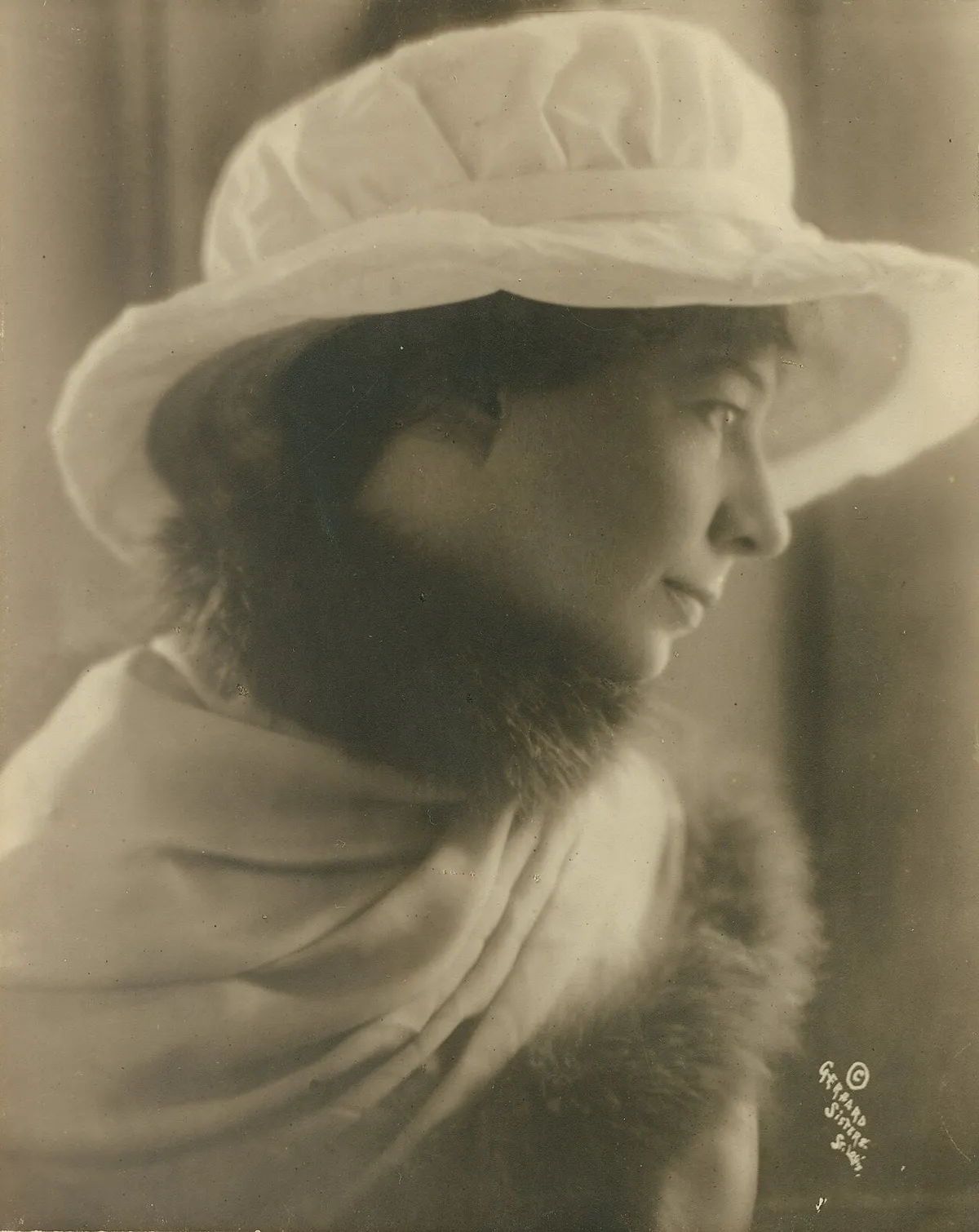
Sara Teasdale
The Treasure
When they see my songs
They will sigh and say,
"Poor soul, wistful soul,
Lonely night and day."
They will never know
All your love for me
Surer than the spring,
Stronger than the sea;
Hidden out of sight
Like a miser's gold
In forsaken fields
Where the wind is cold.
They will sigh and say,
"Poor soul, wistful soul,
Lonely night and day."
They will never know
All your love for me
Surer than the spring,
Stronger than the sea;
Hidden out of sight
Like a miser's gold
In forsaken fields
Where the wind is cold.
396

William Shakespeare
Sonnet 91: Some glory in their birth, some in their skill
Some glory in their birth, some in their skill,
Some in their wealth, some in their body's force,
Some in their garments though new-fangled ill,
Some in their hawks and hounds, some in their horse;
And every humour hath his adjunct pleasure,
Wherein it finds a joy above the rest,
But these particulars are not my measure;
All these I better in one general best.
Thy love is better than high birth to me,
Richer than wealth, prouder than garments' costs,
Of more delight than hawks and horses be;
And having thee, of all men's pride I boast—
Wretched in this alone, that thou mayst take,
All this away and me most wretched make.
391
William Shakespeare
Sonnet 52: So am I as the rich, whose blessed key
So am I as the rich, whose blessed key
Can bring him to his sweet up-locked treasure,
The which he will not every hour survey,
For blunting the fine point of seldom pleasure.
Therefore are feasts so solemn and so rare,
Since, seldom coming, in the long year set,
Like stones of worth they thinly placed are,
Or captain jewels in the carcanet.
So is the time that keeps you as my chest,
Or as the wardrobe which the robe doth hide,
To make some special instant special blest,
By new unfolding his imprison'd pride.
Blessed are you, whose worthiness gives scope,
Being had, to triumph, being lack'd, to hope.
387

Robert W. Service
The Ballad Of One-Eyed Mike
This is the tale that was told to me by the man with the crystal eye,
As I smoked my pipe in the camp-fire light, and the Glories swept the sky;
As the Northlights gleamed and curved and streamed, and the bottle of "hooch" was
dry.
A man once aimed that my life be shamed, and wrought me a deathly wrong;
I vowed one day I would well repay, but the heft of his hate was strong.
He thonged me East and he thonged me West; he harried me back and forth,
Till I fled in fright from his peerless spite to the bleak, bald-headed North.
And there I lay, and for many a day I hatched plan after plan,
For a golden haul of the wherewithal to crush and to kill my man;
And there I strove, and there I clove through the drift of icy streams;
And there I fought, and there I sought for the pay-streak of my dreams.
So twenty years, with their hopes and fears and smiles and tears and such,
Went by and left me long bereft of hope of the Midas touch;
About as fat as a chancel rat, and lo! despite my will,
In the weary fight I had clean lost sight of the man I sought to kill.
'Twas so far away, that evil day when I prayed to the Prince of Gloom
For the savage strength and the sullen length of life to work his doom.
Nor sign nor word had I seen or heard, and it happed so long ago;
My youth was gone and my memory wan, and I willed it even so.
It fell one night in the waning light by the Yukon's oily flow,
I smoked and sat as I marvelled at the sky's port-winey glow;
Till it paled away to an absinthe gray, and the river seemed to shrink,
All wobbly flakes and wriggling snakes and goblin eyes a-wink.
'Twas weird to see and it 'wildered me in a queer, hypnotic dream,
Till I saw a spot like an inky blot come floating down the stream;
It bobbed and swung; it sheered and hung; it romped round in a ring;
It seemed to play in a tricksome way; it sure was a merry thing.
In freakish flights strange oily lights came fluttering round its head,
Like butterflies of a monster size--then I knew it for the Dead.
Its face was rubbed and slicked and scrubbed as smooth as a shaven pate;
In the silver snakes that the water makes it gleamed like a dinner-plate.
It gurgled near, and clear and clear and large and large it grew;
It stood upright in a ring of light and it looked me through and through.
It weltered round with a woozy sound, and ere I could retreat,
With the witless roll of a sodden soul it wantoned to my feet.
And here I swear by this Cross I wear, I heard that "floater" say:
"I am the man from whom you ran, the man you sought to slay.
That you may note and gaze and gloat, and say `Revenge is sweet',
In the grit and grime of the river's slime I am rotting at your feet.
"The ill we rue we must e'en undo, though it rive us bone from bone;
So it came about that I sought you out, for I prayed I might atone.
I did you wrong, and for long and long I sought where you might live;
And now you're found, though I'm dead and drowned, I beg you to forgive."
So sad it seemed, and its cheek-bones gleamed, and its fingers flicked the shore;
And it lapped and lay in a weary way, and its hands met to implore;
That I gently said: "Poor, restless dead, I would never work you woe;
Though the wrong you rue you can ne'er undo, I forgave you long ago."
Then, wonder-wise, I rubbed my eyes and I woke from a horrid dream.
The moon rode high in the naked sky, and something bobbed in the stream.
It held my sight in a patch of light, and then it sheered from the shore;
It dipped and sank by a hollow bank, and I never saw it more.
This was the tale he told to me, that man so warped and gray,
Ere he slept and dreamed, and the camp-fire gleamed in his eye in a wolfish way--
That crystal eye that raked the sky in the weird Auroral ray.
387
Carl Sandburg
'Boes
I waited today for a freight train to pass.
Cattle cars with steers butting their horns against the
bars, went by.
And a half a dozen hoboes stood on bumpers between
cars.
Well, the cattle are respectable, I thought.
Every steer has its transportation paid for by the farmer
sending it to market,
While the hoboes are law-breakers in riding a railroad
train without a ticket.
It reminded me of ten days I spent in the Allegheny
County jail in Pittsburgh.
I got ten days even though I was a veteran of the
Spanish-American war.
Cooped in the same cell with me was an old man, a
bricklayer and a booze-fighter.
But it just happened he, too, was a veteran soldier, and
he had fought to preserve the Union and free the
niggers.
We were three in all, the other being a Lithuanian who
got drunk on pay day at the steel works and got to
fighting a policeman;
All the clothes he had was a shirt, pants and shoes-somebody
got his hat and coat and what money he
had left over when he got drunk.
383

Henry Van Dyke
The Glory of Ships
The glory of ships is an old, old song,
since the days when the sea-rovers ran
In their open boats through the roaring surf,
and the spread of the world began;
The glory of ships is a light on the sea,
and a star in the story of man.
When Homer sang of the galleys of Greece
that conquered the Trojan shore,
And Solomon lauded the barks of Tyre that
brought great wealth to his door,
'Twas little they knew, those ancient men,
what would come of the sail and the oar.
The Greek ships rescued the West from the East,
when they harried the Persians home;
And the Roman ships were the wings of strength
that bore up the empire, Rome;
And the ships of Spain found a wide new world,
far over the fields of foam.
Then the tribes of courage at last saw clear
that the ocean was not a bound,
But a broad highway, and a challenge to seek
for treasure as yet unfound;
So the fearless ships fared forth to the search,
in joy that the globe was round.
Their hulls were heightened, their sails spread out,
they grew with the growth of their quest;
They opened the secret doors of the East,
and the golden gates of the West;
And many a city of high renown
was proud of a ship on its crest.
The fleets of England and Holland and France
were at strife with each other and Spain;
And battle and storm sent a myriad ships
to sleep in the depths of the main;
But the seafaring spirit could never be drowned,
and it filled up the fleets again.
They greatened and grew, with the aid of steam,
to a wonderful, vast array,
That carries the thoughts and the traffic of men
into every harbor and bay;
And now in the world-wide work of the ships
'tis England that leads the way.
O well for the leading that follows the law
of a common right on the sea!
But ill for the leader who tries to hold
what belongs to mankind in fee!
The way of the ships is an open way,
and the ocean must ever be free!
Remember, O first of the maritime folk,
how the rise of your greatness began.
It will live if you safeguard the round-the-world road
from the shame of a selfish ban;
For the glory of ships is a light on the sea,
and a star in the story of man!
384
Emily Dickinson
All forgot for recollecting
All forgot for recollecting
Just a paltry One-
All forsook, for just a Stranger's
New Accompanying-
Grace of Wealth, and Grace of Station
Less accounted than
An unknown Esteem possessing
Estimate-
Who can-
Home effaced-Her faces dwindled
Nature-
altered small
Sun-
if shone-or Storm-if shattered-
Overlooked I all
Dropped-my fate-a timid Pebble-
In thy bolder SeaProve-
me-Sweet-if I regret it-
Prove Myself-of Thee-
382
William Butler Yeats
The Man Who Dreamed Of Faeryland
HE stood among a crowd at Dromahair;
His heart hung all upon a silken dress,
And he had known at last some tenderness,
Before earth took him to her stony care;
But when a man poured fish into a pile,
It Seemed they raised their little silver heads,
And sang what gold morning or evening sheds
Upon a woven world-forgotten isle
Where people love beside the ravelled seas;
That Time can never mar a lover's vows
Under that woven changeless roof of boughs:
The singing shook him out of his new ease.
He wandered by the sands of Lissadell;
His mind ran all on money cares and fears,
And he had known at last some prudent years
Before they heaped his grave under the hill;
But while he passed before a plashy place,
A lug-worm with its grey and muddy mouth
Sang that somewhere to north or west or south
There dwelt a gay, exulting, gentle race
Under the golden or the silver skies;
That if a dancer stayed his hungry foot
It seemed the sun and moon were in the fruit:
And at that singing he was no more wise.
He mused beside the well of Scanavin,
He mused upon his mockers: without fail
His sudden vengeance were a country tale,
When earthy night had drunk his body in;
But one small knot-grass growing by the pool
Sang where -- unnecessary cruel voice --
Old silence bids its chosen race rejoice,
Whatever ravelled waters rise and fall
Or stormy silver fret the gold of day,
And midnight there enfold them like a fleece
And lover there by lover be at peace.
The tale drove his fine angry mood away.
He slept under the hill of Lugnagall;
And might have known at last unhaunted sleep
Under that cold and vapour-turbaned steep,
Now that the earth had taken man and all:
Did not the worms that spired about his bones
proclaim with that unwearied, reedy cry
That God has laid His fingers on the sky,
That from those fingers glittering summer runs
Upon the dancer by the dreamless wave.
Why should those lovers that no lovers miss
Dream, until God burn Nature with a kiss?
The man has found no comfort in the grave.
384

Ella Wheeler Wilcox
At The Hop
‘Tis time to dress. Dost hear the music surging
Like sobbing waves that roll up from the sea?
Yes, yes, I hear – I yield – no need of urging;
I know your wishes, - send Lisette to me.
I hate the ballroom; hate its gilded pleasure;
I hate the crowd within it, well you know;
But what of that? I am your lawful treasure –
And when you would display me I must go.
You bought me with a mother’s pain and trouble.
I’ve been a great expense to you always.
And now, if you can sell me, and get double
The sum cost – why, what have I to say?
You’ve done your duty: kept me in the fashion,
And shown off me at every stylish place.
‘Twas not your fault I had a heart of passion;
‘Twas not your fault I ever saw his face.
The dream was brief, and beautiful, and tender,
(O, God! to live those golden hours once more.
The silver moonlight, and his dark eyes’ splendour,
The sky above us, and the sea below.)
Come, come, Lisette, bring out those royal laces;
To-night must make the victory complete.
Among the crowd of masked and smiling faces,
I’ll move with laughter, and with smiles most sweet.
Make me most fair! with youth and grace and beauty.
I needs must conquer bloated age and gold.
She shall not say I have not done my duty;
I’m ready now – a daughter to be sold!
380

John Greenleaf Whittier
Moloch In State Street
THE moon has set: while yet the dawn
Breaks cold and gray,
Between the midnight and the morn
Bear off your prey!
On, swift and still! the conscious street
Is panged and stirred;
Tread light! that fall of serried feet
The dead have heard!
The first drawn blood of Freedom's veins
Gushed where ye tread;
Lo! through the dusk the martyr-stains
Blush darkly red!
Beneath the slowly waning stars
And whitening day,
What stern and awful presence bars
That sacred way?
What faces frown upon ye, dark
With shame and pain?
Come these from Plymouth's Pilgrim bark?
Is that young Vane?
Who, dimly beckoning, speed ye on
With mocking cheer?
Lo! spectral Andros, Hutchinson,
And Gage are here!
For ready mart or favoring blast
Through Moloch's fire,
Flesh of his flesh, unsparing, passed
The Tyrian sire.
Ye make that ancient sacrifice
Of Man to Gain,
Your traffic thrives, where freedom dies,
Beneath the chain.
Ye sow to-day; your harvest, scorn
And hate, is near;
How think ye freemen, mountain-born,
The tale will hear?
Thank God! our mother State can yet
Her fame retrieve;
To you and to your children let
The scandal cleave.
Chain Hall and Pulpit, Court and Press,
Make gods of gold;
Let honor, truth, and manliness
Like wares be sold.
Your hoards are great, your walls are strong,
But God is just;
The gilded chambers built by wrong
Invite the rust.
What! know ye not the gains of Crime
Are dust and dross;
Its ventures on the waves of time
Foredoomed to loss!
And still the Pilgrim State remains
What she hath been;
Her inland hills, her seaward plains,
Still nurture men!
Nor wholly lost the fallen mart;
Her olden blood
Through many a free and generous heart
Still pours its flood.
That brave old blood, quick-flowing yet,
Shall know no check,
Till a free people's foot is set
On Slavery's neck.
Even now, the peal of bell and gun,
And hills aflame,
Tell of the first great triumph won
In Freedom's name.
The long night dies: the welcome gray
Of dawn we see;
Speed up the heavens thy perfect day,
God of the free!
375
Carl Sandburg
Broadway
I shall never forget you, Broadway
Your golden and calling lights.
I’ll remember you long,
Tall-walled river of rush and play.
Hearts that know you hate you
And lips that have given you laughter
Have gone to their ashes of life and its roses,
Cursing the dreams that were lost
In the dust of your harsh and trampled stones.
Your golden and calling lights.
I’ll remember you long,
Tall-walled river of rush and play.
Hearts that know you hate you
And lips that have given you laughter
Have gone to their ashes of life and its roses,
Cursing the dreams that were lost
In the dust of your harsh and trampled stones.
375

Henry Lawson
Cherry- Tree Inn
The rafters are open to sun, moon, and star,
Thistles and nettles grow high in the bar --
The chimneys are crumbling, the log fires are dead,
And green mosses spring from the hearthstone instead.
The voices are silent, the bustle and din,
For the railroad hath ruined the Cherry-tree Inn.
Save the glimmer of stars, or the moon's pallid streams,
And the sounds of the 'possums that camp on the beams,
The bar-room is dark and the stable is still,
For the coach comes no more over Cherry-tree Hill.
No riders push on through the darkness to win
The rest and the comfort of Cherry-tree Inn.
I drift from my theme, for my memory strays
To the carrying, digging, and bushranging days --
Far back to the seasons that I love the best,
When a stream of wild diggers rushed into the west,
But the `rushes' grew feeble, and sluggish, and thin,
Till scarcely a swagman passed Cherry-tree Inn.
Do you think, my old mate (if it's thinking you be),
Of the days when you tramped to the goldfields with me?
Do you think of the day of our thirty-mile tramp,
When never a fire could we light on the camp,
And, weary and footsore and drenched to the skin,
We tramped through the darkness to Cherry-tree Inn?
Then I had a sweetheart and you had a wife,
And Johnny was more to his mother than life;
But we solemnly swore, ere that evening was done,
That we'd never return till our fortunes were won.
Next morning to harvests of folly and sin
We tramped o'er the ranges from Cherry-tree Inn.
. . . . .
The years have gone over with many a change,
And there comes an old swagman from over the range,
And faint 'neath the weight of his rain-sodden load,
He suddenly thinks of the inn by the road.
He tramps through the darkness the shelter to win,
And reaches the ruins of Cherry-tree Inn.
376
Carl Sandburg
The Noon Hour
She sits in the dust at the walls
And makes cigars,
Bending at the bench
With fingers wage-anxious,
Changing her sweat for the day’s pay.
Now the noon hour has come,
And she leans with her bare arms
On the window-sill over the river,
Leans and feels at her throat
Cool-moving things out of the free open ways:
At her throat and eyes and nostrils
The touch and the blowing cool
Of great free ways beyond the walls.
373
Carl Sandburg
The Shovel Man
On the street
Slung on his shoulder is a handle half way across,
Tied in a big knot on the scoop of cast iron
Are the overalls faded from sun and rain in the ditches;
Spatter of dry clay sticking yellow on his left sleeve
And a flimsy shirt open at the throat,
I know him for a shovel man,
A dago working for a dollar six bits a day
And a dark-eyed woman in the old country dreams of
him for one of the world's ready men with a pair
of fresh lips and a kiss better than all the wild
grapes that ever grew in Tuscany.
373
William Shakespeare
St. Crispin’s Day Speech: from Henry V
WESTMORELAND. O that we now had here
But one ten thousand of those men in England
That do no work to-day!
KING. What’s he that wishes so?
My cousin Westmoreland? No, my fair cousin;
If we are mark’d to die, we are enow
To do our country loss; and if to live,
The fewer men, the greater share of honour.
God’s will! I pray thee, wish not one man more.
By Jove, I am not covetous for gold,
Nor care I who doth feed upon my cost;
It yearns me not if men my garments wear;
Such outward things dwell not in my desires.
But if it be a sin to covet honour,
I am the most offending soul alive.
No, faith, my coz, wish not a man from England.
God’s peace! I would not lose so great an honour
As one man more methinks would share from me
For the best hope I have. O, do not wish one more!
Rather proclaim it, Westmoreland, through my host,
That he which hath no stomach to this fight,
Let him depart; his passport shall be made,
And crowns for convoy put into his purse;
We would not die in that man’s company
That fears his fellowship to die with us.
This day is call’d the feast of Crispian.
He that outlives this day, and comes safe home,
Will stand a tip-toe when this day is nam’d,
And rouse him at the name of Crispian.
He that shall live this day, and see old age,
Will yearly on the vigil feast his neighbours,
And say “To-morrow is Saint Crispian.”
Then will he strip his sleeve and show his scars,
And say “These wounds I had on Crispian’s day.”
Old men forget; yet all shall be forgot,
But he’ll remember, with advantages,
What feats he did that day. Then shall our names,
Familiar in his mouth as household words-
Harry the King, Bedford and Exeter,
Warwick and Talbot, Salisbury and Gloucester-
Be in their flowing cups freshly rememb’red.
This story shall the good man teach his son;
And Crispin Crispian shall ne’er go by,
From this day to the ending of the world,
But we in it shall be remembered-
We few, we happy few, we band of brothers;
For he to-day that sheds his blood with me
Shall be my brother; be he ne’er so vile,
This day shall gentle his condition;
And gentlemen in England now-a-bed
Shall think themselves accurs’d they were not here,
And hold their manhoods cheap whiles any speaks
That fought with us upon Saint Crispin’s day.
370
Carl Sandburg
A Coin
Your western heads here cast on money,
You are the two that fade away together,
Partners in the mist.
Lunging buffalo shoulder,
Lean Indian face,
We who come after where you are gone
Salute your forms on the new nickel.
You are
To us:
The past.
Runners
On the prairie:
Good-by.
You are the two that fade away together,
Partners in the mist.
Lunging buffalo shoulder,
Lean Indian face,
We who come after where you are gone
Salute your forms on the new nickel.
You are
To us:
The past.
Runners
On the prairie:
Good-by.
367
Ella Wheeler Wilcox
The Yellow-Covered Almanac
I left the farm when mother died and changed my place of dwelling
To daughter Susie’s stylish house right on the city street:
And there was them before I came that sort of scared me, telling
How I would find the town folks’ ways so difficult to meet;
They said I’d have no comfort in the rustling, fixed-up throng,
And I’d have to wear stiff collars every weekday, right along.
I find I take to city ways just like a duck to water;
I like the racket and the noise and never tire of shows;
And there’s no end of comfort in the mansion of my daughter,
And everything is right at hand and money freely flows;
And hired help is all about, just listenin’ to my call –
But I miss the yellow almanac off my old kitchen wall.
The house is full of calendars from the attic to the cellar,
They’re painted in all colours and are fancy like to see,
But in this one in particular I’m not a modern feller,
And the yellow-covered almanac is good enough for me.
I’m used to it, I’ve seen it round from boyhood to old age,
And I rather like the jokin’ at the bottom of the page.
I like the way its ‘S’ stood out to show the week’s beginning,
(In these new-fangled calendars the days seem sort of mixed) ,
And the man upon the cover, though he wa’n’t exactly winnin’,
With lungs and liver all exposed, still showed how we are fixed;
And the letters and credentials hat was writ to Mr. Ayer
I’ve often on a rainy day found readin’ pretty fair.
I tried to buy one recently; there wa’n’t none in the city!
They toted out great calendars, in every shape and style.
I looked at them in cold disdain, and answered ‘em in pity –
‘I’d rather have my almanac than all that costly pile.’
And though I take to city life, I’m lonesome after all
For that old yellow almanac upon my kitchen wall.
364