
Money and Wealth
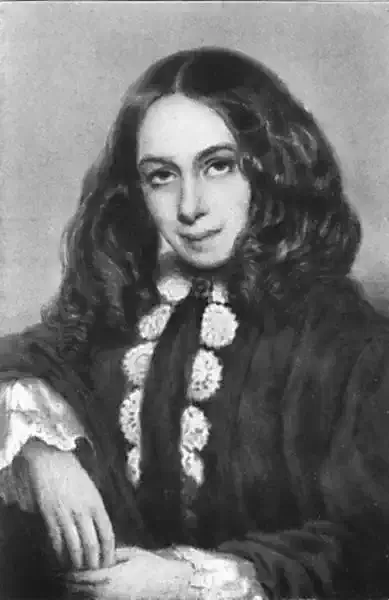
Elizabeth Barrett Browning
Sonnet 04 - Thou hast thy calling to some palace-floor
IV
Thou hast thy calling to some palace-floor,
Most gracious singer of high poems! where
The dancers will break footing, from the care
Of watching up thy pregnant lips for more.
And dost thou lift this house's latch too poor
For hand of thine? and canst thou think and bear
To let thy music drop here unaware
In folds of golden fulness at my door?
Look up and see the casement broken in,
The bats and owlets builders in the roof!
My cricket chirps against thy mandolin.
Hush, call no echo up in further proof
Of desolation! there 's a voice within
That weeps . . . as thou must sing . . . alone, aloof
454

Robert Browning
The Bishop Orders His Tomb At Saint Praxed's Church
Vanity, saith the preacher, vanity!
Draw round my bed: is Anselm keeping back?
Nephews -- sons mine -- ah God, I know not! Well --
She, men would have to be your mother once,
Old Gandolf envied me, so fair she was!
What's done is done, and she is dead beside,
Dead long ago, and I am Bishop since,
And as she died so must we die ourselves,
And thence ye may perceive the world's a dream.
Life, how and what is it? As here I lie
In this state-chamber, dying by degrees,
Hours and long hours in the dead night, I ask
"Do I live, am I dead?" Peace, peace seems all.
Saint Praxed's ever was the church for peace;
And so, about this tomb of mine. I fought
With tooth and nail to save my niche, ye know:
-- Old Gandolf cozened me, despite my care;
Shrewd was that snatch from out the corner South
He graced his carrion with, God curse the same!
Yet still my niche is not so cramped but thence
One sees the pulpit o' the epistle-side,
And somewhat of the choir, those silent seats,
And up into the very dome where live
The angels, and a sunbeam's sure to lurk:
And I shall fill my slab of basalt there,
And 'neath my tabernacle take my rest,
With those nine columns round me, two and two,
The odd one at my feet where Anselm stands:
Peach-blossom marble all, the rare, the ripe
As fresh poured red wine of a mighty pulse
-- Old Gandolf with his paltry onion-stone,
Put me where I may look at him! True peach,
Rosy and flawless: how I earned the prize!
Draw close: that conflagration of my church
-- What then? So much was saved if aught were missed!
My sons, ye would not be my death? Go dig
The white-grape vineyard where the oil-press stood,
Drop water gently till the surface sink,
And if ye find -- Ah God, I know not, I! --
Bedded in store of rotten fig-leaves soft,
And corded up in a tight olive-frail,
Some lump, ah God, of lapis lazuli,
Big as a Jew's head cut off at the nape,
Blue as a vein o'er the Madonna's breast
Sons, all have I bequeathed you, villas, all,
That brave Frascati villa with its bath,
So, let the blue lump poise between my knees,
Like God the Father's globe on both his hands
Ye worship in the Jesu Church so gay,
For Gandolf shall not choose but see and burst!
Swift as a weaver's shuttle fleet our years:
Man goeth to the grave, and where is he?
Did I say basalt for my slab, sons? Black --
'Twas ever antique-black I meant! How else
Shall ye contrast my frieze to come beneath?
The bas-relief in bronze ye promised me.
Those Pans and Nymphs ye wot of, and perchance
Some tripod, thyrsus, with a vase or so,
The Saviour at his sermon on the mount,
Saint Praxed in a glory, and one Pan
Ready to twitch the Nymph's last garment off,
And Moses with the tables -- but I know
Ye mark me not! What do they whisper thee,
Child of my bowels, Anselm? Ah, ye hope
To revel down my villas while I gasp
Bricked o'er with beggar's mouldy travertine
Which Gandolf from his tomb-top chuckles at!
Nay, boys, ye love me -- all of jasper, then!
'Tis jasper ye stand pledged to, lest I grieve.
My bath must needs be left behind, alas!
One block, pure green as a pistachio-nut,
There's plenty jasper somewhere in the world --
And have I not Saint Praxed's ear to pray
Horses for ye, and brown Greek manuscripts,
And mistresses with great smooth marbly limbs?
-- That's if ye carve my epitaph aright,
Choice Latin, picked phrase, Tully's every word,
No gaudy ware like Gandolf's second line --
Tully, my masters? Ulpian serves his need!
And then how I shall lie through centuries,
And hear the blessed mutter of the mass,
And see God made and eaten all day long,
And feel the steady candle-flame, and taste
Good strong thick stupefying incense-smoke!
For as I lie here, hours of the dead night,
Dying in state and by such slow degrees,
I fold my arms as if they clasped a crook,
And stretch my feet forth straight as stone can point,
And let the bedclothes, for a mortcloth, drop
Into great laps and folds of sculptor's work:
And as yon tapers dwindle, and strange thoughts
Grow, with a certain humming in my ears,
About the life before I lived this life,
And this life too, popes, cardinals and priests,
Saint Praxed at his sermon on the mount,
Your tall pale mother with her talking eyes,
And new-found agate urns as fresh as day,
And marble's language, Latin pure, discreet,
-- Aha, ELUCESCEBAT quoth our friend?
No Tully, said I, Ulpian at the best!
Evil and brief hath been my pilgrimage.
All lapis, all, sons! Else I give the Pope
My villas! Will ye ever eat my heart?
Ever your eyes were as a lizard's quick,
They glitter like your mother's for my soul,
Or ye would heighten my impoverished frieze,
Piece out its starved design, and fill my vase
With grapes, and add a visor and a Term,
And to the tripod ye would tie a lynx
That in his struggle throws the thyrsus down,
To comfort me on my entablature
Whereon I am to lie till I must ask
"Do I live, am I dead?" There, leave me, there!
For ye have stabbed me with ingratitude
To death -- ye wish it -- God, ye wish it! Stone --
Gritstone, a crumble! Clammy squares which sweat
As if the corpse they keep were oozing through --
And no more lapis to delight the world!
Well, go! I bless ye. Fewer tapers there,
But in a row: and, going, turn your backs
-- Ay, like departing altar-ministrants,
And leave me in my church, the church for peace,
That I may watch at leisure if he leers --
Old Gandolf -- at me, from his onion-stone,
As still he envied me, so fair she was!
456

Ezra Pound
Further Instructions
Come, my songs, let us express our baser passions.
Let us express our envy for the man with a steady job and no worry about the future.
You are very idle, my songs,
I fear you will come to a bad end.
You stand about the streets, You loiter at the corners and bus-stops,
You do next to nothing at all.
You do not even express our inner nobilitys,
You will come to a very bad end.
And I? I have gone half-cracked.
I have talked to you so much that I almost see you about me,
Insolent little beasts! Shameless! Devoid of clothing!
But you, newest song of the lot,
You are not old enough to have done much mischief.
I will get you a green coat out of China
With dragons worked upon it.
I will get you the scarlet silk trousers
From the statue of the infant Christ at Santa Maria Novella;
Lest they say we are lacking in taste,
Or that there is no caste in this family.
454

Robert Louis Stevenson
Ad Nepotem
O NEPOS, twice my neigh(b)our (since at home
We're door by door, by Flora's temple dome;
And in the country, still conjoined by fate,
Behold our villas standing gate by gate),
Thou hast a daughter, dearer far than life -
Thy image and the image of thy wife.
Thy image and thy wife's, and be it so!
But why for her, { neglect the flowing } can
{ O Nepos, leave the }
And lose the prime of thy Falernian?
Hoard casks of money, if to hoard be thine;
But let thy daughter drink a younger wine!
Let her go rich and wise, in silk and fur;
Lay down a { bin that shall } grow old with her;
{ vintage to }
But thou, meantime, the while the batch is sound,
With pleased companions pass the bowl around;
Nor let the childless only taste delights,
For Fathers also may enjoy their nights.
454
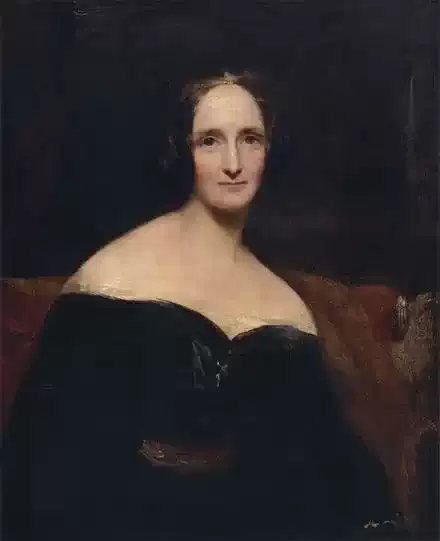
Percy Bysshe Shelley
To The Men Of England
Men of England, wherefore plough
For the lords who lay ye low?
Wherefore weave with toil and care
The rich robes your tyrants wear?
Wherefore feed and clothe and save,
From the cradle to the grave,
Those ungrateful drones who would
Drain your sweat -- nay, drink your blood?
Wherefore, Bees of England, forge
Many a weapon, chain, and scourge,
That these stingless drones may spoil
The forced produce of your toil?
Have ye leisure, comfort, calm,
Shelter, food, love's gentle balm?
Or what is it ye buy so dear
With your pain and with your fear?
The seed ye sow another reaps;
The wealth ye find another keeps;
The robes ye weave another wears;
The arms ye forge another bears.
Sow seed, -- but let no tyrant reap;
Find wealth, -- let no imposter heap;
Weave robes, -- let not the idle wear;
Forge arms, in your defence to bear.
Shrink to your cellars, holes, and cells;
In halls ye deck another dwells.
Why shake the chains ye wrought? Ye see
The steel ye tempered glance on ye.
With plough and spade and hoe and loom,
Trace your grave, and build your tomb,
And weave your winding-sheet, till fair
England be your sepulchre!
449
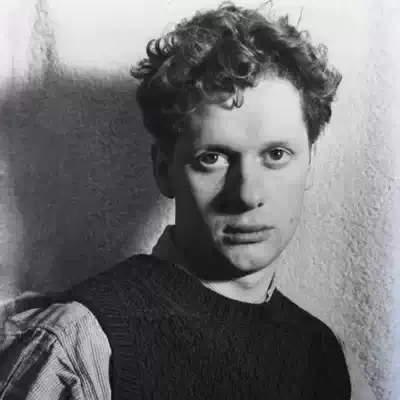
Dylan Thomas
Twenty Four Years
Twenty-four years remind the tears of my eyes.
(Bury the dead for fear that they walk to the grave in labour.)
In the groin of the natural doorway I crouched like a tailor
Sewing a shroud for a journey
By the light of the meat-eating sun.
Dressed to die, the sensual strut begun,
With my red veins full of money,
In the final direction of the elementary town
I advance as long as forever is.
449

William Wordsworth
The Last of The Flock
I
In distant countries have I been,
And yet I have not often seen
A healthy man, a man full grown,
Weep in the public roads, alone.
But such a one, on English ground,
And in the broad highway, I met;
Along the broad highway he came,
His cheeks with tears were wet:
Sturdy he seemed, though he was sad;
And in his arms a Lamb he had.
II
He saw me, and he turned aside,
As if he wished himself to hide:
And with his coat did then essay
To wipe those briny tears away.
I followed him, and said, "My friend,
What ails you? wherefore weep you so?"
--"Shame on me, Sir! this lusty Lamb,
He makes my tears to flow.
To-day I fetched him from the rock;
He is the last of all my flock,
III
"When I was young, a single man,
And after youthful follies ran,
Though little given to care and thought,
Yet, so it was, an ewe I bought;
And other sheep from her I raised,
As healthy sheep as you might see;
And then I married, and was rich
As I could wish to be;
Of sheep I numbered a full score,
And every year increased my store.
IV
"Year after year my stock it grew;
And from this one, this single ewe,
Full fifty comely sheep I raised,
As fine a flock as ever grazed!
Upon the Quantock hills they fed;
They throve, and we at home did thrive:
--This lusty Lamb of all my store
Is all that is alive;
And now I care not if we die,
And perish all of poverty.
V
"Six Children, Sir! had I to feed;
Hard labour in a time of need!
My pride was tamed, and in our grief
I of the Parish asked relief.
They said, I was a wealthy man;
My sheep upon the uplands fed,
And it was fit that thence I took
Whereof to buy us bread.
'Do this: how can we give to you,'
They cried, 'what to the poor is due?'
VI
"I sold a sheep, as they had said,
And bought my little children bread,
And they were healthy with their food
For me--it never did me good.
A woeful time it was for me,
To see the end of all my gains,
The pretty flock which I had reared
With all my care and pains,
To see it melt like snow away--
For me it was a woeful day.
VII
"Another still! and still another!
A little lamb, and then its mother!
It was a vein that never stopped--
Like blood-drops from my heart they dropped.
'Till thirty were not left alive
They dwindled, dwindled, one by one
And I may say, that many a time
I wished they all were gone--
Reckless of what might come at last
Were but the bitter struggle past.
VIII
"To wicked deeds I was inclined,
And wicked fancies crossed my mind;
And every man I chanced to see,
I thought he knew some ill of me:
No peace, no comfort could I find,
No ease, within doors or without;
And, crazily and wearily
I went my work about;
And oft was moved to flee from home,
And hide my head where wild beasts roam.
IX
"Sir! 'twas a precious flock to me,
As dear as my own children be;
For daily with my growing store
I loved my children more and more.
Alas! it was an evil time;
God cursed me in my sore distress;
I prayed, yet every day I thought
I loved my children less;
And every week, and every day,
My flock it seemed to melt away.
X
"They dwindled, Sir, sad sight to see!
From ten to five, from five to three,
A lamb, a wether, and a ewe;--
And then at last from three to two;
And, of my fifty, yesterday
I had but only one:
And here it lies upon my arm,
Alas! and I have none;--
To-day I fetched it from the rock;
It is the last of all my flock."
446

William Butler Yeats
The Black Tower
SAY that the men of the old black tower,
Though they but feed as the goatherd feeds,
Their money spent, their wine gone sour,
Lack nothing that a soldier needs,
That all are oath-bound men:
Those banners come not in.
There in the tomb stand the dead upright,
But winds come up from the shore:
They shake when the winds roar,
Old bones upon the mountain shake.
Those banners come to bribe or threaten,
Or whisper that a man's a fool
Who, when his own right king's forgotten,
Cares what king sets up his rule.
If he died long ago
Why do yopu dread us so?
There in the tomb drops the faint moonlight,
But wind comes up from the shore:
They shake when the winds roar,
Old bones upon the mountain shake.
The tower's old cook that must climb and clamber
Catching small birds in the dew of the morn
When we hale men lie stretched in slumber
Swears that he hears the king's great horn.
But he's a lying hound:
Stand we on guard oath-bound!
There in the tomb the dark grows blacker,
But wind comes up from the shore:
They shake when the winds roar,
Old bones upon the mountain shake.
446

Ella Wheeler Wilcox
Fleeing Away
My thoughts soar not as they ought to soar,
Higher and higher on soul-lent wings;
But ever and often and more and more
They are dragged down earthward by little things,
By little troubles and little needs,
As a lark might be tangled among the weeds.
My purpose is not what it ought to be,
Steady and fixed, like a star on high,
But more like a fisherman's light at sea;
Hither and thither it seems to fly--
Sometimes feeble, and sometimes bright,
Then suddenly lost in the gloom of night.
My life is far from my dream of life--
Calmly contented, serenely glad;
But, vexed and worried by daily strife,
It is always troubled and ofttimes sad--
And the heights I had thought I should reach one day
Grow dimmer and dimmer, and farther away.
My heart never finds the longed-for rest;
Its worldly striving, its greed for gold,
Chilled and frightened the calm-eyed guest
Who sometimes sought me in days of old;
And ever fleeing away from me
Is the higher self that I long to be.
439
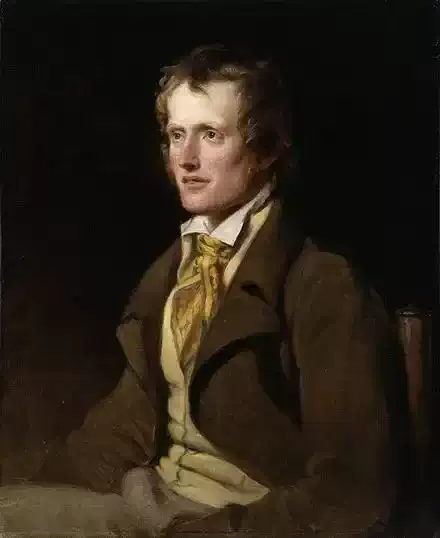
John Clare
The Vanities Of Life
Vanity of vanities, all is vanity.--_Solomon_
What are life's joys and gains?
What pleasures crowd its ways,
That man should take such pains
To seek them all his days?
Sift this untoward strife
On which thy mind is bent:
See if this chaff of life
Is worth the trouble spent.
Is pride thy heart's desire?
Is power thy climbing aim?
Is love thy folly's fire?
Is wealth thy restless game?
Pride, power, love, wealth, and all
Time's touchstone shall destroy,
And, like base coin, prove all
Vain substitutes for joy.
Dost think that pride exalts
Thyself in other's eyes,
And hides thy folly's faults,
Which reason will despise?
Dost strut, and turn, and stride,
Like walking weathercocks?
The shadow by thy side
Becomes thy ape, and mocks.
Dost think that power's disguise
Can make thee mighty seem?
It may in folly's eyes,
But not in worth's esteem,
When all that thou canst ask,
And all that she can give,
Is but a paltry mask
Which tyrants wear and live.
Go, let thy fancies range
And ramble where they may;
View power in every change,
And what is the display?
--The country magistrate,
The meanest shade in power,
To rulers of the state,
The meteors of an hour.
View all, and mark the end
Of every proud extreme,
Where flattery turns a friend,
And counterfeits esteem;
Where worth is aped in show,
That doth her name purloin,
Like toys of golden glow
That's sold for copper coin.
Ambition's haughty nod
With fancies may deceive,
Nay, tell thee thou'rt a god,
And wilt thou such believe?
Go, bid the seas be dry;
Go, hold earth like a ball,
Or throw thy fancies by,
For God can do it all.
Dost thou possess the dower
Of laws to spare or kill?
Call it not heavenly power
When but a tyrant's will.
Know what a God will do,
And know thyself a fool,
Nor, tyrant-like, pursue
Where He alone should rule.
O put away thy pride,
Or be ashamed of power
That cannot turn aside
The breeze that waves a flower.
Or bid the clouds be still:
Though shadows, they can brave
Thy poor power mocking will:
Then make not man a slave.
Dost think, when wealth is won,
Thy heart has its desire?
Hold ice up to the sun,
And wax before the fire;
Nor triumph oer the reign
Which they so soon resign;
In this world's ways they gain,
Insurance safe as thine.
Dost think life's peace secure
In house and in land?
Go, read the fairy lure
To twist a cord in sand;
Lodge stones upon the sky,
Hold water in a sieve,
Nor give such tales the lie,
And still thine own believe.
Whoso with riches deals,
And thinks peace bought and sold,
Will find them slipping eels,
That slide the firmest hold:
Though sweet as sleep with health
Thy lulling luck may be,
Pride may oerstride thy wealth,
And check prosperity.
Dost think that beauty's power
Life sweetest pleasure gives?
Go, pluck the summer flower,
And see how long it lives:
Behold, the rays glide on
Along the summer plain
Ere thou canst say 'they're gone,'
And measure beauty's reign.
Look on the brightest eye,
Nor teach it to be proud;
View but the clearest sky,
And thou shalt find a cloud;
Nor call each face ye meet
An angel's, cause it's fair,
But look beneath your feet,
And think of what they are.
Who thinks that love doth live
In beauty's tempting show,
Shall find his hopes ungive,
And melt in reason's thaw.
Who thinks that pleasure lies
In every fairy bower,
Shall oft, to his surprise,
Find poison in the flower.
Dost lawless passions grasp?
Judge not thou deal'st in joy:
Its flowers but hide the asp,
Thy revels to destroy.
Who trusts an harlot's smile,
And by her wiles are led,
Plays, with a sword the while
Hung dropping oer his head.
Dost doubt my warning song?
Then doubt the sun gives light,
Doubt truth to teach thee wrong,
And wrong alone as right;
And live as lives the knave,
Intrigue's deceiving guest;
Be tyrant, or be slave,
As suits thy ends the best.
Or pause amid thy toils
For visions won and lost,
And count the fancied spoils,
If eer they quit the cost:
And if they still possess
Thy mind, as worthy things,
Plat straws with bedlam Bess,
And call them diamond rings.
Thy folly's past advice,
Thy heart's already won,
Thy fall's above all price,
So go, and be undone;
For all who thus prefer
The seeming great for small
Shall make wine vinegar,
And sweetest honey gall.
Wouldst heed the truths I sing,
To profit wherewithal,
Clip folly's wanton wing,
And keep her within call.
I've little else to give,
What thou canst easy try;
The lesson how to live
Is but to learn to die.
438
Ezra Pound
Alf’s Fifth Bit
The pomps of butchery, financial power,
Told 'em to die in war, and then to save,
Then cut their saving to the half or lower;
When will this system lie down in its grave?
The pomps of Fleet St., festering year on year,
Hid truth and lied, and lied and hid the facts.
The pimps of Whitehall ever more in fear,
Hid health statistics, dodged the Labour Acts.
All drew their pay, and as the pay grew less,
The money rotten and more rotten yet,
Hid more statistics, more feared to confess
C.3, C.4, 'twere better to forget
How many weak of mind, how much tuberculosis
Filled the back alleys and the back to back houses.
'The medical report this week discloses . . .'
'Time for that question!' Front Bench interposes.
Time for that question? and the time is NOW.
Who ate the profits, and who locked 'em in
The unsafe safe, wherein all rots, and no man can say how
What was the nation's, now by Norman's kin
Is one day blown up large, the next, ducked in?
436
Ezra Pound
Alf’s Ninth Bit
Listen, my children, and you shall hear
The midnight activities of Whats-his Name,
Scarcely a general now known to fame
Can tell you of that famous day and year.
When feeble Mr. Asquith, getting old,
The destinies of England were almost sold
To a Welsh shifter with an ogling eye,
And Whats-his-name attained nobility.
The Dashing Rupert of the pulping trade,
Rough from the virgin forests inviolate,
Thus rose in Albion, and tickled the State
And where he once set foot, right there he stayed.
Old 'Erb was doting, so the rumour ran,
Ahd Rupert ran the rumour round in wheels,
And David's harp let out heart-rending squeals:
'Find us a harpist ! ! DAVID is the man!!'
Dave was the man to sell the shot and shell,
And Basil was the Greek that rode around
On sea and land, with all convenience found
To sell, to sell, to sell, that's it, to SELL
Destroyers, bombs and spitting mitrailleuses.
He used to lunch with Balfour in those days
And if the papers seldom sang his praise,
The simple Britons never knew he was,
Until a narsty German told them so.
Listen, my children, and you shall hear
Of things that happened very long ago,
And scarcely heed one word of what you hear.
Bury it all, bury it all well deep,
And let the blighters start it all over again.
They'll trick you again and again, as you sleep;
But you shall know that these were the men,
435

Rudyard Kipling
Public Waste
Walpole talks of "a man and his price."
List to a ditty queer --
The sale of a Deputy-Acting-Vice-
Resident-Engineer,
Bought like a bullock, hoof and hide,
By the Little Tin Gods on the Mountain Side.
By the Laws of the Family Circle 'tis written in letters of brass
That only a Colonel from Chatham can manage the Railways of State,
Because of the gold on his breeks, and the subjects wherein he must pass;
Because in all matters that deal not with Railways his knowledge is great.
Now Exeter Battleby Tring had laboured from boyhood to eld
On the Lines of the East and the West, and eke of the North and South;
Many Lines had he built and surveyed -- important the posts which he held;
And the Lords of the Iron Horse were dumb when he opened his mouth.
Black as the raven his garb, and his heresies jettier still --
Hinting that Railways required lifetimes of study and knowledge --
Never clanked sword by his side -- Vauban he knew not nor drill --
Nor was his name on the list of the men who had passed through the "College."
Wherefore the Little Tin Gods harried their little tin souls,
Seeing he came not from Chatham, jingled no spurs at his heels,
Knowing that, nevertheless, was he first on the Government rolls
For the billet of "Railway Instructor to Little Tin Gods on Wheels."
Letters not seldom they wrote him, "having the honour to state,"
It would be better for all men if he were laid on the shelf.
Much would accrue to his bank-book, an he consented to wait
Until the Little Tin Gods built him a berth for himself,
"Special, well paid, and exempt from the Law of the Fifty and Five,
Even to Ninety and Nine" -- these were the terms of the pact:
Thus did the Little Tin Gods (lon may Their Highnesses thrive!)
Silence his mouth with rupees, keeping their Circle intact;
Appointing a Colonel from Chatham who managed the Bhamo State Line
(The wich was on mile and one furlong -- a guaranteed twenty-inch gauge),
So Exeter Battleby Tring consented his claims to resign,
And died, on four thousand a month, in the ninetieth year of his age!
437
Ella Wheeler Wilcox
After the Engagement
Well, Mabel, 'tis over and ended---
The ball I wrote was to be;
And oh! it was perfectly splendid---
If you could have been here to see.
I've a thousand things to write you
That I know you are wanting to hear,
And one, that is sure to delight you---
I am wearing Joe's diamond, my dear!
Yes, mamma is quite ecstatic
That I am engaged to Joe;
She thinks I am rather erratic,
And feared that I might say "no."
But, Mabel, I'm twenty-seven
(Though nobody dreams it, dear),
And a fortune like Joe's isn't given
To lay at one's feet each year.
You know my old fancy for Harry---
Or, at least, I am certain you guessed
That it took all my sense not to marry
And go with that fellow out west.
But that was my very first season---
And Harry was poor as could be,
And mamma's good practical reason
Took all the romance out of me.
She whisked me off over the ocean,
And had me presented at court,
And got me all out of the notion
That ranch life out west was my forte.
Of course I have never repented--I'm
not such a goose of a thing;
But after I had consented
To Joe---and he gave me the ring---
I felt such a queer sensation.
I seemed to go into a trance,
Away from the music's pulsation,
Away from the lights and the dance.
And the wind o'er the wild prairie
Seemed blowing strong and free,
And it seemed not Joe, but Harry
Who was standing there close to me.
And the funniest feverish feeling
Went up from my feet to my head,
With little chills after it stealing---
And my hands got as numb as the dead.
A moment, and then it was over:
The diamond blazed up in my eyes,
And I saw in the face of my lover
A questioning, strange surprise.
Maybe 'twas the scent of the flowers,
That heavy with fragrance bloomed near,
But I didn't feel natural for hours;
It was odd now, wasn't it, dear?
Write soon to your fortunate Clara
Who has carried the prize away,
And say you'll come on when I marry;
I think it will happen in May.
433

Henry Wadsworth Longfellow
Hiawatha And The Pearl-Feather
On the shores of Gitche Gumee,
Of the shining Big-Sea-Water,
Stood Nokomis, the old woman,
Pointing with her finger westward,
O'er the water pointing westward,
To the purple clouds of sunset.
Fiercely the red sun descending
Burned his way along the heavens,
Set the sky on fire behind him,
As war-parties, when retreating,
Burn the prairies on their war-trail;
And the moon, the Night-sun, eastward,
Suddenly starting from his ambush,
Followed fast those bloody footprints,
Followed in that fiery war-trail,
With its glare upon his features.
And Nokomis, the old woman,
Pointing with her finger westward,
Spake these words to Hiawatha:
"Yonder dwells the great Pearl-Feather,
Megissogwon, the Magician,
Manito of Wealth and Wampum,
Guarded by his fiery serpents,
Guarded by the black pitch-water.
You can see his fiery serpents,
The Kenabeek, the great serpents,
Coiling, playing in the water;
You can see the black pitch-water
Stretching far away beyond them,
To the purple clouds of sunset!
"He it was who slew my father,
By his wicked wiles and cunning,
When he from the moon descended,
When he came on earth to seek me.
He, the mightiest of Magicians,
Sends the fever from the marshes,
Sends the pestilential vapors,
Sends the poisonous exhalations,
Sends the white fog from the fen-lands,
Sends disease and death among us!
"Take your bow, O Hiawatha,
Take your arrows, jasper-headed,
Take your war-club, Puggawaugun,
And your mittens, Minjekahwun,
And your birch-canoe for sailing,
And the oil of Mishe-Nahma,
So to smear its sides, that swiftly
You may pass the black pitch-water;
Slay this merciless magician,
Save the people from the fever
That he breathes across the fen-lands,
And avenge my father's murder!"
Straightway then my Hiawatha
Armed himself with all his war-gear,
Launched his birch-canoe for sailing;
With his palm its sides he patted,
Said with glee, "Cheemaun, my darling,
O my Birch-canoe! leap forward,
Where you see the fiery serpents,
Where you see the black pitch-water!"
Forward leaped Cheemaun exulting,
And the noble Hiawatha
Sang his war-song wild and woful,
And above him the war-eagle,
The Keneu, the great war-eagle,
Master of all fowls with feathers,
Screamed and hurtled through the heavens.
Soon he reached the fiery serpents,
The Kenabeek, the great serpents,
Lying huge upon the water,
Sparkling, rippling in the water,
Lying coiled across the passage,
With their blazing crests uplifted,
Breathing fiery fogs and vapors,
So that none could pass beyond them.
But the fearless Hiawatha
Cried aloud, and spake in this wise,
"Let me pass my way, Kenabeek,
Let me go upon my journey!"
And they answered, hissing fiercely,
With their fiery breath made answer:
"Back, go back! O Shaugodaya!
Back to old Nokomis, Faint-heart!"
Then the angry Hiawatha
Raised his mighty bow of ash-tree,
Seized his arrows, jasper-headed,
Shot them fast among the serpents;
Every twanging of the bow-string
Was a war-cry and a death-cry,
Every whizzing of an arrow
Was a death-song of Kenabeek.
Weltering in the bloody water,
Dead lay all the fiery serpents,
And among them Hiawatha
Harmless sailed, and cried exulting:
"Onward, O Cheemaun, my darling!
Onward to the black pitch-water!"
Then he took the oil of Nahma,
And the bows and sides anointed,
Smeared them well with oil, that swiftly
He might pass the black pitch-water.
All night long he sailed upon it,
Sailed upon that sluggish water,
Covered with its mould of ages,
Black with rotting water-rushes,
Rank with flags and leaves of lilies,
Stagnant, lifeless, dreary, dismal,
Lighted by the shimmering moonlight,
And by will-o'-the-wisps illumined,
Fires by ghosts of dead men kindled,
In their weary night-encampments.
All the air was white with moonlight,
All the water black with shadow,
And around him the Suggema,
The mosquito, sang his war-song,
And the fire-flies, Wah-wah-taysee,
Waved their torches to mislead him;
And the bull-frog, the Dahinda,
Thrust his head into the moonlight,
Fixed his yellow eyes upon him,
Sobbed and sank beneath the surface;
And anon a thousand whistles,
Answered over all the fen-lands,
And the heron, the Shuh-shuh-gah,
Far off on the reedy margin,
Heralded the hero's coming.
Westward thus fared Hiawatha,
Toward the realm of Megissogwon,
Toward the land of the Pearl-Feather,
Till the level moon stared at him
In his face stared pale and haggard,
Till the sun was hot behind him,
Till it burned upon his shoulders,
And before him on the upland
He could see the Shining Wigwam
Of the Manito of Wampum,
Of the mightiest of Magicians.
Then once more Cheemaun he patted,
To his birch-canoe said, "Onward!"
And it stirred in all its fibres,
And with one great bound of triumph
Leaped across the water-lilies,
Leaped through tangled flags and rushes,
And upon the beach beyond them
Dry-shod landed Hiawatha.
Straight he took his bow of ash-tree,
On the sand one end he rested,
With his knee he pressed the middle,
Stretched the faithful bow-string tighter,
Took an arrow, jasperheaded,
Shot it at the Shining Wigwam,
Sent it singing as a herald,
As a bearer of his message,
Of his challenge loud and lofty:
"Come forth from your lodge, Pearl-Feather!
Hiawatha waits your coming!"
Straightway from the Shining Wigwam
Came the mighty Megissogwon,
Tall of stature, broad of shoulder,
Dark and terrible in aspect,
Clad from head to foot in wampum,
Armed with all his warlike weapons,
Painted like the sky of morning,
Streaked with crimson, blue, and yellow,
Crested with great eagle-feathers,
Streaming upward, streaming outward.
"Well I know you, Hiawatha!"
Cried he in a voice of thunder,
In a tone of loud derision.
"Hasten back, O Shaugodaya!
Hasten back among the women,
Back to old Nokomis, Faint-heart!
I will slay you as you stand there,
As of old I slew her father!"
But my Hiawatha answered,
Nothing daunted, fearing nothing:
"Big words do not smite like war-clubs,
Boastful breath is not a bow-string,
Taunts are not so sharp as arrows,
Deeds are better things than words are,
Actions mightier than boastings!"
Then began the greatest battle
That the sun had ever looked on,
That the war-birds ever witnessed.
All a Summer's day it lasted,
From the sunrise to the sunset;
For the shafts of Hiawatha
Harmless hit the shirt of wampum,
Harmless fell the blows he dealt it
With his mittens, Minjekahwun,
Harmless fell the heavy war-club;
It could dash the rocks asunder,
But it could not break the meshes
Of that magic shirt of wampum.
Till at sunset Hiawatha,
Leaning on his bow of ash-tree,
Wounded, weary, and desponding,
With his mighty war-club broken,
With his mittens torn and tattered,
And three useless arrows only,
Paused to rest beneath a pine-tree,
From whose branches trailed the mosses,
And whose trunk was coated over
With the Dead-man's Moccasin-leather,
With the fungus white and yellow.
Suddenly from the boughs above him
Sang the Mama, the woodpecker:
"Aim your arrows, Hiawatha,
At the head of Megissogwon,
Strike the tuft of hair upon it,
At their roots the long black tresses;
There alone can he be wounded!"
Winged with feathers, tipped with jasper,
Swift flew Hiawatha's arrow,
Just as Megissogwon, stooping,
Raised a heavy stone to throw it.
Full upon the crown it struck him,
At the roots of his long tresses,
And he reeled and staggered forward,
Plunging like a wounded bison,
Yes, like Pezhekee, the bison,
When the snow is on the prairie.
Swifter flew the second arrow,
In the pathway of the other,
Piercing deeper than the other,
Wounding sorer than the other;
And the knees of Megissogwon
Shook like windy reeds beneath him,
Bent and trembled like the rushes.
But the third and latest arrow
Swiftest flew, and wounded sorest,
And the mighty Megissogwon
Saw the fiery eyes of Pauguk,
Saw the eyes of Death glare at him,
Heard his voice call in the darkness;
At the feet of Hiawatha
Lifeless lay the great Pearl-Feather,
Lay the mightiest of Magicians.
Then the grateful Hiawatha
Called the Mama, the woodpecker,
From his perch among the branches
Of the melancholy pine-tree,
And, in honor of his service,
Stained with blood the tuft of feathers
On the little head of Mama;
Even to this day he wears it,
Wears the tuft of crimson feathers,
As a symbol of his service.
Then he stripped the shirt of wampum
From the back of Megissogwon,
As a trophy of the battle,
As a signal of his conquest.
On the shore he left the body,
Half on land and half in water,
In the sand his feet were buried,
And his face was in the water.
And above him, wheeled and clamored
The Keneu, the great war-eagle,
Sailing round in narrower circles,
Hovering nearer, nearer, nearer.
From the wigwam Hiawatha
Bore the wealth of Megissogwon,
All his wealth of skins and wampum,
Furs of bison and of beaver,
Furs of sable and of ermine,
Wampum belts and strings and pouches,
Quivers wrought with beads of wampum,
Filled with arrows, silver-headed.
Homeward then he sailed exulting,
Homeward through the black pitch-water,
Homeward through the weltering serpents,
With the trophies of the battle,
With a shout and song of triumph.
On the shore stood old Nokomis,
On the shore stood Chibiabos,
And the very strong man, Kwasind,
Waiting for the hero's coming,
Listening to his songs of triumph.
And the people of the village
Welcomed him with songs and dances,
Made a joyous feast, and shouted:
'Honor be to Hiawatha!
He has slain the great Pearl-Feather,
Slain the mightiest of Magicians,
Him, who sent the fiery fever,
Sent the white fog from the fen-lands,
Sent disease and death among us!"
Ever dear to Hiawatha
Was the memory of Mama!
And in token of his friendship,
As a mark of his remembrance,
He adorned and decked his pipe-stem
With the crimson tuft of feathers,
With the blood-red crest of Mama.
But the wealth of Megissogwon,
All the trophies of the battle,
He divided with his people,
Shared it equally among them.
429
Ella Wheeler Wilcox
A Glass Of Wine
'What's in a glass of wine?'
There, set the glass where I can look within.
Now listen to me, friend, while I begin
And tell you what I see-
What I behold with my far-reaching eyes,
And what I know to be
Below the laughing bubbles that arise
Within this glass of wine.
There is a little spirit, night and day,
That cries one word, for ever and alway:
That single word is 'More!'
And whoso drinks a glass of wine, drinks him:
You fill the goblet full unto the brim,
And strive to silence him.
Glass after glass you drain to quench his thirst,
Each glass contains a spirit like the first;
And all their voices cry
Until they shriek and clamor, howl and rave,
And shout 'More!' noisily,
Till welcome death prepares the drunkard's grave,
And stills the imps that rave.
That see I in the wine:
And tears so many that I cannot guess;
And all these drops are labelled with 'Distress.'
I know you cannot see.
And at the bottom are the dregs of shame:
Oh! it is plain to me.
And there are woes too terrible to name:
Now drink your glass of wine.
428
Robert Browning
A Pretty Woman
I.
That fawn-skin-dappled hair of hers,
And the blue eye
Dear and dewy,
And that infantine fresh air of hers!
II.
To think men cannot take you, Sweet,
And enfold you,
Ay, and hold you,
And so keep you what they make you, Sweet!
III
You like us for a glance, you know---
For a word's sake
Or a sword's sake,
All's the same, whate'er the chance, you know.
IV.
And in turn we make you ours, we say---
You and youth too,
Eyes and mouth too,
All the face composed of flowers, we say.
V.
All's our own, to make the most of, Sweet---
Sing and say for,
Watch and pray for,
Keep a secret or go boast of, Sweet!
VI.
But for loving, why, you would not, Sweet,
Though we prayed you,
Paid you, brayed you
in a mortar---for you could not, Sweet!
VII.
So, we leave the sweet face fondly there:
Be its beauty
Its sole duty!
Let all hope of grace beyond, lie there!
VIII.
And while the face lies quiet there,
Who shall wonder
That I ponder
A conclusion? I will try it there.
IX.
As,---why must one, for the love foregone,
Scout mere liking?
Thunder-striking
Earth,---the heaven, we looked above for, gone!
X.
Why, with beauty, needs there money be,
Love with liking?
Crush the fly-king
In his gauze, because no honey-bee?
XI.
May not liking be so simple-sweet,
If love grew there
'Twould undo there
All that breaks the cheek to dimples sweet?
XII.
Is the creature too imperfect,
Would you mend it
And so end it?
Since not all addition perfects aye!
XIII.
Or is it of its kind, perhaps,
Just perfection---
Whence, rejection
Of a grace not to its mind, perhaps?
XIV.
Shall we burn up, tread that face at once
Into tinder,
And so hinder
Sparks from kindling all the place at once?
XV.
Or else kiss away one's soul on her?
Your love-fancies!
---A sick man sees
Truer, when his hot eyes roll on her!
XVI.
Thus the craftsman thinks to grace the rose,---
Plucks a mould-flower
For his gold flower,
Uses fine things that efface the rose:
XVII.
Rosy rubies make its cup more rose,
Precious metals
Ape the petals,---
Last, some old king locks it up, morose!
XVIII.
Then how grace a rose? I know a way!
Leave it, rather.
Must you gather?
Smell, kiss, wear it---at last, throw away!
423
Robert Louis Stevenson
Dedication
MY first gift and my last, to you
I dedicate this fascicle of songs -
The only wealth I have:
Just as they are, to you.
I speak the truth in soberness, and say
I had rather bring a light to your clear eyes,
Had rather hear you praise
This bosomful of songs
Than that the whole, hard world with one consent,
In one continuous chorus of applause
Poured forth for me and mine
The homage of ripe praise.
I write the finis here against my love,
This is my love's last epitaph and tomb.
Here the road forks, and I
Go my way, far from yours.
419

Carl Sandburg
The Mayor of Gary
I asked the mayor of Gary about the 12-hour day and the 7-day week.
And the mayor of Gary answered more workmen steal time on the job in Gary than any
other place in the United States.
"Go into the plants and you will see men sitting around doing nothing--machinery does
everything," said the mayor of Gary when I asked him about the 12-hour day and the
7-day week.
And he wore cool cream pants, the Mayor of Gary, and white shoes, and a barber had
fixed him up with a shampoo and a shave and he was east and imperturbable though
the government weather bureau thermometer said 96 and children were soaking their
heads at bubbling fountains on the street corners.
And I said good-bye to the Mayor of Gary and I went out from the city hall and turned
the corner into Broadway.
And I saw workmen wearing leather shoes scruffed with fire and cinders, and pitted
with little holes from running molten steel,
And some had bunches of specialized muscles around their shoulder blades hard as pig
iron, muscles of their forearms were sheet steel and they looked to me like men who
had been somewhere.
415
Ella Wheeler Wilcox
Rich And Poor
By the castle-gate my lady stands,
Viewing broad acres and spreading lands.
Hill and valley and mead and plain
Are all her own, with their wealth of grain.
In the richest of rich robes she is dressed,
A jewel blazes upon her breast;
And her brow is decked with a diadem
That glitters with many a precious gem.
But what to the Lady Wendoline
Rich satin garments or jewels fine?
Or ripening harvests, or spreading lands-
See! she is wringing her milk-white hands!
And her finger is stained with crimson dew
Where the ring with the diamond star cut through.
And a look of pain and wild despair
Rests on the face, so young and fair.
To-morrow will be her bridal day,
And she will barter herself away
For added wealth and a titled name;
'Tis the curse of her station, and whose the blame!
She loathes the man who will call her wife,
And moans o'er her hapless, loveless life.
The joys of wooing she cannot know;
My lord, her father, has willed it so.
She's a piece of merchandise, bought and sold
For name, position, and bags of gold.
But people must wed in their own degree,
Though hearts may break in their agony.
Under the hill, in the castle's shade,
At a cottage door sits an humble maid;
In her cheek the blushes come and go
As she stitches away on a robe like snow;
And she sings aloud in her happiness-
In a joy she cannot hide or repress.
Close at her side her lover stands,
Watching the nimble, sun-browned hands
As they draw the needle to and fro
Through the robe as white as drift of snow.
Both hearts are singing a wordless lay,
For the morrow will be their bridal day.
They have only their hands, their love, their health,
In place of title, position, and wealth.
But which is the rich, and which the poor,
The maid at the gate, or the maid in the door?
415

Walt Whitman
Brother Of All, With Genesrous Hand
BROTHER of all, with generous hand,
Of thee, pondering on thee, as o'er thy tomb, I and my Soul,
A thought to launch in memory of thee,
A burial verse for thee.
What may we chant, O thou within this tomb?
What tablets, pictures, hang for thee, O millionaire?
--The life thou lived'st we know not,
But that thou walk'dst thy years in barter, 'mid the haunts of
brokers;
Nor heroism thine, nor war, nor glory.
Yet lingering, yearning, joining soul with thine,
If not thy past we chant, we chant the future,
Select, adorn the future.
Lo, Soul, the graves of heroes!
The pride of lands--the gratitudes of men,
The statues of the manifold famous dead, Old World and New,
The kings, inventors, generals, poets, (stretch wide thy vision,
Soul,)
The excellent rulers of the races, great discoverers, sailors,
Marble and brass select from them, with pictures, scenes,
(The histories of the lands, the races, bodied there,
In what they've built for, graced and graved,
Monuments to their heroes.)
Silent, my Soul,
With drooping lids, as waiting, ponder'd,
Turning from all the samples, all the monuments of heroes.
While through the interior vistas,
Noiseless uprose, phantasmic (as, by night, Auroras of the North,)
Lambent tableaux, prophetic, bodiless scenes,
Spiritual projections.
In one, among the city streets, a laborer's home appear'd,
After his day's work done, cleanly, sweet-air'd, the gaslight
burning,
The carpet swept, and a fire in the cheerful stove.
In one, the sacred parturition scene,
A happy, painless mother birth'd a perfect child.
In one, at a bounteous morning meal,
Sat peaceful parents, with contented sons.
In one, by twos and threes, young people,
Hundreds concentering, walk'd the paths and streets and roads,
Toward a tall-domed school.
In one a trio, beautiful,
Grandmother, loving daughter, loving daughter's daughter, sat,
Chatting and sewing.
In one, along a suite of noble rooms,
'Mid plenteous books and journals, paintings on the walls, fine
statuettes,
Were groups of friendly journeymen, mechanics, young and old,
Reading, conversing.
All, all the shows of laboring life,
City and country, women's, men's and children's,
Their wants provided for, hued in the sun, and tinged for once with
joy,
Marriage, the street, the factory, farm, the house-room, lodgingroom,
Labor and toil, the bath, gymnasium, play-ground, library,
college,
The student, boy or girl, led forward to be taught;
The sick cared for, the shoeless shod--the orphan father'd and
mother'd,
The hungry fed, the houseless housed;
(The intentions perfect and divine,
The workings, details, haply human.)
O thou within this tomb,
From thee, such scenes--thou stintless, lavish Giver,
Tallying the gifts of Earth--large as the Earth,
Thy name an Earth, with mountains, fields and rivers.
Nor by your streams alone, you rivers,
By you, your banks, Connecticut,
By you, and all your teeming life, Old Thames,
By you, Potomac, laving the ground Washington trod--by you Patapsco,
You, Hudson--you, endless Mississippi--not by you alone,
But to the high seas launch, my thought, his memory.
Lo, Soul, by this tomb's lambency,
The darkness of the arrogant standards of the world,
With all its flaunting aims, ambitions, pleasures.
(Old, commonplace, and rusty saws,
The rich, the gay, the supercilious, smiled at long,
Now, piercing to the marrow in my bones,
Fused with each drop my heart's blood jets,
Swim in ineffable meaning.)
Lo, Soul, the sphere requireth, portioneth,
To each his share, his measure,
The moderate to the moderate, the ample to the ample.
Lo, Soul, see'st thou not, plain as the sun,
The only real wealth of wealth in generosity,
The only life of life in goodness?
418
Ella Wheeler Wilcox
Love is Enough
Love is enough. Let us not ask for gold.
Wealth breeds false aims, and pride and selfishness;
In those serene, Arcadian days of old
Men gave no thought to princely homes and dress.
The gods who dwelt on fair Olympia's height
Lived only for dear love and love's delight.
Love is enough.
Love is enough. Why should we care for fame?
Ambition is a most unpleasant guest:
It lures us with the glory of a name
Far from the happy haunts of peace and rest.
Let us stay here in this secluded place
Made beautiful by love's endearing grace!
Love is enough.
Love is enough. Why should we strive for power?
It brings men only envy and distrust.
The poor world's homage pleases but an hour,
And earthly honours vanish in the dust.
The grandest lives are ofttimes desolate;
Let me be loved, and let who will be great.
Love is enough.
Love is enough. Why should we ask for more?
What greater gift have gods vouchsafed to men?
What better boon of all their precious store
Than our fond hearts that love and love again?
Old love may die; new love is just as sweet;
And life is fair and all the world complete:
Love is enough!
413
William Butler Yeats
Colonel Martin
THE Colonel went out sailing,
He spoke with Turk and Jew,
With Christian and with Infidel,
For all tongues he knew.
'O what's a wifeless man?' said he,
And he came sailing home.
He rose the latch and went upstairS
And found an empty room.
The Colonel went out sailing.
'I kept her much in the country
And she was much alone,
And though she may be there,' he said,
'She may be in the town.
She may be all alone there,
For who can say?' he said.
'I think that I shall find her
In a young man's bed.'
The Colonel went out sailing.
III
The Colonel met a pedlar,
Agreed their clothes to swop,
And bought the grandest jewelry
In a Galway shop,
Instead of thread and needle
put jewelry in the pack,
Bound a thong about his hand,
Hitched it on his back.
The Colonel wcnt out sailing.
The Colonel knocked on the rich man's door,
'I am sorry,' said the maid,
'My mistress cannot see these things,
But she is still abed,
And never have I looked upon
Jewelry so grand.'
'Take all to your mistress,'
And he laid them on her hand.
The Colonel went out sailing.
And he went in and she went on
And both climbed up the stair,
And O he was a clever man,
For he his slippers wore.
And when they came to the top stair
He ran on ahead,
His wife he found and the rich man
In the comfort of a bed.
The Colonel went out sailing.
The Judge at the Assize Court,
When he heard that story told,
Awarded him for damages
Three kegs of gold.
The Colonel said to Tom his man,
'Harness an ass and cart,
Carry the gold about the town,
Throw it in every patt.'
The Colonel went out sailing.
VII
And there at all street-corners
A man with a pistol stood,
And the rich man had paid them well
To shoot the Colonel dead;
But they threw down their pistols
And all men heard them swear
That they could never shoot a man
Did all that for the poor.
The Colonel went out sailing.
VIII
'And did you keep no gold, Tom?
You had three kegs,' said he.
'I never thought of that, Sir.'
'Then want before you die.'
And want he did; for my own grand-dad
Saw the story's end,
And Tom make out a living
From the seaweed on the strand.
The Colonel went out sailing.
412
Robert Louis Stevenson
The Vagabond
Give to me the life I love,
Let the lave go by me,
Give the jolly heaven above
And the byway nigh me.
Bed in the bush with stars to see,
Bread I dip in the river -
There's the life for a man like me,
There's the life for ever.
Let the blow fall soon or late,
Let what will be o'er me;
Give the face of earth around
And the road before me.
Wealth I seek not, hope nor love,
Nor a friend to know me;
All I seek, the heaven above
And the road below me.
Or let autumn fall on me
Where afield I linger,
Silencing the bird on tree,
Biting the blue finger.
White as meal the frosty field -
Warm the fireside haven -
Not to autumn will I yield,
Not to winter even!
Let the blow fall soon or late,
Let what will be o'er me;
Give the face of earth around,
And the road before me.
Wealth I ask not, hope nor love,
Nor a friend to know me;
All I ask, the heaven above
And the road below me.
400