
Humor e Ironia

Henry Lawson
The Loveable Characters
I long for the streets but the Lord knoweth best,
For there I am never a saint;
There are lovable characters out in the West,
With humour heroic and quaint;
And, be it Up Country, or be it Out Back,
When I shall have gone to my Home,
I trust to be buried 'twixt River and Track
Where my lovable characters roam.
There are lovable characters drag through the scrub,
Where the Optimist ever prevails;
There are lovable characters hang round the pub,
There are lovable jokers at sales
Where the auctioneer's one of the lovable wags
(Maybe from his "order" estranged),
And the beer is on tap, and the pigs in the bags
Of the purchasing cockies are changed.
There were lovable characters out in the West,
Of fifty hot summers, or more,
Who could not be proved, when it came to the test,
Too old to be sent to the war;
They were all forty-five and were orphans, they said,
With no one to keep them, or keep;
And mostly in France, with the world's bravest dead,
Those lovable characters sleep.
I long for the streets, but the Lord knoweth best,
For there I am never a saint;
There are lovable characters out in the West,
With humour heroic and quaint;
And, be it Up Country, or be it Out Back,
When I shall have gone to my Home,
I trust to be buried 'twixt River and Track
Where my lovable characters roam.
For there I am never a saint;
There are lovable characters out in the West,
With humour heroic and quaint;
And, be it Up Country, or be it Out Back,
When I shall have gone to my Home,
I trust to be buried 'twixt River and Track
Where my lovable characters roam.
There are lovable characters drag through the scrub,
Where the Optimist ever prevails;
There are lovable characters hang round the pub,
There are lovable jokers at sales
Where the auctioneer's one of the lovable wags
(Maybe from his "order" estranged),
And the beer is on tap, and the pigs in the bags
Of the purchasing cockies are changed.
There were lovable characters out in the West,
Of fifty hot summers, or more,
Who could not be proved, when it came to the test,
Too old to be sent to the war;
They were all forty-five and were orphans, they said,
With no one to keep them, or keep;
And mostly in France, with the world's bravest dead,
Those lovable characters sleep.
I long for the streets, but the Lord knoweth best,
For there I am never a saint;
There are lovable characters out in the West,
With humour heroic and quaint;
And, be it Up Country, or be it Out Back,
When I shall have gone to my Home,
I trust to be buried 'twixt River and Track
Where my lovable characters roam.
245

Anonymous
Godfrey Gordon
Godfrey Gordon Gustuvus Gore
The boy who'd never shut the door
His Father would Plead and mother implore
Godfrey Gordon Please Shut the door.
The boy who'd never shut the door
His Father would Plead and mother implore
Godfrey Gordon Please Shut the door.
243

Ogden Nash
I Do, I Will, I Have
How wise I am to have instructed the butler
to instruct the first footman to instruct the second
footman to instruct the doorman to order my carriage;
I am about to volunteer a definition of marriage.
Just as I know that there are two Hagens, Walter and Copen,
I know that marriage is a legal and religious alliance entered
into by a man who can't sleep with the window shut and a
woman who can't sleep with the window open.
Moreover, just as I am unsure of the difference between
flora and fauna and flotsam and jetsam,
I am quite sure that marriage is the alliance of two people
one of whom never remembers birthdays and the other
never forgetsam,
And he refuses to believe there is a leak in the water pipe or
the gas pipe and she is convinced she is about to asphyxiate
or drown,
And she says Quick get up and get my hairbrushes off the
windowsill, it's raining in, and he replies Oh they're all right,
it's only raining straight down.
That is why marriage is so much more interesting than divorce,
Because it's the only known example of the happy meeting of
the immovable object and the irresistible force.
So I hope husbands and wives will continue to debate and
combat over everything debatable and combatable,
Because I believe a little incompatibility is the spice of life,
particularly if he has income and she is pattable.
243

Robert W. Service
The Philistine And The Bohemian
She was a Philistine spick and span,
He was a bold Bohemian.
She had the mode, and the last at that;
He had a cape and a brigand hat.
She was so riant and chic and trim;
He was so shaggy, unkempt and grim.
On the rue de la Paix she was wont to shine;
The rue de la Gaîté was more his line.
She doted on Barclay and Dell and Caine;
He quoted Mallarmé and Paul Verlaine.
She was a triumph at Tango teas;
At Vorticist's suppers he sought to please.
She thought that Franz Lehar was utterly great;
Of Strauss and Stravinsky he'd piously prate.
She loved elegance, he loved art;
They were as wide as the poles apart:
Yet -- Cupid and Caprice are hand and glove --
They met at a dinner, they fell in love.
Home he went to his garret bare,
Thrilling with rapture, hope, despair.
Swift he gazed in his looking-glass,
Made a grimace and murmured: "Ass!"
Seized his scissors and fiercely sheared,
Severed his buccaneering beard;
Grabbed his hair, and clip! clip! clip!
Off came a bunch with every snip.
Ran to a tailor's in startled state,
Suits a dozen commanded straight;
Coats and overcoats, pants in pairs,
Everything that a dandy wears;
Socks and collars, and shoes and ties,
Everything that a dandy buys.
Chums looked at him with wondering stare,
Fancied they'd seen him before somewhere;
A Brummell, a D'Orsay, a beau so fine,
A shining, immaculate Philistine.
Home she went in a raptured daze,
Looked in a mirror with startled gaze,
Didn't seem to be pleased at all;
Savagely muttered: "Insipid Doll!"
Clutched her hair and a pair of shears,
Cropped and bobbed it behind the ears;
Aimed at a wan and willowy-necked
Sort of a Holman Hunt effect;
Robed in subtile and sage-green tones,
Like the dames of Rossetti and E. Burne-Jones;
Girdled her garments billowing wide,
Moved with an undulating glide;
All her frivolous friends forsook,
Cultivated a soulful look;
Gushed in a voice with a creamy throb
Over some weirdly Futurist daub --
Did all, in short, that a woman can
To be a consummate Bohemian.
A year went past with its hopes and fears,
A year that seemed like a dozen years.
They met once more. . . . Oh, at last! At last!
They rushed together, they stopped aghast.
They looked at each other with blank dismay,
They simply hadn't a word to say.
He thought with a shiver: "Can this be she?"
She thought with a shudder: "This can't be he?"
This simpering dandy, so sleek and spruce;
This languorous lily in garments loose;
They sought to brace from the awful shock:
Taking a seat, they tried to talk.
She spoke of Bergson and Pater's prose,
He prattled of dances and ragtime shows;
She purred of pictures, Matisse, Cezanne,
His tastes to the girls of Kirchner ran;
She raved of Tchaikovsky and Caesar Franck,
He owned that he was a jazz-band crank!
They made no headway. Alas! alas!
He thought her a bore, she thought him an ass.
And so they arose and hurriedly fled;
Perish Illusion, Romance, you're dead.
He loved elegance, she loved art,
Better at once to part, to part.
And what is the moral of all this rot?
Don't try to be what you know you're not.
And if you're made on a muttonish plan,
Don't seek to seem a Bohemian;
And if to the goats your feet incline,
Don't try to pass for a Philistine.
243
Robert W. Service
Violet De Vere
You've heard of Violet de Vere, strip-teaser of renown,
Whose sitting-base out-faired the face of any girl in town;
Well, she was haled before the Bench for breachin' of the Peace,
Which signifies araisin' Cain, an' beatin' up the police.
So there she stood before the Court of ruddy Judge McGraw
Whom folks called Old Necessity, because he knew no law.
Aye, crackin' in a silken gown, an' sheddin' of a tear,
Ashine wi' gold an' precious stones sat Violet de Vere.
Old Judge McGraw looked dourly down an' stroked his silver beard.
Says he: "Although the Sheriff's bruised, the lady should be heared.
What can you say in your defence? We'll give you a square deal."
"I jest forget," said Violet. "Maybe it was my heel.
I always want to kick the gong when I am feelin' gay;
It's most unfortunate, I guess, his face was in the way."
Then scratchin' of his snowy pow the Judge looked down severe,
Where bright wi' paint like plaster saint sat Violet de Vere.
Says he: "I'm going to impose a twenty dollar fine."
Says Violet: "Your Honour, to your judgement I resign.
I realize I should not my agility reveal:
Next time I'll kick the Sheriff with my toe and not my heel.
I'm grateful to the Court because I'm not put in the clink;
There's twenty plunks to pay my fine,--but now I come to think:
Judge, darlin', you've been owin' me five bucks for near a year:
Take fifteen,--there! We'll call it square," said Violet de Vere.
242
Robert W. Service
My Future
"Let's make him a sailor," said Father,
"And he will adventure the sea."
"A soldier," said Mother, "is rather
What I would prefer him to be."
"A lawyer," said Father, "would please me,
For then he could draw up my will."
"A doctor," said Mother, "would ease me;
Maybe he could give me a pill."
Said Father: "Lt's make him a curate,
A Bishop in gaiters to be."
Said Mother: "I couldn't endure it
To have Willie preaching to me."
Said Father: ""Let him be a poet;
So often he's gathering wool."
Said Mother with temper: "Oh stow it!
You know it, a poet's a fool."
Said Farther: "Your son is a duffer,
A stupid and mischievous elf."
Said Mother, who's rather a huffer:
"That's right - he takes after yourself."
Controlling parental emotion
They turned to me, seeking a cue,
And sudden conceived the bright notion
To ask what I wanted to do.
Said I: "my ambition is modest:
A clown in a circus I'd be,
And turn somersaults in the sawdust
With audience laughing at me."
. . . Poor parents! they're dead and decaying,
But I am a clown as you see;
And though in no circus I'm playing,
How people are laughing at me!
240
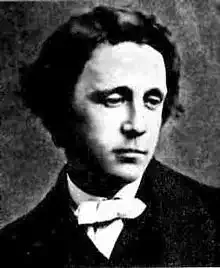
Lewis Carroll
Twinkle, Twinkle, Little Bat!
" it
was at the great concert given by the
Queen of Hearts, and I had to sing
`Twinkle, twinkle, little bat!
How I wonder what you're at!'You know the song, perhaps?" "I've heard something
like it," said Alice. "It goes on, you know," the Hatter continued,
"in this way:
`Up above the world you fly,
Like a teatray in the sky.
Twinkle, twinkle '"
237

Edward Lear
Limerick: There was an Old Man of Peru
There was an Old Man of Peru,
Who never knew what he should do;
So he tore off his hair,
And behaved like a bear,
That intrinsic Old Man of Peru.
Who never knew what he should do;
So he tore off his hair,
And behaved like a bear,
That intrinsic Old Man of Peru.
235
Henry Lawson
Australian Bards And Bush Reviewers
While you use your best endeavour to immortalise in verse
The gambling and the drink which are your country's greatest curse,
While you glorify the bully and take the spieler's part -You're
a clever southern writer, scarce inferior to Bret Harte.
If you sing of waving grasses when the plains are dry as bricks,
And discover shining rivers where there's only mud and sticks;
If you picture `mighty forests' where the mulga spoils the view -You're
superior to Kendall, and ahead of Gordon too.
If you swear there's not a country like the land that gave you birth,
And its sons are just the noblest and most glorious chaps on earth;
If in every girl a Venus your poetic eye discerns,
You are gracefully referred to as the `young Australian Burns'.
But if you should find that bushmen -- spite of all the poets say --
Are just common brother-sinners, and you're quite as good as they -You're
a drunkard, and a liar, and a cynic, and a sneak,
Your grammar's simply awful and your intellect is weak.
233
Edward Lear
There was an Old Man of Thermopylae
There was an old man of Thermopylæ,
Who never did anything properly;
But they said, "If you choose, To boil eggs in your shoes,
You shall never remain in Thermopylæ."
Who never did anything properly;
But they said, "If you choose, To boil eggs in your shoes,
You shall never remain in Thermopylæ."
232
Robert W. Service
Include Me Out
I grabbed the new Who's Who to see
My name - but it was not.
Said I: "The form they posted me
I filled and sent - so what?"
I searched the essies," dour with doubt . . .
Darn! It was plain as day
The scurvy knaves had left me out . . .
Oh was I mad? I'll say.
Then all at once I sensed the clue;
'Twas simple, you'll allow . . .
The book I held was Who WAS Who
Oh was I glad - and how!
232

Christina Rossetti
A House Of Cards
A house of cards
Is neat and small:
Shake the table,
It must fall.
Find the Court cards
One by one;
Raise it, roof it, -
Now it's done: -
Shake the table!
That's the fun.
Is neat and small:
Shake the table,
It must fall.
Find the Court cards
One by one;
Raise it, roof it, -
Now it's done: -
Shake the table!
That's the fun.
231

James Whitcomb Riley
Leedle Dutch Baby
Leedle Dutch baby haff come ter town!
Jabber und jump till der day gone down--
Jabber und sphlutter und sphlit hees jaws--
Vot a Dutch baby dees Londsmon vas!
I dink dose mout' vas leedle too vide
Ober he laugh fon dot altso-side!
Haff got blenty off deemple und vrown--?
Hey! Leedle Dutchman come ter town!
Leedle Dutch baby, I dink me proud
Ober your fader can schquall dot loud
Ven he vas leedle Dutch baby like you
Und yoost don't gare, like he alvays do--!
Guess ven dey vean him on beer, you bet
Dot's der because dot he aind veaned yet--!
Vot you said off he dringk you down--?
Hey! Leedle Dutchman come ter town!
Leedle Dutch baby, yoost schquall avay--
Schquall fon preakfast till gisterday!
Better you all time gry und shout
Dan shmile me vonce fon der coffin out!
Vot I gare off you keek my nose
Downside-up mit your heels und toes--
Downside, oder der oopside-down--?
Hey! Leedle Dutchman come ter town!
229
Lewis Carroll
Fit the Second ( Hunting of the Snark )
The Bellman's Speech
The Bellman himself they all praised to the skies
Such
a carriage, such ease and such grace!
Such solemnity, too! One could see he was wise,
The moment one looked in his face!
He had bought a large map representing the sea,
Without the least vestige of land:
And the crew were much pleased when they found it to be
A map they could all understand.
"What's the good of Mercator's North Poles and Equators,
Tropics, Zones, and Meridian Lines?"
So the Bellman would cry: and the crew would reply
"They are merely conventional signs!
"Other maps are such shapes, with their islands and capes!
But we've got our brave Captain to thank"
(So the crew would protest) "that he's bought us the best
A
perfect and absolute blank!"
This was charming, no doubt: but they shortly found out
That the Captain they trusted so well
Had only one notion for crossing the ocean
And that was to tingle his bell.
He was thoughtful and gravebut
the orders he gave
Were enough to bewilder a crew.
When he cried "Steer to starboard, but keep her head larboard!"
What on earth was the helmsman to do?
Then the bowsprit got mixed with the rudder sometimes:
A thing, as the Bellman remarked,
That frequently happens in tropical climes,
When a vessel is, so to speak, "snarked".
But the principal failing occurred in the sailing,
And the Bellman, perplexed and distressed,
Said he had hoped, at least, when the wind blew due East,
That the ship would not travel due West!
But the danger was pastthey
had landed at last,
With their boxes, portmanteaus, and bags:
Yet at first sight the crew were not pleased with the view
Which consisted of chasms and crags.
The Bellman perceived that their spirits were low,
And repeated in musical tone
Some jokes he had kept for a season of woe
But
the crew would do nothing but groan.
He served out some grog with a liberal hand,
And bade them sit down on the beach:
And they could not but own that their Captain looked grand,
As he stood and delivered his speech.
"Friends, Romans, and countrymen, lend me your ears!"
(They were all of them fond of quotations:
So they drank to his health, and they gave him three cheers,
While he served out additional rations).
"We have sailed many months, we have sailed many weeks,
(Four weeks to the month you may mark),
But never as yet ('tis your Captain who speaks)
Have we caught the least glimpse of a Snark!
"We have sailed many weeks, we have sailed many days,
(Seven days to the week I allow),
But a Snark, on the which we might lovingly gaze,
We have never beheld till now!
"Come, listen, my men, while I tell you again
The five unmistakable marks
By which you may know, wheresoever you go,
The warranted genuine Snarks.
"Let us take them in order. The first is the taste,
Which is meagre and hollow, but crisp:
Like a coat that is rather too tight in the waist,
With a flavour of Willo'
the
Wisp.
"Its habit of getting up late you'll agree
That it carries too far, when I say
That it frequently breakfasts at fiveo'clock
tea,
And dines on the following day.
"The third is its slowness in taking a jest.
Should you happen to venture on one,
It will sigh like a thing that is deeply distressed:
And it always looks grave at a pun.
"The fourth is its fondness for bathingmachines,
Which it constantly carries about,
And believes that they add to the beauty of scenes
A
sentiment open to doubt.
"The fifth is ambition. It next will be right
To describe each particular batch:
Distinguishing those that have feathers, and bite,
From those that have whiskers, and scratch.
"For, although common Snarks do no manner of harm,
Yet I feel it my duty to say
Some are Boojums"
The Bellman broke off in alarm,
For the Baker had fainted away.
231

Jonathan Swift
The Famous Speech-Maker Of England Or Baron (Alias Barren) Lovel’s Charge
From London to Exon,
By special direction,
Came down the world's wonder,
Sir Salathiel Blunder,
With a quoif on his head
As heavy as lead;
And thus opened and said:
Gentlemen of the Grand Inquest,
Her majesty, mark it,
Appointed this circuit
For me and my brother,
Before any other;
To execute laws,
As you may suppose,
Upon such as offenders have been.
So then, not to scatter
More words on the matter,
We're beginning just now to begin.
But hold—first and foremost, I must enter a clause,
As touching and concerning our excellent laws;
Which here I aver,
Are better by far
Than them all put together abroad and beyond sea;
For I ne'er read the like, nor e'er shall, I fancy
The laws of our land
Don't abet, but withstand,
Inquisition and thrall,
And whatever may gall,
And fire withal;
And sword that devours
Wherever it scowers:
They preserve liberty and property, for which men pull and haul so,
And they are made for the support of good government also.
Her majesty, knowing
The best way of going
To work for the weal of the nation,
Builds on that rock,
Which all storms will mock,
Since Religion is made the foundation.
And, I tell you to boot, she
Resolves resolutely,
No promotion to give
To the best man alive,
In church or in state,
(I'm an instance of that,)
But only to such of a good reputation
For temper, morality, and moderation.
Fire! fire! a wild-fire,
Which greatly disturbs the queen's peace
Lies running about;
And if you don't put it out,
( That's positive) will increase:
And any may spy,
With half of an eye,
That it comes from our priests and Papistical fry.
Ye have one of these fellows,
With fiery bellows,
Come hither to blow and to puff here;
Who having been toss'd
From pillar to post,
At last vents his rascally stuff here:
Which to such as are honest must sound very oddly,
When they ought to preach nothing but what's very godly;
As here from this place we charge you to do,
As ye'll answer to man, besides ye know who.
Ye have a Diocesan,—
But I don't know the man;—
The man's a good liver,
They tell me, however,
And fiery never!
Now, ye under-pullers,
That wear such black colours,
How well would it look,
If his measures ye took,
Thus for head and for rump
Together to jump;
For there's none deserve places,
I speak't to their faces,
But men of such graces,
And I hope he will never prefer any asses;
Especially when I'm so confident on't,
For reasons of state, that her majesty won't
Know, I myself I
Was present and by,
At the great trial, where there was a great company,
Of a turbulent preacher, who, cursedly hot,
Turn'd the fifth of November, even the gun-powder plot,
Into impudent railing, and the devil knows what:
Exclaiming like fury—it was at Paul's, London—
How church was in danger, and like to be undone,
And so gave the lie to gracious Queen Anne;
And, which is far worse, to our parliament-men:
And then printed a book,
Into which men did look:
True, he made a good text;
But what follow'd next
Was nought but a dunghill of sordid abuses,
Instead of sound doctrine, with proofs to't, and uses.
It was high time of day
That such inflammation
should be extinguish'd without more delay:
But there was no engine could possibly do't,
Till the commons play'd theirs, and so quite put it out.
So the man was tried for't,
Before highest court:
Now it's plain to be seen,
It's his principles I mean,
Where they suffer'd this noisy and his lawyers to bellow:
Which over, the blade
A poor punishment had
For that racket he made.
By which ye may know
They thought as I do,
That he is but at best an inconsiderable fellow.
Upon this I find here,
And everywhere,
That the country rides rusty, and is all out of gear:
And for what?
May I not
In opinion vary,
And think the contrary,
But it must create
Unfriendly debate,
And disunion straight;
When no reason in nature
Can be given of the matter,
Any more than for shapes or for different stature?
If you love your dear selves, your religion or queen,
Ye ought in good manners to be peaceable men:
For nothing disgusts her
Like making a bluster:
And your making this riot,
Is what she could cry at,
Since all her concern's for our welfare and quiet.
I would ask any man
Of them all that maintain
Their passive obedience
With such mighty vehemence,
That damn'd doctrine, I trow!
What he means by it, ho',
To trump it up now?
Or to tell me in short,
What need there is for't?
Ye may say, I am hot;
I say I am not;
Only warm, as the subject on which I am got.
There are those alive yet,
If they do not forget,
May remember what mischiefs it did church and state:
Or at least must have heard
The deplorable calamities
It drew upon families,
About sixty years ago and upward.
And now, do ye see,
Whoever they be,
That make such an oration
In our Protestant nation,
As though church was all on a fire,—
With whatever cloak
They may cover their talk,
And wheedle the folk,
That the oaths they have took,
As our governors strictly require;—
I say they are men—(and I'm a judge, ye all know,)
That would our most excellent laws overthrow;
For the greater part of them to church never go;
Or, what's much the same, it by very great chance is,
If e'er they partake of her wise ordinances.
Their aim is, no doubt,
Were they made to speak out,
To pluck down the queen, that they make all this rout;
And to set up, moreover,
A bastardly brother;
Or at least to prevent the House of Hanover.
Ye gentlemen of the jury,
What means all this fury,
Of which I'm inform'd by good hands, I assure ye;
This insulting of persons by blows and rude speeches,
And breaking of windows, which, you know, maketh breaches?
Ye ought to resent it,
And in duty present it,
For the law is against it;
Not only the actors engaged in this job,
But those that encourage and set on the mob:
The mob, a paw word, and which I ne'er mention,
But must in this place, for the sake of distinction.
I hear that some bailiffs and some justices
Have strove what they could, all this rage to suppress;
And I hope many more
Will exert the like power,
Since none will, depend on't,
Get a jot of preferment.
But men of this kidney, as I told you before.—
I'll tell you a story: Once upon a time,
Some hot-headed fellows must needs take a whim,
And so were so weak
(Twas a mighty mistake)
To pull down and abuse
Bawdy-houses and stews;
Who, tried by the laws of the realm for high-treason,
Were hang'd, drawn, and quarter'd for that very reason.
When the time came about
For us all to set out,
We went to take leave of the queen;
Where were great men of worth,
Great heads and so forth,
The greatest that ever were seen:
And she gave us a large
And particular charge;—
Good part on't indeed
Is quite out of my head;—
But I remember she said,
We should recommend peace and good neighbourhood, wheresoever we came;
and so I do here;
For that every one, not only men and their wives,
Should do all that they can to lead peaceable lives;
And told us withal, that she fully expected
A special account how ye all stood affected;
When we've been at St. James's, you'll hear of the matter.
Again then I charge ye,
Ye men of the clergy,
That ye follow the track all
Of your own Bishop Blackall,
And preach, as ye should,
What's savoury and good;
And together all cling,
As it were, in a string;
Not falling out, quarrelling one with another,
Now we're treating with Monsieur,—that son of his mother.
Then proceeded on the common matters of the law; and concluded:
Once more, and no more, since few words are best,
I charge you all present, by way of request,
If ye honour, as I do,
Our dear royal widow,
Or have any compassion
For church or the nation;
And would live a long while
In continual smile,
And eat roast and boil,
And not be forgotten,
When ye are dead and rotten;
That ye would be quiet, and peaceably dwell,
And never fall out, but p—s all in a quill.
230
Robert W. Service
The Petit Vieux
"Sow your wild oats in your youth," so we're always told;
But I say with deeper sooth: "Sow them when you're old."
I'll be wise till I'm about seventy or so:
Then, by Gad! I'll blossom out as an ancient beau.
I'll assume a dashing air, laugh with loud Ha! ha! . . .
How my grandchildren will stare at their grandpapa!
Their perfection aureoled I will scandalize:
Won't I be a hoary old sinner in their eyes!
Watch me, how I'll learn to chaff barmaids in a bar;
Scotches daily, gayly quaff, puff a fierce cigar.
I will haunt the Tango teas, at the stage-door stand;
Wait for Dolly Dimpleknees, bouquet in my hand.
Then at seventy I'll take flutters at roulette;
While at eighty hope I'll make good at poker yet;
And in fashionable togs to the races go,
Gayest of the gay old dogs, ninety years or so.
"Sow your wild oats while you're young," that's what you are told;
Don't believe the foolish tongue -- sow 'em when you're old.
Till you're threescore years and ten, take my humble tip,
Sow your nice tame oats and then . . . Hi, boys! Let 'er rip.
231
Jonathan Swift
Dean Swift At Sir Arthur Acheson’s In The North Of Ireland
The Dean would visit Market-Hill,
Our invitation was but slight;
I said—'Why let him, if he will:'
And so I bade Sir Arthur write.
His manners would not let him wait,
Lest we should think ourselves neglected,
And so we see him at our gate
Three days before he was expected,
After a week, a month, a quarter,
And day succeeding after day,
Says not a word of his departure,
Though not a soul would have him stay.
I've said enough to make him blush,
Methinks, or else the devil's in't;
But he cares not for it a rush,
Nor for my life will take the hint.
But you, my dear, may let him know,
In civil language, if he stays,
How deep and foul the roads may grow,
And that he may command the chaise.
Or you may say—'My wife intends,
Though I should be exceeding proud,
This winter to invite some friends,
And, sir, I know you hate a crowd.'
Or, 'Mr. Dean—I should with joy
Beg you would here continue still,
But we must go to Aghnecloy;
Or Mr. Moore will take it ill.'
The house accounts are daily rising;
So much his stay doth swell the bills:
My dearest life, it is surprising,
How much he eats, how much he swills.
His brace of puppies how they stuff!
And they must have three meals a-day,
Yet never think they get enough;
His horses too eat all our hay.
O! if I could, how I would maul
His tallow face and wainscot paws,
His beetle brows, and eyes of wall,
And make him soon give up the cause!
Must I be every moment chid
With Skinnybonia, Snipe, and Lean?
O! that I could but once be rid
Of this insulting tyrant Dean!
227
Jonathan Swift
The Revolution At Market-Hill
From distant regions Fortune sends
An odd triumvirate of friends;
Where Phoebus pays a scanty stipend,
Where never yet a codling ripen'd:
Hither the frantic goddess draws
Three sufferers in a ruin'd cause:
By faction banish'd, here unite,
A Dean, a Spaniard, and a Knight;
Unite, but on conditions cruel;
The Dean and Spaniard find it too well,
Condemn'd to live in service hard;
On either side his honour's guard:
The Dean to guard his honour's back,
Must build a castle at Drumlack;
The Spaniard, sore against his will,
Must raise a fort at Market-Hill.
And thus the pair of humble gentry
At north and south are posted sentry;
While in his lordly castle fixt,
The knight triumphant reigns betwixt:
And, what the wretches most resent,
To be his slaves, must pay him rent;
Attend him daily as their chief,
Decant his wine, and carve his beef.
O Fortune! 'tis a scandal for thee
To smile on those who are least worthy:
Weigh but the merits of the three,
His slaves have ten times more than he.
Proud baronet of Nova Scotia!
The Dean and Spaniard must reproach ye:
Of their two fames the world enough rings:
Where are thy services and sufferings?
What if for nothing once you kiss'd,
Against the grain, a monarch's fist?
What if, among the courtly tribe,
You lost a place and saved a bribe?
And then in surly mood came here,
To fifteen hundred pounds a-year,
And fierce against the Whigs harangu'd?
You never ventured to be hang'd.
How dare you treat your betters thus?
Are you to be compared with us?
Come, Spaniard, let us from our farms
Call forth our cottagers to arms:
Our forces let us both unite,
Attack the foe at left and right;
From Market-Hill's exalted head,
Full northward let your troops be led;
While I from Drapier's-Mount descend,
And to the south my squadrons bend.
New-River Walk, with friendly shade,
Shall keep my host in ambuscade;
While you, from where the basin stands,
Shall scale the rampart with your bands.
Nor need we doubt the fort to win;
I hold intelligence within.
True, Lady Anne no danger fears,
Brave as the Upton fan she wears;
Then, lest upon our first attack
Her valiant arm should force us back,
And we of all our hopes deprived;
I have a stratagem contrived.
By these embroider'd high-heel shoes
She shall be caught as in a noose:
So well contriv'd her toes to pinch,
She'll not have power to stir an inch:
These gaudy shoes must Hannah place
Direct before her lady's face;
The shoes put on, our faithful portress
Admits us in, to storm the fortress,
While tortured madam bound remains,
Like Montezume, in golden chains;
Or like a cat with walnuts shod,
Stumbling at every step she trod.
Sly hunters thus, in Borneo's isle,
To catch a monkey by a wile,
The mimic animal amuse;
They place before him gloves and shoes;
Which, when the brute puts awkward on:
All his agility is gone;
In vain to frisk or climb he tries;
The huntsmen seize the grinning prize.
But let us on our first assault
Secure the larder and the vault;
The valiant Dennis, you must fix on,
And I'll engage with Peggy Dixon:
Then, if we once can seize the key
And chest that keeps my lady's tea,
They must surrender at discretion!
And, soon as we have gain'd possession,
We'll act as other conquerors do,
Divide the realm between us two;
Then, (let me see,) we'll make the knight
Our clerk, for he can read and write.
But must not think, I tell him that,
Like Lorimer to wear his hat;
Yet, when we dine without a friend,
We'll place him at the lower end.
Madam, whose skill does all in dress lie,
May serve to wait on Mrs. Leslie;
But, lest it might not be so proper
That her own maid should over-top her,
To mortify the creature more,
We'll take her heels five inches lower.
For Hannah, when we have no need of her,
'Twill be our interest to get rid of her;
And when we execute our plot,
'Tis best to hang her on the spot;
As all your politicians wise,
Dispatch the rogues by whom they rise.
224
Edward Lear
Limerick: There was an Old Man of Kilkenny
There was an Old Man of Kilkenny,
Who never had more than a penny;
He spent all that money,
In onions and honey,
That wayward Old Man of Kilkenny.
Who never had more than a penny;
He spent all that money,
In onions and honey,
That wayward Old Man of Kilkenny.
221
Lewis Carroll
The Voice of the Lobster
''Tis the voice of the Lobster: I heard him declare
'You have baked me too brown, I must sugar my hair.'
As a duck with its eyelids, so he with his nose
Trims his belt and his buttons, and turns out his toes.
When the sands are all dry, he is gay as a lark,
And will talk in contemptuous tones of the Shark:
But, when the tide rises and sharks are around,
His voice has a timid and tremulous sound.'
'I passed by his garden, and marked, with one eye,
How the Owl and the Panter were sharing a pie:
The Panther took piecrust,
and gravy, and meat,
While the Old had the dish as its share of the treat.
When the pie was all finished, the Owl, as a boon,
Was kindly permitted to pocket the spoon:
While the Panther received knife and fork with a growl,
And concluded the banquet by [eating the owl.]
220
Ogden Nash
Grandpa Is Ashamed
A child need not be very clever
To learn that "Later, dear" means "Never."
To learn that "Later, dear" means "Never."
220
Edward Lear
Limerick: There was an Old Man of Moldavia
There was an Old Man of Moldavia,
Who had the most curious behaviour;
For while he was able,
He slept on a table.
That funny Old Man of Moldavia.
Who had the most curious behaviour;
For while he was able,
He slept on a table.
That funny Old Man of Moldavia.
218
Henry Lawson
The Squatter, Three Cornstalks, and the Well
There was a Squatter in the land—
So runs the truthful tale I tell—
There also were three cornstalks, and
There also was the Squatter’s Well.
Singing (slowly): “Sin and sorrer, sin and sor-rer, sin and sor-r-r-rer.”
The Squatter he was full of pluck,
The Cornstalks they were full of sin,
The well it was half full of muck
That many rains had drifted in.
Singing (with increased feeling): “Sin, &c.”
The Squatter hired the Cornstalks Three
To cleanse the well of mud and clay;
And so they started willing-lee
At five-and-twenty bob a day.
Singing (apprehensively): “Sin, &c.”
At five-and-twenty bob the lot—
That’s eight-and-four the day would bring
To each; and so they thought they’d got
A rather soft and easy thing.
Singing (sadly): “Sin, &c.”
The Cornstalks cleaned the well within
A day or two, or thereabout—
And then they worked an awful sin—
A scheme to make the job last out.
Singing (reproachfully): “Sin and sorrer, &c.”
For when the well was cleaned out quite
Of all its logs and muck and clay
They tipped a drayload down at night
And worked to haul it up next day.
Singing (dismally): “Sin, &c.”
But first the eldest, christened Hodge,
He greased the dray-wheel axles, so
The super wouldn’t smell the dodge
And couldn’t let the Squatter know.
Singing (hopelessly): “Sin and sorrer, &c.”
The stuff they surfaced out each day
With some surprise the Squatter saw.
He never dreamt the sand and clay
Was three miles off the night before.
Singing (mournfully): “Sin and sorrer, &c.”
But he got something in his eye;
It wasn’t green, that’s very plain.
He said the well was rather dry,
And they could fill it up again.
Singing (mournfully and dismally): “Sin and sorrer, &c.”
The Cornstalks went to work next day
In hope, of course, of extra tin—
The Squatter watched, and, sad to say,
The mullock wouldn’t all go in.
Singing (with great pathos): “Sin and sorrer, &c.”
And though the Cornstalks twigged the ruse
Whereby the boss had done ’em brown,
They argued that the clay was loose,
And wanted time to settle down.
Singing (hopelessly): “Sin and sorrer, &c.”
The boss began to rave and tear,
And yelled with a most awful frown,
“I will not settle up, I swear,
Till that there clay is settled down!”
Singing (hopefully): “Sin, &c.”
“Before my cheques yer’Il pocket, boys,
Yer’ll put a mountain in a well”—
The Cornstalks didn’t make a noise,
They only murmured sadly—!
Singing (triumphantly): “Sin and sorrer, &c.”
MORAL:
There is a moral to my rhyme—
A moral to the dirge I sing—
That when you do go in for crime
You mustn’t overdoo the thing.
Singing (more dismally than ever): “Sin and sorrer, s-i-n and sor-r-r-r-rer!”
216
Jonathan Swift
Toland’s Invitation To Dismal To Dine With The Calve’s Head Club
If, dearest Dismal, you for once can dine
Upon a single dish, and tavern wine,
Toland to you this invitation sends,
To eat the calfs head with your trusty friends.
Suspend awhile your vain ambitious hopes,
Leave hunting after bribes, forget your tropes.
To-morrow we our mystic feast prepare,
Where thou, our latest proselyte, shall share:
When we, by proper signs and symbols, tell,
How by brave hands the royal traitor fell;
The meat shall represent the tyrant's head,
The wine, his blood our predecessors shed;
Whilst an alluding hymn some artist sings,
We toast, Confusion to the race of kings!
At monarchy we nobly show our spight,
And talk, what fools call treason, all the night.
Who, by disgraces or ill fortune sunk,
Feels not his soul enliven'd when he's drunk?
Wine can clear up Godolphin's cloudy face,
And fill Jack Smith with hopes to keep his place:
By force of wine, ev'n Scarborough is brave,
Hal grows more pert, and Somers not so grave:
Wine can give Portland wit, and Cleaveland sense,
Montague learning, Bolton eloquence:
Cholmondeley, when drunk, can never lose his wand;
And Lincoln then imagines he has land.
My province is, to see that all be right,
Glasses and linen clean, and pewter bright;
From our mysterious club to keep out spies,
And Tories (dress'd like waiters) in disguise.
You shall be coupled as you best approve,
Seated at table next the man you love.
Sunderland, Orford, Boyle, and Richmond's grace
Will come; and Hampden shall have Walpole's place;
Wharton, unless prevented by a whore,
Will hardly fail; and there is room for more;
But I love elbow-room whene'er I drink;
And honest Harry is too apt to stink.
Let no pretence of bus'ness make you stay;
Yet take one word of counsel by the way.
If Guernsey calls, send word you're gone abroad;
He'll teaze you with King Charles, and Bishop Laud,
Or make you fast, and carry you to prayers;
But, if he will break in, and walk up stairs,
Steal by the back-door out, and leave him there;
Then order Squash to call a hackney chair.
216