
Humor e Ironia

Edward Lear
Limerick: There was an Old Man of Madras
There was an Old Man of Madras,
Who rode on a cream-coloured ass;
But the length of its ears,
So promoted his fears,
That it killed that Old Man of Madras.
Who rode on a cream-coloured ass;
But the length of its ears,
So promoted his fears,
That it killed that Old Man of Madras.
215

Christina Rossetti
If A Mouse Could Fly
If a mouse could fly,
Or if a crow could swim,
Or if a sprat could walk and talk,
I’d like to be like him.
If a mouse could fly,
He might fly away;
Or if a crow could swim,
It might turn him grey;
Or if a sprat could walk and talk,
What would he find to say?
Or if a crow could swim,
Or if a sprat could walk and talk,
I’d like to be like him.
If a mouse could fly,
He might fly away;
Or if a crow could swim,
It might turn him grey;
Or if a sprat could walk and talk,
What would he find to say?
213

Ogden Nash
The Firefly
The firefly's flame
Is something for which science has no name
I can think of nothing eerier
Than flying around with an unidentified glow on a
person's posteerier.
Is something for which science has no name
I can think of nothing eerier
Than flying around with an unidentified glow on a
person's posteerier.
211

Henry Lawson
The Other Gum
Well Boory, I have read your “grin”,
And listened to your whine;
I only wish you’d sent it in
Before I printed mine.
You see, I never meant to hit
The new-chum Jackaroo;
I only tried to write a skit
On poets – such as you.
We’re sinners all – the world knows that,
But damned mean sinners some –
(The ‘possum you are barking at
is up the other gum).
But sneer in safety if you choose
I’ve no hand in the game;
I will not fight the crawlers who’s
Afraid to sign his name.
I never strike without a mark –
‘Tis safer in the end;
For he who hits back in the dark
Might chance to hurt a ‘friend’!
The game is stale, your jokes are flat,
You might as well be dumb –
(The ‘possum you are howling at
Is up another gum).
211
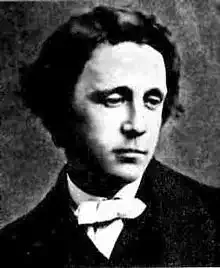
Lewis Carroll
Fit the Sixth ( Hunting of the Snark )
The Barrister's Dream
They sought it with thimbles, they sought it with care;
They pursued it with forks and hope;
They threatened its life with a railwayshare;
They charmed it with smiles and soap.
But the Barrister, weary of proving in vain
That the Beaver's lacemaking
was wrong,
Fell asleep, and in dreams saw the creature quite plain
That his fancy had dwelt on so long.
He dreamed that he stood in a shadowy Court,
Where the Snark, with a glass in its eye,
Dressed in gown, bands, and wig, was defending a pig
On the charge of deserting its sty.
The Witnesses proved, without error or flaw,
That the sty was deserted when found:
And the Judge kept explaining the state of the law
In a soft undercurrent
of sound.
The indictment had never been clearly expressed,
And it seemed that the Snark had begun,
And had spoken three hours, before any one guessed
What the pig was supposed to have done.
The Jury had each formed a different view
(Long before the indictment was read),
And they all spoke at once, so that none of them knew
One word that the others had said.
"You must know"
said the Judge: but the Snark exclaimed "Fudge!"
That statute is obsolete quite!
Let me tell you, my friends, the whole question depends
On an ancient manorial right.
"In the matter of Treason the pig would appear
To have aided, but scarcely abetted:
While the charge of Insolvency fails, it is clear,
If you grant the plea 'never indebted'.
"The fact of Desertion I will not dispute:
But its guilt, as I trust, is removed
(So far as relates to the costs of this suit)
By the Alibi which has been proved.
"My poor client's fate now depends on your votes."
Here the speaker sat down in his place,
And directed the Judge to refer to his notes
And briefly to sum up the case.
But the Judge said he never had summed up before;
So the Snark undertook it instead,
And summed it so well that it came to far more
Than the Witnesses ever had said!
When the verdict was called for, the Jury declined,
As the word was so puzzling to spell;
But they ventured to hope that the Snark wouldn't mind
Undertaking that duty as well.
So the Snark found the verdict, although, as it owned,
It was spent with the toils of the day:
When it said the word "GUILTY!" the Jury all groaned
And some of them fainted away.
Then the Snark pronounced sentence, the Judge being quite
Too nervous to utter a word:
When it rose to its feet, there was silence like night,
And the fall of a pin might be heard.
"Transportation for life" was the sentence it gave,
"And then to be fined forty pound."
The Jury all cheered, though the Judge said he feared
That the phrase was not legally sound.
But their wild exultation was suddenly checked
When the jailer informed them, with tears,
Such a sentence would not have the slightest effect,
As the pig had been dead for some years.
The Judge left the Court, looking deeply disgusted
But the Snark, though a little aghast,
As the lawyer to whom the defence was intrusted,
Went bellowing on to the last.
Thus the Barrister dreamed, while the bellowing seemed
To grow every moment more clear:
Till he woke to the knell of a furious bell,
Which the Bellman rang close at his ear.
211

Robert W. Service
Vanity
My tangoing seemed to delight her;
With me it was love at first sight.
I mentioned That I was a writer:
She asked me: "What is it you write?"
"Oh, only best-sellers," I told her.
Their titles? . . . She shook her blonde head;
The atmosphere seemed to grow colder:
Not one of my books had she read.
Oh, she was a beauty ensnaring,
And I was an author of note;
But little I saw she'd be caring
If never a novel I wrote.
Alas for the caprice of Cupid!
Alack for the phantom of Fame!
I thought her just homely and stupid:
She didn't know even my name.
I saw her a score of years after;
She gushed as I took off my hat;
But inwardly loud was my laughter,
For she was enormously fat.
Thank heaven I'd not made that error;
I saw Love drive off in a hearse;
But I too retreated in terror . . .
She started to quote me my verse.
212
Robert W. Service
The Pigeons Of St. Marks
Something's wrong in Pigeon-land;
'Tisn't as it used to be,
When the pilgrim, corn in hand,
Courted us with laughing glee;
When we crooned with pinions furled,
Tamest pigeons in the world.
When we packed each arm and shoulder,
Never deeming man a menace;
Surly birds were never bolder
Than our dainty doves of Venice:
Who would have believed a pigeon
Could become wild as a widgeon.
Well, juts blame it on the War,
When Venetians grew thinner,
And gaunt hands would grab us for
Succulence to serve a dinner . . .
How our numbers fast grew fewer,
As we perished on a skewer.
Pa and Mummie went like that,
So when tourist takes his stand,
On his Borsolino hat
Soft as whispered love I land;
Then with cooing liquid vowels
I . . . evacuate my bowls.
Something's wrong in Pigeon-land;
Mankind we no longer trust;
Shrinking from the tendered hand,
pick we corn from out the dust;
While on guileless pilgrim pate,
Thinking that revenge is sweet,
Soft I croon my hymn of hate,
Drop my tribute and retreat.
213
Lewis Carroll
Alice And The White Knight
Alice was walking beside the White Knight in Looking Glass Land.
'You are sad.' the Knight said in an anxious tone: 'let me sing you a song to comfort
you.'
'Is it very long?' Alice asked, for she had heard a good deal of poetry that day.
'It's long.' said the Knight, 'but it's very, very beautiful. Everybody that hears me sing
it either
it brings tears to their eyes, or else '
'Or else what?' said Alice, for the Knight had made a sudden pause.
'Or else it doesn't, you know. The name of the song is called 'Haddocks' Eyes.''
'Oh, that's the name of the song, is it?' Alice said, trying to feel interested.
'No, you don't understand,' the Knight said, looking a little vexed. 'That's what the
name
is called. The name really is 'The Aged, Aged Man.''
'Then I ought to have said 'That's what the song is called'?' Alice corrected herself.
'No you oughtn't: that's another thing. The song is called 'Ways and Means' but that's
only
what it's called, you know!'
'Well, what is the song then?' said Alice, who was by this time completely bewildered.
'I was coming to that,' the Knight said. 'The song really is 'Asitting
On a Gate': and the
tune's my own invention.'
So saying, he stopped his horse and let the reins fall on its neck: then slowly beating
time
with one hand, and with a faint smile lighting up his gentle, foolish face, he began:
I'll tell thee everything I can;
There's little to relate.
I saw an aged, aged man,
Asitting
on a gate.
'Who are you, aged man?' I said,
' And how is it you live?'
And his answer trickled through my head
like water through a sieve.
He said 'I look for butterflies
That sleep among the wheat:
I make them into mutton pies,
And sell them in the street.
I sell them unto men,' he said,
'Who sail on stormy seas;
And that's the way I get my bread
A trifle if you please.'
But I was thinking of a plan
To dye one's whiskers green,
And always use so large a fan
That they could not be seen.
So, having no reply to give
To what the old man said,
I cried, 'Come tell me how you live!'
And thumped him on the head.
His accents mild took up the tale:
He said, 'I go my ways,
And when I find a mountainrill,
I set it in a blaze;
And thence they make a stuff they call
Rowland's Macassar Oil Yet
twopencehalfpenny
is all
They give me for my toil.'
But I was thinking of a way
To feed one's self on batter,
And so go on from day to day
Getting a little fatter.
I shook him well from side to side
Until his face was blue:
'Come tell me how you live,' I cried,
'And what it is you do!'
He said 'I hunt for haddocks' eyes
Among the heather bright,
And work them into waistcoat buttons
In the silent night.
And these I do not sell for gold
Or coin of silvery shine,
But for a copper halfpenny,
And that will purchase nine.
'I sometimes dig for buttered rolls,
Or set limed twigs for crabs;
I sometimes search for grassy knolls
For wheels of hansomcabs.
And that's the way' (he gave a wink)
'By which I get my wealth And
very gladly will I drink
Your Honour's noble health.'
I heard him then, for I had just
Completed my design
To keep the Menai Bridge from rust
By boiling it in wine.
I thanked him much for telling me
The way he got his wealth,
But chiefly for the wish that he
Might drink my noble health.
And now if e'er by chance I put
My fingers into glue,
Or madly squeeze a righthand
foot
Into a lefthand
shoe,
Or if I drop upon my toe
A very heavy weight,
I weep, for it reminds me so
Of that old man I used to know Whose
look was mild, whose speech was slow
Whose hair was whiter than the snow,
Whose face was very like a crow,
With eyes, like cinders, all aglow,
Who seemed distracted with his woe,
Who rocked his body to and fro,
And muttered mumblingly and low,
As if his mouth were full of dough,
Who snorted like a buffalo That
summer evening long ago
Asitting
on a gate.
As the Knight sang the last words of the ballad, he gathered up the reins, and turned
his horse's head along the road by which they had come.
209
Edward Lear
Limerick: There was an Old Man of the South
There was an Old Man of the South,
Who had an immederate mouth;
But in swallowing a dish,
That was quite full of fish,
He was choked, that Old Man of the South.
Who had an immederate mouth;
But in swallowing a dish,
That was quite full of fish,
He was choked, that Old Man of the South.
208

Jonathan Swift
Dingley And Brent
Dingley and Brent,
Wherever they went,
Ne'er minded a word that was spoken;
Whatever was said,
They ne'er troubled their head,
But laugh'd at their own silly joking.
Should Solomon wise
In majesty rise,
And show them his wit and his learning;
They never would hear,
But turn the deaf ear,
As a matter they had no concern in.
You tell a good jest,
And please all the rest;
Comes Dingley, and asks you, what was it?
And, curious to know,
Away she will go
To seek an old rag in the closet.
209
Edward Lear
Limerick: There was an Old Man of the Nile
There was an Old Man of the Nile,
Who sharpened his nails with a file,
Till he cut out his thumbs,
And said calmly, 'This comes
Of sharpening one's nails with a file!'
Who sharpened his nails with a file,
Till he cut out his thumbs,
And said calmly, 'This comes
Of sharpening one's nails with a file!'
206

William Wordsworth
Rural Architecture
There's George Fisher, Charles Fleming, and Reginald Shore,
Three rosy-cheeked school-boys, the highest not more
Than the height of a counsellor's bag;
To the top of GREAT HOW did it please them to climb:
And there they built up, without mortar or lime,
A Man on the peak of the crag.
They built him of stones gathered up as they lay:
They built him and christened him all in one day,
An urchin both vigorous and hale;
And so without scruple they called him Ralph Jones.
Now Ralph is renowned for the length of his bones;
The Magog of Legberthwaite dale.
Just half a week after, the wind sallied forth,
And, in anger or merriment, out of the north,
Coming on with a terrible pother,
From the peak of the crag blew the giant away.
And what did these school-boys?--The very next day
They went and they built up another.
--Some little I've seen of blind boisterous works
By Christian disturbers more savage than Turks,
Spirits busy to do and undo:
At remembrance whereof my blood sometimes will flag;
Then, light-hearted Boys, to the top of the crag!
And I'll build up giant with you.
205
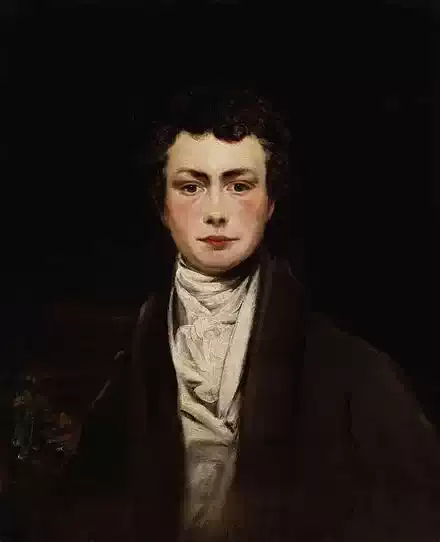
Thomas Moore
Ode to the Sublime Porte
Great Sultan, how wise are thy state compositions!
And oh, above all, I admire that Decree,
In which thou command'st, that all she politicians
Shall forthwith be strangled and cast in the sea.
'Tis my fortune to know a lean Benthamite spinster --
A maid, who her faith in old Jeremy puts;
Who talks, with a lisp, of the "last new Westminster,"
And hopes you're delighted with "Mill upon Gluts";
Who tells you how clever one Mr. Fun-blank is,
How charming his Articles 'gainst the Nobility; --
And assures you that even a gentleman's rank is,
In Jeremy's school, of no sort of utility.
To see her, ye Gods, a new number perusing --
Art. - "On the Needle's variations", by Pl--e;
Art. - By her fav'rite Fun-blank - so amusing!
"Dear man! he makes poetry quite a Law case."
Art. -"Upon Fallacies", Jeremy's own --
(Chief Fallacy being, his hope to find readers); -
Art. - "Upon Honesty", author unkown; --
Art. - (by the young Mr. M--) "Hints to Breeders".
Oh, Sultan, oh, Sultan, though oft for the bag
And the bowstring, like thee, I am tempted to call --
Though drowning's too good for each blue-stocking hag,
I would bag this she Benthamite first of them all!
And, lest she should ever again lift her head
From the watery bottom, her clack to renew --
As a clog, as a sinker, far better than lead,
I would hang round her neck her own darling Review.
206
Robert W. Service
My Dog's My Boss
Each day when it's anighing three
Old Dick looks at the clock,
Then proudly brings my stick to me
To mind me of our walk.
And in his doggy rapture he
Does everything but talk.
But since I lack his zip and zest
My old bones often tire;
And so I ventured to suggest
Today we hug the fire.
But with what wailing he expressed
The death of his desire!
He gazed at me with eyes of woe
As if to say: 'Old boy,
You mustn't lose your grip, you know,
Let us with laughing joy,
On heath and hill six miles or so
Our legs and lungs employ.'
And then his bark was stilled to a sigh
He flopped upon the floor;
But such a soft old mug am I
I threw awide the door;
So gaily, though the wind was high
We hiked across the moor.
203
Robert W. Service
Farewell To Verse
In youth when oft my muse was dumb,
My fancy nighly dead,
To make my inspiration come
I stood upon my head;
And thus I let the blood down flow
Into my cerebellum,
And published every Spring or so
Slim tomes in vellum.
Alas! I am rheumatic now,
Grey is my crown;
I can no more with brooding brow
Stand upside-down.
I fear I might in such a pose
Burst brain blood-vessel;
And that would be a woeful close
To my rhyme wrestle.
If to write verse I must reverse
I fear I'm stymied;
In ink of prose I must immerse
A pen de-rhymèd.
No more to spank the lyric lyre
Like Keats or Browning,
May I inspire the Sacred Fire
My Upside-downing.
202
Edward Lear
Limerick:There was an Old Man of Marseilles
There was an Old Man of Marseilles,
Whose daughters wore bottle-green veils;
They caught several Fish,
Which they put in a dish,
And sent to their Pa' at Marseilles.
Whose daughters wore bottle-green veils;
They caught several Fish,
Which they put in a dish,
And sent to their Pa' at Marseilles.
202
Lewis Carroll
Fit the First: ( Hunting of the Snark )
The Landing
"Just the place for a Snark!" the Bellman cried,
As he landed his crew with care;
Supporting each man on the top of the tide
By a finger entwined in his hair.
"Just the place for a Snark! I have said it twice:
That alone should encourage the crew.
Just the place for a Snark! I have said it thrice:
What I tell you three times is true."
The crew was complete: it included a BootsA
maker of Bonnets and HoodsA
Barrister, brought to arrange their disputes
And
a Broker, to value their goods.
A Billiardmarker,
whose skill was immense,
Might perhaps have won more than his share
But
a Banker, engaged at enormous expense,
Had the whole of their cash in his care.
There was also a Beaver, that paced on the deck,
Or would sit making lace in the bow:
And had often (the Bellman said) saved them from wreck
Though none of the sailors knew how.
There was one who was famed for the number of things
He forgot when he entered the ship:
His umbrella, his watch, all his jewels and rings,
And the clothes he had bought for the trip.
He had fortytwo
boxes, all carefully packed,
With his name painted clearly on each:
But, since he omitted to mention the fact,
They were all left behind on the beach.
The loss of his clothes hardly mattered, because
He had seven coats on when he came,
With three pair of bootsbut
the worst of is was,
He had wholly forgotten his name.
He would answer to "Hi!" or to any loud cry,
Such as "Fry me!" or "Fritter my wig!"
To "Whatyoumaycallum!"
or "Whatwashisname!"
But especially "Thingumajig!"
While, for those who preferred a more forcible word,
He had different names from these:
His intimate friends called him "Candleends",
And his enemies "Toastedcheese"
"His form is ungainlyhis
intellect small"
(So the Bellman would often remark)"
But his courage is perfect! And that, after all,
Is the thing that one needs with a Snark."
He would joke with hyaenas, returning their stare
With an impudent wag of the head:
And he once went a walk, pawinpaw,
with a bear,
"Just to keep up its spirits," he said.
He came as a Baker: but owned, when too late
And
it drove the poor Bellman halfmad
He
could only bake Bridecakefor
which, I may state,
No materials were to be had.
The last of the crew needs especial remark,
Though he looked an incredible dunce:
He had just one ideabut,
that one being "Snark",
The good Bellman engaged him at once.
He came as a Butcher: but gravely declared,
When the ship had been sailing a week,
He could only kill Beavers. The Bellman looked scared,
And was almost too frightened to speak:
But at length he explained, in a tremulous tone,
There was only one Beaver on board;
And that was a tame one he had of his own,
Whose death would be deeply deplored.
The Beaver, who happened to hear the remark,
Protested, with tears in its eyes,
That not even the rapture of hunting the Snark
Could atone for that dismal surprise!
It strongly advised that the Butcher should be
Conveyed in a separate ship:
But the Bellman declared that would never agree
With the plans he had made for the trip:
Navigation was always a difficult art,
Though with only one ship and one bell:
And he feared he must really decline, for his part,
Undertaking another as well.
The Beaver's best course was, no doubt, to procure
A secondhand
daggerproof
coat
So
the baker advised itand
next, to insure
Its life in some Office of note:
This the Baker suggested, and offered for hire
(On moderate terms), or for sale,
Two excellent Policies, one Against Fire
And one Against Damage From Hail.
Yet still, ever after that sorrowful day,
Whenever the Butcher was by,
The Beaver kept looking the opposite way,
And appeared unaccountably shy.
204

Spike Milligan
A Silly Poem
Said Hamlet to Ophelia,
I'll draw a sketch of thee,
What kind of pencil shall I use?
B or not B?
I'll draw a sketch of thee,
What kind of pencil shall I use?
B or not B?
203
Edward Lear
Limerick:There was a Young Lady of Clare
There was a Young Lady of Clare,
Who was sadly pursued by a bear;
When she found she was tired,
She abruptly expired,
That unfortunate Lady of Clare.
Who was sadly pursued by a bear;
When she found she was tired,
She abruptly expired,
That unfortunate Lady of Clare.
197

Jack Prelutsky
Super Samson Simpson
I am Super Samson Simpson,
I'm superlatively strong,
I like to carry elephants,
I do it all day long,
I pick up half a dozen
and hoist them in the air,
it's really somewhat simple,
for I have strength to spare.
My muscles are enormous,
they bulge from top to toe,
and when I carry elephants,
they ripple to and fro,
but I am not the strongest
in the Simpson family,
for when I carry elephants,
my grandma carries me.
193

D.H. Lawrence
Intimates
Don't you care for my love? she said bitterly.
I handed her the mirror, and said:
Please address these questions to the proper person!
Please make all requests to head-quarters!
In all matters of emotional importance
please approach the supreme authority direct! -
So I handed her the mirror.
And she would have broken it over my head,
but she caught sight of her own reflection
and that held her spellbound for two seconds
while I fled.
191
Edward Lear
Limerick:There was a Young Lady of Wales
There was a Young Lady of Wales,
Who caught a large fish without scales;
When she lifted her hook
She exclaimed, 'Only look!'
That ecstatic Young Lady of Wales.
Who caught a large fish without scales;
When she lifted her hook
She exclaimed, 'Only look!'
That ecstatic Young Lady of Wales.
192