
Art
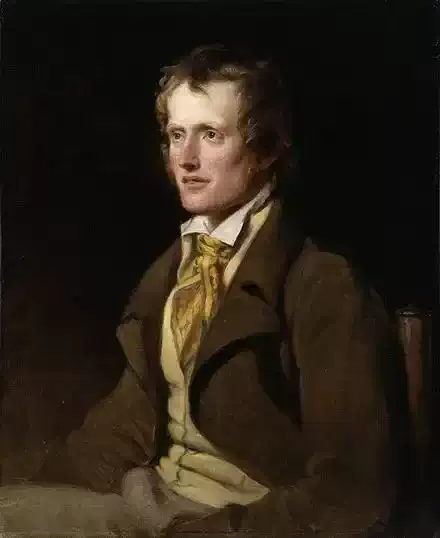
John Clare
To John Milton
_'From his honoured friend, William Davenant'_
Poet of mighty power, I fain
Would court the muse that honoured thee,
And, like Elisha's spirit, gain
A part of thy intensity;
And share the mantle which she flung
Around thee, when thy lyre was strung.
Though faction's scorn at first did shun
With coldness thy inspired song,
Though clouds of malice passed thy sun,
They could not hide it long;
Its brightness soon exhaled away
Dank night, and gained eternal day.
The critics' wrath did darkly frown
Upon thy muse's mighty lay;
But blasts that break the blossom down
Do only stir the bay;
And thine shall flourish, green and long,
With the eternity of song.
Thy genius saw, in quiet mood,
Gilt fashion's follies pass thee by,
And, like the monarch of the wood,
Towered oer it to the sky,
Where thou couldst sing of other spheres,
And feel the fame of future years.
Though bitter sneers and stinging scorns
Did throng the muse's dangerous way,
Thy powers were past such little thorns,
They gave thee no dismay;
The scoffer's insult passed thee by,
Thou smild'st and mad'st him no reply.
Envy will gnaw its heart away
To see thy genius gather root;
And as its flowers their sweets display
Scorn's malice shall be mute;
Hornets that summer warmed to fly,
Shall at the death of summer die.
Though friendly praise hath but its hour.
And little praise with thee hath been;
The bay may lose its summer flower,
But still its leaves are green;
And thine, whose buds are on the shoot,
Shall only fade to change to fruit.
Fame lives not in the breath of words,
In public praises' hue and cry;
The music of these summer birds
Is silent in a winter sky,
When thine shall live and flourish on,
Oer wrecks where crowds of fames are gone.
The ivy shuns the city wall,
When busy clamorous crowds intrude,
And climbs the desolated hall
In silent solitude;
The time-worn arch, the fallen dome,
Are roots for its eternal home.
The bard his glory neer receives
Where summer's common flowers are seen,
But winter finds it when she leaves
The laurel only green;
And time from that eternal tree,
Shall weave a wreath to honour thee;
A sunny wreath for poets meet,
From Helicon's immortal soil,
Where sacred Time with pilgrim feet
Walks forth to worship, not to spoil,
A wreath which Fame creates and bears,
And deathless genius only heirs.
Nought but thy ashes shall expire;
Thy genius, at thy obsequies,
Shall kindle up its living fire
And light the muse's skies;
Ay, it shall rise, and shine, and be
A sun in song's posterity.
364
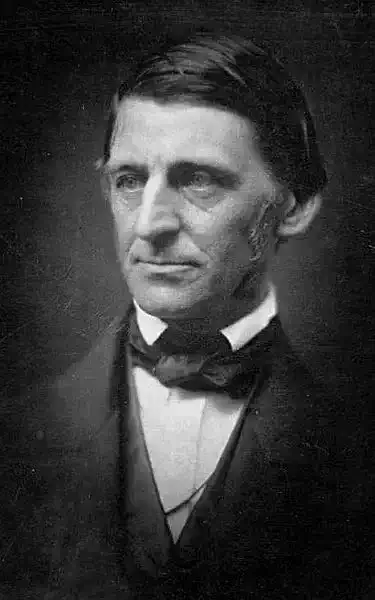
Ralph Waldo Emerson
Merops
What care I, so they stand the same,—
Things of the heavenly mind,—
How long the power to give them fame
Tarries yet behind?
Thus far to-day your favors reach,
O fair, appeasing Presences!
Ye taught my lips a single speech,
And a thousand silences.
Space grants beyond his fated road
No inch to the god of day,
And copious language still bestowed
One word, no more, to say.
361

Walt Whitman
Had I the Choice
Had I the choice to tally greatest bards,
To limn their portraits, stately, beautiful, and emulate at will,
Homer with all his wars and warriors--Hector, Achilles, Ajax,
Or Shakespeare's woe-entangled Hamlet, Lear, Othello--Tennyson's fair ladies,
Meter or wit the best, or choice conceit to weild in perfect rhyme, delight of singers;
These, these, O sea, all these I'd gladly barter,
Would you the undulation of one wave, its trick to me transfer,
Or breathe one breath of yours upon my verse,
And leave its odor there.
360
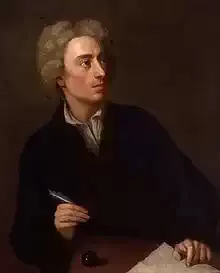
Alexander Pope
Chorus of Athenians
Strophe I.
Ye shades, where sacred truth is sought;
Groves, where immortal Sages taught;
Where heav'nly visions of Plato fir'd,
And Epicurus lay inspir'd!
In vain your guiltless laurels stood
Unspotted long with human blood.
War, horrid war, your thoughtful walks invades,
And steel now glitters in the Muses' shades.
Antistrophe I.
Oh heav'n-born sisters! source of art!
Who charm the sense, or mend the heart;
Who lead fair Virtue's train along,
Moral Truth, and mystic Song!
To what new clime, what distant sky,
Forsaken, friendless, shall ye fly?
Say, will you bless the bleak Atlantic shore?
Or bid the furious Gaul be rude no more?
Strophe II.
When Athens sinks by fates unjust,
When wild Barbarians spurn her dust;
Perhaps ev'n Britain's utmost shore,
Shall cease to blush with strager's gore.
See Arts her savage sons control,
And Athens rising near the pole!
'Till some new Tyrant lifts his purple hand,
And civil madness tears them from this land.
Antistrophe II.
Ye Gods! what justice rules the ball?
Freedom and Arts together fall;
Fools grant whate'er Ambition craves,
And men, once ignorant, are slaves.
Oh curs'd effects of civil hate,
In ev'ry age, in ev'ry state!
Still, when the lust of tyrant power succeeds,
Some Athens perishes, some Tully bleeds.
361

Johann Wolfgang von Goethe
Poetry
GOD to his untaught children sent
Law, order, knowledge, art, from high,
And ev'ry heav'nly favour lent,
The world's hard lot to qualify.
They knew not how they should behave,
For all from Heav'n stark-naked came;
But Poetry their garments gave,
And then not one had cause for shame.
Law, order, knowledge, art, from high,
And ev'ry heav'nly favour lent,
The world's hard lot to qualify.
They knew not how they should behave,
For all from Heav'n stark-naked came;
But Poetry their garments gave,
And then not one had cause for shame.
359

Robert Browning
Popularity
I.
Stand still, true poet that you are!
I know you; let me try and draw you.
Some night you'll fail us: when afar
You rise, remember one man saw you,
Knew you, and named a star!
II.
My star, God's glow-worm! Why extend
That loving hand of his which leads you
Yet locks you safe from end to end
Of this dark world, unless he needs you,
just saves your light to spend?
III.
His clenched hand shall unclose at last,
I know, and let out all the beauty:
My poet holds the future fast,
Accepts the coming ages' duty,
Their present for this past.
IV.
That day, the earth's feast-master's brow
Shall clear, to God the chalice raising;
``Others give best at first, but thou
``Forever set'st our table praising,
``Keep'st the good wine till now!''
V.
Meantime, I'll draw you as you stand,
With few or none to watch and wonder:
I'll say---a fisher, on the sand
By Tyre the old, with ocean-plunder,
A netful, brought to land.
VI.
Who has not heard how Tyrian shells
Enclosed the blue, that dye of dyes
Whereof one drop worked miracles,
And coloured like Astarte's<*> eyes
Raw silk the merchant sells?
VII.
And each bystander of them all
Could criticize, and quote tradition
How depths of blue sublimed some pall
---To get which, pricked a king's ambition
Worth sceptre, crown and ball.
VIII.
Yet there's the dye, in that rough mesh,
The sea has only just o'erwhispered!
Live whelks, each lip's beard dripping fresh,
As if they still the water's lisp heard
Through foam the rock-weeds thresh.
IX.
Enough to furnish Solomon
Such hangings for his cedar-house,
That, when gold-robed he took the throne
In that abyss of blue, the Spouse
Might swear his presence shone
X.
Most like the centre-spike of gold
Which burns deep in the blue-bell's womb,
What time, with ardours manifold,
The bee goes singing to her groom,
Drunken and overbold.
XI.
Mere conchs! not fit for warp or woof!
Till cunning come to pound and squeeze
And clarify,---refine to proof
The liquor filtered by degrees,
While the world stands aloof.
XII.
And there's the extract, flasked and fine,
And priced and saleable at last!
And Hobbs, Nobbs, Stokes and Nokes combine
To paint the future from the past,
Put blue into their line.
XIII.
Hobbs hints blue,---Straight he turtle eats:
Nobbs prints blue,---claret crowns his cup:
Nokes outdares Stokes in azure feats,---
Both gorge. Who fished the murex<*> up?
What porridge had John Keats?
* The Syrian Venus.
* Molluscs from which the famous Tyrian
* purple dye was obtained.
360

Elizabeth Barrett Browning
The Soul's Expression
WITH stammering lips and insufficient sound
I strive and struggle to deliver right
That music of my nature, day and night
With dream and thought and feeling interwound
And inly answering all the senses round
With octaves of a mystic depth and height
Which step out grandly to the infinite
From the dark edges of the sensual ground.
This song of soul I struggle to outbear
Through portals of the sense, sublime and whole,
And utter all myself into the air:
But if I did it,--as the thunder-roll
Breaks its own cloud, my flesh would perish there,
Before that dread apocalypse of soul.
357
John Clare
Idle Fame
I would not wish the burning blaze
Of fame around a restless world,
The thunder and the storm of praise
In crowded tumults heard and hurled.
I would not be a flower to stand
The stare of every passer-bye;
But in some nook of fairyland,
Seen in the praise of beauty's eye.
Of fame around a restless world,
The thunder and the storm of praise
In crowded tumults heard and hurled.
I would not be a flower to stand
The stare of every passer-bye;
But in some nook of fairyland,
Seen in the praise of beauty's eye.
357
Ralph Waldo Emerson
The Problem
I like the church; I like a cowl;
I love a prophet of the soul;
And on my heart monastic aisles
Fall like sweet strains, or pensive smiles;
Yet not for all his faith can see
Would I that cowlèd churchman be.
Why should the vest on him allure,
Which I could not on me endure?
Not from a vain or shallow thought
His awful Jove young Phidias brought;
Never from lips of cunning fell
The thrilling Delphic oracle;
Out from the heart of nature rolled
The burdens of the Bible old;
The litanies of nations came,
Like the volcano's tongue of flame,
Up from the burning core below,--
The canticles of love and woe:
The hand that rounded Peter's dome
And groined the aisles of Christian Rome
Wrought in a sad sincerity;
Himself from God he could not free;
He builded better than he knew;--
The conscious stone to beauty grew.
Knowst thou what wove yon wood bird's nest
Of leaves and feathers from her breast?
Or how the fish outbuilt her shell,
Painting with morn each annual cell?
Or how the sacred pine tree adds
To her old leaves new myriads?
Such and so grew these holy piles,
Whilst love and terror laid the tiles.
Earth proudly wears the Parthenon,
As the best gem upon her zone,
And Morning opes with haste her lids
To gaze upon the Pyramids;
O'er England's abbeys bends the sky,
As on its friends, with kindred eye;
For out of Thought's interior sphere
These wonders rose to upper air;
And Nature gladly gave them place,
Adopted them into her race,
And granted them an equal date
With Andes and with Ararat.
These temples grew as grows the grass;
Art might obey, but not surpass.
The passive Master lent his hand
To the vast soul that o'er him planned;
And the same power that reared the shrine
Bestrode the tribes that knelt within.
Ever the fiery Pentecost
Girds with one flame the countless host,
Trances the heart through chanting choirs,
And through the priest the mind inspires.
The word unto the prophet spoken
Was writ on tables yet unbroken;
The word by seers or sibyls told,
In groves of oak, or fames of gold,
Still floats upon the morning wind,
Still whispters to the willing mind.
One accent of the Holy Ghost
The heedless world hath never lost.
I know what say the fathers wise,--
The Book itself before me lies,
Old Chrysostom, best Augustine,
And he who blent both in his line,
The younger Golden Lips or mines,
Taylor, the Shakespeare of divines.
His words are music in my ear.
I see his cowlèd portrait dear;
And yet, for all his faith could see,
I would not the good bishop be.
356
Johann Wolfgang von Goethe
Lines On Seeing Schiller's Skull
WITHIN a gloomy charnel-house one day
I view'd the countless skulls, so strangely mated,
And of old times I thought, that now were grey.
Close pack'd they stand, that once so fiercely hated,
And hardy bones, that to the death contended,
Are lying cross'd,--to lie for ever, fated.
What held those crooked shoulder-blades suspended?
No one now asks; and limbs with vigour fired,
The hand, the foot--their use in life is ended.
Vainly ye sought the tomb for rest when tired;
Peace in the grave may not be yours; ye're driven
Back into daylight by a force inspired;
But none can love the wither'd husk, though even
A glorious noble kernel it contained.
To me, an adept, was the writing given
Which not to all its holy sense explained,
When 'mid the crowd, their icy shadows flinging,
I saw a form, that glorious still remained.
And even there, where mould and damp were clinging,
Gave me a blest, a rapture-fraught emotion,
As though from death a living fount were springing.
What mystic joy I felt! What rapt devotion!
That form, how pregnant with a godlike trace!
A look, how did it whirl me tow'rd that ocean
Whose rolling billows mightier shapes embrace!
Mysterious vessel! Oracle how dear!
Even to grasp thee is my hand too base,
Except to steal thee from thy prison here
With pious purpose, and devoutly go
Back to the air, free thoughts, and sunlight clear.
What greater gain in life can man e'er know
Than when God-Nature will to him explain
How into Spirit steadfastness may flow,
How steadfast, too, the Spirit-Born remain.
355
Robert Browning
A Toccata Of Galuppi's
I.
Oh Galuppi, Baldassaro, this is very sad to find!
I can hardly misconceive you; it would prove me deaf and blind;
But although I take your meaning, 'tis with such a heavy mind!
II.
Here you come with all your music, and here's all the good it brings.
What, they lived once thus at Venice where the merchants were the kings,
Where Saint Mark's is, where the Doges used to wed the sea with rings?
III.
Ay, because the sea's the street there; and 'tis arched by ... what you call
... Shylock's bridge with houses on it, where they kept the carnival:
I was never out of England---it's as if I saw it all.
IV.
Did young people take their pleasure when the sea was warm in May?
Balls and masks begun at midnight, burning ever to mid-day,
When they made up fresh adventures for the morrow, do you say?
V.
Was a lady such a lady, cheeks so round and lips so red,---
On her neck the small face buoyant, like a bell-flower on its bed,
O'er the breast's superb abundance where a man might base his head?
VI.
Well, and it was graceful of them---they'd break talk off and afford
---She, to bite her mask's black velvet---he, to finger on his sword,
While you sat and played Toccatas, stately at the clavichord?
VII.
What? Those lesser thirds so plaintive, sixths diminished, sigh on sigh,
Told them something? Those suspensions, those solutions---``Must we die?''
Those commiserating sevenths---``Life might last! we can but try!''
VIII.
``Were you happy?''---``Yes.''---``And are you still as happy?''---``Yes. And you?''
---``Then, more kisses!''---``Did _I_ stop them, when a million seemed so few?''
Hark, the dominant's persistence till it must be answered to!
IX.
So, an octave struck the answer. Oh, they praised you, I dare say!
``Brave Galuppi! that was music! good alike at grave and gay!
``I can always leave off talking when I hear a master play!''
X.
Then they left you for their pleasure: till in due time, one by one,
Some with lives that came to nothing, some with deeds as well undone,
Death stepped tacitly and took them where they never see the sun.
XI.
But when I sit down to reason, think to take my stand nor swerve,
While I triumph o'er a secret wrung from nature's close reserve,
In you come with your cold music till I creep thro' every nerve.
XII.
Yes, you, like a ghostly cricket, creaking where a house was burned:
``Dust and ashes, dead and done with, Venice spent what Venice earned.
``The soul, doubtless, is immortal---where a soul can be discerned.
XIII.
``Yours for instance: you know physics, something of geology,
``Mathematics are your pastime; souls shall rise in their degree;
``Butterflies may dread extinction,---you'll not die, it cannot be!
XIV.
``As for Venice and her people, merely born to bloom and drop,
``Here on earth they bore their fruitage, mirth and folly were the crop:
``What of soul was left, I wonder, when the kissing had to stop?
XV.
``Dust and ashes!'' So you creak it, and I want the heart to scold.
Dear dead women, with such hair, too---what's become of all the gold
Used to hang and brush their bosoms? I feel chilly and grown old.
* . An overture---a touch piece.
353
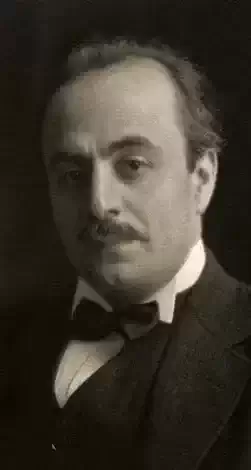
Khalil Gibran
A Poet's Death is His Life IV
The dark wings of night enfolded the city upon which Nature had spread a pure white
garment of snow; and men deserted the streets for their houses in search of warmth,
while the north wind probed in contemplation of laying waste the gardens. There in the
suburb stood an old hut heavily laden with snow and on the verge of falling. In a dark
recess of that hovel was a poor bed in which a dying youth was lying, staring at the
dim light of his oil lamp, made to flicker by the entering winds. He a man in the spring
of life who foresaw fully that the peaceful hour of freeing himself from the clutches of
life was fast nearing. He was awaiting Death's visit gratefully, and upon his pale face
appeared the dawn of hope; and on his lops a sorrowful smile; and in his eyes
forgiveness.
He was poet perishing from hunger in the city of living rich. He was placed in the
earthly world to enliven the heart of man with his beautiful and profound sayings. He
as noble soul, sent by the Goddess of Understanding to soothe and make gentle the
human spirit. But alas! He gladly bade the cold earth farewell without receiving a smile
from its strange occupants.
He was breathing his last and had no one at his bedside save the oil lamp, his only
companion, and some parchments upon which he had inscribed his heart's feeling. As
he salvaged the remnants of his withering strength he lifted his hands heavenward; he
moved his eyes hopelessly, as if wanting to penetrate the ceiling in order to see the
stars from behind the veil clouds.
And he said, "Come, oh beautiful Death; my soul is longing for you. Come close to me
and unfasten the irons life, for I am weary of dragging them. Come, oh sweet Death,
and deliver me from my neighbors who looked upon me as a stranger because I
interpret to them the language of the angels. Hurry, oh peaceful Death, and carry me
from these multitudes who left me in the dark corner of oblivion because I do not bleed
the weak as they do. Come, oh gentle Death, and enfold me under your white wings,
for my fellowmen are not in want of me. Embrace me, oh Death, full of love and
mercy; let your lips touch my lips which never tasted a mother's kiss, not touched a
sister's cheeks, not caresses a sweetheart's fingertips. Come and take me, by beloved
Death."
Then, at the bedside of the dying poet appeared an angel who possessed a
supernatural and divine beauty, holding in her hand a wreath of lilies. She embraced
him and closed his eyes so he could see no more, except with the eye of his spirit. She
impressed a deep and long and gently withdrawn kiss that left and eternal smile of
fulfillment upon his lips. Then the hovel became empty and nothing was lest save
parchments and papers which the poet had strewn with bitter futility.
Hundreds of years later, when the people of the city arose from the diseases slumber
of ignorance and saw the dawn of knowledge, they erected a monument in the most
beautiful garden of the city and celebrated a feast every year in honor of that poet,
whose writings had freed them. Oh, how cruel is man's ignorance!
353
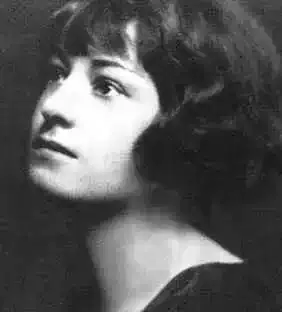
Dorothy Parker
For A Lady Who Must Write Verse
Unto seventy years and seven,
Hide your double birthright well-
You, that are the brat of Heaven
And the pampered heir to Hell.
Let your rhymes be tinsel treasures,
Strung and seen and thrown aside.
Drill your apt and docile measures
Sternly as you drill your pride.
Show your quick, alarming skill in
Tidy mockeries of art;
Never, never dip your quill in
Ink that rushes from your heart.
When your pain must come to paper,
See it dust, before the day;
Let your night-light curl and caper,
Let it lick the words away.
Never print, poor child, a lay on
Love and tears and anguishing,
Lest a cooled, benignant Phaon
Murmur, "Silly little thing!"
353

Ella Wheeler Wilcox
Bohemia
Bohemia, o'er thy unatlassed borders
How many cross, with half-reluctant feet,
And unformed fears of dangers and disorders,
To find delights, more wholesome and more sweet
Than ever yet were known to the "elite."
Herein can dwell no pretence and no seeming;
No stilted pride thrives in this atmosphere,
Which stimulates a tendency to dreaming.
The shores of the ideal world, from here,
Seem sometimes to be tangible and near.
We have no use for formal codes of fashion;
No "Etiquette f Courts" we emulate;
We know it needs sincerity and passion
To carry out the plans of God, or fate;
We do not strive to seem inanimate.
We call no time lost that we give to pleasure;
Life's hurrying river speeds to Death's great sea;
We cast out no vain plummet-line to measure
Imagined depths of that unknown To-Be,
But grasp the Now, and fill it full of glee.
All creeds have room here, and we all together
Devoutly worship at Art's sacred shrine;
But he who dwells once in thy golden weather,
Bohemia--sweet, lovely land of mine--
Can find no joy outside thy border-line.
350

Claude Mckay
Russian Cathedral
Bow down my soul in worship very low
And in the holy silences be lost.
Bow down before the marble man of woe,
Bow down before the singing angel host.
What jewelled glory fills my spirit's eye,
What golden grandeur moves the depths of me!
The soaring arches lift me up on high
Taking my breath with their rare symmetry.
Bow down my soul and let the wondrous light
Of beauty bathe thee from her lofty throne,
Bow down before the wonder of man's might.
Bow down in worship, humble and alone;
Bow lowly down before the sacred sight
Of man's divinity alive in stone.
348

Carl Sandburg
Mask
Fling your red scarf faster and faster, dancer.
It is summer and the sun loves a million green leaves, masses of green.
Your red scarf flashes across them calling and a-calling.
The silk and flare of it is a great soprano leading a chorus
Carried along in a rouse of voices reaching for the heart of the world.
Your toes are singing to meet the song of your arms:
Let the red scarf go swifter.
Summer and the sun command you.
348

John Greenleaf Whittier
Fitz-Greene Halleck
AT THE UNVEILING OF HIS STATUE.
Among their graven shapes to whom
Thy civic wreaths belong,
O city of his love, make room
For one whose gift was song.
Not his the soldier's sword to wield,
Nor his the helm of state,
Nor glory of the stricken field,
Nor triumph of debate.
In common ways, with common men,
He served his race and time
As well as if his clerkly pen
Had never danced to rhyme.
If, in the thronged and noisy mart,
The Muses found their son,
Could any say his tuneful art
A duty left undone?
He toiled and sang; and year by year
Men found their homes more sweet,
And through a tenderer atmosphere
Looked down the brick-walled street.
The Greek's wild onset gall Street knew;
The Red King walked Broadway;
And Alnwick Castle's roses blew
From Palisades to Bay.
Fair City by the Sea! upraise
His veil with reverent hands;
And mingle with thy own the praise
And pride of other lands.
Let Greece his fiery lyric breathe
Above her hero-urns;
And Scotland, with her holly, wreathe
The flower he culled for Burns.
Oh, stately stand thy palace walls,
Thy tall ships ride the seas;
To-day thy poet's name recalls
A prouder thought than these.
Not less thy pulse of trade shall beat,
Nor less thy tall fleets swim,
That shaded square and dusty street
Are classic ground through him.
Alive, he loved, like all who sing,
The echoes of his song;
Too late the tardy meed we bring,
The praise delayed so long.
Too late, alas! Of all who knew
The living man, to-day
Before his unveiled face, how few
Make bare their locks of gray!
Our lips of praise must soon be dumb,
Our grateful eyes be dim;
O brothers of the days to come,
Take tender charge of him!
New hands the wires of song may sweep,
New voices challenge fame;
But let no moss of years o'ercreep
The lines of Halleck's name.
348
Johann Wolfgang von Goethe
The Consecrated Spot
WHEN in the dance of the Nymphs, in the moonlight so holy assembled,
Mingle the Graces, down from Olympus in secret descending,
Here doth the minstrel hide, and list to their numbers enthralling,
Here doth he watch their silent dances' mysterious measure.
All that is glorious in Heaven, and all that the earth in her beauty
Ever hath brought into life, the dreamer awake sees before him;
All he repeats to the Muses, and lest the gods should be anger'd,
How to tell of secrets discreetly, the Muses instruct him.
348

Ezra Pound
Ité
Go, my songs, seek your praise from the young
and from the intolerant,
Move among the lovers of perfection alone.
Seek ever to stand in the hard Sophoclean light
And take you wounds from it gladly.
and from the intolerant,
Move among the lovers of perfection alone.
Seek ever to stand in the hard Sophoclean light
And take you wounds from it gladly.
346

Robert Louis Stevenson
Still I Love To Rhyme
STILL I love to rhyme, and still more, rhyming, to wander
Far from the commoner way;
Old-time trills and falls by the brook-side still do I ponder,
Dreaming to-morrow to-day.
Come here, come, revive me, Sun-God, teach me, Apollo,
Measures descanted before;
Since I ancient verses, I emulous follow,
Prints in the marbles of yore.
Still strange, strange, they sound in old-young raiment invested,
Songs for the brain to forget -
Young song-birds elate to grave old temples benested
Piping and chirruping yet.
Thoughts? No thought has yet unskilled attempted to flutter
Trammelled so vilely in verse;
He who writes but aims at fame and his bread and his butter,
Won with a groan and a curse.
344
Robert Louis Stevenson
To the Muse
Resign the rhapsody, the dream,
To men of larger reach;
Be ours the quest of a plain theme,
The piety of speech.
As monkish scribes from morning break
Toiled till the close of light,
Nor thought a day too long to make
One line or letter bright:
We also with an ardent mind,
Time, wealth, and fame forgot,
Our glory in our patience find
And skim, and skim the pot:
Till last, when round the house we hear
The evensong of birds,
One corner of blue heaven appear
In our clear well of words.
Leave, leave it then, muse of my heart!
Sans finish and sans frame,
Leave unadorned by needless art
The picture as it came.
345
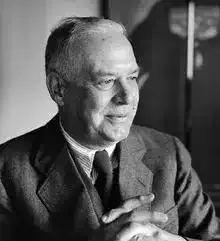
Wallace Stevens
Poem Written at Morning
A sunny day's complete Poussiniana
Divide it from itself. It is this or that
And it is not.
By metaphor you paint
A thing. Thus, the pineapple was a leather fruit,
A fruit for pewter, thorned and palmed and blue,
To be served by men of ice.
The senses paint
By metaphor. The juice was fragranter
Than wettest cinnamon. It was cribled pears
Dripping a morning sap.
The truth must be
That you do not see, you experience, you feel,
That the buxom eye brings merely its element
To the total thing, a shapeless giant forced
Upward.
Green were the curls upon that head.
342
Henry Van Dyke
Robert Browning
How blind the toil that burrows like the mole,
In winding graveyard pathways underground,
For Browning's lineage! What if men have found
Poor footmen or rich merchants on the roll
Of his forbears? Did they beget his soul?
Nay, for he came of ancestry renowned
Through all the world, -- the poets laurel-crowned
With wreaths from which the autumn takes no toll.
The blazons on his coat-of-arms are these:
The flaming sign of Shelley's heart on fire,
The golden globe of Shakespeare's human stage,
The staff and scrip of Chaucer's pilgrimage,
The rose of Dante's deep, divine desire,
The tragic mask of wise Euripides.
341
Wallace Stevens
A High-Toned Old Christian Woman
Poetry is the supreme fiction, madame.
Take the moral law and make a nave of it
And from the nave build haunted heaven. Thus,
The conscience is converted into palms,
Like windy citherns hankering for hymns.
We agree in principle. That's clear. But take
The opposing law and make a peristyle,
And from the peristyle project a masque
Beyond the planets. Thus, our bawdiness,
Unpurged by epitaph, indulged at last,
Is equally converted into palms,
Squiggling like saxophones. And palm for palm,
Madame, we are where we began. Allow,
Therefore, that in the planetary scene
Your disaffected flagellants, well-stuffed,
Smacking their muzzy bellies in parade,
Proud of such novelties of the sublime,
Such tink and tank and tunk-a-tunk-tunk,
May, merely may, madame, whip from themselves
A jovial hullabaloo among the spheres.
This will make widows wince. But fictive things
Wink as they will. Wink most when widows wince.
343