
Art

William Shakespeare
The Rival Poet Sonnets (78 - 86)
LXXVIII
So oft have I invoked thee for my Muse,
And found such fair assistance in my verse
As every alien pen hath got my use
And under thee their poesy disperse.
Thine eyes, that taught the dumb on high to sing
And heavy ignorance aloft to fly,
Have added feathers to the learned's wing
And given grace a double majesty.
Yet be most proud of that which I compile,
Whose influence is thine, and born of thee:
In others' works thou dost but mend the style,
And arts with thy sweet graces graced be;
But thou art all my art, and dost advance
As high as learning my rude ignorance.
LXXIX
Whilst I alone did call upon thy aid,
My verse alone had all thy gentle grace;
But now my gracious numbers are decay'd,
And my sick Muse doth give an other place.
I grant, sweet love, thy lovely argument
Deserves the travail of a worthier pen;
Yet what of thee thy poet doth invent
He robs thee of, and pays it thee again.
He lends thee virtue, and he stole that word
From thy behaviour; beauty doth he give,
And found it in thy cheek: he can afford
No praise to thee, but what in thee doth live.
Then thank him not for that which he doth say,
Since what he owes thee, thou thyself dost pay.
LXXX
O! how I faint when I of you do write,
Knowing a better spirit doth use your name,
And in the praise thereof spends all his might,
To make me tongue-tied speaking of your fame.
But since your worth, wide as the ocean is,
The humble as the proudest sail doth bear,
My saucy bark, inferior far to his,
On your broad main doth wilfully appear.
Your shallowest help will hold me up afloat,
Whilst he upon your soundless deep doth ride;
Or, being wrack'd, I am a worthless boat,
He of tall building, and of goodly pride:
Then if he thrive and I be cast away,
The worst was this, my love was my decay.
LXXXI
Or I shall live your epitaph to make,
Or you survive when I in earth am rotten,
From hence your memory death cannot take,
Although in me each part will be forgotten.
Your name from hence immortal life shall have,
Though I, once gone, to all the world must die:
The earth can yield me but a common grave,
When you entombed in men's eyes shall lie.
Your monument shall be my gentle verse,
Which eyes not yet created shall o'er-read;
And tongues to be, your being shall rehearse,
When all the breathers of this world are dead;
You still shall live, such virtue hath my pen,
Where breath most breathes, even in the mouths of men.
LXXXII
I grant thou wert not married to my Muse,
And therefore mayst without attaint o'erlook
The dedicated words which writers use
Of their fair subject, blessing every book.
Thou art as fair in knowledge as in hue,
Finding thy worth a limit past my praise;
And therefore art enforced to seek anew
Some fresher stamp of the time-bettering days.
And do so, love; yet when they have devis'd,
What strained touches rhetoric can lend,
Thou truly fair, wert truly sympathiz'd
In true plain words, by thy true-telling friend;
And their gross painting might be better usd
Where cheeks need blood; in thee it is abusd.
LXXXIII
I never saw that you did painting need,
And therefore to your fair no painting set;
I found, or thought I found, you did exceed
The barren tender of a poet's debt:
And therefore have I slept in your report,
That you yourself, being extant, well might show
How far a modern quill doth come too short,
Speaking of worth, what worth in you doth grow.
This silence for my sin you did impute,
Which shall be most my glory being dumb;
For I impair not beauty being mute,
When others would give life, and bring a tomb.
There lives more life in one of your fair eyes
Than both your poets can in praise devise.
LXXXIV
Who is it that says most, which can say more,
Than this rich praise, that you alone, are you,
In whose confine immured is the store
Which should example where your equal grew?
Lean penury within that pen doth dwell
That to his subject lends not some small glory;
But he that writes of you, if he can tell
That you are you, so dignifies his story.
Let him but copy what in you is writ,
Not making worse what nature made so clear,
And such a counterpart shall fame his wit,
Making his style admired every where.
You to your beauteous blessings add a curse,
Being fond on praise, which makes your praises worse.
LXXXV
My tongue-tied Muse in manners holds her still,
While comments of your praise richly compiled,
Reserve thy character with golden quill,
And precious phrase by all the Muses filed.
I think good thoughts, whilst others write good words,
And like unlettered clerk still cry 'Amen'
To every hymn that able spirit affords,
In polished form of well-refined pen.
Hearing you praised, I say ''tis so, 'tis true,'
And to the most of praise add something more;
But that is in my thought, whose love to you,
Though words come hindmost, holds his rank before.
Then others, for the breath of words respect,
Me for my dumb thoughts, speaking in effect.
LXXXVI
Was it the proud full sail of his great verse,
Bound for the prize of all too precious you,
That did my ripe thoughts in my brain inhearse,
Making their tomb the womb wherein they grew?
Was it his spirit, by spirits taught to write
Above a mortal pitch, that struck me dead?
No, neither he, nor his compeers by night
Giving him aid, my verse astonished.
He, nor that affable familiar ghost
Which nightly gulls him with intelligence,
As victors of my silence cannot boast;
I was not sick of any fear from thence:
But when your countenance filled up his line,
Then lacked I matter; that enfeebled mine.
389

Johann Wolfgang von Goethe
The Magic Net
Do I see a contest yonder?
See I miracles or pastimes?
Beauteous urchins, five in number,
'Gainst five sisters fair contending,--
Measured is the time they're beating--
At a bright enchantress' bidding.
Glitt'ring spears by some are wielded,
Threads are others nimbly twining,
So that in their snares, the weapons
One would think, must needs be captured,
Soon, in truth, the spears are prison'd;
Yet they, in the gentle war-dance,
One by one escape their fetters
In the row of loops so tender,
That make haste to seize a free one
Soon as they release a captive.
So with contests, strivings, triumphs,
Flying now, and now returning,
Is an artful net soon woven,
In its whiteness like the snow-flakes,
That, from light amid the darkness,
Draw their streaky lines so varied,
As e'en colours scarce can draw them.
Who shall now receive that garment
Far beyond all others wish'd-for?
Whom our much-loved mistress favour
As her own acknowledged servant?
I am blest by kindly Fortune's
Tokens true, in silence pray'd for!
And I feel myself held captive,
To her service now devoted.
Yet, e'en while I, thus enraptured,
Thus adorn'd, am proudly wand'ring,
See! yon wantons are entwining,
Void of strife, with secret ardour,
Other nets, each fine and finer,
Threads of twilight interweaving,
Moonbeams sweet, night-violets' balsam.
Ere the net is noticed by us,
Is a happier one imprison'd,
Whom we, one and all, together
Greet with envy and with blessings.
389
Johann Wolfgang von Goethe
Explanation Of An Ancient Woodcut
EARLY within his workshop here,
On Sundays stands our master dear;
His dirty apron he puts away,
And wears a cleanly doublet to-day;
Lets wax'd thread, hammer, and pincers rest,
And lays his awl within his chest;
The seventh day he takes repose
From many pulls and many blows.
Soon as the spring-sun meets his view,
Repose begets him labour anew;
He feels that he holds within his brain
A little world, that broods there amain,
And that begins to act and to live,
Which he to others would gladly give.
He had a skillful eye and true,
And was full kind and loving too.
For contemplation, clear and pure,--
For making all his own again, sure;
He had a tongue that charm'd when 'twas heard,
And graceful and light flow'd ev'ry word;
Which made the Muses in him rejoice,
The Master-singer of their choice.
And now a maiden enter'd there,
With swelling breast, and body fair;
With footing firm she took her place,
And moved with stately, noble grace;
She did not walk in wanton mood,
Nor look around with glances lewd.
She held a measure in her hand,
Her girdle was a golden band,
A wreath of corn was on her head,
Her eye the day's bright lustre shed;
Her name is honest Industry,
Else, Justice, Magnanimity.
She enter'd with a kindly greeting;
He felt no wonder at the meeting,
For, kind and fair as she might be,
He long had known her, fancied he.
"I have selected thee," she said,
"From all who earth's wild mazes tread,
That thou shouldst have clear-sighted sense,
And nought that's wrong shouldst e'er commence.
When others run in strange confusion,
Thy gaze shall see through each illusion
When others dolefully complain,
Thy cause with jesting thou shalt gain,
Honour and right shalt value duly,
In everything act simply, truly,--
Virtue and godliness proclaim,
And call all evil by its name,
Nought soften down, attempt no quibble,
Nought polish up, nought vainly scribble.
The world shall stand before thee, then,
As seen by Albert Durer's ken,
In manliness and changeless life,
In inward strength, with firmness rife.
Fair Nature's Genius by the hand
Shall lead thee on through every land,
Teach thee each different life to scan,
Show thee the wondrous ways of man,
His shifts, confusions, thrustings, and drubbings,
Pushings, tearings, pressings, and rubbings;
The varying madness of the crew,
The anthill's ravings bring to view;
But thou shalt see all this express'd,
As though 'twere in a magic chest.
Write these things down for folks on earth,
In hopes they may to wit give birth."--
Then she a window open'd wide,
And show'd a motley crowd outside,
All kinds of beings 'neath the sky,
As in his writings one may spy.
Our master dear was, after this,
On Nature thinking, full of bliss,
When tow'rd him, from the other side
He saw an aged woman glide;
The name she bears, Historia,
Mythologia, Fabula;
With footstep tottering and unstable
She dragg'd a large and wooden carved-table,
Where, with wide sleeves and human mien,
The Lord was catechizing seen;
Adam, Eve, Eden, the Serpent's seduction,
Gomorrah and Sodom's awful destruction,
The twelve illustrious women, too,
That mirror of honour brought to view;
All kinds of bloodthirstiness, murder, and sin,
The twelve wicked tyrants also were in,
And all kinds of goodly doctrine and law;
Saint Peter with his scourge you saw,
With the world's ways dissatisfied,
And by our Lord with power supplied.
Her train and dress, behind and before,
And e'en the seams, were painted o'er
With tales of worldly virtue and crime.--
Our master view'd all this for a time;
The sight right gladly he survey'd,
So useful for him in his trade,
Whence he was able to procure
Example good and precept sure,
Recounting all with truthful care,
As though he had been present there.
His spirit seem'd from earth to fly,
He ne'er had turned away his eye,
Did he not just behind him hear
A rattle of bells approaching near.
And now a fool doth catch his eye,
With goat and ape's leap drawing nigh
A merry interlude preparing
With fooleries and jests unsparing.
Behind him, in a line drawn out,
He dragg'd all fools, the lean and stout,
The great and little, the empty and full,
All too witty, and all too dull,
A lash he flourish'd overhead,
As though a dance of apes he led,
Abusing them with bitterness,
As though his wrath would ne'er grow less.
While on this sight our master gazed,
His head was growing well-nigh crazed:
What words for all could he e'er find,
Could such a medley be combined?
Could he continue with delight
For evermore to sing and write?
When lo, from out a cloud's dark bed
In at the upper window sped
The Muse, in all her majesty,
As fair as our loved maids we see.
With clearness she around him threw
Her truth, that ever stronger grew.
"I, to ordain thee come," she spake:
"So prosper, and my blessing take!
The holy fire that slumb'ring lies
Within thee, in bright flames shall rise;
Yet that thine ever-restless life
May still with kindly strength be rife,
I, for thine inward spirit's calm.
Have granted nourishment and balm,
That rapture may thy soul imbue,
Like some fair blossom bathed in dew."--
Behind his house then secretly
Outside the doorway pointed she,
Where, in a shady garden-nook,
A beauteous maid with downcast look
Was sitting where a stream was flowing,
With elder bushes near it growing,
She sat beneath an apple tree,
And nought around her seem'd to see.
Her lap was full of roses fair,
Which in a wreath she twined with care.
And, with them, leaves and blossoms blended:
For whom was that sweet wreath intended?
Thus sat she, modest and retired,
Her bosom throbb'd, with hope inspired;
Such deep forebodings fill'd her mind,
No room for wishing could she find,
And with the thoughts that o'er it flew,
Perchance a sigh was mingled too.
"But why should sorrow cloud thy brow?
That, dearest love, which fills thee now
Is fraught with joy and ecstasy.
Prepared in one alone for thee,
That he within thine eye may find
Solace when fortune proves unkind,
And be newborn through many a kiss,
That he receives with inward bliss;
When'er he clasps thee to his breast.
May he from all his toils find rest
When he in thy dear arms shall sink,
May he new life and vigour drink:
Fresh joys of youth shalt thou obtain,
In merry jest rejoice again.
With raillery and roguish spite,
Thou now shalt tease him, now delight.
Thus Love will nevermore grow old,
Thus will the minstrel ne'er be cold!"
While he thus lives, in secret bless'd,
Above him in the clouds doth rest
An oak-wreath, verdant and sublime,
Placed on his brow in after-time;
While they are banish'd to the slough,
Who their great master disavow.
387

Emily Dickinson
Her-last Poems
Her-"last Poems"Poets-
ended
Silver-
perished-with her Tongue-
Not on Record-bubbled other,
Flute-or Woman-
So divine-
Not unto its Summer-Morning
Robin-uttered Half the Tune-
Gushed too free for the Adoring-
From the Anglo-FlorentineLate-
the Praise'
Tis dull-conferring
On the Head too High to CrownDiadem-
or Ducal Showing-
Be its Grave-sufficient sign
Nought-
that We-No Poet's KinsmanSuffocate-
with easy woe-
What, and if, Ourself a Bridegroom-
Put Her down-in Italy?
387

Ella Wheeler Wilcox
I Step Across The Mystic Border-Land
I step across the mystic border-land,
And look upon the wonder-world of Art.
How beautiful, how beautiful its hills!
And all its valleys, how surpassing fair!
The winding paths that lead up to the heights
Are polished by the footsteps of the great.
The mountain-peaks stand very near to God:
The chosen few whose feet have trod thereon
Have talked with Him. and with the angels walked.
Here are no sounds of discord-no profane
Or senseless gossip of unworthy things-
Only the songs of chisels and of pens,
Of busy brushes, and ecstatic strains
Of souls surcharged with music most divine.
Here is no idle sorrow, no poor grief
For any day or object left behind-
For time is counted precious, and herein
Is such complete abandonment of Self
That tears turn into rainbows, and enhance
The beauty of the land where all is fair,
Awed and afraid, I cross the border-land.
Oh, who am I, that I dare enter here
Where the great artists of the world have trod-
The genius-crowned aristocrats of Earth?
Only the singer of a little song;
Yet loving Art with such a mighty love
I hold it greater to have won a place
Just on the fair land's edge, to make my grave,
Than in the outer world of greed and gain
To sit upon a royal throne and reign.
386
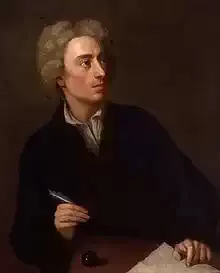
Alexander Pope
The Temple of Fame
In that soft season, when descending show'rs
Call forth the greens, and wake the rising flow'rs;
When op'ning buds salute the welcome day,
And earth relenting feels the genial day,
As balmy sleep had charm'd my cares to rest,
And love itself was banish'd from my breast,
(What time the morn mysterious visions brings,
While purer slumbers spread their golden wings)
A train of phantoms in wild order rose,
And, join'd, this intellectual sense compose.
I stood, methought, betwixt earth, seas, and skies;
The whole creation open to my eyes:
In air self-balanc'd hung the globe below,
Where mountains rise and circling oceans flow;
Here naked rocks, and empty wastes were seen,
There tow'ry cities, and the forests green:
Here sailing ships delight the wand'ring eyes:
There trees, and intermingled temples rise;
Now a clear sun the shining scene displays,
The transient landscape now in clouds decays.
O'er the wide Prospect as I gaz'd around,
Sudden I heard a wild promiscuous sound,
Like broken thunders that at distance roar,
Then gazing up, a glorious pile beheld,
Whose tow'ring summit ambient clouds conceal'd.
High on a rock of Ice the structure lay,
Steep its ascent, and slipp'ry was the way;
The wond'rous rock like Parian marble shone,
And seem'd, to distant sight, of solid stone.
Inscriptions here of various Names I view'd,
The greater part by hostile time subdu'd;
Yet wide was spread their fame in ages past,
And Poets once had promis'd they should last.
Some fresh engrav'd appear'd of Wits renown'd;
I look'd again, nor could their trace be found.
Critics I saw, that other names deface,
And fix their own, with labour, in their place:
Their own, like others, soon their place resign'd,
Or disappear'd, and left the first behind.
Nor was the work impair'd by storms alone,
But felt th' approaches of too warm a sun;
For Fame, impatient of extremes, decays
Not more by Envy than excess of Praise.
Yet part no injuries of heav'n could feel,
Like crystal faithful to th' graving steel:
The rock's high summit, in the temple's shade,
Nor heat could melt, nor beating storm invade.
Their names inscrib'd, unnumber'd ages past
From time's first birth, with time itself shall last;
These ever new, nor subject to decays,
Spread, and grow brighter with the length of days.
So Zembla's rocks (the beauteous work of frost)
Rise white in air, and glitter o'er the coast;
Pale suns, unfelt, at distance roll away,
And on th' impassive ice the light'nings play;
Eternal snows the growing mass supply,
Till the bright mountains prop th' incumbent sky:
As Atlas fix'd, each hoary pile appears,
The gather'd winter of a thousand years.
On this foundation Fame's high temple stands;
Stupendous pile! not rear'd by mortal hands.
Whate'er proud Rome or artful Greece beheld,
Or elder Babylon, its frame excell'd.
Four faces had the dome, and ev'ry face
Of various structure, but of equal grace:
Four brazen gates, on columns lifted high,
Salute the diff'rent quarters of the sky.
Here fabled Chiefs in darker ages born,
Or Worthies old, whom arms or arts adorn,
Who cities rais'd, or tam'd a monstrous race;
The walls in venerable order grace:
Heroes in animated marble frown,
And Legislators seem to think in stone.
Westward, a sumptuous frontispiece appear'd,
On Doric pillars of white marble rear'd,
Crown'd with an architrave of antique mold,
And sculpture rising on the roughen'd mold,
In shaggy spoils here Theseus was beheld,
And Perseus dreadful with Minerva's shield:
There great Alcides stooping with his toil,
Rests on his club, and holds th' Hesperian spoil.
Here Orpheus sings; trees moving to the sound
Start from their roots, and form a shade around:
Amphion there the loud creating lyre
Strikes, and beholds a sudden Thebes aspire!
Cithaeron's echoes answer to his call,
And half the mountain rolls into a wall:
There might you see the length'ning spires ascend,
The domes swell up, the wid'ning arches bend,
The growing tow'rs, like exhalations rise,
And the huge columns heave into the skies.
The Eastern front was glorious to behold,
With di'mond flaming, and Barbaric gold.
There Ninus shone, who spread th' Assyrian fame,
And the great founder of the Persian name:
There in long robes the royal Magi stand,
Grave Zoroaster waves the circling wand,
The sage Chaldaeans rob'd in white appear'd,
And Brahmans, deep in desert woods rever'd.
These stop'd the moon, and call'd th' unbody'd shades
To midnight banquets in the glimm'ring glades;
Made visionary fabrics round them rise,
And airy spectres skim before their eyes;
Of Talismans and Sigils knew the pow'r,
And careful watch'd the Planetary hour.
Superior, and alone, Confucius stood,
Who taught that useful science, to be good.
But on the South, a long majestic race
Of AEgypt's Priests the gilded niches grace,
Who measur'd earth, describ'd the starry spheres,
And trac'd the long records of lunar years.
High on his car Sesostris struck my view,
Whom scepter'd slaves in golden harness drew:
His hands a bow and pointed javelin hold;
His giant limbs are arm'd in scales of gold.
Between the statues Obelisks were plac'd,
And the learn'd walls with Hieroglyphics grac'd.
Of Gothic structure was the Northern side,
O'erwrought with ornaments of barb'rous pride.
There huge Colosses rose, with trophies crown'd,
And Runic characters were grav'd around.
There sate Zamolxis with erected eyes,
And Odin here in mimic trances dies.
There on rude iron columns, smear'd with blood,
The horrid forms of Scythian heroes stood,
Druids and Bards (their once loud harps unstrung)
And youths that died to be by Poets sung.
These and a thousand more of doubtful fame,
To whom old fables gave a lasting name,
In ranks adorn'd the Temple's outward face;
The wall in lustre and effect like Glass,
Which o'er each object casting various dyes,
Enlarges some, and others multiplies:
Nor void of emblem was the mystic wall,
For thus romantic Fame increases all.
The Temple shakes, the sounding gates unfold,
Wide vaults appear, and roofs of fretted gold:
Rais'd on a thousand pillars, wreath'd around
With laurel-foliage, and with eagles crown'd:
Of bright, transparent beryl were the walls,
The friezes gold, an gold the capitals:
As heav'n with stars, the roof with jewels glows,
And ever-living lamps depend in rows.
Full in the passage of each spacious gate,
The sage Historians in white garments wait;
Grav'd o'er their seats the form of Time was found,
His scythe revers'd, and both his pinions bound.
Within stood Heroes, who thro' loud alarms
In bloody fields pursu'd renown in arms.
High on a throne with trophies charg'd, I view'd
The Youth that all things but himself subdu'd;
His feet on sceptres and tiara's trod,
And his horn'd head bely'd the Libyan God.
There Caesar, grac'd with both Minerva's, shone;
Unmov'd, superior still in ev'ry state,
And scarce detested in his Country's fate.
But chief were those, who not for empire fought,
But with their toils their people's safety bought:
High o'er the rest Epaminondas stood;
Timoleon, glorious in his brother's blood;
Bold Scipio, saviour of the Roman state;
Great in his triumphs, in retirement great;
And wise Aurelius, in whose well-taught mind
With boundless pow'r unbounded virtue join'd,
His own strict judge, and patron of mankind.
Much-suff'ring heroes next their honours claim,
Those of less noisy, and less guilty fame,
Fair Virtue's silent train: supreme of these
Here ever shines the godlike Socrates:
He whom ungrateful Athens could expell,
At all times just, but when he sign'd the Shell:
Here his abode the martyr'd Phocion claims,
With Agis, not the last of Spartan names:
Unconquered Cato shews the wound he tore,
And Brutus his ill Genius meets no more.
But in the centre of the hallow'd choir,
Six pompous columns o'er the rest aspire;
Around the shrine itself of Fame they stand,
Hold the chief honours, and the fane command.
High on the first, the mighty Homer shone;
Eternal Adamant compos'd his throne;
Father of verse! in holy fillets drest,
His silver beard wav'd gently o'er his breast;
Tho' blind, a boldness in his looks appears;
In years he seem'd, but not impair'd by years.
The wars of Troy were round the Pillar seen:
Here fierce Tydides wounds the Cyprian Queen;
Here Hector glorious from Patroclus' fall,
Here dragg'd in triumph round the Trojan wall,
Motion and life did ev'ry part inspire,
Bold was the work, and prov'd the master's fire;
A strong expression most he seem'd t' affect,
And here and there disclos'd a brave neglect.
A golden column next in rank appear'd,
On which a shrine of purest gold was rear'd;
Finish'd the whole, and labour'd ev'ry part,
With patient touches of unweary'd art:
The Mantuan there in sober triumph sate,
Compos'd his posture, and his look sedate;
On Homer still he fix'd a rev'rend eye,
Great without pride, in modest majesty.
In living sculpture on the sides were spread
The Latian Wars, and haughty Turnus dead;
Eliza stretch'd upon the fun'ral pyre,
AEneas ending with his aged sire:
Troy flam'd in burning gold, and o'er the throne
Arms of the Man in golden cyphers shone.
Four swans sustain a car of silver bright,
With heads advanc'd, and pinions stretch'd for flight:
Here, like some furious prophet, Pindar rode,
And seem'd to labour with th' inspiring God.
Across the harp a careless hand he flings,
And boldly sinks into the sounding strings.
The figur'd games of Greece the column grace,
Neptune and Jove survey the rapid race.
The youths hand o'er their chariots as they run;
The fiery steeds seem starting from the stone;
The champions in distorted postures threat;
And all appear'd irregularly great.
Here happy Horace tun'd th' Ausonian lyre
To sweeter sounds, and temper'd Pindar's fire:
Pleas'd with Alcaeus' manly rage t' infuse
The softer spirit of the Sapphic Muse.
The polish'd pillar diff'rent sculptures grace;
A work outlasting monumental brass.
Here smiling Loves and Bacchanals appear,
The Julian star, and great Augustus here,
The Doves that round the infant poet spread
Myrtles and bays, hung hov'ring o'er his head.
Here in a shrine that cast a dazzling light,
Sate fix'd in thought the mighty Stagirite;
His sacred head a radiant Zodiac crown'd,
And various Animals his sides surround;
His piercing eyes, erect, appear to view
Superior worlds, and look all Nature through.
With equal rays immortal Tully shone,
The Roman Rostra deck'd the Consul's throne:
Gath'ring his flowing robe, he seem'd to stand
In act to speak, and graceful stretch'd his hand.
Behind, Rome's Genius waits with Civic crowns,
And the great Father of his country owns.
These massy columns in a circle rise,
O'er which a pompous dome invades the skies:
Scarce to the top I stretch'd my aching sight,
So large it spread, and swell'd to such a height.
Full in the midst proud Fame's imperial seat,
With jewels blaz'd, magnificently great;
The vivid em'ralds there revive the eye,
The flaming rubies shew their sanguine dye,
Bright azure rays from lively sapphrys stream,
And lucid amber casts a golden gleam.
With various-colour'd light the pavement shone,
And all on fire appear'd the glowing throne;
The dome's high arch reflects the mingled blaze,
And forms a rainbow of alternate rays.
When on the Goddess first I cast my sight,
Scarce seem'd her stature of a cubit's height;
But swell'd to larger size, the more I gaz'd,
Till to the roof her tow'ring front she rais'd.
With her, the Temple ev'ry moment grew,
And ampler Vista's open'd to my view:
Upward the columns shoot, the roofs ascend,
And arches widen, and long aisles extend.
Such was her form as ancient bards have told,
Wings raise her arms, and wings her feet infold;
A thousand busy tongues the Goddess bears,
And thousand open eyes, and thousand list'ning ears.
Beneath, in order rang'd, the tuneful Nine
(Her virgin handmaids) still attend the shrine:
With eyes on Fame for ever fix'd, they sing;
For Fame they raise the voice, and tune the string;
With time's first birth began the heav'nly lays,
And last, eternal, thro' the length of days.
Around these wonders as I cast a look,
The trumpet sounded, and the temple shoo,
And all the nations, summon'd at the call,
From diff'rent quarters fill the crowded hall:
Of various tongues the mingled sounds were heard;
In various garbs promiscuous throngs appear'd;
Thick as the bees, that with the spring renew
Their flow'ry toils, and sip the fragrant dew,
When the wing'd colonies first tempt the sky,
O'er dusky fields and shaded waters fly,
Or settling, seize the sweets the blossoms yield,
And a low murmur runs along the field.
Millions of suppliant crowds the shrine attend,
And all degrees before the Goddess bend;
The poor, the rich, the valiant and the sage,
And boasting youth, and narrative old-age.
Their pleas were diff'rent, their request the same:
For good and bad alike are fond of Fame.
Some she disgrac'd, and some with honours crown'd;
Unlike successes equal merits found.
Thus her blind sister, fickle Fortune, reigns,
And, undiscerning, scatters crowns and chains.
First at the shrine the Learned world appear,
And to the Goddess thus prefer their play'r.
'Long have we sought t' instruct and please mankind,
With studies pale, with midnight vigils blind;
But thank'd by few, rewarded yet by none,
We here appeal to thy superior throne:
On wit and learning the just prize bestow,
For fame is all we must expect below.'
The Goddess heard, and bade the Muses raise
The golden Trumpet of eternal Praise:
From pole to pole the winds diffuse the sound,
That fills the circuit of the world around;
Not all at once, as thunder breaks the cloud;
The notes at first were rather sweet than loud:
By just degrees they ev'ry moment rise,
Fill the wide earth, and gain upon the skies.
At ev'ry breath were balmy odours shed,
Which still grew sweeter as they wider spread;
Less fragrant scents th' unfolding rose exhales,
Or spices breathing in Arabian gales.
Next these the good and just, an awful train,
Thus on their knees address the sacred fane.
'Since living virtue is with envy curs'd,
And the best men are treated like the worst,
Do thou, just Goddess, call our merits forth,
And give each deed th' exact intrinsic worth.'
'Not with bare justice shall your act be crown'd'
(Said Fame) 'but high above desert renown'd:
Let fuller notes th' applauding world amaze,
And the full loud clarion labour in your praise.'
This band dismiss'd, behold another croud
The constant tenour of whose well-spent days
No less deserv'd a just return of praise.
But strait the direful Trump of Slander sounds;
Thro' the big dome the doubling thunder bounds;
Loud as the burst of cannon rends the skies,
The dire report thro' ev'ry region flies,
In ev'ry ear incessant rumours rung,
And gath'ring scandals grew on ev'ry tongue.
From the black trumpet's rusty concave broke
Sulphureous flames, and clouds of rolling smoke:
The pois'nous vapour blots the purple skies,
And withers all before it as it flies.
A troop came next, who crowns and armour wore,
And proud defiance in their looks they bore:
'For thee' (they cry'd) 'amidst alarms and strife,
We sail'd in tempests down the stream of life;
For thee whole nations fill'd with flames and blood,
And swam to empire thro' the purple flood.
Those ills we dar'd, thy inspiration own,
What virtue seem'd, was done for thee alone.'
'Ambitious fools!' (the Queen reply'd, and frown'd)
'Be all your acts in dark oblivion drown'd;
There sleep forgot, with mighty tyrants gone,
Your statues moulder'd, and your names unknown!'
A sudden cloud straight snatch'd them from my sight,
And each majestic phantom sunk in night.
Then came the smallest tribe I yet had seen;
Plain was their dress, and modest was their mien.
'Great idol of mankind! we neither claim
The praise of merit, nor aspire to fame!
But safe in deserts from th' applause of men,
Would die unheard of, as we liv'd unseen,
'Tis all we beg thee, to conceal from sight
Those acts of goodness, which themselves requite.
To follow virtue ev'n for virtue's sake.'
'And live there men, who slight immortal fame?
Who then with incense shall adore our name?
But mortals! know, 'tis still our greatest pride
To blaze those virtues, which the good would hide.
Rise! Muses, rise; add all your tuneful breath,
These must not sleep in darkness and in death.'
She said: in air the trembling music floats,
And on the winds triumphant swell the notes;
So soft, tho' high, so loud, and yet so clear,
Ev'n list'ning Angels lean'd from heav'n to hear:
To farthest shores th' Ambrosial spirit flies,
Sweet to the world, and grateful to the skies.
Next these a youthful train their vows express'd,
With feathers crown'd, with gay embroid'ry dress'd:
'Hither,' they cry'd, 'direct your eyes, and see
The men of pleasure, dress, and gallantry;
Ours is the place at banquets, balls, and plays,
Sprightly our nights, polite are all our days;
Courts we frequent, where 'tis our pleasing care
To pay due visits, and address the fair:
In fact, 'tis true, no nymph we could persuade,
But still in fancy vanquish'd ev'ry maid;
Of unknown Duchesses lewd tales we tell,
Yet, would the world believe us, all were well.
The joy let others have, and we the name,
And what we want in pleasure, grant in fame.'
The Queen assents, the trumpet rends the skies,
And at each blast a Lady's honour dies.
Pleas'd with the strange success, vast numbers prest
Around the shrine, and made the same request:
'What? you,' (she cry'd) 'unlearn'd in arts to please,
Slaves to yourselves, and ev'n fatigu'd with ease,
Who lose a length of undeserving days,
Would you usurp the lover's dear-bought praise?
To just contempt, ye vain pretenders, fall,
The people's fable, and the scorn of all.'
Straight the black clarion sends a horrid sound,
Loud laughs burst out, and bitter scoffs fly round,
Whispers are heard, with taunts reviling loud,
And scornful hisses run thro' the crowd.
Last, those who boast of mighty mischiefs done,
Enslave their country, or usurp a throne;
Or who their glory's dire foundation lay'd
On Sov'reigns ruin'd, or on friends betray'd;
Calm, thinking villains, whom no faith could fix,
Of crooked counsels and dark politics;
Of these a gloomy tribe surround the throne,
And beg to make th' immortal treasons known.
The trumpet roars, long flaky flames expire,
With sparks, that seem'd to set the world on fire.
At the dread sound, pale mortals stood aghast,
And startled nature trembled with the blast.
This having heard and seen, and snatch'd me from the throne.
Before my view appear'd a structure fair,
Its site uncertain, if in earth or air;
With rapid motion turn'd the mansion round;
With ceaseless noise the ringing walls resound;
Not less in number were the spacious doors,
Than leaves on trees, or sand upon the shores;
Which still unfolded stand, by night, by day,
Pervious to winds, and open ev'ry way.
As flames by nature to the skies ascend,
As weighty bodies to the centre tend,
As to the sea returning rivers toll,
And the touch'd needle trembles to the pole;
Hither, as to their proper place, arise
All various sounds from earth, and seas, and skies,
Or spoke aloud, or whisper'd in the ear;
Nor ever silence, rest, or peace is here.
As on the smooth expanse of crystal lakes
The sinking stone at first a circle makes;
The trembling surface by the motion stir'd,
Spreads in a second circle, then a third;
Wide, and more wide, the floating rings advance,
Fill all the wat'ry plain, and to the margin dance:
Thus ev'ry voice and sound, when first they break,
On neighb'ring air a soft impression make;
Another ambient circle then they move;
That, in its turn, impels the next above;
Thro' undulating air the sounds are sent,
And spread o'er all the fluid element.
There various news I heard of love and strife,
Of peace and war, health, sickness, death, and life,
Of loss and gain, of famine and of store,
Of storms at sea, and travels on the shore,
Of prodigies, and portents seen in air,
Of fires and plagues, and stars with blazing hair,
Of turns of fortune, changes in the state,
The falls of fav'rites, projects of the great,
Of old mismanagements, taxations new:
All neither wholly false, nor wholly true.
Above, below, without, within, around.
Confus'd, unnumber'd multitudes are found,
Who pass, repass, advance, and glide away;
Hosts rais'd by fear, and phantoms of a day:
Astrologers, that future fates foreshew,
Projectors, quacks, and lawyers not a few;
And priests, and party-zealots, num'rous bands
With home-born lies, or tales from foreign lands;
Each talk'd aloud, or in some secret place,
And wild impatience star'd in ev'ry face.
The flying rumours gather'd as they roll'd,
Scarce any tale was sooner heard than told;
And all who told it added something new,
And all who heard it, made enlargements too,
In ev'ry ear it spread, on ev'ry tongue it grew.
Thus flying east and west, and north and south,
News travel'd with increase from mouth to mouth.
So from a spark, that kindled first by chance,
With gath'ring force the quick'ning flames advance;
Till to the clouds their curling heads aspire,
And tow'rs and temples sink in floods of fire.
When thus ripe lies are to perfection sprung,
Full grown, and fit to grace a mortal tongue,
Thro' thousand vents, impatient, forth they flow,
And rush in millions on the world below.
Fame sits aloft, and points them out their course,
Their date determines, and prescribes their force:
Some to remain, and some to perish soon;
Or wane and wax alternate like the moon.
Around, a thousand winged wonders fly,
Borne by the trumpet's blast, and scatter'd thro' the sky.
There, at one passage, oft you might survey
A lie and truth contending for the way;
And long 'twas doubtful, both so closely pent,
Which first should issue thro' the narrow vent:
At last agreed, together out they fly,
Inseparable now, the truth and lie;
The strict companions are for ever join'd,
And this or that unmix'd, no mortal e'er shall find.
While thus I stood, intent to see and hear,
One came, methought, and whisper'd in my ear:
What could thus high thy rash ambition raise?
Art thou, fond youth, a candidate for praise?
'Tis true, said I, not void of hopes I came,
For who so fond as youthful bards of Fame?
But few, alas! the casual blessing boast,
So hard to gain, so easy to be lost.
How vain that second life in others breath,
Th' estate which wits inherit after death!
Ease, health, and life, for this they must resign,
(Unsure the tenure, but how vast the fine!)
The great man's curse, without the gains endure,
Be envy'd, wretched, and be flatter'd, poor;
All luckless wits their enemies profest,
And all successful, jealous friends at best.
Nor Fame I slight, nor for her favours call;
She comes unlook'd for, if she comes at all.
But if the purchase costs so dear a price,
As soothing Folly, or exalting Vice:
Oh! if the Muse must flatter lawless sway,
And follow still where fortune leads the way;
Or if no basis bear my rising name,
But the fall'n ruin of another's fame;
Then teach me, heav'n! to scorn the guilty bays,
Drive from my breast that wretched lust of praise,
Unblemish'd let me live, or die unknown;
Oh grant an honest fame, or grant me none!
386
Johann Wolfgang von Goethe
Phoebus And Hermes
DELOS' stately ruler, and Maia's son, the adroit one,
Warmly were striving, for both sought the great prize to obtain.
Hermes the lyre demanded, the lyre was claim'd by Apollo,
Yet were the hearts of the foes fruitlessly nourish'd by hope.
For on a sudden Ares burst in, with fury decisive,
Dashing in twain the gold toy, brandishing wildly his sword.
Hermes, malicious one, laughed beyond measure; yet deep-seated sorrow
Seized upon Phoebus's heart, seized on the heart of each Muse.
383
Emily Dickinson
The Poets light but Lamps
The Poets light but LampsThemselves-
go out-
The Wicks they stimulate-
If vital Light
Inhere as do the Suns-
Each Age a Lens
Disseminating their
Circumference-
go out-
The Wicks they stimulate-
If vital Light
Inhere as do the Suns-
Each Age a Lens
Disseminating their
Circumference-
383
Emily Dickinson
I Died For Beauty
I died for beauty, but was scarce
Adjusted in the tomb,
When one who died for truth was lain
In an adjoining room.
He questioned softly why I failed?
"For beauty," I replied.
"And I for truth - the two are one;
We brethren are," he said.
And so, as kinsmen met a-night,
We talked between the rooms,
Until the moss had reached our lips,
And covered up our names.
382
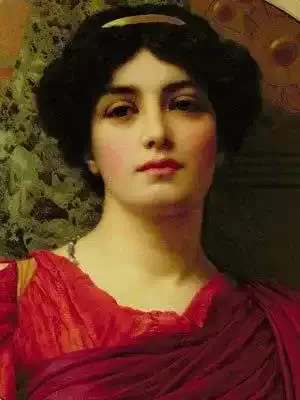
Safo
It is the Muses
It is the Muses
who have caused me
to be honred: they
taught me their craft
who have caused me
to be honred: they
taught me their craft
381

Walt Whitman
My Picture-Callery
IN a little house keep I pictures suspended, it is not a fix'd house,
It is round, it is only a few inches from one side to the other;
Yet behold, it has room for all the shows of the world, all memories?
Here the tableaus of life, and here the groupings of death;
Here, do you know this? this is cicerone himself,
With finger rais'd he points to the prodigal pictures.
It is round, it is only a few inches from one side to the other;
Yet behold, it has room for all the shows of the world, all memories?
Here the tableaus of life, and here the groupings of death;
Here, do you know this? this is cicerone himself,
With finger rais'd he points to the prodigal pictures.
381

John Greenleaf Whittier
An Artist Of The Beautiful
GEORGE FULLER
Haunted of Beauty, like the marvellous youth
Who sang Saint Agnes' Eve! How passing fair
Her shapes took color in thy homestead air!
How on thy canvas even her dreams were truth!
Magician! who from commonest elements
Called up divine ideals, clothed upon
By mystic lights soft blending into one
Womanly grace and child-like innocence.
Teacher I thy lesson was not given in vain.
Beauty is goodness; ugliness is sin;
Art's place is sacred: nothing foul therein
May crawl or tread with bestial feet profane.
If rightly choosing is the painter's test,
Thy choice, O master, ever was the best.
379

William Butler Yeats
The Players Ask For A Blessing On The Psalteries And On Themselves
Three Voices [together]. Hurry to bless the hands that play,
The mouths that speak, the notes and strings,
O masters of the glittering town!
O! lay the shrilly trumpet down,
Though drunken with the flags that sway
Over the ramparts and the towers,
And with the waving of your wings.
First Voice. Maybe they linger by the way.
One gathers up his purple gown;
One leans and mutters by the wall --
He dreads the weight of mortal hours.
Second Voice. O no, O no! they hurry down
Like plovers that have heard the call.
Third Voice. O kinsmen of the Three in One,
O kinsmen, bless the hands that play.
The notes they waken shall live on
When all this heavy history's done;
Our hands, our hands must ebb away.
Three Voices [together]. The proud and careless notes live on,
But bless our hands that ebb away.
373
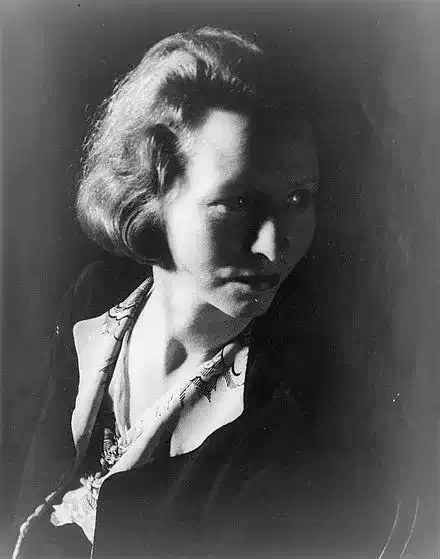
Edna St. Vincent Millay
To Kathleen
Still must the poet as of old,
In barren attic bleak and cold,
Starve, freeze, and fashion verses to
Such things as flowers and song and you;
Still as of old his being give
In Beauty's name, while she may live,
Beauty that may not die as long
As there are flowers and you and song.
In barren attic bleak and cold,
Starve, freeze, and fashion verses to
Such things as flowers and song and you;
Still as of old his being give
In Beauty's name, while she may live,
Beauty that may not die as long
As there are flowers and you and song.
372

Henry Wadsworth Longfellow
Kéramos
Turn, turn, my wheel? Turn round and round
Without a pause, without a sound:
So spins the flying world away!
This clay, well mixed with marl and sand,
Follows the motion of my hand;
Far some must follow, and some command,
Though all are made of clay!
Thus sang the Potter at his task
Beneath the blossoming hawthorn-tree,
While o'er his features, like a mask,
The quilted sunshine and leaf-shade
Moved, as the boughs above him swayed,
And clothed him, till he seemed to be
A figure woven in tapestry,
So sumptuously was he arrayed
In that magnificent attire
Of sable tissue flaked with fire.
Like a magician he appeared,
A conjurer without book or beard;
And while he plied his magic art--
For it was magical to me--
I stood in silence and apart,
And wondered more and more to see
That shapeless, lifeless mass of clay
Rise up to meet the master's hand,
And now contract and now expand,
And even his slightest touch obey;
While ever in a thoughtful mood
He sang his ditty, and at times
Whistled a tune between the rhymes,
As a melodious interlude.
Turn, turn, my wheel! All things must change
To something new, to something strange;
Nothing that is can pause or stay;
The moon will wax, the moon will wane,
The mist and cloud will turn to rain,
The rain to mist and cloud again,
To-morrow be to-day.
Thus still the Potter sang, and still,
By some unconscious act of will,
The melody and even the words
Were intermingled with my thought
As bits of colored thread are caught
And woven into nests of birds.
And thus to regions far remote,
Beyond the ocean's vast expanse,
This wizard in the motley coat
Transported me on wings of song,
And by the northern shores of France
Bore me with restless speed along.
What land is this that seems to be
A mingling of the land and sea?
This land of sluices, dikes, and dunes?
This water-net, that tessellates
The landscape? this unending maze
Of gardens, through whose latticed gates
The imprisoned pinks and tulips gaze;
Where in long summer afternoons
The sunshine, softened by the haze,
Comes streaming down as through a screen;
Where over fields and pastures green
The painted ships float high in air,
And over all and everywhere
The sails of windmills sink and soar
Like wings of sea-gulls on the shore?
What land is this? Yon pretty town
Is Delft, with all its wares displayed;
The pride, the market-place, the crown
And centre of the Potter's trade.
See! every house and room is bright
With glimmers of reflected light
From plates that on the dresser shine;
Flagons to foam with Flemish beer,
Or sparkle with the Rhenish wine,
And pilgrim flasks with fleurs-de-lis,
And ships upon a rolling sea,
And tankards pewter topped, and queer
With comic mask and musketeer!
Each hospitable chimney smiles
A welcome from its painted tiles;
The parlor walls, the chamber floors,
The stairways and the corridors,
The borders of the garden walks,
Are beautiful with fadeless flowers,
That never droop in winds or showers,
And never wither on their stalks.
Turn, turn, my wheel! All life is brief;
What now is bud wilt soon be leaf,
What now is leaf will soon decay;
The wind blows east, the wind blows west;
The blue eyes in the robin's nest
Will soon have wings and beak and breast,
And flutter and fly away.
Now southward through the air I glide,
The song my only pursuivant,
And see across the landscape wide
The blue Charente, upon whose tide
The belfries and the spires of Saintes
Ripple and rock from side to side,
As, when an earthquake rends its walls,
A crumbling city reels and falls.
Who is it in the suburbs here,
This Potter, working with such cheer,
In this mean house, this mean attire,
His manly features bronzed with fire,
Whose figulines and rustic wares
Scarce find him bread from day to day?
This madman, as the people say,
Who breaks his tables and his chairs
To feed his furnace fires, nor cares
Who goes unfed if they are fed,
Nor who may live if they are dead?
This alchemist with hollow cheeks
And sunken, searching eyes, who seeks,
By mingled earths and ores combined
With potency of fire, to find
Some new enamel, hard and bright,
His dream, his passion, his delight?
O Palissy! within thy breast
Burned the hot fever of unrest;
Thine was the prophets vision, thine
The exultation, the divine
Insanity of noble minds,
That never falters nor abates,
But labors and endures and waits,
Till all that it foresees it finds,
Or what it cannot find creates!
Turn, turn, my wheel! This earthen jar
A touch can make, a touch can mar;
And shall it to the Potter say,
What makest thou. Thou hast no hand?
As men who think to understand
A world by their Creator planned,
Who wiser is than they.
Still guided by the dreamy song,
As in a trance I float along
Above the Pyrenean chain,
Above the fields and farms of Spain,
Above the bright Majorcan isle,
That lends its softened name to art,--
A spot, a dot upon the chart,
Whose little towns, red-roofed with tile,
Are ruby-lustred with the light
Of blazing furnaces by night,
And crowned by day with wreaths of smoke.
Then eastward, wafted in my flight
On my enchanter's magic cloak,
I sail across the Tyrrhene Sea
Into the land of Italy,
And o'er the windy Apennines,
Mantled and musical with pines.
The palaces, the princely halls,
The doors of houses and the walls
Of churches and of belfry towers,
Cloister and castle, street and mart,
Are garlanded and gay with flowers
That blossom in the fields of art.
Here Gubbio's workshops gleam and glow
With brilliant, iridescent dyes,
The dazzling whiteness of the snow,
The cobalt blue of summer skies;
And vase and scutcheon, cup and plate,
In perfect finish emulate
Faenza, Florence, Pesaro.
Forth from Urbino's gate there came
A youth with the angelic name
Of Raphael, in form and face
Himself angelic, and divine
In arts of color and design.
From him Francesco Xanto caught
Something of his transcendent grace,
And into fictile fabrics wrought
Suggestions of the master's thought.
Nor less Maestro Giorgio shines
With madre-perl and golden lines
Of arabesques, and interweaves
His birds and fruits and flowers and leaves
About some landscape, shaded brown,
With olive tints on rock and town.
Behold this cup within whose bowl,
Upon a ground of deepest blue
With yellow-lustred stars o'erlaid,
Colors of every tint and hue
Mingle in one harmonious whole!
With large blue eyes and steadfast gaze,
Her yellow hair in net and braid,
Necklace and ear-rings all ablaze
With golden lustre o'er the glaze,
A woman's portrait; on the scroll,
Cana, the Beautiful! A name
Forgotten save for such brief fame
As this memorial can bestow,--
A gift some lover long ago
Gave with his heart to this fair dame.
A nobler title to renown
Is thine, O pleasant Tuscan town,
Seated beside the Arno's stream;
For Lucca della Robbia there
Created forms so wondrous fair,
They made thy sovereignty supreme.
These choristers with lips of stone,
Whose music is not heard, but seen,
Still chant, as from their organ-screen,
Their Maker's praise; nor these alone,
But the more fragile forms of clay,
Hardly less beautiful than they,
These saints and angels that adorn
The walls of hospitals, and tell
The story of good deeds so well
That poverty seems less forlorn,
And life more like a holiday.
Here in this old neglected church,
That long eludes the traveller's search,
Lies the dead bishop on his tomb;
Earth upon earth he slumbering lies,
Life-like and death-like in the gloom;
Garlands of fruit and flowers in bloom
And foliage deck his resting place;
A shadow in the sightless eyes,
A pallor on the patient face,
Made perfect by the furnace heat;
All earthly passions and desires
Burnt out by purgatorial fires;
Seeming to say, 'Our years are fleet,
And to the weary death is sweet.'
But the most wonderful of all
The ornaments on tomb or wall
That grace the fair Ausonian shores
Are those the faithful earth restores,
Near some Apulian town concealed,
In vineyard or in harvest field,--
Vases and urns and bas-reliefs,
Memorials of forgotten griefs,
Or records of heroic deeds
Of demigods and mighty chiefs:
Figures that almost move and speak,
And, buried amid mould and weeds,
Still in their attitudes attest
The presence of the graceful Greek,--
Achilles in his armor dressed,
Alcides with the Cretan bull,
And Aphrodite with her boy,
Or lovely Helena of Troy,
Still living and still beautiful.
Turn, turn, my wheel! 'T is nature's plan
The child should grow into the man,
The man grow wrinkled, old, and gray;
In youth the heart exults and sings,
The pulses leap, the feet have wings;
In age the cricket chirps, and brings
The harvest home of day.
And now the winds that southward blow,
And cool the hot Sicilian isle,
Bear me away. I see below
The long line of the Libyan Nile,
Flooding and feeding the parched land
With annual ebb and overflow,
A fallen palm whose branches lie
Beneath the Abyssinian sky,
Whose roots are in Egyptian sands,
On either bank huge water-wheels,
Belted with jars and dripping weeds,
Send forth their melancholy moans,
As if, in their gray mantles hid,
Dead anchorites of the Thebaid
Knelt on the shore and told their beads,
Beating their breasts with loud appeals
And penitential tears and groans.
This city, walled and thickly set
With glittering mosque and minaret,
Is Cairo, in whose gay bazaars
The dreaming traveller first inhales
The perfume of Arabian gales,
And sees the fabulous earthen jars,
Huge as were those wherein the maid
Morgiana found the Forty Thieves
Concealed in midnight ambuscade;
And seeing, more than half believes
The fascinating tales that run
Through all the Thousand Nights and One,
Told by the fair Scheherezade.
More strange and wonderful than these
Are the Egyptian deities,
Ammonn, and Emeth, and the grand
Osiris, holding in his hand
The lotus; Isis, crowned and veiled;
The sacred Ibis, and the Sphinx;
Bracelets with blue enamelled links;
The Scarabee in emerald mailed,
Or spreading wide his funeral wings;
Lamps that perchance their night-watch kept
O'er Cleopatra while she slept,--
All plundered from the tombs of kings.
Turn, turn, my wheel! The human race,
Of every tongue, of every place,
Caucasian, Coptic, or Malay,
All that inhabit this great earth,
Whatever be their rank or worth,
Are kindred and allied by birth,
And made of the same clay.
O'er desert sands, o'er gulf and bay,
O'er Ganges and o'er Himalay,
Bird-like I fly, and flying sing,
To flowery kingdoms of Cathay,
And bird-like poise on balanced wing
Above the town of King-te-tching,
A burning town, or seeming so,--
Three thousand furnaces that glow
Incessantly, and fill the air
With smoke uprising, gyre on gyre
And painted by the lurid glare,
Of jets and flashes of red fire.
As leaves that in the autumn fall,
Spotted and veined with various hues,
Are swept along the avenues,
And lie in heaps by hedge and wall,
So from this grove of chimneys whirled
To all the markets of the world,
These porcelain leaves are wafted on,--
Light yellow leaves with spots and stains
Of violet and of crimson dye,
Or tender azure of a sky
Just washed by gentle April rains,
And beautiful with celadon.
Nor less the coarser household wares,--
The willow pattern, that we knew
In childhood, with its bridge of blue
Leading to unknown thoroughfares;
The solitary man who stares
At the white river flowing through
Its arches, the fantastic trees
And wild perspective of the view;
And intermingled among these
The tiles that in our nurseries
Filled us with wonder and delight,
Or haunted us in dreams at night.
And yonder by Nankin, behold!
The Tower of Porcelain, strange and old,
Uplifting to the astonished skies
Its ninefold painted balconies,
With balustrades of twining leaves,
And roofs of tile, beneath whose eaves
Hang porcelain bells that all the time
Ring with a soft, melodious chime;
While the whole fabric is ablaze
With varied tints, all fused in one
Great mass of color, like a maze
Of flowers illumined by the sun.
Turn, turn, my wheel! What is begun
At daybreak must at dark be done,
To-morrow will be another day;
To-morrow the hot furnace flame
Will search the heart and try the frame,
And stamp with honor or with shame
These vessels made of clay.
Cradled and rocked in Eastern seas,
The islands of the Japanese
Beneath me lie; o'er lake and plain
The stork, the heron, and the crane
Through the clear realms of azure drift,
And on the hillside I can see
The villages of Imari,
Whose thronged and flaming workshops lift
Their twisted columns of smoke on high,
Cloud cloisters that in ruins lie,
With sunshine streaming through each rift,
And broken arches of blue sky.
All the bright flowers that fill the land,
Ripple of waves on rock or sand,
The snow on Fusiyama's cone,
The midnight heaven so thickly sown
With constellations of bright stars,
The leaves that rustle, the reeds that make
A whisper by each stream and lake,
The saffron dawn, the sunset red,
Are painted on these lovely jars;
Again the skylark sings, again
The stork, the heron, and the crane
Float through the azure overhead,
The counterfeit and counterpart
Of Nature reproduced in Art.
Art is the child of Nature; yes,
Her darling child, in whom we trace
The features of the mother's face,
Her aspect and her attitude,
All her majestic loveliness
Chastened and softened and subdued
Into a more attractive grace,
And with a human sense imbued.
He is the greatest artist, then,
Whether of pencil or of pen,
Who follows Nature. Never man,
As artist or as artisan,
Pursuing his own fantasies,
Can touch the human heart, or please,
Or satisfy our nobler needs,
As he who sets his willing feet
In Nature's footprints, light and fleet,
And follows fearless where she leads.
Thus mused I on that morn in May,
Wrapped in my visions like the Seer,
Whose eyes behold not what is near,
But only what is far away,
When, suddenly sounding peal on peal,
The church-bell from the neighboring town
Proclaimed the welcome hour of noon.
The Potter heard, and stopped his wheel,
His apron on the grass threw down,
Whistled his quiet little tune,
Not overloud nor overlong,
And ended thus his simple song:
Stop, stop, my wheel! Too soon, too soon
The noon will be the afternoon,
Too soon to-day be yesterday;
Behind us in our path we cast
The broken potsherds of the past,
And all are ground to dust a last,
And trodden into clay!
367
Johann Wolfgang von Goethe
The Muse's Mirror
EARLY one day, the Muse, when eagerly bent on adornment,
Follow'd a swift-running streamlet, the quietest nook by it seeking.
Quickly and noisily flowing, the changeful surface distorted
Ever her moving form; the goddess departed in anger.
Yet the stream call'd mockingly after her, saying: "What, truly!
Wilt thou not view, then, the truth, in my mirror so clearly depicted?"
But she already was far away, on the brink of the ocean,
In her figure rejoicing, and duly arranging her garland.
367

Carl Sandburg
An Electric Sign Goes Dark
Poland, France, Judea ran in her veins,
Singing to Paris for bread, singing to Gotham in a fizz at the pop of a bottle’s cork.
“Won’t you come and play wiz me” she sang … and “I just can’t make my eyes
behave.”
“Higgeldy-Piggeldy,” “Papa’s Wife,” “Follow Me” were plays.
Did she wash her feet in a tub of milk? Was a strand of pearls sneaked from her trunk?
The newspapers asked.
Cigarettes, tulips, pacing horses, took her name.
Twenty years old … thirty … forty …
Forty-five and the doctors fathom nothing, the doctors quarrel, the doctors use silver
tubes feeding twenty-four quarts of blood into the veins, the respects of a prize-fighter,
a cab driver.
And a little mouth moans: It is easy to die when they are dying so many grand deaths
in France.
A voice, a shape, gone.
A baby bundle from Warsaw … legs, torso, head … on a hotel bed at The Savoy.
The white chiselings of flesh that flung themselves in somersaults, straddles, for
packed houses:
A memory, a stage and footlights out, an electric sign on Broadway dark.
She belonged to somebody, nobody.
No one man owned her, no ten nor a thousand.
She belonged to many thousand men, lovers of the white chiseling of arms and
shoulders, the ivory of a laugh, the bells of song.
Railroad brakemen taking trains across Nebraska prairies, lumbermen jaunting in pine
and tamarack of the Northwest, stock ranchers in the middle west, mayors of southern
cities
Say to their pals and wives now: I see by the papers Anna Held is dead.
367
William Butler Yeats
Long-Legged Fly
THAT civilisation may not sink,
Its great battle lost,
Quiet the dog, tether the pony
To a distant post;
Our master Caesar is in the tent
Where the maps ate spread,
His eyes fixed upon nothing,
A hand under his head.
Like a long-legged fly upon the stream
His mind moves upon silence.
That the topless towers be burnt
And men recall that face,
Move most gently if move you must
In this lonely place.
She thinks, part woman, three parts a child,
That nobody looks; her feet
Practise a tinker shuffle
Picked up on a street.
Like a long-legged fly upon the stream
Her mind moves upon silence.
That girls at puberty may find
The first Adam in their thought,
Shut the door of the Pope's chapel,
Keep those children out.
There on that scaffolding reclines
Michael Angelo.
With no more sound than the mice make
His hand moves to and fro.
Like a long-leggedfly upon the stream
His mind moves upon silence.
367
William Shakespeare
Sonnet 101: O truant Muse, what shall be thy amends
O truant Muse, what shall be thy amends
For thy neglect of truth in beauty dyed?
Both truth and beauty on my love depends;
So dost thou too, and therein dignified.
Make answer, Muse. Wilt thou not haply say,
"Truth needs no colour with his colour fixed,
Beauty no pencil, beauty's truth to lay,
But best is best, if never intermixed"?
Because he needs no praise, wilt thou be dumb?
Excuse not silence so, for't lies in thee
To make him much outlive a gilded tomb
And to be praised of ages yet to be.
Then do thy office, Muse; I teach thee how
To make him seem, long hence, as he shows now.
367
Henry Wadsworth Longfellow
To Vittoria Colonna. (Sonnet V.)
Lady, how can it chance--yet this we see
In long experience--that will longer last
A living image carved from quarries vast
Than its own maker, who dies presently?
Cause yieldeth to effect if this so be,
And even Nature is by Art at surpassed;
This know I, who to Art have given the past,
But see that Time is breaking faith with me.
Perhaps on both of us long life can I
Either in color or in stone bestow,
By now portraying each in look and mien;
So that a thousand years after we die,
How fair thou wast, and I how full of woe,
And wherefore I so loved thee, may be seen.
368
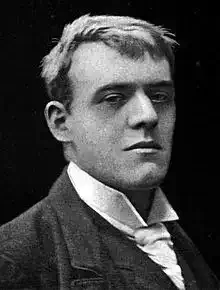
Hilaire Belloc
The Face
A face Sir Joshua might have painted! Yea:
Sir Joshua painted anything for pay . . .
And after all you're painted every day.
Sir Joshua painted anything for pay . . .
And after all you're painted every day.
367
William Shakespeare
Sonnet 103: Alack, what poverty my Muse brings forth
Alack, what poverty my Muse brings forth,
That having such a scope to show her pride,
The argument all bare is of more worth
Than when it hath my added praise beside.
O, blame me not if I no more can write!
Look in your glass, and there appears a face
That overgoes my blunt invention quite,
Dulling my lines, and doing me disgrace.
Were it not sinful then striving to mend,
To mar the subject that before was well?
For to no other pass my verses tend
Than of your graces and your gifts to tell;
And more, much more than in my verse can sit,
Your own glass shows you when you look in it.
364
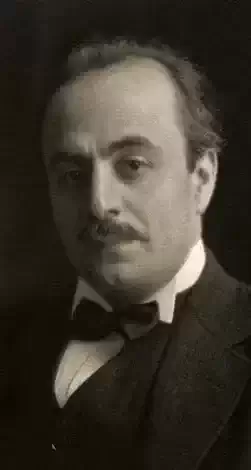
Khalil Gibran
Beauty XXV
And a poet said, "Speak to us of Beauty."
Where shall you seek beauty, and how shall you find her unless she herself be your
way and your guide?
And how shall you speak of her except she be the weaver of your speech?
The aggrieved and the injured say, "Beauty is kind and gentle.
Like a young mother half-shy of her own glory she walks among us."
And the passionate say, "Nay, beauty is a thing of might and dread.
Like the tempest she shakes the earth beneath us and the sky above us."
The tired and the weary say, "beauty is of soft whisperings. She speaks in our spirit.
Her voice yields to our silences like a faint light that quivers in fear of the shadow."
But the restless say, "We have heard her shouting among the mountains,
And with her cries came the sound of hoofs, and the beating of wings and the roaring
of lions."
At night the watchmen of the city say, "Beauty shall rise with the dawn from the east."
And at noontide the toilers and the wayfarers say, "we have seen her leaning over the
earth from the windows of the sunset."
In winter say the snow-bound, "She shall come with the spring leaping upon the hills."
And in the summer heat the reapers say, "We have seen her dancing with the autumn
leaves, and we saw a drift of snow in her hair."
All these things have you said of beauty.
Yet in truth you spoke not of her but of needs unsatisfied,
And beauty is not a need but an ecstasy.
It is not a mouth thirsting nor an empty hand stretched forth,
But rather a heart enflamed and a soul enchanted.
It is not the image you would see nor the song you would hear,
But rather an image you see though you close your eyes and a song you hear though
you shut your ears.
It is not the sap within the furrowed bark, nor a wing attached to a claw,
But rather a garden forever in bloom and a flock of angels for ever in flight.
People of Orphalese, beauty is life when life unveils her holy face.
But you are life and you are the veil.
Beauty is eternity gazing at itself in a mirror.
But you are eternity and you are the mirror.
364
Carl Sandburg
Adelaide Crapsey
Among the bumble-bees in red-top hay, a freckled field of brown-eyed Susans dripping
yellow leaves in July,
I read your heart in a book.
And your mouth of blue pansy—I know somewhere I have seen it rain-shattered.
And I have seen a woman with her head flung between her naked knees, and her head
held there listening to the sea, the great naked sea shouldering a load of salt.
And the blue pansy mouth sang to the sea:
Mother of God, I’m so little a thing,
Let me sing longer,
Only a little longer.
And the sea shouldered its salt in long gray combers hauling new shapes on the beach
sand.
362